Opinion

Skills or Degrees? You may need both to thrive

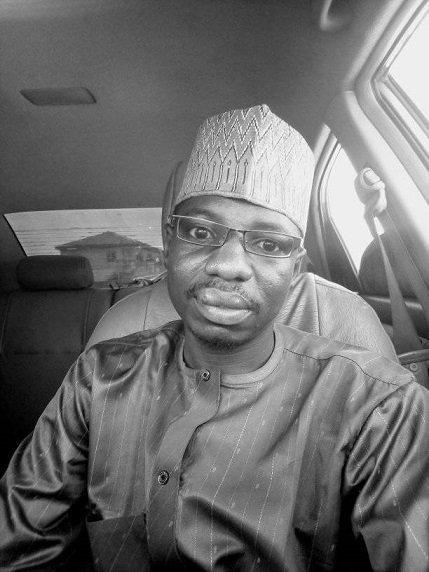
By Nusaiba Ibrahim

For over a year, I have been working alongside other creatives in my department after I assumed my role as a content writer and website manager with a higher education institution. The department in which we work is formally referred to as the Media and Communication Department, but somehow, maybe before I joined, it became known as the Creative Department.

Whenever we attend a meeting, we are termed the creatives. Only along my journey did I realise that two or three of the team members had undergone degrees in disciplines that had little or no bearing on the creative industry. The team—a social media manager, a content writer or website manager, a graphic designer, a motion designer, and a creative support staff member—has one thing in common: we possess skill sets that are within the creative industry. Yet, we all have degrees.

During our usual chitchats, I realised that the social media person I had met was a history graduate with a second degree in the same field. He’s doing wonderfully well today in Lagos because of his exquisite skills as a brand marketer and manager. The new staff member who assumed the role is a biology graduate; the motion designer studied industrial design; the graphic designer and I studied mass communication; and the creative support staff studied quantity survey and obtained a postgraduate diploma in the same field.

From the faculty to operational staff to even students, the creative department comprises geniuses skilled in producing exceptional creative pieces that would be admired by the university’s community and beyond. Hence, the department is admired by many. Simple casual discussions with students and staff, whether in or out of the office, never ended without passionate statements like “I will stop by to learn one or two things” or “I’ll come to learn a few things.”

When I was putting this piece together, a faculty member, a friend of the creative department, had come in to drop a request. While going out of our office, he was tempted to read the title of the article. He read it carefully and said, “I think I disagree with you. I am of the opinion that skills are better than degrees.” I turned and tried to explain that the topic didn’t mean degrees were superior to skills or vice versa. They could be used to complement each other when necessary.

This particular faculty member only left me with more thoughts about the debate. He’s a faculty member with a B.Sc. and Master’s degree in International Relations and is very much appreciated by the institution due to his expertise in teaching. He is yearning for a skill set. I understand he must not have realised he could do well as a public speaker, as that is what he’s most notable for. Hence, he didn’t value his proficiency in public speaking, which is now widely applauded. Later that day, he came into our office to further explain his passion for learning graphic design or motion design.

With these current debates, which have awakened people’s desire to invest more in skill sets, I think we are on the path to building the future we’d envisioned to be far. We are getting closer to a better Nigeria. Nonetheless, you might still need a solid foundation from degrees that will familiarise you with values and etiquette that will propel your career.

I’d say this regarding the book title by Prof. Pantami, ‘Skills rather than Just Degrees’, that stirred the Arewa atmosphere a week ago (which I haven’t read). I’m only saying this based on the evident experiences of the revered scholar and the book title. Sheikh Pantami possesses three degrees: a B.Sc., an M.Sc., a Ph.D., and other academic qualifications. He is also a distinguished Islamic scholar who has been lauded adequately due to his skills in teaching Islamic education through his exceptional preaching.

To showcase the relevance of having both, the Sheikh used his wealth of technology experience to serve as a minister and accepted a professorial award (which has generated so much back-and-forth). In the process of serving as one of the ministers under former President Buhari, he definitely acquired more administrative and political skills, making his career stronger.

So you see, the title wouldn’t have become a bone of contention if people had realised the Sheikh was writing to explain the benefits of obtaining both, but just a little bit of emphasising skills. But works of art unleashed on the world are open to criticism. This is something authors and artists cannot control; hence, the Sheikh faced reactions due to his publications.

One of the things I’ve learned amid other creatives is skills and academic upgrades. I tell you, we’ve learned so much from each other. We often see ideas from similar perspectives when it comes to designs, motion graphics or writing. Three out of four yeses is always a pass for any content. We have become part of one another’s journey and a great team. Despite our skill-based engagements, we’d encourage one another to further our degrees.

Whether you have skills or degrees or both, use what you have to get what you want in life. With degrees, you can pursue a particular area of interest and gain something extraordinary. Likewise, with skills, you can also realise your potential. So, the big idea is to use any of the two to gain something beneficial for yourself.

Nusaiba Ibrahim Na’Abba wrote from Kano. She can be contacted via nusaibaibrahim66@gmail.com.

The return of Sanusi

By Aliyu Nuhu

I have read the amended Kano Emirates law, which was brief, concise and straight to the point, to achieve certain ends. It is a promise fulfilled by the new NNPP government. Engr. Rabiu Musa Kwankwaso had said time without number that if elected, the government would repeal the Dr Abdullahi Umar Ganduje-led Emirates laws.

If Governor Abba Kabir Yusuf signs the amendment into law (which is a certainty), it will remove the present emirs from their offices and return all the Ganduje creation of first-class emirs back to district heads (hakimai). The affected emirs are those of Gaya, Rano, Karaye and Bichi.

The new law gives the governor the power to either re-appoint them hakimai or remove them and search for new ones.

Until the coming of this new law, I thought that Muhammadu Sanusi II’s return was impossible, as it had no precedence in the history of the Kano emirate. But after talking to officials and people who know the workings of the government, it appears certain that Sanusi will return to his throne, in fact, soon enough to preside over the coming Eid-Kabir prayer. 

Nothing is certain yet, but nothing is impossible, thanks to political intrigues and the need for the new government to reverse Ganduje’s legacies. There is no love lost between Kwankwaso, Abba, and Ganduje.

For my own views, I support the amendment of the Emirates laws and the return of a strong Kano emirate, but I don’t support Sanusi’s return as emir of Kano. The current Emir of Kano, Aminu Ado Bayero, is doing well and is loved by the people. 

I don’t support Sanusi’s return. I know he has not learned a lesson and will still come back and meddle with Kano politics, attack Abba and his government, and continue shooting his mouth as if he is an ordinary person. People who sit on the Kano throne don’t talk too much. He must also not try, like his grandfather did to Sardauna, to outshine the Kano state governor.

In history, there was an incident where the then-Emir Muhammadu Sanusi shamed Sardauna in the Kano race course parade ground by attracting a standing ovation with the Sardauna seated. The premier of Northern Nigeria considered it an affront to himself as the Emir stole the spotlight by arriving in full splendour and pageantry, and the whole assemblage had to stand up for the Emir in traditional homage and honour. It was a percussion to the dethronement of Emir Sanusi of Kano.

The grandson Sanusi Lamido Sanusi has inherited those tendencies from his grandfather, and I daresay when it comes to attacking and criticizing the government, Kwankwaso/Abba don’t have the patience, and if you like to call it table manners of Ganduje. They will throw out Sanusi in a blink of an eye.

They said a leopard never changes its colours. But time will tell.

Until then.

Nigerian leaders and the call to save our country

By Yusuf Yusuf 

Sometimes, even the starry-eyed optimist must give up on Nigeria. The way things go from bad to worse in the country today is appalling. The great novelist Chinua Achebe had diagnosed our problem as a nation where he said, “The trouble with Nigeria is simply and squarely a failure of leadership.” The leadership of this country is not doing enough to save us from what experts call a “failed” to a “collapsed” state. We fervently pray for God’s intervention. 

The recent revelation by an ace investigative journalist and maverick writer, Malam Jaafar Jaafar, is mindboggling! It highlights Nigerian leaders’ new joint venture in unrelenting efforts to run this country aground. It shows their insensitivity to the suffering of other Nigerians. How will a government that berates the payment subsidy of basic stuff for its citizenry and whose minimum wage is among the lowest approve such an unsubstantiated rise in the salary and allowances of only a “select group”?

I cannot unravel our leaders’ craze to undermine this nation’s progress. Sometimes, I feel like believing conspiracy theories about them being stooges of other groups with vested interests in our nation. Our leaders fail to grasp that when you cause your country to fail or collapse, you will spend the rest of your life a stranger, the life of a Black Hermit (apologies to the great Kenyan writer Ngugi wa Thiang’o).   

White-collar crimes are threatening the existence of Nigeria. Once upon a Giant of Africa is now a baby learning to crawl. Ironically, a country blessed with human and natural resources will become a poverty capital. The way these resources are mismanaged points an accusing finger to its leadership.

The level of suffering in Naija these days is monumental. The dream of having a meaningful life is becoming a mirage. The hopes of the young people are being shattered by daily reality in the country. Hunger and poverty have become our co-tenants—businesses, whatever the scale, are crumbling. Young graduates with both certificates and functional skills are roaming about our streets.  Sensible minds are afraid of what may happen next. You know, poverty always breeds crimes.

This trend needs to be reversed. More than anyone else, the Nigerian leader has a lot to do to reverse the rot and change the status quo. We can all borrow a leaf from other people’s books.  Nigerian leaders are very good at making allusions to attitudes which promote development in other climes. 

Charity, they say, begins at home. The best way the Nigerian leader can help his people catch up with progressive worlds is by renewing our hopes of the noble decision to cut the cost of governance, as leaders of these nations have done. 

Cutting undeserved official allowances and estacodes, unnecessary long laundry lists of aides and stopping duplicity, inflating figures and collecting kickbacks when issuing contracts could help save now the slim chance of the survival of the nation. 

The earlier the nation’s leadership makes the above noble decision, the better for our collective future. This has the potential to prevent the furtherance of the untold hardships that the majority of Nigerians are going through. These hardships, I am afraid, could make many citizens easy prey to international criminal syndicates, especially young and inexperienced minds, with mere food and money handouts. Nigerian leaders, individually and collectively, need to act swiftly to avert the arrival of our doomsday. 

May God save Nigeria from Nigerians.

Yusuf Yusuf can be contacted via yusufyusufgamji@gmail.com.

Familiarity breeds contempt

By Abdurrazak Muktar Makarfi

In our daily lives, those closest to us often find it most challenging to appreciate or value us fully. Familiarity can breed contempt, as the saying goes. The people we interact with regularly, whether family members, close friends, or colleagues, can sometimes take us for granted or overlook our unique qualities and contributions.

When someone sees us daily, they become accustomed to our presence and may fail to recognise the depth of our character or the significance of our actions. They might overlook our strengths, talents, and achievements because they’re too focused on the routine aspects of our relationship. This familiarity can lead to a lack of appreciation and understanding of our true worth.

On the other hand, people farther away from us, whether geographically or emotionally, may have a clearer perspective on who we are and what we bring to the table. They might see us through a different lens that isn’t clouded by everyday interactions and expectations. They may be more likely to appreciate our unique qualities, offer genuine recognition for our accomplishments, and provide valuable feedback because they’re not as intimately familiar with us.

It is important to recognise this dynamic and strive to balance closeness and distance in our relationships. While it’s natural for those closest to us sometimes to struggle to appreciate us entirely, we can take steps to foster understanding and gratitude within those relationships. 

Communication, expressing gratitude, and regularly reflecting on each other’s contributions can help bridge the gap between familiarity and appreciation. Additionally, seeking feedback and validation from various sources, including those farther away, can provide a more comprehensive perspective on our value and worth.

Abdurrazak Muktar Makarfi wrote from Kaduna via prof4true@gmail.com.

Governor Fintiri and market development 

By Zayyad I. Muhammad 

In systems thinking, infrastructure and social developments don’t occur in isolation; projects and programmes are built using a series of interconnected systems that complement each other’s purposes and functions. Governor Fintiri is applying this approach to his development programmes, projects, and policies.

A typical example is the modernization of the Jimeta Shopping Complex, which aims to connect its purpose and functions with those of the new flyover at the old Mubi Roundabout while also providing a befitting shopping complex at the centre of Jimeta City for economic and aesthetic development as part of the urban renewal programme.

The new flyover at the old Mubi Roundabout will connect travellers to Jimeta’s economic activities and natural beauty. At one end, it will lead to the Gerio Swamp and the historic Jimeta Bridge over the River Benue, offering a glimpse of the area’s natural charm. At the other end, it will provide access to the Jimeta Modern Shopping Complex and ease traffic within the city—economic and social development knit together.

The new Jimeta Shopping Complex will feature a world-class, 24-hour, one-stop shopping mall with high-rise buildings. The redevelopment plan of the complex includes a diverse range of shops, boutiques, arcades, food courts, cinemas, banks, smart parking facilities, Wi-Fi connectivity, interactive displays, and a customer service desk.

Adamawa’s three senatorial zones each boast important urban and rural markets. In the southern zone, spanning from the Ganye grain market to the historic Mayo Belwa market, there are connections to the central zone’s Ngurore cattle market, the Jimeta modern market, the new Jimeta shopping complex, the Jimeta old market, the Yola-town market, and the Hong agriculture market.

In the northern zone, notable markets include the Mubi International Cattle Market, Michika Market, and various weekly markets. Plans are underway to transform these markets into modern trading hubs catering to local, national, and international trade. The markets in the northern zone and the Fufore markets serve as crucial centres for traders from Cameroon, Chad, and several Central African countries.

The redevelopment of the Mubi International Market is already underway, with plans to rebuild and remodel the burned Yola Town Market. Additionally, other major markets across Adamawa State are slated for modernization. The markets will undergo systematic redevelopment following Governor Fintiri’s government’s series-system development process.

Governor Fintiri’s comprehensive plan for market development focuses on revitalising economic activities across the state by introducing modern markets and shopping centres. This initiative aims to create vibrant commercial hubs catering to diverse needs. 

Central to the plan is a robust market redevelopment policy, streamlining bureaucratic processes and attracting local and international investors. Job creation is prioritised, with the goal of stimulating employment opportunities through market revitalization and new commercial spaces.

The policy also emphasises sustainability, promoting private sector participation to diversify revenue streams and reduce dependence on the dollar. Overall, Governor Fintiri’s vision for market development encompasses economic transformation, community empowerment, and a prosperous future for the state.

Zayyad I. Muhammad writes from Abuja via zaymohd@yahoo.com.

The raise and the rays of Prof Adamu Abubakar Gwarzo

By Murtala Sani

The story of Professor Adamu Abubakar Gwarzo cannot be narrated without weaving greatness with success and mixing niceness with kindness, for he is a character of dignity and simplicity. His life is a hub of imagination and determination, creativity and possibility, humanism and activism because he is a master of generosity and hospitality. Gwarzo’s life style is full of optimism, strength, zeal, courage, tolerance with no iota of hopelessness and laziness as seen in his commitments and achievements.

Adamu Abubakar Gwarzo is an origin of Gwarzo Local Government, Kano State, pursuance of knowledge took him to France where he obtained all his degrees. He held Bachelors degree in French, Masters of Arts in French, PhD in French Linguistics, and then PhD in High Education. This gave him a room to become a Professor of Modern European Languages and also a Professor of Leadership. Obtaining dual Professorship is a feat that only a genius can attain.

Gwarzo became a Professor in his early fourties, coincidentally; he was the President of Protection Rights of Journalists of Africa (PRJA) in his early thirties when he was active in the field of Journalism. At the young age he fought for the rights and freedom of Journalists across Africa.

His passion for business and entrepreneurship opened doors for him to get opportunities in France where he made a huge success. He was the first person that founded bilingual University in Niger Republic, Maryam Abacha American University, Niger (MAAUN) in 2013. Seven years later, Gwarzo founded Maryam Abacha American University, Nigeria, (MAAUN) at Kano in 2021 after two years he founded two more Universities in Nigeria, Franco-British international University, Kaduna and Canadian University of Nigeria, Abuja the former is the first Franco-British University in Nigeria.

Therefore, within ten years, Adamu Gwarzo founded four universities making him the first and youngest man that founded four universities in Africa.

Gwarzo is the pioneer President of the Association of African Private Universities due to his dedication to the development of education in Africa. Considering his outstanding contributions to education sector, International Union of Universities in collaboration with Association of African Private Universities gave him an award which serves as commendation to his tireless effort in uplifting education within the African continent.

Again, noticing Gwarzo’s impact on the education sector, International Academic and Management Association (IAMA) inducted him as the Member of its Advisory Board. For the same reason, World Education and Ed Tech 2 awarded him as Innovative Leader in New Delhi, India. These are few out of the numerous awards and honors Gwarzo received from various governmental and non-governmental organizations, national and international associations institutions, schools, communities and students.

The generosity of Adamu Gwarzo led him to establish a foundation with which he can easily touch the lives of many people that are in need of assistance, therefore, Adamu Abubakar Gwarzo Foundation was initiated. The philanthropic activities of the foundation revolve around education health, entrepreneurship, empowerment and provision of infrastructural facilities to communities.

For instance, the foundation donated 66 seater bus to Aliko Dangote University of Science and Technology, Wudil (ADUSTECH), 60 seater bus to Bayero University Kano (BUK) , 66 seater bus to Al-Istiqama University Sumaila, 60 seater bus to Kaduna State Polytechnic and 60 seater bus to Niger University. The foundation also constructed more than one hundred boreholes in Gwarzo Local Government area and some areas within Kano State that were in dire need of water. Again, the foundation undertakes the tasks of giving skills and capital to orphans and masses in order to make them self – reliable considering the economic hardship and the rate of unemployment within the country.

Adamu Gwarzo is an enigma. If you see him dining with the elites today, you may see him feasting with the masses tomorrow. His down-to-earth joyous interactions with the masses make him the hero of the commoners. His capacity gives him the opportunity in rubbing shoulders and shaking hands with African, Arabian and European Presidents despite his young age. No wonder Chinua Achebe said a boy that washes his hand well dine with the elders.

His fluency in Hausa and Yoruba languages, plus his mastery of French and English languages speaks volumes of his intelligence. He is peaceful and tolerant because he is he is neither a racist, nor a tribalist, nor a religious jingoist. Muslims, Christians and Jews have no problem with him as seen in his constant navigation to almost every continent of the world. In his entourage, there is no separation between Sunni and Shi’ite believers, therefore, Qadiriyya, Tijjaniyya, Shi’ites and Izala followers work closely with him without segregation. He embraces the actors, musicians, footballers and all sorts of celebrities or legends that swarm around him without stigma.

Adamu Gwarzo is heterogeneous, as a Pan- African, he named MAAUN’s Senate Building after Nelson Mandela, the former South African President and activist that fought against the subjugation of the black people under Apartheid system of government. He named MAAUN’s President Building after Thomas Sankara, that revolutionist that served as the President of Burkina Faso. He named MAAUN’s Deanry Block after Kwame Nkrumah, the first President of Ghana and nationalist who fought for the independence of the country. He named MAAUN’s Library after Murtala Ramat Muhammad, the patriotic Nigerian General who was assasinated on power.

Furthermore, as an advocate of girl-child education, he named MAAUN’s Social Centre after Magajiya Danbatta, the legendary female singer who promoted girl-child education in her songs. As a Philanthropist, he named MAAUN’s School of Health Sciences after Aminu Alhassan Dantata, a legendary business man and iconic philanthropist. As a non-partisan, he named MAAUN’s school of Social and Management Science after Atiku Abubakar, the former Vice president of Nigeria and former Nigerian Presidential candidate under PDP. He named the Association of African Private Universities (AAPU) Secretariat Building after Senator Rabiu Musa Kwakwaso, the former Governor of Kano state and former Nigerian presidential candidate under NNPP. He named MAAUN’s School of Law Building after Remi Tinubu, the First lady of the Nigerian President, Bola Tinubu, who became President under Apc. Reciprocally, streets, buildings and schools were named after him by the communities, institutions and schools that benefitted from his philanthropic gestures.

In appreciation of Adamu Gwarzo’s friendly and kinship relationship with people he interacts with, Sarkin Hausawan Turai, a leader of Hausa community living in Europe turbaned him as Wazirin Sarkin Hausawan Turai. A Hausa community living in Agege, Lagos, turbaned him as the Sarkin Zumunchi of Agege. In Niger Republic, African Aminci Cultural Association Niger crowned him as the Sarkin Yaki da Jahilci na Afrika. This is in tune with his ambition where he stated that his ambition is to sponsor the education of one million people.

Currently, Maryam Abacha Amercan University Nigeria (MAAUN) is the 4TH best private University in Nigeria, 17th in Africa and 854 in the world, according to the AD Scientific Regulatory Ranking Body for global Academic Institutions. The ranking is based on capacity in Research Inputs /Outputs, Quality Teaching Aids (Faculties and Facilities), Conductive Atmosphere of Learning, Internalization and Collaborations, Students /Staff (Academic and Non – Academic), Positive Interpersonal Relationships, Community Services and Support, Human and Infrastructural Developments that fit with global standard.

Murtala Sani writes from Gwarzo Local Government of Kano State. He is also an academic staff of Kano State Polytechnic, Department of Basic and Remedial Studies.

International HR Day: Shaping the new future

By Imam-Malik Abdullahi Kaga (ACIHRM, CPM, PGD-HRM)

Today, Monday, May 20, 2024, marks International Human Resource Day, a celebration of the vital role HR professionals play in shaping the future of work. As a Certified Personnel Manager, I write to celebrate this special day in line with the theme: Shaping the New Future.

International HR Day was founded by the European Association for People Management (EAPM) and was first observed in 2019. Its aim is to recognise the momentous contributions of HR professionals globally. Prior to this day, the then-Jamaican Governor-General, Sir Patrick Allen, proposed the celebration in 2013 but was not successful in bringing the day to life. In 2018, the Jamaican government declared the day.

Since then, it has become an avenue for HR practitioners to come together, share best practices, and discuss the latest trends and challenges by organising webinars, workshops, et al in the industry.

This year’s HR Day is tagged with the theme: Shaping the New Future, and sub-themes of Championing Ethical Tech and AI Integration, Excellence in People Management, Continuous Investment in Skills and Education, Redefining the Future Workplace.

Championing Ethical Tech and AI Integration

The integration of technology and AI has revolutionised the way our department works. However, it also raises important ethical considerations. Despite the increasing reliance on technology and AIs, it’s very important that HR professionals champion ethical practices to ensure these technologies are used responsibly and for the betterment of organisations, companies, and society at large.

This includes implementing AI systems that are transparent, unbiased, and protect employee data privacy.

Excellence in People Management

MSF has this adage: “MSF is People.” HR professionals play a crucial role in attracting, retaining, and developing top talent. At the heart of any successful organisation is its people. This requires a deep understanding of the changing needs and expectations of employees.

By nurturing a culture of excellence in people management, HR can improve employee engagement and create a positive work environment. This involves adopting a holistic approach to talent management, spotting the diverse needs of global labourers, and providing opportunities for growth and development.

Continuous Investment in Skills and Education

The stride of technological change demands that employees continually update their skills to remain relevant. HR invest in education and training programs that arm workers with the skills needed to succeed in their roles. 

This includes providing access to online learning platforms, workshops, and mentorship opportunities. For example, organisations like the MSF have a department called learning and development, where the staff’s KSA are developed. MSF also has a platform called Tembo for its staff to learn and develop. By prioritising continuous learning, HR can future-proof the workforce, initiate innovation, and stay ahead of the competitive world.

As we celebrate International HR Day, we urge all departments in every organisation, whether humanitarian, government, or profit-based, to adapt the culture of continuous learning for professional growth and excellent work outcomes.

Happy International HR Day to the “retention strategists”

Imam-Malik Abdullahi Kaga is a member of the Chartered Institute of Human Resources Management and a Certified Personnel Manager. He writes from Maiduguri and can be reached via imammalikabdullahikaga@gmail.com.

A sight of relief in Jos as rain begins to drop

By Usman Muhammad Salihu 

As the rainy season sets in over Jos, the Plateau State capital, residents are cautiously optimistic about relief from the persistent water scarcity that has plagued the city for months. The onset of the rainy season brings a glimmer of hope for the residents of Jos, replenishing parched earth and depleted water sources and offering a reprieve from the relentless struggle for access to clean water.

For many in Jos, the arrival of the rainy season symbolises the prospect of a brighter future. With each drop of rain, the reservoirs begin to fill, easing the burden on communities that have long been forced to endure rationing and scarcity. However, while the rains offer respite, they also underscore the need for sustainable solutions to Jos’s water woes.

The city’s infrastructure must be fortified to harness and manage this precious resource effectively. Investments in water treatment facilities, storage infrastructure, and distribution networks are imperative to ensure every resident can access safe and reliable water year-round.

Moreover, Jos’s challenges are not unique; they reflect broader issues of water scarcity and management that affect communities worldwide. As climate change intensifies, erratic weather patterns and dwindling water supplies pose increasingly urgent threats to global populations. The lessons learned from Jos’s struggle are pertinent not only for Nigeria but for all nations grappling with the repercussions of environmental degradation and resource depletion.

The resilience and resourcefulness of the people of Jos shine through in the face of adversity. Communities come together, sharing resources and supporting one another in times of need. This spirit of solidarity will propel Jos forward towards a future where access to clean water is no longer a luxury but a fundamental human right.

As the rain continues to fall over Jos, let us remember the lessons of the past and the challenges that lie ahead. Let us seize this opportunity to build a more sustainable and equitable future where every individual can thrive, nourished by the life-giving waters that sustain us all.

Usman Muhammad Salihu writes from Jos, Plateau state. He can be reached via muhammadu5363@gmail.com.

The bandits, the vigilantes, and the government

By Rabiu Isah Hassan

Citing the killing of an army officer by bandits in Katsina recently, Sheikh Musa Yusuf Assadussunnah shows the futility of military measures in resolving the pastoralist-peasant conflict in northern Nigeria. By this daring act, the insurgents have demonstrated that the military, much less the vigilante, cannot end the insurgency. According to him, the only solution is a truce. From other sermons by clerics and numerous online items from the conflict area, it appears Assadussunnah is misreading the situation. Not only are the insurgents receiving severe setbacks, but the signs are also ominous. 

The army officer might have been killed not because the troops were weak or ill-equipped but because he exposed himself to unnecessary danger. The way the vigilante and locals praise his determination and commitment suggests he might have been motivated to sacrifice himself for Nigeria and significantly for a Hausa cause. In a way, the prolongation and viciousness of the conflict have started affecting the soldiers on the ground; as in any internal crisis, the armed forces, which are supposed to be neutral, are gradually and inexorably drawn into its vortex.

No group has drawn the wrath of most Nigerian groups, perhaps except for the Igbo during the Nigerian crisis of 1966-1970, like the ethnic Fulani presently. Anti-Fulani sentiments, always simmering below the surface mainly due to perceived historical wrongs, are now erupting due to the current widespread atrocities of mostly pastoral Fulani. An inchoate coalition of mostly Hausa youths and northern minorities is emerging based on shared grievances against the Fulani. Their violent rhetoric, both online and offline, reflects the extent to which the Fulani have slipped down from decent beings and citizens to savages and aliens. No amount of infractions against the ethnic Fulani is seen as grotesque or repugnant.

The troops on the ground and the Hausa vigilante have fused into a hardened armed fist against their perceived enemy. From diverse reports, a discernible pattern is emerging. As the soldiers attack the bandits, the vigilante form their rear, mopping up any stragglers and often dispersing or exterminating ethnic Fulani along their path. The vigilante are also at liberty to arrest, detain, and kill any ethnic Fulani or Hausa informers in an attempt to root out collaborators or destroy the bandits’ supply channels. When the bandits feel the heat, they attack, maim, and kill Hausa peasants randomly. They threaten to stop farming this season, forcing the government and the sedentary population into another truce. This only inflames the soldiers and the vigilante, resulting in more indiscriminate attacks against ethnic Fulani.

Some Islamic clerics still maintain that military operations will not end the insurgency and that the government should negotiate with the bandits to end the bloodletting. These statements make the bandits believe in their invincibility anddangerously encourage them to see their actions as serving an ethnic cause. In a bizarre twist, the bandits have come to link their survival with that of the ethnic Fulani. Since they no longer see themselves as the cause of the Fulani predicament, their removal from the scene is out of the question. This intransigence is further fueling the binary that currently pits the Fulani against the Hausa. Thus, instead of viewing the conflict as occupational and the bandits as criminals, some sections of the ulema have come to regard it as communal, with the insurgents seen as activists.

What some clerics and others fail to appreciate is that both the Hausa-speaking sedentary population of the Northwest and the pastoral Fulani have become one community through centuries of exchange. The pastoral Fulani are essentially an occupational and remnant group continuously absorbed into the general Hausa population. In other words, they do not exist as separate and closed groups. Like similar groups throughout history, the bandits are deviants that have emerged due to internal crises. They need to be tamed or destroyed, not hailed as vanguards of any ethnic group.

With the bandits vowing to fight to the bitter end, they risk dragging the rest of the ethnic Fulani into the abyss with them. The intensity and randomness of their attacks testify to this deranged stance. The indiscriminate reprisals from the other side are making life unbearable for the ethnic Fulani. As the noose tightens around them, there is little chance for their offspring to continue the fight as they hope. A war of attrition would only lead to their decimation; they cannot withstand the combined strength of the Nigerian state and the Nigerian masses. 

Unlike the Igbo, who returned to their homeland following the pogroms in Northern Nigeria, the ethnic Fulani are losing their remaining sanctuaries. If the war becomes protracted or its viciousness intensifies, the country risks sliding into the fate of Mali and Burkina Faso. With the bandits terrorising almost half of the country and the army engaged in fighting them in about a quarter of it, hatred against the Fulani is increasing among the soldiers. 

Like the inchoate movement developing among the ethnic Hausa and northern minorities online, a conspiratorial group with similar configuration and motivation could develop within the army. Given the toxicity across the land and the increasing hardship, they might attempt a putsch. As in Mali and Burkina Faso, where the raison d’être of the juntas is the containment of the Fulani in the case of the former and their destruction in the latter’s case, an idealistic junta in Nigeria would unleash its reign of terror not only against the ethnic Fulani but also against their symbols.

There is only one possible way to avert this Armageddon. Many groups before them have avoided this ruinous outcome. Recently, the Kanuri, who formed the bulk of the supporters of Boko Haram, quietly abandoned their weapons and dispersed among the general population as the magnitude of the catastrophe loomed. The followers of Maitatsine had followed the same course after realising the folly of confronting the state. After valiant resistance against Rabeh at the end of the nineteenth century, many Kanuri surrendered, and others fled. The leaders of the Sokoto Caliphate retreated in the face of superior arms. After their defeat at Burmi, a few withdrew from the territory and eventually submitted to the British authorities in Sudan. At the same time, the majority reconciled themselves to the new order in Northern Nigeria. When the Biafran secessionists realised that their intransigence would only lead to more destruction of the Igbo, they removed themselves from the scene to pave the way for surrender. These were the practical and noble paths taken in Germany and Japan at the end of the Second World War and countless previous conflicts. 

The preservation of the ethnic Fulani must supersede the bandits’ ego, and only surrender would spare their kinsmen from possible destruction. They should give themselves up and be tried in a military tribunal. Like the Nuremberg trials at the end of the Second World War, they must be sentenced based on the gravity of their offences. The minors could be assembled and enrolled in a rehabilitation program. A bold resettlement and integration plan must be rolled out for the pastoral Fulani. Parallel communities should not be allowed to resurface; the pastoralists should be settled among the sedentary population to end mistrust and bigotry. The homogeneous, stable, and prosperous nation that would emerge would be the compensation for these painful sacrifices. 

Rabiu Isah Hassan wrote from the Arewa House/Department of History, ABU Zaria. He can be contacted at rabiurafani@gmail.com.

How to combat decision fatigue, maximize daily productivity 

By Aisha Musa Auyo

Oxford Dictionary defines decision fatigue as a difficulty in making a good decision experienced due to the number of decisions one needs to make. In psychology, decision fatigue is defined as mental and emotional exhaustion due to excessive or relentless decision-making.

According to Bob Pozen, a professor at MIT and author of Extreme Productivity, we make between 10,000 and 40,000 decisions per day, ranging from insignificant to critical.

The figure looks exaggerated, right? I didn’t believe him at first until I started to count the decisions I had made from the moment I woke up, from what to make for breakfast, to which kid to bath first, to which clothes to wear, which shoe or bag, what time to go out, what article to write, to eat before leaving or not, what type of tea to make? To call my siblings after work or before work, to read either a book or a journal, to address a junior colleague or to let it pass, to watch a movie or sleep. If I chose to watch a movie, then which one? The decisions are endless. 

The more energy we spend on mundane tasks, the less we have for the important ones.

Roy F. Baumeister, a social psychologist, developed this theory, arguing that our mental energy diminishes as we make more decisions. The brain’s ability to make decisions wears out over time like a muscle that is used too much.

According to a 2016 study published in the Proceedings of the National Academy of Sciences, people find it difficult to make intelligent decisions even after spending hours deliberating. Brain scans revealed a decline in mental energy in the lateral prefrontal cortex, an area crucial for decision-making.

Everyone experiences decision fatigue from time to time. And that’s OK. While we can’t always control the situations that cause our decision fatigue, we can build protective measures into our daily lives to make that fatigue less likely and more manageable

To combat decision fatigue, experts suggest simplifying daily choices as much as possible and learning to manage our mental energy more efficiently. But I’ve summarized a few points that will help us in our day-to-day activities. 

Experts advise making as few decisions as feasible on a daily basis and developing more effective mental energy management techniques to fight decision fatigue. However, I’ve outlined a few things that will support us in our daily tasks. 

1. Take the option out of certain aspects of your life. Prominent decision-makers such as Steve Jobs and Barack Obama have openly discussed how they wear nearly identical outfits every day. Their justification is that there is one less decision to make when it comes to attire. Certain things can be automated, such as your wardrobe choices, the podcast you listen to while commuting, or the type of bread you purchase from the shop. Allow yourself to not be the one who demands perfection.

2. Assign (if you can). You will always have to make some selections. But occasionally, it’s acceptable to delegate tasks to others. They might make a mistake, but so will you! Try to delegate some of the decision-making to your spouse, siblings, or subordinates. They’ll learn how to meet your expectations with time.

3. Make time for self-care. Caring about your own mental health and well-being isn’t selfish. You can’t do what it takes to help others if you aren’t caring for yourself. Having a self-care routine in place can prevent decision fatigue — and make handling it easier if it does happen.

4. Prioritise your sleep. What do people say when presented with difficult decisions? “I’ll sleep on it.” There is a reason for that. Research suggests that humans spend more time deliberating – and making better decisions — early in the day. It also demonstrates that sleep deprivation impairs not just impulse control and emotional management skills but also morality. If you’re going through a particularly decision-heavy period in your life, making an additional effort to get a decent night’s sleep may help you avoid decision fatigue.

5. Schedule downtime into your day. Life can get so hectic that we forget to give our brains a chance to disconnect for a bit. Scheduling downtime, whether it’s watching a series on your phone during your lunch break, listening to Quranic recitation, perusing social media clips, or phoning a buddy who makes you laugh, can help keep your mind charged and ready to make difficult decisions.

6. Exercise. You’ve probably heard that exercise is good for your brain, especially as you get older. But did you know that it can also help you make better decisions? A study published in the British Journal of Sports Medicine found that 30 minutes of moderate-intensity exercise followed by a 3-minute walking break every 30 minutes When combined, they were found to improve executive function.

 If that sounds like a lot, don’t worry: Any exercise is better than no exercise, and long walks can do wonders for your overall mental health.

In sum, decision fatigue is a common issue that affects our decision-making abilities. To manage it, we can simplify routines, delegate tasks, prioritize self-care, schedule downtime, and incorporate exercise. These strategies preserve cognitive resources, enhance well-being, and enable more thoughtful decisions.

Aisha Musa Auyo is a Doctorate researcher in Educational Psychology, a wife, a mother of three, a homemaker, a chef, and a parenting/ relationship coach. She can be reached via aishamuauyo@live.co.uk.