Opinion

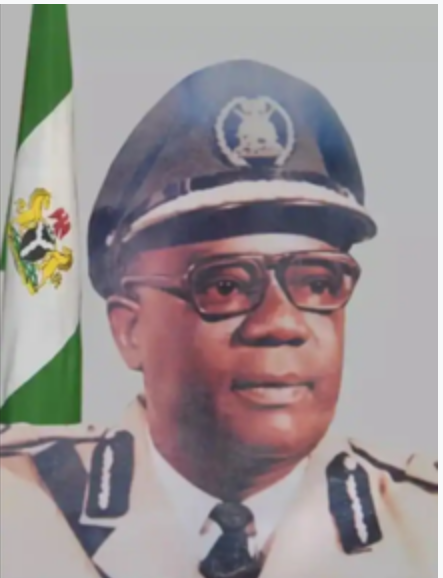
Audu Bako: The military administrator who made Kano great (I)

By Mubarak Ibrahim Lawan

Audu Bako, a Police Commissioner, the first military governor of the old Kano State from April 1967 to July 1975, was a wonderful human who executed superhuman projects that were, to this day, unsurpassed. When he came, Kano was the most educationally deprived among the 12 states created in 1967. Nevertheless, he made it compete with the rest before he left.

Together with his dutifully well-meaning permanent secretaries and commissioners, Audu Bako charted a good Kano development plan that was followed by successive governments up to the year 2000. Only a few changes were effected in the last 20 years. However, he was regarded as the most insightful governor of Kano to date.

Audu Bako gave Kano life when he came despite having met only 743 staff in the entire state, most of them junior officers; no single Kano indigene that could operate a bulldozer; only 241 primary schools, 16 post-primary schools and 139 teachers; no tertiary institutions in the whole state except Bayero University College and Advanced Teachers College, ATC Kano.

With the take-off grant of N10 Million on 1st April 1968, Audu Bako created six ministries, (1) Agriculture, (2) Forestry and Community Development, (3) Justice, (4) Education, (5) Finance, Industry and Commerce, and (6) Works and Surveys, as well as three other commissioners under the governor’s office who took charge of Home Affairs, Local Government and Information Division.

To bring the government closer to people, Audu Bako established 8 administrative headquarters: (1) Kano North Central -Ɗambatta which includes Ɓaɓura, Garki, Ringim, Gabasawa, Gezawa and Minjibir; (2) Kazaure, Comprising Roni, Yankwashi and Amaryawa; (3) Gumel which includes Sule Tankarkar, Maigatari, Ɗanzomo and Gagarawa.

The fourth (4th) was Haɗejia comprising Birniwa, Malam Madori, Guri, Kirikasamma, Auyo, Bulangu and Kafin Hausa. (5) Kano West with headquarter at Gwarzo includes Dawakin Tofa, Bichi and Ƙaraye. (6) Kano South-East with headquarter at Birnin Kudu has Gaya, Jahun, Dutse, Sumaila and Gwaram. Then (7) Kano South-West -Rano, Dawakin Kudu, Kura, Ƙiru, and Tudun Wada. Lastly, (8) Kano Metropolitan that comprises Ungoggo, Kumbotso, Kano and Waje.

This way, the far-sighted governor touched the lives of everyone in the state. Among his accomplishments, Audu Bako expanded the government house, built administrative area offices, the famous Gidan Murtala, the Audu Bako secretariat and the State Fire Service. He also built the Bagauda Housing Estate at Dakatsalle, Bagauda Lake Hotel, 13 junior Staff quarters, the 500 Housing Units at Tiga workers village, the bedroom houses at Suleiman Crescent and WRECA Staff quarters at Challawa and Gari Dams.

He also built 130 housing units at the pilgrims camp and junior staff quarters at Haɗejia and Gumel. Similarly, he built Teachers’ Housing Estate at Gwammaja as well as Waziri Giɗaɗo Flats at Lagos. As for roads, he laid tarred roads at Gwagwarwa, Tudun Wada, Kano City, Gyaɗi-gyaɗi, Tarauni, Nassarawa, Sabon Gari and other places.

He dualized Murtala Muhammad Way, from Ahmadu Bello way to Triumph Junction; BUK Road, from Ƙofar Nassarawa BUK; Aminu Kano way; Triumph Roundabout -Ƙofar Mazugal, Ƙofar Ruwa, Katsina Road Junction; Ibrahim Taiwo to Ƙofar Mata, Ƙofar Ƙwaru, Ƙofar Kudu, Kasuwar Rimi to Ƙofar Nassarawa. Still, he dualized State Road from Silver Jubilee Roundabout to Audu Bako way. Others are Lagos Street, Airport Bridge, Mandawari to Ƙofar Kabuga and Suleiman Crescent.

These were part of his achievements in infrastructure. The next write up will look at his success in Kano rural areas, Agriculture, education and health sectors. Indeed there were leaders who, because of their honesty, integrity, political will and commitment, achieved, in about 8 years, what present leaders put together can not achieve in 30 years.

May we learn from this past!

Mal. Mubarak Ibrahim Lawan is a Lecturer at Alƙalam University, Katsina and writes from Kano State.

Why Not Just Make a Waqf Now?

By Abdullahi Abubakar Lamido

I begin, after praising Allah and sending blessings to the beloved Prophet peace be upon him, with three stories from Nigeria. They are all real. The first is of a rich man who died and was survived by a wife and her two children. His estate included mansions in choice areas, high worth investments, company shares, farmlands, etc. This “beloved” wife was advised to make a waqf (perpetual charity) of just a mosque as a source of everlasting reward for the late husband from the hard-earned wealth he spent his life gathering. She was reminded that less than one per cent of his wealth could do it.  The wife answered in one word: “Impossible”! Rather, she offered to cook rice and beans every Friday and give to the begging Almajiris around as sadaqah. To be fair to her, she did so for some months until she met a new darling husband with whom she now enjoys her inherited, halal fortune! End of story!

The second story is that of a religious and highly influential personality who died and left behind several sons and daughters, all of whom had already grown wealthy and influential. The deceased’s bosom friend, who was the custodian of many of his possessions, approached the heirs. He pinpointed a plot of land in a choice area in one of the largest Nigerian cities and offered that if they would designate it as a perpetual charity, he would build an ultramodern Islamic centre there as a waqf for their late father. This, he said, was to create a ceaseless flow of rewards to their late father. Alas! To his face, they simply said no! And the rest is history.

The third is the story of a woman philanthropist who was the wife of an influential person. She was known for her dedication to building mosques, schools, among other charitable interventions. After her demise, the husband learned of several uncompleted mosques and schools that were part of her charitable initiatives. He called her children to a conference and suggested that from her inheritable wealth, they should dedicate what would be enough to complete such ongoing projects. And what a small portion of her wealth was that! They unanimously rejected his offer, departing in a “just give us our money” mood. It was the father who used his resources to finance the completion of the projects. I gather that he was lucky to have learned some lessons here and begin to emulate his late philanthropist wife. He actually increased his budget for Islamic philanthropy as he was already known for charity also. May Allah accept it for him, and for her.

I am sure by now you, my dear reader, have started to recollect several similar stories you have heard on several occasions or which might have even happened close to you. I also have many to share. But these ones suffice as examples. At least for now. What lesson, then, have you learned from this?

Now, remember the Prophetic hadith in which he explains that the moment a person dies, his reward fetching deeds terminate except three; waqf or perpetual charity being the first of them. The other two reward sources are the prayer of a pious child and beneficial knowledge. Interestingly, in the hadith is an equitable distribution of reward sources of some sort. The wealthy folks no doubt have access to the “lion share” in terms of perpetual charity. Beneficial knowledge is the share of the scholars essentially. For the non-rich, non-scholar believer, giving a good upbringing to his/her children guarantees them prayers from pious children and a continuous flow of reward.

Many owners of surplus resources miss the opportunity of making a waqf due to procrastination and other flimsy considerations. By doing so, they deny themselves the most important investment of their lifetime. How can Allah give you the opportunity of making an investment that may pass a millennium fetching you rewards only for you to refuse to do so? Daniel Crecelius explains to us that several waqfs, created for the provision of various social, religious, educational, economic and welfare services free of charge to the public, have survived for five centuries, and some for over a millennium. Now! Imagine yourself, in your grave, receiving “alerts” of rewards daily while charting with the Angels! Can you imagine the amount of reward you would earn by continuously creating benefits, solving problems, drawing happiness to thousands or millions of needy and poor lives for decades, centuries or even a millennium after your departure from this deceptive world? Consider the following stories.

You already know the third caliph of the Prophet, Uthman bin Affan (may Allah be pleased with him). After the migration to Medina, access to water became a great challenge for the believer. They had to buy from a Jew who owned a well called Ruma. The Jew was so wicked, charging exorbitant prices, and making life difficult for the believers. The solution was for the Muslim community to own it. The Prophet peace be upon him announced a guaranteed direct entry certificate to Jannah for whoever purchased it. Uthman did. He surrendered it as a waqf. People now could get water at zero cost. This charity became blessed and continued to expand. During the Umayyad period, it began to grow date palm trees in its surroundings. Many grew. The Ottoman Empire paid particular attention to developing the trees generating income from them. The returns would then be shared into two; a portion distributed as charity and the other saved. Later, the Saudi Arabian authorities opened a bank account in the name of Uthman Bin Affan. They save half of the returns and distribute half in charity. As the savings grew, a hotel was built in Medina, still in the name of Caliph Uthman. Half of the returns is reinvested while the other half, amounting to about 500 million Riyals annually (equivalent to about USD14 million) is distributed in charity. 1400 years of ceaseless reward, thanks to waqf!

Then the story of the great philanthropist, lady Zubaiyda, daughter of Ja’far al-Mansūr, granddaughter of the second Abbasid Caliph Abū Ja’far al-Mansūr; wife of the 5th Abbasid Caliph Hārūn al-Rashīd and mother to the 6th Abbasid Caliph, al-Amīn. Although she died in 216 AH (832 CE) in Baghdad, her source of reward is still yet to! In 186 AH (802 CE), she visited the Holy land as a pilgrim. She then noticed the serious difficulty people experienced in Mecca vis-à-vis accessing water. There were no reliable wells and springs from where to fetch portable water. The people rather relied on rainfall or poor wells that were irregular in providing water. She then ordered her treasurer to look for “world-class” engineers and professionals from different cities to embark on the work of constructing a befitting well. Having observed how difficult the project would be due to the nature of the soil which was rocky and hard, she declared her readiness to pay a dinar for every single digging, until they reached water level. Soon, highly professional engineers and experts flooded Mecca and started work, surveying between hard rocks until they were able to sink the well. In the end, they parted with the dinars and she parted with the never-ceasing reward! She dedicated the well as a waqf for the residents and visitors of Mecca. Water became abundantly available. Water scarcity became history.

But not only this. Zubayda also did a waqf for the waqf; waqf of rentable houses and landed properties for the maintenance of the water wells.  The ‘Ayn Zubaydah has been described as the largest waqf known in history in terms of the cost of its capital, the magnificence of its design, as well as its contributions to welfare in a sustainable manner. Importantly, the Well of Zubaydah, as it came to be known, has remained functional and productive to date. About 1200 years? It is being utilized by the people of the city as well as visiting pilgrims to the Holy land.

Dear reader! Make a waqf. Look around you. Investigate; what is the greatest problem of the poor around you? Food? Water? Lack of a clinic? Lack of a school for their children? Lack of capital for the poor widows who need money-generating ventures? Make a waqf to provide a sustainable solution for them. Build a plaza, a shopping complex, a rentable house, a garden or buy shares and dedicate as waqf for funding such charitable courses. Do not wait for your wife to make sadaqah of rice and beans for you on Fridays! If you want to enjoy your wealth perpetually, why not just make a waqf NOW?


Abdullahi Abubakar Lamido is the Chairman, Zakah & Waqf Foundation, Gombe, Nigeria. He can be contacted via lamidomabudi@gmail.com.


M.D. Aminu: A transition from academia to consultancy

By Ahmadu Shehu, PhD.

Recently, my friend Dr Mohammed Dahiru Aminu took a step further in realizing his promised greatness. He joins PricewaterhouseCoopers (PwC) as Manager in Sustainability and Climate Change consulting. PwC is one of the ‘big four’ accounting/management consulting firms and the world’s second-largest professional services networks, operating in 157 countries with over 742 locations. The annual revenue generation of the company is around $42.4 billion, which is greater than Nigeria’s annual budget.

Dahiru, as he is known and called by persons close to him, was born in Yola to Dr Aminu Raji’s family, a descendant of Modibbo Raji—one of the most prominent 19th-century Islamic scholars in northern Nigeria and the most important scholar in the Fombina emirate. Dahiru earned a bachelor’s degree in geology from the University of Maiduguri and a master’s degree in petroleum engineering from London South Bank University. In addition, he holds a PhD in carbon capture and storage from Cranfield University.

Upon completing his master’s degree, Dahiru launched a career in academia as an Assistant Lecturer at the Modibbo Adamawa University of Technology before moving to the American University of Nigeria as an Assistant Professor of Petroleum Chemistry. Brief as it may seem, Dahiru’s academic career is a story of success. He is amongst the world’s first generation of PhDs in the emerging carbon capture and storage area and has produced consequential papers in the leading journals in that discipline. One of his papers, entitled “A review of developments in carbon dioxide storage”, published in Applied Energy—a leading journal within Energy and Environmental Science—is arguably the broadest published paper in the open literature on any aspect of carbon dioxide storage. Other contributors to the article were Professor Vasilije Manovic and Dr Syed Ali Nabavi of Cranfield University, and Dr Christopher A. Rochelle of the British Geological Survey, Keyworth, Nottingham, UK.

Because of the paper’s relevance within the field, it won an award as one of the most cited papers ever published in Applied Energy since the journal’s inception in 1975. The award was announced at the International Conference on Applied Energy (ICAE) in 2020, which was scheduled to hold in Bangkok (Thailand), but due to the Covid-19 pandemic, the event was held in a virtual conference in December 2020.

Similarly, all chapters of Dahiru’s thesis, completed under a research program entitled “Carbon Dioxide Storage in the UK Southern North Sea: Experimental and Numerical Analysis”, were published in leading scientific journals as the International Journal of Greenhouse Gas Control and Heliyon.

Dahiru has also been actively involved in community service and is a member of several advisory boards, councils, and committees. He is a member of the Roster of Experts of the United Nations Framework Convention on Climate Change (UNFCCC), Bonn, Germany; and serves as member and secretary of the Working Group on Solid Waste Management for implementation of the Nigeria Climate Change Response Programme (NCCRP), Federal Ministry of Environment, Abuja; amongst others.

Although Dahiru’s scholarly achievements in academia were remarkable, nonetheless, those of us who know him have always felt that the academic career path was a transitional phase. His expertise would be better harnessed for the more public good in the private or policy sectors, where he could apply his training and knowledge in a more instrumental setting. This move should also offer him greater visibility and voice in meaningful African conversations around sustainability and climate change.

Beyond academia, Dahiru’s profile reaches into the arena of public commentary and public service. He is one of Nigeria’s prolific and influential young public intellectuals. His writings and talks on national issues and sharp analyses and prognoses of Nigeria’s economic and developmental challenges are as informed as they are illuminating. He publishes opinion pieces in Nigeria’s leading online and traditional newspapers. He is also a visible and strident voice in Nigeria’s vibrant cyberspace. As Dahiru joins the world of consulting, where he will work on finding solutions to the problems posed by climate change as one of humanity’s greatest challenges, he will undoubtedly deploy his expertise and experience in a more hands-on approach, now more than ever.

Dr Ahmadu Shehu holds a PhD in Linguistics and writes from Yola, the Adamawa state capital. He can be reached on ahmadsheehu@gmail.com

Where do we go from here?

By MA Iliasu

This one is a personal experience about our society’s current state of affairs and the ills they may be carrying instead of any brainstorming discourse. It started a little more than two years ago when a young man, pressed by the excessive frugality of his godfather, looted his quarterly savings and ran away to Cote d’Ivoire. Fortunately, the godfather didn’t get mad at him on the belief that the boy ran away with what was worthy of his long years of servitude. Months later, he came back, maybe after receiving assurance about his immunity. Most people developed an interest in the bold-albeit-stupid young man, mostly about why he would betray his godfather cum cousin’s trust. But knowing people’s tendency for moral hazard, I thought it shouldn’t surprise anyone why he did it. Quite differently, I am more interested in why he chose Cote d’Ivoire above all the places to run within Nigeria and nearby. To me, the choice seemed very odd, which surely can’t be a coincidence. I shall explain why.

Firstly, the place is very far from here, and in my experience, our people aren’t very fond of distance. Secondly, the excessive cultural and linguistic variation would shake the thoughts of any young man of such age and education, who are primarily monolingual and inept on homogeneity. Thirdly because of the infamous homesickness and risk aversion. Thus, what warrants the overlooking of such defining factors should rationally be investigated beyond the naivety of a scared young man. But it may also be wondered why would I be so interested in something that doesn’t directly concern me.

As a rule, a wise guardian tasked with the responsibility of an immature youth that can’t be within his sight all the time is only right to extend surveillance on the developments surrounding new trends, norms, habits and idiosyncrasies that inform the conduct of the respective age bracket. The young man belongs in the age bracket that must interest any guardian.

He said, “a kola nut trader who used to stop at Mariri (a kola nut market in Kano) arrived in Ujile (another kola nut market in the metropolis) once told us about the opportunities that await in the kola nut farms and industries in Cote d’Ivoire. He portrayed that as far better than any job we do here”. I smiled because I predicted that. “And what did you discover when you arrived? Was he telling the truth?” I asked him. “He was, but partially,” the boy replied. “The opportunities aren’t better than the ones here. But the environment in Ivory Coast is far more liberating and nourishing. You can’t separate the rich from the poor based on food. They’re not very sensitive to what happens between a man and a woman, even if she’s not his wife. And that alone is a reason for me to stay,” he added.

“Holy God,” I sighed. The boy’s account was revealing and taking an exciting dimension, so I asked him again, “How many of you went there (Ivory Coast)?” He replied: “We were seven. But many others were aiming to reach Libya and Algeria to work in the goldmines or become professional footballers. Other groups were set to follow also.”

I became dumbfounded that many young men have taken the risk of fleeing to the far West and North Africa for different reasons and confessed my concern to a friend who lives in a neighbourhood away. To my utmost surprise, he told me that his younger brother too had, four weeks ago, led a group of young men and ran away to work in the goldmines in Libya. More unfortunate is that it’s against their mother’s wishes. I lamented at how a tragedy of such magnitude could occur without myself being informed. And he laughed it off with the claim: “it is nothing serious. Such has been the norm for a while down here”.

A month later, he informed me that the boy had made it to Libya. They started working but later got apprehended and sold into slavery. I couldn’t believe it. Slavery in the 21st century? But he erased my doubts when he outlined the financial plan they were putting in place to buy the boy’s freedom. “Merciful God,” I said, “man has turned into a commodity”. In a short while, the boy made it back alone to meet the troubles of other boy’s parents, who blamed him for their children’s departure.

The depth of my grief grew big; emigration as a function of trade and brain drain isn’t particularly worrying. After all, the young men have attained the age of choice. What they do within the boundaries of the reason is even welcoming. But the unique circumstances surrounding the decisions of those youths must worry any sane person.

I pondered how the young men came from a society where the emerging youths are characterised by risk aversion, phobia to distance, homesickness, monolingualism and relative poverty of world-class skills. And they’re certainly not traders; they are relatively ignorant and unskilled labourers. On the other hand, some of them are pretty talented in sports and athletics. So it’s obvious, what’s happening isn’t brain drain but a willed-slavery. Indeed the forces that rattle the youths into overcoming those fears heedlessly warrant an investigation.

Let me say the obvious: the ravaging unemployment has since become the fuel of thuggery, pick-pocketing, phone-snatching, armed burglary. The rotten state of public education has produced more cunning kids who discovered they should rather hawk sachet-water than waste their time in a place that resembles a poorly-kept third-world prison than a school. The parental nonchalance plagues the family institution is graduating malnourished, under-schooled, undisciplined, wicked, and mentally unprepared rotten eggs. Coupled with the unfortunate trend of social organisation, people no longer serve as their brother’s keepers. Immorality, especially amongst youths, is being granted a place in the code of conduct, excuse in the intelligentsia and warming reception in the mainstream opinion. While the moral police are either questioned on a far-fetched basis or upon a deliberate loyalty for cancel culture.

It wouldn’t require an expert to predict how the future looks bleak. Critically it asks the question of the accuracy of the relative size of any sample. However, it’s scary that when a menace breakout like a bushfire, a small sample only tells the story of the little that appears obvious. The reality in Kano, amidst the meagre of the sample size, is an emerging bracket of youths being radicalised into emigration-cum-slavery in North Africa. And the weak social forces can only hope to stop them.

MA Iliasu can be contacted via muhada102@gmail.com.

Matso-Matso Jibia and their unfair treatment

By Prof. Abdussamad Umar Jibia

It is now one and a half months since the Nigerian Telecommunication Commission (NCC) issued an order to all telecommunication companies to shut down their telecommunication sites in Zamfara state. According to the information released by Nigeria’s telecommunication regulator, it did so at the instance of the Zamfara State Government. The shutdown, according to the NCC boss was necessary to “enable relevant security agencies to carry out the required activities towards addressing the security challenge in the state”.

Soon after, a number of local governments in Katsina state, including mine, were shut down at the request of the Katsina State Government.

Although I had my reservations about the order, I kept my comments to myself and remained hopeful. This is for two reasons. One. I decided to believe that the decision was taken in good faith after due consultations and brainstorming among Government and security officials on the ground. In civilized societies such collective decisions are respected not necessarily because they are the best but because of the blessings associated with numbers.

My other reason was to avoid being misunderstood. Since banditry started in Jibia/Batsari area it has affected many of my near and distant relations. But despite that and the fact that all of us, including most of the direct victims, supported and voted in this Government, many people believe that we have no reason to criticize the present Government even if constructively. If you are kidnapped, killed, raped or injured the person you should blame is yourself or your Governor but not the central Government. I know the kind of negative reactions I receive from such people just for narrating that a bandits’ operation has taken place in my local government. That has not prevented me from saying my mind anyway.

It is almost two months now and so far, as far as I know, none of the known bandits’ kingpins has been killed or arrested. Is that because their locations are unknown? I don’t think so. When Government was looking for them to sign a peace accord, they were easily located. In fact, if Government sources are anything to go by, the Governors have their telephone numbers and they were always in touch.

“Since the bandits are isolated inside the forest, is it not easier to bombard them?” I am only repeating a question a journalist asked one of the Governors. The answer, please don’t laugh was, “They hide inside caves”.

Like that journalist, I also thought that the security agents had already identified the bandits’ locations and all that remained was to launch rains of attacks within the two weeks they requested. Alas! Here we are. Tens have just been killed in Sokoto state. In other states like mine, the stories are not different. However, the news does not travel quickly because of the telecommunications shutdown. I heard someone insinuate that to be the reason the Government asked for telecommunications cut.

Of course, some of the Governors like Aminu Masari are vividly helpless. We saw how he went around begging service chiefs to come and help him deal with bandits. In the end, when the kind of help he was looking for was not forthcoming, he started telling the people to acquire arms and defend themselves. Do you blame him?
Yes. I blame him for not buying the weapons and distributing them to the people. Most of the victims of banditry are villagers who are struggling to eat. Where does my Governor expect them to get the money to buy AK47 rifles?

But if I may ask, whose policy is it to burn the houses of suspected bandits but not to kill or arrest them? Again, how do you identify a bandit in order to arrest, kill or burn their houses? I wrote severally that the bandits living in communities should be identified and summarily tackled and I have no regret for saying it.

However, some of the activities of local vigilantes and security forces in the Jibia/Batsari axis leave much to be desired. Over the past month, many houses in selected villages were burnt to ashes and personal effects were taken away by local vigilantes backed by regular security forces. To my dismay, no bandit was said to be arrested or killed in the operations. In fact, as far as I know, no bandit was identified and declared wanted. This raises concern about the sincerity of those who carried out the attacks. Are they actually fighting banditry or is it banditry with another face?

I am particularly worried about one of the villages whose story I know very well. Matso-Matso is a small settlement about two kilometres from Zandam in Jibia local government. Matso-Matso villagers are some of the early victims of banditry. Their resistance to banditry is what led to the assassination of their Imam in 2016. The Imam, who doubles as my maternal uncle, had the habit of gathering people every Thursday to recite the complete Qur’an and pray against bandits’ activities. This led to his attack by a group of bandits on August 7, 2016. The following week, I led a delegation of the villagers to meet the Emir of Katsina and the Commissioner of Police. If PC Usman Abdullahi or the head of his CID are reading this they will bear witness that they promised to launch a raid to arrest the five key suspects identified by the villagers. On their part, the villagers promised to arrest Jatau (not real name) the principal suspect and hand him over to the police dead or alive whenever they set eyes on him.

Neither the police raided nor did the villagers set eyes on Jatau before the infamous peace agreement Governor Masari sealed with the criminals in November of that year. To their disappointment, Jatau came to their village with a full Police escort and they were told that they had no option but to accept him since the Governor had forgiven him and signed a peace agreement with him. After all, they were told, he was their “brother” from a neighbouring village in the Batsari Local Government Area.

With Government in it, the villagers had no choice. They were totally demoralized. They realized their limited power and had to submit. Many times the bandits would come with their cattle and devour their farm produce but they had nowhere to report. The village was attacked several times but calling the regular security forces was a waste of time. The only choice Matso-Matso villagers had was to be paying Jatau, the killer of their Imam to be protecting them against other gangs. And it has been working very well.

Matso-Matso also falls on a major bandits’ route from the forest to the eastern part of Jibia LGA. The armed bandits thus made it a habit to branch and rest in the village and the villagers had no power to repel them.
That is the village in which no less than 28 houses were burnt down by local vigilante and their military backers because “all the people there are bandits”. Meanwhile, Jatau, the leader of bandits in Jibia and Batsari LGA has not been arrested.

My call on Governor Masari, Chief of … (sorry, I don’t even know who to call upon now). Okay, whosoever is in charge should find a more scientific way of identifying bandits living in rural communities and neutralizing them. The advice given by the Chairman, Jibia People’s Forum, which I agree to, is to launch an unexpected house to house search for weapons and the like in the villages. As for the townships, I believe they have by now heeded the advice of the Governor and acquired sufficient rifles.

Anarchy….. Allah Ya kyauta!

Professor Abdussamad Jibia can be contacted via aujibia@gmail.com.

The glitters in Hausa International Book and Arts Festival (HIBAF)

By Adamu Usman Garko

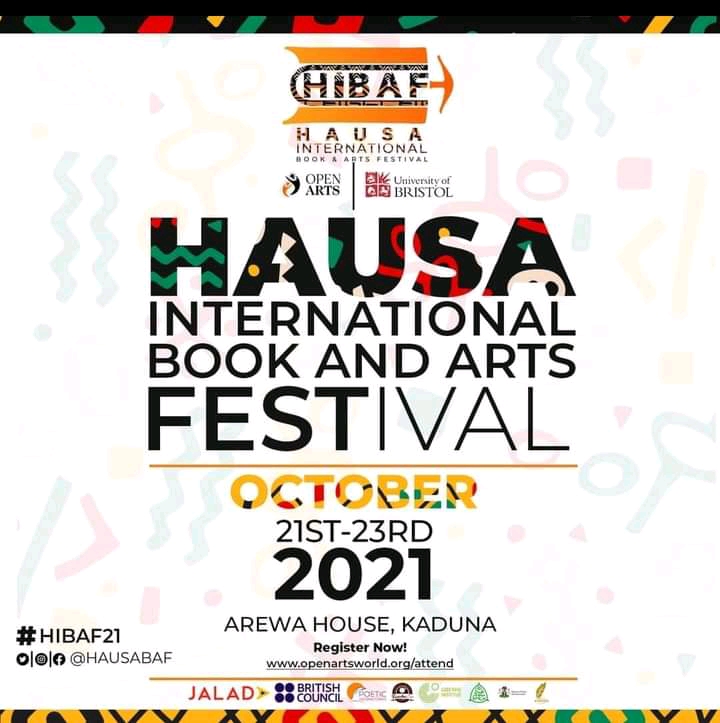
The Hausa International Book and Arts Festival (HIBAF) is an Open Arts project designed purposely for giving voice to Hausa literature, arts and culture. It is through efforts like this that human beings reaffirm their honour as the greatest of all animals.

The maiden edition of the Hausa International Book and Arts Festival (HIBAF) is set to hold in Kaduna State, Nigeria, between October 21 and October 23, 2021. In the curator’s words, Sada Malumfashi: “The conceptualisation of the festival was borne out of a need to explore writing and literature in indigenous languages from Africa, and to open up conversations about language relationships across countries and borders. We at Open Arts have been blessed with the support of the community here in northern Nigeria, cousin festivals as well as researchers, academics and cultural institutions from the UK and Germany to make sure the inaugural festival comes to life.”

Among other exciting panels and book chats lined up for the event, the project also aims at combating fear, socio-cultural and religious intolerance amongst humanity and fosters a sense of unity, tolerance of diversity and subsequent embrace of and respect for each other’s differences in the North and by extension Nigeria.

The program is a three-day festival that focuses on “showcasing the best of contemporary African literature, poetry, music, art, film, and theatre in Hausa to a target audience of thousands of youths across West Africa. This is an important period in West Africa at crossroads of extremism to consider arts in Hausa as focal points to address our problems.”

The program will also feature Hausa Creative Writing Workshop, a free workshop to be facilitated by experts with the aim of teaching young Hausa storytellers rigorous ways to improve their writing skills.

Certainly, the Hausa International Book and Arts Festival is expected to be a promising, educative and informative avenue for the betterment of Hausa in the world of literature.

Re: Cornflakes for Jihad: The Origin of Boko Haram Story

By Barrister Nura Sunusi

For some misguided individuals and those who consume everything online hook, line and sinker, David Hundeyin’s ‘Cornflakes for Jihad: The Origin of Boko Haram Story’, which he and his cohorts call ‘investigation’, would have been left to die a natural death like many before it. However, if allowed unchallenged, lies may be sold as truth, and the world will be blind. And those who know will not allow this. Besides, Hundeyin’s story is packed with journalistic chicanery of epic proportion.

Hundeyin’s sole aim was to push the lies he concocted down the throat of his readers/audiences. This is my concern. It is for this, I believe, such intellectual dishonesty has to be stamped out completely.

One cannot give what they do not have. Before I go far, Hundeyin deserves some quick bath; then let me stripe him naked first.

An Annang Christian ‘journalist’ from Akwa Ibom State in the South-South, Hundeyin is utterly ignorant of the vast northern region and its intentional predicates: background, history, language, culture, religion, etc. At this point, it is instructive to note that Hundeyin is not a lone walker in the use of this pure sophistry. There are some people in our midst toeing this path.

Izala, particularly Alhaji Shahru, Sheikh Yakubu Musa, Isa Pantami and other personalities belonging to the religious body, have been a target of a sustained campaign of calumny for its ability to bestride the earthly and heavenly with such ease. Of particular is a Nigerian ‘historian’, mind the quotation marks, who teaches at an American University.

This confused dude like Hundeyin has been at the forefront of this campaign for some time. Had he been allowed, he would have formed an empire, which modus operandi is to silence and blackmail the most peaceful, 40-year-old registered religious organization in Nigeria. About two years ago, perhaps long before that, the said ‘historian’ raised a finger in this corridor, and some intelligently educated youths called his bluff. He left mentally wounded.

I have learnt that Hundeyin’s hit-and-run piece has struck the ‘historian’, who has been mum all this while like a spent horse, as an energizer.

My perception of this saga is this: since those folks had test-flied this campaign severally and woefully failed, now Hundeyin is hired to try his luck and dead is his attempt on arrival.

That notwithstanding, to set the record straight, Hundeyin‘s piece deserves some response, which I give below, stitching facts and figures. Then let us take it one at a time.

Nomenclature of terrorism

First, the blurry line demarcating what terrorism is and what it is not, who is a terrorist and who is not is, is one of the factors breathing life into liars like David Hundeyin.

Although I intend to restrict this piece to Alhaji Shahru Haruna’s side of the argument, I will touch on some of the issues Hundeyin raised in his article to unravel the intricacies involved.

Hundeyin is overzealously blind in the sense that every passing picture of Islam or a Muslim forms in his mind a mental image of what he calls terrorism or terrorist. No wonder! Nigeria is full of academically certified but ignorant people. We will see this in the subsequent paragraphs.

Nigeria is not an opponent of GSPC

GSPC stands for “Groupe Salafiste pour la Prédication et le Combat” (Salafist Group for Preaching and Combat). According to Wikipedia, GSPC was an armed Islamic group UNTIL 2004!

The group had only one opponent, which was not Nigeria, but Algeria. Therefore, how did Alhaji Shahru Haruna or Sheikh Yakubu Musa become the GSPC’s agents?

Politics of origin

The moment he tried to conjecture up a triangular of Izala, terrorism, which he barely understands, and finance, Hundeyin shot himself in the foot. His is a weak argument full of lacunas, fabricated evidence, and disjointed analogies. Is there anything hatred cannot drive one to do?

From Sheikh Abubakar Gumi to Alhaji Shahru Haruna, Sheikh Yakubu Musa to Isa Aliyu Pantami, the current minister of Communications and digital economy and others, Hundeyin has failed to come up with even a single irrefutable proof linking any of them with terrorism. Instead, his submission heavily relied on hearsay, including social media posts.

First, Izala’s deeply established manifestoes/objectives to non-politically strive and promote the pure teaching of Islam and proselytizing, which is acknowledged even by non-Muslims in the West, is for anyone to see.

Second, Izala’s leading figure, Sheihk Abubakar Gumi, the Grand Khadi of the Northern region of Nigeria between 1962 and 1967, was a champion of democracy. He encouraged Islamic and Western educations; and associated with upright political figures like Aminu Kano, Sa’adu Zungur and Sardauna of Sokoto.

Moreover, Izala is a progressive organization. It has established schools, libraries, hospitals, Islamic centres, and satellite TV stations, and now Assalam Global University in Jigawa is in the pipeline. Unlike its nemesis, its members participate in political activities, and they vote and are voted for into political offices. In addition, they are into academia and civil service.

In contrast, Boko Haram, which is the opposite, is an insurgent group engaged in continued rebellion against the constituted authority. The insurgent group ideology is rooted in a gross misinterpretation of Sunni and Salafi Islam, and it primarily attracts poorly educated and overzealous youths that lack even basic Islamic knowledge.

Where is the link?

Consequently, that in 2011 bombs went up at St. Theresa Catholic Church, Madalla, a fringe of Abuja and Gadaka in Damaturu; and during the trial of one Kabiru Sokoto, a ‘masked’ witness testified that an Islamist group in Algeria provided funding and support worth N40,000,000 ($250,000 at the time) to carry out the attacks, is not enough reason to inculpate either Sheikh Abubakar Gumi, Shahru Haruna, Yakubu Musa or other Izala personalities, is it?

Let’s try this formula to see if it works this way: on October 1, 2010, bombs went off, killing 15 people during Nigeria’s fiftieth anniversary. An ex-MEND leader, Henry Okah and one Nwabueze were convicted of terrorism.

If Kabiru Sokoto or attacks by Boko Haram insurgents were to be linked to Izala and Alhaji Shahru for a simple reason that Izala is an Islamic organization and Shahru is a Muslim and a member, as Hundeyin would have us believe, who sponsored Henry Okah and his accomplice?  Hundeyin, who is also an overzealous Christian and a southerner?

From the inception of Boko Haram to date, Izala, as against other violent religious movements, has never been on the same wavelength with any insurgent group.

Facts speak for themselves, they say. Had Izala clerics been complicit in the activities of the insurgents, Boko Haram leadership would never have called for the heads of Pantami, Sheikh Jaafar Mahmud Adam or Sheikh Muhammad Auwal Adam Albaniy Zaria.

It seems those who planted the piece have not briefed Hundeyin of the fate of the two fiercest critics of Boko Haram in the Izala cycle: Albaniy Zaria and Ja’afar. Boko Haram murdered both in an attempt to silence the persistent voice that had been voicing the irreligiosity of Boko Haram and insurgency of any type.

One does not need to strain himself. Videos showing Izala Ulama in a heated debate with the Boko Haram founder, Muhammad Yusuf, are on YouTube. An example is that of Sheikh Pantami.

Journalist or religious bigot

Nigeria’s media space is saturated with ethnic and religious bigots, and David Hundeyin happens to be one of them.

He quickly cited that ‘the scholar(s) states that Muslims should never accept a non-Muslim as ruler, which can be interpreted as a call for insurrection against a Christian Nigerian President’. However, he could not tell his readers how pastors ascended the pulpit of churches and made similar calls, which can also be interpreted as another call for insurrection against a Muslim Nigerian President as we see today?

Ideology of Finance

Who deceives who? If there is anything Hundeyin succeeded in linking Alhaji Shahru Haruna to is his tie with Izala and his being an owner of legitimate businesses – nothing more.

Citing CBN Governor Godwin Emefiele’s argument that BDC operators sell dollars to some people ‘to go and buy arms and ammunitions to come back to hurt us’ is no clear-cut evidence to implicate Alhaji Haruna.

A call to CBN

It is high time for CBN to furnish the public with the reason for its instruction to banks to block bank accounts of some entities such as Zahraddeen Shahru Haruna’s (Alhaji Shahru Haruna’s son).

I believe that the failure of the apex bank to provide the information is one of the chief reasons behind Hundeyin’s evil pen attempt to link the Zaharaddin’s account blockage to terrorism.

Shahru’s media trial

Shahru Haruna’s media trial began sometime in 2004. And to understand this better, I will refer the reader to a defunct Weekly Trust newspaper front cover story in 2004 titled ‘Detention Without Trial’.

The paper narrated a sympathetic story of how Alhaji Shahru Haruna was arrested and detained by DSS without trial for six consecutive months.

However, the interesting part of the story is how the secret police discharged him unconditionally. Since then, there has been no re-arrest by the DSS or any other relevant security agency. What does that imply?

My conclusive argument is that Hundeyin of Akwa Ibom’s piece is yet another failed smear campaign against Alhaji Shahru Haruna, Sheikh Yakubu Musa, Izala and some of its personalities. It is another mischief that has its sponsors.

Barrister Nura Sunusi writes from Kano. He can be reached via nurasunusi6@gmail.com.
Consequences of political sycophancy

By Adamu Bello Mäi-Bödi

Upon realizing that if youths are liberated, they would have difficulty in milking the country dry and feeding fat on the commonwealth, Nigerian politicians resort to catching sycophants the same way Monkeys are caught in Brazil.

Brazilian hunters put a nut in a bottle and tie the bottle to a tree. The monkey grasps at the nut, but the bottle’s neck is too narrow for the monkey to withdraw its paw along with the nut. You’d think that the monkey would let go of the nut and escape, wouldn’t you? But it never does! The monkey is so greedy that it never releases the nut and always gets captured.

Nigerian politicians wittingly buy off the loyalty of greedy youths and make them their die-hard followers that can go to extra miles to protect their(politicians) interest, simply by giving them some amount of cash and little other things after which all that would follow are empty promises and lies with which the greedy sycophants are caught.

Whenever such sycophants decide to withdraw their blind loyalty and set themselves free, time and again, the greedy part of them reminds them of the juicy or relatively empty promises made to them. This chains them to the sycophancy forever, which means their future is finished.

If you happen to be one of those bootlickers, remember the little amount of money the politicians offer in exchange for your full-time puppet-ship would not take you half a mile on the inevitable journey to the future that awaits you. The danger ahead is; when these self-enforced masters of yours are dead or out of power for some reason, you’re done for good.

As succinctly put by the thriller maestro of the generation, James Hadley Chase, “Greed is a dangerous thing, if you give way to it, sooner or later you will be caught”.

Adamu Bello Mäi-Bödi can be reached via adamubellomaibodi@gmail.com.

TETFund should abolish foreign scholarships

By Abdelghaffar Abdelmalik Amoka

The presence of ETF and later TETFund became more visible after the suspension of the 2009 ASUU strike in October 2009, thanks to the ASUU strike. You enter the campus of some universities, especially the state government-owned universities and it appears as if TETFund is the only funder of the infrastructures in the universities. No wonder Professor Mahmood Yakubu’s NEEDS Assessment committee referred to them as “TETFund universities”.

The intervention from TETFund did not end on infrastructures and other physical projects but also on training. Quite a number of University academic staff obtained their PhD abroad, thanks to the TETFund Academic Staff Training and Development Intervention and ASUU. That ASUU’s achievement has increased the number of quality PhDs across the departments in our universities. About 6 colleagues in my department are beneficiaries of the TETFund PhD grant.

It did not stop at that. TETFund has also established research grants. The TETFund Institutional Based Research (IBR) grant for basic research and the TETFund National Research Fund for developmental research.

When TETFund announced the call for the 2016 National Research Fund (NRF) grant proposal submission, I got it forwarded to me by several people that knew I was passionately looking for research grants to set up my lab since my return from Europe to ABU in September 2015. I was excited with the call for proposals and I prepared my proposal and submitted it with others. It was well coordinated by the university, thanks to the efforts of Prof. Husseina Makun and the Directorate of Academic Planning and Monitoring of my university.

Not long after then, there was a change in the leadership of the agency and I never get to hear anything about that submission to date. My guess was that the usual Nigerian factor may have played a role and you possibly need to know somebody that knows another body that knows someone that can help facilitate it.

The call for the submission of a “concept note” for the 2019 NRF grant after your return did not excite me. I was informed by several people but I ignored it. I was like this is a repeat of what I called the “2016 call for grant proposal scam”. But few days to the expiration of the call, I decided to make a submission, after all the application doesn’t cost anything. It will only cost my time and effort. I was actually not expecting a response like it happened in 2016, but a few weeks later, you “shocked” me as I received an email requesting to submit the full proposal. I did, and a few weeks later I got an invitation to Abuja to defend the proposal. In January 2020, the grant award letter was issued.

That was the first very transparent exercise I have participated in in Nigeria in recent times. No personal contact. All correspondence was through email and you don’t have to wet anybody’s palm. Unbelievable! That exercise gave me a renewed hope that with responsible leadership, we can make every unit work as it should and the sum will make Nigeria work. Sir, you renewed my hope that Nigeria is going to work and we can regain the lost glory in academia.

TETFund is making a lot of impact in public universities even though some universities may not get the true value of the allocated funds due to several reasons including the possible manipulation of the procurement process. TETFund is also doing a lot to build research capacity in our universities and over the last 10 years, the number of quality PhDs has increased. But my worry is that these researchers may end up being more frustrated if they get back without the necessary research facilities and incentives to give back to the system.

The TETFund PhD training scheme is a train-the-trainers program but there seems to be no preparation to utilize the knowledge acquired by these scholars on their return. We seem to be just training without any provision for their return. The scholars were sent for training as researchers but returned to meet little or no improvement on research facilities. So, how do we intend to utilize these well-trained scholars that have returned?

Their research work seems not to be well coordinated, unlike the NRF grants. They are mostly not towards the critical needs of the country. Some of the scholars who have got no idea of what to work on may sometimes end up using our fund to implement the supervisor’s idea. The idea may not be something that is of very importance to our country. Going abroad for quality research in that state-of-the-art laboratory but on research that does not tend towards our national need and without adequate provision for their return will make them more frustrated on their return.

Quite a number of PhDs in our universities, colleges of education, and polytechnics trained over the last 10 years are TETFund Scholars. Thanks to the overseas training scheme. The question then is; What is the strategic plan for the scheme? How long is the scheme meant to last? When is it going to end? What are the exit plans?

A lesson from other countries.

During my PhD, I met a number of Malaysians doing PhD at the University of Southampton. One of those Malaysians was on 3 months research visit to the lab I did my PhD. They were all on a Malaysian government scholarship. They have all returned to their respective universities in Malaysia with well-established laboratories and access to funds for research. Most of the funds for PhD training are in Malaysian universities.

Malaysia now earn foreign exchange from international students, especially Nigeria students. These my colleagues and contemporaries in the UK universities are among the researchers/Lecturers training my Nigerian university colleagues that have gone to Malaysia to study. What is the difference between us and them? They return to a functional lab but we returned to an empty space and we are struggling to build a lab. Our situations are different because their training and return were well planned out. What are the plans for our trained colleagues?

It is possibly time to re-channel the funds for overseas scholarships to funded PhDs in our universities.

South Africa has National Research Foundation (NRF) that gives grants for research PhD training in South African universities. NRF is so well established that they are collaborating with DAAD in Germany for a funded PhD in South Africa. There is also the TWAS-NRF funded PhD but in South African university. We can take a lesson from that

The Research Council of Norway usually contributes 50% of research project funds while the other 50% is from industrial partners, but the condition on the government 50% is to train a PhD or postdoc in Norwegian university. Norwegian universities are tuition-free like Nigerian universities. The grant covers living costs, travel, conference attendance anywhere in the world, etc.

There is the UK Research and Innovation (UKRI), Engineering and Physical Sciences Research Council (EPSRC), that provides UK universities with grants – awarded through a competitive process – to cover the fees and living costs of postgraduate students. Each place a university offers as a result of this funding is called a studentship. Application for the studentship is done through the university you want to study.

These countries would not have being able to comfortably execute research and training without capacity building. We surely need capacity building scheme and TETFund and PTDF have done great in that respect. But the scheme should have a well-defined timeline. At the expiration of the timeline, the overseas scholarship should be converted to full national scholarships for the trained scholars to train PhDs in funded laboratories in our universities. Forex is already becoming a big challenge. The funds are then domicile here rather than shipping the fund out.

TETFund may need to produce a database of their scholars in the various tertiary institutions in Nigeria and even the ones that have refused to return to the country. There should also be a database for successfully completed TETFund NRF projects and their Principal Investigators. The TETFund Academic staff training and development intervention can then be converted to Nigeria’s university-based training. Scholars are only sent abroad for subjects that we lack expertise in Nigeria.

So what do we do?

We can adopt the German model. To get a DAAD-funded PhD training in Germany, you must first get a supervisor in a German university that is willing to work with you. With the consent of the supervisor, you can then apply and the application is endorsed by the supervisor.

In our case, the prospective TETFund PhD scholar will first get a supervisor from TETFund recognized researchers/Professors. Application is then made through the university and endorsed by the prospective supervisor. If the scholarship grant is like 20 million naira, for example, up to 10 million naira can be mandated for laboratory equipment, the rest will be used for living expenses for the scholar, International conference participation, purchase of consumables, etc.

You can imagine the value Dr. Mansurah Abdulazeez will add to the existing facilities for Cancer research in their Biotech lab in BUK if they are awarded the 20 million naira by TETFund to train 1 TETFund scholar each year for the next 10 years. That will be another investment of about 200 million naira in our university that would have being taking out.

Just a little effort and we got the Materials Physics Research lab. Imagine getting 10 TETfund scholars to train over the next 10 years in high voltage materials engineering and 50% (about 100 million naira) of the PhD grant is approved for research facilities. Unlike the PhD done abroad, the facilities procured during the PhD will remain in the Nigerian university for others to use after the PhD. Just imagine how the lab will be in the next few years.

I was at the Biotech lab at IAR, ABU Zaria last year, I saw the IAEA-funded research facilities, and I was like wow! Just imagine the steady growth of the lab, research output, and visibility if Prof Husseina Makun for example, gets the funded PhD scholars to work with instead of taking the money to universities abroad. We have quite a number of serious-minded researchers among senior colleagues across our university and a large number of bright and exposed early career researchers.

We have trained enough PhDs abroad over the last 15 years through PTDF, TETFund, NITDA, etc that are back and capable. Some of them are not doing badly even with all the challenges as they have been able to publish quality papers in indexed journals. I want to believe that we can give quality training to PhD scholars in Nigeria.

We have several challenges in Nigeria that the universities can develop solutions for. But personally funded PhDs cannot give that quality PhD research to achieve that. I advertised 2 research topics on my Facebook page recently and I got responses from prospective research students. But the question they were asking was; is it funded? Some of the people that responded are students that received their MSc abroad.

A timeline should be rolled out on when to end the overseas scholarships and focus on using the fund meant for that to further develop the research capacity of our universities to make them attractive to foreign students. It is time to keep the money at home to develop our research and development capacity and use PhD programs to find solutions to our numerous problems.

Abdelghaffar Abdelmalik Amoka

The Southeast is no less a burden

Ahmadu Shehu, PhD.

As we continue the inconvenient conversation on Biafra and what it portends for the Southeast and our country, I find the need to clarify some insinuations raised in the troupes of comments and rejoinders that trailed my previous articles. But, before proceeding, I must commend many southeasterners for their dispassionate contributions and insightful perspectives.

However, although critical, some of the comments have missed salient truths that need further explanation. This will help our generation avoid past mistakes committed mostly by overzealous politicians, leading to avoidable wars and near-disintegration of our dear country.

There is this illusion that conflates southern Nigeria, particularly the Niger Delta, with the Southeast or “Biafra”. The truth is that the people of the Niger Delta region (let alone the southwest) do not align with the Southeast in politics and administration. For the information of our youth, the first secessionist war in Nigeria was fought between Niger Delta activists under the leadership of Isaac Adaka Boro and the Nigerian forces led by Chumeka Ojukwu, who later became a secessionist himself.

The three phases of Ojukwu’s career: from a defender of Nigeria’s unity at the battlefield to a rebel against his own country and later a senator and presidential candidate for the very country he fought to disintegrate should tell discerning minds that there are many faces to the idea of Biafra, none of which is the common interest of the Igbo people.

Please permit me to be blunter here. As far as our contemporary political and economic realities are concerned, the Southeast is only hiding behind the shadows of other regions in the south to claim prosperity. In other words, when our Igbo brothers call the northerners parasites, lazy or Abuja-dependent, they are actually borrowing the glory of the Niger Delta, and probably Lagos State, to abuse others. Because in reality, the contributions of the Southeast in the so-called feeding the nation is not as significant as they may like us to believe.

If you doubt this, let’s ask a few questions on the most critical sectors of the Nigerian economy. Since 90% of Nigeria’s foreign income depends on crude oil, what is the contribution of the Southeast in the two million barrels Nigeria makes per day? Very little is the answer. For, out of the nine oil-bearing states in Nigeria, Imo and Abia are the only southeastern states, accounting for an abysmal 1.6% and 0.68% of the total crude oil produced in the country. This is very negligible, as far as the numbers in this sector are concerned.

The Nigerian GDP, which is the bedrock of the economy and the source of non-oil revenue, primarily comes from agriculture. What is the contribution of the Southeast to agricultural production? The numbers are even more insignificant here. It is unfortunate that except for the oil-spilt Ogoni land, the Southeast is Nigeria’s least agriculturally viable region. Most states and local councils in the Southeast are not food sufficient.

By the nature of its geography, the Southeast sits on one of the country’s most infertile, erosion-prone lands. It is also the smallest and most overpopulated region leading to congestion and resource scarcity. It is no coincidence, therefore, that no one buys farm produce from there. Conversely, we see tons of raw food and livestock being transported daily to feed the region.

Some people may argue that the economic strength of the Southeast lies in its profoundly robust revenue base generated from industries and MSEs. They further postulate that the region contributes the most to the Nigerian revenue basket, albeit without evidence. Well, all the regions of the federation contribute their fair share to the federation tax revenue. However, the evidence available proves that the Southeast is neither the highest contributor nor is it self-reliant.

According to the National Bureau of Statistics, Southwest and South-South have the highest IGR per capita, and the Southeast is at par with North-Central, followed by Northwest and Northeast. None of the five southeastern states appears close to the top ten high revenue-generating states. Like any other northern state, none of the southeastern states – despite the 12% derivation funds – is wealthy enough to pay salaries without the federation account. Thus, one may ask: what kind of entrepreneurship and economic prosperity we are talking about here?

The fallacy behind the overestimated economic contribution of the Southeast is just one of the many problems. For instance, more than once, our country’s unity and cohesion are put on dangerous edges, thanks to the secessionist tendencies of the Southeast. Instead of forging ahead and pursuing alliances and friendships countrywide, the region and some of its people have continued on the path of division and segregation. The hatred propagated against anything and anyone perceived to be anti-Biafra has been phenomenal.

Furthermore, the Southeast is the main culprit in destroying Nigeria’s image and dignity in the international community. The Nigerian passport, which commanded respect a few decades ago, has become a suspect document worldwide. This unfortunate degradation of national identity and pride is the handwork of Nigerian drug pushers, physical and internet scammers, illegal migrants and human traffickers, most of whom are known to be southeasterners.

The same people are dealers and distributors of fake, contraband medications and drugs in all the nooks and crannies of this country, particularly in the North. This has always been an open secret and has been made even more vividly evident by the recent successes of the Nigerian Drug Law Enforcement Agency (NDLEA). The dangers these portend to our national development and global recognition is unquantifiable.

Therefore, if the above is true, claiming that the North is a mere burden on the Nigerian federation is absurd. For some, this might be based on ignorance, while for others, it is a deliberate attempt to malign and stereotype the region for reasons best known to the perpetrators of these dangerous narratives. But, whatever the motive is, we must recognize that all the federating units cause shared burdens to our national growth and development.

Since the North’s limitations and other regions have been overstretched in our national discourse, I believe it is equally important to remind our brothers in the Southeast that they are no less a burden than the other regions. As Nigerians, we should prepare to share both the positive and negative consequences of the actions and inactions of our fellow citizens. But, this is only possible when all parties acknowledge their limitations and are ready to embrace one another. Nigerians are siblings of a single family that are more alike than different. The earlier we accept this truth, the better.

Dr Ahmadu Shehu is a nomad cum herdsman, an Assistant Professor at the American University of Nigeria, Yola, and is passionate about the Nigerian project.