Opinion

My journey into student unionism

By Mubarak Shafiu

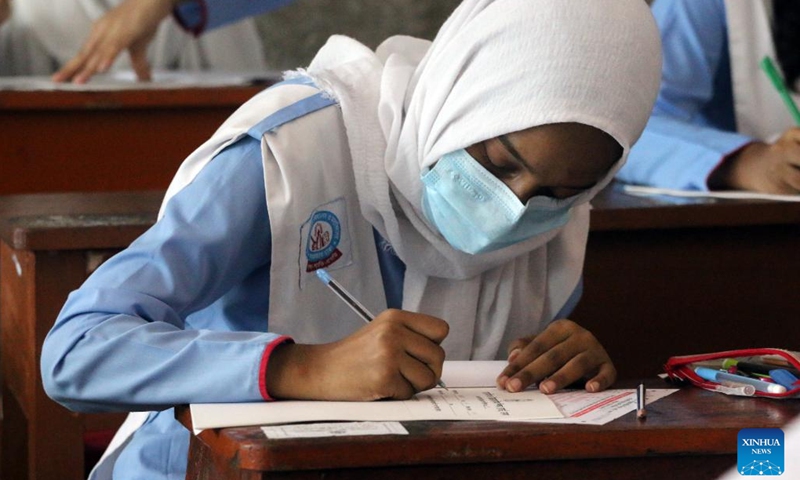
I joined the train of the Students’ Union right from day one at the university. My painstaking journey to the world of student activism has also fed me with sour, bitter and sweet experiences. Often, I feel nostalgic about the onerous struggles we underwent and the myriad of obstacles we encountered.

Being a passionate advocate for good governance, leadership and democracy, I was overwhelmingly compelled by nature to partake in the diversity-politics. My participation is solely to add my own quota and refine the university’s political atmosphere.

It is indeed sad seeing incompetent, incapable, self-centred and unpatriotic students take the leadership mantle and run the affairs of this vast student body.

Though my fundamental assignment is to study, acquire knowledge, experience, and skills, more importantly, earn my degree with colourful grades. Yet, I developed a burning desire to involve in the school’s extracurricular activities, more precisely- politics, intending to make sustainable reformation.

As a freshman, my initial preoccupation was to study and adequately understand my new environment. Being well-informed would assist me tremendously in making better decisions as events unfold.

Along the process, on many occasions, my parents called me to order and cautioned me to be steadfastly focused on my studies and not mingle with bad company. These cautionary words always crossed my mind, and I decided to keep myself away from anything that could interfere with my study.

Since then, I shunned anything apart from my study as the drumbeat of my parents’ cautionary remarks sounded louder and louder into my eardrums. This made my ambition of becoming a student leader a pipe dream, for naturally, I disliked betraying the parental confidence reposed in me.

As an obedient child, who always wanted to please his parents, I had never turned down every admonition. I just dispelled and dismissed anything that had nothing to do with my study. I attended classes, dug into research, engaged in group discussions and made the library my best friend. 

As the exam approached, I became consistent, determined and accelerated my efforts towards achieving my goal. Expectedly. I passed out with flying colours in my first-semester examination, as I made an “A” in the overall result.

Out of sheer joy, I presented the result to my parents to bless it, as they had been nursing the dream of seeing their son become a champion. 

After a short break from the first-semester examination, we all returned to our dear University, and academic and social activities began fully.

Students from various departments and faculties started expressing their interests in different positions, especially in the “Students’  Union Government” (SUG) and other associations like departmental, faculty and state associations.

Being sceptical and scared of my parent’s stance on not getting involved in school politics, I let my intention be latent and inexpressible. I was only debating whether to seek my dear parents’ approval.

Seeing how time flew, I just took the bull by the horn, shook off my phobia and sought permission to contest for a position that would not be infectious to my study.

 Surprisingly, my parents gave me the go-ahead to participate on the condition that I should not interfere with my academic performance. Having heard of this had gladdened my heart and brightened my spirit. 

Long story short, I vied for a senator representing my department in the “Students’ Representative Assembly (S.R.A), and I effortlessly made it. This assembly shared some things in common with the “National Assembly regarding greatness, corruption, unaccountability and many more.

Millions of funds were annually poured into the students’ union government account.

However, these funds were being mismanaged, misappropriated and stolen in collaboration with representatives of various departments.

The brainlessness and wickedness of the so-called student leaders tremendously moved me. This compelled me to resign and distance myself from the system. I recently retired from S.U.G to my state association, “The National Association of Kano State Students”. But you guess what? The Story was the same or even worse than that of S.U.G.

I contested for the presidential position under the bona fide umbrella of the association, and I won the election by a wider margin. To my dismay, under the watchful eyes of the students, some unscrupulous folks rubbed, snatched and ran with my mandate to one’s advantage.

Sadly, these corrupt individuals are the so-called leaders of tomorrow. Imagine an institution like a university where learning, character and discipline are inculcated. The university management should force such student-leaders to face punishment to deter others.

If we have not changed ourselves into better persons, we will continue to produce bad leaders in the country. Let’s desist from insulting, cursing, and condemning our leaders at all levels.

“Change begins with me”…….

Mubarak Shafiu wrote via mubarakshafiu596@gmail.com.

Combating thuggery in Kano: What is your contribution?

Najeeb Ibrahim

Peace is not just a state of mind which is personal but also that which could be an inter-personal, inter-communal, inter-regional, and global phenomenon.

Kano State is free from bandits and kidnappers in contrast to other northern states like Zamfara, Sokoto, Katsina, and Kaduna. Thus, the state becomes an asylum for many people from different parts of Nigeria. A single issue that bedevils the tranquillity of the state is thuggery (dabanci).

Thuggery has been a threat to the people of Kano for an extended period. It costs many people’s lives and prompts the distraction of many properties. Recently, the abominable act has arisen, forcing people indoors before dusk.

In parts of Gwale local government, two warring parties from Hausawa quarters and their opponents in Kofar Naisa disrupt our peace. They have been fighting each other for a long time. Very recently, Hausawa thugs ventured into the community of Kofar Naisa around 1 am to take revenge for their brother, who was wounded by one of Naisa’s ruffians.

Police tried to quell the fight. They fired several tear gases. One of the tear gas canisters dropped fell in our neighbourhood. The family of the house, including children and a two-month-old baby, wept; the baby even fainted at night. Many car wind glasses were broken, several kiosks were burgled, and the thugs stole many things.

The Kano State police commissioner has been working hard to ensure that thugs and thuggery have no hidden place in the state. In the last two weeks, the commissioner announced some names of thugs’ leaders to surrender themselves. Otherwise, he resolved to fish them out by himself. We are deeply in debt to the enormous effort of the commissioner.

Civilians also have roles to play to surmount the situation in the state:

First, if anyone is known to be in the dirty business of thuggery, offer a piece of useful advice to him. Cite him some references with those who have long been in the messy business. Ask him whether they achieve anything worthwhile in life or not. Tell him soothingly that most end their lives in misery and sycophancy.

Second, if you have the means, help him go back to school. If it is a financial problem that refrains him from furthering his education and he decides to enrol into the school of thuggery, but apart from you, you are not financially stable to assist him, tell someone whom you know can hepl him. It says, “Knowledge is light, and it guides us to the right path”.

Also, avoid dissociating from him, and advise your friends not to do so. Many thugs decry dissociation from their friends; they neither talk to them nor invite them to events like wedding ceremonies and so on.

A similar case happened in Makasa quarters. A retired thug got frustrated by his friends. They dispersed and left him alone if he joined them in their setting place (majalisa). Nobody showed him an appreciation for his withdrawal from his former self.  He became incommunicado in his society.  In the end, anxiety and depression led him to murder himself.

Second, to last, form a youth organisation in your locality. Assemble at least once in a fortnight. Discuss your problems, and offer solutions and pieces of advice to yourselves. Let everyone feels at home with one another.

And finally, report any thugs’ meeting point you know to the police station near you. Do not hesitate. Because as long as thuggery persists in our society, our lives and properties will never be safe.

May Allah guide us to the right path and guide those who have already gone astray amin.

Najeeb Ibrahim wrote from Kano. He can be reached via inajeeb08@gmal.com.

Embracing a hybrid mode of working in Nigeria amidst fuel subsidy removal

By Salisu Uba, PhD FCIPS

Nigeria has witnessed yet another transition in government after eight years of the previous administration. In his inaugural address, the newly sworn-in President, Bola Ahmed Tinubu, announced a ground-breaking policy decision to alleviate strain on the government’s finances. He declared the end of the long-standing subsidy on petroleum products, proclaiming, “Fuel subsidy is gone.” While addressing economic challenges, this decision will increase petrol prices and potentially impact other price points. The removal of the subsidy marks a crucial shift. It paves the way for the integration of hybrid and remote working, which holds the potential to positively impact Nigeria’s workforce, productivity, and work-life balance, among other aspects.

Removing the subsidy and transportation and commuting challenges can transform the work landscape in several significant ways. These changes can create opportunities for increased flexibility, renewable energy investment, on-demand workspaces, startups with affordable internet connectivity solutions, and the decentralisation of government ministries and departments away from the centralised Abuja city.

Flexible working, hybrid working, and remote working have emerged as popular modern work arrangements in recent years. Flexible working allows employees to exert some degree of control over their working hours, location, and work structure. It provides the flexibility needed to accommodate individual preferences and needs. Hybrid working combines elements of both office-based work and remote work, enabling employees to split their time between the physical office and remote locations. On the other hand, remote working involves working outside the traditional office environment, often from home or any other external location.

The genesis of these work arrangements can be attributed to various factors. Technological advancements, particularly the widespread availability of high-speed internet, have revolutionised how employees stay connected and collaborate remotely. This technological progress has facilitated the seamless integration of remote work into everyday business operations. The growing demand for work-life balance, increased autonomy, and the pursuit of enhanced productivity and job satisfaction have contributed to the rise of flexible, hybrid, and remote working.

The fundamental distinction between these modern work arrangements and traditional working lies in the level of flexibility and location independence they provide. Traditional working typically adheres to fixed working hours and mandates physical presence in the office for the majority of the workweek. In contrast, flexible, hybrid, and remote working empowers employees with the freedom to choose when and where they work, enabling them to manage both personal and professional responsibilities effectively. 

Since the onset of COVID-19, numerous companies and governments worldwide have embraced hybrid working. With the rising cost of petrol due to the subsidy removal, companies may find increased incentives to adopt more flexible work arrangements. Hybrid and remote working options enable employees to reduce their reliance on commuting, resulting in cost savings and a superior work-life balance. This shift towards flexible work arrangements can potentially increase employee productivity and job satisfaction.

The lack of infrastructure to support remote and hybrid working may raise concerns. However, this challenge should foster innovative thinking and serve as a catalyst for increased investment in renewable energy sources. Nigeria, endowed with abundant renewable energy potential, particularly solar and wind, can leverage this opportunity to diversify its energy mix. By promoting renewable energy infrastructure and technologies, Nigeria can create new job opportunities, reduce dependency on imported fossil fuels, and contribute to global sustainability efforts.

The infrastructure challenges associated with commuting and transportation to offices necessitate the growth of on-demand workspace providers and startups offering innovative solutions. These providers can establish affordable and convenient coworking spaces and shared offices in strategically decentralised locations, catering to the needs of professionals and government workers seeking alternatives to traditional office setups. This trend can encourage entrepreneurship, collaboration, and the development of vibrant startup ecosystems across Nigeria.

Access to reliable and affordable internet connectivity becomes crucial for the changing work landscape. The government and private sector should prioritise investments in broadband infrastructure to ensure widespread access to high-speed internet in urban and rural areas. Affordable internet connectivity can empower remote workers, entrepreneurs, and startups to thrive, promoting digital inclusion and fostering economic growth.

To streamline government operations and mitigate transportation challenges, decentralisation of offices is necessary. Removing the subsidy can serve as a catalyst for decentralising government ministries and departments away from Abuja City. This effort can involve establishing regional offices and administrative centres in different parts of the country, leading to increased accessibility to government services, better coordination with local communities, and the equitable distribution of resources and opportunities.

The future of work in Nigeria presents a ripe opportunity for shaping and thinking differently. The concept of hybrid and remote working has gained significant traction, and with the removal of the subsidy, the traditional work landscape should undergo a paradigm shift. Organisations must reconsider their operational strategies, leading to the rise of hybrid and remote working models. This transformative shift can potentially reshape the Nigerian work culture and enhance overall productivity.

Hybrid and remote working offer numerous benefits to Nigerian employees, such as eliminating the need for daily commuting, saving valuable time, and reducing the stress associated with traffic congestion. Additionally, working from home provides a more relaxed environment, allowing employees to customise their workspace and tailor it to their specific needs. This flexibility enhances work-life balance, fosters a sense of autonomy, and can even improve job satisfaction.

Contrary to conventional beliefs, hybrid and remote working can significantly boost productivity. Employees working remotely often experience fewer interruptions, resulting in increased focus and efficiency. Furthermore, the absence of a rigid office environment allows individuals to structure their day according to their natural productivity cycles, leading to better time management and enhanced output.

Forward-thinking Nigerian employers should embrace hybrid and remote working to remain competitive and attract top talent. By offering flexible work arrangements, companies can tap into a wider pool of candidates from different geographic regions. This allows for diversity in skillsets, perspectives, and experiences, ultimately fostering innovation and driving business growth.

While hybrid and remote working present numerous advantages, they also come with unique challenges that must be addressed. Reliable internet connectivity is crucial for effective remote work, and the government should invest in infrastructure development to ensure widespread access to high-speed internet across the country. Employers must also establish clear communication channels and implement robust remote work policies to maintain collaboration and cohesion among team members.

The removal of the subsidy and the adoption of hybrid and remote working have the potential to stimulate Nigeria’s economy. By reducing transportation costs, employees can allocate their savings towards other essential expenditures, thereby increasing consumer spending. This shift can open doors to new employment opportunities and increase workforce participation, benefiting both individuals and the economy as a whole.

The integration of hybrid and remote working into Nigeria’s workforce is an exciting prospect for the future. As technology continues to advance and businesses adapt, the concept of traditional office-based work may become less dominant. The government, private sector, and individuals must collaborate to create a supportive ecosystem that fosters innovation, provides training in remote work skills, and ensures equitable access to opportunities.

In conclusion, the removal of the subsidy in Nigeria must catalyse the adoption of hybrid and remote working, which offers numerous benefits for employees, employers, and the economy. By embracing this new working model, Nigeria can unlock the potential for enhanced productivity, improved work-life balance, and increased economic growth. Stakeholders must work together to address challenges and create an enabling environment that promotes the successful integration of hybrid and remote working into the fabric of Nigerian society.

Dr Salisu Uba, PhD FCIPS, writes from the United Kingdom.

Contact information LinkedIn https://www.linkedin.com/in/salisuuba/

Davido, cultural expression and respect: Addressing disrespectful acts in music and comedy

By Muhammad Ubale Kiru

I am glad it happened. I am talking about the controversy around a video song of people dancing in front of a mosque on their praying mats soon after they supposedly finish their prayers. And, Davido shared the offensive video on his timeline on Twitter.

Some individuals mindlessly follow these singers, imitating their style of dressing, adopting their haircuts, imitating their mannerisms, and even trying to talk and walk like them. This has been an issue we have repeatedly addressed.

These musicians often lack respect for your culture and faith; their apparent affection towards their fans is often just a façade. Despite the video causing an uproar on the internet, Davido has refused to take it down, showing how far some of these artists are willing to go to offend others.

Mocking Islam in the manner Davido did is the last thing he should have done. As I have always said, there seems to be a tendency to test the limits of our tolerance. If he faces no consequences this time, he may repeat such actions in the future, and others might follow suit.

I must point out that our Yoruba brothers are not doing justice to Islam either. Many Yoruba comedians also indulge in mocking Islam in similar ways. One example is the well-known comedian Aisha Ibrahim, who partakes in blasphemous shows for entertainment. Regrettably, her Yoruba elders are doing nothing about it. There must be a clear distinction between cultural expression and religious beliefs.

On the other hand, our Christian counterparts must understand that not everything falls under the category of freedom of speech, and not all forms of expression are acceptable. We are often accused of religious intolerance, but how can we be expected to tolerate disrespect towards our faith?

For instance, if a film producer were to create a movie disrespectfully portraying Jesus, such as Jesus being depicted as gay or as a masquerade, that may be a concern for the Christian community, as it may not show proper respect for Jesus (peace be upon him). In Islam, we take such matters very seriously, as our faith prohibits the mockery of other religions.

Let us all strive to stay within the limits of decency and respect. Honouring and respecting other people’s faiths and cultures is crucial, even as we express our own beliefs.

Muhammad Ubale Kiru is a tech enthusiast, social activist and freelancer. He can be reached via muhdujkiru@gmail.com.

Married or marred?

By Abubakar Aliyu

I discussed with a friend about the woman that stabbed her husband to death, and this part of her opinion makes me ponder deeply about our society; “Living with the identity, “the woman that stabbed her husband” when she was just a woman who did not want to be in the marriage to start with.”

I can never trust the sanity of a man who forces himself on a woman that made it clear in the first place that she does not want to be with him. I think only delusional and toxic men—purported alpha men—will find it normal to subdue a woman into marriage despite being vivid that she is not into it.

And you wonder why the same woman you forced into a marriage lets loose of her survival instinct, ignoring all rational and objective views, therefore, prepared to perpetrate unbelievable atrocities to “escape”. At this juncture, nobody cares to come to her aid until what could have been averted—by peacefully ending the marriage—has happened, a society that incited it will be pointing fingers at her.

I understand that no amount of pressure can justify the action of a woman who stabbed her husband to death. But the fundamental driving forces of this preventable menace largely boil down to societal pressure. Society coerces women to accept that being in a marriage—no matter how abusive and toxic it gets—is the best thing that could ever happen to her as a woman.

Islamically, marriage affords a man to marry as many women as he is allowed—not beyond four. To a woman, marriage is a world she is allowed to live in for the rest of her life with one man only. So imagine living the rest of your life with someone you do not love or whom you once loved but turned out to be toxic and abusive! To have a simulation of a woman living in a toxic or forced marriage, picture yourself stuck in a pit latrine for the rest of your life.

Marriage is supposed to be a willing union of mutual love, tolerance, and respect between a man and a woman. Whenever any party insists on separating, it suggests that some or all of these three ingredients are short-changed beyond repair. That is why when couples are in crisis, one thing society needs to do is hear the concerns of both parties and intervene with no intention to subdue anyone to the detriment of the other.

Even when they do not reciprocate, chivalry toward women is a virtue of a gentleman. But it is good you know when a woman runs out of love for you and makes it clear that she wants to leave. Acknowledge and respect her feelings and yourself and let her go—unless you are not a gentleman. Humans fall in and out of love for several reasons, and it is normal because many of these reasons do not necessarily have to do with you in the first place—it is not your fault.

As a woman entangled in a forced or toxic marriage, know that you are faced with two evils—resorting to violence which you will live to regret, or leaving the marriage against all odds. Always choose the lesser evil, which is to, by any means, end the marriage. It is always better they describe you as a woman who refused to stay married than as a murderer.

To put it briefly, as long as the willingness to form a marriage union is not mutual, or the couple does not see any reason to stay in the marriage, the society—this includes parents, guardians, and religious and traditional leaders—has to respect their decision and let them go their separate way without trying to judge or bully any one of them into staying for the sake of their children. It is easier for children to live with the trauma of a broken home than with the unsettling fact that their mother killed their father.

Dear gentlemen and others (self-acclaimed alpha men), ask yourselves, do you want to get married or marred? A word is enough for the wise!

Abubakar Aliyu wrote via abubakaraliyu599@gmail.com.

Kano State Foreign Scholarships: Review and Recommendations

By Mahmud Aminu Dambazau

One of the trending topics in the past weeks has been the increase in registration fees of students by Bayero University, Kano. Before that, the University of Maiduguri, Federal University Dutse, University of Uyo and several others had increased theirs, and of course, it was anticipated following the revelation from the federal government that it could no longer fund universities.

I am glad the state universities in Kano have not toed that path yet, as several state universities have followed suit or tried to. Engr Rabi’u Kwankwaso’s administration has, among its biggest achievements, sponsored thousands of students abroad and within the country for undergraduate and postgraduate studies. While such numbers were unprecedented and unmatched by any other state administration, there is a need to reflect, assess the previous intervention, and possibly look for alternative ways to achieve the same result without necessarily taking the same route.

Many students had dropped out of tertiary institutions even when they had a passion for the study and were lucky to pass all stages of admission simply because they could not afford the then registration fees. A day hardly passes during registrations by tertiary institutions without students begging for public support to pay their fees on radio programs in the state. Now that most of these institutions have increased their fees which are in most cases more than 100%, we are likely to have an influx of dropouts across the state. With few job opportunities and frustrations of a crumbled dream, such could threaten a volatile security situation. More students will benefit from a home-based scholarship, even if partly, than a foreign one.

Between 2011 to 2015, when Kwankwaso sent students abroad, a dollar was exchanged for less than ₦200. With the dollar now fluctuating around ₦800. It means what would be spent for a single student now would be more than what was paid for three students then; if they are to be sent to the same institutions, fees will remain unchanged. Is Kano generating at least three times what was developed during Senator Kwankwaso’s administration, even if other factors were to be constant?

I have friends that had graduated years back from private universities within the country who were also sponsored by the then administration but are unable to serve their country (NYSC) or secure employment with the government because the schools have not issued their original results to them due to inability of the successive administration to complete their payments. A relative of mine could only graduate from India because her father paid her outstanding fees.

I have heard different appeals from students sent to different countries but later abandoned after Kwankwaso’s tenure. Wouldn’t it be better to investigate and ensure all those previously sponsored thoroughly have successfully graduated and issued their original results and then devise a sustainable plan for similar future interventions even if it is to be continued?

The Kwankwaso administration established more than 20 different institutes, none of which are currently functioning. I am glad; HE Abba Kabir Yusuf had, among his first acts in government, visited the Reformatory Institute, Kiru and given directives for its revival, among others. To borrow the title of Prof. Isa Ali Pantami’s recent book, Skills Rather than Just Degrees, re-establishing these institutions will allow even those who have already acquired degrees to further polish them with relevant skills. Reviving them will certainly gulf millions if not billions. All other stages of education at the state are currently requiring urgent attention.

Recent pictures from the once glorious Science and Technical Schools Board schools are disturbing. Bringing back these institutes, Technical Schools; Schools for Arabic Studies; Adult and Nomadic schools, without doubt, are better avenues to invest rather than foreign scholarships.

Again, as an alternative to foreign scholarships, why not invest the money in needed infrastructures in our universities, get them the latest equipment and employ on contract foreign scholars while giving them specific targets to train a certain number of masters and PhD students? With that, a considerably greater number of students would benefit, meaning more research output, recognition, and higher ranking of the state universities and might even attract foreign students or grants.

Lastly and more importantly, there is a saying, thus, “Teach a man to fish rather than give him a fish”. Some months back, just before the elections, a friend of mine who graduated with a first-class degree from Bayero University, Kano, and a distinction during his masters at a university in India sponsored by the Kwankwasiyya Foundation appealed to his followers on Twitter to vote for the NNPP, at least so he and of course, others could further their studies once more, abroad. For him, it would be a PhD. There are currently multiple scholarship opportunities, such as the PTDF, especially for students with excellent results. There are even more opportunities from several universities, including some of the best universities in the world. In almost every instance, those who get such opportunities from Nigeria are usually from the southern part of the country, who are more informed and enlightened in aspects like this.

An association, Arewa Youth Mentorship Forum, comprising mainly academics that secured foreign scholarships, is mentoring the younger ones from the North. Luckily, many succeeded in securing scholarships for both undergraduate and postgraduate levels. I came across a post on their Telegram group earlier this week where they provided a list of universities in the US that offer scholarships to even second-class lower and third-class graduates. If second-class and third-class graduates could get foreign scholarships, why should scarce resources be expended on sending those who could easily get such scholarships to institutions that even the government could probably not afford to send them?

If the Kano state government can utilise these opportunities and provide an avenue for these graduates to be mentored, trained and guided on securing foreign scholarships, more students would benefit. In contrast, the government can invest the scholarship money in other areas requiring more urgent attention.

Mahmud Aminu Dambazau can be contacted via madambazau@gmail.com.

Dear Sen. Rufai Hanga: The choice is yours

Dear Sir,

As a concerned citizen from your senatorial district, I address you today with the utmost respect. You hold the unique distinction of being the first to represent the Kano senatorial district for a second term. However, it cannot be overlooked that your previous representation of the region fell short of expectations.

Despite the shortcomings, the good people of this region have rallied behind you. They have chosen to forgive your past mistakes and have granted you another chance to serve them. This presents you with a remarkable opportunity to accomplish two significant goals simultaneously.

It is imperative to reiterate that the people of this region will reward you based on your achievements. Two former governors have represented Kano senatorial district in the past. It is home to great political revolutionaries like Malam Aminu Kano and renowned figures in the world of business and economics, such as Aminu Dantata, Aliko Dangote, Abdul Samad Isyaku Rabiu, and countless other eminent technocrats. Representing this region is an arduous task that demands dedication and competence.

By providing effective representation, you can achieve the dual purpose of enhancing your political influence and better serving the people’s interests. It is crucial to recognise that your political success cannot solely rely on your godfather’s support; your achievements will serve as the yardstick by which your quality will be measured in the next election.


Kano Central belongs to all of us; now, the choice lies in your hands.


Yours sincerely,

Kamal Alkasim

Kano, Nigeria

Email: kamalalkasim17@gmail.com

Nigerian economy and the Washington package

By Mohammad Qaddam Sidq Isa (Daddy)

Now that Nigeria has finally embarked on the total implementation of the Washington Consensus package of neoliberal economic policies, what becomes of the country’s economy, in the long run, remains to be seen. 

As a product of consensus among the Washington-based World Bank, the International Monetary Fund (IMF) and the United States Department of the Treasury, the package was purportedly designed to guide developing countries bedevilled by protracted economic crises to recovery and achieve sustainable economic development. 

Also, as a capitalist template with inherent and unmistakable lopsidedness in favour of the rich and those with access to public resources, the package encourages governments to literally but gradually wash their hands of the critical economic sectors in favour of profit-oriented local and foreign investors.

Under pressure from neoliberal international financial institutions, successive Nigerian governments have gone to various extents in selective and partial implementation of the package, triggering rounds of controversy. 

However, now with the country going fully and irreversibly capitalist, there is no more time to waste in criticising capitalism and romanticising some obsolete socialist and populist ideas that are no longer realistic. After all, the reform policies can still work out if the federal government pursues requisite measures, which include, among other things, total transparency in governance, governance cost-cutting and prioritisation of the strategic sectors of the economy that have a direct bearing on people’s lives. 

In other words, for the reform to be effective, governance at all levels must be too transparent to accommodate any act of corruption; and anti-corruption measures, including appropriate punishments, must be in force and deterrent enough to deter any would-be perpetrator. 

Likewise, appropriate governance cost-cutting measures must be implemented judiciously to save resources without prejudice to productivity and efficacy.   

Equally, public spending must strictly follow the public’s priorities that entail appropriate investments in strategic sectors with clear short, medium and long-term goals measured not by mere figures but by their real effect on people’s living conditions. 

With these and other requisite measures in place, the investment atmosphere in the country will be transparent and competitive enough to attract local and foreign investors with appropriate job-creating investments that would facilitate real and sustainable economic development. 

That way, and with time, the local and foreign rent-seeking opportunists and profiteers, who have dominated the business sphere in the country, making hugely disproportionate returns compared to their real investments, will have to follow suit to remain relevant or simply lose out. 

Unless the Tinubu administration pursues these measures with appropriate commitment, the reform will end up counterproductive, thus making life even more unbearable to most Nigerians. At the same time, a tiny politico-business clique continue to wallow in abundance.

Interestingly, there has been conspicuous silence on the part of our local West-admiring Washington Consensus apologists, who have advocated total capitalist reform as the only panacea to the country’s persistent underdevelopment. Ordinarily, having passionately advocated it, they should now feel morally obliged to show some understanding, or at least fake it, over the ensuing escalating hardship in the country. 

Besides, though supposedly experts in economics and other related fields, none have developed a viable alternative economic recovery package or even introduced viable inputs to the Washington Consensus package to make it relevant to our peculiar circumstances and other underlying challenges.

Mohammad Qaddam Sidq Isa (Daddy) wrote from Dubai, UAE. He can be reached via mohammadsidq@gmail.com.

₦‎8000 palliatives: Tinubu should not repeat Buhari’s mistakes

By Kasim Isa Muhammad

I was quite gobsmacked when I came across the news that President Bola Ahmed Tinubu plans to compassionately alleviate the burden of subsidy removal on 12 million impoverished households by providing them with a meagre sum of N8000 for a period of six months. Initially, I had to rub my eyes in scepticism, questioning the authenticity of what I had just read. However, to my surprise, it appears that numerous media outlets have indeed reported this astonishing news.

Struggling to recover from what I scanned earlier, I stumbled upon a startling piece of news that left me exceedingly in complete disbelief. The gravity of the situation rendered me speechless for several minutes as I pondered the implications for the future of our country. Now, dear reader, I sense your anticipation to learn what I read. Brace yourself, for I came across an incredibly disturbing article in The Sun newspaper last Saturday.

In the midst of the unprecedented sufferings experienced by our nation, it was reported that the Senate and House of Representatives are planning to allocate a staggering N40 billion for the purchase of vehicles intended solely for the lawmakers inhabiting the Red and Green Chambers of the National Assembly.

The report further disclosed that a mind-boggling number of vehicles would be procured: precisely 107 units of the 2023 model of the Toyota Landcruiser for the Senate and an astounding 358 units of the 2023 model of the Toyota Prado for the House of Representatives.

Of course, this disclosure left me contemplating the priorities of our elected representatives and the ostensibly vast disconnect between their actions and the dire needs of our nation. As our country wrestles with countless challenges and its citizens endure untold encumbrances, it is disheartening to witness such extravagant expenditures.

The immense amount of funds allotted for luxury vehicles raises valid concerns in my mind about the judicious utilization of our collective wealth and the overall commitment of our lawmakers to serve the people’s best interests.

It is at moments like these that one cannot help but question the future trajectory of our country. The glaring contrast between the exorbitant spending on lavish vehicles and the pressing issues that demand urgent attention sends a disconcerting message about the priorities of our leaders. As a concerned citizen, I cannot help but wonder if there are better ways to allocate these funds and address the genuine needs and aspirations of our nation.

However, let me not dwell excessively on the shenanigans of our lawmakers, for Nigeria is a country that never ceases to stun with its myriad shocks and surprises.

My dear reader, allow me to transport you back to the discussion surrounding Tinubu’s poverty alleviation scheme. It is frankly baffling to comprehend how a mere 8K could possibly ameliorate the devastating impact of fuel subsidy removal in a country where people are already burdened with exorbitant prices for essential food commodities.

The current petrol pump price alone stands at nothing less than N500, and the cost of education in our public universities has experienced a drastic surge. In light of these distressing circumstances, one cannot help but reflect upon the efficacy of allocating a slavish sum of 8K to 12 million poor Nigerians over a period of six months.

Perhaps it is necessary to remind our leaders, as it seems they may have forgotten, that according to the National Bureau of Statistics (NBS), an overwhelming 84 million Nigerians are currently trapped in the clutches of extreme poverty, surviving on less than $1.9 per day. Instead of actively seeking lasting solutions to the multitude of challenges that plague us, it appears that Tinubu’s administration is perilously poised to repeat the mistakes of previous administrations.

We are all aware that the last government under former President Muhammadu Buhari implemented innumerable poverty mitigation programs, such as N-power, Survival Funds, and the National Youth Investment Fund (NYIF). However, it is worth questioning whether these initiatives have really succeeded in alleviating the pervasive poverty that plagues our country.

Similarly, the Nigerian Economic Summit Group (NESG) has also projected a distressing tide in unemployment, estimating it to reach a startling breathtaking 37 per cent this year. Is the N500 Billion not truly sufficient to empower our youth with viable and veritable skills?

Regrettably, it seems that our leaders have lost their ability to listen and empathize with the very people who entrusted them with power. Instead of prioritizing the well-being of those who elected them into office, they have chosen to inflict unnecessary hardships, seemingly oblivious to the devastating impact of their policies.

To illustrate, allow me, my admirable readers, to outline what N500 Billion can potentially achieve for our country.

First and foremost, education must be prioritized as it is essential for any nation’s progress. In Nigeria, the situation regarding education is particularly concerning.

According to a UNESCO report in 2023, approximately 20 million Nigerians, which accounts for 20 per cent of the country’s population, are not enrolled in school. This figure exceeds the total population of several African countries. In my opinion, by utilizing N500 Billion to build and renovate schools in both rural and urban areas, we can significantly reduce the number of out-of-school children in the country.

Furthermore, agriculture, being a vital sector of our economy, faces insurmountable challenges. By allocating a substantial portion of these funds to the agricultural sector, we can provide our farmers with adequate and affordable fertilizers, thereby enhancing the agricultural industry.

To incredibly uplift Nigeria, it is vital to focus on promoting rural infrastructure. By wisely directing the funds towards initiatives such as improving rural roads, ensuring a reliable electricity supply, and establishing cold storage facilities, we can also address issues of poor management, facilitate transportation of agricultural produce, and foster overall economic development in rural areas.

Additionally, our public universities are currently battling with insufficient funding, making education increasingly unaffordable for children from economically disadvantaged backgrounds. Will N500 Billion be sufficient to revamp many of these universities and address the pressing needs of students?

Finally, I would like to take this opportunity to address our esteemed President, Bola Ahmed Tinubu. Nigerians have high expectations of you, Mr President, as we believe you possess valuable insights into the economy. We eagerly anticipate your visionary ideas and urge you to wear your thinking cap. It may be early to pass judgment, but please do not disappoint us.

Kasim Isa Muhammad is an investigative journalist who contributes as a full-time journalist at both Neptune Prime and The Citizen Reports newspapers.

APC’s ineptitude, Nigerians’ suffering: Who is to blame?

By Salisu Uba Kofar Wambai

Atiku Abubakar made campaign promises about tackling border closure which seriously ushered hardships, especially in the North. He equally rolled out plans to liberate Nigeria from the shackles of foreign loans President Muhammadu Buhari immersed it into.

PDP is the party that has formidable and unnerving politicians who fought tooth and nail for democracy to thrive in this country. The party people know the long walk to freedom they walked, and their 16-year dispensation spoke for them. 

PDP mastered campaigns for the creditors to give us waivers, which prevented the country from such loan spells. They ensured Nigeria hadn’t been submitted to total external control like we see today with APC’s inexperienced and heartless dispensation.

PDP has think tanks that guide their foreign relations which made sure we did not accept in toto any development strategy which could undermine the welfare of citizens in the long run. Thanks to their inclusion of technocrats both from home and outside in their socioeconomic and political decision makings 

Atiku was an integral part of all these goodies mentioned; that’s why we suggested northern voters vote for him during the 2023 presidential campaigns. As a northerner who willingly gave power to the South from 1999 to 2015, I thought it was economically stagnant due to the selfish allocation of federal government projects under OBJ and GEJ. The North had expected Buhari to compensate the region for even development of the country.

However, Buhari seemed to have failed and was ignorant of why power was being rotated at the centre. He favoured the South in many aspects of development project allocations like railways, good roads, bridges and electricity. 

Most of the projects Northerners have been clamouring for, like Mumbila Power Plants, Baro Port, Ajakuota Steel Company, KKK gas pipeline projects, and roads linking states of the region, have not seen the lights of the day. And how could North continue to support power-sharing and shift these injustices, shabbiness and iniquity?

The southern PDP governors under Nyesom Wike led a mischievous campaign against their party candidate PDP to work for the southern presidency. They were not a bunch of idiots like some undesirable elements of the northern politicians who selfishly sold out the region for their egocentric notions.

Now that Nigerians are paying the price of what they had bought by bringing APC to power again, we must remind our people how to become politically smart next election season. And many folks from this part of the country cannot still see things as they are. Sad.

Salisu Uba Kofar Wambai writes from Kano State and can be reached via salisunews@gmail.com.