Opinion

Barota: It’s still not too late

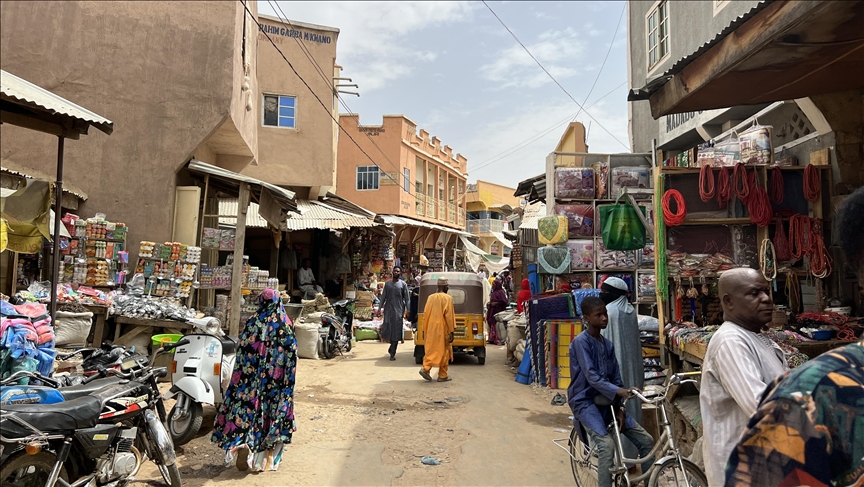
I watched with dismay a video circulating on social media in which an officer in uniform—possibly a cadet working with the Bauchi-Road Traffic-Agency (BAROTA)—was being chased by some youths at the Bakaro/Karofi/Shagari Roundabout. They were stoning him as he unconsciously ran across the road for his dear life.

The scenario is both frightening and disturbing. How can an officer on official duty be chased, possibly by a mob, simply for trying to discharge his responsibility of enforcing safety regulations? Unfortunately, some people now consider this a crime. For this reason, I am appealing to His Excellency Governor Bala Abdulkadir Mohammed to issue a marching order to address this unruly behaviour.

I have often written about BAROTA, particularly its operations and engagement. On many occasions, as a spectator and observer, I have suggested ways they can improve their work to enhance the safety of motorists and other road users. This is a pledge I made with honesty and sincerity of purpose, and I will continue until the desired objectives are achieved. I am glad to see other concerned individuals involved in this advocacy. Let us maintain the tempo, please.

In his speech during the inauguration of the officers, His Excellency Governor Bala Abdulkadir Mohammed (Kauran Bauchi) made it clear that the agency was established, among other things, to address widespread road traffic violations and enhance road safety across the state.

Other responsibilities of the agency include removing and impounding vehicles obstructing highways, arresting road traffic violators, ensuring smooth traffic flow in urban centres and major towns, and promoting road safety awareness among residents. He urged the cadets to work closely with conventional security agencies to maintain order and safety on the roads.

Given the purpose of their work, these officers should be supported in discharging their duties to save lives and property, ensure safer roads, and instil discipline among motorists and other road users.

What went wrong?

Since its inception, the agency’s officers have faced numerous public challenges during official assignments. Passersby who are supposed to support them in carrying out their duties often end up creating hostile and chaotic situations.

This will not be unconnected to the poor perception and limited understanding of the essence of their work in securing people’s lives and property, perhaps resulting from their engagement and operational practices.

Way Forward. 

Therefore, it is incumbent upon the Agency to introduce workshops for its personnel on the rules of engagement in accordance with best practices, and to embark on rigorous awareness and sensitisation campaigns through stakeholder engagements with relevant groups, including NURTW, Achaba, and Keke Napep riders’ unions, as well as other road users.

There is a need for town hall meetings, street rallies, and sustained radio programmes, including phone-in segments, dramas, and jingles, to promote buy-in and public acceptance. The Agency should also involve religious and traditional institutions and encourage them to use their platforms for these campaigns. These and many more initiatives will help in addressing the growing resentment.

The leadership of NURTW and Achaba should educate their members on the importance of complying with all rules and regulations and ensure they possess all necessary documents to operate legally. The general public, on the other hand, should understand that these officers are legally engaged and work in strict adherence to the law establishing the Agency. Any attempt to obstruct or prevent them from performing their lawful duties will be treated as sabotage and will attract the full wrath of the law.

These and other similar initiatives will help bring sanity to road operations while creating an enabling environment for peaceful coexistence and harmonious relationships between the Agency and road users.

Isyaka Laminu Badamasi is at No. 555, Ajiya Adamu Road, Bauchi. He can be reached at makwalla82@gmail.com.

Journalism is beyond sitting behind a microphone…

By Nasir Yusuf Jibril Kufa

It is a common misconception, especially among those with low literacy levels, that the difference between professional practitioners and assistants or technicians is not understood. Professional fields require specialised training and proper qualifications before a person can be recognised as a professional. Examples of such fields include Medicine, Law, Engineering, Journalism, etc.

However, many people often confuse professionals with assistants. For instance, in Law, some people believe that studying Law automatically makes someone a lawyer, without knowing that Law School is also required. In Medicine, many people believe that all healthcare workers are doctors, even though nurses, laboratory technicians, and pharmacists are distinct from physicians. 

The same misunderstanding also exists in Engineering, where people sometimes call anyone who repairs electrical appliances or vehicles an engineer. 

Sadly, this misunderstanding also affects Journalism, which is the main focus of my piece. 

Many people believe that journalism simply means sitting behind a microphone, reading the news, or talking on the radio. This misconception has made some assume that anyone who can speak confidently or operate studio equipment is automatically a journalist. In reality, journalism goes far beyond studio presentation. It is a professional field that requires training, ethical responsibility, critical thinking, and commitment.

 A professional, well-trained journalist is someone who has acquired formal education or structured training in journalism or mass communication. Such a journalist understands news values, reporting techniques, media ethics, and the laws guiding the profession. Their work begins long before they appear behind a microphone or camera. They research issues, verify facts, interview credible sources, cross-check information, and ensure balance and fairness in their reports. Because Journalism is about truth, accuracy, and accountability, not just voice delivery or public appearance.

Professional journalists are guided by ethical principles such as objectivity, accuracy, fairness, and responsibility. They know the consequences of misinformation, malinformation, and disinformation and are trained to avoid sensationalism, hate speech, and unverified reports. 

Their role is to inform, educate, and, at times, challenge society responsibly, and to hold power to account. This means protecting sources, respecting privacy, and understanding the social impact of every story they publish or broadcast.

What truly surprised and saddened me is that even someone I consider intelligent has this incorrect understanding. A friend of mine recently started anchoring a program on an online TV channel, and he now believes he is a professional journalist. Unfortunately, he failed to distinguish between a program presenter, a producer, and a journalist, which deeply concerned me. If educated individuals still fail to understand what journalism truly means, what should we expect from the general public? This shows how widespread this misunderstanding has become.

I wrote this piece not to criticise anyone, but to raise awareness and promote knowledge. Journalism is not just about speaking on camera or presenting a program;  it is a profession built on training, ethics, and responsibility. Understanding this will help society respect the profession and those who practice it properly.

Not everyone working in a radio station is a journalist. Radio stations employ technicians, presenters, producers, marketers, and program assistants. A presenter may have an attractive voice and strong communication skills, but may not be trained in news reporting, investigative journalism, or media ethics. Sitting behind a microphone or hosting a program does not automatically make one a journalist. 

Journalism is defined by the process of gathering, analysing, and presenting verified information in the public interest, not by physical presence in a studio. It is important to understand that journalism involves fieldwork, research, critical questioning, and responsibility to society. So,  journalism is far beyond sitting behind a microphone. It is a serious profession that demands training, discipline, ethical conduct, and a strong sense of responsibility.

I hope this message helps readers understand what a real journalist is and why journalistic professionalism should be respected.

Nasir Yusuf Jibril Kufa wrote via nasirjibril2018@gmail.com.

In defence of Kwankwaso and the scholars who stand with him

By Muhammad Sani Ilyasu

I woke up to a video circulating on social media by a former Kano State anti-corruption czar, giving his opinion about scholarship beneficiaries on why they had no moral right to identify with Kwankwasiyya. It is important to clear the air. Much of what is being said comes from people who were never inside the scheme and never lived the consequences.

Let me state this clearly and upfront: I do not identify with Kwankwasiyya. I disengaged from the movement in 2020. What follows is not partisan advocacy. It is testimony.

Criticism of Rabiu Musa Kwankwaso and scholars associated either rightly or wrongly with his ideology has become fashionable. But much of that criticism is detached from the lived realities that shaped those associations, especially the horrible experience of Kano State scholarship beneficiaries. I write as one of them.

Yes, the scholarships were funded with Kano State resources. But at no point—none that I can recall—were beneficiaries compelled to support Kwankwaso politically. There was no loyalty test, no ideological oath, no expectation of political repayment. In fact, many scholars openly opposed him. I personally recall frequent debates with colleagues who were supporters of Ibrahim Shekarau, many of whom never gave Kwankwaso any credit for the scholarship. Most of us were indifferent, credit was never the issue.

The lesson however came in 2015. That was when Abdullahi Ganduje assumed office—and when all of us, including Kwankwaso’s fiercest critics among the scholars, learned the brutal difference between right and privilege. Tuition payments were halted. Upkeep allowances disappeared. Return-ticket funds were withheld. Scholars were stranded and pushed into destitution in foreign countries.

Some waited over eight years to receive their certificates after the scheme was abruptly terminated. In some cases, parents died without ever seeing the academic fruits of sacrifices they had made.

As if that were not enough, scholars were publicly discredited—labeled products of “substandard universities,” their academic legitimacy questioned to justify administrative neglect. Throughout this period, Kano State went silent.

Religious leaders. Business elites. Civil society organizations. The same voices that now moralize and gaslight scholars looked away. The only “crime” of the scholars was that Kwankwaso started the program.

If, as some critics claim, the scheme was merely a vehicle for siphoning public funds, a simple question remains unanswered: why was Kwankwaso never prosecuted—and why were scholars punished instead? Why were entitlements withheld if the beneficiaries were not the accused?

What makes the silence more damning is that this neglect extended beyond foreign scholars. Until the return of a Kwankwasiyya-led government, even undergraduate scholars sent to private universities within Nigeria—and to Egypt and Cyprus—were denied certificates. For postgraduate students, the delay was damaging. For undergraduates, it was life-shattering: no certificate meant no employment, no future.

In all those years, only one political current consistently raised the issue and demanded settlement: Kwankwasiyya. This is the context critics conveniently ignore.

What they now describe as “indoctrination” or “blind loyalty” was, in reality, a rational response to abandonment. You cannot withdraw education, dignity, and future—then later shame people for gravitating toward the only structure that acknowledged their suffering.

That is not principled criticism. It is double standard. Scholars were not pushed toward Kwankwaso by manipulation. They were pushed there by neglect and even for those of us who have long moved on, that historical truth remains intact—uncomfortable, inconvenient, and undeniable.

Gaslighting scholars for the choices they made under abandonment is not moral courage.
It is hypocrisy.

Muhammad writes from Baltimore Maryland and can be reached at msaniiliyasu@gmail.com.

Arewa: Why do some women murder their husbands?

By Usman Usman Garba

Incidents of women killing their husbands in Northern Nigeria have become a disturbing phenomenon which puts some kind of anxiety in the hearts of youth and unmarried men. What was once rare is now appearing more frequently in headlines, police reports and public conversations. 

Everyone knows that Northern Nigeria is a region known for strong family values, deep respect for marriage, and a social structure built on religious and cultural norms. Yet, the recent rise in cases where wives take the lives of their husbands has forced many to question what is happening behind the façade of stability.

There are a lot of views and perceptions concerning why women kill their husbands in Northern Nigeria. Many are of the belief that forced marriage is one of the reasons such an inhumane act happens. Thus, others are married willingly without the intervention of anyone in a forced marriage, but still kill their spouses.

In my opinion, other factors should be taken into consideration, contrary to what many regard as the main cause of this dastardly act.

Mental health remains one of the least understood issues in Northern Nigeria. Depression, trauma from abusive relationships, postpartum challenges, and emotional exhaustion can push individuals to extremes. Unfortunately, many women have no access to counselling, families discourage speaking out; society expects women to “endure”; emotional crises are dismissed as weakness or spiritual problems, and this lack of support creates dangerous psychological pressure.

Similarly, domestic violence is one of the dangerous circles that causes women to kill their husbands. Many of the reported cases involve homes where domestic violence had been ongoing. Women in such situations sometimes endure physical and emotional abuse for years. With limited support systems, some feel trapped with no escape route.

This does not justify murder, but it highlights the reality. For instance, some wives act out of fear; some out of desperation; some out of retaliation; while others act because they believe no one will protect them.

Hence, the role of social media and exposure to new narratives has also contributed immensely to this inhumane act in Northern Nigeria.

Cases of women killing their husbands, though still few, spread quickly on social media, and sometimes, this creates copycat behaviour, unrealistic ideas about marriage, normalisation of revenge narratives and fake empowerment messages telling women to “fight back” violently.

Social media has become an amplifier, sometimes distorting reality and increasing tension in fragile homes

Nonetheless, a justice system that often fails women worsens the system. Many women who are abused find no one to intervene. At the station, police dismiss domestic complaints; families send them back home; religious or traditional leaders advise “patience”, and society blames women for failed marriages. Thus, when conflict turns deadly, the same system responds swiftly, after lives have already been destroyed. This is why prevention, not punishment, should be our priority.

The rising cases of wives killing their husbands are not simply crime stories; they are warning signs of deeper fractures inside marriages, families and social systems.

Northern Nigeria must confront these issues honestly and urgently. The goal is not to assign blame but to prevent homes from becoming battlegrounds. When families break down, society breaks down: when violence enters the home, it enters the community; and when silence becomes the norm, tragedy becomes inevitable.

The solution lies in awareness, support, justice and compassion, before the next headline appears. To stop this dangerous pattern in our communities, we must confront the root causes. The society must strengthen domestic violence reporting channels, improve community mediation and counselling structures, promote healthy marital communication, address economic pressures, educate people on mental health and teach conflict management to young couples.

Usman Garba writes from Kano via usmangarba100@gmail.com

When power meets purpose: Why Abba Kabir Yusuf’s APC move is Kano’s necessary turn

By Abdulkadir Ahmed Ibrahim (Kwakwatawa), FNGE

In politics, moments arise when loyalty to a platform must give way to loyalty to the people. There are seasons when courage is not found in standing still, but in moving forward with clarity of purpose. Kano State stands at such a moment. The planned defection of Governor Abba Kabir Yusuf to the ruling All Progressives Congress is not an act of betrayal. It is a call to responsibility, a deliberate choice shaped by necessity, foresight, and the overriding interest of Kano and its people.

Perhaps power, when isolated, grows weak. Governance, when detached from the centre, struggles to deliver. Since the emergence of Abba Kabir Yusuf as governor, Kano has found itself standing alone in the national space. Federal presence is thin, strategic attention limited. The state that once sat confidently at the table of national influence now watches key decisions pass by without its voice fully heard. This isolation is not a reflection of the governor’s intent or capacity; it is the reality of operating outside the ruling structure in a political environment where access often determines outcomes.

It is common knowledge that governors do not govern in a vacuum. Roads, security, education, health, and economic revival depend on cooperation between state and federal authorities. When that bridge is weak, the people bear the cost. Kano today needs bridges, not walls. It needs inclusion, not distance. It needs a seat where decisions are shaped, not a gallery where outcomes are merely observed.

The internal tension surrounding the emirate question has further deepened uncertainty. While history and tradition demand respect, governance demands stability. Prolonged disputes distract leadership, unsettle investors, and weigh heavily on public confidence. At such a time, a governor requires strong institutional backing and political leverage to navigate sensitive reforms with balance and authority. Standing alone makes that task far more difficult than it ought to be.More troubling is the visible absence of federal projects and partnerships. In a country where development is often driven by political proximity, Kano cannot afford to remain on the margins. A state of its stature, population, and historical relevance deserves more than sympathetic silence. It deserves action, presence, and partnership.

It is within this context that Abba Kabir Yusuf’s movement toward the APC must be understood. Not as personal ambition, but as strategic realism. Not as political convenience, but as a pathway to unlock opportunities long denied by distance from power.

By extension, Senator Rabi’u Musa Kwankwaso stands at a defining crossroads. History has placed him in a rare position. He is respected across party lines, commands a loyal following, and remains one of the most influential political figures in Northern Nigeria. Above all, President Bola Ahmed Tinubu holds him in high regard. They share a common political generation, having both served as governors in 1999, shaped by the same democratic rebirth and seasoned by time and experience.

In addition, one can recall that both Rabi’u Kwankwaso and Bola Tinubu were at the National Assembly under the platform of the now defunct Social Democratic Party, SDP, during the short-lived 3rd Republic. The former was the Deputy Speaker at the House of Representatives while the latter was a Senator together with Late Senator Engineer Magaji Abdullahi who was also elected under the same SDP ticket.

Late Engineer Magaji Abdullahi a former Deputy Governor of Kano State (2003 to 2007) and also a former Chief Executive of the State owned Water Resources and Engineering Construction Agency, WRECA, in the 1980s was a benefactor of Engineers Rabi’u Kwankwaso and Abba Kabir Yusuf were they first met as members of staff.

The late successful Kano technocrat, accomplished engineer, career civil servant charismatic and vibrant national politician was a close ally and associate of Asiwaju Bola Ahmed Tinubu starting from the SDP days and the duo was some of the foundation members of the APC.

The President’s repeated extension of an olive branch to Kwankwaso is therefore not accidental. These gestures are acknowledgements of value, respect, and shared history. They signal recognition of Kwankwaso’s political weight and his capacity to contribute meaningfully at the national level. When such calls come consistently, wisdom suggests they should not be ignored. Kwankwaso should heed the call by moving along with the political direction of Kano State.

The truth is unavoidable. The political home Kwankwaso once built no longer offers the shelter it promised. The NNPP is enmeshed in internal crises that threaten its very identity. Court cases over party ownership and recognition pose serious risks. With the Independent National Electoral Commission recognising one faction amid raging disputes, the platform has become unstable ground for any serious electoral ambition. Under these circumstances, entering the 2027 race either with Abba Kabir Yusuf seeking re election on the NNPP platform or Kwankwaso pursuing a presidential ambition would amount to gambling against history and reason.

The alternatives are no better. The Peoples Democratic Party is fractured, weakened by internal contradictions and persistent leadership disputes. Its once formidable structure now struggles to inspire confidence. The African Democratic Congress, on the other hand, is ideologically and historically uncomfortable for Kwankwaso. Many of its leading figures were once his fiercest rivals. They resisted him in the PDP and are unlikely to allow him meaningful influence now. Political memory is long, and grudges rarely dissolve.

Beyond current realities lies a deeper lesson from history. Regional parties, no matter how passionate or popular within their strongholds, have rarely succeeded on the national stage. From the First Republic to the Fourth, the pattern remains consistent. Nigeria rewards broad coalitions, not narrow bases. Power flows where diversity converges.

The APC today represents that convergence. It is not perfect, but it is expansive. It is national in outlook, broad in structure, and firmly in control of the federal machinery. For Kano, aligning with the APC is not surrender. It is strategy. It is an investment in relevance, access, and development.

For Abba Kabir Yusuf, the move is about delivering tangible dividends of democracy. For Kwankwaso, it is about securing a future that reflects his stature and experience. Loyalty, in its truest sense, is not blind attachment to a platform. It is fidelity to the welfare of followers, to the aspirations of a people, and to the demands of the moment.

Politics is not static. It is a living conversation between ideals and realities. When realities change, wisdom adapts. Kano’s future demands bold choices, not sentimental delays. The music is louder now. The moment is clearer. The door is open.

History favours those who recognise when to move. For Abba Kabir Yusuf and Senator Rabi’u Musa Kwankwaso, the path toward the APC is not a retreat from principle. It is a step toward purpose. They should go back to where they rightly belong. And for Kano, it may well be the bridge back to the centre, where its voice belongs and its destiny can be fully pursued.

Abdulkadir, a Fellow of Nigerian Guild of Editors, former National Vice President of the NUJ, Veteran Journalist, was the Press Secretary of the former Deputy Governor Late Engineer Magaji Abdullahi.

WAEC CBT Exams: A laudable initiative, but wait…

By Lawal Dahiru Mamman,

While the nation, parents, and income earners are still debating the legitimacy of the Tax Laws rolled out by the Federal Government due to “alterations” in some sections and their broader implications, final-year senior secondary school students have other things to worry about. A case of different strokes for different folks.

A student called and, after exchanging pleasantries, he said, “Is it true we’re going to write WAEC exams with computers? We have a computer lab at our school, but it can accommodate only about 30 students at a time, and not everyone offers computer studies. Some people I know don’t even have any in their schools.” He is familiar with how computers work, but was looking out for others, and his concerns are legitimate.

The Senior Secondary School Certificate exam, conducted by the West African Examinations Council (WAEC), is held in Ghana, Sierra Leone, Liberia, The Gambia, and Nigeria. WAEC announced plans to shift from traditional paper-and-pencil tests to Computer-Based Testing (CBT) for Nigeria’s 2026 West African Senior School Certificate Examination (WASSCE), affecting about 2 million students across 23,554 schools.

The rollout begins with this year’s edition, tentatively scheduled from 24 April to 20 June 2026, with the aim of improving integrity, reducing malpractice and ensuring results are released 45 days after the exam, with digital certificates available within 90 days. 

WAEC’s Head in Nigeria, Amos Dangut, revealed that 1,973,253 students (979,228 males and 994,025 females) will participate, covering 74 subjects and 196 papers. According to him, the digital exams will feature unique question papers for each of the 1,973,253 students as part of efforts to uphold academic integrity.

To support students, the examination body says it has introduced digital learning tools, such as the WAEC E-Study Portal, the E-Learning Portal, and WAEC Konnect. These platforms offer past questions, marking schemes, and performance analysis. 

Despite these promising statements, the young student’s apprehension is not an isolated case. It is the silent and loud cry of thousands of students across Nigeria. While the shift toward digitalisation is a progressive move intended to curb examination malpractice and speed up the release of results, the infrastructure on the ground tells a different story. 

In many suburban and rural schools, the “digital revolution” feels like an ancient myth. It was only last year that Nigeria crossed the 50% broadband penetration mark, according to data from the Nigerian Communications Commission (NCC) under the National Broadband Plan (NBP) 2020–2025.

We can also recall that, in May 2025, some students in Asaba, Delta State, took some of their exams using torchlights. The Minister of Education promised to “investigate” the situation, and Nigerians are still waiting for the outcome. But the substance of the matter is, can schools that lack the ability to purchase electric bulbs to light classrooms build rooms and stock them with computers before this year’s test commences?

Students in urban centres may not be affected; both at home and in school, they’re exposed to computers and the Internet. But introducing a computer-based exam to a student who has never used a mouse or sat in front of a steady power source creates an unfair playing field.

The House of Representatives learned of this development in early November and asked WAEC to halt it, citing concerns that it could lead to widespread failure and disadvantage students in rural areas with limited access to computers and the internet. Lawmakers suggest deferring it for at least three years to allow sufficient time for proper infrastructure and capacity building.

Interestingly, WAEC, through the Nigeria National Office Head, confirmed in the last week of the same month that “its plan to introduce a fully Computer-Based Test (CBT) system for the 2026 WASSCE for school candidates is firmly on track”, assuring the public that a key concern regarding travel has been addressed: “No candidate will have to travel more than 2km from their location to take the exam. This assurance is based on a new school mapping strategy.”

The transition to digital examinations cannot succeed through pronouncements alone. If the examination body insists, there must be clear communication to students through their schools and other stakeholders on a step-by-step strategy for this rollout, because students have registered and the examinations are underway.

Issues such as the delivery model must be addressed. Will the exam be fully digital across all subjects, or will it follow a hybrid model, with practical and essay-based subjects remaining on paper for now? Is it going to be JAMB-style? If essays are not retained, this well-intentioned effort could end up being a disaster for all parties involved.

What is the plan to equip public schools at 2km intervals with functional computer laboratories and consistent power solutions, such as solar energy? This must be considered carefully, as our reality shows that students across Nigeria study on bare floors and in other dilapidated conditions.

There must be a nationwide programme for “Mock CBT” exams to familiarise students in underserved areas with the software interface before the actual harvest of grades begins. In this case, even teachers in such areas must be trained to ensure adequate supervision.

In today’s world of artificial intelligence, big data, and other emerging technologies, digitalisation is inevitable, but it must be inclusive. If the goal is to improve the integrity of education, no student should be penalised for their geographical location or economic status.

Without adequate information, one may not be able to speak for The Gambia, Liberia, Sierra Leone, and Ghana, but here in Nigeria, WAEC and the Federal Government must speak clearly on how they want this to happen, because if the questions raised above cannot be answered with clarity, we should as well heed the advice of the lawmakers in the green chamber.

Lawal Dahiru Mamman writes from Abuja and can be reached at dahirulawal90@gmail.com.

Gidan Badamasi (Season 7) – A Short Review

To Kannywood audiences, the TV series Gidan Badamasi needs no introduction. It is arguably the most successful comedy series since the industry’s migration to YouTube/TV series production. There have been other popular comedy series, such as Zafin Nema and Jikokin Maigari. However, none has matched the reach and longevity of Gidan Badamasi.

After six successful seasons, Gidan Badamasi now returned with Season 7. Only two episodes have been released so far, yet the new season already shows the potential to surpass its predecessors. This is due to its thematic preoccupation, which tackles the issue of insecurity in Northern Nigeria and the problematic framing of the Fulani ethnic group as terrorists without distinction. The new season rightly reinforces a crucial truth: that terrorism has no religion or ethnicity.

The first episode opens with Alhaji Badamasi (Magaji Mijinyawa) and his aide, Taska (Falalu Dorayi), being abducted by kidnappers. The kidnappers’ kingpin, Dan Tsito, is portrayed as Fulani.  However, the narrative shows that Dan Tsito’s criminal path begins within his own community (Rugga), before extending into the forest, where he operates alongside criminals from other ethnic groups. 

The series obviously avoids ethnic reductionism and offers a more balanced portrayal of terrorists and terrorism in Nigeria. It also dismantles the notion of selective victimhood by presenting Alhaji Badamasi, a Hausa Muslim, and his aide as victims. This challenges how the international community often wrongly assumes that terrorism in Nigeria targets only Christians, and how films like The Herd (2025) subtly reinforce that misleading narrative.

The director, Falalu Dorayi and the creative team deserve commendation for addressing this sensitive issue with courage and clarity. This is the kind of storytelling Northern filmmakers must prioritise – telling their own stories truthfully rather than allowing outsiders to define their realities.

The series is also technically solid. Both picture quality and sound design are commendable. However, based on the two episodes released so far, the makers need to be more restrained with unnecessary comic scenes. A more disciplined approach would allow the series to do full justice to the seriousness of its subject matter.

In conclusion, Gidan Badamasi Season 7 shows strong promise. It remains as entertaining as previous seasons while effectively blending important social issues into its narrative. I highly recommend it.

Reviewed by

Habibu Maaruf Abdu

Habibumaaruf11@gmail.com

Farewell to Sheikh Dahiru Bauchi: A tribute to a light among us

By Usman Muhammad Salihu

The passing of Sheikh Dahiru Usman Bauchi shook the nation in a way words can barely hold. Bauchi witnessed a scene history will struggle to forget, millions gathered, from ordinary citizens to scholars, traditional rulers, state governors, former Vice President Atiku Abubakar, and even the Vice President of the Federal Republic of Nigeria, Kashim Shettima, leading the State’s delegation. It wasn’t a crowd built by influence. It wasn’t politics. It wasn’t power.

It was a divine honour given only by Allah to His chosen servants.

One elderly man at the funeral said, “What I saw today with my eyes… if Allah does not honour you, you cannot receive the kind of favour Maulana Sheikh received. This matter is beyond politics or chieftaincy. It is purely from Allah.” And truly, the atmosphere testified to that.

For decades, Sheikh Dahiru Bauchi stood as a bridge between generations. The number of people who embraced Islam through him is known only to Allah. The number of students who memorised the Qur’an under his guidance defies calculation. This, more than titles, wealth or recognition, is the legacy of a life well spent.

Yes, we feel the sting of his departure. But even in our grief, gratitude rises. Alhamdulillah for a man whose end came with honour, whose journey was marked by service, and whose impact will continue to shape hearts long after today.

He lived well. He left well.

May Allah widen his resting place.

May his light continue to guide those he left behind.

And may we live in ways that make our own children proud 

Millions were proud to call him their teacher, leader and father.

Usman Muhammad Salihu writes from Jos, Nigeria, via muhammadu5363@gmail.com.

Nigeria must turn to modern technology to defeat insecurity

By Aminu Babayo Shehu

Nigeria is facing one of its toughest internal security battles in decades. From the kidnapping of schoolchildren in Kebbi and Niger states to the killing of senior military officers, including a Brigadier General, criminal groups continue to operate with increasing boldness. Bandits, kidnappers and terror cells now openly upload videos on platforms like TikTok and WhatsApp, displaying weapons, hostages and propaganda with little fear of consequences.

This is no longer an era where outdated tactics can secure the nation. Criminal groups are becoming more technologically aware, while the state still relies heavily on manual intelligence and slow-response systems. Countries facing similar threats have adopted advanced tools and strategies. Nigeria must follow the same path.

The United States and Israel use drones, satellite intelligence and geolocation trackers to disrupt hostile organisations long before they strike. Rwanda has established a modern drone command system to enhance surveillance and national security. India employs mobile tracing, SIM mapping and digital pattern analysis to dismantle kidnapping networks. These examples show that even in challenging environments, technology can expose criminal movements, reduce their operational freedom and strengthen national response.

Nigeria can apply the same approach effectively.

Real-time aerial surveillance remains one of the most critical gaps in Nigeria’s security architecture. High-altitude drones equipped with night-vision cameras and thermal sensors can monitor large forest areas where bandits hide. Such drones transmit live data to command centres, enabling tracking of movements and coordination of precision strikes. In many cases, soldiers need not be deployed on foot into ambush-prone areas; operations can be guided or executed remotely.

Mobile intelligence is another powerful asset. Every phone, even when switched off, leaves digital traces. With firm collaboration between telecom operators and security agencies, criminals can be located through cell-site analysis, call patterns and movement anomalies. India has successfully used these tools to reduce large-scale kidnapping syndicates.

Satellite imaging, when paired with artificial intelligence, can detect camps, vehicles, and human movement in remote areas. Modern software can analyse thousands of images within minutes and flag suspicious activity such as heat signatures, makeshift shelters, or recently cleared land. This drastically improves early detection and reduces operational delays.

State governments can also invest in early-warning technologies. Community CCTV networks, automated alarm systems and remote-sensor alerts can shorten response times. Local initiatives that once existed in a few states need consistent funding and national integration.

At the federal level, the Presidency should coordinate a national security technology blueprint. This would bring together drones, cyber-intelligence tools, biometric systems, satellite monitoring, and geospatial-analysis platforms into a single central command. Strategic partnerships with technologically advanced nations can reduce costs and strengthen capacity.

Nigeria’s security forces have courage and dedication, but courage alone cannot defeat modern criminals who rely on speed, shock and terrain mastery. Technology is the equaliser. It exposes hideouts, cuts communication lines and allows the state to strike before criminals mobilise.

The tools exist. They are affordable. They have worked in other nations. What Nigeria needs now is clear political will, long-term investment and an understanding that 21st-century threats demand 21st-century solutions.

If embraced, technology can save lives, disrupt kidnappers and terrorists, and restore the confidence of millions of Nigerians who deserve safety.

Aminu Babayo Shehu is a Software Engineer and Mobile Developer with experience building technology-driven solutions, including systems for logistics, telecommunications, e-commerce, and security-focused applications. He writes on technology, national development and digital transformation.

Exercise as a therapy for progressive diseases

By Mujahid Nasir Hussain

On 14 November 2025, the world marked World Diabetes Day, and a familiar message rang out across hospitals, communities, and workplaces: Africa must “know more and do more” to confront the rising tide of chronic diseases. It is a message that feels especially urgent here in Nigeria, and in cities like Kano, where the realities of modern life have dramatically reshaped how people live, move, work, and stay healthy. For many families, this year’s theme was not merely a global campaign. It reflected what they witness daily—more people living with diabetes, hypertension, kidney disease, stroke, obesity, and joint disorders than ever before.

The World Health Organisation has warned that Africa will soon face a dramatic shift in its health landscape. By 2030, deaths from non-communicable diseases are projected to surpass those from infectious diseases. This is a striking transformation for a continent historically burdened by malaria, tuberculosis, and HIV. Nigeria, Africa’s most populous nation, is at the centre of this shift, with cities such as Kano experiencing a rapid rise in chronic and progressive conditions. The reasons are both complex and straightforward: changing diets, prolonged sitting, stressful work environments, reduced physical activity, environmental pollution, and limited access to preventive healthcare.

Yet amid these alarming trends, one therapeutic tool stands out: exercise. For many years, exercise has been treated merely as a wellness activity or an optional lifestyle choice. But in reality, it is one of the most powerful and scientifically proven therapies for slowing the progression of chronic diseases. When the body moves consistently, it undergoes profound biological changes: insulin works better, blood vessels become healthier, the heart becomes stronger, inflammation decreases, and harmful fat around organs begins to shrink. These benefits are not cosmetic; they are therapeutic.

However, there is a critical truth that the public often misunderstands: exercise is powerful medicine, and like any medicine, it must be prescribed correctly. It is not something people with chronic diseases should “start doing” without guidance. The mode, frequency, intensity, and duration of exercise must be tailored to the individual’s medical condition, age, fitness level, and risk factors. What is safe and effective for one person may be dangerous for another. This is why professional guidance is so essential. For instance, a person living with uncontrolled hypertension should not begin intense aerobic workouts without clearance from a doctor, because sudden spikes in blood pressure could lead to complications.

Someone with diabetic neuropathy may not feel injuries in their feet, making certain activities unsafe without supervision. Individuals with chronic kidney disease need specific exercise prescriptions that do not strain the cardiovascular system or accelerate fatigue. People recovering from stroke require structured rehabilitation overseen by physiotherapists to prevent falls or further damage. Even patients with obesity, osteoarthritis, or long-standing back pain need tailored, gradual programs to avoid joint overload. This is why exercise should not be approached casually, especially in a context like Africa, where many chronic conditions are undiagnosed or poorly monitored. Before starting an exercise program, individuals living with progressive diseases should consult qualified professionals. Doctors provide medical clearance and identify risks. Physiotherapists design safe movements that protect joints and nerves. Exercise physiologists prescribe evidence-based routines that align with the patient’s goals and limitations. Their role is to ensure that exercise becomes therapy, not a trigger for complications.

In Kano State, this issue is especially relevant. The city has undergone a rapid transition from physically demanding lifestyles to sedentary routines. Many residents now spend long hours sitting in shops, riding motorcycles, or working in offices. Combined with high consumption of energy-dense foods and limited awareness of disease symptoms, progressive illnesses have become deeply entrenched. Yet awareness of safe, guided exercise therapy remains low. Many people begin rigorous routines abruptly, driven by social pressure or misinformation, only to injure themselves or exacerbate their conditions. Others avoid exercise entirely because they fear doing the wrong thing. Both extremes are harmful.

To confront this, a cultural shift is needed, one that recognises exercise as a vital part of medical care. Hospitals and clinics across Nigeria must integrate exercise counselling into routine visits, especially for patients with diabetes, hypertension, kidney issues, and obesity. Something as simple as a doctor explaining which movements are safe, or a physiotherapist demonstrating gentle routines, could prevent years of complications. Exercise physiologists, though still few in number, should be incorporated into more healthcare teams to design personalised programs grounded in scientific evidence.

At the community level, awareness must grow that exercise therapy is not a one-size-fits-all approach. It is a carefully structured health intervention. Encouraging early-morning walking groups, promoting workplace movement breaks, and organising community fitness sessions are valuable, but they must be paired with safety education. Leaders—traditional, religious, and educational—can play a vital role by emphasising the importance of seeking professional guidance before starting any intense routine, especially for those already living with chronic diseases.

It is also worth acknowledging the emotional dimension. People battling progressive diseases often feel overwhelmed, frightened, or uncertain. Exercise offers not just physical healing but a sense of agency. It improves mood, relieves anxiety, supports sleep, and helps people feel that they are actively shaping their health. This psychological benefit is powerful, especially in societies where chronic diseases still carry stigma. But again, confidence grows stronger when people know they are exercising safely and correctly under the guidance of trained professionals.

Nigeria’s future health outcomes depend on coordinated action. Families must embrace a culture of safe movement. Workplaces must reduce prolonged sitting and encourage healthy routines. Schools must restore physical activity as a normal part of the day, not an afterthought. Healthcare institutions must treat exercise as a formal therapy, not a casual suggestion. And individuals must understand that professional guidance is the foundation of safe and effective exercise therapy. The WHO’s projections are indeed alarming, but they are not destiny. Africa still has the opportunity to change its trajectory. But to do so, we must shift how we view health, how we integrate movement into daily life, and how we approach treatment of chronic diseases. Exercise will play a central role in this transformation, but only if it is approached with the same seriousness and medical supervision as any other form of therapy.

In the markets of Kano, the offices of Abuja, the streets of Lagos, and the rural communities of northern and southern Nigeria, the message must be clear: movement heals, but only when guided, intentional, and safe. The global call to “know more and do more” continues beyond 14 November. This is a reminder that Africans must not only embrace exercise as therapy but also do so with professional guidance to protect the body and preserve long-term health. Our path forward lies not just in treating disease, but in transforming lifestyles with knowledge, with care, and with the understanding that the right kind of movement, at the right intensity, prescribed by the right professional, can change the story of health for a generation.

Mujahid Nasir Hussain is an exploratory researcher in biomedicine, deeply passionate about public health, chronic disease prevention, and evidence-based community health interventions.