News

US suffers nearly $2 Billion military losses in first four days of Iran war


By Sabiu Abdullahi


The United States has recorded an estimated loss of almost $2 billion in military assets within the first four days of its military campaign against Iran, according to figures compiled by Anadolu Agency.

The report shows that Iran has damaged military equipment valued at about $1.902 billion across several locations in the Middle East since hostilities began on Saturday.

The most costly single asset affected is the US AN/FPS-132 early warning radar system stationed at Al Udeid Air Base in Qatar. The radar, valued at $1.1 billion, was struck by an Iranian missile on Saturday. Qatari authorities later confirmed that the facility was hit and sustained damage.

On Sunday, three F-15E Strike Eagles were lost in what officials described as a friendly fire incident involving Kuwaiti air defence systems. Although all six crew members survived, the aircraft were destroyed. The estimated replacement cost for the three jets stands at $282 million.

During its initial retaliatory operation, Iran targeted the US Navy’s Fifth Fleet headquarters in Manama, Bahrain. The strike destroyed two satellite communication terminals and several large structures within the facility. Open-source intelligence assessments identified the damaged terminals as AN/GSC-52B systems. Each unit is estimated to cost around $20 million, including deployment and installation expenses.

Iran also announced that it had destroyed the AN/TPY-2 radar component of the THAAD Anti-Ballistic Missile system deployed in Al-Ruwais Industrial City in the United Arab Emirates. Satellite imagery reviewed through open-source intelligence indicated that the site was indeed hit. The radar component alone is valued at approximately $500 million.

When combined, the value of the damaged assets amounts to $1.902 billion.

Multiple US sites targeted

Iran has reportedly targeted at least seven US-linked military locations in the region since the conflict escalated. These include the Fifth Fleet headquarters in Bahrain, Camp Arifjan, Ali Al Salem Air Base and Camp Buehring in Kuwait, Erbil Base in Iraq, Jebel Ali Port in the UAE, and Al Udeid Air Base in Qatar.

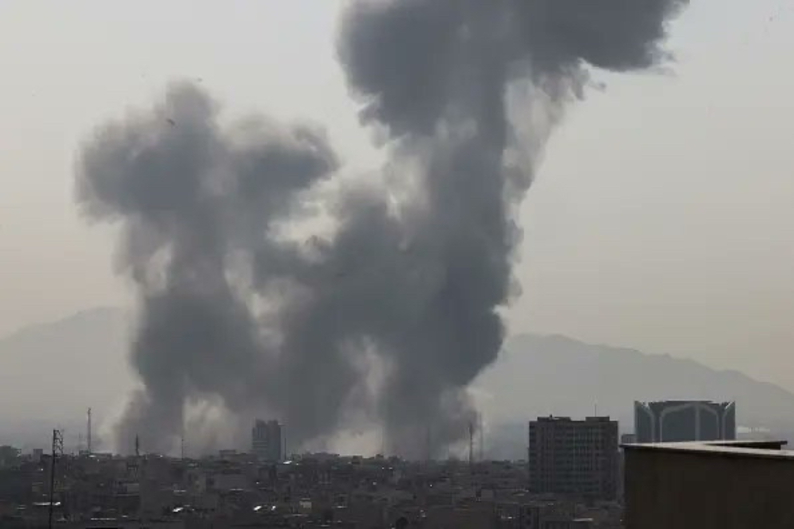
In Kuwait, images taken after reported strikes showed collapsed rooftops at various sections of Ali Al Salem Air Base. Camp Arifjan recorded the deaths of six US service members. A widely shared video from Camp Buehring captured a drone flying over the base before exploding within its perimeter.

At Erbil International Airport in Iraq, where US forces are stationed, footage verified by The New York Times indicated repeated strikes over the weekend. Smoke and flames rose from the installation. Satellite images taken on Sunday morning revealed that four structures in one section of the base had either been damaged or destroyed. Fires continued into early Monday.

In Dubai, satellite imagery from Sunday showed smoke rising from a large building inside a fenced US Navy recreational zone at Jebel Ali Port. Although the site is not officially designated as a US base, it remains one of the navy’s most frequently used ports in the region.

Diplomatic missions also hit

In addition to military installations, several US diplomatic missions in Saudi Arabia, Kuwait and the UAE came under attack.

The US Embassy in Riyadh was struck by two drones. The Saudi Defence Ministry reported “limited fire and minor material damage” within the compound. The Washington Post later reported that the CIA station located inside the embassy complex was also hit.

The US Embassy in Kuwait City faced drone and missile strikes. Smoke was seen near the compound. Authorities have not released detailed information about the extent of the damage. The embassy announced it would remain closed “until further notice,” while non-essential staff and family members were evacuated.

In the UAE, a suspected Iranian drone struck a parking area near the US Consulate General in Dubai. The incident caused a fire, which local authorities quickly brought under control. The consulate compound experienced some impact, though no major structural damage was reported.

The escalation marks one of the most significant direct confrontations between the United States and Iran in recent years.
Russia, China urge an end to US-Israeli military strikes on Iran

By Anas Abbas

Russia and China have publicly criticised the ongoing military campaign by the United States and Israel against Iran, warning that it risks destabilising the Middle East and undermining diplomatic efforts.

Chinese Foreign Minister Wang Yi made direct contact with his Israeli counterpart, urging an immediate halt to the bombardment of Iranian territory. China has framed the strikes as a setback to negotiations that had been making headway in addressing Iran’s nuclear programme and regional security concerns. According to him, military action interrupted progress that was being achieved through talks.

In a statement released by China’s foreign ministry, Wang stressed that continued fighting would deepen instability, increase civilian suffering, and fray international norms governing sovereign relations. He reaffirmed Beijing’s preference for diplomatic engagement over force and called for all parties to resume peaceful negotiations without delay.

On the same day, Russian Foreign Minister Sergei Lavrov echoed similar concerns in Moscow, questioning the justification for the attacks. He pointed out during a press briefing that there is no credible evidence that Tehran was actively pursuing a nuclear weapon, the publicly stated reason for the military action.

Lavrov argued that the strikes could have the opposite effect of what their architects intended, potentially driving Iran and other states to seek nuclear capabilities as a deterrent.

Lavrov warned that the conflict may prompt a broader nuclear arms race in the region if countries feel compelled to arm themselves in response to military threats. He also criticised the US and Israeli approach as “unprovoked aggression,” underscoring that such actions violate international norms and threaten regional peace.

Russia has offered to assist in diplomatic efforts to resolve the crisis but has firmly rejected any justification for the current offensive campaign.

Both Beijing and Moscow are pushing for renewed diplomatic channels to be opened, including through international institutions and direct talks, emphasising that military solutions cannot resolve deeply rooted political disputes. Their positions signal widening international concern over the conflict and mounting pressure for a ceasefire and negotiated settlement.

Trump threatens to cut off all trade with Spain over refusal to approve using its military bases to strike Iran

By Sabiu Abdullahi

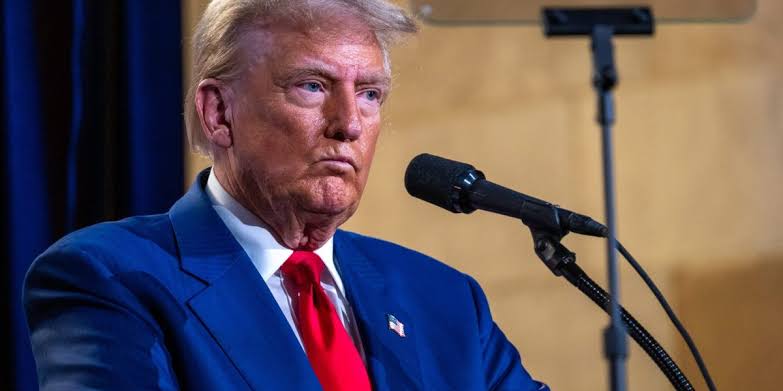
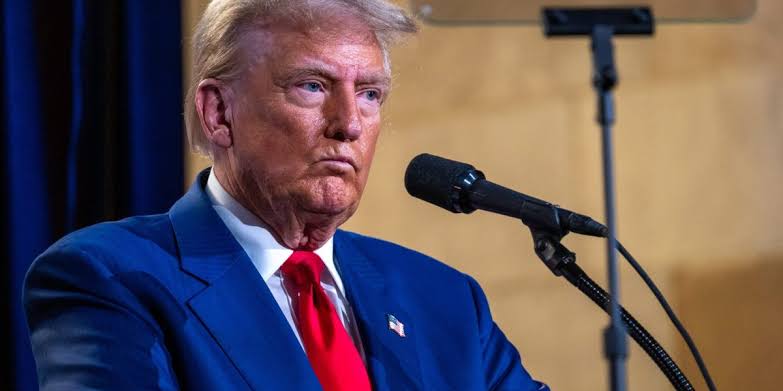
U.S. President Donald Trump has announced plans to halt all trade relations with Spain after Madrid declined to permit American forces to use its military bases for operations connected to strikes on Iran.

Trump made the remarks on Tuesday during a meeting at the White House with German Chancellor Friedrich Merz. He criticised Spain’s position and disclosed that he had directed Treasury Secretary Scott Bessent to take action.

“Spain ‌has been terrible,” Trump said. He added that he had instructed Bessent to “cut off all dealings” with Spain.

“We’re going to cut off all trade with Spain. We don’t want anything to do with Spain,” the president stated.

Following Spain’s refusal, the United States moved 15 aircraft, among them refuelling tankers, away from the Rota and Moron air bases in southern Spain. The Spanish Socialist-led government had declined permission for the facilities to support operations targeting Iran.

Trump also revisited his long-standing demand that NATO members allocate 5% of their gross domestic product to defence. Spain has resisted that target. The president argued that Washington holds broad authority over trade matters.

“Spain has absolutely nothing that we need,” he said.

“All business having to do with Spain, I have the right to stop it. Embargoes – do anything I want with it – and we may do that with Spain,” Trump added.

Bessent, who stood beside the president, confirmed that steps would be taken to examine possible penalties. He said the United States Trade Representative and the Commerce Department would begin inquiries into measures against Spain.

Although the U.S. Supreme Court recently limited Trump’s ability to impose sweeping global tariffs under the International Emergency Economic Powers Act (IEEPA), the president insisted the ruling strengthened his powers in other respects. He said the decision “totally reaffirmed” his authority to impose a comprehensive trade embargo under the same law.

IEEPA, enacted in 1977, has served as a legal basis for sanctions against countries such as Iran, Russia and North Korea. It has also enabled restrictions on exports of sensitive technologies.

Bessent backed Trump’s interpretation of the ruling. “The Supreme Court reaffirmed your ability to implement an embargo,” he told the president.

Spain Reacts

The Spanish government responded with a statement stressing that the United States must respect the independence of private enterprises, international legal frameworks and trade agreements between Washington and the European Union.

Madrid said it possesses the tools required to cushion any economic impact and assist industries that might suffer losses. Officials also affirmed their commitment to open markets and continued economic collaboration with partners.

Spain ranks as the world’s leading exporter of olive oil. It also supplies the United States with auto components, steel and chemicals. However, analysts note that Spain may be less exposed to American trade pressure than some other European economies.

Data from the U.S. Census Bureau show that the United States recorded a $4.8 billion trade surplus with Spain in 2025. American exports to Spain reached $26.1 billion, while imports stood at $21.3 billion. This marked the fourth consecutive year of surplus for Washington.

Chancellor Merz indicated that European partners are urging Spain to increase defence expenditure. “We are trying to ⁠convince Spain to catch up with the 3% or 3.5% which we agreed on in NATO,” he said.

“And as the president said, it’s correct: Spain is the only one who is not willing to accept that and we are trying to convince them that this is part of our common security that ⁠we all have to comply with these numbers,” Merz added.

Spain’s Prime Minister Pedro Sanchez has previously taken positions that have drawn criticism from Trump. Among them was a decision to deny docking access to vessels transporting weapons to Israel.

The latest dispute signals rising tension between Washington and Madrid. The situation may have wider implications for transatlantic trade and security cooperation if concrete measures follow the president’s warning.

Ronaldo did not leave Saudi Arabia, report dismisses Madrid return claims amid heightened tension in Middle East

By Sabiu Abdullahi

Fresh reports suggesting that Cristiano Ronaldo has left Saudi Arabia for Madrid with his family have been dismissed as false.

Renowned football journalist Fabrizio Romano debunked the claim in a Facebook post on Tuesday. According to him, the story circulating in sections of the international media is untrue.

Romano stated that Ronaldo remains in Saudi Arabia and was present at Al Nassr’s training ground today. The clarification comes amid widespread speculation that the Portuguese star had travelled back to Spain.

The journalist described the report as fake news and insisted that the forward has not departed the country.

He added that Ronaldo is currently undergoing assessment and treatment following issues he experienced in his last match. The five-time Ballon d’Or winner was substituted during that game due to the problem.

Ronaldo continues to train with Al Nassr as he works toward full fitness, putting to rest rumours of an immediate return to Madrid.

Zelensky offers drone support to Gulf States in exchange for ceasefire with Russia

By Sabiu Abdullahi

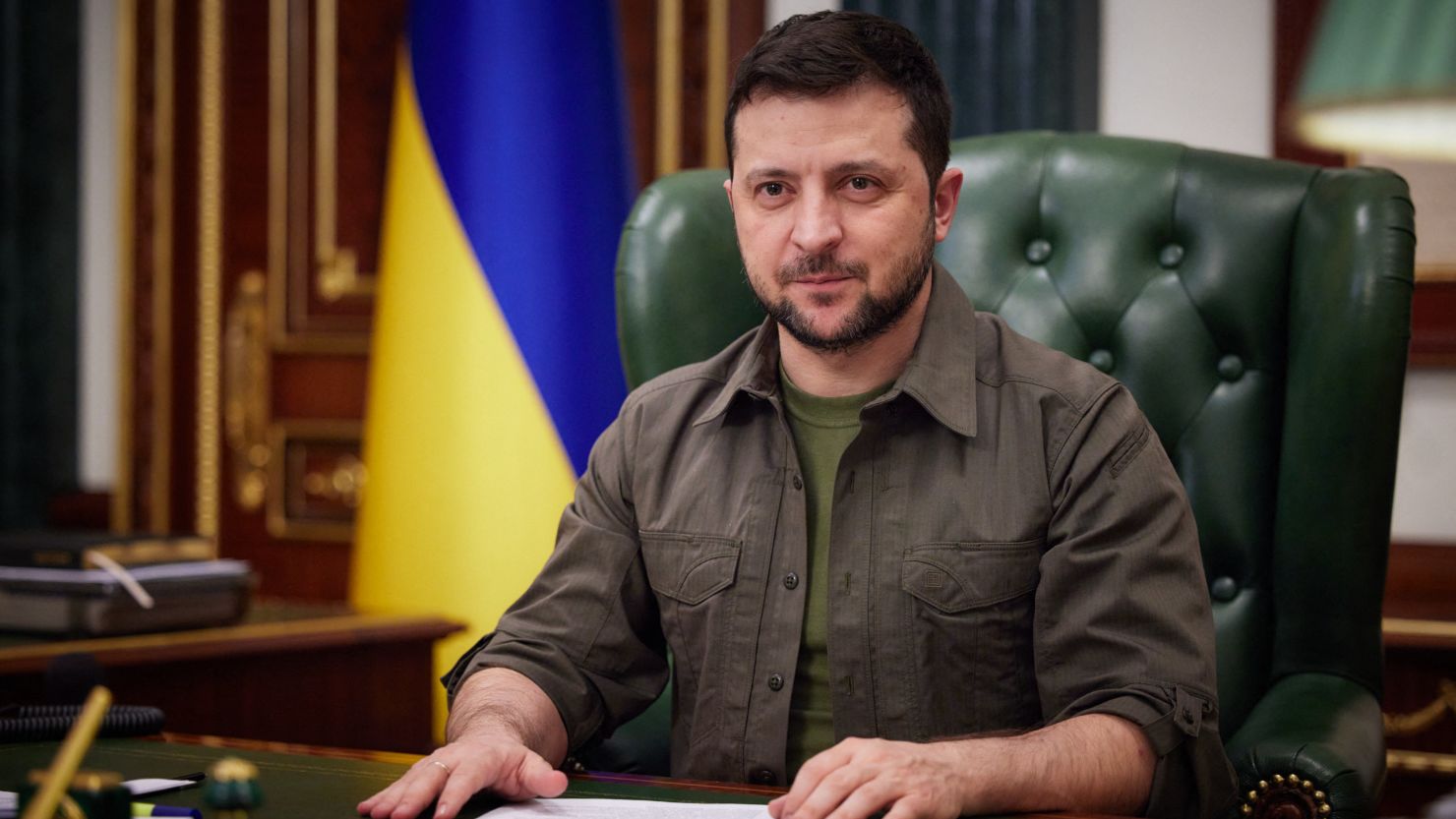
Ukrainian President Volodymyr Zelensky has proposed sending his country’s leading drone interception specialists to the Middle East. He said the support would be provided if Gulf leaders persuade Russian President Vladimir Putin to accept a temporary ceasefire in Ukraine.

Zelensky made the proposal after a series of Iranian drone strikes targeted countries including the United Arab Emirates, Bahrain, Kuwait, Qatar and Saudi Arabia. He noted that Ukraine has built strong expertise in countering such attacks after four years of war with Russia.

One of the Iranian-made drones struck the British Royal Air Force base in Akrotiri, Cyprus, on Monday. Security forces intercepted two other drones hours later.

“I would suggest the following: leaders of the Middle East have great relations with Russians. They can ask Russians to implement a month-long ceasefire,” Mr Zelensky told Bloomberg. “In exchange, we will send our best operators of drone interceptors to the Middle East countries.”

He said the ceasefire could last two months or even two weeks. He explained that the pause would allow Ukraine to deploy assistance aimed at protecting civilians in affected countries.

Kyiv and its European partners have repeatedly called for an unconditional ceasefire. Moscow has turned down those appeals. Russian officials insist they are prepared to discuss what they describe as a “lasting peace,” while placing strict conditions on any settlement.

On Monday, President Putin held phone conversations with leaders from Bahrain, the UAE and Qatar. These countries have faced recent Iranian drone attacks. Kremlin spokesman Dmitry Peskov said Russia remains “in constant contact with the Iranian leadership.”

“For sure, the UAE, Saudi Arabia, Qatar have good relations, first of all economic, with Putin,” Zelensky said. “We can help Israel in the same way.”

Zelensky stated that Russia has launched more than 57,000 Shahed drones at Ukraine since the invasion began four years ago. He said the drones often target power facilities, warehouses and residential areas.

The drones were first designed by an Iranian firm, Shahed Aviation Industries Research Centre. Russia now produces many of them at a factory in Yelabuga, located in the Republic of Tatarstan.

Ukraine uses a coordinated air defence structure that combines mobile ground units, anti-aircraft missiles and radio-electronic systems. Zelensky described the system as “irreplaceable.”

He voiced support for recent US and Israeli military action against Iran. He argued that Tehran “chose to become Putin’s accomplice” by supplying military equipment to Moscow.

At the same time, Zelensky warned that a prolonged conflict in the Middle East could affect Ukraine’s access to air defence supplies. Kyiv depends heavily on US-made Patriot systems, which are also deployed by American forces in the region.

“We understand that a long war… and the intensity of the fighting will affect the amount of air defence equipment we receive,” he said.

Ukraine’s Foreign Minister Andrii Sybiha said recent developments show weakening support for Moscow among its allies. “Assad, Maduro and now Khamenei. Putin has lost three of his closest pals in little more than a year,” he said. “The domino of deposed dictators must continue, and Putin’s fall one day is inevitable.”

Meanwhile, Putin has presented Russia as a potential mediator in the crisis. He condemned what he described as the “cynical” killing of the Iranian Supreme Leader and held discussions with leaders in Iran and the Gulf region.

Some pro-Kremlin commentators have argued that US military action could disrupt peace efforts in Ukraine. “Diplomacy was destroyed as a tool on Saturday,” said Vladimir Solovyov on Russia-1 television. “It is now completely obvious to us that any negotiation process is nothing more than part of a military operation designed to pacify the enemy.”

Cristiano Ronaldo leaves Saudi Arabia for Spain amid rising tensions in Riyadh

By Sabiu Abdullahi

Portuguese football star Cristiano Ronaldo has reportedly departed Saudi Arabia for Madrid, Spain, as security concerns mount in the region following recent military action involving the United States and Israel.

Ronaldo, who serves as captain and forward for Al-Nassr FC, left Riyadh late at night aboard his £61million ($81million) Bombardier Global Express 6500 private jet. The UK Daily Mail disclosed the development on Tuesday.

His relocation followed coordinated strikes carried out by the United States and Israel in Iran on February 28, 2026. The operation reportedly led to the deaths of several senior Iranian figures. Iranian state media announced on March 1 that Supreme Leader Ali Khamenei had been killed. Authorities declared 40 days of mourning and introduced a seven-day public holiday.

The security situation in the Gulf region deteriorated after two drones hit the United States Embassy in Riyadh overnight.

The Saudi Ministry of Defence said, “A limited fire broke out at the United States Embassy in Riyadh after it was hit by two drones,” adding that the strike caused “minor material damage.”

According to the Daily Mail, “Riyadh, where Ronaldo lives with his partner Georgina Rodriguez and their five children, has been affected by attacks linked to the regional conflict.”

Flight tracking service Flightradar24 reported that the aircraft “departed Riyadh at 8:00 pm and arrived in Madrid at almost 1:00 am, flying a path over Egypt and the Mediterranean.”

Ronaldo’s exit occurred as Washington intensified security steps across the Middle East in response to the unfolding crisis. The U.S. Department of State announced temporary closures of embassies and the suspension of consular services in several countries due to heightened safety concerns tied to the expanding Iran conflict.

In Saudi Arabia, the U.S. Embassy in Riyadh halted both routine and emergency services across its missions in Riyadh, Jeddah and Dhahran.

In neighbouring Iraq, nonemergency American government personnel received orders to exit the country. U.S. staff also faced restrictions from using Baghdad’s international airport.

Kuwait recorded deadly incidents involving American forces. Six soldiers lost their lives, and three fighter jets crashed in what the U.S. military described as an “apparent friendly fire” episode.

The unfolding developments have heightened uncertainty across the region, with governments implementing precautionary measures as tensions persist.

No distress signal from Nigerians in Iran amid rising tensions—FG

By Uzair Adam

The Nigerians in Diaspora Commission (NiDCOM) has said it has not received any distress call from Nigerians residing in Iran despite the escalating hostilities involving Iran, the United States and Israel.

The clarification comes as the Federal Ministry of Foreign Affairs disclosed that it is closely monitoring developments in the Middle East.

NiDCOM’s Director of Media and Public Relations, Abdur-Rahman Balogun, speaking on Monday, explained that although Nigerians may be living in Iran, none has formally contacted the commission to request assistance.

“I’m not saying there are no Nigerians there, I’m only saying nobody has sent any distress call,” he said.

Balogun attributed the cancellation of flights to the region to the ongoing hostilities, noting that airlines would not operate in an active war zone.

He added that temporary ceasefires are sometimes arranged to allow stranded passengers to be evacuated, but such an arrangement has yet to take place.

On the possibility of an evacuation, he said the Federal Government would only activate a full-scale operation when specific conditions are met, including an official request for help from affected citizens.

“You cannot force them. People went there voluntarily. In Sudan and Ukraine, some initially said they were not leaving,” he explained.

He stressed that Nigerians who desire evacuation must clearly indicate their willingness to return home. “People must seek help and say, ‘Our lives are in danger, can you evacuate us?’” he said.

According to him, once a formal request is made and the situation permits safe movement, the government could initiate emergency steps such as chartering aircraft and setting up a rescue committee.

“All must be Nigerian and must be ready to come back home,” he stated.

Balogun reaffirmed that safeguarding Nigerians abroad remains a key responsibility of the Federal Government under its citizen diplomacy policy.

He assured that if any Nigerian’s life is threatened and a request for assistance is received, authorities would explore available options, including leasing aircraft if necessary.

However, he maintained that evacuation would be impracticable without a ceasefire and the reopening of airspace, stressing that international aviation protocols must also be respected.

“As far as I know, I’m not aware that anybody has sent a distress call,” he reiterated.

Nigerian military intercept 296 wraps of suspected Cannabis

By Sabiu Abdullahi

Troops of the 35 Artillery Brigade have intercepted 296 large wraps of substances believed to be Cannabis Sativa along the Abeokuta–Igboora Road in Ogun State.

The operation took place at about 4:30 a.m. on March 1, 2026, after the troops received credible intelligence about the planned movement of suspected illicit drugs along the route. Acting swiftly on the information, the soldiers moved to the area and stopped a motorcycle without a registration number.

During a search, the troops discovered 296 large wraps of substances suspected to be Cannabis Sativa, also known as Indian hemp. The items were hidden inside three large sacks. The suspect reportedly abandoned the motorcycle and escaped into a nearby bush under the cover of darkness.

The seized exhibits have been handed over to the National Drug Law Enforcement Agency (NDLEA), Ogun State Command, for further investigation and necessary action.

The 35 Artillery Brigade reiterated its determination to rid Ogun State of drug trafficking and other criminal activities. The Brigade warned individuals involved in illegal trade to embrace lawful means of livelihood or face the consequences of security operations.

It also reassured residents of Ogun State of the Nigerian Army’s continued commitment to safeguarding lives and property. The Brigade stated that troops will sustain a strong presence across the state to ensure that criminal elements do not operate freely.

The statement was signed by Major IderegHI Samuel Akari, Assistant Director, Army Public Relations, 35 Artillery Brigade, and dated March 2, 2026.

Time for negotiations is over, Iran’s new leader Arafa tells Trump

By Sabiu Abdullahi

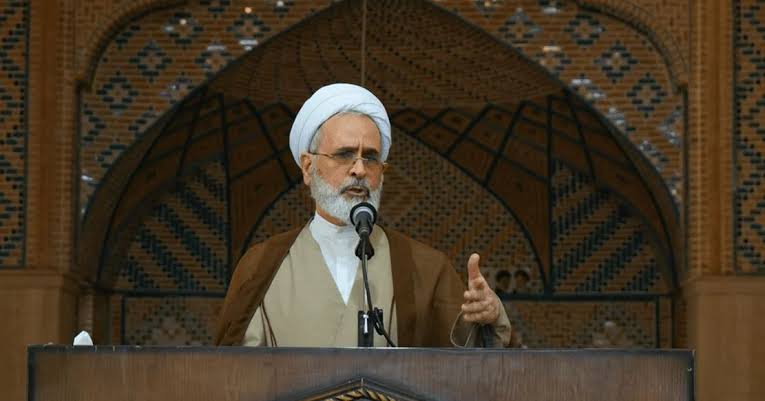
Iran’s newly declared Supreme Leader, Alireza Arafa, has threatened retaliation against the United States and Israel after Tehran accused both countries of carrying out military attacks on its territory.

In a statement released on Tuesday morning across several social media platforms, Arafa said diplomatic efforts had come to an end. He accused Washington of crossing a “red line.”

“The time for negotiations is over. The United States has chosen to cross the red line, the line of irreparable harm,” he said.

“By launching this war, they have signed their own death warrant: they don’t know when or how the axe will fall, but we hold the reins.”

His remarks followed reports of coordinated airstrikes by US and Israeli forces on Iranian military sites and key infrastructure. The operation marked a sharp deterioration in relations among Tehran, Washington and Tel Aviv.

Tensions between the countries have grown in recent months over Iran’s missile programme, its regional activities and allegations linked to nuclear development. The United States has repeatedly accused Iran of supporting armed groups in the Middle East and fuelling instability in the region. Iranian officials have denied those allegations.

Tehran described the recent strikes as “unprovoked.” Authorities insisted that Iran did not initiate hostilities.

Arafa rejected Western claims that the attacks were preventive steps against a nuclear threat.

“They brandish the nuclear specter like a scarecrow, blinded by their arrogance,” he said.

“They have no idea of the true extent of our power or what we are prepared to unleash.”

He directed some of his strongest remarks at Israel and warned of continued retaliation.

“As for Israel, its fate is sealed. Every strike, every crime, every act of suffering they have inflicted will come back to haunt them,” Arafa declared.

“They will remain in our sights, exposed, vulnerable, hunted.”

The exchange of threats has heightened concerns about a wider regional conflict. Armed groups aligned with Tehran in Lebanon, Syria, Iraq and Yemen could become involved if hostilities expand.

Security analysts say a prolonged confrontation could disrupt global energy supplies and deepen sectarian divisions across the Middle East.

In his concluding remarks, Arafa described the crisis as a defining struggle for Iran.

“We walk in the shadow of the Leader, and every step is a lightning bolt,” he said, before ending with the slogan: “Iran does not bend. Iran wins. Always.”

As tensions rise and military activities continue, international actors face growing calls to intervene and prevent a broader conflict that could reshape the region for years.

Iran clarifies it is at war ith US, Israel, not Gulf nations

By Sabiu Abdullahi

Iran has clarified that it is engaged in conflict with the United States and Israel, not with any countries in the Gulf region.

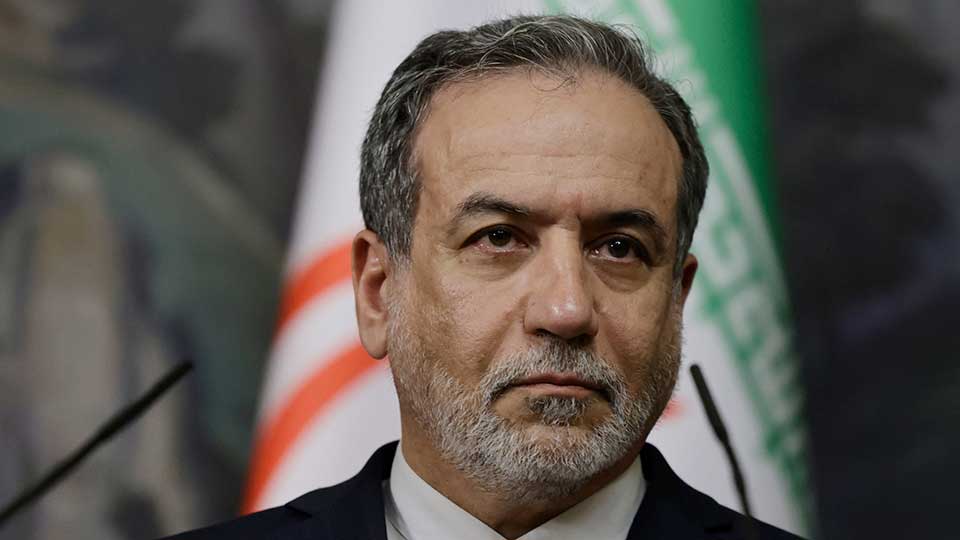
Speaking on Monday, Iranian Foreign Minister Seyed Abbas Araghchi said, “We’re not attacking our neighbours, we’re attacking US military bases. US soldiers fleeing to hotels will not prevent them from being targeted.” His remarks come amid ongoing US and Israeli strikes on Iranian positions, and retaliatory Iranian attacks on American and Israeli interests in the Middle East.

Al Jazeera reports that Iran accused the US of “betraying diplomacy” by launching attacks during ongoing negotiations. Araghchi also urged Gulf nations to pressure Washington to halt its military actions against Iran.

The Iranian minister emphasized that US military installations, including those located within Gulf countries, and facilities housing American troops, are considered legitimate targets.

For the third day in a row, loud explosions were reported in Dubai, UAE, and Qatar as Iran continues to respond to US and Israeli attacks. Bloomberg notes that both the UAE and Qatar have been quietly appealing to international allies to encourage President Trump to pursue a diplomatic solution instead of extending the conflict.

Qatar warned that ongoing disruptions to regional shipping could further drive up global natural gas prices. The country also announced that it intercepted two Iranian fighter planes, along with missiles and drones, which had entered its airspace. Gulf nations have pledged to continue defending their territories.

Meanwhile, the conflict between Israel and Hezbollah continues to escalate as both sides exchange attacks.