News

Israeli cyberattack crippled Iranian defenses during airstrike, sources say

By Muhammad Abubakar

In a stunning display of cyber warfare, Israeli forces reportedly rendered Iran’s military defenses inoperative during a recent strike, leaving the Islamic Republic’s army effectively “blind, deaf and dumb,” according to military analysts cited by the German outlet Bild.

The report suggests that a sophisticated and large-scale cyberattack paralyzed Iranian radar systems throughout the night, allowing Israeli aircraft to carry out their operations without detection. Only a single Iranian air defense base managed to register the strikes, underscoring the scale of the electronic disruption.”

Israeli forces appear to have disabled Iran’s radar infrastructure so thoroughly that Iranian fighter jets scrambled without ever spotting the incoming targets,” Bild reported, citing military observers.

The extent of the cyber intrusion also reportedly severed internal communications among Iran’s air defense units. Mobile networks, radios, pagers, and even encrypted messaging platforms such as WhatsApp were reportedly jammed or rendered inoperable during the attack. This effectively left military personnel and targeted sites unaware of the impending strike.

“Hundreds of Iranian officers and pilots did not even know that anything was happening,” the report stated. “This points to a massive cyberattack using advanced electronic warfare, likely initiated as Israeli aircraft began their mission.”

The Israeli Defense Forces (IDF) have not officially commented on the operation, but the reported scale and precision of the strike suggest a high level of coordination between Israel’s cyber, intelligence, and air units.

If confirmed, the incident would mark one of the most significant uses of cyberwarfare in a live military operation to date, raising serious questions about the resilience of critical defense infrastructure in the face of digital threats.

Iran launches drone barrage at Israel following Israeli airstrikes on Tehran

By Sabiu Abdullahi

Tensions between Iran and Israel escalated sharply on Friday after Iran launched around 100 drones toward Israeli territory.

The Iranian response came hours after Israel carried out widespread airstrikes targeting nuclear facilities and key military sites across Iran.

According to a spokesperson for the Israel Defense Forces (IDF), “all the defense systems are acting to intercept the threats,” as the military moved swiftly to neutralize the incoming drones.

The drone attack follows a pre-dawn offensive by Israel, which struck multiple targets in Iran, including nuclear installations and military compounds.

The assault reportedly resulted in the deaths of several high-ranking Iranian commanders and nuclear scientists.

Iran’s Supreme Leader, Ayatollah Ali Khamenei, issued a stern warning following the Israeli operation, stating that Israel would face “severe punishment” for the attack.

The situation has drawn international concern, with fears of a broader regional conflict if tensions continue to spiral.

Both nations remain on high alert as the world watches for what comes next.

NAPTAN president dismisses 2026 deadline for CBT-based WAEC, NECO as unrealistic

By Sabiu Abdullahi

The National President of the Parents-Teachers Association of Nigeria (NAPTAN), Haruna Danjuma, has expressed strong doubts over the feasibility of the Federal Government’s plan to fully transition West African Examinations Council (WAEC) and National Examinations Council (NECO) tests to Computer-Based Testing (CBT) by 2026.

In April, the Minister of Education, Dr Tunji Alausa, directed both examination bodies to adopt full CBT formats by the May/June 2026 session.

According to the Minister, the process would begin in November 2024 with multiple-choice papers, followed by full adoption—including essay sections—within two years.

However, speaking to The PUNCH, Danjuma questioned the practicality of this target, citing the inadequate digital infrastructure in many public schools, particularly in rural areas.

“It can only be practicable if the 36 state governors and the FCT Minister provide all senior secondary schools with functional computer laboratories powered by solar energy. They must also provide computer instructors/teachers to train the student,” he said.

He further warned, “Anything short of that, I don’t think it will be possible, because over 70 per cent of students—especially those in rural areas—are not computer literate.”

Danjuma emphasized that unless all state governments invest heavily in ICT infrastructure and personnel, the proposed transition could widen educational inequality and damage the credibility of national exams.

Echoing similar concerns, the Secretary of the Education Rights Committee at the University of Ibadan, Nnamdi Ochi, described the federal directive as another case of “motion without movement.”

In a statement shared journalists, Ochi acknowledged that CBT could improve how public exams are administered but maintained that the current state of public education infrastructure makes the goal unachievable.

“We have also campaigned for improved conditions of learning for students, and WAEC and NECO transitioning into a computer-based examination would be an improvement. However, it goes beyond empty proclamations. For this not to be another colossal failure, the necessary facilities must be put in place,” he said.

Ochi pointed out that many secondary schools in Nigeria lack even the most basic amenities. He noted that in several public schools, classrooms are either dilapidated or nonexistent, and students continue to learn under trees without proper learning materials.

“Presently, the country is far behind and incapable of this transition. Over the years, public education has continued to wallow in decay, without any genuine and sincere effort by the government to uplift it. Many public secondary schools lack classrooms—students are still studying under trees and in dilapidated structures without any learning facilities or equipment,” he said.

He also referenced the Joint Admissions and Matriculation Board’s own struggles with CBT implementation, despite over ten years of adoption.

According to him, JAMB still relies heavily on privately-run computer centres, a practice that has created recurring technical and logistical challenges for candidates.

“A transition to CBT for WAEC and NECO exams will only create more problems under the current conditions. The proclamation by the Federal Government is not driven by genuine concern for students,” Ochi said.

He added that for meaningful reform, the government must commit more funding to revitalising public education and ensure it becomes truly accessible. He also advocated for broader involvement in policy-making.

“There is also a need to democratise the decision-making structures in the education sector by involving students, parents, and education workers through their associations and unions,” he said.

Kano government dismisses allegation of new $6.6m loan as politically motivated

By Uzair Adam 

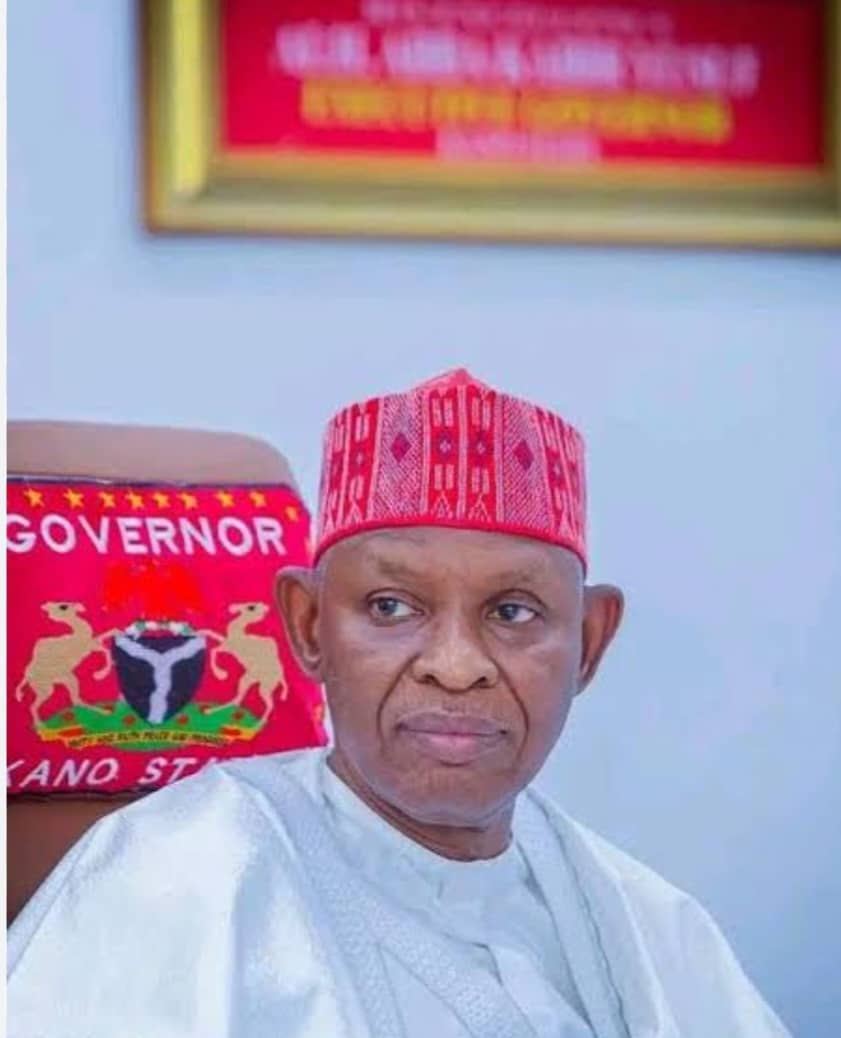
The Kano State Government has refuted claims that it secured a new external loan of $6.6 million under the current New Nigeria People’s Party (NNPP) administration.

In a statement issued on Thursday, the Director General of the State Public Debt Management Office, Hamisu Sadi Ali, described the allegation as false and politically driven.

The claim was made by a group known as the APC Patriotic Volunteers, which alleged that Governor Abba Kabir Yusuf’s government had taken a fresh loan within two years of assuming office—an allegation earlier reported by the Daily Nigerian on June 11, 2025.

Sadi Ali dismissed the report, insisting that the present administration had not contracted any new domestic or external loans since coming into power.

“Since the inception of the NNPP-led administration till today, the Kano State Government under the leadership of His Excellency Alhaji Abba Kabir Yusuf has not taken a single fresh loan,” he said.

He clarified that the government is still servicing loans inherited from the previous All Progressives Congress (APC) administration, which he described as a “wasted” eight-year period under former Governor Abdullahi Umar Ganduje.

The debt office boss also criticised Usman Alhaji, the leader of the APC group and former Secretary to the State Government, questioning his understanding of the 2021 law that established the State Public Debt Management Office—a law signed during the APC administration.

“If he claims ignorance of the law, we must remind him of Section 4(b), which empowers the State Debt Management Office to borrow on behalf of the government—under strict procedures and documentation,” Sadi Ali said.

He challenged the group to provide verifiable evidence from the Federal Debt Management Office in Abuja to back their claims.

“They should provide the name of the creditor, the subsidiary loan agreement, the purpose of the loan, the amortisation schedule, and whether it is a multilateral or bilateral loan,” he added.

Sadi Ali emphasised that the public can now differentiate between facts and political propaganda, adding that Governor Yusuf remains committed to fulfilling his mandate without being distracted by baseless accusations.

SLUK staff becomes first African to win King Abdullah Bin Abdulaziz International Award for Translation

By Muhammad Sulaiman

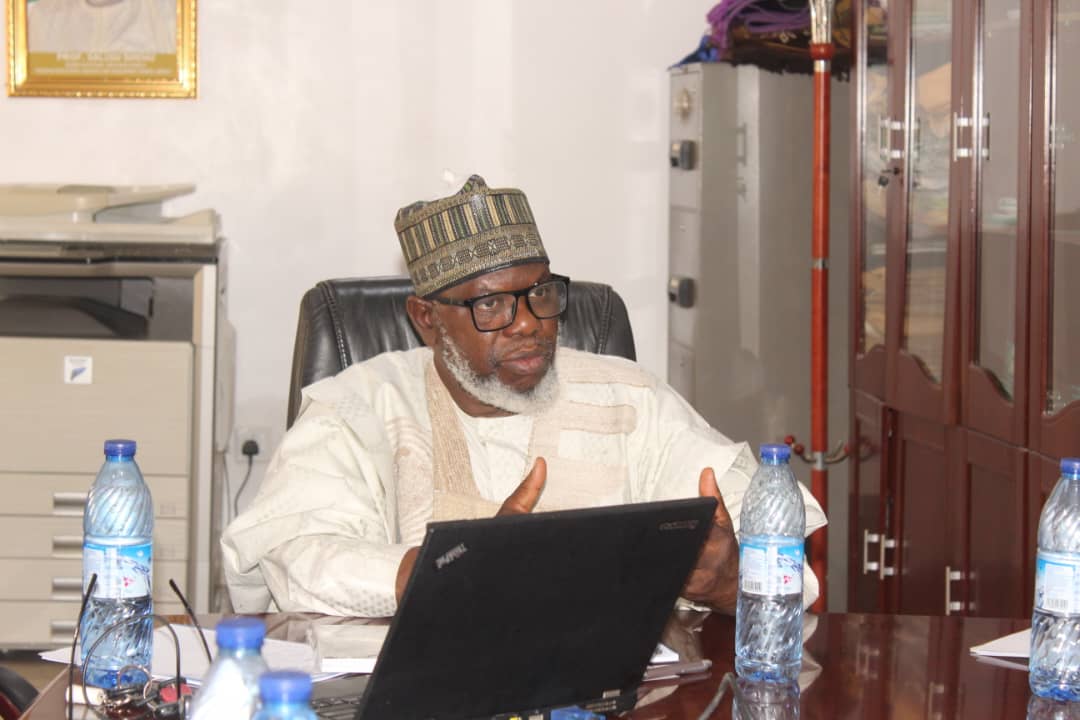
In a historic academic achievement, Dr. Zaidu Jibril Muhammad, a lecturer at Sule Lamido University (SLUK), Kafin Hausa, has become the first African recipient of the prestigious King Abdullah Bin Abdulaziz International Award for Translation.

Dr. Zaidu, who lectures in the Department of Arabic, Faculty of Humanities, clinched the 2025 award for his Hausa translation of the Arabic literary masterpiece Maqāmāt al-Ḥarīrī, published under the title Dandalin Hikimomi. The Prize’s Board of Trustees praised the translation for its scholarly depth and cultural resonance, calling it a significant contribution to African scholarship and global cross-cultural understanding.

Born on May 15, 1985, in Shungurum village, Birnin Kudu Local Government Area of Jigawa State, Dr. Zaidu holds a Ph.D. in Arabic Language among other qualifications.

Dr. Zaidu is also a prolific author, with four major Hausa translations of classical Arabic works. In addition to Dandalin Hikimomi, his works include Dandalin Dabaru (from Maqāmāt Badī‘ al-Zamān al-Hamadhānī), Bakandamai Bakwai(from Al-Mu‘allaqāt al-Sab‘a), and a Hausa version of a widely used Arabic academic guide for university students. He has also published fifteen academic articles in national and international journals.

Currently serving as a Lecturer I and a member of the International Union of Arabic Language, Dr. Zaidu’s groundbreaking achievement has been described as a landmark not just for Nigeria but for the entire African continent.

Indian family’s one-way journey to London ends in tragedy

By Muhammad Abubakar

A young Indian family’s new life abroad ended in tragedy when Air India flight 171 from Ahmedabad to London crashed this morning, killing 241 people on board, with one miraculous survivor.

Among the victims were Dr Pratik Joshi and Dr Komi Vyas, both accomplished medical professionals, and their three children: aged 9, 6, and just 18 months. Their story, tragically, has come to embody the human cost of an unthinkable disaster.

Dr. Joshi, 38, had been living and working in London for the past six years, laying the foundation for a new life in the UK. Tirelessly working through the red tape of immigration and professional certification, he had long dreamed of reuniting his family abroad and offering them a brighter, safer future.

That dream was finally within reach. Just two days ago, Dr. Komi Vyas resigned from her job at a government hospital in Gujarat. The couple had packed up their lives, said their goodbyes, and looked forward to turning the page. Friends and relatives recall their excitement and plans to settle in South London, enrol their children in school, and continue their medical careers.

Before boarding the flight, the family took a photo after boarding and sent it to relatives with the caption: “One way to a new beginning.” Minutes later, the aircraft lost contact with air traffic control moments after taking off.

The Indian diaspora in the UK, especially among the medical fraternity, is mourning the loss. “Pratik was more than a colleague; he was a friend and a father trying to do right by his family,” said Dr. Meena Chauhan, who worked alongside him at St. George’s Hospital in London. “He was so excited they were finally joining him. It’s just incomprehensible.”

Back home in Vadodara, grief has swept through the neighbourhood. Friends and family gathered at the now shuttered family home, still echoing with recent packing sounds. A neighbour, clutching the last family photograph, said, “They were finally going to be together. They had waited so long.”

In a world fixated on the future, this family’s tale serves as a profound reminder to value the present—to embrace life, to express love, and to never delay happiness.

Governor Uba Sani awarded CON national honour by president Tinubu

By Abdullahi Mukhtar Algasgaini

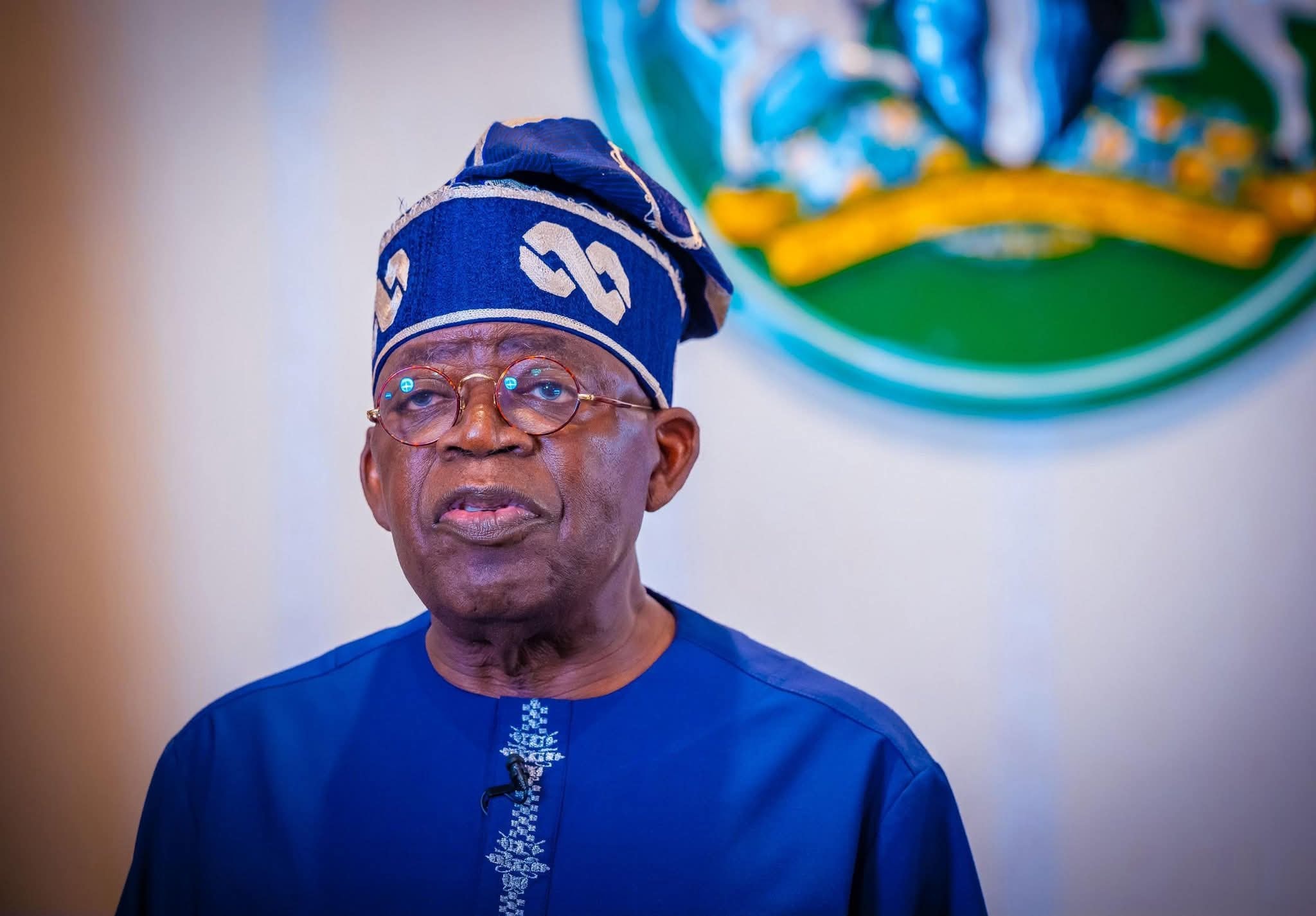
President Bola Ahmed Tinubu has honoured Kaduna State Governor, Senator Uba Sani, with the national title of Commander of the Order of the Niger (CON) in recognition of his contributions to democracy and national development.

Governor Sani, a prominent figure in Nigeria’s democratic struggle, faced multiple detentions during the fight for democratic governance. His long-standing commitment to justice and civil rights has earned him widespread respect.

Notably, he is the only serving governor named in this year’s national honors list, as announced by President Tinubu during a joint session of the National Assembly.

Congratulatory messages have poured in for Governor Uba Sani on the recognition.

Plane crash near Ahmedabad leaves no survivors, officials say

By Hadiza Abdulkadir

A devastating tragedy unfolded near Ahmedabad early Thursday morning as AI171, a commercial flight carrying 242 passengers and crew, crashed shortly after taking off. Authorities have confirmed that there appear to be no survivors.

Ahmedabad’s city police commissioner told The Associated Press that rescue teams at the scene found no signs of life amid the wreckage. “It is with deep regret that we believe all 242 people on board have perished,” he said.

Emergency responders and investigators are working to secure the site and begin efforts to identify the victims. The cause of the crash remains under investigation, with aviation officials and forensic teams en route.

The flight, operated by Air India, was en route to London. Eyewitnesses reported seeing smoke and hearing a loud explosion in the area shortly before dawn.

Prime Minister Narendra Modi expressed condolences via social media, calling the incident “a heartbreaking loss.” Grief counselling and support services have been offered to the families of those on board.

More updates will follow as the investigation continues.

Anti-immigrant riots spread in Northern Ireland

By Maryam Ahmad

Anti-migrant riots have spread across parts of Northern Ireland, with violent mobs attacking police and targeting migrant communities.

Clashes erupted in several towns, leaving police vehicles damaged and officers injured. The unrest, sparked by anti-immigrant rhetoric online, began in a Belfast suburb and quickly spread.

The Police Service of Northern Ireland condemned the violence and confirmed multiple arrests. Community leaders and rights groups have called for calm and urged protection for vulnerable communities.

Authorities continue to monitor the situation.

Wave of carnage in Plateau leaves 41 dead, many homes destroyed

By Muhammad Abubakar

A wave of violent attacks across Plateau State over the past week has claimed the lives of at least 41 people, with dozens more reportedly wounded, local sources and security officials have confirmed.

In what residents describe as a series of coordinated assaults, a total of 96 homes were set ablaze in several communities, displacing scores of families and raising fresh concerns over the escalating insecurity in the region.

The attacks, which spanned multiple local government areas, are believed to be part of ongoing communal clashes and reprisal violence that have plagued the state for years. Eyewitnesses recount harrowing scenes of gunfire, arson, and panic as armed assailants descended on their villages under the cover of darkness.

Authorities say security operatives have been deployed to the affected areas, but locals continue to express frustration over what they perceive as a slow or inadequate response to the violence.

While the Plateau State Government has condemned the attacks and promised to bring the perpetrators to justice, humanitarian agencies are calling for urgent relief efforts to support the growing number of displaced persons.

As of the time of this report, no group has officially claimed responsibility for the attacks. Investigations are ongoing.