News

MRA raises alarm over rising attacks on journalists in Tinubu era

By Uzair Adam

Media Rights Agenda (MRA) has expressed deep concern over what it described as a sharp rise in attacks on media freedom and civic expression in Nigeria, particularly the misuse of the Cybercrime Act by law enforcement agencies to intimidate and penalize journalists and government critics.

The concern was raised in a mid-term assessment report of President Bola Tinubu’s administration released on Monday.

Titled “The Onslaught Intensifies: A Mid-term Assessment Report on Media Freedom under the Tinubu Administration,” the report documents 141 cases of attacks on journalists, media workers, and citizens between May 29, 2023, and May 29, 2025, for peacefully expressing their views on issues such as governance, economic challenges, and security.

According to MRA, 61 of these incidents—representing over 43%—were carried out by personnel of the Nigeria Police, while the Department of State Services (DSS) was responsible for seven cases.

Together, the two agencies accounted for nearly half of all recorded violations.

The report held the Tinubu-led government responsible for these abuses, citing Principle 20(5) of the Declaration of Principles on Freedom of Expression and Access to Information in Africa, which holds states accountable for violations committed by law enforcement and other state actors against media practitioners.

In the report’s preface, MRA’s Executive Director, Edetaen Ojo, highlighted the use of repressive laws like the Cybercrime Act to suppress journalists, alongside politically motivated sanctions, arbitrary arrests, surveillance, and censorship of government-owned media outlets.

Ojo described the report as a necessary intervention amid growing threats to Nigeria’s democratic values, stressing that its goal is not just to criticize but to document and analyze the government’s impact on freedom of expression.

Among the report’s most troubling revelations is the continued abuse of Section 24 of the Cybercrime Act (2015), which has been frequently used to arrest, detain, and prosecute journalists and social media users for online expressions deemed critical of the government.

The report documented several such cases, including the arrests of Emmanuel Uti of the Foundation for Investigative Journalism (FIJ), blogger Destiny Ekhorutomuen in Edo State, four staff members of Informant247 in Kwara State, lawyer and activist Dele Farotimi, and others who faced harsh bail conditions or prolonged detention.

MRA noted that international concern over the misuse of the Act reached a peak in June 2025, when the Heads of Mission of the United States, United Kingdom, Canada, Norway, and Finland issued a joint statement condemning the Nigerian government’s abuse of the law and calling for urgent reforms.

The report also criticized the government’s treatment of peaceful protests as criminal acts, pointing out cases where even minors were charged with treason—a capital offence—for simply demonstrating.

Journalists covering such protests were often brutalized, detained, or had their equipment confiscated or destroyed, with no perpetrators brought to justice.

Commenting on the report’s release, MRA’s Communications Officer, Idowu Adewale, described it as troubling that President Tinubu—once a pro-democracy activist and media proprietor—is now at the helm of an administration increasingly defined by repression.

The organization called on all stakeholders, including media professionals, civil society, the judiciary, the legislature, and international partners, to pressure the Nigerian government into enacting reforms that protect media freedom, free expression, and democratic principles.

ICPC arraigns former El-Rufai’s aide, others over alleged fraud in Kaduna

By Uzair Adam

The Independent Corrupt Practices and Other Related Offences Commission (ICPC) has commenced the trial of Mr. Olajimi Shakiru Adebisi Lawal, a former aide to ex-Kaduna State Governor Nasir El-Rufai, alongside three others, at the Federal High Court in Kaduna.

The trial began on Monday, July 21, 2025, before Justice R.M. Aikawa, with the defendants facing charges bordering on fraudulent estacode payments and abuse of public office during their tenure in government service.

At the opening of the proceedings, the prosecution presented three witnesses—Mrs. Aisha Dikko Kalil, Mrs. Bariyatu Yusuf, and Mr. Samuel Aruwan—all former senior officials in the Kaduna State Government.

While giving her testimony, Mrs. Kalil, who served as Attorney-General of Kaduna State from 2019 to 2023, told the court that tuition fees for all foreign training she attended were paid directly by the state government to the respective institutions.

She added that estacode allowances were, however, paid into her personal Guaranty Trust Bank account.She confirmed receiving over N5 million in estacode payments but clarified that none of the funds came from the first defendant, Mr. Lawal.

She also stated that the total tuition fees for the training programs amounted to \$9,100.

The court admitted various documents in evidence, including her bank statements, official approvals for foreign training, and training certificates.

Kano moves to protect mothers, babies as hepatitis B cases exceed 1.2 million

By Uzair Adam

The Kano State Government has launched Nigeria’s first Triple Elimination Programme aimed at preventing the transmission of HIV, Hepatitis B, and Syphilis from mothers to their babies.

The Commissioner for Health, Dr. Abubakar Labaran Yusuf, disclosed this on Monday during a press briefing in Kano to commemorate the 2025 World Hepatitis Day with the theme “Hepatitis: Let’s Break it Down.”

Dr. Yusuf said the state government has released N95 million for the procurement of test kits and Tenofovir Disoproxil Fumarate (TDF) for pregnant women who test positive for Hepatitis B.

He added that another N135 million is awaiting approval for the purchase of additional materials to support the prevention of mother-to-child transmission (MTCT).

“This makes Kano the first state to commence and own the process of Triple Elimination of HIV, Hepatitis, and Syphilis for pregnant women,” he said.

He explained that the pilot programme, titled “HepFree Mothers, Healthy Babies” (HepFree Uwadajariri), was launched in February 2025 to eliminate mother-to-child transmission of Hepatitis B through early screening and treatment.

The effort is aligned with the global Triple Elimination goal targeting HIV, Hepatitis, and Syphilis among pregnant women attending antenatal care.

According to Dr. Yusuf, preliminary data shows that Kano State reflects the national trend, with an estimated burden of over 1.2 million people living with Hepatitis B and a prevalence rate of over 6% based on retrospective and current facility data.

He stressed that the infection, though preventable and treatable, often goes undetected, leading to avoidable deaths from liver complications.

The pilot programme is currently implemented in six major facilities: Aminu Kano Teaching Hospital, Murtala Mohammed Specialist Hospital, Muhammad Wase Teaching Hospital, General Hospital Gaya, General Hospital Bichi, and General Hospital Wudil.

In these hospitals, all eligible pregnant women are screened for Hepatitis B free of charge. Those who test positive are placed on TDF treatment starting from 32 weeks of pregnancy until delivery.

Additionally, immunization officers are posted in labour wards to administer the first dose of the Hepatitis B vaccine to newborns at birth, also free of charge.

Dr. Yusuf said this effort is part of the state’s strategy to prevent mother-to-child transmission, which accounts for about 70 to 80 percent of all Hepatitis B infections.

He also noted that blood transfusion services across both public and private health facilities in Kano are aligned with screening protocols to ensure safety.

The commissioner reaffirmed Kano State’s commitment to advance the HepFree Mothers, Healthy Babies initiative, integrate hepatitis services into existing maternal and child health platforms, strengthen commodity and data systems, and advocate for increased domestic funding to sustain the gains made.

He called on development partners, the private sector, and the media to support the programme through advocacy, funding, and public sensitisation.

Troops kill 3 terrorist bandits in Sokoto

By Anwar Usman

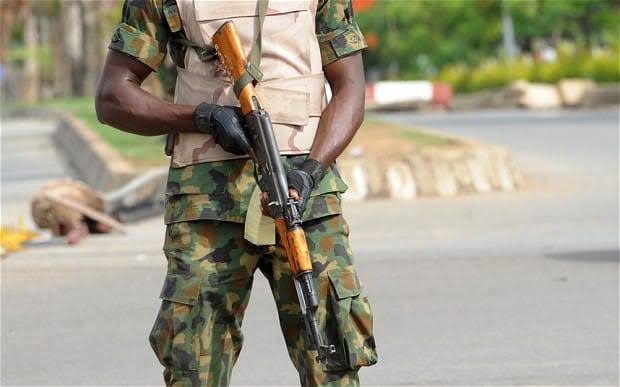
Troops of the Joint Task Force under Operation Fansan Yamma have eliminated three notorious kingpins in Sabon Birni Local Government Area of Sokoto State.

The operation, which took place on Friday, was a carefully executed ambush between Mallamawa and Mazau villages in the Tsamaye/Mai Lalle District.

According to military authorities, the terrorists, identified as Kachalla Nagomma, Gurmu, and Ali Yar Daribiyar, were intercepted while attempting to extort ransom and levies from locals in the area.

Three AK-47 rifles with magazines and a motorcycle were recovered from the scene during the operation.

The success of the mission has been met with widespread jubilation in the affected communities of Mai Lalle, Tsamaye, Rimaye, and nearby areas in Sabon Birni and Goronyo LGAs.

Residents of the communities, terrorised by the activities of the neutralised criminals and their foot soldiers, expressed happiness and renewed confidence in the security efforts.

Operation FANSAN YAMMA, a security task force aimed at restoring peace and stability across Nigeria’s North West and parts of the North Central region, reiterated its commitment to intensifying counter-terrorism efforts in collaboration with local communities.

The Media Information Officer of OPFY, Captain David Adewusi, in a statement issued on Saturday called on the public to continue sharing genuine information that’ll help the ongoing military operations.

He further stated that “the Joint Task Force remains resolute in its mission to eradicate terrorism and restore lasting peace to all affected areas”.

Dangote begins free petroleum distribution across Nigeria to ease fuel prices

By Abdullahi Mukhtar Algasgaini

The Dangote Group has announced its plan to distribute petroleum products across Nigeria free of charge in an effort to reduce the soaring fuel prices in the country.

A fleet of Compressed Natural Gas (CNG)-powered trucks has already arrived in Lagos, signaling the company’s commitment to easing the fuel supply crisis.

This move comes as the Nigerian government tightens regulations on petroleum distribution, potentially displacing independent marketers from the sector.

Meanwhile, Aliko Dangote has announced his retirement from the cement business to focus entirely on the petroleum industry.

The development has sparked mixed reactions among Nigerians, with many questioning how this shift will reshape the nation’s fuel market dynamics.

Gov Yusuf orders probe into transport commissioner’s alleged role in drug suspect’s bail

By Uzair Adam

Kano State Governor, Alhaji Abba Kabir Yusuf, has ordered a full-scale investigation into the alleged involvement of the State Commissioner for Transport, Alhaji Ibrahim Namadi, in the controversial bail of a suspected drug baron, Sulaiman Aminu Dan Wawu.

The directive came following public outrage after reports surfaced that the Commissioner’s name appeared in official documents that facilitated the suspect’s release.

This was disclosed in a statement issued on Saturday by the Governor’s spokesperson, Sanusi Bature Dawakin Tofa.

To address the matter, Governor Yusuf has constituted a special investigative committee chaired by Barrister Aminu Hussain, his Special Adviser on Justice and Constitutional Matters.

The committee has been tasked with unraveling the circumstances surrounding the incident and recommending appropriate actions without delay.

The Daily Reality reports that members of the committee include Barr. Aminu Hussain (Chairman), Barr. Hamza Haladu, Barr. Hamza Nuhu Dantani, Alhaji Abdullahi Mahmoud Umar, Maj. Gen. Sani Muhammad (Rtd.), Comrade Kabiru Said Dakata, and Hajiya Bilkisu Maimota, who will serve as Secretary.

While announcing the committee’s formation, Governor Yusuf expressed deep concern over the alleged misconduct, reiterating his administration’s commitment to combating drug abuse and other social vices in the state.

Barau flags off constitution review in Kano, calls for inclusive reform

By Uzair Adam

Deputy Senate President and Chairman of the Senate Committee on the Review of the 1999 Constitution, Senator Barau I Jibrin, on Saturday, July 26, 2025, declared open the North West Zonal Public Hearing of the Committee in Kano.

The two-day public hearing aims to gather input from citizens and stakeholders across the zone on proposed amendments to the 1999 Constitution.

The Daily Reality gathered that this is part of a broader nationwide exercise by the National Assembly to foster inclusive governance and constitutional reform.

Barau explained that the Kano session had been previously postponed out of respect for the late business magnate, Alhaji Aminu Dantata, and former President Muhammadu Buhari, GCFR, both of whom passed away earlier this month.

In his opening remarks, Barau reiterated the importance of citizen engagement in the reform process.

He noted that while Nigeria has undergone five constitutional alteration phases since 1999, several key issues remain unresolved.

“Many of these challenges cannot be addressed by regular legislation alone. We must be honest about our commitment not just to the letter of the Constitution, but to its spirit,” he said.

The Deputy Senate President highlighted that the 10th Senate established the Constitution Review Committee to lead a consultative process that reflects national consensus.

He said the Committee received hundreds of memoranda on major national concerns, including electoral and judicial reform, local government autonomy, gender representation, traditional institutions, and security structure.

“These memoranda have been translated into draft Bills which we are now bringing back to the people for further discussion,” he added.

Barau assured participants that the Committee remains impartial and open to all views, encouraging stakeholders to offer their contributions freely and responsibly.

He stressed the need for intergovernmental cooperation in ensuring that any agreed constitutional changes are properly implemented.

“A law that is not put into effect is as good as not passed,” he remarked.

The Senate Committee chairman also acknowledged the support of Kano State authorities, fellow legislators, civil society organisations, and development partners, describing their involvement as a vital step in strengthening Nigeria’s democratic institutions.

The hearing continues on Sunday, July 27.

Senator Ningi defies Senate, blocks $21bn loan over lack of accountability

By Abdullahi Mukhtar Algasgaini

Senator Abdul Ningi (PDP, Bauchi Central) has taken a firm stand against President Bola Tinubu’s $21 billion foreign loan request, refusing to endorse the deal despite its approval by the Senate.

The outspoken lawmaker, a known advocate for fiscal responsibility, criticized the lack of transparency in the loan agreement, demanding full disclosure of repayment terms and project allocations before any further borrowing.

“How can we approve such a massive loan without clear terms? This is fiscal recklessness,” Ningi declared during a press briefing.

“Nigerians deserve to know exactly how these funds will be used and how we intend to repay them.”

The rejection comes amid rising concerns over Nigeria’s ballooning debt profile, which has surpassed N121 trillion. Analysts warn that unchecked borrowing could plunge the nation deeper into economic instability.

The Presidency has yet to respond, but sources indicate Tinubu may seek alternative approval routes if Senate support wavers.

Opposition figures and civil society groups have rallied behind Ningi’s demand for accountability.

Over 200 women empowered with N50k in Kano by Zam-Zam, Light Up Orphans Foundation

By Uzair Adam

More than 200 women in Kano have received financial support from Zam-Zam Educational Initiative in partnership with the Light Up Orphans Foundation, as part of efforts to cushion the effects of the current economic hardship in the country.

The empowerment programme, which took place on Thursday at the premises of Zam-Zam College in Kano, saw each beneficiary receive N50,000 in cash to support their livelihood and small-scale businesses.

Speaking during the event, Sheikh Muhammad Aminu Ibrahim Daurawa, proprietor of Zam-Zam and a prominent Islamic scholar, said the initiative was borne out of a desire to support vulnerable women, especially in the face of growing economic challenges.

He was quoted as saying, “We considered giving N20,000 or N30,000 to enable us to reach more people. But we decided on N50,000 to ensure the beneficiaries can do something tangible with the amount, whether in business or home support.”

Sheikh Daurawa explained that the money was given in cash to avoid technical issues and delays often associated with bank transfers.

“Sometimes, people complain that they didn’t receive their share when it’s sent through banks. We wanted to avoid that entirely,” he added.

He also noted that while the team initially preferred a low-key distribution, the event was made public in the interest of transparency and accountability to their donors.

Also speaking at the event, Malam Aisar Fagge, General Manager of Salsabil TV, a media outlet under Sheikh Daurawa, described the gesture as a righteous act that aligns with Islamic values.

“This is one of the most beloved deeds in the sight of Allah — helping those in need, especially women who are struggling to make ends meet,” he said.

The beneficiaries, many of whom appeared visibly elated, expressed appreciation to the organisers, describing the assistance as timely and life-changing.

The Daily Reality learned that the empowerment programme is part of an ongoing commitment by Zam-Zam Educational Initiative and Light Up Orphans Foundation to improve the lives of the less privileged in society, particularly women and orphans.

Dear Northerners, it is time to wake up, by Abdulaziz T. Bako

By Abdulaziz T. Bako

The National Assembly is quietly processing over 80 constitutional amendments that could change the structure of Nigeria permanently. But most of us are not paying attention. This is not about party or tribe, it is about our future.

Just look at what happened in Kano. The State Government organized a public hearing on these bills, but the hall was mostly filled with Kwankwasiyya supporters, not because others were not invited, but because people are sleeping on what may be an existential threat to their region.

Reading through all 86 proposals, I couldn’t find a single clause that deliberately strengthens the North or addresses our developmental realities. The only visible “benefit” is that most of the proposals for the creation of new states and local governments are from Northern states, which is a clear reflection of our power-hungry leaders’ penchant for prioritizing territorial control over actual development. It’s the same mindset behind our endless creation of emirates across the North. Everyone just wants a title, a throne, or a kingdom they can personally rule, while the people remain poor, uneducated, and insecure.

Well, I want you to know that these reforms are not harmless. Many of them target the political, social, and economic foundations of Northern Nigeria. Leme break down a few of the most dangerous ones with what the bill says:

  1. 50% VAT Derivation

The FG’s push for 50% VAT derivation is especially dangerous and deceptive. The federal government is now trying to reintroduce 50% VAT derivation formula through the back door after it was fought and rejected in the recently enacted tax reform bill. This move is clearly designed to give Lagos state an undue advantage, allowing them to keep most of the VAT collected, while impoverishing Northern states that rely heavily on federal redistribution. In essence, Lagos and other few states will keep most VAT, and Northern states will lose billions.

  1. Resource Control – (HB 1310, HB 1406)

“States to have control over resources in their land… only remit 25% to the Federation Account.”

If this proposal passes, states will control the natural resources in their land and only remit 25% to the Federation Account. This would be catastrophic for Northern Nigeria, as most northern states heavily rely on the redistribution of oil revenue and VAT to fund their budgets, pay salaries, build infrastructure, and provide basic services. But with this reform, oil-producing states like Rivers, Akwa Ibom, and Delta would keep 75% of their oil money, while the federal government would be left with less to share. The North, which has fewer natural resources and far lower internally generated revenue, would be left behind economically. This is clearly an economic secession and sabotage disguised as federalism. It will widen the already dangerous gap between North and South, and could plunge many northern states into deeper poverty, unrest, and dependency.

3.. Indigeneship Reform – (HB 2057, HB 1422, HB 70)

“Any person resident for 10 years… or married to an indigene shall be entitled to all rights of indigeneship.”

This means anyone can become an indigene of Kano, Katsina, or Sokoto after 10 years or by marriage. I would leave you to decide what this means for emlloyment opportunities and federal character.

  1. Ecclesiastical (Christian) Courts – (HB 79)

“Establish a system of Ecclesiastical Courts equivalent to Sharia Courts for Christians.”

You decide what you make of it.

This is just a sample. These reforms are coming fast and quietly. If we don’t speak up, they will be passed, and we may never recover from the consequences.

Share this, organize, and demand your state organize public hearings. Ask your religious leaders, lawmakers, and traditional rulers where they stand.

Abdulaziz Bako
7/25/2025