News

Funeral prayer in absentia to be held for late Alhaji Aminu Dantata

By Uzair Adam

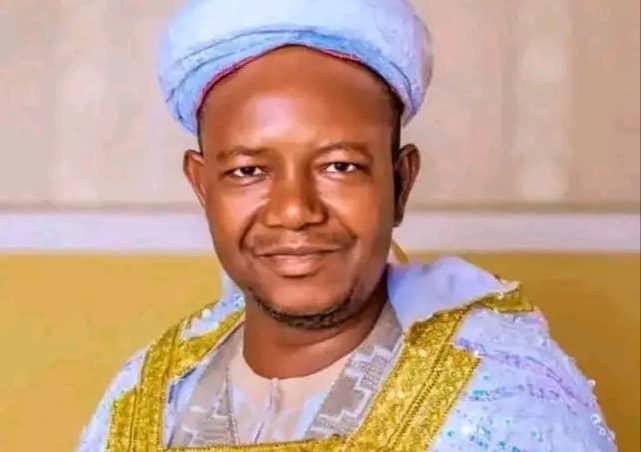
The Kano Council of Ulama has announced plans to conduct Salatul Ga’ib (funeral prayer in absentia) for the late Alhaji Aminu Alhassan Dantata, who passed away recently.

In a statement issued by the Council’s Chairman, Malam Ibrahim Khalil, the prayer will take place at 2:00 pm at the Umar Bin Khaddab Mosque in the Gyadi-Gyadi area of Kano.

Khalil urged members of the Muslim community to attend and offer prayers for the deceased.

“Inna Lillahi Wa Inna Ilaihi Raji’un. May Allah forgive him and grant him Jannatul Firdaus,” the statement said.

Salatul Ga’ib is performed for a deceased person whose body is not present at the location of the prayer, often when the individual has died and been buried elsewhere.

Renowned businessman Alhaji Aminu Alhassan Dantata passes away

By Sabiu Abdullahi

One of Nigeria’s most prominent businessmen and respected elder statesmen, Alhaji Aminu Alhassan Dantata, has died.

His death was confirmed by a family member on Friday, stirring an outpouring of grief across the country.

The family member shared the sad news, stating: “Innalillahi wa inna ilaihi rajiun. Innalillahi wa inna ilaihi rajiun. It is with heavy heart that I announce the passing of our beloved father Alhaji Aminu Alhassan Dantata. May Allah grant him Jannatul Firdaus and forgive his shortcomings. The Janazah details will be shared later insha Allah.”

Alhaji Aminu Dantata was widely respected for his immense contribution to commerce, philanthropy, and the development of northern Nigeria.

He was known for his humility, generosity, and commitment to public good.

Details of his funeral (Janazah) will be made public in due course, according to the family.

JAMB laments low printing of mop-up exam slips by candidates

By Anwar Usman

The Joint Admissions and Matriculation Board has lamented over the low turnout of candidates to reprint their notification slips for the upcoming make-up Unified Tertiary Matriculation Examination.

This was contained in a statement issued on Friday by JAMB spokesperson, Fabian Benjamin, the Board revealed that only a small number of the scheduled candidates had completed the slip-printing process.

“As of this morning (Friday), only 12,442 out of the 98,232 scheduled candidates have printed their slips, reflecting a mere 12.6% participation rate,” the statement read.

To this end, JAMB appealed to affected candidates, particularly those who missed their main UTME, to take immediate action in order not to miss the rare opportunity.

“We strongly encourage all candidates, particularly those who missed the main examination, to print their notification slips promptly.

“This is a rare opportunity for them to participate in this year’s examination,” the Board said.

JAMB further reiterated that, “We urge all candidates who missed their previous examinations to reprint their slips to ensure they do not miss this opportunity.”

The board also assured the public that adequate measures had been taken to ensure a smooth and inclusive process.

“The Board is actively monitoring the printing process to determine the number of candidates who will be present for the examination.

“Meanwhile, we have deployed both human and material resources to facilitate this exercise, ensuring that all registered candidates have the opportunity to sit the examination,” the statement concluded.

Retired police officers to stage nationwide protest over pension woes

By Uzair Adam

The Kaduna State chapter of the Union of Retired Police Officers has announced plans for a nationwide demonstration scheduled for July 21, 2025, to protest what it describes as persistent pension-related challenges.

Dubbed the “Mother of All Peaceful Protests,” the demonstration aims to draw attention to the plight of retired police personnel enrolled in the Contributory Pension Scheme, which the group argues has caused severe financial hardship, psychological distress, and a rise in deaths among retirees.

The union’s Chairman, Mannir M. Zaria, and Vice Chairman, Danlami Maigamo, disclosed this decision after their monthly meeting held at the Police Officers’ Mess in Kaduna.

They stressed that their demand is for the Nigeria Police Force to be withdrawn from the Contributory Pension Scheme and for the establishment of an independent Police Pension Board.

They maintain that the current system is unjust and has failed to protect the welfare and dignity of retired officers.

“We have no option but to embark on another peaceful protest tagged ‘Mother of All Peaceful Protests’ on July 21, 2025,” the union stated, vowing to keep their agitation peaceful and lawful across all 36 states.

The group also recalled an earlier protest between February 24 and March 3, 2025, at the National Assembly by the Kaduna and Bauchi chapters, during which petitions were submitted to key legislative and security offices.

However, they expressed frustration over the continued silence from the authorities, especially the lack of progress on the Police Pension Board Bill discussed in a public hearing on November 19, 2024.

They reaffirmed their commitment to non-violence and distanced themselves from any group plotting violent action, insisting their demands are centered on justice, welfare, and reform.

“The silence from the authorities is deafening, but we remain committed to lawful engagement,” the union said.

The persecution of Hausa people in Nigeria must stop

By Salisu Uba Kofar Wambai

The safety and dignity of Hausa people in Nigeria are increasingly under threat. The recent spate of brutal killings targeting innocent Hausa travellers across various regions of the country is both alarming and unacceptable. 

Disturbingly, the North Central and Southern parts of Nigeria, in particular, are turning into graveyards for members of the Hausa community, despite the hospitality and freedom non-indigenes continue to enjoy in Hausa land—where people from across the country have settled peacefully, enjoying all rights guaranteed under the Nigerian Constitution, including freedom of movement and residence.

The recent killing of two Hausa tanker drivers in the South-East came as a shock. They were attacked and butchered while trying to repair their broken-down vehicle. Similarly, the horrific massacre of Hausa hunters in an incident that sent shockwaves across Nigeria and beyond speaks volumes about the rising hostility against the Hausa community.

Equally tragic was the killing of Hausa travellers in Plateau State who were on their way to honour a wedding invitation. Their brutal slaughter reflects the growing dehumanisation of Hausa people, treated like cockroaches in a country they call home. In Benue State, two sons of renowned Islamic scholar, Malam Ibrahim Khalil, were also gruesomely murdered, as though their lives meant nothing.

These atrocities raise serious questions: Are we to fold our arms while our people are slaughtered day after day? Where are our political leaders? Where are the Hausa individuals within the security and intelligence networks? Is silence the best they can offer? Or is the Hausa community being pushed to a point where it might be forced to retaliate?

This alarming trend must not be ignored. The examples highlighted are only a fraction of the broader pattern of persecution being endured by Hausa people across the country. Despite being one of the most accommodating and detribalized ethnic groups in Nigeria, the Hausa are being pushed to the wall—and if this continues, the unity of the Nigerian federation could be at serious risk.

Urgent action is required. These barbaric attacks must stop, and those responsible must be brought to justice. The time to act is now.

Tinubu mediates Rivers crisis in Abuja talks

By Abdullahi Mukhtar Algasgaini

President Bola Tinubu convened a high-stakes reconciliation meeting on Thursday night at the Presidential Villa in Abuja, aiming to resolve the political turmoil in Rivers State.

The closed-door session included Governor Siminalayi Fubara, Federal Capital Territory Minister Nyesom Wike, Rivers State Assembly Speaker Martins Amaewhule, and other lawmakers.

This comes after President Tinubu declared a state of emergency on March 18, suspending Governor Fubara, his deputy, and the entire State House of Assembly.

The discussions focused on restoring stability in the oil-rich state, though details of the agreement remain undisclosed.

Tinubu risks 2027 defeat over hunger, insecurity, Ohanaeze warns

By Abdullahi Mukhtar Algasgaini

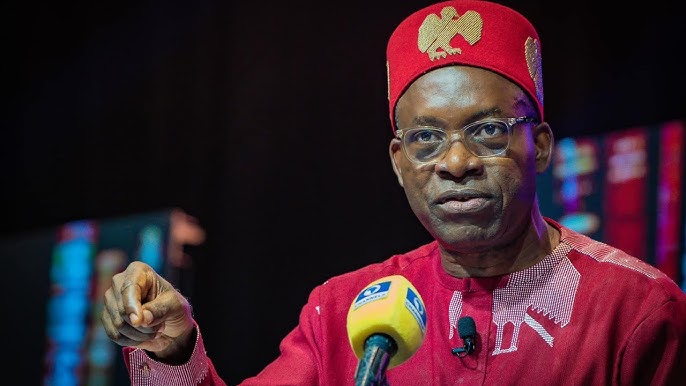
The apex Igbo socio-cultural organization, Ohanaeze Ndigbo, has warned President Bola Tinubu that failure to address Nigeria’s worsening hunger, poverty, and insecurity could cost him reelection in 2027.

In a statement by its factional Deputy President-General, Mazi Okechukwu Isiguzoro, the group said Nigerians are at a breaking point and may revolt against the administration through the ballot box if urgent measures are not taken.

Ohanaeze accused state governors of misleading Tinubu with false assurances of support, warning that Northern governors, in particular, may abandon him in 2027 due to public discontent.

The group also criticized governors for blocking financial relief meant for local governments despite Supreme Court rulings on autonomy.

The organization urged Tinubu to implement revolutionary policies, slash electricity tariffs, revamp his economic team, and invest heavily in agriculture to avert disaster.

It warned that without immediate action, the suffering masses could make his 2027 campaign impossible.

“Nigerians are enduring unbearable hardship, and if nothing changes, no governor can save Tinubu in the next election,” the statement read.

INEC sets August 16 for Chikun/Kajuru by-election, 15 others

By Abdullahi Mukhtar Algasgaini

The Independent National Electoral Commission (INEC) has scheduled by-elections for 16 vacant legislative seats, including the Chikun/Kajuru Federal Constituency in Kaduna State, for Saturday, August 16, 2025.

The polls follow the death of Hon. Ekene Adams, the former representative of Chikun/Kajuru.

The elections will cover five federal and 11 state constituencies across 12 states.INEC Chairman, Prof. Mahmood Yakubu, announced the date during a meeting with political parties in Abuja.

Over 3.5 million registered voters in 32 LGAs, 356 wards, and 6,987 polling units will participate, with 30,451 officials deployed for the exercise.

Yakubu assured that INEC remains committed to conducting a free, fair, and credible election to fill the vacant seats.

President Tinubu signs tax reform bills into law

By Anwar Usman

The President of Nigeria, Bola Ahmed Tinubu, has today signed the four tax reform bills into law.

The bills, which he said will transform Nigeria’s fiscal and revenue framework, were signed at the Presidential Villa in Abuja on Thursday afternoon.

The four bills include the Nigeria Tax Bill, the Nigeria Tax Administration Bill, the Nigeria Revenue Service (Establishment) Bill, and the Joint Revenue Board (Establishment) Bill, which were recently passed by the National Assembly.

Those present at the signing ceremony were Senate President Godswill Akpabio, Speaker of the House of Representatives, Tajudeen Abbas; Senate Majority Leader, House Majority Leader, chairman of the Senate Committee on Finance, and his House of Representatives counterpart.

On Wednesday, Bayo Onanuga, Special Adviser to the President on Information and Strategy, stated that the implementation of the new tax laws would significantly transform tax administration in the country, leading to increased revenue generation, an improved business environment, and a boost in domestic and foreign investments.

Nigeria’s digital shield: Why SOC analysts, threat-intelligence teams become business-critical

By: Kabir Fagge

As Nigeria’s fintech boom, e-commerce surge and digital-government projects push ever more data online, the threat surface is expanding faster than many boardrooms realise. In January 2025 alone, Nigeria jumped two places on Check Point Software’s global list of most cyber-attacked countries, moving from 13th to 11th in just four weeks.

The previous month saw the National Bureau of Statistics knocked offline by an account takeover, forcing the agency to warn citizens against fraudulent data releases. Analysts say the uptick is part of a wider continental pattern: an INTERPOL-led sweep across Africa in March netted 300 suspects (130 of them in Nigeria) accused of everything from investment-app scams to crypto-laundering rings.

Against this backdrop, the unsung heroes of Nigeria’s blue-team defences. Security Operations Centre (SOC) analysts and threat-intelligence (TI) specialists have never been more vital. “Think of the SOC as a 24-hour digital emergency ward,” says Ofuafo Orumeteme, a Texas-based Nigerian cybersecurity professional completing an M.Sc. in Cybersecurity at Stephen F. Austin State University and formerly a technical-support lead in the Nigerian banking sector. “Every log line, every traffic spike is a vital sign we triage in real time. Without that vigilance, a ransomware infection can burn through a network before leadership even knows something is wrong.”

A modern SOC is typically staffed in shifts of Tier-1, Tier-2 and incident-response engineers who hunt for anomalies across security information and event management (SIEM) dashboards such as Splunk or IBM QRadar. When an alert fires, say, an unusually large data exfiltration at 2 a.m., Tier-1 analysts validate it, block the malicious IP or quarantine the affected endpoint, and escalate the case for deeper forensics.

“Speed is everything,” Orumeteme notes. “The median ‘dwell time’ of attackers worldwide dropped to 10 days last year, but in West Africa, it’s often measured in hours because many criminals are after quick-hit business email compromise payouts. A well-drilled SOC can cut that dwell time to minutes.” Deloitte’s 2025 Nigeria Cybersecurity Outlook agrees, warning that ransomware groups are now “weaponising automation” to compress their attack cycles.

While SOC operators fight fires, threat-intelligence teams work further upstream. They scrap dark-web marketplaces, analyse malware samples and map adversary tactics, techniques and procedures (TTPs) to the MITRE ATT&CK framework. Their goal is to transform fragments of chatter or novel code into actionable “indicators of compromise” (IOCs) that can be fed back into SIEM detection rules.
“In practice, TI is our radar,” Orumeteme explains. “If we learn that a credential-harvesting toolkit now embeds specific PowerShell obfuscation, we will write a YARA rule the same day. That way, the SOC spots it on packet capture before the attacker pivots to domain controllers.”

The Central Bank of Nigeria’s updated risk-based cybersecurity framework for deposit-money and payment-service banks now makes a formal TI programme mandatory. It urges institutions to “proactively identify, detect and mitigate” emerging threats. NITDA’s Strategic Roadmap likewise lists “developmental regulation” and indigenous capacity-building as cornerstones of its 2021-24 plan. These policies are beginning to shape budgets.

Nigerian banks spent an estimated ₦ 35 billion on cyber controls last year, industry executives say, with SOC outsourcing and TI subscriptions topping the list. Yet investment alone is not enough, warns Orumeteme. “You can buy a SIEM overnight, but you can’t buy muscle memory. Organisations need tabletop exercises, cross-training between network and security teams, and clear playbooks that specify who calls whom at 3 a.m. when the alarms go red.”

Nigeria’s cybersecurity workforce deficit is still wide. It is roughly around 76,000 professionals short of demand, according to ISC² regional estimates. That shortage is felt acutely in blue-team roles that require both technical depth and nerves of steel. University programmes are expanding, but Orumeteme argues that industry must accelerate on-the-job apprenticeships:
“Give junior analysts sandbox labs, let them dissect real malware and write correlation searches. Pair them with TI researchers who can teach open-source-intelligence tradecraft. It’s the fastest way to grow tier-2 talent.”

Data-leakage incidents in Nigeria have doubled year-on-year, with BusinessDay warning of “a crisis in the making” as attackers exploit cloud misconfigurations and unpatched VPNs. The average cost of a breach in the country now hovers around ₦ 300 million. Insurers say that money could fund expansion, R&D or thousands of new jobs.

“When executives ask for ROI, remind them that a single business-email compromise drained ₦ 1.2 billion from a West-African conglomerate last quarter,” Orumeteme says. “A mature SOC caught early recon on day one, blocked it, and saved shareholder value.”

Nigeria is aggressively cracking down on cyber-fraud. Over 1,000 arrests and 152 successful prosecutions in the past year show that progress is possible. But enforcement must be matched by enterprise-level vigilance. SOC analysts and threat-intelligence operatives sit at that nexus, turning raw telemetry and scattered clues into the actionable knowledge that keeps businesses and citizens safe.

As Orumeteme puts it, “Cybersecurity isn’t just an IT line item anymore. It’s national economic policy. And the SOC floor at 2 a.m. is where that policy succeeds or fails.”

Kabir Fagge Ali writes from Abuja, Nigeria and can be contacted via faggekabir29@gmail.com