News

Beyond “scandals”: Subtle war against Kwankwasiyya administration?

By Nuraddeen Nasir

In recent weeks, Kano State’s political atmosphere has been unsettled by a series of corruption allegations targeting senior government officials. From the resignation of the former Commissioner of Transportation, Honourable Ibrahim Namadi Dala, over a bail scandal to the latest accusations linking another top official to the diversion of public funds, the narrative has been one of scandal after scandal, amplified across select media platforms.

While accountability remains a cornerstone of good governance, it is important to ask a deeper question: Are these allegations isolated incidents, or do they point to a calculated effort to discredit the present administration?

A closer look reveals a pattern. Each controversy is picked up, amplified, and sensationalized in ways that extend beyond normal journalistic inquiry. The timing and intensity suggest more than coincidence; it hints at a broader political strategy designed to erode public trust in the governor’s leadership.

By targeting appointees one after another, the opposition may be seeking to create a perception that the administration is engulfed in corruption, regardless of the facts.

The real danger lies not only in the allegations themselves, but in how the administration reacts to them. Governor ABBA KABIR YUSUF has earned a reputation for his swift responses to public concerns. While such responsiveness is commendable, it can also be exploited. Reactionary decisions, especially dismissals or quick condemnations, may serve short-term public applause but risk long-term instability. They can embolden political opponents, who thrive on portraying the government as fragile and divided.

What is needed now is a balance: firm commitment to accountability, but guided by due process rather than media pressure. Investigations into any such incidents must be thorough, transparent, and credible, not dictated by headlines or political intrigue. At the same time, the administration must recognize that governance is not only about policies, but also about narratives. A robust communication strategy is essential, one that highlights achievements, places allegations in context, and exposes the political motives behind orchestrated attacks.

Kano State stands at a critical juncture. The battle is not merely about individual scandals; it is about the credibility of an administration that came to power on the promise of people-centered governance. If unchecked, the systematic discrediting of its officials could weaken the governor’s mandate and distract from his developmental agenda.

The lesson is clear: while corruption must never be condoned, neither should conspiracy be ignored. Seeing the bigger picture is essential. This is more than a string of scandals; it may well be a subtle political war aimed at shaping perceptions ahead of 2027.

Nuraddeen Nasir is a Doctoral candidate from Bayero University, Kano
MD, Data in-use Nigeria LTD

Kano battles mosquito surge as communities, doctors, government call for action

By Anas Abbas

The ongoing rainy season has brought relief from the heat but also a dangerous surge in mosquito breeding across many communities.

Open, clogged gutters and stagnant pools of water have become breeding hotspots for Anopheles mosquitoes, the primary carriers of malaria, prompting urgent calls for action from health experts, residents, and government officials.

The Daily Reality has reported that numerous neighborhoods in Kano City, including Dan Rimi, Yan Mata, and Kurna Asabe, are facing serious challenges related to unclean open gutters and stagnant sewage channels.

These unsightly conditions not only compromise the aesthetic appeal of these areas but also pose serious health risks to the residents.

Community outcry

Across several neighborhoods in the city, residents have expressed frustration over the poor state of local drainage systems. Many lament that the rainy season has worsened the situation, with gutters overflowing and stagnant water lingering for days.

“Our gutters are blocked with plastic waste, sand, and all kinds of debris,” said Aisha Ismail, a resident of Kurna Asabe.

Another resident of Yan mata, Isah Mustafa, added “Mosquitoes are everywhere now. We are willing to clean up, but the drains are deep and heavily silted. We need government equipment and manpower to make a real impact.”

Although some communities like Gayawa, Rimin Zakara Rijiyar Lemo (A) have already embarked on volunteer clean-up exercises, local leaders admit that without adequate tools, trucks, and protective gear, their efforts remain limited.

The village head of Rimin Zakara, Kabiru Abba, explained that during the rainy season, community members gather to emphasize the importance of maintaining clean water channels.

“This includes placing slabs over street gutters and clearing unwanted grass to reduce the risk of mosquito breeding.” However, “households with flowers are also advised to trim their plants and grasses, as doing so helps minimize the presence of insects and mosquitoes”.

He said the Ward Head of Tudun Bojuwa, Zaharaddin Muhammad, also urged communities to take advantage of the sanitation day to clean up their sewage systems, gutters, and drainages in order to protect themselves from mosquito infestations.

He added that “sanitation should not only be about preventing mosquitoes, but also about promoting personal comfort and well-being”.

Medical expert’s insight

Dr. Usman Sani, a seasoned medical doctor explained to Daily Reality that the outbreak of malaria is closely linked to how we manage sewage and refuse disposal in our environment.

“Malaria lays its eggs in dirty water, which leads to an increase in disease transmission in affected areas. It is crucial that we effectively manage our water systems,” he stated.

He emphasized the importance of implementing a closed system for water and waste disposal, rather than allowing them to be exposed openly. “Cleaning sewage channels and gutters will significantly reduce the chances of malaria in our communities. However, it is essential that these channels are enclosed rather than left open. In our case, our gutters are predominantly open and often stagnant, leading to clogged water systems filled with debris,” Usman said.

Government response

The Kano State Ministry of Environment and Climate Change has emphasized that both government and communities, alongside relevant stakeholders, must actively engage in drainage and sewage clean-up exercises.

Speaking in an interview with Arise TV, the Commissioner for Environment explained that rampant refuse dumping and blocked drainages often serve as breeding grounds for mosquitoes.

He stressed that consistent clean-up activities could effectively address this challenge.

According to him, the ministry has provided equipment to communities to enable their participation in the exercise.

He further noted that while negligence and ignorance sometimes contribute to the problem, ongoing sensitization and inclusive efforts will encourage residents of Kano to embrace the initiative.

ThisDay newspaper reported that the Kano State Government has flagged-off the 2025 Seasonal Malaria Chemoprevention (SMC) Campaign and Insecticide-Treated Net (ITN) Distribution, with the official launch held at Burji Primary Health Centre in Madobi Local Government Area.

Aminu Abdulssalam, the deputy governor said the state has initiated the launching of the Seasonal Malaria Chemoprevention campaign and distribution of insecticide-treated nets to prevent malaria, a disease that disproportionately affects children and pregnant women across Kano state.

Despite the general distribution of 7.7 million insecticide-treated nets (ITNs) across Kano State, particularly targeting mothers and children, some residents in parts of Ungogo Local Government Area have expressed concerns about not receiving the nets.

“We have seen people in areas like Fagge and Dala Local Government Areas collecting ITNs, but it is yet to reach us,” lamented Jamila Sulaiman, a resident of Ungogo.

A source confirmed that the Ungogo Local Government distributed insecticide-treated nets (ITNs) to residents across the area. Health officials emphasize that mosquito control is not a one-time effort but requires consistent community engagement. Regular cleaning of gutters, covering of water storage containers, and timely waste disposal are being highlighted as essential steps.

“If we act together now, we can greatly reduce mosquito breeding and protect our communities. Every blocked gutter we clear today is one less breeding site tomorrow. The rainy season is here we must treat this as a health emergency.” Dr. Juniadu sani concluded

Customs, ICPC intensify anti-corruption campaign with sensitisation workshop

By Sabiu Abdullhi

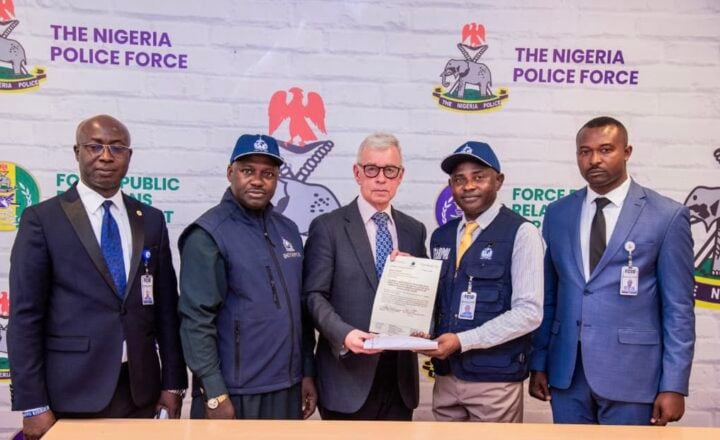
The Nigeria Customs Service (NCS), in partnership with the Independent Corrupt Practices and Other Related Offences Commission (ICPC), has held a sensitisation workshop aimed at boosting the efficiency of its Anti-Corruption and Transparency Unit (ACTU).

The event was organised for senior management staff of Customs and took place in Abuja on August 21, 2025.Speaking at the opening, Deputy Comptroller-General Greg Itotoh, who represented the Comptroller-General of Customs, Adewale Adeniyi, said the fight against corruption within the Service has been a long-standing effort.

He explained that the workshop was designed to reinforce internal checks and entrench integrity at all levels.”Having you here today demonstrates our resolve to fight corruption. Being with us further encourages us and strengthens that desire to enforce our Anti-Corruption initiatives that we have put in place,” he said.

He added that the lessons from the exercise would be passed on to other officers and would help drive better service delivery.

He further assured that Customs, working with its stakeholders, would not relent until corruption is fully eradicated.

Also speaking at the event, ICPC Chairman, Musa Aliyu, who was represented by Olusegun Adigun, praised the Customs leadership for prioritising accountability and ensuring that the sensitisation was held.

“Corruption remains one of the greatest impediments to national development, eroding trust, stifling economic growth and diminishing the effectiveness of governance,” he said.

He continued, “As we engage in today’s discourse, let us remember that every act of integrity contributes to a stronger, more transparent society. Let this workshop be a catalyst for a renewed commitment, innovation and proactive engagement in the fight against corruption.”

He urged Customs personnel to remain committed to ethical standards and encouraged management to sustain support for ACTU’s operations.

“Every act of integrity will help reshape society,” he added.

The workshop featured paper presentations, including “Understanding the ACTU Standing Order 2023” by an ICPC official, and “Preventive Strategies in Combating Corruption in Public Institutions” delivered by Richard Bello.

Both papers underscored the importance of preventive reforms and stronger institutional frameworks against unethical practices.

Bringing the event to a close, Comptroller Emmanuel Oshoba, who heads the Customs Intelligence Unit, reaffirmed the Service’s commitment to working closely with ICPC.

He stressed that accountability and transparency remain central to Customs’ ongoing reforms.

“We’re deeply grateful to the ACTU for initiating and championing this Programme. Your relentless effort towards promoting accountability and good governance did not go unnoticed. Thank you for being the moral compass within our institution,” he said.

Outrage as 20 suspects in Plateau wedding bloodbath walk free on bail

By Abdullahi Mukhtar Algasgaini

There was outrage after the Plateau State High Court granted bail to twenty individuals accused of the brutal killing of thirteen wedding guests in the Mangu Local Government Area.

The decision, delivered yesterday, comes just days after the tragic attack that shocked the nation.

The victims were ambushed while returning from a wedding celebration.

They were travelling in a vehicle affiliated with Ahmadu Bello University (ABU), Zaria, from Zaria to Jos when they were reportedly set upon by a group of youths.

The suspects were subsequently arrested and arraigned before the court on charges relating to the massacre.

Presiding over the case, the judge ruled to grant all twenty defendants bail pending the continuation of their trial.

The court has adjourned the matter until October 13, 2025, for further hearing and proceedings.

The decision is likely to be met with mixed reactions from a public still grieving from the devastating attack.

EFCC detains Hajj commission officials over alleged fund diversion

By Anwar Usman

The Economic and Financial Crimes Commission has detained two senior officials of the National Hajj Commission of Nigeria over alleged fraud linked to the 2025 Hajj exercise.

Anonymous sources at the EFCC reliability confirmed the arrests, noting that both officials were currently in custody.

“They are with us. We asked them to return the money they took, but they have yet to do so. That is why they remain in our custody,” a source stated.

In a statement signed by the commission’s Assistant Director of Information and Publication, Fatima Usara, on behalf of the Chairman and Chief Executive Officer, Prof. Abdullahi Usman, NAHCON emphasized its commitment to accountability and due process.

Although the commission neither confirmed nor denied the detention of its officials, it stated that it maintains an open and ongoing relationship with relevant government agencies, including anti-corruption and regulatory bodies.

“This cooperation is a standing principle of the commission’s operations and its belief in due process and the rule of law. The commission would not shield any staff or process found wanting,” the statement read.

Usara also appealed to the public and the media to avoid speculation, urging that due process be allowed to run its course.

“However, the commission respectfully urges the public and especially the media to exercise restraint on speculations and allow the appropriate authorities to conclude their work in accordance with established procedures, without subjecting perhaps innocent persons to indignity through media trials.”

The statement further added that “the commission remains focused on post-Hajj evaluations, addressing operational challenges, and strengthening measures to ensure even better service delivery in future Hajj operations”.

Efforts to reach the EFCC spokesperson, Dele Oyewale, for comments were unsuccessful as of the time of filing this report.

Kaduna commuters groan as Nnamdi Azikiwe Bypass project stalls

By Malam Aminu Wase

For yet another day, commuters along the Nnamdi Azikiwe Express Bypass in Kaduna were left stranded in long queues of traffic, lamenting the hardship occasioned by the snail-paced road construction. What ought to be a symbol of progress has instead become a nightmare for motorists, traders, and workers who rely on the route daily.

The project, awarded years ago to construction giant Dantata and Sawoe under the supervision of the Federal Government, remains far from completion. Instead of providing relief, the road has degenerated into a corridor of pain, littered with potholes, construction delays, and traffic disorder.

Residents and road users have accused both the Federal Government and the contractor of negligence and insensitivity to the plight of ordinary Nigerians. Every day, we waste hours here. Government officials don’t pass through this road, so they don’t care. The contractor is not even serious about the work.

The Nnamdi Azikiwe Bypass is a critical artery in Kaduna, designed to ease traffic pressure and promote economic activity. Yet, the slow pace of work reflects poorly on the government’s commitment to infrastructure delivery and raises questions about accountability in contract execution.

As things stand, Kaduna residents are left to bear the brunt of abandoned promises. If urgent measures are not taken to fast-track the project, the bypass will remain a monument of inefficiency, another reminder of how governance failures continue to suffocate the lives of ordinary Nigerians.

Customs, Shippers’ Council meet over B’Odogwu implementation

By Sabiu Abdullahi

The Nigeria Customs Service (NCS) has held a high-level consultation with the Nigerian Shippers’ Council (NSC) to address challenges surrounding the rollout of the Unified Customs Management System, popularly called B’Odogwu.

Concerns had been raised by freight forwarders and Licensed Customs Agents who complained about delays and demurrage linked to the new system.

This prompted a meeting on Monday, August 19, 2025, between the Comptroller-General of Customs, Bashir Adewale Adeniyi MFR, and the Executive Secretary of the Shippers’ Council, Dr. Akutah Ukeyima, at the Customs headquarters in Abuja.

During the discussions, Dr. Ukeyima conveyed feedback from stakeholders, stressing that operators were facing difficulties tied to system integration, documentation, and port logistics.

He highlighted the need for swift intervention to minimise financial losses and avoid disruptions in cargo clearance.

The Comptroller-General of Customs reaffirmed the importance of the project, describing it as a flagship under the Customs Modernisation Programme.

He noted that, “B’Odogwu, being a flagship project under the Customs Modernisation Programme, remains critical to achieving a transparent, technology-driven, and globally competitive clearance process.”

He assured stakeholders that the initial setbacks would be addressed through continuous engagement, phased improvements, and upgrades to the system.

Both agencies agreed on the need for sustained collaboration and pledged to continue consultations with shipping lines, terminal operators, and other stakeholders.

The NCS stressed that while transitional difficulties were expected in reforms of this scale, efforts were underway to reduce disruptions and shield operators from additional costs such as demurrage.

According to the Service, the B’Odogwu platform is designed to centralise Customs processes, integrate stakeholders into a single system, shorten clearance timelines, lower costs, improve compliance, and boost government revenue.

The Customs leadership urged stakeholders to support the implementation, provide constructive feedback, and partner with the Service in creating a modernised trade environment that enhances efficiency and competitiveness.

The statement was issued by Abdullahi Maiwada, PhD, Assistant Comptroller of Customs and National Public Relations Officer, on behalf of the Comptroller-General of Customs.

Gov Namadi sacks special adviser on NASS matters

By Uzair Adam

Jigawa State Governor Umar Namadi has relieved his Special Adviser on National Assembly Matters, Rabi’u Garba Kaugama, of his appointment.

Although no official reason was given for the decision, a statement issued on Tuesday by the Secretary to the State Government (SSG), Bala Ibrahim, said the removal takes immediate effect.

The statement added that all rights and privileges attached to Kaugama’s office have been withdrawn, and he is directed to hand over all government properties in his possession to the SSG’s office without delay.

Court freezes Mele Kyari’s bank accounts over fraud probe

By Uzair Adam

The Federal High Court in Abuja on Tuesday ordered the temporary freezing of four Jaiz Bank accounts linked to the immediate-past Group Managing Director (GMD) of the Nigerian National Petroleum Company Limited (NNPCL), Mele Kyari, following allegations of fraud.

Justice Emeka Nwite granted the order after the Economic and Financial Crimes Commission (EFCC) lawyer, Ogechi Ujam, moved an ex parte motion.

Ujam explained that investigations were still ongoing and more time was needed to conclude the process.

In his ruling, Justice Nwite held that the application had merit and should be granted. He adjourned the matter until September 23 for a progress report.

According to the EFCC, the affected accounts are registered under Kyari’s name and two other entities—Guwori Community Development Fund and Guwori Community Development Foundation Flood Relief.

The anti-graft agency alleged that the accounts contain over N661 million suspected to be proceeds of unlawful activities.

The commission further told the court that preliminary investigations revealed the funds were disguised as payments for a book launch and NGO activities, while the accounts were managed through Kyari’s family members acting as fronts.

The EFCC said the action became necessary to preserve the funds pending the conclusion of investigations and possible prosecution.

President Tinubu scraps 5% telecom tax, says NCC boss

By Abdullahi Mukhtar Algasgaini

The Executive Vice Chairman of the Nigerian Communications Commission (NCC), Dr. Aminu Maida, announced on Tuesday that the previously suspended 5% excise duty on telecommunications services has been completely scrapped by President Bola Tinubu.

Speaking at an interactive session with journalists in Abuja, Maida revealed he was present when the issue was raised with the President, who firmly rejected the tax.

“He said, ‘No, no, no, we cannot put this on Nigerians’,” Maida recounted. “I was very pleased when the bills came out and we saw his words were followed through.”

The contentious duty, part of a broader tax reform bill, had faced strong public opposition since its introduction in 2022, leading to its suspension by President Tinubu in July 2023.

Its full removal is now expected to ease financial pressure on subscribers and support wider growth in the crucial sector.