News

Outrage as notorious bandit leader Babaro attends peace meeting in Katsina

By Muhammad Abubakar

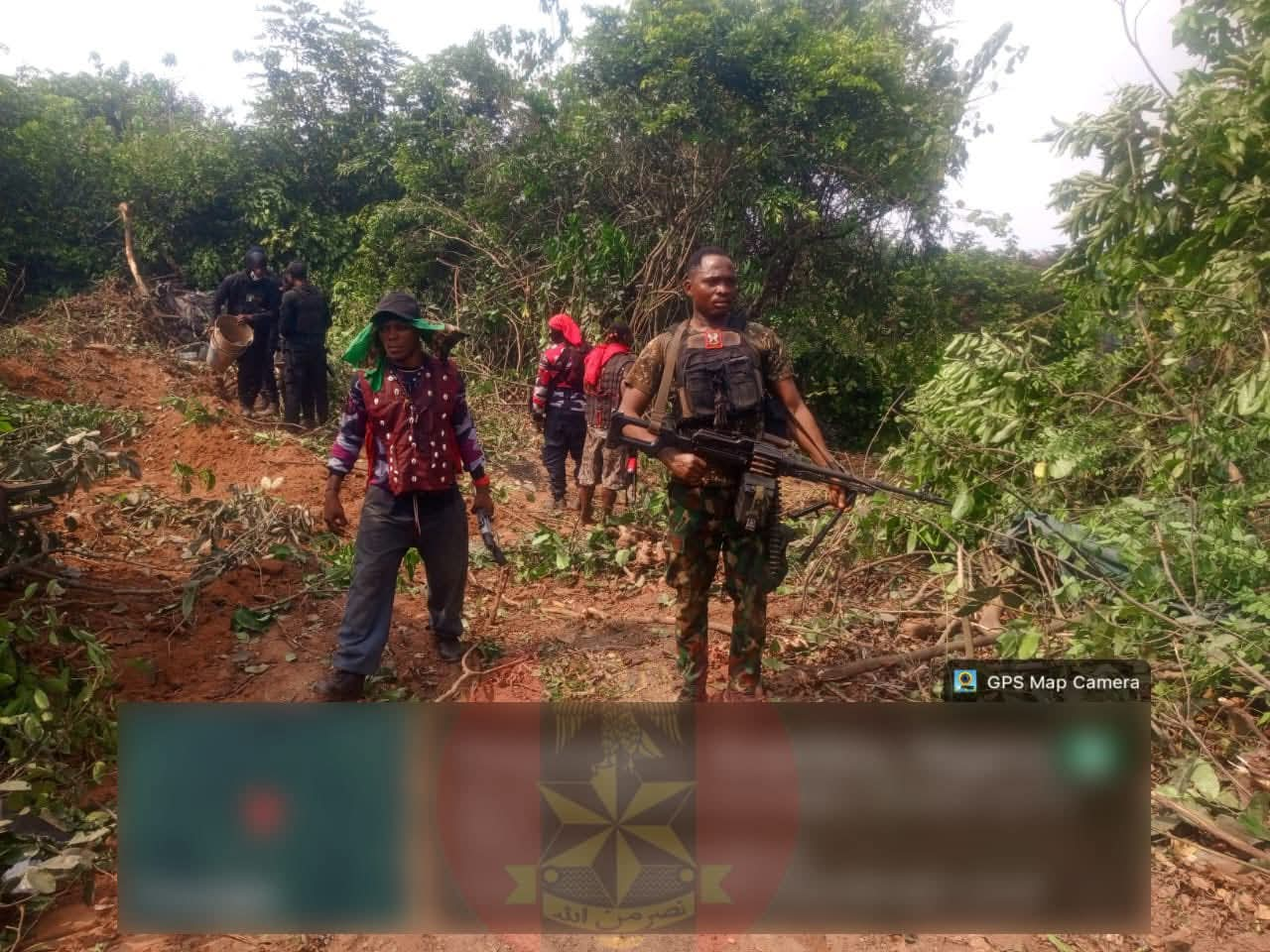
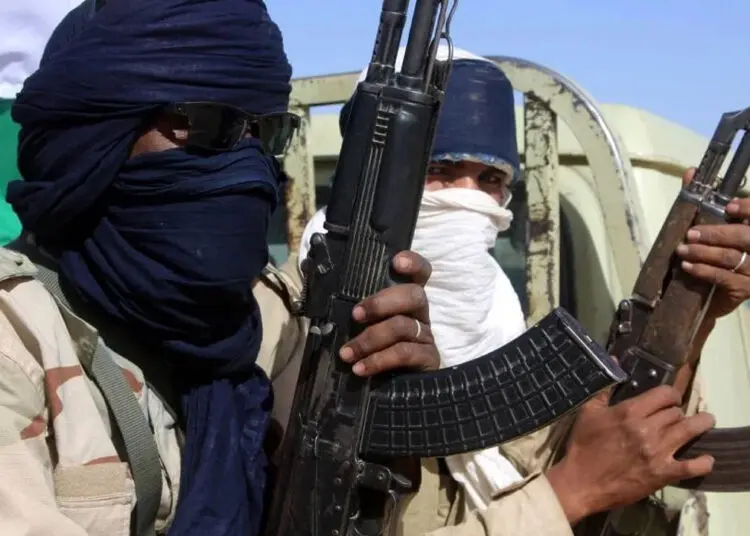
Shock and outrage have trailed the appearance of a notorious militia leader, Babaro, at a government-backed peace dialogue in Faskari Local Government Area on Sunday. The bandit commander, long accused of mass killings and sexual violence, arrived at the meeting heavily armed and in a convoy, alongside his fighters.

Witnesses said Babaro and his gang openly flaunted their weapons, taunted residents, and bragged that “nothing will happen to them” despite years of terrorising communities across Katsina and neighbouring states.

Babaro is accused of carrying out some of the deadliest attacks in the region, including the massacre of more than 50 worshippers during morning prayers at Unguwar Mantau Mosque in August. Survivors say the bloodstains of that slaughter are still visible on the mosque’s walls and floor. He is also alleged to have raped women and girls in front of their families, and, together with fellow warlord Kachalla Isiya Akwashi Garwa, killed an unconfirmed number of people, particularly in the Faskari axis.

In Kankara, Malumfashi, and other parts of Katsina, his name has become synonymous with fear, mass abductions, and relentless bloodshed.

The decision to give Babaro and his fighters a seat at a peace meeting has left victims’ families devastated. Relatives of abducted persons, some of whom attended the dialogue, broke down in tears as they watched the same men who killed their loved ones sit at the negotiating table with impunity.

Amnesty International Nigeria sharply criticised the development, warning that privileging armed groups while silencing victims only deepens injustice.

“The mere notion that it is now acceptable for a group of people in Nigeria to carry arms that are solely used to kill people who are never armed is unbelievable,” said Isa Sanusi, spokesperson of Amnesty International Nigeria. “The assumption that those who are carrying sophisticated arms and decorate themselves with bullet magazines can accept peace or are ready to renounce violence is faulty. Nonsense.”

Sanusi questioned how bandits like Babaro continue to obtain weapons and logistical support while victims are left unprotected, marginalised, and ignored.

The Faskari meeting has reignited anger over the government’s controversial peace overtures to armed groups in the northwest, where thousands of people have been killed, abducted, and displaced in a decade-long wave of violence.

Bandit kingpin attends peace talks in Katsina as communities call for negotiations

By Anwar Usman

Local communities in the Faskari local government area of Katsina State have entered into negotiations with armed groups, raising fears of a repeat of a sequence whereby the collapse of peace agreements led to renewed violence.

Reports have it that bandit representatives, including figures accused of leading raids and abductions, sat with community leaders at a gathering in Hayin Gada.

The bandits reportedly agreed to stop attacks on villages, allow farmers safe passage, and release abducted persons in exchange for freedom of movement and market access for Fulani and the development of their areas.

In attendance were the notorious kigpin Alero, who spoke on behalf of several armed groups. He said the initiative was “not the first of its kind”, but the turnout was unprecedented.

Also present was Kwashe Garwa, whose name is 19 on Nigeria’s most-wanted terrorists list. Videos shared on multiple local media show Mr Garwa, with ammunition strapped around his waist, condemning the stereotyping of Fulani herders as criminals.

Garwa stated, “In Nigeria, whenever there is a discussion, they call Fulani herders bandits and terrorists. But tell me, which tribe in the world does not have criminals among them? You, Hausawa, who say we are bandits, don’t you also have bandits among you? Yet, no one stereotypes you with such a name.”

Garwa further asserted that killings and kidnappings would not stop until “injustice” against the Fulani was addressed. “There will be no peace if security agencies do not also stop killing our people,” he added.

Reports indicate that similar peace agreements were reached in Jibia and other frontline areas, with residents negotiating directly with bandit leaders for safe passage, a cessation of raids, and the reopening of markets.

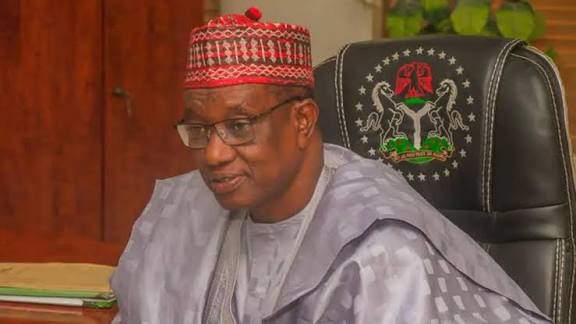
Acknowledging the arrangements, Governor Dikko Radda said at the launch of an EU-funded conflict prevention project last week that negotiations were ongoing in several frontline local government areas and credited them with restoring calm in those areas.

Farmers, traders warn of losses following Tinubu’s price slash order

By Abdullahi Mukhtar Algasgaini

Nigerian farmers and food traders have expressed significant concerns over President Bola Tinubu’s recent directive to slash food prices, warning that the policy, while well-intentioned, could inflict serious financial hardship on them.

The order, intended to ease the cost of living for ordinary citizens, has been met with mixed reactions from key players in the agricultural supply chain.

Malam Abba Sani, a farmer from Kano, highlighted the dilemma facing producers.

“We bought our seeds, fertiliser at an expensive price, how then are we supposed to get our money back?” he questioned.

Sani argued that while the policy may seem good to the public, farmers are the ones who will “suffuffer under the new price regime.”

Echoing these concerns, Bashir Madara, the Public Relations Officer of Singer Market—a major food hub in northern Nigeria—stated that traders holding old stock would be the hardest hit.

“Every good Nigerian… will welcome the President’s order,” Madara told newsmen. “But… whenever there’s a price slash, it is very likely that some marketers have products in stock. This will definitely lead to losses.”

Madara noted that many traders have already adapted to economic volatility by avoiding bulk purchases and instead stocking only enough goods to sell in a short period, a strategy that he says will mitigate the severity of the losses.

He advised fellow traders to quickly sell off their existing inventory and appealed to the government to consider the challenges faced by the agricultural sector when implementing policies designed to help consumers.

Despite the potential for losses, Madara conceded that the policy is ultimately “good for the common Nigerian.”

Body of missing toddler recovered following Zaria flood search

By Abdullahi Mukhtar Algasgaini

The remains of three-year-old Haneefa, the last missing victim of last week’s devastating flood in Tudun Jukun, Zaria, have been recovered, bringing a tragic close to the search operation.

The recovery was confirmed on Sunday, September 14th, by the Nigerian Red Cross Society, Zaria division.

In a statement, official Abdulmumin Adamu said the body was discovered at approximately 11:00am at Gangaren Kasan Killaco in the Gyallesu area.

“This recovery concludes the search and confirms that all the flood victims have now been accounted for,” the statement read.

The fatal incident occurred on Monday, September 8th, after a heavy downpour triggered severe flooding that swept away several children.

The flood claimed the lives of two students: Fatima Sani Danmarke, a student of the School of Basic and Remedial Studies in Funtua, and Yusuf Surajo, known as Abba.

Haneefa, who was being carried on the back of her sister, Fatima, at the time of the disaster, had been missing since.

Her grandfather, Mallam Suleiman of Layin Adamu Mai Aljana, confirmed the recovery, stating he was called around noon on Sunday and informed of the news.

“I rushed home to discover the story is true,” Suleiman said. “We then organized for funeral prayer and subsequent burial of the deceased at about 1pm.”

He added that the family had previously performed Salatul Gaib (prayer for the absent) for Haneefa after Maghrib prayers at the Isa cikon kwami mosque in Magume.

Suleiman expressed gratitude to all who assisted the family during the difficult period.

Haneefa’s father, Sunusi, who was present when the incident occurred but had since left for Umrah, was informed of the recovery.

Kano to introduce compulsory mental health tests for couples before marriage

By Uzair Adam

The Kano State Hisbah Board says it will soon introduce mandatory mental health tests for intending couples as part of measures to address the rising cases of domestic violence and divorce.

Deputy Commander-General of Hisbah, Mujahideen Aminudeen, disclosed this while speaking to journalists, noting that many marital crises are linked to mental health challenges.

“We have realized that many of the problems we see in marriages today are linked to mental health. The test will help us know if both partners are truly ready to live together without harming one another,” Aminudeen said.

He explained that during marital counseling sessions, many women are discovered to be battling anxiety and depression, which makes mental health stability crucial for successful unions.

The Hisbah chief also expressed concern over the sale and use of alcohol and intoxicants in homes, describing them as major contributors to mental health problems.

“We have uncovered that there are women at home who are selling alcohol and other intoxicants. This is a major cause for concern for us and it is adding to the mental health crisis,” he said.

Aminudeen further stated that the policy would also cover divorcees whose marriages are sponsored by the state government.

“We already have a series of mandatory tests before marriage, like genotype and sexually transmitted diseases, so adding a mental health evaluation will not be a stretch,” he explained.

He advised parents to thoroughly investigate the character of prospective suitors before approving marriages, stressing that family scrutiny remains vital.

Kano law students appeal to Gov. Yusuf as scholarship delay bites harder

By Uzair Adam

Kano State students currently enrolled at the Nigerian Law School have appealed to Governor Abba Kabir Yusuf to intervene in the delayed payment of their scholarships.

The students, in an open letter signed by Najeebullah Lawan on behalf of his colleagues, said they concluded the mandatory screening exercise conducted by the Kano State Scholarship Board over five months ago but have not received any information on their entitlements since then.

They described the situation as frustrating, noting that the financial strain of law school has left many of them struggling to cope.

“After undergoing the basic screening by the Kano State Scholarship Board more than five months ago, we were hopeful of receiving the much-needed scholarship support to aid our studies. However, we haven’t received any update on the status of our awards,” the letter stated.

The students further explained that the cost of books, study materials, and daily upkeep has become overwhelming, stressing that a timely response from the state government would greatly ease their burden.

“The cost of buying books, materials, and meeting our daily needs is overwhelming. Your timely intervention would be a huge relief and a boost to our academic pursuits,” they added.

They urged Governor Yusuf to fast-track the payment of their scholarship, saying the intervention would motivate them to excel and return to contribute meaningfully to the development of Kano State.

Nepal’s new PM promises to address protesters’ demands

By Sabiu Abdullahi

Nepal’s newly appointed Prime Minister, Sushila Karki, has pledged to act on the demands of young protesters who pushed for change after weeks of demonstrations toppled the previous government.

“We have to work according to the thinking of the Gen Z generation,” Karki declared on Sunday in her first remarks since taking office. “What this group is demanding is the end of corruption, good governance and economic equality. You and I have to be determined to fulfil that.”

Karki, a 73-year-old former chief justice known for her independence, assumed office on Friday following negotiations involving army chief General Ashok Raj Sigdel and President Ram Chandra Paudel.

Representatives of the youth-led “Gen Z” movement were also part of the talks.Her appointment followed mass protests that shook the Himalayan nation.

The unrest, described as the most violent since the abolition of the monarchy in 2008, left at least 72 people dead and 191 others injured, according to Chief Secretary Eaknarayan Aryal.

The demonstrations escalated on Tuesday when several government buildings in the Singha Durbar complex were set on fire.

On Sunday, Karki observed a minute’s silence in memory of those killed before beginning meetings in the damaged government compound.

Thousands of young activists, who coordinated their movement through the Discord app, had put forward her name as their preferred candidate for prime minister.

“The situation that I have come into, I have not wished to come here. My name was brought from the streets,” she admitted.

Following her appointment, parliament was dissolved and elections scheduled for March 5, 2026. In a national address, Karki assured citizens that her role would be temporary.

“We will not stay here more than six months in any situation; we will complete our responsibilities and pledge to hand over to the next parliament and ministers,” she said. “This is not possible without your support.”

President Paudel, who administered her oath of office, acknowledged the complexity of the crisis. He described it as a “very difficult, complicated, and grave situation” and urged citizens to rally behind the interim government.

“A peaceful solution has been found through a difficult process,” he noted, while appealing to the public to ensure the success of the upcoming elections.

Books before bridges: Emir Sanusi faults Northern leaders’ misplaced priorities

By Uzair Adam

The Emir of Kano, Muhammadu Sanusi II, has criticised successive governments in Northern Nigeria for neglecting education while focusing on roads and flyovers, warning that the region is sliding behind the rest of the country.

Sanusi spoke on Saturday as a panellist at the Kano International Poetry and Art Festival (KAPFES), organised by the Poetic Wednesdays Initiative, during a session themed “Beyond Words: Unlocking Northern Nigeria’s Literacy Potential.”

The former Central Bank governor recalled how Kano State sponsored his secondary and university education in the 1970s and 1980s, covering tuition, living expenses, and allowances. 

He said, “My parents did not pay a dime. Why is it that the younger generation has not been able to get those benefits? Something went wrong in terms of the political class and its priorities.”

He argued that leaders must channel “huge resources” into schools, scholarships, and teacher training rather than spending billions on physical projects. 

“It’s nice to have beautiful flyovers and underpasses, but you are building these roads for uneducated children to walk on. Who will maintain them in the future?” the Emir queried.

Describing education as the most valuable investment, Sanusi stressed that it is the only asset that cannot be inherited or taken away. 

“You can be given money, a house, or even a political position, and all of these can disappear. But once you are educated, no one, no ruler, no oppressor can take it away from you,” he said.

He linked Northern Nigeria’s current setbacks to colonial policies that discourage the growth of an intellectual Muslim class. 

According to him, Arabic literacy, despite its intellectual depth, was devalued under British rule and is still treated as illiteracy today.

Sanusi also highlighted the role of language as a barrier, calling for the adoption of mother tongues in teaching. 

“In Germany, you study in German; in France, you study in French; in China, you study in Mandarin. Why can’t a doctor be trained in Hausa, Yoruba, or Igbo?” he asked, noting that mother-tongue instruction reduces dropout rates and improves learning outcomes.

Challenging conventional views of schooling, he argued that communities should utilise available spaces, such as mosques, as temporary classrooms instead of waiting years for new buildings. 

“If a mosque is vacant between morning prayers and the afternoon, why can’t children be taught there?” he asked.

The Emir concluded with a call for leaders, policymakers, and citizens to humanise statistics. “When we say three million children are out of school, these are not just numbers. 

“This is somebody’s son, somebody’s daughter, a future mother on the street without hope. In everything we do, we must ask ourselves: who is the human being at the end of it?”

UNIMAID appoints Prof. Mu’azu as Pioneer Dean, Faculty of Communication

By Kasim Isa Muhammad

The Vice-Chancellor University of Maiduguri, Prof. Mohammed Laminu Mele, has approved the appointment of Prof. Abubakar Mu’azu as pioneer Dean, Faculty of Communication and Media Studies (FCM).

The faculty, which has Departments of Mass Communication, Journalism and Media Studies, Broadcasting, Public Relations, Advertising, Development Communication as well as Multimedia and Film Studies, was established by the Senate of the University at its 319th Regular Meeting held on July 31, 2025.

Therefore, the appointment, which is on acing capacity, would last for a period of six months with effect from 9th September, 2025, and it may be renewed subject to satisfactory performance.

The letter, which was signed by the Registrar of the University Ahmad Lawan, stated that the new dean “will responsible to the Vice-Chancellor for day-to-day administration of the faculty”, adding that further details of the functions of the dean were “contained in the Schedule 3, Section 8(3) – 5 University of Maidugur Act, CAP.U10 as may be determined from time to time by the Vice-Chancellor”.

Prof. Mu’azu is renown communication scholar with interests in mass communication, media and peace studies.

He was the immediate past Director of the University’s Centre for Peace, Diplomatic and Development Studies (CPDDS) and former Director Remedial Studies of the University and subdean of the Faculty of Social Sciences.

According to Dr. Abdulmutallib A. Abubakar the university management has made a right decision for appointment Prof. Mu’azu who would bring wealth of experience and connection in order to develop the new faculty.

He further added that the staff and students of the faculty would give him all the necessary cooperation and supports to succeed.

‎‎Yobe senator empowers six female constituents with ₦1 million each‎‎

By Kasim Isa Muhammad‎‎

In a deliberate move to cushion the impact of economic hardship and create sustainable opportunities for women, Senator Ibrahim Mohammed Bomai, who represents Yobe South Senatorial District, has empowered six women with financial support of ₦1 million each.

The initiative, which was unveiled in Potiskum on Friday, is part of the senator’s ongoing interventions aimed at addressing poverty, improving livelihoods, and encouraging women to actively participate in business and community development.‎‎

According to Yusuf Zaki, a close aide of the senator who represented him at the event, the programme was carefully designed to give women in the constituency the financial muscle to either start or expand their businesses.‎‎

He explained that Senator Bomai recognises the enormous contributions that women make to household welfare and the local economy, and has therefore prioritised their empowerment.‎‎

“Senator Bomai believes that empowering women is one of the most effective ways of reducing poverty and improving livelihoods in our communities. The ₦1 million given to each of the beneficiaries will enable them to invest in viable ventures that can sustain their families and, by extension, contribute meaningfully to the growth of the local economy,” Zaki stated while addressing journalists.‎‎

He also noted that this intervention is not an isolated gesture, but part of a broader empowerment agenda that the senator has consistently pursued since assuming office. ‎‎

According to him, the lawmaker has previously supported educational programmes for indigent students, invested in healthcare projects, and initiated youth empowerment schemes to tackle unemployment in Yobe South.‎‎

Zaki added that the women’s empowerment programme was deliberately crafted to focus on those who have shown entrepreneurial drive but lacked access to capital due to the harsh economic realities and limited opportunities in rural communities.

‎‎One of the beneficiaries, Aisha Mohammed, who operates a small tailoring business, spoke emotionally about how the support has given her a renewed sense of hope.

‎‎She said she had struggled for years to keep her shop running with outdated sewing machines and insufficient materials.

“This money is a lifeline for me. With ₦1 million, I can now buy better sewing machines, employ two apprentices and expand my shop to cater for more customers. It is not just about money; it is about the dignity and confidence it gives me to keep going. I am grateful to Senator Bomai for remembering women like us who are struggling to survive,” she told our correspondent.

‎‎Another beneficiary, revealed that she intends to invest in poultry farming, which has long been her dream but was hampered by lack of capital.‎‎

According to her, poultry has the potential to provide steady income and create employment opportunities for others in her community.

“With this support, I can start on a solid foundation by setting up proper structures and buying enough birds and feed. It is a dream come true because women in rural communities like ours hardly get access to bank loans or financial institutions. This is why we are so grateful to the senator for giving us a chance to stand on our feet,” she said.

‎‎Community leaders in Yobe South have also applauded the initiative, describing it as a commendable step towards poverty reduction and local economic revitalisation.

‎‎Alhaji Idi Jugujugu, a respected elder in Potiskum, said the programme goes beyond financial empowerment, as it also builds confidence in women and encourages them to see themselves as active contributors to development.

‎‎“This is not just about giving money, it is about building confidence in women and showing them that they can also be economic pillars in their families and communities. If more leaders would replicate such interventions, many families would escape poverty and our society would be stronger,” he stressed.‎‎