National

You can add some category description here.

Job for sale: Jobseekers recount travails in Nigeria

By Uzair Adam Imam

Jobseekers in Nigeria have narrated harrowing tales of how job offer sale decimates their chances of securing jobs in a country where the national economy has remained increasingly stagnant.

According to a recent report by Bloomberg, unemployment in Nigeria has surged to the second-highest on the global list, jumping to 33.3%.

Graduates, who took to social media to condemn the menace, decried how bribery, corruption and politics militate against the growth of institutions in the country.

They argued that buying and selling of job offers are affecting almost all the institutions in the country, as it will be at the expanse of merit and skills

Fraud in employment is believed to be the reason the standard of education in the country continues to witness a fatal decline, and unemployment rises at child’s Christmas wishes.

Graduates narrate harrowing experiences

Every year Nigerian institutions produce thousands of graduates who come out to compete for the few available job opportunities.

A graduate, Usman Bello Balarabe, said that he was once asked to pay N1.2 million for a lecturing job offer.

Immediately he returned to Nigeria from India after bagging his Master’s degree. He was greeted with an outrageous N1.2 million job offer to teach at a Federal University in northern Nigeria.

Balarabe, who was initially over-excited, said his hope was dashed upon learning that it was a give-and-take offer, as he had to break the bank if he indeed wanted to land the job. 


He said, “I was all smiling when I was told, until when I heard him saying that I have to pay N1.2 million to get that offer. The amount shocked me to the marrow”.

Auwal Mukhtar Usman, a university lecturer, said recently someone shopped her job offer for N3.5 million.

He said, “A lady recently confided in me that she bought her offer for about N3.5 million to teach in one federal government agency. It’s equally disheartening how these politicians connive with the university administrators by allocating slots for them. In the end, it is the University that suffers.”

A.S Mohammed also shared his experience, saying that a lecturing offer was advertised to him for N1.5 million in June last year.

He added, “I was asked to bring a potential buyer for a lecturing job offer at the Federal University, Dutsen-Ma, for N1.5 million; no discount whatsoever.

“And it didn’t matter what course the buyer studied or what class of degree he graduated with. That incident stroke me dumb with surprises and left me paralyzed. It took me almost a month to recover from that shock.”

Pay, get promoted

From job offer sale things are worsening to ‘promotion’ for sale, as workers at various institutions in the country pay to get promoted. 

Sa’idu Mustapha Buhari argued that it is not only job offer that is sold, but also promotions are purchased.

He said, “It is not only job offers that are sold.  Promotion, advancement, transfer, release for training, among others, have their prices in some sectors.

“Though fixing Nigeria must be a collective effort, people as individuals must change.

“The bitter part of the story is that: everyone works for himself, not for the people. The sense of nationalism is totally absent among us. That’s why I support the mantra: CHANGE BEGINS WITH ME…If any Nigerian applies this, Nigeria will be fixed,” he added.

Also commenting, a media consultant, Yahya Abdurrahman, stated that the fraud is not only rocking not only the education sector.

He said, “The deeper you dig, the more worrisome information you would come across. Unfortunately, the rot is also prevalent in the Nigerian Police, Customs Service and other Security affiliated Agencies.”

EFCC partners with NYSC to fight corruption

By Ahmed Deedat Zakaria

The Economic and Financial Crimes Commission (EFCC) signed a Memorandum of Understanding with the National Youth Service Corps (NYSC). The MoU aims at a partnership that combats financial crimes. 

The EFCC Chairman, Abdulrashid Bawa, received the Director-General of NYSC, Major-General Shuaibu Ibrahim, at the EFCC headquarters in Abuja on Monday, February 21, where the MoU was signed. 

Addressing the audience at the event, Mr Bawa said the document is important as it will guide the two agencies on what is expected of them.

“We are delighted to have you. NYSC has been part of us from the beginning, as we have always had the opportunity of welcoming corps members to help us in one area or another where we have gaps in our staff, even though the sensitivity of what we do requires trained officers, but they are actually helping us a lot,” he said.

Bawa also commended the role of corps members in the fight against corruption.

“Corps members are agents of enlightenment. I want to assure you that our collaboration will address fraudulent acts, and I assure you that we will continue to sensitize members of the public on the dangers of corruption,” he said.

On the other hand, Ibrahim asked for the support of EFCC in arresting online scammers attempting to defraud unsuspecting Corps Members and the public. 

“All of us have to fight corruption for the sake of our country, and I can assure you that the NYSC will play its part as enshrined in the MoU,” he said.

Light Rail: A panacea for Abuja traffic jam

By Tajuddeen Ahmad Tijjani

The increasing traffic gridlock in Abuja is simply nerve-wracking. A journey that, in normal circumstances, would have taken 30 minutes takes more than an hour now. This has not only caused daily waste of precious man-hours but has also inflicted enormous pain on commuters who have to contend with extra costs at this challenging time of a shrinking economy. It’s not a changing time for Nigeria to borrow a leaf from the developed world. We should not continue suffering since there are long-term and short-term solutions.

To be specific, here are some notable spots where heavy traffic snarls are a constant feature, which unfortunately affects the well-being of the people. They include Mararaba-Nyanya Bus Stop; AYA Roundabout along the Abuja-Keffi corridor; Madala-Zuba-Kubwa-Gwarinpa-Aso Radio Junction, along the Abuja-Kaduna corridor; and Girri Junction-Alaita-City Gate, along the Abuja-Gwagwalada corridor. Indeed, a lot of concern was raised about these notorious traffic hubs. And I can’t believe it if someone tells me the FCT administration is not aware of this development.

To be fair to the FCT minister, he’s trying, though his best is not enough. It’s gruesomely inadequate. We must come to terms with the fact that we’re in the 21st century and that new technology should be put in place to reduce the long-suffering of commuters. The axes mentioned above need to be expanded to accommodate the daily traffic volume.

I’d be willing to bet my bottom dollar that if the FCT administration built “railroad tracks” from end to end of the city, beyond a shadow of a doubt, this unbearable traffic jam would disappear in no time. Both the income and the revenue generation will increase. An uncountable number of commuters will drop their vehicles.

The transportation system will give cheerful colour, beautify the city, and compete with global best practices. Can’t we do these for the benefit of all? But, someone might decide to ask, where should we get the funds? Yes, there it is. Invite investors and strike a Public-Private Partnership. I believe we can do it. Building, operating, and transferring is one of the surest ways of getting it done. 

I urge the FCT administration to look inward and try railway tracks in the city. For instance, the same should be in place in other axes from Zuba to Dey Dey, Kubwa, Dutsen Alhaji Junction, Gwarimpa, Maitama to Mararraba, etc. It would be a life-changing event for both the government and the people. Indeed, this will enhance internally generated revenue and increase work productivity. It will be a win-win for the country.

Tajuddeen Ahmad Tijjani writes from Abuja. And can also be reached via sen.taju@gmail.com.

ASUU declares four-week warning strike

By Hussaina Sufyan Ahmed

Following up on the meeting between the Academic Staff Union of Universities (ASUU) and the federal government in the early morning of February 14, 2022, has declared a four week comprehensive and total strike.

On Monday, the President of ASUU, Prof. Emmanuel Osodeke, announced the strike at a press conference.

The strike takes effect from Monday, February 14, 2022.

He said, “The union tried to avoid the strike, but the Federal Government was unresponsive to the union’s demands.”

Prof. Osodeke also said that ASUU NEC faulted the creation of new universities.

“NEC resolved to embark on the four-week roll-over total, and comprehensive strike as the government has failed to implement the Memorandum of Action it signed with ASUU since December 2020.

Hushpuppi: Abba Kyari has a case to answer, says Malami

By Ahmad Deedat Zakari

The Minister of Justice and Attorney General of the Federation, Abubakar Malami (SAN), said reasonable grounds for suspicion had been established against the embattled Deputy Police Commissioner, Abba Kyari.

Malami disclosed this while featuring on Channels Television’s ‘Politics Today’ programme on Monday, February 7.

According to Malami, “Reasonable grounds for suspicion have been established, and that will eventually translate to the possibility of prosecution and conviction if indeed one is adjudged guilty by the law.”

The discussion became necessary due to Kyari’s alleged involvement in a $1 million scam allegedly involving the international internet fraudster, Ramon Abbas, alias Hushpuppi and five others. 

Malami also noted that justice would be done, “It is an issue that has international and national dimensions. Actions have been taken, it is a work-in-process locally and internationally, and we are doing what it takes to ensure justice is done within the context of law regardless of the personalities that are involved,” He said.

Nigerian women and the national security discourse

By Mukhtar Ya’u Madobi

In a heterogeneous society like Nigeria, where security threats are rising daily, the vital role of women in contributing to peace and security ought to be recognised and harnessed effectively.

Women are often viewed as victims of conflict. But this view masks the essential roles women play as leaders, especially in helping end conflict, developing post-conflict reintegration efforts and economic life, and even in leading the organisation of camps for internally displaced persons.

Recognising that sustainable security is not possible without the involvement of women, the United Nations in October 2000 passed Security Council Resolution 1325. The resolution calls for increased representation of women at peace negotiations and all levels of decision making regarding security. It also calls for women inclusion in post-conflict reconstruction efforts and disarmament, demobilisation, reintegration efforts; increased protection from sexual violence; and an end to impunity for crimes affecting women.

Additionally, in his words, Lene Espersen, Denmark’s minister of foreign affairs, “We are fortunate that the unique role of women as key contributors to peace and security is growing, and we already possess substantial knowledge about the critical importance of women in the prevention and resolution of conflicts and in post-conflict reconciliation and reintegration.”

That UN resolution was the first to recognise the disproportionate and unique impact of armed conflict on women and girls, acknowledge their contributions to conflict prevention, peacekeeping, conflict resolution, and peacebuilding, and highlight the importance of their equal and full participation as active agents in peace and security.

Security pundits noted that the key areas in which women could foster security include: peace decision making and peacekeeping, reconciliation, reintegration, the rule of law, and economic development. Therefore, the government of every country should recognise them with these roles and create an enabling environment for them to participate.

A report by the UN Secretary-General shows that there are a growing number of inspiring examples of women, peace and security in action across regions, but overall progress remains slow and uneven.

Meanwhile, in Nigeria, history revealed that many women had made remarkable security impacts in their desire to provide stability to their respective societies. Notable among include; Inkpi, the Princess of Igala royal family who buried herself alive to save the Igalas from the stronghold of the Junkuns, Moremi of Ile Ife, who allowed herself to be captured by the Igbos during a clash with the Yorubas. In addition, Queen Amina became the Queen of Zazzau in 1576 not because there were no strong contenders, but she emerged as the most suitable successor to the office. She proved herself a capable leader both on the home front and on the battlefield.

Under gender sensitivity and security, the National Security Strategy (NSS, 2019), a policy document designed by the Office of the National Security Adviser (ONSA), says, “Nigeria recognises that development is endangered if it is not engendered. Therefore, gender sensitivity and security will be mainstreamed into public policy to create opportunities for the advancement of women and children’s rights as well as gender equality.

“It is imperative to engage women as agents of development to ensure social inclusion, sustainable peace and the security of all segments of the society.”

Given the above, the country has already made a plan of action towards incorporating women into participation in preventing and resolving conflicts, peace negotiations, and humanitarian response, among others.

“Nigeria developed a National Action Plan (NAP) built on five important pillars; prevention, participation, protection, promotion and prosecution. These are important pillars that would strengthen gender-responsive conflict management and prevention frameworks in Nigeria,” the NSS stated.

However, the reality is that women are largely excluded from many formal peace processes. In the terrorism affected states, women and children constitute the largest internally displaced persons and refugees across the border.

Also, it is noted that women are not just victims of war; they are also agents of peace. Thus, it was stated in the NSS 2019 that appropriate legislation would be adopted to enhance gender security to promote inclusiveness across various sectors of the economy.

On its part, the United Nations has identified priority areas to “accelerate progress” on the Women, Peace and Security (“WPS”) Agenda. These include “increasing the number of women in uniformed services in peacekeeping missions and national security services.” The inclusion of these priority areas signals an important shift towards recognising that advancing women in national security services, in addition to peacekeeping operations, is critical to the broader WPS mission. To accomplish the goal of closing the women’s participation gap in uniformed and non-uniformed national security efforts, new policy planning must begin with a conversation with girls as to how they understand, define and interpret security.

It is a fact that women are the bedrock of every society, as they are involved actively in food security, economic security and political security. Thus, there should be a change in attitudes and behaviour. Individuals should learn that women are effective and should be incorporated fully and equally into participation at every decision-making level in positions having to do with peace and security issues. Furthermore, mainstreaming should be integrated into a whole-of-government approach to reform justice and security.

Mukhtar Ya’u Madobi wrote from Kano via ymukhtar944@gmail.com.

Parents, students plead to FG as ASUU mulls over fresh strike

By Uzair Adam Imam

Students and their parents are worried as the Academic Staff Union of Universities (ASUU) threatens to embark on a fresh indefinite strike.

Recall that ASUU suspended its nine-month-long strike in 2020 after reaching an agreement with the Federal Government. Still, after a year, the government is yet to fulfil its promises to the union.

The ASUU’s strike has been described as one of the most lingering issues that has been paralysing Nigerian universities, leading to the delay in students’ graduation and the deterioration of the education system in the country.

Not only that, many people argue that the strike has destroyed the future of many promising youths.

In a statement on Thursday, the Chairperson of ASUU Kano State Branch, Comrade Haruna Musa, and the Union’s Secretary, Comrade Yusuf U. Madugu, declared Monday, February 7, 2022, as a lecture-free day.

Its essence is for ASUU to use the day to sensitise university students, parents and other stakeholders on the brewing crisis arising from the Federal Government’s failure to implement the existing agreements with the union judiciously.

Educational sector at the receiving end

A lecturer at the Department of Nigerian Languages, Bayero University, Kano, Dr Muhammad Sulaiman Abdullahi, said that the strike was killing the country’s educational sector and the economy.

Dr Abdullahi cried: “It is a sad development. It looks childish and an endless menace, especially to the Nigerian educational system. Strike has become a thorn in the flesh of Nigeria’s general development. No nation can prosper morally in such a nasty situation. It is, indeed, unfortunate.”

He added that the situation “generally makes people, teachers, students and their parents to become very dull and uncertain of their future. You can take it to the banks that crime rate will somersault, and new bad things will manifest within the wider community”.

Students at risk

The president of the Mass Communication Students Association (MACOSA), Bayero University, Kano chapter, Comrade Sadisu Sada, decried that industrial action in Nigerian universities had been there for quite a long time.

He said, “It is worrying. The issue affects students directly. And for me, the government is to blame.

“ASUU is doing her best to give the educational system all that it requires. If not, education would have died.”

Umar Isah Dandago, an undergraduate of the Department of Mass Communication in the university, also voiced his grievance, saying this would delay his graduation.

Dandago said: “We would have graduated if not for the 2020 strike. This is a serious problem. A lot of people want to do something, like setting up a new business after university, but because of the strike, it’s becoming almost impossible.”

He, therefore, urged the Federal Government to give ASUU what it demanded, saying, “I believe it’s not even half of what’s being squandered in some things that are not important to us. So let’s get the education we deserve as Nigerians so that we’ll be proud of our leaders and our country.”

Also speaking, Comrade Ibrahim Mukhtar Sulaiman, a level 300 student, said: “Sadly, students taking a four-year course will graduate in five, six or seven years. And this affects not only their academic careers but also their personal life.”

Parents raise alarm

As the strike looks imminent, some parents lamented that the brewing crisis between the government and ASUU jeopardises their children’s future.

A parent, Malam Adamu Kolo, who looked disturbed by the imminent strike, said that his son would have graduated if not for ASUU incessant strike.

Malam Adamu Kolo said, “My son would have graduated this year if not because of ASUU incessant strike. You can see that I am poor. I am hopeless. Our hope is on this boy.”

Tinubu returns from London in ‘youthful appearance’

By Ahmad Deedat Zakari

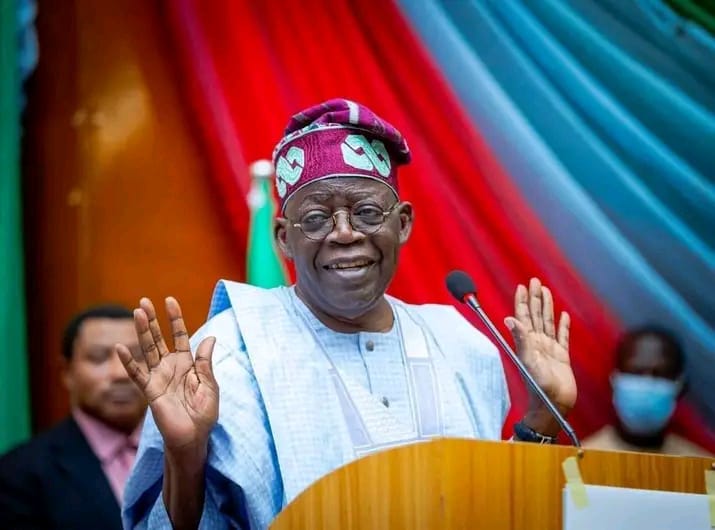
The chieftain of the All Progressives Congress (APC), Bola Ahmad Tinubu, arrived at Murtala Muhammad International Airport in Lagos on Sunday, February 6, 2022, with a new look.

The 69-year-old presidential aspirant was unconventionally dressed in what many Nigerians called “youthful apparel.”

He was seen on a flat cap, black t-shirt underneath an unbuttoned blazer, scuba trousers and sneakers.

Tinubu was rumoured to be attending hospital for an undisclosed sickness in the United Kingdom. But his media aide, Tunde Rahman, has dismissed the rumour, stating that his principal was in the UK for consultations and meetings.

Tinubu’s ambition to lead Nigeria has stirred different reactions from people on social media considering his age and health status.

Road to Aso Villa 2023

By Ahmad Murtala

Ever since Asiwaju Bola Ahmed Tinubu declared his ambition to succeed President Buhari earlier this month, the political sphere off and online stirred up debates in favour of Tinubu and the potholes along his way. People cite some irrelevant motifs that may hinder Tinubu’s success. However, these are not paramount of any buyable candidate at the moment, and of course, for the electorate.

The intrinsic status quo of our polity entertains those factors that undermine the democracy and the governance—rating region, tribe, religion, age, school attended, above competency and capacity going even further to dig up the ancestral root of a candidate. The result we are cultivating under this administration says a lot about the mistakes we’ve committed in the past – from  2015 to date—by using only those yardsticks to scrutinize a candidate. Can we still pelt with our intelligence to subscribe to the same mistake of the past come 2023, which appears new dawn to our country?

We imported the American presidential system of government, which is quite expensive and implemented its only cover page. It’s a multi-party system that compels too much spending which a saleable candidate capable of taking the lead is hindered from contesting by the processions. These include the ticket, the campaign, and the mobilization. In this context, two major parties are on the run, which the rest endorses the party that has the chance of winning in subterranean manoeuvre.

The Southeast has configured and domesticated PDP as its political party since 1999, while APC appears nascent in the region—the weakness of the ruling party and the deterioration of the security across the country under the watch of APC makes the nascent party lose its credibility far to the NE. If the president is to emerge from the region, two possibilities may arise.

First, northern people stereotype and characterize PDP as evil, callous and looters, which most of the states in the region are under. Second, APC has lost its shining plate before the people based on what appears on the ground since coming to power in 2015. Therefore, no matter the candidate’s credit from the SE, if APC deems it fit to give the flag bearer to the region to entertain zoning as postulated by some northern state governors, the chances are its success would be a bottleneck.

The polarization within the spheres of politics that SouthEast translates to secession if not given a chance to rule, it appears that PDP would have to play the same card of the last election, by choosing the running mate from the SouthEast, here the North would draw a line looking at the indices of the carnage their businesses faced in the region. Meanwhile, APC would play the South-West and the running mate from the North, perhaps a Muslim-Muslim ticket. The result would be determined by the primaries from the parties in a couple of weeks ahead.  

In those countries that have built the social establishments and have smooth working systems with literally little or no corruption, the age of presidential aspirants is not a matter of concern. We see Biden of US—unlike Nigeria when chunks of domestic battle are entangled yet to be addressed. The age of the candidate matters a lot in this context. Tinubu, who appears to be more robust so far from those who declared their aspiration, is brazenly feeble. If not a good diet and wealth make politicians appear strong, most of the politicians at the frontline ought to assume coach duties guiding the upcoming ones. We forbid the like we’ve seen in this administration by encasing the president in the Villa and plunging the country into anarchy.

From the view and the colour of the game, Atiku Abubakar, the former vice president, would swiftly take the PDP flag and Tinubu APC. Both have been dented by the people’s court to have maliciously accumulated wealth—having no other alternative polling box for the electorate. If history is to repeat itself, Buhari contested four times before he won. Now, Atiku is running on his fifth time is likely to have a smooth ride based on APC losing its credibility because of insecurity across the country. 

The extreme thirst for power to fulfil the ‘need hierarchy’ is not dangerous to the beholder alone. The motive is only to possess the authority without a sketched-architectural blueprint and clear manifestos which will coalesce with the national need. Buhari came on this platter, and the result is unbecoming.

So far, the two giants have not made it to the public the what-and-how to attend to the tangled problems agonizing every sector. The currently delicate security and imbalanced economy are at the top, strangling the country by the neck—finding it arduous to breathe. We, for now, don’t need the so-called ‘kingmakers’ who cannot heed or take advice from the public opinion but become foreign puppets—since, intrinsically, the presumption of superiority as the number-one citizen is established. 

Road to Villa 2023 must come from the parties and play the game card to sew the polarization across the region. The Villa in 2023 and beyond begs for a head that has both stick and carrot in his hands, the one who has a clear understanding of foreign policies and has immediate treatment to our problems, both short and long-term solutions. If to suggest best candidates, there are a multitude of them from SS, SW and NW, both fit in into position of President and Vice President, but for now, let’s see the outcome of the parties convention, which is the utmost decider.

Ahmad Murtala sent this article via ahmadmurtala@outlook.com.

Reps introduce bill to abolish Nigerian civil defence corps

By Muhammad Sabiu

A bill in the House of Representatives has been raised to abolish the National Security and Civil Defence Corps (NSCDC).

Shina Peller (APC, Oyo) sponsored the measure, which was read for the first time on Tuesday. It proposes repealing the NSCDC Act of 2007 and transferring the agency’s staff and assets to the Nigeria Police Force.

Mr Peller proposes, according to the bill’s description, to establish a transition management committee to oversee the NSCDC, write regulations, and implement processes for the transfer of the Corps’ assets and employees to the Nigeria Police Force.

Mr Peller claims that the NSCDC’s expanded functions are a duplication of police mandates, noting that “Fragmentation of security resources across multiple competing agencies is counterproductive.

“The mandate of the NSCDC has expanded that it has now become a duplication of the Nigeria Police Force. This has led to avoidable conflicts.

“Every single function of the NSCDC can be done or is being done by the Nigeria Police Force”. He added that” it is a “waste of scarce resources which has an annual budget of almost 100 billion.”

Mr Peller noted that “the assets and personnel of the NSCDC will be absorbed by the Nigeria Police, hence, no loss of job.”