Local

Demolition: Court awards N2m damages against Kano gov’t

By Uzair Adam Imam

A Federal High Court in Kano state has ordered the state Governor, Abba Kabir Yusuf, and other respondents to jointly pay two brothers the sum of one million naira each for attempting to demolish their properties at Salanta quarters.

In a court sitting on Friday, Justice Simon Amobeda described the attempt by the state government and its agents as an infringement to the applicants right to own immovable property as guaranteed by the Nigerian constitution.

Justice Amobeda stated that the intrusion to the applicants’ properties around 11pm on 14th June, 2023, in an attempt to carry out demolition is clearly infringement to their private and family life as enshrined by the constitution.

He stated, “The Respondents are also ordered to remove the red signing marked: 14th June,/KN/ KNUPDA made by their staff or Agents on the Wall of the Applicant’s Properties situated at Salanta and to repaint the wall to the satisfaction of all respondents.”

Barrister Bashir Ibrahim, who filed the suit on behalf of the applicants, applauded the court judgement and described it as a landmark for protection of human rights.

However, also speaking with the journalists after the judgement, counsel to Kano State Government and other respondents, Barrister Musa Dahuru Muhd, said they would study the judgement and advise the Government on the next step.

Namadi constitutes committee on illegal land allocations in Jigawa

Muhamamad Suleiman Yobe

Jigawa State governor, Mallam Umar Namadi, has constituted a committee to retrieve pieces of land that were indiscriminately allocated to individuals and corporations without the approval of the government. 

At the Council Chamber of the Government House, the governor inaugurated the committee to be chaired by the Secretary to the State Government (SSG), Mallam Bala Ibrahim (Mamser), in his bid to re-establish order and due process. 

Recall that Mallam Umar Namadi has promised to bring back sanity and run an administration based on the ethics of bureaucratic governance. 

He said the objective is to prevent the occurrences of farmer/herder clashes as a result of such encroachment around the state, especially during the rainy season. 

The land retrieval committee is part of Governor Umar Namadi’s effort to ensure that land designated as a cattle grazing route is not encroached on for selfish reasons and therefore reserved to serve its purpose.

Hadejia Emirate relieves traditional ruler over drug abuse

By Muhammad Suleiman Yobe

Hadejia Emirate Council in Jigawa State has relieved one of its traditional title holders, Alhaji Abubakar Hussain Abubakar, known as Dan Lawan of Hadejia.

This is contained in a letter sent to The Daily Reality by Muhammad Garba Talaki, a Public Relations Officer of the Council, signed by Council Secretary Alhaji Muhammad Baffale Abbas.

Baffale said the dismissal was due to his engagement with illicit drugs.

He said the council confirmed the matter through a letter from National Drug Law Enforcement Agency (NDLEA) Jigawa State intimating the council on the issue.

He added that the traditional title holder refused to honour an invitation letter sent by the Emirate Council to defend himself, which was found to be disrespectful to the council.

Consequently, Alhaji Abubakar Hussain Abubakar was dismissed and warned to avoid parading himself as Dan Lawan of Hadejia.

Secretary Alhaji Muhammad Baffale advised the general public, especially those interacting with him, to take note.

He said the strict measure was taken to serve as a deterrent to other traditional leaders and urged traditional leaders in the area to be sound moral.

Bandits kill policemen in Zamfara

By Muhammadu Sabiu

Armed bandits on the Gusau-Sokoto route in Zamfara’s Bungudu Local Government area are reported to have slain four police officers.

According to a local who identified himself as Haruna Musa, the bandits ambushed and shot the police officers who were on duty on the road on Monday.

He stated that the bandits opened fire on the police officers who were stationed at a roadblock they had set up not far from Bungudu town, killing four of them.

Musa was quoted as saying, “The police officers were on duty and mounted a roadblock not knowing that the bandits were hiding in a bush near the roadblock.

“The bandits suddenly came out of their hiding place and opened fire on the police officers, killing four of them.”

The Daily Reality (TDR) understands that the police public relations officer in the state police, SP Yazid Abubakar, confirmed the attack.

However, he noted that he was not aware of whether or not a police officer was killed during the attack.

Sokoto Governor denies staff entrance to Government House 

By Ahmad Deedat Zakari

Sokoto State Governor, Ahmed Aliyu, denied entrance to members of staff of the Government House over lateness to work on Thursday. 

The governor drove to the Government House at about 8:30 to the reality that most of the staff were not in their offices and duty posts. 

According to reports, the governor only met cleaners and a nurse at the Government House Clinic. Consequent to the development, he ordered the security to lock up the gate and not allow entrance to anyone.

Speaking on the decision, the governor explained that “This is not a matter of joke.

 “What is expected from any serious government is to ensure timely payment of workers’ salary.

 “When I came in, I paid two months’ salaries within three weeks.

 “That is why I drove myself to the office because my driver did not come in time.

 “But I will not tell you my next line of action because you, too, came late (referring to the interviewers),” he said.

 The governor added that “I promised the people of Sokoto State that I would not betray their trust nor allow any public officers to do so.

 “You either work or return our money. You cannot collect our money without justifying it,”

Gunmen killed vigilante in Kogi East

By Ahmad Deedat Zakari

Gunmen has shot and killed a vigilante in Ankpa Local Government Area of Kogi State. The victim, simply identified as Mustapha, was gunned down by unknown persons in the late hours of Saturday at the Ejeh Palace gate.

The attack is believed by many residents of to be politically motivated. A resident of who spoke to the Daily Reality on the ground of anonymity said: “Some powerful persons in the state want to instill fear in the voting population in the eastern part of the state.”

Another resident who spoke out of fear and sought not to be in print, disclosed that attacks on individuals have been on the increase since the conclusion of party primaries and as the state prepares for December gubernatorial election.

Daily Reality has gathered that the residents have threatened to arm and defend themselves if the culprits are not brought to justice by the government. As of the time of writing this report, the police is yet to comment on the issue.

Woman murdered, set ablaze over accusation of witchcraft

By Uzair Adam Imam

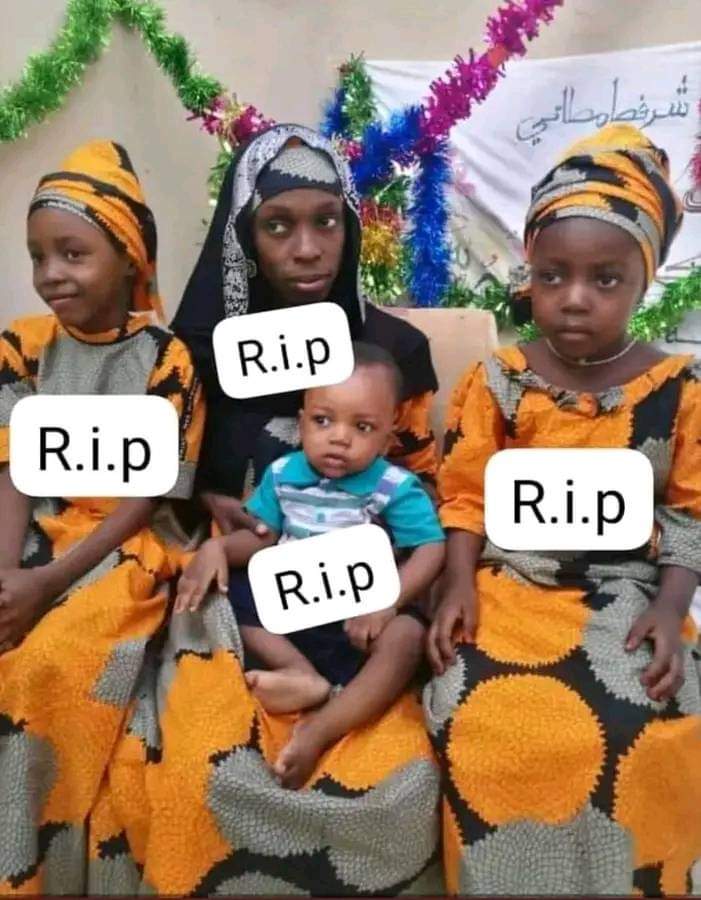
A mother of four in Cross River State, Mrs. Martina Itagbor, was murdered by some frustrated youths over accusation of a witchcraf in Akamkpa Local Government Area of the state.

The deceased was accused of witchcraft following the death of two brothers in a motor accident. It was on the heels of the accusations that the mother of four was beaten to death and her fingers chopped off.

It was reported that the frustrstrated youths also set her dead body ablaze, a development many people described as horrible.

The Commissioner of Police, CP Gyogon Grimah, directed that the perpetrators be tracked down, arrested and prosecuted according to the law.

This was relayed Saturday in a statement by the Command’s PPRO, SP Irene Ugbo, and made available to journalists in Calabar, the state’s capital.

The statement reads in part, “The issue of jungle justice is one crime that the Police does not take lightly and, as such, we have already commenced manhunt for those responsible for the dastardly act.

“Those responsible, no matter how highly placed, will be arrested and prosecuted according to the laws of the land.

“We are going to treat them like the criminals that they are, and no stone would be left unturned on this matter.

“They can only run but won’t hide. Enough is enough. Jungle justice is not the solution.All those involved in the murder of Mrs Itagbor would be brought to book, and the law will take it’s full cause. We won’t relent until they are in our custody,” CP Grimah assured.

Kano State governor swears in 19 commissioners

By Muhammad Abdurrahman

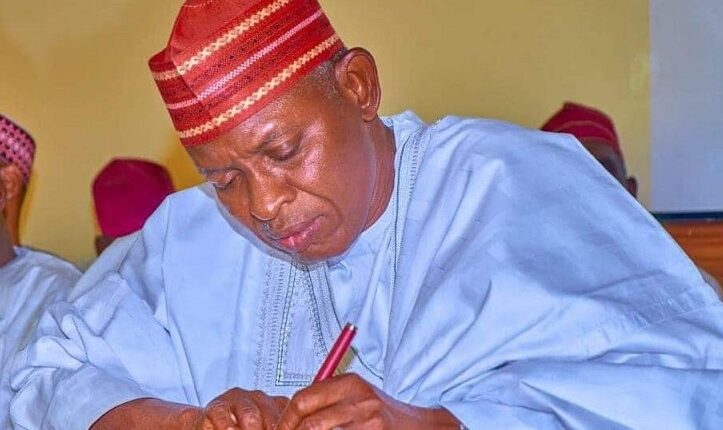
Today, the Executive Governor of Kano state, Engr. Abba Kabir Yusuf, swore in his newly appointed commissioners and assigned them to their respective ministries.

During the governor’s speech, he urged the appointed commissioners to prioritize honesty and sincerity and avoid any involvement in corrupt practices.

The commissioners and their ministries are as follows:

1-Comr. Aminu Abdulsalam  – Ministry for Local Government

2-Hon. Haruna Umar Doguwa -Commissioner for Education

3-Hon. Ali Bukar Makoda -Commissioner for Water Resources

4-Dr. Abubakar Labaran Yusuf – Commissioner Ministry of Health

5-Engr. Marwan Ahmad – Commissioner Ministry of Works, Housing and Infrastructure

6-Barr. Haruna Dederi – Commissioner Ministry for Justice

7-Dr. Yusuf Kofar Mata – Commissioner Ministry for Higher Education

8-Hon. Nasiru sule Garo-Commissioner Ministry for Environment

9-Engr. Muhammad Diggol – Commissioner Ministry for transport

10-Hon. Abbas Sani Abbas-Commissioner Ministry for Commerce and Investment

11-Hon. Hamza Safiyanu-Commissioner Ministry for Rural Affairs

12-Dr. Danjuma Mahmoud -Commissioner Ministry for Agriculture

13-Hon. Musa Sulaiman Shanono – Commissioner Ministry for Budget and Planning

14-Haj. Ladidi Garko -Commissioner Ministry for Culture and Tourism

15-Hon. Adamu Ali Kibiya – Commissioner Ministry for Land and survey

16-Hon. Tajuddeen Othman- Commissioner Ministry for Science and Technology

17-Hon. Baba Halilu Dantiye – Commissioner Ministry for Information

18-Sheik Tijjani Auwal – Ministry for Religious Affairs.

19-Aisha L. – Commissioner Ministry for Women Affairs

Majma’al Bahrain: Arabs in Kano II – the sequel

By Prof. Abdalla Uba Adamu

My posting about MU Adamu’s 1968 paper on the influence of Arabs on Kano culture, economy and religious practices has ignited a few responses of personal nature from some readers interested in their own interconnected life stories. This is a follow-up and update.

I think it is wonderful that we begin to interrogate our past so that we can appreciate our present in order to make better plans for the future. We were all besotted with this implausible concept of ‘Hausa-Fulani’ that we tend to ignore other genetic tributaries that constitute the Hausa genetic pool, especially in Kano. Such Majma’al Bahrain is either unknown to many or ignored. Bringing it out means that the ethnic picture of the Hausa is more than the mingling of the Fulani genes with the Hausa – there were dashes of Arab in there thrown for good measure.

For the most part, the Arab voices had been silent. I think it is time for them to voice out their life histories in conversations with their elders. Not to further divide a monolithic Hausa society but demonstrate how the Hausa have been developing into distinct, absorptive people. Clearly, then Hausa is not a language but a people. Ask any individual in Kano with ‘Fulani’ or ‘Arab’ ancestorial roots, and they will tell you they are Hausa, ‘even though my grandmother is Fulani/Arab/Russian/Greek, etc.’

Let’s split hairs here. Having different languages but the same skin colour – whether you are black, white, brown, yellow or (if an alien) green, and submitting to the same central, national governing authority makes you ‘ethnic’. Having the same attributes but without recognition of national authority, only blood and kinship ties make you ‘tribal’. Separation across skin colour is a race, not an ethnic issue. Arabs are a separate race from Africans. So, what happens when the racial divide is crossed (bred)? Will a new ‘race’ emerge?

The Arabs’ contributions to the economy and culture of Kano are far more than any other ethnic group, including the Fulani. Consider the Yemeni alone and their massive contributions to the animal skin trade in northern Nigeria. Initially ‘imported’ as Italian trade agents from Yemen in the early 20th century, they have now become domesticated to the Hausa society. Yes, they are light-skinned, and quite a few speak Arabic; but the mid-generations have lost the Arabic language. As a ‘minority’ group, they intermarried with local African women and their offspring contributed to the sustainable development of culture and life in Hausa societies without the consciousness of being ‘the other’. What are then the cultural specificities that tie them to the Arab world? Can it be in dress, language, food, existential rites and rituals (birth, living, death)? How do theirs – if at all present – differ from those of the Hausa?

Then consider the Lebanese and their input into the goods and products found in various Kano markets – including their influence all over West Africa. They are less integrative with their African hosts but have been linguistically domesticated, and for all intents and purposes, many self-identify as Hausa and retain some living rituals (e.g., food habits). This is an area initially mapped out by Sabo Albasu’s monumental groundbreaking research, “The Lebanese in Kano” (which is based on his 1989 doctoral thesis), and unfortunately, not much else was done on such a scale by other people. I wish he could update and re-print it, as now, more than ever, is the time for it.

The Sudanese, more than the other Arabs, had integrated more effectively into northern Nigerian Hausa communities, perhaps due to the gradation in their skin colours – from extremely dark to extremely light – than either the Tripolitanians, Yemeni, Lebanese or Syrians/Jordanians, whose clearly light skins made them stand out in any group. Establishing themselves in the city of Kano at Sudawa (Sudanese settlement), they formed part of the identity of the Kano city populace.

The Sudanese influence was also more intellectual. While they were instrumental in trade, their main contribution was in education. For instance, when the School for Arabic Studies – undoubtedly the Oxford of Arabic Studies in Nigeria – was established in 1934, it was to Sudan that inspiration was sought, including the teachers. Even what later became Bayero University Kano was first headed by Abdullahi el-Tayyeb, a Sudanese. No talk of Sudan itself being a destination for studies at all levels by northern Nigerians. You don’t see such rush for education in Lebanon or Yemen.

While rummaging through the caverns of an old abandoned hard drive, I came across a booklet that Kantoma (Muhammad Uba Adamu) had asked me to extract from his “Confluences and Influences” as a standalone paper (presented in 1998) and later with additional material, as a booklet. We named it “The Presence of Arabs in Kano”. Lack of funding prevented its publication, but I was able to get it published as a paper in a book project. A link to the paper is given at the end of this posting.

For those interested, I have included the table (from the paper attached) of the 25 Arab-dominated Kano inner city wards. I did this because not many would have the time to read 43 pages of the paper!

Adamu, Abdalla Uba. 2014. The presence of Arabs in Kano. In A.I. Tanko & S. B. Momole (Eds.). Kano: Environment, Society and Development (pp. 125-164). London & Abuja: Adonis & Abbey Publishers.

Or: https://shorturl.at/dgzW0

Kano Demolition: Doctor who built house with overseas loan begs Abba

By Uzair Adam Imam

A Nigerian doctor based in Russia has pleaded with the Kano State Governor, Engr. Abba Kabir Yusuf, to spare his newly built house from demolition.

The doctor, whose name is withheld, told Kano Chronicle that he borrowed almost $500,000 and added his savings of $500,000 to build the house.

The passionate plea to the governor was in a letter written by the doctor, which Kano Chronicle shared on its verified Twitter handle.

Recall that the governor had decided not to back down on demolishing illegal structures built by his predecessor.

Abba’s administration had torn down a three-storey shopping complex located at Race Course Road, Nasarawa GRA, with 90 shops, Daula Hotel and other buildings at Hajj Camp, to mention but a few.

However, the doctor, who insisted that he put the house up for N500,000,000, pleaded with the governor to spare his home, adding that he would be at a loss if the house is demolished.

He stated, “I spent close to 8 years working in Russia now, and I have developed a successful business. So I decided to take a loan on my business name and use my savings to move to real estate back in my home state Kano Nigeria. I borrowed close to $500,000 and added $500,000 together with saving from some family members to buy land for 15,000,000 nairas and build a mansion on it.

“My home has been completed, sir, and I have even put it on the market to service my debt due to the economic situation in Nigeria. I won’t even make a profit on it. I will take a loss because I put the house up for 500,000,000 Naira as a distress sale.”

“Yesterday, I was informed that (Knupda)  has marked my house for removal, and I followed all instructions before building. I got their approval and a C of O . I didn’t put up a single block on that land until (Knupda)  gave me approval. Please consider my situation, sir. 

“If that house is taken from me. I will be in very serious financial problems coupled with the debt I took for the building,” he added.