Lifestyle

You can add some category description here.

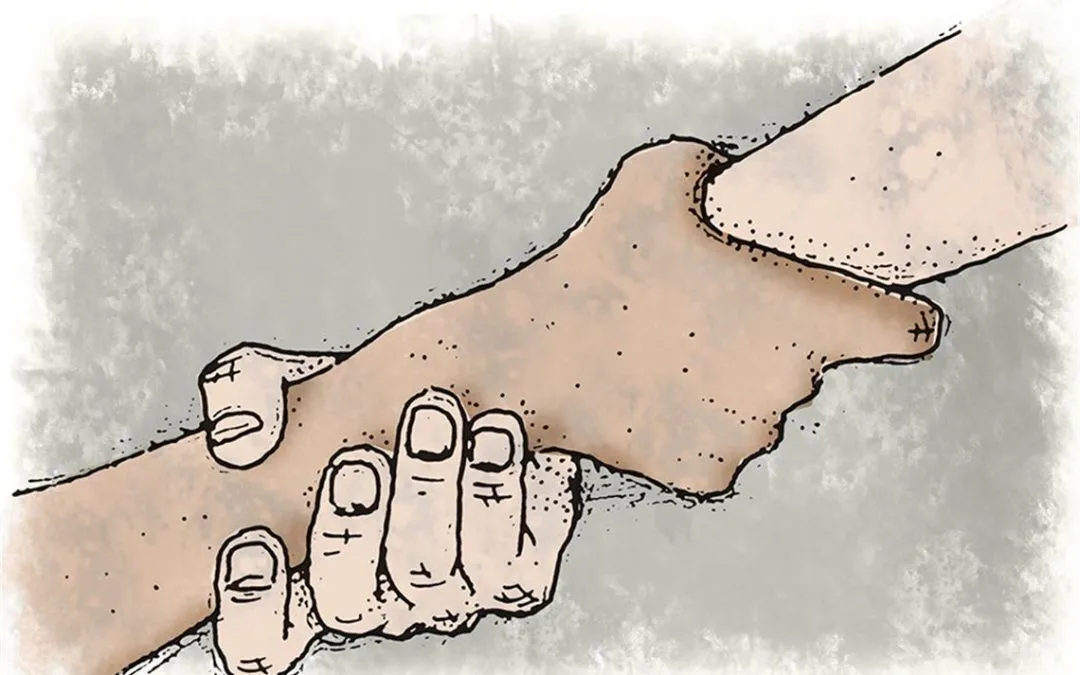
The fathers we forgot to thank

By Lawal Dahiru Mamman

A senior colleague once shared a thought that has stayed with me for years. While discussing the burdens of parenthood, he described how fathers would go to great lengths to provide for their children, often at the expense of their own comfort. 

He explained that for every penny earned, the first question in a father’s mind is, “What do the children need?” That struck a chord. With each passing day, as I grow older, I find myself reflecting on how my father silently sacrificed to ensure our needs were met. 

These memories linger like a background hum in my consciousness. What becomes clearer with time is that we often miss what is right in front of us. We benefit from the comfort, the food, the shelter, the school fees, and the security,without giving much thought to the man behind it all. 

It is the classic case of not seeing the elephant in the room or, as the saying goes, not seeing the wood for the trees. It is no surprise, then, that some people have questioned why there seem to be more songs, poems, and films celebrating mothers than those appreciating fathers. 

While we may lack precise statistics to prove this imbalance, popular culture seems to confirm the observation. From the nursery rhyme “Who sat and watched my infant head…” titled “My Mother,” many of us were introduced to the emotional pull of maternal devotion. 

Over time, several explanations have emerged for this artistic focus. Mothers are often perceived as more emotionally accessible. The mother-child bond, portrayed as warm, nurturing, and unconditional, lends itself easily to emotional expression in music, film, and poetry.

Cultural symbolism also plays a role. Across different societies, mothers are often regarded as the emotional anchors of the family. This perception makes them natural muses for stories about love, sacrifice, and resilience. 

Moreover, many creatives draw from personal experience, with some having been raised primarily by their mothers. And then there is the reality of audience connection — people often relate more universally to stories about mothers. 

All of that said, as we commemorate Father’s Day, it is crucial — now more than ever — to reflect on and appreciate the often-unnoticed contributions that fathers make. While mothers are frequently, and rightly, celebrated for their warmth and care, many fathers quietly go about their roles with little attention or applause.

Providing for the family remains one of the most visible expressions of a father’s love. Fathers work tirelessly to ensure there is food on the table, school fees are paid, and their children live comfortably. As children, we may take these things for granted. 

It is only with maturity that we begin to realise the depth of their commitment. Fathers often do all this without asking for recognition. Their sacrifices are quiet and enduring — a form of love that speaks less and does more. 

This year’s Father’s Day, like those before it, may have come and gone without noise or public fanfare. But even in the silence, we must recognise the strength of men who daily put their families ahead of themselves. They go without, just so we never lack. 

They deny themselves small luxuries so their children can feel seen, equal, and included. That is not just love — it is selflessness in its purest form. Many of us, growing up, may have perceived our fathers as distant or overly strict. 

But now, we realise that those long hours spent away from home, the constant budgeting, the unspoken worries — they were all signs of a love that often hid behind responsibility. Fathers may not always wear their emotions on their sleeves, but their love is steadfast and deep.

Times have changed, and we now see more women contributing financially to their homes, a development that deserves celebration. Still, it is important not to diminish the sacrifices and emotional labour of fathers. This is not a contest about who does more. 

Instead, it is a moment to reflect on all that fathers do — without complaint, without applause, and often without being asked. If there is such a thing as an unsung hero, the average father fits that description. They show up. 

They stay. They build. And they keep going. So, to every father, stepfather, guardian, and father figure — thank you. Thank you for your sacrifices. Thank you for the quiet strength you bring into our lives. 

Thank you for the roads you walk, so that we can dream. You are the solid foundations upon which we rise. May your love, sacrifice, and strength never go unnoticed again.

Lawal Dahiru Mamman writes from Abuja and can be reached via: dahirulawal90@gmail.com.

A counsel for celebrities

By Saifullahi Attahir

In life, every valuable thing has a cost, and a price must be paid. As the saying goes, nothing good comes free. This is true in almost all walks of life.

Looking at human history from time immemorial, man has always cherished being known, popular, heard, and respected. This is one of the powerful factors behind the human search for power, influence and riches. And to be fair to the modern age, this is not a new thing in human history.

But in our insatiable search for popularity and prestige, we must be mindful of what we are trading in exchange for. This article offers some advice on how a celebrity can navigate life without much temptation from his newly acquired status.

As billionaire Microsoft founder Bill Gates stated, success is a lousy friend. It deprives many of the original energy, enthusiasm, discipline, hard-working spirit, and humility that catapulted them to success in the first place. Successful people easily become complacent and trapped in their orbit of self-entitlement.

Once a man becomes successful, a binge of arrogance and self-entitlement starts appearing. He begins to stop listening to experts, observing and learning, and soon, he stops improving. Over the long run, unknown to him, those attitudes he had abandoned are the fabric behind his success. 

One thing we should all know: every man who was on a path to utilise his talent, produce something magnificent, and become successful, whether in sports, leadership, business, entertainment, professionalism, music, writing, or any creative talent, must have met with a bunch of critics.

From the day you become a celebrity, your activities will no longer be secret: your outfits, marital affairs, social life, assets, family, and movements. You will bid farewell to some level of privacy, and life will never be the same again. 

Many people are not prepared for this stage of their lives. Many great men, especially celebrities, were lost in this ocean of deception and falsehood. You would now focus more on pleasing people: good outfits, even at the cost of debt, new skin, costly living just to show off, and new fake friends.

On another dimension, the kind of social pressure met is unimaginable: constant calls, constant meetings, constant online presence, just to satisfy your fans or followers. This demand is so consuming that many celebrities hardly cope with it. Stories of celebrities taking drugs and injections are not a new thing. Few celebrities sleep without the aid of pills. Many celebrities lost the battle to alcohol and toxic heroin and were unable to find peace. 

A popular Hausa songwriter, Aminuddeen Ladan Ala, once described how difficult it was to become a celebrity in his famous album “Shahara”. Only phone calls were enough to drain your energy, plus the number of expectations by loved ones seeking your attention. Many celebrities would become friends with highly influential people whose offers they can’t easily turn down. You would be invited at any hour without much consideration for your schedules and health, and turning such invitations down would be described as arrogant to your fans and followers.

This is more common among those who made it in life at a very young age. The majority of these young celebrities squander their fortune. They return to square zero without proper guidance, discipline or genuine counselling. Many celebrities become depressed, psychotic, and destitute.

Well-grounded and sustainable success requires a solid foundation of time, perseverance, and smart decisions. Unfortunately, many celebrities, especially in the music, sports, and entertainment industries, lack such foundations, hence the many sorrowful celebrity stories. Uncountable stories of suicide, crime, divorce, and bankruptcy are always in the papers.

Although I’m not much of a football fan, I always admire the lifestyle of one player called Lionel Messi. Messi was among the greatest and most successful football players of all time, a record breaker in many aspects, but still one of the most humble people on earth. Lionel Messi has all it takes to be arrogant and showy, but he was disciplined enough to maintain his zeal, energy, humility, and enthusiasm. This principle has helped him throughout his football career. He didn’t allow his initial success to distract him from achieving more. 

This attitude of self-entitlement has destroyed many players. Just after a season or two of trophies and achievements, they began to disobey, fight, and become distracted by amusement and glitter. Many celebrities started to lose focus on their primary goals; they became carried away by displaying their newly built homes, newly bought luxury cars, newly made friends, or newly made beautiful girlfriends.

These celebrities become attention seekers on social media platforms. They always engage in trivial issues and display wealth or status, adding to their load of enemies. They have forgotten that their primary goal was to hone more of their talents, score more goals, produce more beautiful songs, deliver more as leaders, maintain their positions in class, and profit more as business individuals.

Another destructive attitude of some celebrities was engaging in a competitive war with their rival colleagues. After being recognised by their followers, they began to install software to envy anyone trying to catch up with them. They subscribed to slander and a war of words to denigrate their rivals to maintain their status. Smart champions never engage in such an attitude; they recognise their God-given talent as a favour from their Lord and offer gratefulness by being humble and respecting their positions even if time changes and they lose their status to the new generation.

Smart celebrities respect others below them; they never act in desperation for money or status; they are philanthropists with their wealth; they are less pompous and showy; they invest and diversify their sources of income; they still make time for their families and core friends; and they always have learning minds and listening ears.

We seek Allah’s guidance in every step of our journey, Ameen.

Saifullahi Attahir is the President of the National Association of Jigawa State Medical Students (NAJIMS) National Body, and he wrote this piece from Federal University Dutse. He can be contacted via saifullahiattahir93@gmail.com.

Rethinking commercial surrogacy in Nigeria

By Arita Oluoma Alih

Medical science has evolved significantly over the centuries. One of the most remarkable breakthroughs in this journey is the art and science of surrogacy, a practice where a woman carries a child in utero (in the womb) on behalf of another woman or couple, whose egg and sperm are fertilised in a laboratory to form an embryo before being implanted into the surrogate mother.

The choice to become a surrogate mother is bestowed upon a woman who undergoes the implantation process, a complex journey that undoubtedly results in experiencing discomfort, physical and emotional pain.

Regardless of the outcome, these pains persist as the foetus develops during the nine-month gestation period, which comes with its own set of challenges, including hormonal imbalances and resultant body changes.

Becoming a surrogate mother is not a knee-jerk decision. Financial challenges, especially in developing societies like ours, and sympathy – a woman wanting to help another woman who has been struggling to conceive or whose womb has been certified unfit to carry a child by a medical professional – are often underlying motivations.

Intended parents also do not jump into surrogacy headfirst; they may have tried other means before settling for such a tedious process. Others, however, would opt for it due to tokophobia – the fear of childbirth. For this group, it is a case of better safe than sorry. 

Other phobias that make couples consider surrogacy include the fear of losing the baby inside the womb, medically known as stillbirth; fear of dying during childbirth; fear of excessive weight gain and other bodily and hormonal changes; fear of mom brain; and baby blues, among others. 

With all these factors in mind, it is mind-boggling that a woman should go the extra mile to carry and birth another person’s child, only to be left high and dry without any form of compensation!

On May 26, 2025, the House of Representatives initiated legislative action to prohibit commercial surrogacy in Nigeria and establish a framework to regulate the practice solely for non-commercial, altruistic purposes. This move follows the introduction of “A Bill for an Act to Protect the Health and Well-being of Women, Particularly in Relation to Surrogacy and for Related Matters”.

The provisions in the Bill that stipulate ‘explicit protection against coercion or forced surrogacy arrangements’ and ‘mandating counselling for both surrogate mothers and intended parents’ are highly commendable. This is particularly important given instances where intended parents reject babies based on gender preferences; counselling would help them understand that they must accept the child wholeheartedly, regardless of gender.

Another twist that underscores the importance of counselling is that, in some cases, surrogate mothers have fought for and claimed ownership of the child, despite prior agreements.

Secondly, the “endorsement of only altruistic surrogacy, where no financial profit is involved except for reimbursing medical and pregnancy-related matters” is a point of contention. Surrogate mothers should be fairly compensated financially for their role, based on mutually agreed-upon terms and conditions between both parties.

While the bill in itself may be altruistic, it should consider monetary compensation for women who render such a difficult and time-consuming service, thereby providing them with the necessary tools to maintain proper mental and physical well-being after childbirth.

Since the bill seeks to protect the rights of women involved in surrogacy and other parties, the legislators should consider several key factors: What happens if a surrogate mother loses her life? What if a stillbirth occurs? What provisions are made for aftercare? What if the pregnancy leaves the surrogate mother with long-lasting health issues, such as hypertension or diabetes? Addressing these questions will provide balance and add depth to the Bill.

The monetary compensation should be seen as a form of consolation for these surrogate mothers when all is said and done. However, Senator Uchenna Okonkwo, who represents the Idemili North/Idemili South Federal Constituency of Anambra State and sponsored the bill, may have his reasons, which I won’t speculate about. Nevertheless, the bill warrants a second look to make it more comprehensive.

Lastly, it is no news that baby farms are hotbeds for illicit activities, including human trafficking. Criminalising commercial surrogacy might inadvertently fuel these underground enterprises, whereas a more critical look at the bill to include compensating surrogate mothers could nip the problem in the bud.

Arita Oluoma Alih is a student of the International Institute of Journalism. She writes from Abuja and can be reached at aritaarit118@gmail.com.

How I escaped from kidney traffickers: A true story

By Sabiu Usman

On a Thursday evening, I began to experience symptoms of a fever. I took paracetamol, which temporarily reduced the temperature, but the fever returned more aggressively by nightfall. I spent the entire night shivering and praying for dawn, hoping to visit a nearby pharmacy for further treatment.

By morning, I was too weak to leave the house alone. I contacted a neighbour who often assisted people with basic medications. He came over with some drugs, inserted a cannula into my hand, and administered an injection. After some time, I felt slightly better, just enough to perform my early morning obligatory prayers.

After prayers, I visited my parents for the usual morning greetings. They noticed the cannula in my hand and expressed concern. I explained that I had been battling a fever all night. They offered prayers for my quick recovery and good health.

I returned to my room to rest, but a few hours later, the fever returned. I decided to visit a hospital for a proper diagnosis and treatment. I informed my mother and father, who responded with prayer and support.

Just as I stepped out, NEPA restored electricity, so I went back inside briefly to plug in my phones. Then I picked up my HMO & ATM card, some cash, and headed out. I stopped an Okada taxi motorcycle and climbed. However, midway through the trip, I suddenly felt dizzy and weak. I asked the Okada man to stop so I would not fall off. He parked and waited with me for about 10 minutes. When the dizziness did not subside, he advised me to stop another Okada when I felt better, and he left.

As I sat by the roadside with my head lowered, trying to recover, I heard someone call my name: “Sabiu, what are you doing here?” I looked up and saw a man who seemed to recognise me. I told him I was heading to Doma Hospital, and he offered to give me a ride. Without much thought, I entered his tinted glass car, given my background working in places like banks, I often encountered many people, so I did not find it unusual that he knew me, even though I could not recognise him.

I did not realise the danger until the doors shut behind me. The two men in the back seat immediately pulled me to the centre and forced a long beanie over my head, covering my face. We drove for about 25 minutes. When the cap was finally removed, I found myself in an unfamiliar room with three men surrounding me.

One of them, wearing a face mask and medical gloves, opened a kit, pulled out a syringe, and took my blood. He also forced me to give a saliva sample by pressing my jaw and collected it in a small container. Then he asked for a urine sample. I told him I did not feel the urge, but he insisted. One of the men, a tall, heavy-set individual, struck me twice in the back. The pain and fear triggered an immediate urge, and I had no choice but to comply. I gave the sample.

They offered me food, which I refused. I was scared and confused, still burning with fever. I noticed a wall clock, and it was 11:20 am. They left me locked in the room around noon and did not return with food and water until late that night, around 10:00 pm. Again, I refused to eat.

Later, one of the men sitting beside me was scrolling through what appeared to be my Facebook profile on his phone. I realised he had likely performed a reverse image search using the photo he had taken of me earlier. As he continued scrolling, a call came in from a contact saved as “Dr. Gombe.” He answered briefly, and shortly afterwards, they opened the door to let the doctor in. He appeared again wearing a face mask, this time also with a pair of glasses.

He reviewed some papers and likely test results and told the others that my vitals were fine and the only issue was my fever. He handed me medication I recognised and trusted, so I took it. It relieved the fever, but I remained cautious and continued to reject all food and drinks they offered.

That night, I could not sleep. I was terrified, and I knew something terrible was about to happen.

On Saturday morning, I refused to eat the breakfast they brought. They eventually left, leaving me alone inside the room. Around 9:00 pm, they returned. I overheard a tense conversation between the men and the doctor from behind the door. The doctor confirmed that everything had been arranged for a journey to Kaduna, where a surgery was scheduled for Monday. The driver, whom I had become familiar with by voice, asked about payment and the buyer of the kidney. Suddenly, one of them realised the door had not been entirely shut and might have allowed me to overhear their plans. He quickly pulled it closed and locked it properly.

When I realised they were planning to transport me to Kaduna, surgically remove my kidney, and sell it, a wave of fear surged through me. My heart began to race uncontrollably. I knew, without a doubt, that I had to find a way to escape or I might not live to tell the story.

That night, after they all left with the doctor, I gathered what little strength I had left and began inspecting the room. The doors were solid, and the windows were tightly secured with reinforced burglar-proof bars. Then, as I looked upward, I noticed the ceiling was made of a thin, rubber-like material, not as strong as the rest of the room. I dragged a chair to the centre, climbed onto the headrest, and carefully broke through two ceiling panels. With trembling hands, I pulled myself up into the roof cavity.

Carefully crawling along the ceiling joists, I broke through another panel leading into a different bedroom. I did not stop. I kept crawling, searching for a way out, until I spotted a weak point near the edge of the roof. With all the strength I could muster, I pushed through it, and to my relief, it opened to the outside.

I jumped down and instantly heard approaching footsteps. My heart pounded as I dove into a nearby flower bed, pressing my body flat against the ground. A man walked by, sweeping the area with a flashlight. I held my breath, praying he would not see me. Fortunately, he moved on to another part of the compound. When his back was turned, I leapt up, climbed onto a drum near the wall, and scaled it, disappearing into the night as fast as my legs could carry me.

I ran blindly, barefoot, and disoriented. Eventually, I found a road. I tried flagging down cars, but most sped past. Finally, an elderly man stopped. He asked where I was going. I said Nasarawo. He said he was not going that far but would drop me at Jekadafari Roundabout.

He noticed I was barefoot and looked me over suspiciously, probably questioning my mental state, but he said nothing. When we reached Jekadafari, I got down and began walking toward Central Primary School, exhausted and disoriented. Along the way, someone who looked familiar stopped me. Though I could not remember his name, we recognised each other. 

“Sabiu, what happened to you?” he asked, shocked. I did not have the strength to explain. I simply begged, “Please just take me home.” Without hesitation, he helped me onto his motorcycle and rode straight to our house in Nasarawo.

My mother was the only one at home; all of them were out searching for me. I knocked on her door and weakly said, “It’s me.” She opened it, and I collapsed in her arms, crying. She offered me water, which I drank desperately. After two sachets, I passed out from exhaustion and trauma.

My elder brother and his wife, both medical practitioners, had returned by then. They immediately began treating me. I was given injections and placed on intravenous fluids. Their swift care helped stabilise me.

I didn’t wake up until midnight the next day, Sunday. I had slept for more than 24 hours straight. My body had completely shut down from the fever, stress, and trauma.

When I finally regained enough strength to speak, I sat with my mother and narrated everything, from the moment I fell ill to my escape from the traffickers. As I said, her eyes filled with tears. She listened in horror, then pulled me close and wept.

Through her sobs, she kept repeating, “Alhamdulillah. Your prayers and ours worked. Allah protected you.” Today, I am recovering, still feeling aches and pains, but alive. I thank God for giving me the courage and the opportunity to escape.

I share my story to warn the public: organ trafficking is real. These people are organised and patient, and may even know your name or background. They work like professionals, from collecting samples to contacting buyers.

Please be cautious when interacting with strangers, even those who seem familiar. If you ever feel dizzy, disoriented, or experience sudden symptoms after a simple injection, seek professional medical help immediately.

Above all, always let your loved ones know where you are going and don’t move around alone, especially when you are unwell.

May Allah continue to protect us all, ameen.

Sabiu Usman can be reached via sabiuusman12@gmail.com.

Nigerian health worker jailed in UK for kissing vulnerable patient

By Hadiza Abdulkadir

A UK court has sentenced Nigerian health worker Adewale Kudabo to six months in prison for kissing a vulnerable patient in his care, in what the judge described as a “serious abuse of trust.”

Kudabo, who was employed at a care facility in England, was found guilty of engaging in inappropriate and non-consensual physical contact with a patient. The court heard that the victim was emotionally and mentally vulnerable, and unable to provide informed consent.

Presiding Judge Alex Menary said Kudabo’s actions represented “a gross violation of professional boundaries,” and stressed the duty of care owed by healthcare workers to those they serve.

Henry Fernnandez, the prosecutor, said Kudabo was allocated to bathe the patient who was in a lot of pain.

When finished bathing the patient, Kudabo reportedly kissed her on the lips

“The patient was dependent on your care and protection,” Judge Menary said during sentencing. “Instead, you exploited that vulnerability.”

In addition to the prison sentence, Kudabo has been removed from the health care register and is barred from working in the care sector in the future.

Indonesian province pays men to get vasectomies to curb population growth 

By Maryam Ahmad

An Indonesian province is offering cash rewards to men who undergo vasectomy procedures, in a bold effort to slow the country’s rapid population growth, The Star reports.

As part of a government-backed family planning campaign, local health authorities say the initiative aims to promote shared responsibility in reproductive health. Men who voluntarily get the procedure will receive a financial incentive, though the exact amount has not been publicly disclosed.

“We want to raise awareness that family planning is not just a woman’s burden,” a provincial health official told The Star. “Men also have a role to play in managing population growth.”

With over 270 million people, Indonesia is the fourth most populous country in the world. Officials warn that continued population growth could strain resources, from healthcare to education and employment.

While some have praised the initiative as progressive, others have raised concerns about potential social pressure and the need for proper counselling to ensure informed consent. Authorities say all participants will receive thorough medical guidance before proceeding.

The program is currently being rolled out in selected areas and could expand if deemed effective.

Atiku celebrates wife Titi at 75, reflects on 50+ years of marriage

By Muhammad Abubakar

Former Nigerian Vice President and presidential candidate of the People’s Democratic Party (PDP), Atiku Abubakar, has penned a heartfelt tribute to his wife, Titi Abubakar, on the occasion of her 75th birthday.

In a message shared on his social media platform, Atiku reflected on their unconventional journey to marriage. He revealed that the couple tied the knot without their families’ consent, witnessed only by two friends. Despite the odds, their union has endured for over five decades.

“Titi has been a blessing beyond measure to me and our family,” Atiku wrote. “I thank her for being patient with my shortcomings. Patience is a virtue you can never regret.”

He also encouraged couples to embrace patience in their relationships and wished his wife many more years of “bliss and blessings.”

It was a joyous occasion attended by family and friends, including the wife of the former military president, General Sani Abacha, Maryam Abacha.

Human minds, Nigerian youth and why self-awareness matters

By Arita Oluoma Alih

Anthony de Mello’s book The Prayer of the Frog explores human nature. An excerpt states, “Human beings react, not to reality, but to ideas in their heads.” The writer illustrates this concept with a metaphorical story about a pestilence travelling rapidly to a particular city. 

The pestilence met someone on the way who asked why he was speeding. He replied, “I am going to kill 1,000 lives.” On his way home, he met the same person, who said, “You killed 50,000 lives, not 1,000.” He replied, “I killed 1,000 lives; the rest died of fear.”

This phenomenon expounds how the human mind works. The additional 49,000 died solely due to fear and the thought of being killed, demonstrating the powerful impact of perception on reality. The human mind can be potent and perilous, as people’s thoughts and fears can shape their experiences and outcomes.

As simple as the words ‘self-awareness’ may sound, they hold significance. Just like people will say some statements do not hold water, these have a lot of water. Many folks do not understand what it means to be self-aware. 

Self-awareness shields you from manipulation in today’s complex world. It keeps you alive and conscious, helps maintain spiritual balance, gives you a sense of identity, and enables you to reflect on your personality, allowing you to stand firm in the face of adversity.

While I was reflecting on my personality, including my purpose and fears about not achieving certain things before reaching a certain age and how it may affect my mental health, self-awareness of these concerns led me to plan countermeasures if I don’t achieve them as envisioned.

Before proceeding, self-awareness needs to be understood: what is the self, what is awareness, and what does the compound term self-awareness entail? The self refers to a person’s entirety, encompassing their sense of identity, being, character traits, and individuality, distinguishing them from others. 

On the other hand, awareness is an individual’s capacity for reasoning and knowledge about things, including how to navigate potentially distressing situations; it’s essentially consciousness of mind. Self-awareness is the development of a conscious mind that observes, perceives thoughts, and reflects on its own personality.

I am an advocate of self-awareness because it helps shape lives. It enables one to stand firm on one’s goodwill. It helps self-discovery and ultimately prevents manipulation into doing something against one’s conscience and purpose.

Although an important life tool, many youth do not understand self-awareness and its significance. In a society where immorality is becoming the norm, do youths know how not to allow themselves to be convinced that such acts and other social vices are not the norm in a society that craves growth?

To thrive, we must answer these questions as youth in a Nigeria with over 200 million people, where the national grid is constantly collapsing, where the ASUU is always on strike over wages, where the farmers-herders clash is unending, and where politicians are continually toiling with the masses’ intelligence.  

In all these, self-awareness comes into play through self-interrogation. For example, will I allow myself to be used as a thug for politicians because of some necessities? Your answers and actions reflect your level of consciousness. When ASUU is on strike, you ask yourself, “What do I do with my time?” and so on. 

The power of observation, a component of self-awareness, is often underrated. Pay attention to your surroundings and the people you interact with. Notice their level of self-awareness, openness to learning, and mindset. Surround yourself with positivity, as those lacking these traits often spread negativity, which is not good for either growth or development.

This also takes us back to a story from Anthony de Mello’s The Prayer of the Frog, in which a Viennese surgeon taught his students that a surgeon needs two gifts: freedom from nausea and the power of observation. He demonstrated this by dipping one finger into a foul-smelling fluid and licking another, testing his students’ observation skills. While they passed the first test by showing no nausea, they failed the second by not noticing the surgeon’s trick. This underscores the veracity of observation.

Thus, navigating the murky waters of life, especially for Nigeria’s youthful population, requires one to train their mind and be self-aware because self-awareness begets self-consciousness and self-observation.

Arita Oluoma Alih writes from Abuja and can be reached at aritaarit118@gmail.com.

A policy without a pulse

By Oladoja M.O

How Nigeria’s Traditional Medicine Policy Falters in the Face of a Healthcare Crisis

Traditional medicine remains a lifeline in the heart of Nigeria’s vibrant communities. For millions, the village herbalist is not just a healer but the only accessible one. Yet, despite its ubiquity and potential, traditional medicine in Nigeria remains largely relegated to the fringes of the healthcare system.

Why? Because the one policy that could breathe life into it, the “Traditional Medicine Policy” of 2007, is quite frankly a policy without a pulse.

It exists on paper, yes. But in practice, it drifts in the ether of neglect, underfunding, and governmental lip service. The intent was noble: to recognise, integrate, and regulate traditional and complementary medicine (T&CM) harmoniously with Nigeria’s conventional medical framework. But over 15 years later, the landscape remains fragmented institutions, unrecognised practitioners, and a glaring vacuum of legislation that could bind it all into something functional.

The 2007 policy envisioned institutionalising traditional medicine education, promoting evidence-based practices, and protecting indigenous knowledge. It proposed the development of curricula, collaborations between practitioners and scientists, and most importantly, the integration of traditional health workers into mainstream healthcare delivery.

But here’s the reality in 2025:

Despite repeated attempts to pass the Council for Traditional, Alternative, and Complementary Medicine Practice Bill, there is no functional regulatory council for traditional medicine practitioners.

No constitutionally defined or legally licensed role for herbalists or traditional health workers within Nigeria’s medical profession.

Institutions like NICONMTECH, Ibadan College of Natural Medicine, and African College of Traditional Medicine train thousands annually, but no professional pathway exists to license or employ them formally.

Only National Diplomas or certificates exist; there’s no accredited B.Sc. program, no postgraduate clinical practice recognition, and no universal standard for certification.

The result? A generation of “trained” traditional medicine practitioners with no seat at the healthcare table.

Counting some blessings, Nigeria’s Ministry of Health did establish the Department of Traditional, Complementary & Alternative Medicine in 2018, but its impact has been symbolic at best. NAFDAC mandated herbal product registration and labelling, which doesn’t translate into practitioner recognition or integration. The Natural Medicine Development Agency (NNMDA) was signed into law in 2019 to spearhead research and development, but there is no central governing council, which means that coordination remains chaotic. State governments have made some strides, e.g., Governor Soludo’s Anambra State Herbal Practice Law, but it is an isolated effort with no national backing. Ultimately, it’s like having a beautifully designed ship without a captain or compass.

One might ask, why does this matter more than ever now?

It is no longer breaking news that Nigeria is bleeding professionals. The “Japa” wave has not spared doctors, nurses, or dentists. With over 65% of qualified health workers seeking opportunities abroad, Nigeria’s healthcare system is being hollowed out from within.

To compound this, the country now faces blocked financing from global donors like the U.S., partly due to concerns over poor transparency, suboptimal health data management, and systemic inefficiencies. With this dwindling foreign aid and a crumbling workforce, we should explore every viable alternative, and traditional medicine stands at the crossroads.

But rather than mobilise this ready workforce, we shackle them with policy paralysis, leaving our vast herbal and traditional knowledge base languishing in semi-formal practice, unprotected, unregulated, and unsupported.

Time after time, the National Association of Nigerian Traditional Medicine Practitioners (NANTMP) has repeatedly called on the National Assembly to pass the Traditional, Complementary and Alternative Council of Nigeria (TCACN) Bill. Their plea is simple: recognise, regulate, and give us a voice in the national health discourse. They are not asking for a free ride, but for the years of training at herbal schools, skills acquisition centres, and research institutes across Nigeria to be met with a legitimate path to service.

After all, how do you tell a Nigerian College of Natural Medicine Technology graduate that their diploma is valid, but they are legally invisible? How do you justify decades of policy silence when the country desperately needs all hands on deck?

A living policy evolves with need, responds to gaps, and energises sectors. The 2007 policy is comatose, hanging on by technical documents and departmental charades. What it needs now is:

An active national council to regulate, license, and accredit T&CM practitioners.

Curriculum reform and NUC-approved B.Sc. degrees to professionalise training.

Legal recognition of traditional practitioners under Nigeria’s health law.

Clear collaborative frameworks between conventional health professionals.

Nigeria cannot afford to sideline its heritage medicine when its hospitals are overcrowded, its workforce is thinning, and its people are desperate for healing, wherever it may come from.

We do not need another policy document. What we need is a pulse.

Oladoja M.O writes from Abuja and can be reached at: mayokunmark@gmail.com

Professor Abubakar Roko passes away

By Muhammad Abubakar

The academic community is mourning the passing of Professor Abubakar Roko, a respected lecturer in the Department of Computer Science, Faculty of Physical and Computing. He died after a period of illness, despite efforts made to secure advanced medical treatment abroad.

Professor Roko had been battling a critical health condition that required specialist care, prompting a crowdfunding campaign to support his medical trip to Cairo, Egypt. The campaign received overwhelming support from colleagues, students, friends, and well-wishers.

Notably, the Governor of Kano State, Engineer Abba Kabir Yusuf, contributed ₦5,000,000 to the cause, a gesture that was widely appreciated by the family and academic community.

In a message announcing his passing, the department expressed deep sorrow and extended heartfelt thanks to everyone who supported him during his time of need. “We are saddened to announce the demise of Professor Abubakar Roko… May Allah SWT reward you abundantly,” the statement read.

Prayers are being offered across the campus and beyond for the repose of his soul. “May Allah bestow His grace on him,” the department added.

Professor Roko is remembered not only for his academic excellence but also for his humility and dedication to the advancement of computer science education in Nigeria.