Lifestyle

You can add some category description here.

Kano records 7 rape cases in June – CITAD

By Muhammad Aminu

No fewer than seven cases of rape were reported with some involving minor in various parts of Kano State in the month of June alone.

This was revealed by the Gender-based Violence (GBV) monitoring team of the Center for Information Technology and Development (CITAD) during a press briefing on Thursday, 21st July, 2022 in Kano.

CITAD’s GBV project manager, Zainab Adamu said there are reported cases of various Gender-Based Violence on the increase in the State.

She said online harrassment, sexual abuse and harrassment have significantly increased in June when compared with reported cases in May.

“Rape cases were 7, Online Harassment 22, Sexual Blackmail 8, Sexual Harassment60, Sexual Abuse39, Wife Battering 3 while School Violence1, she noted.

She stated that the data collected for the month of June showed “In comparison with the data obtained in previous months, GBV cases are still on the increase. 140 cases were reported via our GBV App for the month.”

According to her, CITAD’s GBV App and Sustained awareness creation have increased people’s reporting of the GBV hence the need to have perpetrators brought to justice.

“The GBV Offenders database which the government adopted recently will go a long way in curbing the menace as offenders will rather desist from the act than to be publicly shamed.

“As much as we continue to monitor and report, we will like to appeal to parents, relatives and others to always report cases to the various agencies handling GBV cases. Keeping silent will not protect the victims who suffer. It encourages the perpetrators to take this silence as a stamp of acceptability, she added.

She reiterated CITAD’s call to Kano State Government to create Special court for GBV related cases and monitoring units in schools to help check GBV in schools to enable students particularly female students to be protected from abuse.

She appealed to all other stakeholders and the general public to lend their support and cooperation to combat Gender-Based violence both physically and virtually.

Zoonotic diseases kill 2 million people annually – Expert

By Aisar Fagge

Over 2 million people die every year across the globe as a result of zoonotic diseases that people get from food, water and mostly from their contacts with animals such as dogs, cats, cows and the meat they eat.

Dr Muhammad Adamu Abbas, Head of Department, Medical Microbiology and Parasitology, Bayero University, Kano stated this during a monthly seminar organized by the Community Health Organization (CHR) in collaboration with Youth Society for the Prevention of Infectious Disease and Social Vices (YOSPIS), held on Wednesday, 20th July, 2022 at CHR’s conference room, Kano.

The aim of the seminar which was sponsored by Dr Aminu Magashi, the Coordinator of Africa Health Budget Network (AHBN) is bring members of the academia, Civil Society Organizations, Non-governmental organizations and media practitioners to interact and proffer solutions to lingering problems around health, population and youth matters.

In his paper titled: Zoonotic Diseases: What are they & their effect on Health and Socio-economic Development,” Dr Abbas said zoonosis is an infectious disease that jumps from animals to humans in the form of virus, fungus, bacteria, parasite or from human environment. Deadly diseases such as Covid-19, Ebola, SARS, Anthrax, bird flu, Lassa fever are all zoonoses family.

Touching infected animals, mosquito bite, eating contaminated food, eggs or meat, polluted air or kissing sick pets such as dogs and cats are all means of transmission.

“Pregnant women, children of 5 years old or younger, people with weakened immune system and people who have regular contacts with animals have high risk of zoonotic diseases.”

According to the speaker, “Of every 4 emerging and re-emerging diseases, 3 are zoonoses while 60% of zoonoses are from animals – wild and pets. Similarly, 80% of bio-terrorism agents are pathogens of animal origin.”

Dr Abbas affirms that zoonoses force more danger to poor and vulnerable societies in Africa and Asia. But unfortunately poverty, poor health system and facilities worsen the situation.

In Nigeria, majority of the people are farmers. They have regular contacts with their animals. “North [for example] is the major supplier of meat to other parts of the country. In those days, there were people who check the health of an animal before and after it was slaughtered in order to protect people [from zoonotic diseases]. But nowadays because of too many slaughter houses and butchers, many animals are being eaten unchecked,” he lamented.

In order to tackle zoonotic diseases in countries like Nigeria, the speaker said, “educating the people and mass awareness, poverty reduction, collaboration between health workers and early detection of these diseases are of paramount importance”.

Many questions were asked by the participants and some of the ways to go forward is to sensitize people about the importance of hygiene and take the campaign to the slaughter houses, farmers and hunters.

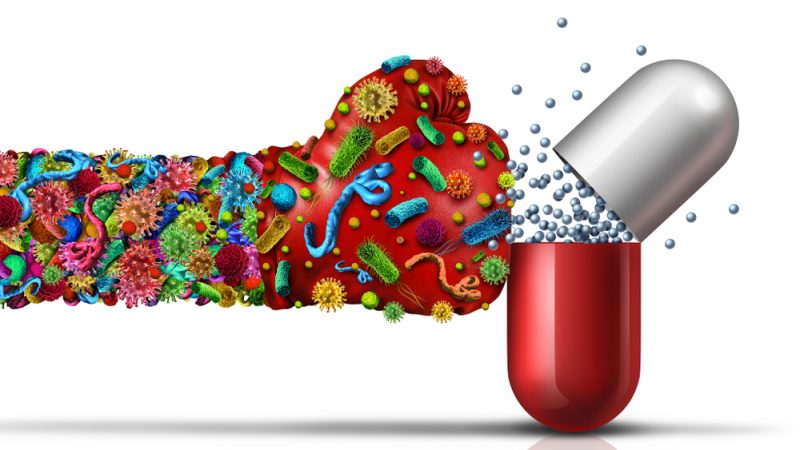
Antimicrobial resistance, the quiet pandemic

By Aminu Shehu Karaye

You wake up at midnight with a running stomach, all sweating and with a terrible headache. You surrendered that it was typhoid and, of course, opened the first aid shelf and brought out some drugs to take. It was amoxicillin for typhoid and tetracycline for the running stomach. But you remembered that every Nigerian has got some malaria, so you brought out the artemether and took it also. However, are you aware of antimicrobic resistance?

Even among the literate, only a few understand the effects and dangers posed by antibiotic resistance. Especially in Nigeria, where awareness is low, the magnitude of antibiotic resistance is expected to increase considerably over the coming years due to excessive use of antibiotics and other practices that are said to trigger antimicrobial resistance.

Antimicrobial resistance (AMR) is a general term used to describe the ability of microorganisms, including those that cause diseases (pathogens), to resist the effects of drugs that were once used to kill them or slow their activities. AMR is a worldwide concern and should be taken with all seriousness. The UN ad hoc interagency coordinating group on antimicrobial resistance warns that if action is not taken, drug-resistant diseases could cause 10 million deaths annually by 2050 and damage the economy, similar to the 2008-2009 global financial crisis.

Also, by 2030, AMR could force up to 24 million people into extreme poverty. The World Health Organization identified misuse and overuse of antimicrobials; lack of access to clean water, sanitation and hygiene (WASH) for both humans and animals; low-grade infection and disease prevention and control in healthcare facilities and farms; lack of access to quality, affordable medicines, vaccines, and diagnosis; lack of awareness and knowledge and lack of enforcement of legislation as the major drivers of AMR (WHO, 2021).

In Nigeria, people get antibiotics over the counter without a prescription from the appropriate specialist. An individual would take an antibiotic when he has a running stomach or even a mild headache. The misuse of antibiotics is one of the biggest causes of antibiotic resistance.

Antibiotic-resistant bacteria can also be transferred from animals to humans and vice-versa. Poultry is one of the leading industries that harbours these resistant bacteria. Due to our everyday association with poultry animals, we will likely get these bacteria into our bodies. Many other ways exist in which AMR can be established. However, it is our responsibility to curb this menace as we are the ones in danger!

Curbing the menace of AMR is everyone’s business. No matter how careful you are with antibiotics, you might buy and consume a chicken grown with antibiotics as a growth promoter, which will surely trigger resistance. Therefore, from farmers to healthcare workers to everyone else, we must all play our parts to control antimicrobial resistance.

In Nigeria, there is a need for appropriate bodies and the government to educate the masses and warn them about the dangers of antibiotic misuse. The government should also ban selling antibiotics over the counter, without doctors’ prescription, and see that previous restrictions on antibiotics are implemented.

No action today, no cure tomorrow!

Aminu Shehu Karaye wrote this article via aminushehukaraye@gmail.com.

Gender-based Violence: Culture, society and psychology

By Hassan Idris

In discussing sexual and gender-based violence, it is of utmost importance to distinguish between sex and gender. Sex is the biological predisposition of being a male or female, while gender refers to a social construction which is socially created. It’s sexual and gender-based violence because it’s violence against the sexual predisposition of somebody, accompanied by social and cultural norms against one’s gender. Sexual and gender-based violence can be violence against men by men, men by women, women by men or women by women. But I’ll be more concerned with violence against women by men. 

Culture and Gender-Based Violence

The role culture plays in sexual and gender-based violence is perilous because most sexual and gender-based violence cases revolve around social and cultural norms that are culturally made by society. Social norms are contextually and socially derived uncontested intentions of ethical behaviours. Sexual and gender-based violence persists as one of the extensively prevalent and ongoing issues confronting women and girls globally.

Disputes and other humanitarian emergencies spot women and girls at heightened risk of numerous forms of sexual and gender-based violence. The Inter-Agency Standing Committee (IASC) 2015 Guidelines for Integrating Sexual and Gender-based Violence Interventions in Humanitarian Action defines sexual and gender-based violence as “any fatal act that is perpetrated against a person’s will, and that is based on socially ascribed (i.e., gender) differences between females and males. 

What Makes up Gender-Based Violence?

Gender-based violence comprises conduct that imposes physical, sexual or mental harm or hardship, perils of such acts, intimidation and other deprivations of freedom. These destructive acts can transpire in public and in private. Toxic social norms that strengthen sexual and gender-based violence include women’s sexual virtue, conserving family respect over women’s safety, and men’s sovereignty to discipline women and children.

It’s paramount for us to know that women are at enormous risk of sexual and gender-based violence. We have seen circumstances where women are endangered by parental violence and violence during adolescence, and survivors always report adverse effects on physical, mental and reproductive health. Yet, often time hostile health and social effects imposed on women are never dealt with because often women do not divulge sexual and gender-based violence to providers or key health care or other services (e.g., safety, legal, traditional authorities) because of social norms that accuse the woman for the onslaught. 

Personal Experience with Gender-Based Violence

I can recall a friend’s elder brother who molested and beat his wife mercilessly because she served his mother food with her left hand. To him, it’s against his culture, and he had to beat his wife till she was hospitalised. Another man beat his wife because she cooked food for him while she was on her menstrual period, which he claimed went against his culture and traditional norms. There are many cases where women are badly hit because of their biological predispositions and cultural norms that give men more power.

Social and Psychological Impacts of Gender-Based Violence.

Sexual and gender-based violence have caused a lot of physiological, psychological and sociological injuries to numerous women. All indicate and enhance inequities between men and women and jeopardise victims’ health, self-respect, protection and freedom. Moreover, it incorporates various human rights infringements, including sexual exploitation of teenagers, rape, home cruelty, sexual battering and harassment, trafficking of women and girls and multiple other dangerous traditional practices.

Any one of these abuses can leave deep mental wounds; ravage the well-being of women and girls in a widespread manner, encompassing their reproductive and sexual health, and in some specimens, results in death. 

It is a Human Rights Violation

Violence against women is the most vastly yet subtlest renowned human rights intimidation in the world. It is an exhibition of historically unequal hegemony approaches between men and women, which have directed to dominance over and unfairness against women by men and to the impediment of the comprehensive advancement of women. Brutality against women is one of the crucial social tools by which women are impelled into a subordinate roles compared with men.

This violence may have contemplative effects, both direct and indirect, on a woman’s reproductive health, including undue pregnancies and insufficient acceptance of family planning information and contraceptives, unsafe abortion or damages unremitting throughout a legitimate abortion after an undesirable pregnancy, drawbacks from recurring rent, high-risk pregnancies and deficiency of follow-up care, sexually transmitted infections, including HIV, continual gynaecological problems as well as mental hardships.

Conclusion

In conclusion, to curtail and reduce sexual and gender-based violence, fundamental deterrence programs that promote change by dealing with the elementary causes and drivers of sexual and gender-based violence at a population level should be enacted. Such programs traditionally included endeavours to economically empower girls and women, enhanced legal penalties, enshrining women’s rights and gender equivalence within national legislation and policy, and other measures to promote gender equality and reduce sexual and gender-based violence.

Hassan Idris wrote from Kogi State, Nigeria, via drishassan035@gmail.com.

World Population Day: AHBN tasks Buhari to redouble efforts on family planning

By Uzair Adam Imam

The Africa Heath Budget Network (AHBN) has called on President Muhammadu Buhari to redouble efforts in determining to achieve the Family Planning (FP).

Dr. Aminu Magashi Garba, the AHBN Coordinator, made the call in a statement Monday to commemorate the World Population Day of 2022.

He added that the government should also make family planning information, commodities and services available and accessible to all.

He stated that these places should be provided especially in hard-to-reach areas, adding that, “this will curb teenage pregnancy significantly.”

As Nigeria has the largest population in Africa, the Federal Government was reportedly launched the 2030 FP commitment in March 2022, in Abuja.

The Daily Reality gathered that the federal government intents were, “by the end of 2030, Nigeria envisions a country where everyone including adolescents, young people, populations affected by crisis and other vulnerable populations are able to make informed choices, have equitable and affordable access to quality family planning and participate as equals in society’s development.”

Magashi further called on the federal government to maximize its bulging youthful population by improving on the quality of and access to education.

He added that, “The issue of recurrent strike action in the education sector such as the ongoing strike by the Academic Staff Union of Universities (ASUU) should be addressed once and for all.

“The youth should also be empowered and given the relevant skills to enable them contribute in resolving national challenges.

“We call on the government to also make family planning information, commodities and services available and accessible to all, especially those in hard-to-reach areas – this will curb teenage pregnancy significantly.

“The Federal and state governments should take the issues of the provision of family planning commodities serious by ensuring its availability free of charge in all government clinics across the country.

“This can be achieved by the payment of counterpart funding and the provision of funds for logistics by all tiers of governments,” the statement added.

Tragedy as husband nearly loses wife, baby, in hands of quack doctor in Bauchi

By Muhammad Sabiu

A husband in Misau town of Misau Local Government Area in Bauchi State, Ismail Ahmad Misau, has recounted his worst ordeal involving an ill-qualified doctor at Misau General Hospital. The doctor performed an unsuccessful post-partum surgery on Mr Ahmad’s wife without the husband’s or her family’s consent.

The wife, Khadija Muhammad, was admitted to Misau Town Maternity, after which she was referred to Misau General Hospital on July 4.

Speaking to The Daily Reality, Mr Ahmad lamented that he had found himself in a state of misery since then, adding that things are only worsening as his wife has been in a coma for about one week.

“After she was taken to the ward room, I was instructed to get out. Also, the person taking care of her was asked to move to the laboratory. Khadija was left alone in the room. Afterwards, as we sat down, we heard a cleaner shouting, asking where her caregiver was. We entered and found that Khadija had fallen from the bed in a coma. She was then quickly given an eclampsia injection.

The unprofessional doctor injured my baby—husband

“At 10 am, I was called from the hospital. We were asked to get some drugs. We did as instructed. After one hour, drugs were again needed. I was still asked to get drugs for the third time. On my way, I got a call that she had delivered a baby, but not by herself.

A doctor checked her and found that her unborn baby had died, so she could not deliver it. So, the doctor used a metallic object to eject the baby forcefully. Unfortunately, in trying to remove it, the baby got injured in the face, hand and leg. However, it later mysteriously turned out that the baby did not pass on, contrary to the doctor’s claim.”

Khadija’s life is at risk

“Khadija had been bleeding since then. I was told that she needed a blood transfusion. She first consumed two bags, two bags again, and another one afterwards. Still, the bleeding did not stop. The doctor then administered Tranexamic Acid (1 ample). Unfortunately, it wasn’t available in the whole of Misau. Before I returned to the hospital, I was told that the doctor had taken her into the operation room because, according to him, her womb had developed some issues (either cut or damaged). Therefore, the womb had to be stitched or completely removed before the bleeding could stop. Otherwise, she could die at any moment, according to him.

“On arrival at the hospital, I stopped and asked him why he would perform the surgery without scanning. He still answered that further delay could lead to my wife’s death. I still asked what he had discovered after the surgery. He said the womb was fine and that he had sorted the problem he found. After she was relocated to another unit, it took him about 40 minutes to attend to her again despite her acute condition. She had to be put on an oxygen mask.

“Since then, she has not been urinating because, as claimed by the doctor, she has developed a kidney problem,” Mr Ahmad recounted.

A 7-man delegation arrived in Misau

After subsequent development, the victim’s husband told The Daily Reality that on Wednesday, a 7-man team of doctors from the Abubakar Tafawa Balewa University Teaching Hospital visited the Misau hospital. Three of them checked Khadija and instructed that she be referred to the Federal Medical Center Azare.

“After taking her to Azare, she was taken to the Intensive Care Unit, after which we narrated all that transpired to the personnel in charge. And they documented it.

“They really showed their outrage due to what happened at the Misau hospital. They lamented that incompetence and recklessness had affected the treatment in Misau,” Mr Ahmad added.

This incident has caused a lot of tension in the Misau metropolis as some angry young men attempted to beat up the embattled, suspended doctor, who is also the Chief Medical Director of the hospital.

“People complain about his unprofessionalism”—insider

According to a worker at Misau General Hospital that spoke to the Daily Reality, the ill-qualified doctor was unprofessional and was not supposed to be at the hospital.

The source, who pleaded anonymity, told our reporter that this was not the first time the man’s unprofessionalism caused problems and difficulties for patients after surgery.

He said, “sometimes people come with lots of complaints after surgery. His unprofessionalism is almost known to everyone.”

He added that the quack doctor had been transferred to another hospital long ago. But, to the dismay of anyone in the hospital, he refused to accept the transfer. You know politics has roamed this system too, and the guy was said to have a political godfather.

What he did was entirely unethical

Asked whether the unprofessional doctor was ethically right when he did surgery on Ahmad’s wife without his consent, the doctor said it was entirely unethical.

He said, “What he did was wrong. One should not perform any surgery without the consent of the patient’s relatives.

All attempts by our reporters to hear from the management proved abortive.

The sociology of Eid festivals in Nigeria 

By Hassan Idris

It’s quite important to demystify the fact that in the festivity of the Eid festival, which is a religious celebration amongst Muslims all over the world, there is quite a lot of sociologically significant display, which demands sociological explanations and outlooks. Religious festivals such as Eid hold greater importance to sociologists like Emile Durkheim (1858-1917). He developed a widely used theory for explaining what holds society and social groups together through his study of religion. He identified core aspects of religious structure and participation that sociologists today apply to the study of society in its entirety.

This includes the role of religious festivals and rituals in bringing about social cohesion, social solidarity and people together around shared practices and values. It also comprises ways that participation in religious festivals and rituals reaffirms shared values and thus reaffirms and strengthens the social bonds between people and the experience of “collective effervescence,” in which people tend to share in feelings of excitement and are unified in the experience of participating in religious festivals and rituals together. The Eid festival, an Islamic holiday celebrated by many Muslims as a religious holiday with religious rituals, values, and relationships, is one of them.

Thus, Durkheim defined religion as a“unified system of beliefs and practices relative to sacred things. Sacred to him meant extraordinary—something that inspired wonder and that seemed connected to the concept of “the divine.” He argued that“religion happens” in society when there is a separation between the profane (ordinary life) and the sacred. A rock, for example, isn’t sacred or profane as it exists. But if someone makes it into a headstone, or another person uses it for landscaping, it takes on different meanings—one sacred, one profane. Durkheim, who’s generally considered the first sociologist to have analyzed religion regarding its societal impact, believed that religion is about community. It binds people together (social cohesion), promotes behaviour consistency (social control), and offers strength during life’s transitions and tragedies (meaning and purpose).

With the applicability of the methodology of natural science to the study of society, Durkheim held that the source of religion and morality is the collective mindset of society and that the cohesive bonds of social order result from common values in a society. He contended that these values need to be maintained to maintain social stability, to which explanations of Durkheim on the importance and functionality of religion would be used to explain and understand the religious Eid festivals celebrated by all the Muslims in the world.

However, the word “Eid” means festival or feast. Therefore, it depicts the event that is being celebrated. Muslims celebrate two types of Eid yearly following two significant acts of worship. The first is called “Eid Al-Fitr”, which means “the fast-breaking Festival” celebrated after fasting the entire month of Ramadan. The second, known as “Eid-ul-Adha,” meaning “the festival of sacrifice which is celebrated immediately upon the completion of Hajj, the annual pilgrimage to Mecca. The Eid Al-Adha entails going for a pilgrimage to Mecca performed by millions of Muslims simultaneously once a year. Through Eid Al-Adha, the sacrifice Abraham was willing to make to God and the mercy God had upon him becomes celebrated and manifested.

Muslims celebrate the day by sacrificing a sheep or so and sharing it not just with family and friends but also with the less privileged. This celebration lasts four days, beginning the day after the completion of Hajj. The celebration of Eid Al-Fitr lasts one day, starting with the sighting of the new moon, which marks the end of the Islamic month of Ramadan and the beginning of the following month. During Ramadan, Muslims fast to purify themselves and get closer to God. Ramadan is like a retreat, a time to step aside worldly worries, focus on spirituality, and improve connections with the one who gave them life and blessings.

After going through a long spiritual retreat for a maximum of 29 to 30 days, it is only logical that a feast is held to mark the end of the month. This is what Eid Al-Fitr is all about. Like Ramadan, Eid Al-Fitr begins with the first sighting of the new moon, so most of the time, Muslims have to wait until the night before Eid to verify its date. If the new moon is not visible, the month lasts 30 days. The date changes annually on the Gregorian calendar and varies from country to country, depending on geographical location.

Though, in declaring the start of Eid, Muslim-majority countries depend on the testimonies of local moon sighters. The Judicial High Court then decides if Eid has arrived. When the sighting has been verified, Eid is declared on television, radio stations and mosques. The celebration of Eid Al-Fitr lasts one day, starting with the sighting of the new moon, which marks the end of the Islamic month of Ramadan and the beginning of the following month.

The first Eid Al-Fitr was celebrated in 624 CE by the Prophet Muhammad (PBUH) and his companions after their victory in the battle of Badar, a turning point in the prophets’ struggle with his opponents among the Quraish in Mecca during the early days of Islam. Inasmuch as all Muslims celebrate the festival, there are many doctrines and ways of celebrating it which are sociological and are of paramount interest and importance to sociologists and Anthropologists. However, the traditions of Eid Al-Fitr entail ‘Sawm’ ( fast), which is the practice of fasting during the holy month of Ramadan and is one of the five pillars of Islam.

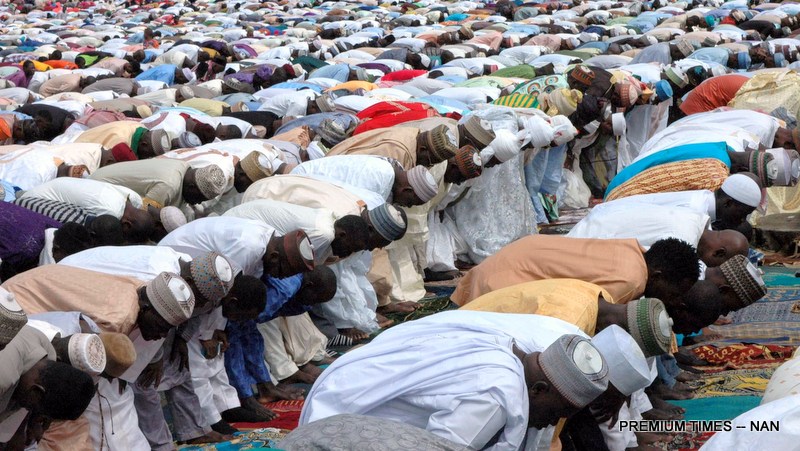
Muslims believe that during Ramadan, the Qur’an text was revealed to the Prophet Muhammad (S.A.W). Muslims celebrate Eid Al-Fitr with “Salat Al Eid” (Eid prayers). There is no audible call to prayer for the Eid prayers. Muslims will gather in mosques or open spaces and offer two units of prayer–called “Rakat”. The prayers are followed by a sermon, in which the Imam asks for forgiveness, mercy, and peace for every being worldwide.

To further bolster the sociological social solidarity and love in Islam, which clarifies Durkheim’s postulation, the other key element of the Eid festival is giving money to the poor alias ‘Zakat al-Fitr’, sending Eid greetings and feasting with families. For many Muslims, Eid al-Fitr is a festival to show gratitude to Allah for the help and strength he gave them throughout the month of Ramadan to help them practice self-control. The phrase commonly used by Muslims as a greeting on this day is “Eid Mubarak”, which is Arabic for ‘blessed festival’.

Muslims begin Eid with the observance of the Eid congregational prayer, sometimes in the mosque but usually in an outdoor location. Before going for the Eid prayer, it’s encouraged to take a bath, wear the most befitting clothes, and look dignified for the celebration. On the way to the Eid Prayer, Muslims recite the words: Allah is great, Allah is great, Allah is great. There is no other God but Allah. Allah is great; Allah is great. To him belongs all praise. And after the Eid prayer, people gather to feast with their families and friends, where they get to savour the taste of various dishes.

Some even travel to their hometowns or home countries to celebrate with their extended families and rekindle the bond of kinship. There is a rich tradition of gift exchange during Eid. For example, it is customary to gift new clothes and shoes to children in Nigeria. Sometimes, the children receive money to buy sweets and snacks to enjoy with their friends and cousins. In western countries, however, children receive gifts instead of cash, and parents decorate their homes to create a mood of excitement for the family.

Finally, Eid is meant to celebrate the completion of spiritual duty and a time to bond and exchange hugs, kisses, and laughter with family, friends and the community. Each country has traditional foods, and sweets prepared ahead of Eid or on the morning of the first day. These foods range from special biscuits and bread to cakes and puddings. On the first day of Eid al-Fitr, voluntary fasting is not allowed as Muslims are encouraged to feast and celebrate the completion of a month of worship and abstinence from food.

Greetings for Eid also vary depending on the country and language. For instance, in Indonesia, Eid is called Lebaran, so Indonesians would say, “Selamat Lebaran”, which means Happy Eid. Other variations of Happy Eid are “Barka da Sallah” in Hausa, a Nigerian language. In addendum, with clothes being an essential marker of Eid, some people wear traditional clothes from their culture, while others pick out something new to wear. Eid is a time for every Muslim to share and express love, peace, and friendship worldwide and extend hands to their non-Muslim neighbours and friends during this festival.

Hassan Idris wrote from Kogi State via idrishassan035@gmail.com.

In carrying out a wife’s dual mandate

By Aisha M Auyo

You are married to me, not the kids.”

“I was here before the kids.”

“I come first and not the kids.”

“Your primary duty is to me and not the kids.”

How often do wives/mothers hear the above statements? Very often, of course. And to many, it’s a shame that husbands or fathers compete with their kids to get the attention of the woman of the house? Is it really?

Well, one may say, “aren’t you lucky to have your husband and kids fight over you?” But no, that is far from being lucky. The woman in this context is thrown into a state of dilemma, confusion and psychological trauma.

Husbands should be able to save their wives from this heartache and trauma by being more considerate and appreciative of the wives-cum-mothers’ indispensable roles in the family.

The moment a child is born into the world, a mother’s duties commence. In the first days of its existence, an infant is more feeble and helpless than any other living creature. They are unable to minister to their own needs. But to meet this weakness and incapacity on the part of the infant, God has implanted in the mother’s heart a yearning affection for her offspring. No one can understand so well or ever so ready to meet the needs of a child as a mother.

Nevertheless, having said all these, let’s pause and ask ourselves, “is it appropriate for a mother to make her kids her first care in a bid to fulfilling her duties?’ No. Her whole time should not be spent attending to the kids’ needs at the expense of her husband’s. However, it is necessary that reasonable time should be spent so that the kids could have the comfort and happiness they deserve.

It is, therefore, imperative to stress that husbands SHOULD NOT be neglected; neither should they be substituted for their kids.

One of the purposes of marriage is companionship and a man is expected to find this in his wife. As the wife becomes overly involved with and attached to her kids, she falls short of fulfilling this purpose towards her husband.

When this happens, the man feels lonely and loses his best friend, who is supposed to be his wife. He then becomes vulnerable to outside temptations. Will you, therefore, blame a man for reacting to this?

When a woman places her kids above her husband, her action tells him that she loves the kids more than him. This should not be so. Instead, make your husband feel important and know how much you value him.

 Alternatively, instead of treating him as a second-class citizen in his own home, why not treat him as one of your children. After all, the legendary French fashion designer Gabrielle Bonheur Chanel (CoCo Chanel) rightly said, “As long as you know men are like children, you know everything!”

Wives/mothers, be wise. But I must admit, it’s easier said than done!

Aisha Musa Auyo is a Doctorate researcher in Educational Psychology, a mother of three, a Home Maker, caterer and parenting/ relationship coach.

Komi: Who will salvage our maternity clinic?

By Muhammad Rabiu Jibrin (Mr. J) 

It is heartbreaking and horrible that in a country that operates democracy, a nearby house is turned into a medicine store, and no matter the condition of a patient, they can’t be treated in the maternity when it’s raining. Windstorms blew off the roof some time ago. This has been the condition the people of the Komi community found themselves in for a long time despite reports that the gory images of the worn-out structure of the maternity have been submitted to the relevant authorities.

The 22-year-old maternity with a 6442 target population has been in deplorable condition for about 7-8 years.  Owls and other birds made their nests in its ceiling before the damage worsened to the extent that they had no option but to vacate. The staff in the structure reportedly killed two puff adder snakes.  The maternity clinic was built in 2000 by the then Funakaye Local Government Chairman Alhaji Abubakar Abubakar BD to ease people’s lives.

Not more than a month ago, the price of 25 litres jerrican of water skyrocketed from 100 naira – which has been viewed as expensive to any subsistent farmer – to 250 naira forcing many people to sleep on empty stomachs and animals stood thirstily. Until the rain became steady, the rain-softened earth dams retained some water, and the community breathed a sigh of relief from the cancerous lack of drinking water.

As part of their contribution towards curtailing the damages before it went beyond control, every civil servant in the community was tasked with a sum of one thousand naira monthly, which was used in repairing damaged places for a couple of months.

What has been happening could be viewed as an infringement of the right to health guaranteed in chapter 2, section 17, subsection 3(d) of the 1999 Federal Republic of Nigeria constitution. Under the African Charter on Human and Peoples Rights, the  ‘Right to Health’ has been guaranteed.

Also, it has been accorded recognition by many international treaties in which Nigeria is part and parcel. These include the Convention on the Elimination of all Forms of Discrimination against Women (CEDAW) Convention on the Elimination of all Forms of Discrimination (CEFD), the convention on the rights of the Child (CRC), the International Covenant on Economic, Social and Cultural Rights (ICESCR) among others.

It is high time the government came to the rescue of this community. Likewise, non Governmental Organizations and well-to-do individuals should, for a matter of help, come to their aid too.

Muhammad Rabiu Jibrin (Mr J) wrote from Gombe via muhammadrabiujibrin@gmail.com.

Kano: Over 3.1m children to receive supplements against malaria – commissioner

By Uzair Adam Imam 

Over 3.1 million children would receive supplements against malaria, while 2.8 million children would be dewormed, the Kano state commissioner for Health, Dr Aminu Ibrahim Tsanyawa, said.

The Commissioner disclosed that there would be childhood immunization for about 68,135 children, adding that antenatal services would also be provided.

Tsanyawa stated this during a media briefing ahead of the exercise, which begins on Tuesday, July 5, 2022.

He noted that the Kano State Government had identified about 12 million children to receive the seasonal Malaria Chemoprevention for July to October 2022 in the 44 government areas of the state.

The Daily Reality learned that the previous exercise conducted in January 2022 recorded huge success with Vitamin A coverage of more than 88 per cent.

In his words, Tsanyawa added, “the aim was to prevent uncomplicated and similar proportion of severe malaria incidences amongst the age group.”

“We are integrating the two exercises, although the MNCHW is a week-long event conducted twice every year.”

“It has a high impact on low-cost interventions offered to pregnant women and children below the age of five to increase coverage level of preventive and curative health indicators,” Tsanyawa stated.