Health

You can add some category description here.

The pains, emotions and struggles of families living with sickle cell

By Aisha Musa Auyo 

September is globally declared Sickle Cell Awareness Month.  The month is dedicated to raising awareness about sickle cell disease (SCD) and the challenges faced by those living with this inherited blood disorder. It serves as an opportunity to educate the public, promote early diagnosis, and advocate for better treatment options and research. 

The month also highlights the importance of genetic screening, support for patients and families, and increased funding to improve the quality of life for individuals affected by SCD. Through community events, health campaigns, and social media, advocates aim to bring attention to the urgent need for action and support for those impacted by sickle cell disease.

Today, I want to discuss sickle cell disease from a social and psychological perspective rather than a medical one. While I’m not a medical doctor, I’ll focus on the impact this condition has on families and individuals beyond the clinical aspects.

Anyone who knows me as a relationship coach knows that I deeply love and believe in love. I advocate for it passionately. However, when it comes to marriage, love is just one of many essential foundations. I’ll be very realistic here—there’s much more needed to make a marriage thrive. We’re all witnesses to the struggles and the painful moments of crisis of sickle cell sufferers. We know how their parents strain to cope with the financial demands at times of crisis.

For AS-AS couples who choose to look beyond their genotype and marry for love, the romantic vision they once had is often overshadowed by constant worry, fear, and apprehension. The looming possibility of having a child with sickle cell disease adds significant stress. After having children, the anxiety only deepens, with parents constantly fearing an impending crisis or managing one. This often results in the other children not receiving the care and attention they need, as the focus shifts primarily to the sick child.

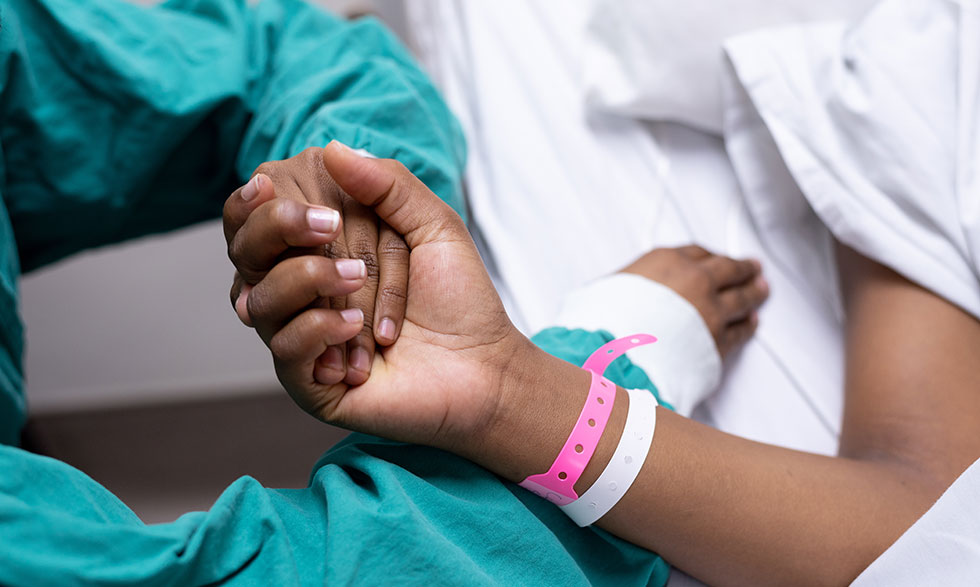
Sometimes, the mother has to forfeit most of her dreams and aspirations because she’s always in and out of the hospital. I don’t want to mention the fear, horror, and pain they endure whenever their kids are in the hospital. The hospital becomes the second home of sickle cell kids with their parents. 

These parents hardly have any social life outside their homes and hospitals. The mothers, who are naturally more emotional, tend to be most affected by this.

Now, let’s discuss the pain and agony of sickle cell children. As much as I hate to write about it, we have to do it.  The pain experienced by a sickle cell patient is not only severe but often unpredictable. It can occur when least expected. 

The crisis stems from the sickle-shaped red blood cells that block blood flow, reducing oxygen delivery to tissues and causing intense pain. The pain can affect various parts of the body, particularly the bones, joints, chest, and abdomen. It can be acute (lasting hours to days) or chronic (persistent over time). The episodes are triggered by stress, dehydration, cold, or infections. The ensuing pain can be debilitating, leading to hospitalisations and significantly affecting the patient’s quality of life.

As these children grow older, many develop feelings of resentment toward their parents. They feel that their parents prioritised their desires over the potential suffering of their children. Every painful episode and crisis can remind you of choices made without fully considering the long-term consequences. This resentment stems from a sense of betrayal as they bear the physical and emotional toll of a decision that was not theirs. Parents often face this blame, which adds another layer of pain to an already difficult journey.

Parents in this situation are bound to carry the heavy burden of guilt and regret. Some marriages don’t survive the strain, leading to divorce, while others remain intact but with the painful decision to stop having children. 

I’ve seen firsthand the difficult choices couples make, including terminating multiple pregnancies because the babies were predicted to have sickle cell disease. It begs the question—why start down this path in the first place, knowing the potential heartache? No one should have to make these choices, and it’s a reminder of the importance of understanding genetic risks before taking that step.

Dear aspiring couples, Love, while beautiful, is not enough to withstand the many challenges that marriage brings. If both of you carry the AS genotype, I urge you to reconsider your relationship. There are many potential partners out there, and though it may be difficult, stepping away now could save you unimaginable heartache later. Trust me, it’s not worth the pain.

To couples already married with the AS genotype, please think carefully before bringing more children into the world. Consider the immense suffering that comes with sickle cell disease—for both you and your child. Spare them the pain and constant crises. Your love can be expressed in ways that protect their future.

Dear parents of children with sickle cell, my heart goes out to you. As a fellow parent, I can only imagine the trauma, pain, regrets, and difficult choices you face. The physical, financial, and emotional toll can feel overwhelming at times. 

Please remember that this is beyond your control, and you are doing your best for your child. Stay strong and lean on each other for support. Don’t hesitate to seek help from family, and make time for yourselves to recharge. Remember, there’s a life outside the hospital and home—try to socialise and find moments of joy. 

Connect with other parents who understand your journey, learn the best ways to care for your child, and never stop seeking knowledge. Above all, pray for Allah’s guidance and strength. You are not alone, and you will get through this.

Dear sickle cell warrior, please know your parents are deeply feeling your pain. They live with a mix of empathy and guilt, wishing they could take away your suffering. While they can’t change the course of destiny, they are sacrificing so much to ensure you have the care and support you need. Their love for you runs incredibly deep, often even more so because of the battles you face. If they could go back and change things, they would do so in a heartbeat. Always remember that your health and happiness mean the world to them.

The spread of the sickle cell genotype can end in a few generations when we intentionally avoid reproducing that genotype. It is a must for all of us to know our genotype before engaging in any serious relationship with the opposite gender. A stitch in time saves nine.

In my next post on this topic, I will discuss prevailing medical solutions in the management and treatment of sickle celldisease.

Aisha Musa Auyo is a Doctorate researcher in Educational Psychology. A wife, a mother, a homemaker, caterer, parenting, and relationship coach. She can be reached via aishamuauyo@live.co.uk.

AMG supports Kano humanitarian ministry, strengthen partnerships to aid vulnerable populations

By Aisar Fagge

“I will facilitate connections between the State Ministry of Humanitarian Affairs and the Federal Ministries, as well as international donors like the United Nations,” said Aminu Magashi Garba during a courtesy visit to the ministry on Tuesday, as part of his commitment to support vulnerable populations, including the less privileged and disabled in the state.

Magashi, founder and CEO of the Aminu Magashi Foundation (AMG), also announced technical support for the ministry, a gesture commended by Hajiya Amina Abdullahi Sani, who is the commissioner of the ministry.

Hajiya Amina assured the foundation of her commitment to collaboration, aiming to enhance the ministry’s impact on the people of Kano State, especially the vulnerable and disabled.

During the visit, Magashi pledged to support the ministry in several key initiatives, including convening a one-day stakeholders’ forum on the proposed Kano State Humanitarian Agenda, organizing a two-day working visit to Abuja to explore partnerships with the Federal Ministry of Humanitarian Affairs and Poverty Alleviation, and the United Nations Office of the Resident and Humanitarian Coordinator.

He also committed to assisting with the development of the 2025 Annual Operational Plan and a five-year strategic plan for Humanitarian Affairs and Poverty Alleviation.

Other support initiatives from the foundation include assistance with establishing the Kano State Humanitarian Investment Trust Fund and the Kano State Inter-Ministerial Coordination Committee on Humanitarian Response.

In her remarks, the commissioner highlighted the present administration’s commitment to supporting vulnerable populations, which led to the establishment of the ministry, reiterating her dedication to working with the foundation to further this mission.

Dr. Magashi praised her leadership and urged the commissioner to engage stakeholders for further interventions. He also encouraged the ministry’s directors to develop annual operational and strategic plans for the future.

Reasons to avoid searching for your health symptoms on Google

By Mutalib Jibril

Have you ever felt a sudden twinge in your back, experienced a sharp pain in your chest, or noticed unusual fatigue? Did you rush to your favorite search engine to discover what might be wrong? You could be a patient of Dr. Google. Even with the best intentions, your search can quickly become a tangled mess of confusion.

Technology has made nearly everything easier and more convenient, giving us access to a wealth of information at our fingertips. This convenience extends to the health sector as well. 

A research review suggested that 90% of people in the United States have searched the internet for health information. It also revealed that 1 in 3 adults have gone online to try to diagnose a medical condition.

Googling your symptoms makes you believe you have a serious or even deadly health condition. When this happens, it’s known as cyberchondria. This term is used for an individual who develops extreme, unwarranted anxiety by using the internet to search for medical information.

For instance, you are experiencing a persistent cough. Almost instinctively, you grab your phone and search “persistent cough is a symptom of ….” In an instant, you are bombarded with a range of potential causes, such as allergies, asthma, tuberculosis, pneumonia, whooping cough, and chronic obstructive pulmonary disease (COPD). Now, you are not only coughing but also feeling overwhelmed and anxious. 

Turning to Google to diagnose what is wrong with you can lead to fear and anxiety because Google will not provide specific information about your health.

Online resources can be beneficial but are often confusing, alarming, and filled with inaccurate information. Google has no knowledge of your medical history, current medications, or other personal details crucial for an accurate diagnosis. One of the biggest risks of self-online diagnosis is that it may deter you from seeking the professional help you need.

When your car breaks down, you don’t just Google the problem to find out why it happened. Searching online may provide numerous reasons, but it won’t pinpoint the exact issue. Instead, you consult a mechanic with the expertise to identify and fix the issue. 

Similarly, seeing a medical doctor is more effective when you are experiencing health problems rather than relying on search engines.

When your smartphone starts acting up, you wouldn’t just rely on online searches to troubleshoot the issue. Instead, youwill visit a tech specialist who can fix the problem. Why, then, are you Googling your health problems? These two examples illustrate why seeking expertise is always the best approach.

Medical doctors undergo years of training that fully equip them with the precision to diagnose and treat a wide range of medical conditions that Google simply cannot match.

Mutalib Jibril wrote via mutalibdantanisabi300@gmail.com.

10 dead, 40 hospitalized as diphtheria outbreak hits Kano

By Uzair Adam

At least 10 people have died and 40 others are currently hospitalized following a diphtheria outbreak in Kano State.

The state’s Commissioner of Health, Dr. Abubakar Labaran, disclosed this to journalists as reported by The Daily Reality on Sunday.

Dr. Labaran confirmed to journalists that the deaths occurred over the past week, adding that the state government has established diphtheria treatment centers in various local government areas to handle the outbreak.

“We have recorded 10 deaths from the diphtheria outbreak in the last week, and as of this morning, 40 patients are receiving treatment,” Dr. Labaran stated. He urged residents who encounter individuals showing symptoms of diphtheria to visit the newly established treatment centers instead of coming to facilities in the metropolitan area, to help prevent the spread of the disease.

He emphasized that treatment at these centers is free of charge.

Dr. Labaran also refuted figures circulating on social media, stating, “The only official number we have is 10 deaths.” The health authorities in Kano continue to monitor the situation closely as efforts to contain the outbreak are underway.

Mother dies, two children injured as building collapse in Kano

By Uzair Adam

A building collapse in the Makwarari area of Kano State has claimed the life of a 35-year-old mother and injured her two children.

The tragedy occurred on Friday following heavy rains that began on Thursday night and continued into the early hours of Friday morning.

The victim, identified as Balaraba Tijjani, was at home with her children, Abdulnasir and Abdallah, aged 11 and 13, when the incident happened.

According to her husband, Tijjani Magaji, the building’s collapse was due to the severe rainfall.

The Kano State Fire Service Spokesperson, Alhaji Saminu Abdullahi, confirmed the incident, noting that the structure was a one-storey residential building measuring 30 feet by 40 feet.

“We received an emergency call on Friday around 9:30 a.m. from one of our staff members, Ibrahim Isah, reporting the collapse,” Abdullahi said.

Emergency responders were promptly dispatched to the scene, where they managed to rescue the children alive.

They were taken to Murtala Muhammed Specialist Hospital in Kano for medical attention.

Zaria: Severe flooding displaces hundreds, cemetery damages as residents plead for aid

By Uzair Adam

Residents of Chikaji, located in the Sabon-Gari Local Government Area of Kaduna State, are urgently seeking assistance from the government and charitable individuals following a devastating flood that swept through the area.

Several media reports indicated that the flood caused extensive damage, washing away cemeteries, homes, and properties.

Triggered by a seven-hour downpour from 5:00 a.m. to 1:00 p.m. on Monday, the flood has severely impacted the community.

The Village Head of Chikaji, Alhaji Auwal Sani-Dambaba, reported on Tuesday that over 200 houses were affected.

He also mentioned that the flood caused significant destruction to the LEA Primary School and desecrated a large section of the Ojo Cemetery.

Although no lives were lost, many graves were disturbed, and residents are now taking refuge in nearby neighborhoods.

To address the immediate needs of the cemetery, Malam Suleiman Liman, the Chief Imam of Chikaji Central Mosque, has called an emergency meeting with local philanthropists to discuss relief efforts.

Among the victims is Malam Ibrahim Ahmed, whose two-bedroom home was reduced to rubble.

He expressed gratitude that the flooding occurred during daylight, which allowed residents to take swift action, although he lost all his belongings while trying to protect his children.

Community leader Alhaji Gafai Katsina highlighted the difficult situation for many flood victims, noting that some families are now staying with less affected neighbors or have returned to their parents’ homes temporarily.

Reacting to the disaster, a statement from the Office of the Speaker of the House of Representatives, Tajuddeen, emphasized the need for swift government intervention and called on the National Emergency Management Agency (NEMA) and the State Emergency Management Agency (SEMA) to provide immediate support to the affected residents.

The Speaker also urged residents to take precautionary measures and adhere to safety advice from authorities to minimize further risks associated with flooding.

Gashua, who will save you?

By Hamza Muhammad Tasiu

I want to start with a powerful word: Kafkaesque! The meaning? It is when you enter a surreal world in which all your control patterns, plans, and how you have configured your own behaviour begin to fall to pieces. You find yourself against a force that does not lend itself to how you perceive the world. You don’t give up; you don’t lie down and die. You struggle against this with your equipment and whatever you have. But of course, you don’t stand a chance. That’s Kafkaesque as defined by Frederick R. Karl.

Kafkaesque comes from the name of the German author Franz Kafka. The word perfectly describes the cases of most kidney failure patients. The disease starts with back pain, then people go for diagnosis, and dialysis follows (Thank God it is free for Yobe indigenes). Swelling in arms and legs, shortness of breath, and hiccups follow and then comes the expected: slow and painful death. These are some of the things patients go through. 

But what is kidney failure? Kidney failure is a condition in which the kidneys lose the ability to remove waste and balance fluids. In other words, the kidneys have failed. 

Ordinarily, kidney failure should not be a death sentence. Dr. Ibrahim Sulaiman told us that a person can survive on 25% of his total nephrons, the kidney cells. That is, you only need half of one kidney to survive. But for most people, being diagnosed with one kidney failure is like being issued an indirect death certificate.

Most patients diagnosed with kidney disease put everything they can into the fight against the disease, but they stand no chance in most cases. And as the word says, ‘You don’t give up, you don’t lie down and die. You struggle against this with your equipment and whatever you have. But of course, you don’t stand a chance.’ 

Gashua has the highest number of cases of kidney failure in the whole of Yobe State. You could go to the dialysis unit in Yobe State Teaching Hospital and look at a kidney failure patient and ask him, ‘Are you from Gashua?’ The most probable answer? ‘Yes!’ 

As we speak today, hundreds of families are at the mercy of this disease. May we, the healthy ones, be protected from it. We also pray that this crisis comes to an end soon. 

My attempts for writing this short piece are that we may get someone (individuals, NGOs, governments, etc.) who will come to our aid and relieve the pain in my heart. As Neil Gaiman said, ‘Pain shared, my brother, is pain not doubled but halved.’

Hamza Muhammad Tasiu wrote via hamzamtasiu@gmail.com.

Gombe: Governor inspects newly completed Kumo General Hospital

by Abdullahi Mukhtar Algasgaini

Governor Muhammadu Inuwa Yahaya, CON, inspected the 200-bed-capacity ultramodern General Hospital in Kumo, Akko Local Government Area of Gombe State.  

The hospital replaced an earlier dilapidated facility and is designed to provide comprehensive healthcare services as a referral centre.

Governor Inuwa said, “The complete reconstruction of this hospital is part of our larger plan to provide quality and affordable healthcare services to the people. We inherited a completely moribund General Hospital that could not provide the required healthcare services due to a lack of necessary equipment. We had no choice but to rebuild it from the ground up.”

“We built the hospital to international standards so it can function as not only a general hospital but also a facility that can provide tertiary health services,” the governor added.

He explained that the state government has also established similar hospitals in Kaltungo and Bajoga and revitalised at least one primary healthcare facility in each of the state’s 114 political wards.

“Our performance in the health sector, from human resources to infrastructure, is evident for all to see”. 

Strategically located, the Kumo General Hospital will serve the local population and travellers along the Gombe-Yola road. 

The Commissioner for Health, Dr. Habu Dahiru, conducted the governor around the facility and said it can handle complex medical cases, including heart surgeries and other medical complications.

He highlighted its modern equipment and potential to become a leading healthcare centre in the state and across the Northeast.

“In this theatre, multiple operations can be performed simultaneously, making it ideal for emergency situations and life-saving interventions,” he noted.

The Governor inspected the well-equipped laboratories, wards, maternity unit, accident and emergency complex, mortuary, powerhouse, and mini water treatment plant, among other facilities.

Construction of Primary Health Care in Kwajale: What is causing its delays?

By Abdulaziz Isah Bagwai

After the Asr prayer on a rainy Monday, Jummai, who was pregnant, was sweeping her courtyard when her daughter Laure returned from the river, where she went to fetch the water they would use for the chores. “Assalamu alaikum,” Laure greeted as she entered the house and poured the water she fetched in a rubber bucket into a large pot.

Jummai, an all-female mother of five, had prayed endlessly during the day and night for a male child, and since the miracle of this pregnancy, her prayers have doubled. She’d often wake up in the middle of the night to remind God of her prayers and to jokingly remind Him that He’d promised to answer good prayers. Hers was.

One night in September, Jummai began her labour with low and intensifying moans that woke Baban Laure, her husband, whose sleeping groans filled the noiseless room. “What’s happening? Are you well?” He inquired in a low, creaking tune. She couldn’t answer him, but in her moans, he understood she was calling God for aid into her large tummy, and when he grabbed his torchlight, he saw that she was holding the belly tightly.

Baban Laure rushed to his neighbour, Rakiya, a traditional birth attendant. Upon their arrival, Rakiya confirmed that it was labour, but the condition was beyond her basic skills; hence, he should take his wife to the primary health care facility in Bagwai.

Amidst preparation, Jummai continued to bleed, and Baban Laure suggested that “if not for the bleeding, we could manage to wait until the morning when the staff of our health post come.” Baban Laure suggested this to Rakiya, who was engrossed in controlling the seemingly unending bleeding. Baban Laure said they could only travel to Bagwai on bikes that night of misery because the only person who had a car wasn’t in town.

Jummai gave birth to a beautiful baby boy at around 4:00 a.m., whom she was unable to see immediately until the day broke. “Where’s my baby?” She asked. But the strolling tears in Rakiya’s eyes told her everything. The baby is dead, she understood, with a bit of desperation in her face. When the birth attendant was telling Rakiya to report on time in emergency cases like this because the baby died as a result of oxygen starvation, which was, of course, due to the excess blood she had lost, she understood that her baby was a boy. Before Rakiya arrived at her bed to calm the tears that formed rivers in her eyes, she lay there stranded, unconscious, and was admitted for two weeks!

What is behind the pause of Kwajale Comprehensive Health Centers construction project?

Had this project been completed and launched today, there would’ve been a 24-hour medical service in this village, which could’ve saved the life of Jummai’s baby boy that she had wished and prayed for. 

“This project has put light on many faces in Kwajale, for it was initiated when our clinic and the services we rendered were insufficient for the community,” said Saifullahi, a healthcare worker at Kwajale Primary Health Post.

“When the construction started, we were assured that it wouldn’t take long to be completed, and we agreed to their assertion because they worked with an enthusiastic speed,” Saifullahi continued.

Who are the contractors?

It was a federal government project awarded in 2007 by the Association of Local Government of Nigeria (ALGON) to Mathan Nigeria Limited. This indigenous engineering company had quietly touched the lives of Nigerians long before it got caught in the eye of the storm because an April 2nd, 2012, Premium Times report stated that “Abandoned N37 billion health centre projects rot away nationwide.” However, “the contractor Mathan Nigeria Limited is insisting on a variation of the original contract sum.”

However, on October 24th, 2023, Platform Times reported that “After 16 years, ALGON disburses equipment to [an] abandoned hospital in Ogun [State].” Although this report might’ve meant ALGON was on another different project with a different contractor, the report continued to read, “The equipment, which was part of a federal government project awarded in 2007, was delivered to the health centre on Monday by a contractor, Mathan Nigeria Limited.”

Why the failed project in Kwajale is different

“We’re a little bit far from Bagwai [town], and we do not have good roads; referred patients suffer a lot [in the day, not to mention at night, and even in the dry season, speak less of the rainy season] along the way.” Malam Umar, a community member, lamented.

“We’ve been given classes to continue with our activities because the building meant for the primary health post has been under renovation for years now, but no progress has been made yet,” said Malama Aisha, the head of Kwajale Health Post.

“A non-governmental organisation (NGO), the United Nigerian Youth Forum (UNYF), has urged the Department of State Services (DSS), the police, other security agencies, and the Economic and Financial Crimes Commission (EFCC) to probe the contractor handling the construction of health centres across the country. The forum accused the contractor, Mathan Nigeria Limited, of abandoning the N57 billion contract, which the forum said had led to the deaths of many Nigerians.” Leadership news report.

Ali Muhammed, the UNYF’s spokesperson, alleged that the contractor’s negligence had caused the deaths of hundreds of expectant mothers who ought to have safely delivered their babies at the health facilities if the projects had been completed on time.

For 17 years now, the remedy for the continued pain like Jummai’s in Kwajale is still uncalled for; no medical condition is manageable at night in Kwajale, their bad roads are yet the same, and patients still suffer along the bicycle-and-motorcycle-only road.

GCC, government fight maternal mortality in Borno 

By Lawan Bukar Maigana 

According to a report by the World Health Organization, Nigeria, after India, has the highest number of maternal mortality in the world. The report shows 788 women and children deaths per hundred thousand’ in India, and 540 women and children ‘per thousand’ died in Nigeria.

Other countries with high maternal, neonatal, and stillbirth rates are Pakistan, the Democratic Republic of the Congo, Ethiopia, Bangladesh, China, Indonesia, Afghanistan, and the United Republic of Tanzania.

‘About 57,000 mothers died from pregnancy and complications during childbirth in 2023 alone,’ said Nigeria’s Minister of Health and Social Welfare, Muhammad Pate, at a public health function.

Unfortunately, the frequent loss of lives among pregnant women in Nigeria, particularly Northern Nigeria, remains an issue of concern. This gives Nigeria a poor global ranking.

Pate explained that the Federal Government was committed to drastically reducing maternal mortality through the new Safe Motherhood Strategy. He noted that the central government will take actionable steps and cascade the strategies to state and local governments, targeting at least seven million pregnant women.

“The aim is to ease six million new births by activating the Decentralised Facility Financing package, establishing robust collaboration with health NGOs, community leaders, and media to boost awareness campaigns.” 

Sequel to the Health Minister’s lamentation, the Girl Child Concerns (GCC), in collaboration with the Borno State Government through the Multi-Sectoral Crisis Recovery Project (MCRP), has trained 300 Community Health Extension Workers (CHEWs) on Basic Emergency Obstetric Care and Early Neonatal Care in Borno State.

The Chief Adviser and Coordinator for Sustainable Development, Partnerships, and Humanitarian Support to the Governor of Borno State, Dr. Mairo Mandara, stated that the training aimed to improve maternal and child health services across the state. The training was conducted in three zones of the state. Each zone underwent one week of theoretical training followed by one week of clinical training. 

The training for Borno Central was held on May 27, 2024, for Borno North on June 3rd, and for Borno South on July 1st, with each zone being exposed to theoretical and clinical aspects of the training.

Dr. Mandara emphasized the governor’s commitment to ensuring quality health services for the resilient people of Borno State, especially the locals, given the magnitude of the challenges they face due to the terrorist activities of Boko Haram insurgents in their communities.

Dr. Mina Endeley from the Namu Project in the UK and Oluwaseyi Akinlaja from Princes Alexandra Hospital Trust in the UK have also joined the training, leading a practical session on successful delivery and universal approaches to handling emergency cases.

Endeley at MCH Biu Local Government Area practically taught non-medical attendants the concepts of basic life support, including managing catastrophic bleeding in the community.

The participants practised approaching the scene safely, calling for help, managing catastrophic bleeding, and reviewing the patient’s airway, breathing, and circulation using a mnemonic we created.

Oluwaseyi Akinlaja from Princess Alexandra Hospital Trust, UK, explained the labour mechanism: how a baby is delivered as it passes through the pelvis into the birth canal and is born by expulsion. This was done to enable CHEWs to visualize the birth process so that they could make early referrals when necessary.

She exposed the participants to the seven steps/processes that a baby passes through before delivery, namely engagement, descent, flexion, internal rotation, extension, external rotation, and extension.

On his part, the Emir of Biu, Maidala Mustapha Umar Aliyu II, described the combined efforts of the organization—GCC—and Borno State Government as a “timely homily” and expressed readiness to support the effort in every way possible.

The lead facilitator of the training, Hadiza Yahaya, has expressed satisfaction with the performance of the participants during the training and expressed hope that the CHEWs will help greatly in the fight against maternal mortality. 

The training offered to Community Health Extension Workers (CHEWs) in Borno State is expected to result in each participant putting the knowledge into practice and witnessing a drastic reduction in maternal mortality in the state.

Lawan Bukar Maigana is the Communication Officer for Girl Child Concerns, GCC, and can be reached via email at lawanbukarmaigana@gmail.com.