Kannywood

Gidan Badamasi (Season 7) – A Short Review

To Kannywood audiences, the TV series Gidan Badamasi needs no introduction. It is arguably the most successful comedy series since the industry’s migration to YouTube/TV series production. There have been other popular comedy series, such as Zafin Nema and Jikokin Maigari. However, none has matched the reach and longevity of Gidan Badamasi.

After six successful seasons, Gidan Badamasi now returned with Season 7. Only two episodes have been released so far, yet the new season already shows the potential to surpass its predecessors. This is due to its thematic preoccupation, which tackles the issue of insecurity in Northern Nigeria and the problematic framing of the Fulani ethnic group as terrorists without distinction. The new season rightly reinforces a crucial truth: that terrorism has no religion or ethnicity.

The first episode opens with Alhaji Badamasi (Magaji Mijinyawa) and his aide, Taska (Falalu Dorayi), being abducted by kidnappers. The kidnappers’ kingpin, Dan Tsito, is portrayed as Fulani.  However, the narrative shows that Dan Tsito’s criminal path begins within his own community (Rugga), before extending into the forest, where he operates alongside criminals from other ethnic groups. 

The series obviously avoids ethnic reductionism and offers a more balanced portrayal of terrorists and terrorism in Nigeria. It also dismantles the notion of selective victimhood by presenting Alhaji Badamasi, a Hausa Muslim, and his aide as victims. This challenges how the international community often wrongly assumes that terrorism in Nigeria targets only Christians, and how films like The Herd (2025) subtly reinforce that misleading narrative.

The director, Falalu Dorayi and the creative team deserve commendation for addressing this sensitive issue with courage and clarity. This is the kind of storytelling Northern filmmakers must prioritise – telling their own stories truthfully rather than allowing outsiders to define their realities.

The series is also technically solid. Both picture quality and sound design are commendable. However, based on the two episodes released so far, the makers need to be more restrained with unnecessary comic scenes. A more disciplined approach would allow the series to do full justice to the seriousness of its subject matter.

In conclusion, Gidan Badamasi Season 7 shows strong promise. It remains as entertaining as previous seasons while effectively blending important social issues into its narrative. I highly recommend it.

Reviewed by

Habibu Maaruf Abdu

Habibumaaruf11@gmail.com

Kannywood rallies to save actress Zee Diamond as colleagues appeal for ₦7 million balance

By Hadiza Abdulkadir

Yunusa Mu’azu, a well-known actor and producer in the Kannywood film industry, has issued a public appeal for urgent financial support for popular actress Zee Diamond Talatuwa, fondly known by fans as Maman Bintalo from the hit television drama Labarina.

In a statement posted on his official Facebook page, Yunusa Mu’azu revealed that the actress is battling a serious and life-threatening medical condition involving blocked blood vessels and abnormally thick blood. According to medical reports shared in the post, the condition—linked to hereditary factors and allergies—has made even basic intravenous treatment difficult and places her at high risk of heart failure and kidney complications.

Doctors have reportedly advised that Zee Diamond must be taken abroad for specialized treatment, as the condition cannot be adequately managed locally. The total cost of the medical procedure and travel is estimated at ₦25 million.

Yunusa disclosed that members of the Kannywood community, alongside the actress’s relatives, have so far raised approximately ₦18 million, leaving a shortfall of ₦7 million. He added that medical experts have warned that the treatment must be carried out within the next two months, stressing that any delay could have fatal consequences.

The appeal has triggered renewed calls for support across social media, with colleagues, fans, and well-wishers urged to contribute toward closing the funding gap. The development has once again drawn attention to the health challenges faced by creative industry professionals and the strong culture of solidarity within the Hausa film industry.

Kannywood Best Performances of 2025

In 2025, the Hausa film industry, popularly known as Kannywood, witnessed a clear shift, with series films completely overshadowing feature-length productions. Apart from Mansura Isa’s Faliha and Falisha, no major Kannywood movie was released in cinemas throughout the year. This is, of course, troubling, as series films alone do not define the strength and global reach of any serious film industry.

However, series films attract more audience commitment, offering extended runtimes, deeper character development, and closer engagement with social realities. They also give filmmakers and actors the room to explore complexity in ways feature-length films often cannot.

After following several Kannywood series throughout the year, six clearly stood out for viewership, audience engagement, and the level of conversation they generated. They are as follows:

  1. Labarina (Season 14), 
  2. Wata Shida
  3. Garwashi
  4. Jamilun Jidda
  5. Zabi Biyu, and 
  6. Taskar Kannywood (Da Na Sani)

The above series were considered for the year’s best performances. Nominees were first identified within each series, after which an overall winner was selected for each category based on consistency, depth of performance, narrative impact, and contribution to the series as a whole.

  1. Best Actor of the Year 

Top Nominees:

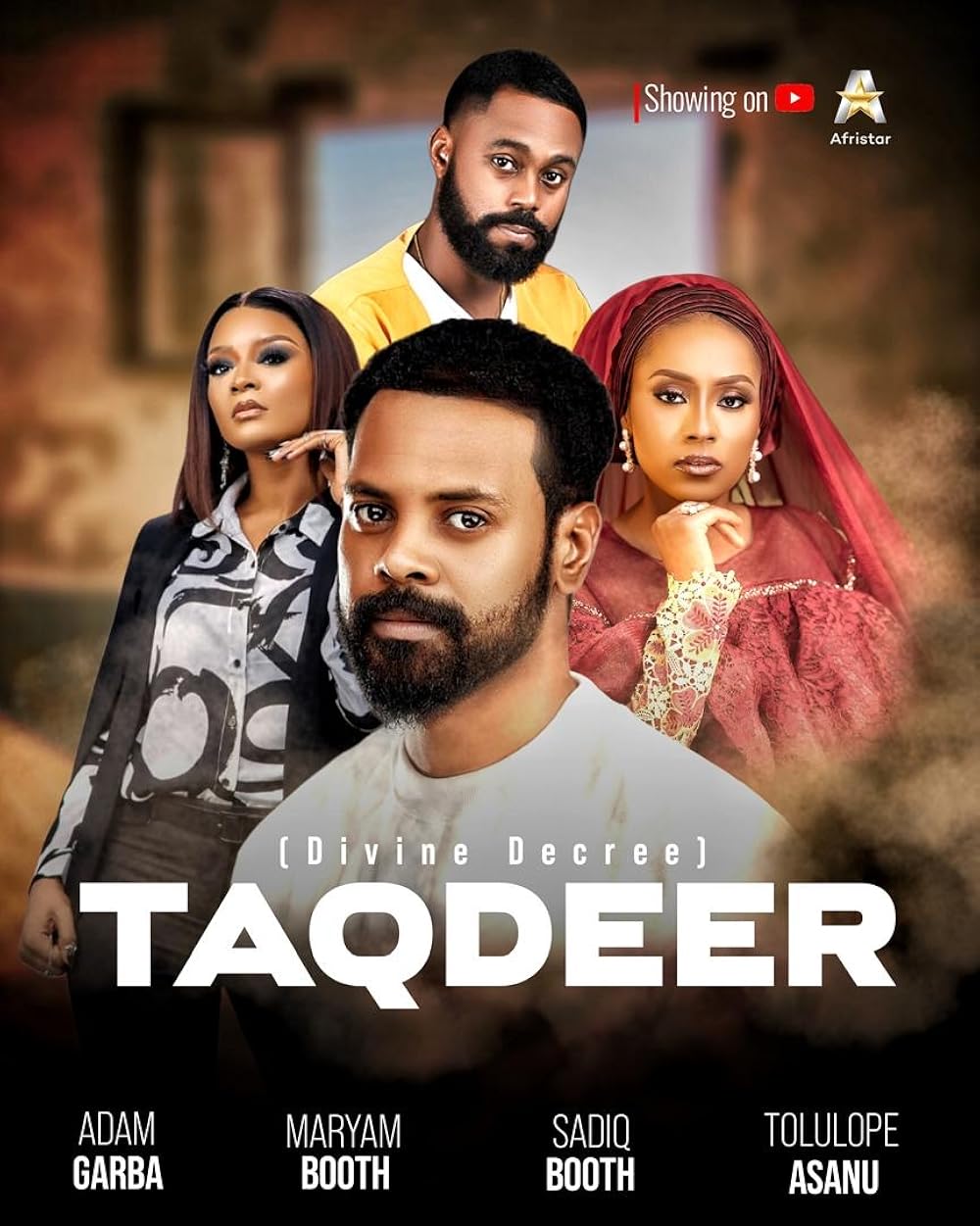
  1. Adam Garba (Abba Galadima in Labarina [season 14], and Sameer/Dahiru in Wata Shida)
  2. Abubakar Waziri [Bado] (Malam Sani in Garwashi)
  3. Ali Nuhu (Professor Nuri in Jamilun Jidda)
  4. Yakubu Muhammad (Mudan in Garwashi)

Winner: Adam Garba (Abba Galadima in Labarina [S14], and Sameer/Dahiru in Wata Shida)

Adam Garba’s contributions to two of the top series clearly set him apart from other nominees. In Labarina (season 14), he delivers a calm, grounded performance as Prince Abba Galadima. However, his portrayal of Sameer/Dahiru in Wata Shida demands duality and emotional balance, all of which he handles with impressive control.

  • Best Actress of the Year 

Top Nominees:

  1. Fatima Abdulahi Washa (Sumayya in Labarina [Season 14])
  2. Fatima Hussaini (Zahrah in Wata Shida, and Ruth/Fatima in Jamilun Jidda)
  3. Fiddausi Yahaya (Ma’u in Garwashi, and Jidda in Jamilun Jidda)

Winner: Fatima Hussaini (Zahrah in Wata Shida, and Ruth/Fatima in Jamilun Jidda)

Although Fiddausi Yahaya left a strong impression as Ma’u in Garwashi and the title character in Jamilun Jidda, Fatima Hussaini maintains a stronger performance quality across different projects. The confidence she showed as Zahrah in Wata Shida, and her dual role in Jamilun Jidda prove her versatility, as she navigates contrasting identities effectively.

  • Best Supporting Actor 

Top Nominees:

  1. Rabi’u Rikadawa (Baba Dan Audu in Labarina [Season 14])
  2. Kabiru Sani (Gaddafi in Garwashi)
  3. Isah Feroz Khan (Kasim in Garwashi)

Winner: Kabiru Sani (Gaddafi in Garwashi)

Each of these actors delivered memorable supporting performances, but Kabiru Sani, alias International, stands out for the complexity and freshness he brought to the role of Gaddafi in Garwashi. The character is a blend of thuggery and humour. This combination could easily have messed up in less capable hands. However, Kabiru International plays it naturally. His performance felt confident and fully formed.

  • Best Supporting Actress

Top Nominees:

  1. Faiza Abdullahi (Lawisa in Garwashi)
  2. Bikisu Safana (Shatty in Wata Shida)
  3. Aisha Humaira (Samira in Garwashi)

Winner: Faiza Abdullahi (Lawisa in Garwashi)

The reason why Fa’iza Abdullahi wins is the way she adjusted her physicality, voice, and mannerisms to fit in the thuggish character of Lawisa in Garwashi. Her performance reminds you of Alia Bhatt’s finest performance in Gangubai Kathiawadi, which earned her the prestigious Indian National Film Award.

  • Best Villain of the Year

Top Nominees:

  1. Hauwa Farar Lema (Kilishi, Labarina [Season 14]) 
  2. Balaraba Abdullahi (Baba Lami, Garwashi)
  3. Magaji Mijinyawa (Kawu Nakowa, Wata Shida)

Winner: Hauwa Farar Lema (Kilishi, Labarina [S14])

Hauwa Farar Lema’s portrayal of Kilishi in Labarina (Season 14) stands out for her deep understanding of the character’s motivations and emotions. Her performance feels realistic. She looks fearsome and conveys the essence of her malicious character through threatening glances and expressions.

  • Star of the Year

Winner: Fiddausi Yahaya (Ma’u in Garwashi and Jidda in Jamilun Jidda)

While some critics question her acting prowess, Fiddausi Yahaya is undoubtedly the star of the year. As a relatively new actress, she suddenly became a household name, gained a massive fan following, trended widely on social media, and began appearing in multiple big-budget projects such as Garwashi and Jamilun Jidda, among others. She is a subtle performer and has shown steady improvement in acting quality with every new role.

  • Best Breakthrough Performance of the year

Winner: Amina Shehu [Lulu] (Samira in Da Na Sani)

A breakthrough performance is a role that elevates an actor’s visibility and reputation. This happens to Amina Shehu after delivering an intense and emotionally layered role of Samira, nicknamed Kwaila, in “Da Na Sani”, the seventh film from Taskar Kannywood collection. Da Na Sani became the most-reviewed film, and her performance in it was probably the most widely acclaimed of the year. 

  • Most Promising Actor of the Year

Winner: Murtala Yahaya Musa Sarauta (Bello in Zabi Biyu)

Judging by how convincingly he handled the role of Bello in Zabi Biyu, only a few roles would truly challenge him. He may appear too mature and lack the conventional swagger of Kannywood heroes, but his acting skills are too solid to be overlooked. With the right story that suits his personality, Murtala is really an actor to watch.

  • Most Promising Actress of the year

Winner: Hassana Ibrahim (Safiyya, Zabi Biyu)

The debutante Hassana Ibrahim demonstrates exceptional potential in her powerful lead performance in Zabi Biyu. She portrays emotional depth and control, particularly in scenes that require vulnerability and internal struggle. She has a commanding screen presence, delivers her dialogue effectively, and complements it with appropriate gestures

  1.  Best Comic Performance

Winner: Isiyaka Jalingo (Zabi Biyu,and Garwashi)

Isiyaka Jalingo is not merely funny; he generates humour through behaviour and mannerisms while still serving the story. His roles are not designed solely for comic relief; instead, the humour emerges organically from the way he speaks and acts in every scene he features. His roles in Garwashi and Zabi Biyu, though small, leave a huge impact.

Written By

Habibu Maaruf Abdu

habibumaaruf11@gmail.com

Kannywood: Reflections on director Salisu T. Balarabe

By Garba Sidi

Kannywood, like other film industries worldwide, depends on the emergence of new talent who capture audiences’ hearts and help transform the industry into a powerhouse. These actors often deliver exactly what is needed because of their talent and fame. However, relying solely on a few well-known stars can threaten the industry’s sustainability. If these actors age or fade away, will the industry collapse with them?

Among those challenging this pattern is filmmaker Salisu T. Balarabe, whose vision goes beyond just telling stories—he is committed to discovering and promoting new actors to grow the industry and create job opportunities.

A VISIONARY PERSPECTIVE ON KANNYWOOD

Salisu T. Balarabe is a key figure among AREWA 24’s directors and plays a major role in giving aspiring talents a platform to shine in Kannywood. His work on the long-running series Kwana Casa’in is a clear example of his commitment to this goal. Rather than relying solely on already-famous actors, Balarabe introduces fresh faces to the audience by integrating them into the show’s narrative. Before Kwana Casa’in, no one knew Safiya Yusuf, now popularly known as Safara’u Kwana Casa’in. The show brought her to prominence, and she has since launched a music career as well.

Now, as he produces another long-running series, Zaɓi Biyu, Balarabe is sticking to his principle of working with new talents, giving them a platform to show their skills to the audience. This strategy is evident when compared to other popular Kannywood productions like GarwashiLabarinaJamilun JiddanManyan Mata and Allurar Ruwa, which mostly rely on a small circle of already-famous actors such as Sadik Sani Sadi, Abubakar Waziri (Baba Rabe), Adam Garba (Raba Gardama), Amal Umar, Momy Gombe, Minal Ahmad (Ya Kaka), Ruky Alim, Hadiza Saima (Maman Saima) and Rabi’u Rikadawa.

There’s no denying the talent, skill, and fame of these actors. Their appearances often guarantee high viewership and profits for any film or series they’re part of. Still, Salisu T. Balarabe has chosen a different route—one that takes longer to become profitable but is ultimately more sustainable.

PERSEVERANCE DESPITE AUDIENCE PRESSURE.

In an industry where producers and directors often prioritise famous faces to ensure quick financial returns, Balarabe deserves praise for his dedication. He understands that for Kannywood to grow and flourish truly, it must constantly introduce new talent and provide them with training and opportunities. This approach is not just about development; it’s a crucial long-term investment in the industry’s future.

Balarabe’s work is reminiscent of internationally acclaimed filmmakers who have taken similar paths in other parts of the world. In Bollywood, directors like Anurag Kashyap, Zoya Akhtar and Karan Johar have introduced fresh talents such as Vicky Kaushal, Siddhant Chaturvedi and Alia Bhatt. Likewise, in Hollywood, directors such as Steven Spielberg, Martin Scorsese and Greta Gerwig have played key roles in discovering actors who went on to achieve global fame.

These directors are celebrated not just for their storytelling abilities but for their impact in nurturing talent. Salisu T. Balarabe is doing something similar in Kannywood—showing great courage and commitment despite the pressure he faces from audiences who demand familiar faces. His vision of discovering gifted individuals and helping them reach their potential through AREWA 24’s productions is commendable.

COMMITMENT TO QUALITY AND MEANINGFUL STORYTELLING.

Beyond introducing new faces, Balarabe also ensures that these actors deliver performances that resonate with audiences. His long-running series, Kwana Casa’in and Zaɓi Biyu, are not small projects. They are rich in culture, politics, and the real-life struggles of Hausa society. This provides new actors the chance to shine while also educating and entertaining the audience.

This approach enriches the stories and gives the new actors a strong foundation to grow. These emerging talents often give their absolute best, using all their abilities to tell stories that leave a lasting impact. Balarabe’s consistent effort to showcase new faces in his films reflects his dedication to prioritising art over fame—a trait that distinguishes true filmmakers from mere trend-followers.

A NEW ERA FOR THE KANNYWOOD INDUSTRY.

Salisu T. Balarabe is showing the Kannywood industry that growth is possible when directors aim higher and embrace innovation. By doing so, they not only enrich the industry with talented and committed actors but also ensure that more talented people can benefit from the opportunities it offers.

If Kannywood were to follow this model, it would continue to progress—not just by elevating individual stars, but by fostering a culture of talent discovery, hard work, and quality production that will earn it global respect. Just like Nollywood in southern Nigeria has proven, an industry does not have to rely solely on a handful of celebrities to grow. When talent becomes the main focus, true and lasting success follows.

CONCLUSION.

At a time when fame dominates the storytelling landscape, Salisu T. Balarabe stands out as a beacon of hope for sustainable development in the Kannywood film industry. His commitment to nurturing and promoting new talent, as seen in series like Kwana Casa’in and Zaɓi Biyu, reflects his deep passion and long-term vision.

Nigerian Film Corporation, Plateau Gov’t to deepen partnership in film development

By Hadiza Abdulkadir

The Managing Director of the Nigerian Film Corporation (NFC), Ali Nuhu, has met with the Executive Governor of Plateau State, His Excellency Caleb Manasseh Mutfwang, to discuss strengthening collaboration between the Corporation and the state government.

During the meeting in Jos, the Plateau State capital where the NFC is headquartered, both parties explored ways to expand their long-standing partnership in promoting film production, nurturing local talents, and positioning Plateau as a central hub for Nigerian and African cinema.

Ali Nuhu noted that the discussion centered on the shared belief in the power of storytelling to shape perception, promote unity, and drive development. He emphasized that Plateau State, with its stunning landscapes and rich cultural heritage, has long been a home for some of Nigeria’s most compelling stories.

“Our goal,” he said, “is to ensure that those stories are not only told but also seen, heard, and celebrated across the world.”

New book explores faith, language and identity in Kannywood

By Hadiza Abdulkadir

A new book examining the cultural and religious forces shaping the Hausa-language film industry, Kannywood, will be released on 5 December 2025 by Springer Nature.

Titled Kannywood: Film, Faith and Identity in Northern Nigeria, the work critically explores how filmmakers navigate religious expectations, cultural norms and language ideologies while appealing to a diverse audience.

The author, Dr Muhammad Muhsin Ibrahim, teaches Hausa Studies at the University of Cologne and is an expert in Hausa media and cultural production.

The study employs audience reception theory and a close analysis of selected films to reveal tensions within the industry, including the dominance of the Kano dialect, the marginalisation of others, such as Sokoto’s, and the commercialisation of “broken” Hausa.

The book also highlights the pressures of global influences and conservative religious forces, presenting Kannywood as a contested space of identity and representation in northern Nigeria.

A counsel for celebrities

By Saifullahi Attahir

In life, every valuable thing has a cost, and a price must be paid. As the saying goes, nothing good comes free. This is true in almost all walks of life.

Looking at human history from time immemorial, man has always cherished being known, popular, heard, and respected. This is one of the powerful factors behind the human search for power, influence and riches. And to be fair to the modern age, this is not a new thing in human history.

But in our insatiable search for popularity and prestige, we must be mindful of what we are trading in exchange for. This article offers some advice on how a celebrity can navigate life without much temptation from his newly acquired status.

As billionaire Microsoft founder Bill Gates stated, success is a lousy friend. It deprives many of the original energy, enthusiasm, discipline, hard-working spirit, and humility that catapulted them to success in the first place. Successful people easily become complacent and trapped in their orbit of self-entitlement.

Once a man becomes successful, a binge of arrogance and self-entitlement starts appearing. He begins to stop listening to experts, observing and learning, and soon, he stops improving. Over the long run, unknown to him, those attitudes he had abandoned are the fabric behind his success. 

One thing we should all know: every man who was on a path to utilise his talent, produce something magnificent, and become successful, whether in sports, leadership, business, entertainment, professionalism, music, writing, or any creative talent, must have met with a bunch of critics.

From the day you become a celebrity, your activities will no longer be secret: your outfits, marital affairs, social life, assets, family, and movements. You will bid farewell to some level of privacy, and life will never be the same again. 

Many people are not prepared for this stage of their lives. Many great men, especially celebrities, were lost in this ocean of deception and falsehood. You would now focus more on pleasing people: good outfits, even at the cost of debt, new skin, costly living just to show off, and new fake friends.

On another dimension, the kind of social pressure met is unimaginable: constant calls, constant meetings, constant online presence, just to satisfy your fans or followers. This demand is so consuming that many celebrities hardly cope with it. Stories of celebrities taking drugs and injections are not a new thing. Few celebrities sleep without the aid of pills. Many celebrities lost the battle to alcohol and toxic heroin and were unable to find peace. 

A popular Hausa songwriter, Aminuddeen Ladan Ala, once described how difficult it was to become a celebrity in his famous album “Shahara”. Only phone calls were enough to drain your energy, plus the number of expectations by loved ones seeking your attention. Many celebrities would become friends with highly influential people whose offers they can’t easily turn down. You would be invited at any hour without much consideration for your schedules and health, and turning such invitations down would be described as arrogant to your fans and followers.

This is more common among those who made it in life at a very young age. The majority of these young celebrities squander their fortune. They return to square zero without proper guidance, discipline or genuine counselling. Many celebrities become depressed, psychotic, and destitute.

Well-grounded and sustainable success requires a solid foundation of time, perseverance, and smart decisions. Unfortunately, many celebrities, especially in the music, sports, and entertainment industries, lack such foundations, hence the many sorrowful celebrity stories. Uncountable stories of suicide, crime, divorce, and bankruptcy are always in the papers.

Although I’m not much of a football fan, I always admire the lifestyle of one player called Lionel Messi. Messi was among the greatest and most successful football players of all time, a record breaker in many aspects, but still one of the most humble people on earth. Lionel Messi has all it takes to be arrogant and showy, but he was disciplined enough to maintain his zeal, energy, humility, and enthusiasm. This principle has helped him throughout his football career. He didn’t allow his initial success to distract him from achieving more. 

This attitude of self-entitlement has destroyed many players. Just after a season or two of trophies and achievements, they began to disobey, fight, and become distracted by amusement and glitter. Many celebrities started to lose focus on their primary goals; they became carried away by displaying their newly built homes, newly bought luxury cars, newly made friends, or newly made beautiful girlfriends.

These celebrities become attention seekers on social media platforms. They always engage in trivial issues and display wealth or status, adding to their load of enemies. They have forgotten that their primary goal was to hone more of their talents, score more goals, produce more beautiful songs, deliver more as leaders, maintain their positions in class, and profit more as business individuals.

Another destructive attitude of some celebrities was engaging in a competitive war with their rival colleagues. After being recognised by their followers, they began to install software to envy anyone trying to catch up with them. They subscribed to slander and a war of words to denigrate their rivals to maintain their status. Smart champions never engage in such an attitude; they recognise their God-given talent as a favour from their Lord and offer gratefulness by being humble and respecting their positions even if time changes and they lose their status to the new generation.

Smart celebrities respect others below them; they never act in desperation for money or status; they are philanthropists with their wealth; they are less pompous and showy; they invest and diversify their sources of income; they still make time for their families and core friends; and they always have learning minds and listening ears.

We seek Allah’s guidance in every step of our journey, Ameen.

Saifullahi Attahir is the President of the National Association of Jigawa State Medical Students (NAJIMS) National Body, and he wrote this piece from Federal University Dutse. He can be contacted via saifullahiattahir93@gmail.com.

Kannywood Movie Review: Da Na Sani

The ‘Taskar Kannywood’ is a YouTube show that seeks to revive the glory of feature films that has been long abandoned since the emergence of web and TV serials. The show runs every Sunday, unveiling fresh standalone movies in a one-episode-per-week order, followed by a review and Q & A sessions to further engage the audience for criticism and opinions. The 7th episode, Da Na Sani, is the collection’s latest and most hyped release.

The film tells the story of a rather humourless and unromantic man (Mansur) married to a young girl (Samira) in her late teens. Samira would always act reminiscent of what we fondly call ‘Kwailanci’ (excessive childishness), which she believes to be her love language to express her romance, a gesture her husband finds too awkward and a clear affront to his dignity.

The biggest drama erupts when she draws a heart emoji with the caption “I love you” on his face while he is asleep and asks if he is ready so she can colour the drawings for a better look. Enraged, he gives her a few slaps and a stark warning about her childish manners, leaving her in tears as he heads back to the bathroom to clean up before leaving for work.

Moments later, after getting housework done, she develops severe chest pain, prompting her to be rushed to a hospital. But she abruptly dies after a brief diagnosis.

Returning home, Mansur finds a note she had dropped containing an apology for her wrongs, promising to change her manners if she made it back alive, plus a reminder that the meal she prepared for him and a visiting friend is already at the dining table. He screams out loud with tears running down his cheeks as he scatters the ice cream and candies he brought as a consolation package, realising the tragedy could have been avoided if he had tolerated her innocent frivolity.

Filled with emotional moments, the movie is ultimately compelling not only for its beautifully crafted drama but also for exposing the gap of misunderstanding between partners and the little effort it takes to fill it. The film is indeed a huge success and well worth watching.

Additionally, the production quality is top-notch, and both Aminu Shareef Momo (Mansur) and Amina Shehu Lulu (Samira) have delivered exceptionally well, thanks to Ahmad Bifa’s directorial expertise in handling family sagas.

However, the running time is relatively short for such a tragic story. The audience would have wanted a longer time frame to see the emotional trauma Mansur would supposedly go through as relief for the painful death of their favourite character, Samira. I rate it 4/5.

Reviewed by

Umar Abdullahi

Kano

umarabdullahiabu@gmail.com

Kannywood Movie Review: Dr. Halima

  • Company: Mai Kwai Movies
  • Director: Abubakar A.S Mai Kwai
  • Producer: Abdul Dan Small
  • Language: Hausa
  • Cast: Ali Nuhu, Aminu Sharif (Momo), Maryam Ceeter, Baballe Hayatu, Hafsat Idris, etc.
  • Year: 2018

The question of whether married women should be allowed to work remains contentious in Hausa society. Modern people support the idea, while traditionalists continue to frown upon it. As the debate continues, a Kannywood production company, Mai Kwai Movies, weighs in with their film Dr. Halima.

The story revolves around the eponymous character (played by Maryam Ceeter), a PhD holder whose husband, Yusuf (Ali Nuhu), allows her to work at a construction company. Dr. Halima takes pride in her appearance and enjoys being complimented on her looks, but her husband is a rigid alpha male who dismisses that as frivolous and never cares to praise her. Instead, she receives attention and admiration from her male colleagues, whom she openly welcomes despite being married. As a modern woman, Dr. Halima doesn’t see anything wrong with dressing fashionably and being appreciated by others.

However, jealousy consumes Halima’s husband when he realises she has become the centre of attention at her workplace. He reacts by neglecting her and sleeping separately. Despite her attempts to address the issue, he turns a deaf ear, leading to growing tension and a deterioration in their marriage. Meanwhile, Halima’s colleague, Dags (Aminu Shareef Momoh), who has long harboured feelings for her, gets an opportunity to intrude into her life. He eventually succeeds in his pursuit, taking advantage of her vulnerability.

Thanks to its powerful story, the film generally captivates despite having a limited narrative hook. It succeeds in delivering its central message: that the problem with married women working is mostly not from the work itself, but from the behaviour of the women involved. When a married woman respects herself, she repels temptation, and when she doesn’t, the opposite occurs. We see how Dr. Halima attracts indecent colleagues with her scanty dress, but repels them later when she begins to dress modestly.

The film also underlines the need for effective communication in marriage and the dangers attached to neglectful relationships. We see how cold communication leads Yusuf and Halima to neglect each other and sleep separately for over three months. This emotional distance is what plays a key role in Halima’s decision to commit adultery with her colleague, as shown in the movie.

Additionally, the film introduces a moderate Fatwa that a marriage does not necessarily have to end if a wife has committed adultery. What matters most is sincere repentance and seeking Allah’s forgiveness. Ultimately, Dr. Halima repents without revealing her transgression to her husband, and they continue to live happily ever after.

On the other hand, the film falls slightly short in its technical aspects. Both sound design and editing are poorly handled. The continuity and costume use are also noticeably flawed. For instance, in one sequence, a messenger is seen meeting Dr. Halima on the company premises. However, moments later, the same messenger appears wearing a different outfit when she enters the office.

Regarding the actors, Maryam Ceeter, with her mature presence, is perfectly cast as Dr. Halima. She brings emotional depth, portraying both the confidence and vulnerability of her character. Ali Nuhu excels as Halima’s rigid husband. He gives a realistic performance, with his love for Halima subtly evident even as he distances himself from her. Aminu Momoh fully inhabits his dubious character, as he often does, using his charm and great comic timing.

Other supporting actors, including Baballe Hayatu and Hafsat Idris, are equally well-cast and perform commendably.

Overall, Dr. Halima is a compelling family drama that does full justice to its serious subject matter. While it may not be suitable for children, it is a must-watch for adult audiences. Rating: 3.5/5

Habibu Maaruf Abdu wrote from Kano via habibumaaruf11@gmail.com.

A brief tribute to Malam Maikudi Cashman

By Muhsin Ibrahim

Talk about Kannywood and, often, some people who are scarcely literate or have little knowledge of film will dismiss the entire industry as a sanctuary for good-for-nothing folks. But that is not always true.

I first met the late Malam Umar Maikudi (also known as Cashman) at the 2019 Kano Indigenous Languages of Africa Film Market and Festival (KILAF) conference. We connected immediately, discussed various issues, and ultimately exchanged phone numbers.

Although Malam was old enough to be my father, we maintained a relatively cordial relationship. He would send me some of his writings, and I would send him mine in return. We also met a few more times during subsequent editions of the KILAF conference. I am sure Alhaji Abdulkarim, the CEO of Moving Image and the organiser of KILAF, will dearly miss Cashman.


He was among the few brilliant individuals blessed with the talent to blend theory and practice seamlessly, and he excelled in both. 

Malam was a lecturer at Nuhu Bamalli Polytechnic, Zaria, and President of the Motion Picture Practitioners Association of Nigeria (MOPPAN). 

Malam was a bridge between Kannywood and Nollywood, as he featured in films from both industries. Many Kannywood viewers may not be very familiar with him, though.

Cashman only recently started featuring in more mainstream Kannywood productions, such as Gidan Badamasi and Labarina. As a lawyer in the latter (Labarina), who is expected to code-switch and code-mix, you can tell this actor is definitely educated. He was.

His death is a significant loss to his family, of course, and to the Nigerian entertainment industry. May Allah forgive his shortcomings and grant his loved ones the fortitude to bear the loss, amin.

Muhsin Ibrahim, PhD, is an academic and writes about Nigerian films. He can be contacted via muhsin2008@gmail.com.