International

Palestinian refugee turned Nobel Laureate: Omar Yaghi wins 2025 Nobel Prize in Chemistry

By Muhammad Abubakar

Omar Yaghi, a Palestinian-born scientist whose journey began in a refugee family in Jordan, has been awarded the 2025 Nobel Prize in Chemistry.

The Royal Swedish Academy of Sciences announced the honour earlier today, recognising his pioneering work in designing and developing new classes of materials that have revolutionised the field of chemistry.

Speaking to reporters while in transit between flights, Yaghi reflected on his humble beginnings: “My parents could barely read or write. It’s been quite a journey. Science allows you to do it.”

Born to Palestinian refugees who fled to Jordan, Yaghi’s journey to scientific excellence was far from straightforward. As a young student, he was drawn to the beauty of chemistry, a fascination that eventually led him to develop metal-organic frameworks (MOFs), materials now vital in energy storage, clean water production, and environmental sustainability.

Yaghi described his motivation as both artistic and intellectual: “I set out to build beautiful things and solve intellectual problems.”

For many across the Arab world, especially Palestinians, Yaghi’s achievement serves as an inspiring reminder that brilliance can arise from the most difficult beginnings.

CAN rejects claims of Christian genocide in Nigeria

By Muhammad Abubakar

The Christian Association of Nigeria (CAN) has denied claims of a Christian genocide in Nigeria, calling such reports misleading and lacking a consistent pattern, as reported by The Guardian (Nigeria).

The claims gained attention after U.S. comedian Bill Maher and Senator Ted Cruz accused Islamist groups and Nigerian officials of persecuting Christians. Cruz even proposed sanctions through the Nigeria Religious Freedom Accountability Act. 

At the same time, U.S. lawmaker Riley Moore urged the U.S. government to halt arms sales and label Nigeria a “Country of Particular Concern.”

In response, Nigeria’s Presidency denied any religious war, stressing that the violence affects all citizens regardless of faith.

CAN’s Director of National Issues and Social Welfare, Abimbola Ayuba, acknowledged widespread killings but said they were not targeted solely at Christians. He noted that both Christians and Muslims have fallen victim to terrorist attacks, adding that bullets “don’t look for a Christian or spare a Muslim.”

Ayuba cautioned against foreign interference and urged Nigerians to work collectively to end the insurgency through local institutions rather than seeking sympathy abroad.

Ulama Forum refutes claims of 500,000 Christian deaths in Nigeria

By Hadiza Abdulkadir

The Ulama Forum in Nigeria has condemned what it describes as false and inflammatory allegations by some international media outlets, including Fox News, Radio Genoa and American talk show host Bill Maher, claiming that 500,000 Christians were killed in Nigeria last year.

In a statement signed by Convener Aminu Inuwa Muhammad and Secretary Engr. Basheer Adamu Aliyu, the Forum described the claims as “entirely unfounded, reckless, and designed to misinform the international community.” 

It added that Nigeria’s security challenges—terrorism, banditry, and farmer-herder clashes—affect both Muslims and Christians, not any single religious group.

The Forum noted that Muslim communities, particularly in the Northwest, have “suffered disproportionately,” with thousands killed in repeated attacks ignored by international coverage. It warned that spreading false genocide narratives could inflame tensions and undermine peace efforts.

Quoting the Qur’an, the Forum reaffirmed Islam’s prohibition of killing innocents and called for unity among Nigerians “to resist attempts by foreign actors to manipulate false narratives.” 

It also urged the government to intensify security measures and advised international media to report responsibly and respect Nigeria’s diversity.

Ballon d’Or and the credibility question

By Amir Abdulazeez

I am writing on this not because I have any significant concern for the award or its credibility, or because it has any correlation with the well-being of anybody in need (which I am often more concerned about). I am doing so instead due to the massive perennial debate it generates, especially among youths in Nigeria, as well as the misinformed opinions surrounding it. 

Again, the Ballon d’Or, like football itself, has transcended sport to become part of international politics and history. I became shocked when I saw a globally renowned Muslim scholar congratulating Ousmane Dembele for winning the 2025 version and hailing its award to a ‘practising Muslim’. Obviously, the crown now carries political significance that stretches well beyond the pitch. 

Since its inception in 1956, the Ballon d’Or has been regarded as football’s most prestigious individual award. Founded by France Football (conceived by sports writers Gabriel Hanot and Jacques Ferran), the award was initially designed to honour the best European player annually, with Stanley Matthews of Blackpool becoming the pioneer winner. Later, it evolved into a global prize, celebrating many other icons. Many have rightly questioned the credibility of the award, but mostly on myopic grounds centred around player and club sentiments. However, as a long-time football observer, I believe there are much broader issues regarding the credibility of the award that are worth discussing. 

Let us start with the politics. During the Cold War (1947-1991), Eastern European players (more aligned to the Soviet Union) often struggled to receive equal recognition despite dazzling performances, while Western European stars (more aligned to the United States and friends) enjoyed more favourable media attention. Although Russian goalkeeper Lev Yashin won the award in 1963, many argue that his case was only the exception that proved the unwritten rule of ‘politics, geography, and media exposure consistently play decisive roles’. Today, the award continues to reflect broader inequalities in the sport of football. European clubs dominate global coverage, which inflates the recognition of their stars. Players performing in less visible leagues, whether in South America, Africa, or Asia, rarely receive consideration, even if their contributions are extraordinary. 

Another concern is the award’s inconsistent eligibility rules over time. Until 1995, only European players competing in European clubs were considered, excluding legendary figures such as Pelé and Diego Maradona from even receiving a nomination. It was only after a rule change that non-Europeans in European leagues became eligible, allowing George Weah to win in 1995. Yet, by then, the award had already excluded decades of worthy non-European and non-European-based winners. Mild allegations of racism also cast a dark shadow over the award. Many believe players like Didier Drogba, Samuel Eto’o, Yaya Touré, Sadio Mané and Mohammed Salah were routinely ranked below their pedigree. In 2021, French pundit Emmanuel Petit openly questioned whether African players were judged by double standards. 

The selection of voters itself raises concerns. Initially restricted to journalists, it later expanded between 2010 and 2015 after a merger with FIFA’s “World Player of the Year,” adding coaches and captains to the electorate whose votes often reflected tribal, national or club loyalties rather than merit. The 2016 reversion to journalist-only voting may be a tacit admission of voting flaws, thereby creating difficulties in making comparisons across eras. For example, Lionel Messi’s consecutive wins (2009-2013) under a global, mixed electorate cannot be objectively compared to Michel Platini’s (1983-1985) under a European-only jury. The current co-organisation with UEFA, which began in 2024, signifies another attempt to lend the award more institutional weight. However, the constant changes in its format and governing alliances suggest an award in search of a stable identity, struggling to balance its commercial ambitions with its original purpose.

Bias towards attacking players has been an emerging hallmark of Ballon d’Or selections. Legendary defenders like Paolo Maldini, Alessandro Nesta, Sergio Ramos and Roberto Carlos, who defined an era of defensive excellence, always fell short. The exception of Fabio Cannavaro in 2006, along with a few others in the past, after a World Cup-winning campaign with Italy, serves as a testament to the rarity of a defender being recognised. 

More recently, Virgil van Dijk’s 2019 narrow runner-up finish sparked debate about whether non-attacking players could ever realistically win in a sport increasingly obsessed with goals and flair. The award relies heavily on football journalists who often prioritise goal highlight reels, statistics and global recognition over tactical nuance and defensive brilliance. Strikers and playmakers dominate the headlines that directly feed into voting behaviour. 

To combat positional bias, a more revolutionary approach could be implemented: nomination by quota. Why not have separate shortlists and voting panels for goalkeepers, defenders, midfielders and forwards? The top three or five of these categories could then be considered for the overall voting and eventual award. This would ensure that the unique skills of each position are evaluated by those who best understand them, guaranteeing that players are judged on their specialisations rather than against others with contrasting roles. 

The criteria for judgment also lack clarity and consistency. Officially, the award considers individual performance, team achievements, talent, fair play and career consistency. In practice, however, voters often seem swayed by a single outstanding tournament or by sentimental narratives. Luka Modrić’s 2018 victory after Croatia’s World Cup run exemplified this. While Modrić was superb, critics argued that other players had stronger year-round performances, but the emotional weight of Croatia’s fairy tale run tilted the scales. But how come this same emotion did not sway voters to select any player from Leicester City’s 2016 Premier League incredible winning team? A pervasive, though often unstated, criterion for many voters is team success. 

To win the Champions League or a major international tournament has become almost a prerequisite for contention. This creates an inherent unfairness, elevating players in dominant teams while punishing extraordinary individuals in less successful sides. This inconsistency reveals a fundamental confusion: is the award for the “best player,” “most popular player,” or the “most successful player”?

The timing and calendar controversies are another issue. International tournaments occur every two years, creating periods where national team success heavily influences voting. World Cup years traditionally favour tournament winners, regardless of club form. The recent calendar change, from July to August, aimed to address this imbalance but created new problems, with voters now contending with assessing performances from overlapping seasons and tournaments. This temporal confusion affects not just voting patterns but also the public’s understanding of what the award represents: is it recognition for calendar year performance, season achievement, or tournament success? The 2013 Ballon d’Or win by Cristiano Ronaldo was criticised following timing inconsistencies due to odd deadline extensions. The current system, which allows a player to win a major tournament in the summer and have their performance rewarded a year later, creates a disjointed narrative. 

The question of authority is another big one. FIFA represents 211 national associations, UEFA oversees European football’s institutional framework, yet it is a private French publication that bestows football’s most prestigious individual honour. The comparison with FIFA’s The Best awards and UEFA’s Player of the Year exposes this imbalance. This raises the paradox: why should a magazine possess such outsized influence in determining football’s most prestigious individual accolade, overshadowing awards backed by governing institutions? While there is nothing fundamentally wrong with this, it only emphasises the need for France Football to show more responsibility by sanitising and standardising its award.

I am not in a position to coach France Football on how to reform its awards to minimise the credibility dilemma; they have much better experts who can do that. My concern is to see young football followers and analysts become more informed and equipped for deeper debates that are beyond sentiments. My other concern, which has little to do with the Ballon d’Or, is to see football giving a little back to its estimated 3.5 billion fans that have made it powerful. While fans give it a lot, the sport appears to be offering almost nothing significant in return. 

It is sad to see football remaining silent, biased and indifferent in the face of global oppression and injustice. While it took FIFA and UEFA just four days to suspend Russia after it invaded Ukraine in 2022, both bodies have remained criminally silent for over two years since Israel launched its genocide on the football supporting people of Palestine.

Amir Abdulazeez, PhD, can be reached via abdulazeezamir@hotmail.com.

Italy gripped by strikes over weapon shipments to Israel

By Muhammad Abubakar

Italy is witnessing widespread labour unrest as dockworkers, unions, and students have launched strikes and demonstrations to protest the shipment of weapons to Israel amid the Gaza conflict.

In Ravenna, Mayor Alessandro Barattoni and local authorities stopped two trucks carrying explosives meant for Haifa, citing solidarity with Palestinians and concerns over loopholes allowing arms transit through Italy.

In Genova, dockworkers participating in a strike have blocked access roads to the port and rallied under the banner of preventing Italian ports from facilitating arms transfers. Similar protests are underway in Livorno. Public transportation services have been disrupted in cities such as Rome and Milan, and several schools have been closed.

Unions are demanding that the Italian government suspend both commercial and military cooperation with Israel, close legal loopholes related to transit of arms, lift any humanitarian blockade on Gaza, and formally recognise the State of Palestine.

The protests highlight increasing internal tensions in Italy’s politics, especially under Prime Minister Giorgia Meloni’s government, which has traditionally aligned more with Israel diplomatically. Observers suggest the strike actions test if citizen and labour moral pressure can influence the government to curb arms exports and transit.

Canada, Australia and UK formally recognise Palestinian state

By Muhammad Abubakar

In a historic diplomatic shift, the governments of Canada, Australia, and the United Kingdom have formally recognised the State of Palestine. The announcement, made in a joint statement on Sunday, marks a significant moment in international support for Palestinian statehood.

Leaders of the three countries said the recognition was aimed at advancing a just and lasting peace in the Middle East, reaffirming their commitment to a two-state solution. They urged both Israel and Palestine to return to negotiations and called for an immediate halt to violence in the region.

The move has been welcomed by Palestinian officials, who described it as a “courageous step towards justice and self-determination.” However, Israel has expressed strong opposition, warning that such recognition could undermine peace efforts.

The decision by three of the world’s most influential Western nations is expected to increase pressure on other countries to follow suit, potentially reshaping the dynamics of the Israeli-Palestinian conflict on the global stage.

China introduces Artificial Intelligence education in schools

By Muhammad Abubakar 

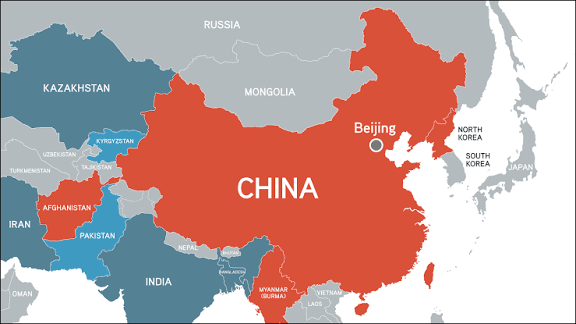
China has taken a significant step in preparing its next generation for the digital future by introducing artificial intelligence (AI) education across primary and secondary schools. 

The Ministry of Education has announced that AI will now be included in the national curriculum, with lessons ranging from basic coding and machine learning concepts to discussions on the ethical implications of technology.

Officials say the program aims to build students’ digital literacy and give them early exposure to skills critical in the 21st-century economy. 

Pilot projects in cities such as Shanghai and Shenzhen have already shown strong interest, with students using AI-powered tools in mathematics, language learning, and creative projects.

Educators emphasise that the initiative is not only about technical training but also about fostering innovation, problem-solving, and responsible use of emerging technologies. “We want our children to understand AI as both a tool and a responsibility,” said an education ministry spokesperson.

The move reflects China’s broader ambition to lead in AI development globally, while also addressing concerns that young people must be equipped to navigate a rapidly changing technological landscape.

Eric Cantona calls for UEFA and FIFA to ban Israel as Spain proposes a World Cup boycott

By Muhammad Abubakar

Former Manchester United legend Eric Cantona has called on football’s governing bodies, UEFA and FIFA, to impose an immediate ban on Israel over its ongoing military actions in Gaza. Cantona, known for his outspoken views, said football cannot remain silent while civilians continue to suffer.

His statement comes amid growing international pressure on Israel, with Spain reportedly considering a boycott of the upcoming World Cup should the situation persist. 

Spanish officials have hinted that participation in global tournaments could be reconsidered if FIFA does not take more decisive action.

The calls echo previous instances where sporting sanctions were used as leverage against states accused of human rights violations, most notably the bans imposed on apartheid-era South Africa and, more recently, Russia following its invasion of Ukraine.

Neither UEFA nor FIFA has officially responded to Cantona’s demand or Spain’s potential boycott threat, but the developments add further weight to the debate over the role of football in addressing global conflicts.

The United Nations and eight decades of impotence

By Amir Abdulazeez

The United Nations is currently holding its 80th General Assembly sessions in New York. Some days earlier, the U.S. State Department, under the pretext of national security and anti-terrorism laws, revoked visas for dozens of Palestinian officials, including President Mahmoud Abbas slated to participate, at the General Assembly and a high-level two-state conference. This move drew criticism from the UN itself, EU and some human rights groups, with calls to relocate Palestinian-related meetings outside New York. This echoes historical precedents, notably the 1988 visa denial to Late Yasser Arafat, which forced the UN to shift one of its sessions to Geneva to allow him participate.

Although the 1947 ‘Headquarters Agreement’ obliges the United States to admit all UN participants, Washington occasionally and selectively invokes security and legal excuses to discriminate between entrants. Such practices explain how the UN’s operations remain vulnerable to U.S. control, thereby undermining its independence, authority and credibility. As the UN marks the 80th anniversary of the ratification of its charter on 24th October 2025, the organization which was founded on the ashes of World War II in 1945 faces an existential crisis of credibility and effectiveness.

While it has achieved notable successes in humanitarian aid, educational research and global environmental and health initiatives, its core mission of maintaining international peace and security has been repeatedly undermined by structural and diplomatic flaws. The organization’s inability to meaningfully respond to crises from Syria to Ukraine and most visibly in the Israeli-Palestinian conflict, has exposed fundamental weaknesses that warrant urgent reform. The UN’s record is one of profound paradox: a body designed for action but often defined by its inaction. Nowhere is this impotence more starkly illustrated than in its 70 years’ failure to resolve the Palestinian question or to hold Israel accountable for its international impunities.

From the outset of the Israeli-Palestinian conflict, the United Nations assumed a central role by proposing the 1947 Partition Plan, which sought to establish separate independent states for both parties. Although initially conceived as a potential path to peace, the plan was never enforced and the UN has since struggled to translate its own decisions into reality. Further failures are documented in a paper trail of unimplemented resolutions: Security Council Resolution 242 (1967) called for Israel’s withdrawal from territories occupied during the Six-Day War; Resolution 338 (1973) and countless subsequent resolutions reaffirmed this demand that was not only ignored but instead empowered Israel’s massive expansion of illegal settlements.

Beyond the unimplemented resolutions, a critical UN failure in this regard is that of narrative framing. It has been unable to consistently enforce a foundational principle: that the right to self-determination for one people (Israelis) cannot be predicated on the denial of that same right to another (Palestinians). The organization’s various bodies often treat the conflict as a symmetrical dispute between two equal parties, rather than an asymmetrical struggle between a nuclear-armed occupying power and a stateless, occupied population living under a brutal blockade.

The core of the UN’s ineffectiveness lies in the flawed decision-making structure of its Security Council, where the five permanent members (United States, Russia, China, France and United Kingdom) hold the autocratic privilege of veto power. This system of outdated World War II geopolitics has frequently paralyzed the organization in hours of need. Since 1946, the veto has been selfishly exercised about 300 times. Between 2011 and 2023, Russia and China blocked 16 resolutions on Syria, enabling the Assad regime’s brutal campaign against civilians. The United States, meanwhile, has used its veto more than 50 times to shield Israel from accountability, making Palestine the single most vetoed issue in UN history. Instead of serving as a platform for global security, the Council has become an arena for shameless and hypocritical power politics.

The General Assembly, despite representing all 193 member states equally, has been relegated to a largely ceremonial role in matters of international peace and security. While the Assembly can pass resolutions by majority vote, these carry no binding legal force and are routinely ignored by powerful nations. The 2012 resolution calling for an arms embargo on Syria passed with 133 votes but had no practical effect, as Russia continued supplying weapons to the Assad government. This has created a two-tiered system where the views of the international majority are systematically subordinated to the interests of Security Council Super Powers.

The selective enforcement of international law has become a defining hallmark of UN impotence. While the organization has at times demonstrated resolve such as coordinating global sanctions against apartheid South Africa in the 1980s or authorizing military intervention in Libya in 2011, its responses to other similar crises have been inconsistent and politically driven. Similarly, the International Criminal Court, often operating with UN support, swiftly indicted leaders of Liberia, Sudan and Libya, yet no Western or allied leaders like George W. Bush or Tony Blair have been held to account for baseless interventions in Iraq, Afghanistan or Yemen. These double standards have eroded the UN’s credibility and moral authority, particularly in the Global South, where it is increasingly viewed as an instrument of Western hegemony.

The UN’s peacekeeping apparatus, while successful in some contexts, has also demonstrated significant limitations when confronting determined state actors. The United Nations Disengagement Observer Force (UNDOF) on the Golan Heights and the United Nations Interim Force in Lebanon (UNIFIL) have maintained buffer zones during their operations, but have been powerless to prevent violations by all parties. During the 2006 Lebanon War and subsequent conflicts, these forces could only observe and report violations rather than enforce compliance.

Financial manipulation has emerged as another tool of selective pressure within the UN system. The United States, which contributes 22% of the UN’s regular budget, has repeatedly withheld or threatened to withhold funding to pressure the organization on specific issues. In 2018, the Trump administration cut $285 million from UN peacekeeping operations and reduced contributions to various UN agencies. The UN’s human rights mechanisms face similar challenges of selective application and political manipulation. The Human Rights Council, reformed in 2006 to address criticisms of its predecessor, continues to be influenced by bloc voting and political considerations rather than objective human rights assessments. Countries with questionable human rights records have served on the Council while using their positions to deflect criticism and protect allies.

Critics argue that the UN has become a stage for symbolic debates while real decisions and tangible actions are outsourced to global bullies like the US, less formal coalitions like the NATO and regional actors like the EU. For example, the U.S.-brokered Abraham Accords normalized relations between Israel and several Arab states without addressing core Palestinian concerns while side-lining the UN. Similarly, its response to Russia’s invasion of Ukraine in 2022 was limited to humanitarian aid and symbolic condemnation, as bodies like EU looked more relevant and assertive.

The rise of new global powers and changing geopolitical realities have rendered the UN’s 1945 structure increasingly obsolete. Reform proposals have circulated for decades but have consistently failed due to the resistance of existing power holders. Things have changed since World War II, nations have evolved, others have declined and hence the UN must be reformed to reflect current realities. The permanency of the Security council membership must be reviewed and the senseless veto authority must be abolished or modified along the lines of justice and accountability. As the United Nations approaches its 80th anniversary, the choice is clear: fundamental reform or continued irrelevance.

Maintaining the United Nations system costs about $50–55 billion per year, not counting military deployments and opportunity costs. Beyond money, states commit significant diplomatic, military, humanitarian and bureaucratic resources to maintain their participation. This makes the UN one of the most resource-intensive international organizations ever created. Without serious reforms to address structural inequalities, eliminate veto abuse and restore the primacy of international law over great power politics, the UN risks becoming a historical footnote rather than the cornerstone of the global governance its founders envisioned. The international community must decide whether it will tolerate continued dysfunction or demand the transformative changes necessary to address 21st century challenges.

Nepal’s new PM promises to address protesters’ demands

By Sabiu Abdullahi

Nepal’s newly appointed Prime Minister, Sushila Karki, has pledged to act on the demands of young protesters who pushed for change after weeks of demonstrations toppled the previous government.

“We have to work according to the thinking of the Gen Z generation,” Karki declared on Sunday in her first remarks since taking office. “What this group is demanding is the end of corruption, good governance and economic equality. You and I have to be determined to fulfil that.”

Karki, a 73-year-old former chief justice known for her independence, assumed office on Friday following negotiations involving army chief General Ashok Raj Sigdel and President Ram Chandra Paudel.

Representatives of the youth-led “Gen Z” movement were also part of the talks.Her appointment followed mass protests that shook the Himalayan nation.

The unrest, described as the most violent since the abolition of the monarchy in 2008, left at least 72 people dead and 191 others injured, according to Chief Secretary Eaknarayan Aryal.

The demonstrations escalated on Tuesday when several government buildings in the Singha Durbar complex were set on fire.

On Sunday, Karki observed a minute’s silence in memory of those killed before beginning meetings in the damaged government compound.

Thousands of young activists, who coordinated their movement through the Discord app, had put forward her name as their preferred candidate for prime minister.

“The situation that I have come into, I have not wished to come here. My name was brought from the streets,” she admitted.

Following her appointment, parliament was dissolved and elections scheduled for March 5, 2026. In a national address, Karki assured citizens that her role would be temporary.

“We will not stay here more than six months in any situation; we will complete our responsibilities and pledge to hand over to the next parliament and ministers,” she said. “This is not possible without your support.”

President Paudel, who administered her oath of office, acknowledged the complexity of the crisis. He described it as a “very difficult, complicated, and grave situation” and urged citizens to rally behind the interim government.

“A peaceful solution has been found through a difficult process,” he noted, while appealing to the public to ensure the success of the upcoming elections.