International

Iran labels European militaries ‘terrorist groups’

By Anwar Usman

Iran has labelled European countries’ armies “terrorist groups”, its parliament speaker said Sunday, following the EU’s decision to apply the same designation to the Islamic Revolutionary Guard Corps.

Lawmakers wore the green uniform of the Guards in a display of solidarity at the legislative session, where they chanted “Death to America”, “Death to Israel,” and “Shame on you, Europe”, state television footage showed.

Slamming the bloc’s “irresponsible action”, speaker Mohammad Bagher Ghalibaf said that under “Article 7 of the Law on Countermeasures Against the Declaration of the IRGC as a Terrorist Organisation, the armies of European countries are considered terrorist groups”.

Recalled that, the law was first passed in 2019, when the United States classified the Guards as a terrorist organisation.

The Sunday’s session was held on the 47th anniversary of the return from exile of the late Ayatollah Ruhollah Khomeini, who founded the Islamic Republic in 1979.

The Guards are the ideological arm of Iran’s military, tasked with safeguarding the Islamic revolution from external and internal threats.

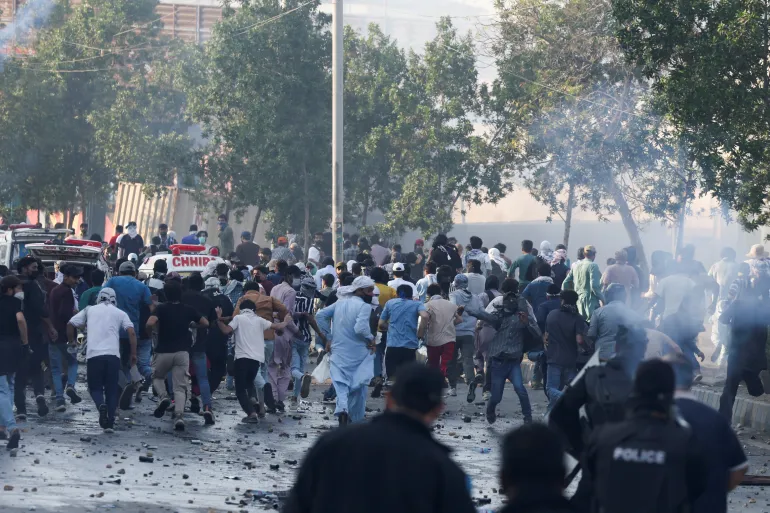
They have been accused by Western governments of orchestrating a crackdown on a recent protest movement that left thousands dead.

Tehran has attributed the violence to “terrorist acts” fomented by the United States and Israel.

The European Union agreed on Thursday to list the body as a “terrorist organisation” over the response to the protests.

The step matched similar classifications enacted by the United States, Canada, and Australia.

The legislative session came as Iran and the United States have traded warnings and threats of potential military action.

Tehran’s response to the protests prompted US President Donald Trump to threaten to intervene, dispatching an aircraft carrier group to the region.

In recent days, however, both sides have insisted they remain willing to talk.

“Contrary to the hype of the contrived media war, structural arrangements for negotiations are progressing,” Ali Larijani, head of Iran’s Supreme National Security Council, said on Saturday.

Trump later confirmed that dialogue was taking place, but without withdrawing his earlier threats. He told Fox News that Iran was “talking to us, and we’ll see if we can do something, otherwise we’ll see what happens… we have a big fleet heading out there”.

Iranian President Masoud Pezeshkian said Saturday that “a war would be in the interest of neither Iran, nor the United States, nor the region”, during a call with his Egyptian counterpart Abdel Fattah al-Sisi, according to Pezeshkian’s office.

AFP

Pep Guardiola speaks out for Palestinian children at Barcelona charity event, says “I’m not neutral; I’m Palestinian”

By Sabiu Abdullahi

Manchester City manager Pep Guardiola has delivered an emotional speech in support of Palestinian children, calling on world leaders to take action over the humanitarian crisis in Gaza.

Guardiola spoke on Thursday evening at a charity concert in Barcelona, which led to his absence from Manchester City’s usual pre-weekend news conference on Friday. The club later explained that he missed the briefing for personal reasons, with assistant coach Pep Lijnders stepping in to address the media ahead of Sunday’s Premier League match against Tottenham Hotspur.

Appearing on stage wearing a keffiyeh scarf, the 55-year-old expressed deep distress over the suffering of children affected by the conflict.

“Good evening, salam alaikum, how wonderful,” Guardiola said at the event.

He went on to describe the scenes that have troubled him over the past two years. “When I see a child in these past two years with these images on social media, on television, recording himself, pleading, ‘where is my mother?’ among the rubble and he still doesn’t know it.”

Guardiola said such images often left him reflecting on the emotional state of the children involved. “And I always think: ‘What must they be thinking?’ And I think we have left them alone, abandoned.”

He added that he imagined the children calling out for help. “I always imagine them saying: ‘Where are you? Come help us.’”

The Manchester City boss criticised global leadership for failing to respond adequately. “And even now, we haven’t done it. Perhaps because those in power are cowards, because they basically send innocent young people to kill innocent people.”

Guardiola urged collective responsibility and action, calling for what he described as a “step forward,” as he said he was making “a statement for Palestine and… a statement for humanity”.

His comments came amid continued tension in Gaza. Although Hamas and Israel agreed to a ceasefire in October, Gaza’s health ministry reports that more than 400 Palestinians have been killed in the months that followed. Israeli media, citing senior military officials, also reported that Israel’s military now accepts that around 70,000 Palestinians have been killed since the war began.

Guardiola’s appearance at the Barcelona event took place during the football season, with Manchester City scheduled to return to action on Sunday.

Israeli air strikes kill 11 Palestinians in Gaza, health ministry says

By Sabiu Abdullahi


At least 11 Palestinians were killed in Israeli air strikes across the Gaza Strip on Saturday, according to the territory’s ministry of health, AFP reports.

The ministry said the victims included civilians who were taking shelter in a tent in the southern part of Gaza. Munir al-Barsh, the general director of the ministry, which operates under Hamas authority, told AFP that 11 people were killed and 20 others were injured “as a result of strikes carried out by the occupation targeting civilians in a tent and an apartment”.

Barsh said those wounded were taken to hospitals in Gaza City in the north and Khan Yunis in the south for medical treatment.

He also accused Israel of breaching the ceasefire agreement. According to him, Israel “continues its serious violations of the ceasefire agreement amid a severe shortage of medical supplies, medicines and medical equipment”.

Meanwhile, Gaza’s Hamas-run government press office said the strike on the tent in the south killed seven members of the same displaced family. The victims reportedly included a child and an elderly person.

A ceasefire brokered by the United States has been in place since October and entered its second phase in January. The phase is expected to involve Hamas’s disarmament, a gradual withdrawal of Israeli forces, and the deployment of an international stabilisation force. Despite the agreement, Israel and Hamas have repeatedly accused each other of violating the truce.

According to the Gaza health ministry, 509 people have been killed since the ceasefire took effect on October 10.

The war has displaced almost the entire population of Gaza at least once. Many residents still live in tents or makeshift shelters across the territory.

The conflict began after Hamas launched an attack on Israel on October 7, 2023, which killed 1,221 people, based on an AFP tally using official Israeli figures. Israel’s military response caused widespread destruction in Gaza, a territory that had already faced repeated rounds of fighting and an Israeli blockade imposed since 2007.

The health ministry said more than 71,769 people have been killed in Gaza since the start of the war. The United Nations considers the ministry’s figures to be reliable.

Nigerians in US go into hiding amid intensified ICE raids, killings

By Sabiu Abdullahi

Anxiety has reportedly gripped Nigerian communities across the United States as Immigration and Customs Enforcement (ICE) ramps up its enforcement drive under President Donald Trump’s administration.

The aggressive campaign has pushed some Nigerians off the streets, caused many to lose jobs, and in some cases, prompted quiet, self-arranged returns to Nigeria. Others have gone into hiding to avoid arrest.

Heightened ICE raids, including door-to-door operations, have disrupted daily life for numerous immigrants. Reports indicate that many Nigerians are avoiding work, limiting their movement, and relying on informal or home-based businesses to make ends meet, according to PUNCH.

President Trump launched a renewed effort to arrest and deport undocumented immigrants shortly after his inauguration in January 2025. The policy, which he has consistently defended, has drawn strong criticism from civil rights groups and immigrant advocates. Critics accuse ICE of using excessive force and mistreating detainees.

The enforcement actions have led to deadly incidents. Official figures show that at least 32 people died in ICE custody in 2025, marking the deadliest year for immigration detention deaths in more than twenty years. In 2026 alone, The Guardian of the UK reported that at least eight people have died during encounters with ICE officers.

Recent shootings in Minneapolis, Minnesota, have further escalated fear. Public outrage followed the death of 37-year-old Renée Good, who was shot by an ICE agent on January 7 during an operation. A medical examiner later ruled her death a homicide caused by multiple gunshot wounds. Weeks later, 37-year-old Alex Pretti was also killed during a federal immigration operation in the same city.

Since the crackdown began, about 70,000 people have reportedly been detained by ICE, while roughly 540,000 immigrants have been deported. Sources across the U.S. indicate that the climate of fear has led some Nigerians to abandon regular jobs and make discreet plans to return home.

Social media has captured the human toll of the raids. A Nigerian woman described the panic and grief among immigrants, saying she was traumatised by Pretti’s death, an intensive care nurse at the Minneapolis VA Medical Center. She said ICE agents often ignored legal status during operations.

“It is very traumatising the way these (ICE) people are treating immigrants,” PUNCH quoted her as saying. “President Trump, if you want the immigrants to leave America, tell us. Just come out and say, ‘All immigrants, we want you out, whether you are criminal or not.’”

She added, “These (ICE) people don’t even care. There are a lot of immigrants who are treated like animals, and these people will be telling them, ‘we are citizens’, but they don’t care.”

The woman, who requested to be identified as senior Immigrant, said fear of arrest has driven many Nigerians into online trading and home-based work. She recounted a shop assistant who stopped coming to work in mid-December and a family who left factory jobs after ICE activity in their area.

“My girl, who was working with me in my shop, stopped coming in mid-December. The reason was that she was scared for her life because ICE came to my area,” she said. “The most unfortunate thing was that they came to her area in New Jersey. Since then, she has had anxiety and fear.”

She added, “People are staying indoors because of the fear of ICE. They get family support from those who work. Two weeks ago, someone called me to say that they were donating to support some families, and they requested that I contribute, which I did.”

She said some families now sell goods from home or prepare meals for online orders that customers pick up privately. “There are many people with other serious experiences,” she noted.

Mrs Chris Ademiluyi, President of the Nigerian community in Maryland, confirmed that many Nigerians have chosen to go into hiding rather than return home.

“They are in hiding instead. Nigeria is not any better,” Ademiluyi said. “Some people affected may want to talk anonymously, but they are not talking because of fear.” She added that Nigerian-Americans are largely shielded and that community organisations are providing support where possible.

The situation has also sparked online debate. The Lead Pastor of Lighthouse/Rejuvenation Church in Rosenberg, Texas, Shola Adeoye, cautioned Nigerians against fear-driven decisions in a Facebook post.

“Some Nigerians are moving back home due to fear of this administration. It’s not wise to bury yourself before death,” Adeoye wrote.

Ben Ijeh, a Facebook user, commented, “Whoever that leaves involuntarily by ICE is not psychologically likely to want to come back in the future. The trauma will be too much to bear. God will always make a way for His own.” Another user, Olukunle Durodolu, wrote, “The way ICE agents capture people could be scary; they may not have the opportunity to get themselves together. So, it is preferred to time their return home when they can control themselves.”

Policy changes have compounded the pressure. Mr Gbenga Ogunjimi, Executive Director of the Nigerian Center, a non-profit immigration and cultural organisation in Washington, DC, said the organisation has seen a surge in Nigerians seeking help.

“The problem we are facing is multi-layered. There is a visa ban,” Ogunjimi said. “Before the visa ban, Nigeria was designated as a Country of Particular Concern. That was last year.”

He explained that in December 2025, a partial ban suspended most visa categories, including non-immigrant visas. “What they did not tell those of us in America or Nigerians in America is that the ban will also stop their ability to file for citizenship, green cards, work authorisation, asylum, and things like that,” he said.

Ogunjimi said the Nigerian Center has focused on public education and guidance. “If you go to our website and social media, we put out a policy memo, educating people on the parameters of this ban. We’re just giving information to folks.”

An increasing number of immigrants are considering voluntary departure, Ogunjimi noted. “We’ve seen cases where a lot of people are self-deporting right now,” he said. “Some of them asked if they would be able to come back to the US if they leave.”

In some cases, his organisation advises immigrants not to leave hastily. “They probably came here on a visiting visa… maybe they have overstayed for a couple of days,” he said, adding that waivers may still be possible.

On exact figures, Ogunjimi said, “Do I have numbers of those who have actually gone back, and who have taken the advice? The answer is: I don’t know. I don’t have those numbers.”

As ICE enforcement continues, uncertainty remains the defining reality for many Nigerians in the U.S., caught between fear of arrest abroad and harsh economic and security conditions at home.

FBI records from Epstein investigation detail sexual allegations against Donald Trump

By Sabiu Abdullahi

Newly unclassified documents from the investigation into Jeffrey Epstein reveal that the FBI interviewed a whistleblower regarding allegations of sexual misconduct involving Donald Trump. The files contain notes from a whistleblower hotline that mention Trump several times, though officials emphasized that inclusion in these records does not establish proof of criminal activity.

While the FBI dismissed several tips as lacking credibility, one specific entry detailed a serious accusation involving a minor. According to the document:

“[redacted] reported an unidentified female friend who was forced to perform oral sex on President Trump approximately 25 years ago in NJ [New Jersey]. The friend told Alexis that she was approximately 13-14 years old when this occurred and that the friend allegedly bit President Trump while performing oral sex. The friend was allegedly hit in the face after she laughed about biting President Trump. The friend said she was also abused by Epstein.”


Records indicate that federal agents viewed this specific tip with enough seriousness to escalate it. Notes attached to the entry state:

“Spoke with caller who identified [redacted] as friend. Lead was sent to Washington Office to conduct interview.”


It remains unclear if that interview was ever finalized.

Department of Justice response

The Department of Justice issued a firm rebuttal regarding the contents of the public release. In an official statement, the department warned that the cache includes unverified information:

“This production may include fake or falsely submitted images, documents or videos, as everything that was sent to the FBI by the public was included in the production that is responsive to the Act. Some of the documents contain untrue and sensationalist claims against President Trump that were submitted to the FBI right before the 2020 election. To be clear, the claims are unfounded and false, and if they have a shred of credibility, they certainly would have been weaponized against President Trump already.”


Massive document release under Transparency Act

This disclosure is part of a broader effort under the Epstein Files Transparency Act. This law mandates the government to open investigative records concerning the late financier and his associate, Ghislaine Maxwell. Deputy Attorney General Todd Blanche confirmed the release of more than 3 million pages, along with thousands of images and videos.

During a news conference, Blanche addressed the intense public interest in the files and the potential for further speculation. He noted:

“Today’s release marks the end of a very comprehensive document identification and review process to ensure transparency to the American people and compliance with the act.”


He further acknowledged that the volume of information might still leave some questions unanswered for the public:

“There’s a hunger, or a thirst, for information that I don’t think will be satisfied by review of these documents.”

Blanche also defended the integrity of the process, asserting that the department did not show favoritism toward any public figures mentioned in the files. He stated:

“We did not protect President Trump. We didn’t protect — or not protect — anybody.”

Epstein emails allege Bill Gates suffered STD after sleeping with Russian women

By Sabiu Abdullahi

Newly released emails attributed to the late Jeffrey Epstein allege that Microsoft co-founder Bill Gates contracted a sexually transmitted disease after encounters with Russian women.

In a memo Epstein wrote to himself and dated July 18, 2013, the convicted sex offender made a series of claims about Gates. The memo reads: “To add insult to the injury you them [sic] implore me to please delete the emails regarding your STD, your request that I provide you antibiotics that you can surreptitiously give to Melinda and the description of your penis.”

Epstein later sent himself another email, which he composed in the voice of a different person. In that message, the writer described alleged tensions in the Gates household and his purported role in assisting Gates. The email states: “I have been caught up in a severe marital dispute between Melinda and Bill…

In my role as his right-hand man, I have been asked and wrongly acquiesced into participating in things that have ranged from the morally inappropriate, to the ethically unsound and have been repeatedly asked to do things that get near and potentially over the line into the illegal…

From helping Bill to get drugs, in order to deal with consequences of sex with Russian girls, to facilitating his illicit trusts [sic], with married women, to being asked to provide Adderall for bridge tournaments, as I am a medial doctor, but have no presriptions [sic] writing ability.”

The allegations outlined in the emails have not been independently verified. Gates has not issued any public response to the claims as of the time of filing this report.

The released files also contain undated photographs that show the Microsoft billionaire in the company of Epstein at undisclosed locations. One image includes a woman whose face has been redacted.

The materials were released by the United States Department of Justice.

Trump says he was not asleep during cabinet meeting, calls session “boring”

By Sabiu Abdullahi

US President Donald Trump has dismissed claims that he fell asleep during a cabinet meeting, saying he only closed his eyes because the session was dull.

The 79-year-old leader faced renewed scrutiny over his health after video footage from a December cabinet meeting appeared to show him dozing off. The incident sparked online debate, especially because such meetings are often broadcast live and tend to last for hours.

Cabinet meetings under Mr Trump are known for their length. One session in August reportedly ran for more than three hours. The meeting held on Thursday, however, ended after one hour and 20 minutes.

During the gathering, Mr Trump departed from the usual practice where cabinet members take turns praising the president and outlining progress in their ministries. After delivering an opening speech that lasted about 25 minutes, he limited the number of officials allowed to speak.

“We are going to ask a couple of people to say a few words, and we’re not going to go through the whole table,” he said.

He referred to criticism from a previous press conference, stating: “Because the last time we had a press conference, it lasted for three hours, and some people said ‘he closed his eyes.’”

Mr Trump then explained his action, saying: “Look, it got pretty boring. I love these people, but there’s a lot of people.” He added: “But I didn’t sleep. I just closed them because I wanted to get the hell out of here.”

The president has repeatedly rejected suggestions that his age affects his performance. In an interview with New York Magazine published on Monday, he again defended his health, blaming what he described as “boring as hell” cabinet meetings for appearing sleepy.

In the interview, Mr Trump said he is in “perfect health” and feels “the same as [he] did 40 years ago”. A senior staff member quoted in the report claimed that the president’s decision to stop dyeing his hair was his “only concession to age”.

Attention also turned to those who were not invited to speak during Thursday’s meeting. Mr Trump did not call on Kristi Noem, the US homeland security secretary, despite her presence in the room.

Ms Noem is facing heavy criticism over the conduct of Immigration and Customs Enforcement officers following recent deadly incidents in Minneapolis. Alex Pretti, a 37-year-old intensive care nurse, was killed during a protest on Saturday. Renee Nicole Good, a mother of three, was killed on January 7 during a confrontation with officers carrying out immigration raids.

Amid rising tension, Mr Trump has reshuffled his immigration leadership. He sidelined Ms Noem and dismissed Gregory Bovino, the head of border control.

Other senior officials also did not speak during the session, including Secretary of State Marco Rubio and Interior Secretary Doug Burgum, although the president praised both men.

In a move that surprised reporters, Mr Trump declined to take questions at the end of the meeting. As a result, he avoided direct queries about his confidence in Ms Noem and the ongoing controversy surrounding immigration enforcement.

Iran bolsters naval forces in Strait of Hormuz amid rising tensions


By Abdullahi Mukhtar Algasgaini

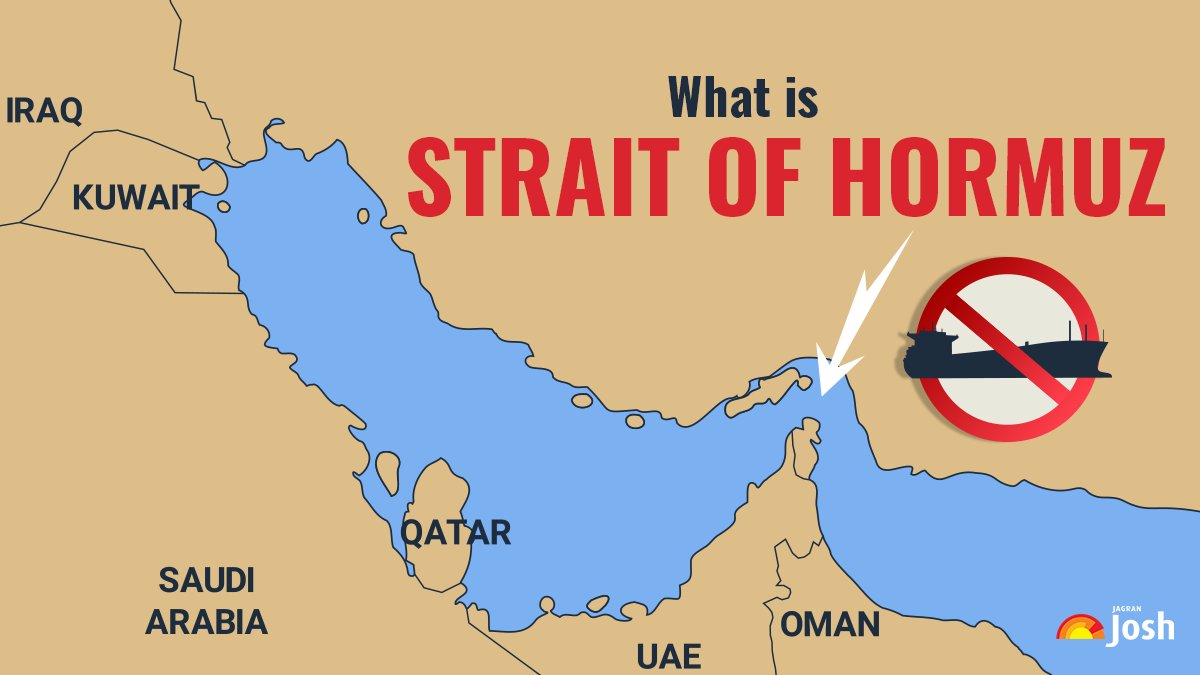
In a significant military mobilization, Iran has deployed over 2,500 military aircraft to operate alongside its naval forces in the strategic Strait of Hormuz. The move, reported tonight, centers on the area of Hormuz Zaldmoon.

Regional analysts view the large-scale deployment as a major security preparation and strategic exercise. It is widely interpreted as a show of force and a direct response to escalating regional tensions and recent threats of conflict.

A senior Iranian military official stated the operations have a “special focus on marine security,” underscoring Tehran’s declaration of readiness to defend vital waterways. The Strait of Hormuz is a critical global chokepoint for oil shipments.

The rapid military buildup has drawn intense international scrutiny, with world leaders and defense observers closely monitoring the speedy activities. The deployment raises concerns over potential miscalculations or confrontations in an already volatile region.

EU labels Iran’s revolutionary guards as terror group amid escalating US-Iran tensions

By Sabiu Abdullahi

The European Union has officially designated Iran’s Islamic Revolutionary Guard Corps (IRGC) as a “terrorist organisation”, a move that further deepens tensions between Tehran and Western powers amid rising military threats from the United States.

The decision followed a meeting of EU foreign ministers and was announced by the bloc’s top diplomat, Kaja Kallas. The designation came as US President Donald Trump renewed warnings of possible military action against Iran.

Iran’s Foreign Minister, Abbas Araghchi, responded with a sharp warning, saying the country’s armed forces were ready to respond “immediately and powerfully” to any attack by the United States. His remarks came hours after Trump said Washington was prepared to act with “speed and violence”.

In recent days, the US has strengthened its military presence in the region. Among the assets deployed to the Arabian Sea is the USS Abraham Lincoln, a nuclear-powered aircraft carrier.

Alongside the terror designation, EU foreign ministers approved fresh sanctions against Iran. The measures include travel bans and asset freezes targeting Iranian officials accused of involvement in the killing of thousands of antigovernment protesters since late December last year.

From Tehran, the General Staff of Iran’s Armed Forces condemned the EU’s decision. In a statement, it described the move as “illogical, irresponsible and spiteful”, and accused the bloc of acting in line with US and Israeli policies. The statement warned that “the dangerous consequences of this hostile and provocative decision will be directly borne by European policymakers”.

Iranian officials noted that the United States had already taken a similar step in 2019, when it designated the IRGC as a foreign “terrorist organisation”.

International reactions quickly followed the EU’s announcement. United Nations Secretary-General Antonio Guterres urged restraint and called for diplomacy to prevent further escalation.

“We believe that it’s important that there is a dialogue allowing for an agreement in relation, namely, to the nuclear question and that we can avoid a crisis that could have devastating consequences in the region,” Guterres told reporters.

In Washington, US Defence Secretary Pete Hegseth said Iran still had an opportunity to reach an agreement with the United States, but warned that the Pentagon stood ready to act if talks failed.

“They have all the options to make a deal,” Hegseth said. “They should not pursue nuclear capabilities.”

He added: “We will be prepared to deliver whatever this president expects from the war department, just like we did this month [in Venezuela].”

Iranian President Masoud Pezeshkian also engaged regional leaders as tensions rose. According to a statement from the Iranian presidency, Pezeshkian spoke with the emir of Qatar and the prime minister of Pakistan, stressing “the importance of strengthening unity among Islamic countries” and the need for continued diplomatic efforts to reduce regional tensions.

The statement added that Iran had chosen “the path of dialogue and dignified diplomacy”, while warning that the country “will not hesitate to defend itself if necessary”.

Germany welcomed the EU’s decision, with its Foreign Office calling the move “overdue”.

“The decision taken today sends a strong political message,” the ministry said. “We as the EU are thus showing that we see what is happening in Iran. We stand side by side with the Iranian people. We stand up for humanity and we oppose repression.”

Germany also confirmed that new individual sanctions had been imposed on officials accused of responsibility for what it described as the “brutal suppression of the protests”.

European Commission President Ursula von der Leyen echoed that position, calling the designation “long overdue”.

“‘Terrorist’ is indeed how you call a regime that crushes its own people’s protests in blood,” she said. “Europe stands with the people of Iran in their brave fight for freedom.”

Israel also praised the EU action. Israeli Foreign Minister Gideon Saar described it as an “important and historic decision”, claiming it would deal a “powerful blow” to the legitimacy of Iran’s government.

Meanwhile, Tehran summoned Germany’s ambassador after Chancellor Friedrich Merz said the Iranian government’s “days are numbered”.

“It could be a matter of weeks, but this regime has no legitimacy to govern the country,” Merz said.

Iran has also issued warnings of upcoming military drills in the Strait of Hormuz, a critical waterway through which about 20 percent of global oil supplies pass, raising further concerns over regional stability.

The IRGC, established after Iran’s 1979 revolution, operates alongside the regular army and reports directly to Supreme Leader Ayatollah Ali Khamenei. It plays a central role in Iran’s defence strategy and regional influence and remains deeply embedded in the country’s political and economic structures.

As diplomatic pressure mounts and military posturing continues, analysts warn that the situation carries high risks, with the potential for serious consequences across the Middle East if tensions spiral further.

CAF sanctions Senegal coach, players following AFCON final walkout

By Muhammad Abubakar

The Confederation of African Football has imposed heavy sanctions on Senegal following the dramatic Africa Cup of Nations final against Morocco, including a five-match suspension and $100,000 fine for coach Pape Thiaw.

Thiaw was penalised for “unsporting conduct” after instructing his players to walk off the pitch during the final. The incident marred Senegal’s championship victory.

Senegalese players Ismaila Sarr and Iliman Cheikh Baroy Ndiaye have each been banned for two CAF matches for similar misconduct. The Senegalese Football Federation faces a substantial $615,000 fine despite lifting the trophy.

Morocco has also been penalised. CAF handed the runners-up a $315,000 fine for improper conduct, whilst defender Achraf Hakimi received a two-match suspension for unsporting actions.

Neither federation has yet announced whether they will appeal the decisions.