Opinion

Steady hands, clear vision: why Abba Kabir Yusuf’s leadership is taking root in Kano

By Dr. Saifullahi Shehu Imam

In leadership, enduring influence is never accidental. It is earned through consistent performance, sustained public trust and the wisdom to navigate changing circumstances while remaining anchored to the people’s interests.

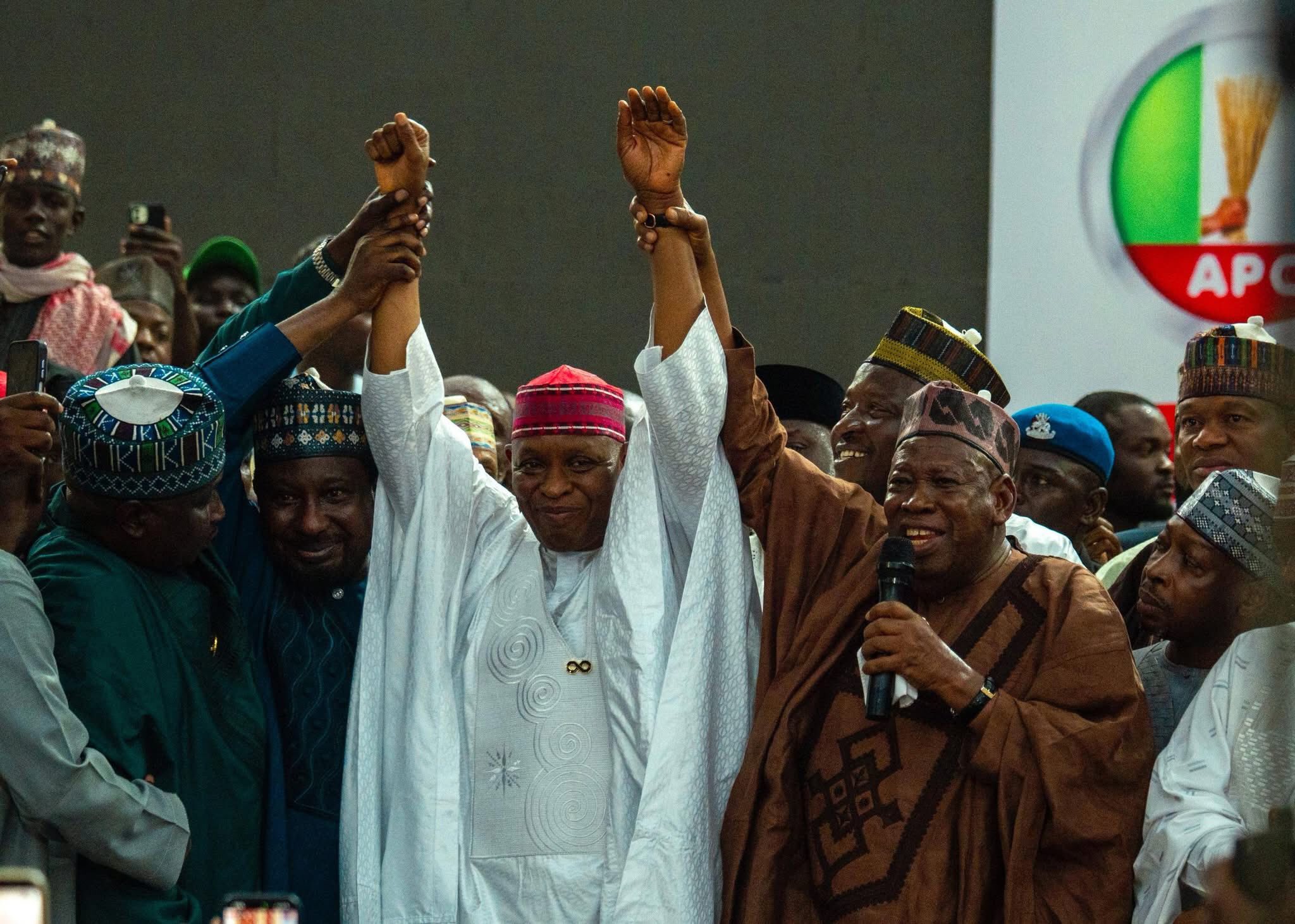
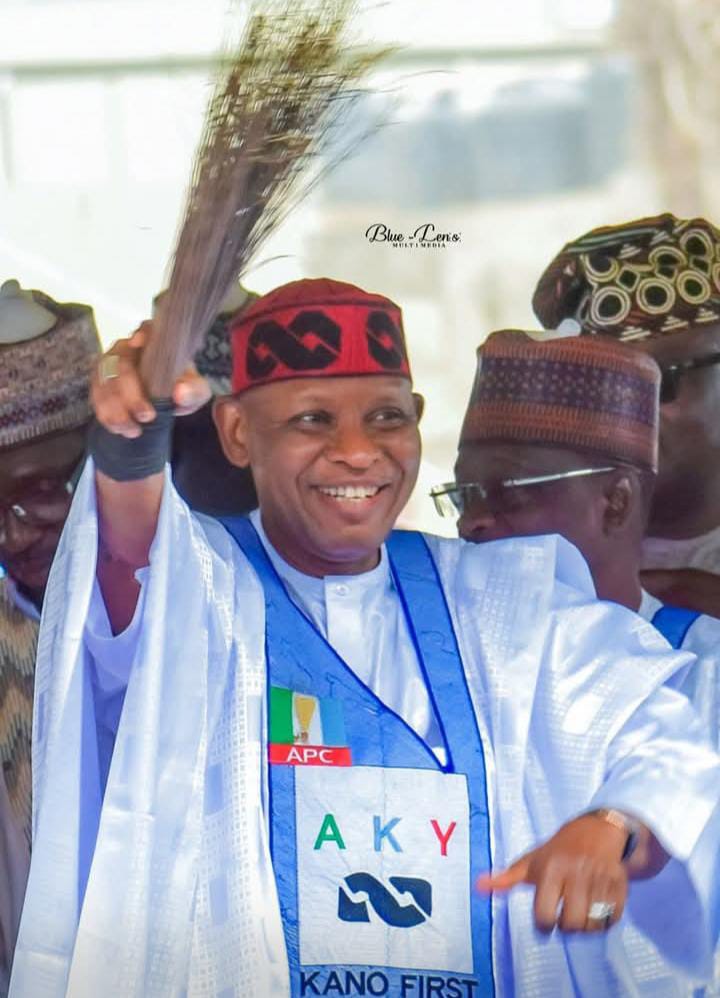
Gov. Abba Kabir Yusuf’s leadership trajectory increasingly reflects these qualities: steady hands, clear vision and a disciplined commitment to results over rhetoric. Taken together, these attributes point to a governance approach that closely aligns with Kano’s long-term needs and aspirations.

Beyond party affiliations and shifting political alignments, what distinguishes Gov. Yusuf is a leadership style rooted in purpose and institutional responsibility. His governance philosophy has emphasised stability, rebuilding public institutions and people-centred development. At a time when popularity is often mistaken for performance, the administration has demonstrated an understanding that sustainable leadership is anchored in tangible outcomes and policies that translate into visible improvements in everyday life.

This reality has again received a national acknowledgement. Gov. Yusuf’s recognition as The Sun Newspaper’s Governor of the Year 2025 is not merely a ceremonial distinction but a broader affirmation of a governance model defined by structure, resolve, and service delivery.

As noted by members of the award panel and national commentators, the honour reflects “good governance, courageous leadership, and effective service delivery.” Based on assessments by media professionals and independent observers, the award reinforces what many Kano residents have observed: measurable progress under a leadership style that prioritises substance over spectacle.

One of Gov. Yusuf’s most notable qualities is political maturity. Effective leadership is not defined by rigidity, but by the ability to adapt strategically without losing sight of core objectives. By consistently placing Kano’s strategic interests above transient political considerations, the governor has demonstrated a nuanced understanding of Nigeria’s federal system and the importance of constructive engagement within it.

This is not an inconsistency; it is political intelligence. Kano’s historic role as an economic and cultural hub demands a leader who can convert political access into concrete benefits for its people. The national recognition now accorded to Gov. Yusuf’s administration underscores a vital point: this strategic, mature approach is yielding tangible dividends and respect beyond Kano’s borders.

Equally significant is the governor’s inclusive posture. His public conduct and policy direction reflect a unifying outlook that transcends factional divides and appeals to shared civic aspirations. His measured response to criticism is particularly instructive. In an era dominated by reactive politics and constant public rebuttals, restraint has become an uncommon but valuable leadership asset. Rather than engage in prolonged exchanges, the administration has largely allowed policy outcomes and administrative action to speak on its behalf.

This approach signals confidence and reinforces a quiet but powerful message: performance remains the most credible response to doubt. From the standpoint of public trust, these qualities are indispensable. Confidence in governance is built on credibility, consistency, and visible results.

As the dividends of governance become more apparent and cooperation across levels of government deepens, public assurance grows organically. National recognition of this nature further strengthens that confidence, serving as an independent validation that cuts through partisan interpretation and situates Kano’s leadership within a broader narrative of effective governance.

Taken as a whole, the evidence increasingly points in one direction. Gov. Abba Kabir Yusuf’s leadership reflects steadiness, foresight, and an orientation toward lasting impact.

These are the hallmarks of an administration that is not merely responding to the demands of the moment but deliberately positioning Kano on a path of continuity, credibility, and progress. On that measure, one conclusion is becoming increasingly difficult to contest: the governor remains firmly on the right track.

Dr. Saifullahi Shehu Imam can be reached via: saifaz2005@gmail.com.

How various online platforms are undermining valuable news in Nigeria

By Usman Usman Garba

The rapid growth of online media, especially online newspapers, has significantly changed journalism in Nigeria. 

Today, news travels faster than ever before. With just a smartphone, Nigerians can access local, national and international news within seconds. This digital transformation has helped expose corruption, amplify citizens’ voices and bring government closer to the people.

However, these advantages have also created serious challenges. The unchecked rise of numerous online news platforms, many of which lack professional standards, is gradually eroding the quality, credibility, and value of credible news in Nigeria.

Opening an online news platform has become cheap and easy. Unlike traditional print media and broadcast stations, which require licences, physical offices, and trained professionals, many online platforms operate without clear structures or accountability. As a result, individuals with little or no journalism training now run platforms that publish news without proper editorial control.

Without professional gatekeeping, many stories are published without verification, balance or ethical consideration. Headlines are often poorly written, misleading or dotted with grammatical errors. This situation has weakened journalism standards and reduced public confidence in the media.

One of the biggest problems is the unhealthy competition to publish breaking news. Many online platforms rush to be the first to report incidents, especially during political events, security crises or court proceedings. In this race, accuracy is often sacrificed. Rumours, unverified social media posts and hearsays are turned into news.

Additionally, fake news and misinformation have become common online. False reports about elections, insecurity, government policies and public figures spread widely before they can be corrected. 

Unfortunately, corrections rarely receive the same attention as the original false stories. This has made it difficult for many Nigerians to know what to believe and which media organisations to trust.

Plagiarism is another serious challenge. Many online platforms copy stories from credible newspapers, television stations and news agencies without proper attribution. 

Some only change headlines or rearrange paragraphs. This unethical practice discourages investigative journalism and erodes originality.

Media organisations that invest time and resources in quality reporting often lose traffic and revenue to platforms that simply copy and paste content.

Sensationalism has also become widespread. Shocking headlines, exaggerated claims and emotional language are used to attract clicks.

Stories about scandals, rumours, insults and the private lives of public figures often receive more attention than reports on education, healthcare, insecurity, unemployment and the economy. As a result, serious national issues are pushed aside.

Social media has made this situation worse. Many online platforms now rely heavily on Facebook, X (formerly Twitter), WhatsApp and TikTok for traffic. 

To satisfy social media algorithms, content is designed to trend rather than to inform the public. News is judged by likes, shares and comments and not by accuracy or public interest. In this environment, truth is often sacrificed for popularity.

The impact on public trust is alarming. Many Nigerians now dismiss online reports as “fake news” or “social media stories.” Sadly, this growing distrust also affects credible media organisations that still uphold professional standards.

When trust in the media declines, accountability, transparency and good governance suffer.

Economic pressure also plays a role. Many online platforms struggle financially due to low advertising revenue. Some resort to paid news, political propaganda or sponsored stories disguised as journalism. This further blurs the line between news reporting and public relations, thereby misleading the public.

Despite these challenges, online journalism remains vital to Nigeria’s democracy. Digital platforms have helped expose corruption, promote citizen journalism and cover neglected communities. 

The problem is not online media itself, but the lack of professionalism, regulation and ethical commitment. To protect quality journalism, media owners must invest in training, robust editorial systems, and ethical standards.

Journalists must return to the core principles of their profession: truth, accuracy, balance and fairness. Regulatory bodies and professional organisations, such as the Nigerian Union of Journalists, must be more active in enforcing standards and disciplining offenders.

The government also has a role to play, as the Kano State government did with online media by allocating offices and registering them, but regulation must be handled carefully to avoid threatening press freedom. 

Efforts to fight fake news should focus on promoting professionalism, not silencing critical voices. The public is not exempt from responsibility. Nigerians must learn to verify information before sharing it, especially on Facebook, WhatsApp and other social media platforms. Supporting credible media organisations through readership and subscriptions will also help sustain quality journalism.

In conclusion, the state of news in Nigeria is at a crossroads. If the current trend of unprofessional online platforms continues unchecked, quality journalism will suffer greatly. But if journalists, media owners, regulators, and the public work together, Nigeria’s online media space can still become a powerful force for truth, development and democracy.

Usman Usman writes from Kano via usmangarba100@gmail.com.

The return of naked power: What Africa must learn from today’s global conflicts

By Iranloye Sofiu Taiye

The world has entered a phase in which power no longer feels compelled to wear moral disguises. From Eastern Europe to the Middle East, from East Asia to Latin America, coercion has re-emerged as an acceptable instrument of statecraft, and sovereignty has become increasingly conditional, least respected when convenient and violated when costly restraint disappears.

The Russia–Ukraine war, China’s posture towards Taiwan, Israel’s war in Gaza, and the long-standing pressure campaign against Venezuela are not isolated crises. They are symptoms of a systemic transition: the erosion of post–Cold War restraint and the reassertion of raw power politics in a crowded, mistrustful, and increasingly multipolar international system.

For Africa, this moment is not abstract. It is existential. The same forces reshaping Europe, Asia, and Latin America are already present on the African continent through resource competition, security outsourcing, debt diplomacy, sanctions regimes, proxy alignments, and political conditionality. The difference is that Africa often confronts these forces without a unified strategy, relying instead on appeals to history, morality, or international goodwill. That approach is no longer sufficient.

Realist theory, as articulated by thinkers such as Hans Morgenthau and John Mearsheimer, offers a brutally honest diagnosis of the international system. It reminds us that global politics is characterised by anarchy, not law; that survival, not virtue, motivates states; and that power, not rhetoric, ultimately determines outcomes.

Recent conflicts confirm realism’s core claims: Russia acted in Ukraine not because of moral failure but because it perceived a narrowing window to secure its sphere of influence. China’s pressure on Taiwan is driven less by ideology than by long-term assessments of capability, timing, and strategic opportunity. Israel’s conduct in Gaza reflects the logic of overwhelming deterrence in an insecure regional environment. The United States’ treatment of Venezuela illustrates how economic warfare substitutes for direct military intervention in an era of reputational constraints.

In each case, capability trumped legality, and vulnerability invited pressure. Yet realism, while accurate in diagnosing power behaviour, becomes dangerous when treated as destiny. Taken to its logical extreme, it suggests that weaker states have only three options: submission, alignment, or destruction. This is analytically lazy and politically paralysing.

History and current global practice demonstrate that survival is not reserved for the strongest but for the most strategically positioned. The key distinction between states that withstand pressure and those that collapse is not moral standing but strategic architecture.

Ukraine did not survive Russia’s invasion because it matched Moscow militarily. It survived because it transformed a bilateral war into a multilateral stake. By embedding its security dilemma within NATO, the EU, and global norms, Ukraine increased the cost of Russian victory beyond the battlefield.

Taiwan’s resilience lies not only in its arms but also in its economy. Its centrality to global semiconductor supply chains converts any military action into a worldwide economic crisis. Invasion becomes irrational not because it is impossible, but because it is prohibitively disruptive.

Palestine commands unprecedented global sympathy yet remains structurally vulnerable. Without credible security guarantees, economic leverage, or institutional power, moral legitimacy alone has not translated into sovereignty.

Venezuela’s leadership adopted confrontational rhetoric without building defensive alliances, diversified economic networks, or institutional shields. The result has been isolation, sanctions, and internal fragility, confirming that outrage without insulation invites coercion. The lesson is stark: states do not survive because they are right; they survive because they are costly to dominate. Afghanistan’s resilience is a case study. 

Africa today occupies a paradoxical position. The continent is: Central to the global energy transition (critical minerals), demographically pivotal, geopolitically courted by rival powers, and numerically powerful in multilateral institutions; alas, Africa remains strategically fragmented. Most African states still approach global politics through the language of gratitude, alignment, or moral appeal rather than through calculated leverage. The continent’s diplomatic posture is often reactive rather than anticipatory.

This is dangerous in a world where: aid is weaponised, debt is politicised, sanctions are normalised, and security assistance comes with strategic strings. Africa risks becoming the quiet theatre of the next great-power contest, not because it is weak, but because it is insufficiently coordinated.

What Africa requires is neither idealism nor cynicism, but strategic realism with agency a doctrine that accepts power politics while refusing subjugation.

Such a doctrine would rest on five pillars.

1. Strategic Indispensability: Africa must move beyond raw resource exportation toward value-chain centrality. Countries that control processing, logistics, and industrial ecosystems are harder to coerce than those that merely supply inputs.

2. Networked Sovereignty: Sovereignty in the 21st century is not isolationist. It is embedded on favourable terms through regional blocs, trade regimes, and security compacts that dilute unilateral pressure.

3. Institutional Power, Not Institutional Faith: Africa must stop treating international institutions as moral referees and start using them as arenas of contestation. Voting blocs, agenda-setting, and procedural leverage matter.

4. Strategic Non-Alignment, Not Passivity: Non-alignment must evolve from rhetorical neutrality into active hedging, diversifying partnerships, avoiding dependency traps, and exploiting multipolar competition without becoming a proxy.

5. Continental Coordination: No African state, regardless of size, can negotiate effectively alone in a hardened global system. Continental coherence in economic, diplomatic, and security-related is no longer aspirational; it is existential.

Conclusively, power will not wait for Africa to be ready; the defining feature of the emerging world order is not chaos, but selective constraint. Power will be exercised where resistance is weak, fragmented, or sentimental and restrained where costs are high, and consequences diffuse. Africa cannot afford another century of learning this lesson too late. The continent must abandon the illusion that shared history, moral standing, or international sympathy will shield it from coercion. Those narratives did not protect Ukraine, Palestine, or Venezuela. They will not protect Africa.

What will protect Africa is a strategy: the ability to anticipate pressure, restructure vulnerability, and convert relevance into leverage. In a world where power has shed its disguises, survival belongs not to the loudest protester, but to the most strategically prepared.

Iranloye Sofiu Taiye is a policy analyst and wrote via iranloye100@gmail.com.

Despite his evil notoriety, Epstein was afraid of Nigerian scammers

By Ibrahym El-Caleel

Jeffery Epstein, despite being a MOSSAD agent who successfully lured high profile individuals and world leaders into his web to obtain their dirty secrets, was afraid of Nigerians scamming him in oil deal.

Epstein is afraid of Nigerians. Hehe.

Ladies and gentlemen, I want to officially tell you that I am also afraid of Nigerians from now going forward.

But jokes aside, Nigerians are a special breed. If a Nigerian decides to settle for anything, he ensures that he masters it to the best of his or her ability.

In the wake of the US’s disregard for Nigeria’s sovereignty in December last year, I read a post on X made by a security analyst. The handle is @GallantDaletian, and he opined that yes, the US military might have the tech, air power, and naval dominance, but when it comes to guerrilla and asymmetric warfare, the Nigerian military is a force to be reckoned with!

He said, the US may have advanced technology, drones, and aircraft carriers, but Nigeria’s military has mastered the art of unconventional warfare, leveraging local knowledge and intelligence to outmaneuver adversaries.

It’s not about comparing strengths, but acknowledging different areas of expertise. Nigeria’s focus on regional security, counter terrorism, and peacekeeping has earned it respect, while the US excels in global reach and high tech warfare.

Clearly Jeffery Epstein, despite his notoriety, believes that the fear of Nigerians is the beginning of wisdom. Sharp guy.

Saving the tax reform from the ‘Fake News’ industry

By Isah Kamisu Madachi


The furore over whether the tax laws should be implemented has passed. The nationwide discussions about the discrepancy between the gazetted version and the version passed by the National Assembly have also faded. January 1 has come and gone, and many changes, especially around digital transactions, are already beginning to manifest, as provided for under the new tax law. The consolidated tax laws under the tax reform regime are now in force, and as a citizen, I hope they are backed by strong accountability mechanisms and oversight to ensure that collected taxes are used for the right purposes.

However, I observed a major policy gap in the final moments of the law’s implementation, which, if left unaddressed, could not only undermine the law’s effectiveness but also cause greater harm to its objectives. If I were to estimate, I would say that less than 5% of Nigerians understand what the new tax law contains, how it works, and what it does not do. This knowledge gap has created a fertile ground for misinformation, disinformation, and fake news. 

In the past few days, I have personally encountered many people who told me they had withdrawn all the money saved in their bank accounts and converted it to cash. They said they no longer trust cashless transactions. Some were told that every transaction, regardless of the amount, would incur a flat ₦50 fee. 

Others were also told that keeping money in their accounts would result in monthly deductions, or that 5% of their savings would be deducted each month for tax. None of these claims could be traced to any provision of the law, yet they are widely shared with absolute confidence.

Another unfortunate experience was my encounter with a young and vibrant POS agent from whom I regularly withdraw cash. He told me he had shut down his business. According to what he was told, every ₦500,000 transaction would attract ₦15,000 in tax, every ₦5 million would attract ₦250,000, and any transaction above ₦1,000 would automatically be charged ₦50. 

He was also told these deductions would be accumulated and collected at the end of the month, and that’s what frightened him most. He used to make transactions averaging ₦50 million per month. With this information, he now chose to abandon his livelihood. Whether these claims are true or false is not the most important when one considers the damage such misinformation is already causing.

There is also a growing narrative, particularly on social media, that every transaction must now be clearly explained in the narration section. People are being told they must specify whether the money is for savings, shopping, gifts, rewards, profit, or salary. A counter-narrative exists saying this is false. Sadly, the average Nigerian does not know which version to believe. In an environment where official clarity is weak, rumours travel faster than facts.

If I were to document all the misinformation circulating about the new tax law, it would take more than a newspaper opinion. New versions emerge almost every hour. The most alarming outcome of this misinformation is how people are altering their economic behaviour. Businesses are being abandoned. Trust in digital finance is being eroded. People are deserting the cashless system out of fear, believing their money is no longer safe in the banking system.

The only effort I am aware of to address this information gap is the reported engagement of social media influencers to enlighten the public. If this effort has begun, it is not enough. If it has not, then it is urgently needed. But beyond influencers, one must ask: what happened to local radio stations? Radio remains the primary source of information for millions of Nigerians, especially in rural areas. The law should be broken down and discussed in local languages on local radio. 

There are also a proliferation of online television platforms operating across social media spaces. The tax reform committee should collaborate strategically with them to explain the law in simple, creative ways. Influencers alone cannot carry this burden. Public communication must be broader, more structured, and more deliberate.

The Federal Ministry of Information also plays a central role here. There is an urgent need for a simplified version of the tax law, as well as translations into local languages, and for their dissemination in collaboration with state ministries of information. Students, heads of households, community leaders, traders, and small business owners must all be deliberately engaged. Town hall meetings, especially in peri-urban communities, should be organised. They are necessary to counter the scale of misinformation already circulating.

When people are largely unaware of what a law entails, dysfunction is inevitable. The law may exist, but its implementation will be undermined by fear, resistance, and unintended consequences. By the look of things, those who understand the new tax law are currently the fewest in Nigeria, even among the highly educated. If this gap remains wide open, the law may struggle to achieve its intended outcomes.

Now that it’s here, I hope, and I genuinely pray, that if effectively implemented and properly communicated, the new tax laws will become one of the long-awaited channels for fixing many of Nigeria’s challenges. But without deliberate public education, I doubt if the policy can yield the desired result.

Isah Kamisu Madachi is a public policy enthusiast and development practitioner. He writes from Abuja and can be reached via: isahkamisumadachi@gmail.com.

Nigeria’s untapped wealth: Zakat and Waqf as tools for national renewal

By Abdullahi Abubakar Lamido

This week marks a historic milestone for Islamic social finance in Nigeria. For the first time, the Association of Zakat and Waqf Operators in Nigeria (AZAWON) has declared a National Zakat and Waqf Week, running from January 30th to the following weekend. Across the country, more than 70 member organisations are participating through various programmes. The goal is simple but urgent: to educate, enlighten, and reawaken Muslims to the power and relevance of zakat and waqf in today’s world.

In Gombe State, the Zakah and Waqf Foundation is leading a series of activities during the week, including khutbahs, public lectures, zakat disbursement programmes, advocacy visits, and radio and television engagements. One of the key events was an invited guest Friday khutbah I delivered at Fuad Lababidi Mosque, carrying a message many communities desperately need to hear: that zakat and waqf are not just religious rituals but economic systems designed to build strong, self-reliant societies.

A central theme of the sermon was that Islam does not accept poverty as destiny, nor hunger as a permanent condition. Allah says, “Take from their wealth a charity by which you purify them and cause them to grow” (Qur’an 9:103), and He reminds us, “The example of those who spend their wealth in the way of Allah is like a seed that grows seven ears; in every ear are a hundred grains” (Qur’an 2:261). 

The verses above show that giving in Islam is not a loss but rather a source of growth, purification, and multiplication. Islam built a community where the wealthy bear responsibility for the vulnerable, the strong uplift the weak, and wealth circulates rather than remaining locked in a few hands. Two of the greatest tools for achieving this are zakat and waqf.

Many people today see zakat only as short-term relief — food packs, cash support, or emergency help. While these are important, zakat in its full vision is far greater. It is a poverty-reduction system, a wealth-redistribution mechanism, and a tool for economic empowerment. When properly managed, zakat can fund small businesses for the poor, provide tools and equipment for tradespeople, support education and skill development, and help recipients become earners. In other words, zakat is meant to move people from dependency to productivity. 

Globally, experts estimate that billions of dollars in zakat are paid annually by Muslims, and if organised professionally and invested productively, this wealth could significantly reduce poverty across the Muslim world.

If zakat is the fuel of social protection, waqf is the engine of long-term development. Waqf, or Islamic endowment, is a form of continuous charity where an asset is dedicated for the sake of Allah and its benefits are used for the public good. Historically, waqf funded universities and schools, hospitals and clinics, roads, bridges, and water systems, orphan care and social welfare, as well as libraries and centres of knowledge. 

For centuries, Muslim civilisation ran on waqf. In places like the Ottoman Empire, vast portions of public services, including education and healthcare, were financed through endowments rather than government budgets. In many classical Muslim cities, it was possible for a person to be born in a waqf-supported hospital, educated in a waqf-funded school, work in a waqf-funded market, and even be buried using waqf land — all without costing the state.

The Nigerian reality today presents serious challenges: youth unemployment, underfunded schools, poor healthcare access, and widespread poverty. Yet Islam has already placed in our hands the tools to respond. The khutbah stressed that we must stop seeing development as the government’s responsibility alone. Islamic civilisation flourished not only because of governments but also because of community-driven institutions like zakat and waqf.

The message echoed across the nation. In Abuja, Alhabibiyyah Islamic Society, through its Zakat and Waqf Unit, organised a major programme to mark its 5th Zakat and Waqf Day and the 15th Public Zakat Disbursement on 31st January 2026. The event drew national attention, with the National Chairman of AZAWON, Malam Muhammad Lawal Maidoki (represented by Honourable Balarabe Shehu Kakale), delivering the keynote address. A high-level panel discussion followed on the theme “Zakat, Waqf and the New Tax Regime,” where I served as a panellist alongside Taiwo Oyedele, Chairman of the Presidential Fiscal Policy and Tax Reforms Committee (represented), Hajiya Adama of Al-Ikhlas Waqf Trust, Borno, and Barrister Dele Oye, Founder of Dele Oye & Associates. My contribution once again emphasised the strategic developmental and civilisational roles of zakat and waqf, highlighting practical ways these instruments can be used to address our numerous socioeconomic challenges in a structured, sustainable manner.

The implications are clear. Zakat institutions must move toward professional management, proper data systems, and empowerment-based programmes that help beneficiaries start businesses and become self-reliant. Waqf must also evolve beyond its limited perception. Instead of restricting waqf to graveyards and mosques, communities can establish rental properties, shopping complexes, farms and orchards, schools, and clinics with income-generating arms. The profits can then fund education, healthcare, scholarships, and social welfare on a permanent basis. Families can dedicate houses or land as waqf, mosques can initiate community waqf projects, businesspeople can create corporate waqf funds, and professionals can contribute their expertise in management and governance.

The National Zakat and Waqf Week is therefore more than a ceremonial event; it is a wake-up call. If Muslims in Nigeria pay zakat correctly and channel it productively, establish and manage waqf professionally, and build partnerships between scholars, business leaders, and experts, then by Allah’s permission, we can see reduced poverty, more jobs for youth, better schools and hospitals, and stronger, more dignified communities. 

The revival of zakat and waqf is not just about charity; it is a strategy for economic revival and social stability. As emphasised in the khutbah and in the Abuja panel discussion, empowering the Muslim community will not happen through speeches alone, but through planning, management, transparency, and trust. The tools are already in our hands. The question is whether we will use them.

Amir Lamido, PhD, wrote from Abuja, Nigeria. 

Failure did not end my dreams; giving up would have

By Garba Sidi

In Nigeria, academic failure is often treated as a life sentence. A poor result can earn a student a damaging label—not serious, not intelligent, or not destined for success. I know this because I lived it. Yet my journey proves that failure, no matter how often it occurs, does not end a person’s future. Giving up does.

After completing SS3, I sat for WAEC, NECO, and JAMB, like millions of Nigerian students whose dreams rest on examination numbers. When my WAEC result was released, I had only three credits—Chemistry, Hausa, and Animal Husbandry. Showing the result to my father was one of the most painful moments of my life. His words, suggesting I might have to repeat SS3, broke my heart. Still, I chose prayer over bitterness.

My JAMB score of 145 further reduced my chances of gaining admission to university. Though ashamed, I showed the result to my father. He advised patience and encouraged me to wait for my NECO result. When NECO came out, I earned seven credits, including English and Mathematics, but failed Physics. At the time, I did not realise how much that single subject would shape my future.

Like many science students, I dreamed of studying Medicine at Bayero University, Kano. I also applied to the College of Education, Gumel, and Hussaini Adamu Polytechnic, Kazaure. With my JAMB score, university admission was impossible. My options narrowed, and disappointment became familiar.

On my uncle’s advice, I enrolled in Remedial Studies at Tafawa Balewa University, Bauchi, hoping to later study Engineering, a course believed to offer better job prospects. I passed the remedial exams and continued attending lectures while preparing for another JAMB. When I failed again, my journey in Bauchi ended abruptly. Without a successful JAMB result, remedial studies could not secure admission.

I returned home discouraged. Applications to the College of Education, Gumel, and Bilyaminu Usman Polytechnic, Hadejia, yielded no results. While friends moved on to universities and colleges, I spent most of 2015 at home, surrounded by self-doubt and silent questions about my worth.

In 2017, I wrote JAMB again and scored 171, meeting the reduced cut-off mark for Sule Lamido University, Kafin Hausa. I was offered admission to study Mathematics and even attended the interview. However, during registration, my admission was withdrawn because I did not have a credit in Physics. It was another painful reminder that failure has consequences—but it does not have to be final.

Once again, family intervention redirected my path. Through my uncle’s connection at the College of Education Gashuwa, affiliated with the University of Maiduguri, I secured admission. I randomly chose Physical Education (PHE), not out of passion, but out of necessity. I was admitted into the preliminary batch with only three weeks left before examinations.

That short period forced a decision: surrender or struggle. I chose to struggle. I attended lectures relentlessly and studied day and night. Of the eight courses I took, I failed only one in my first semester. I cleared it later and completed the programme successfully.

During my studies, I met Haruna Aseeni, a Health Education student. Our friendship began simply—sharing study materials. We stayed connected long after graduation. I later completed my NYSC between July 2023 and June 2024, unsure of what the future held.

Then came a message on a Sunday evening. Haruna informed me that someone was looking for a graduate of Physical Education. A few phone calls later, I was submitting my credentials. After an interview in Dutse, I received an Offer of Appointment as Sports Officer II under the Jigawa State Ministry of Information, Youth, Sports and Culture, and was posted to Hadejia Stadium.

What struck me most was that the opportunity came through someone I once helped academically—not through influence or desperation, but through relationship and character. Even more surprising, my father and uncles later discovered they already knew the official who facilitated the process. Life has a way of connecting efforts in ways we do not expect.

My story is not extraordinary. It is Nigerian. It reflects a system where setbacks are common, opportunities are uneven, and success is rarely linear. But it carries a message young people must hear: failure is not the opposite of success; quitting is.

To students and graduates facing rejection, delay, or disappointment, my advice is simple: do not give up. Respect everyone you meet. Work hard wherever you find yourself. Pray, persevere, and remain humble.

You never know who God will use to change your story.

2025: Genocide, missile and other issues

By Usman Abdullahi Koli

“Tempora mutantur, nos et mutamur in illis.” Times change, and we change with them. Some years arrive with spectacle, with upheaval that demands attention. Others arrive quietly, insistently, reshaping life before their weight is fully understood. 2025 in Nigeria was of the latter. It did not collapse. It did not triumph. It compelled the nation to confront itself.

On a Tuesday morning in early January, before any official pronouncement or statistical briefing, the country was already aware of the season’s challenge. At the motor parks, drivers adjusted fares in silence, anticipating rising fuel costs. From Idumota Market in Lagos to Monday Market in Maiduguri and Sabo Gari Market in Kano, traders shifted prices mid-morning, recalibrating their margins as households silently reshuffled meals and transport plans.

Some Nigerians recounted how they had begun rationing electricity at home and combining trips to reduce petrol expenses. Survival, not aspiration, became the framework of daily life. Everyone began to adjust to the sharp inflationary impact of the new economic regime.

President Bola Ahmed Tinubu had warned that national renewal would be neither fast nor painless. He described it as a painful surgery necessary to recalibrate the economy for future gains. By midyear, the warning had manifested. Inflation, driven by food and energy prices, persisted relentlessly. The naira existed in a state of limbo, neither collapsing completely nor regaining dignity. Salary-dependent citizens faced daily compromise, while speculators adjusted and profited. Official statistics merely confirmed what citizens already knew: adjustment had become endurance.

Yet governance did not stand still. Revenue mobilisation improved. Leakages narrowed. Subnational governments were compelled to confront fiscal realities rather than maintain dependence on the centre. By April, a comprehensive tax reform framework was unveiled, aiming to redefine who pays, how, and to what effect. Properly implemented, it could stabilise finances for decades. Miscommunicated, it risks deepening mistrust. In public policy, substance alone is never sufficient; legitimacy also requires understanding, transparency, and civic consent.

Security offered evidence of the state’s potential when coordinated and intelligence-driven. Operations across Zamfara, Katsina, and Kaduna disrupted entrenched bandit networks. Camps once considered permanent were dismantled and feared commanders neutralised. The significance was less in propaganda and more in the quiet lesson that impunity is not inevitable. Yet highways remained perilous, rural communities exposed, and kidnappings continued. Fear, while less permanent, had not fully dissipated. Structural justice, inclusion, and local legitimacy remain essential for lasting security.

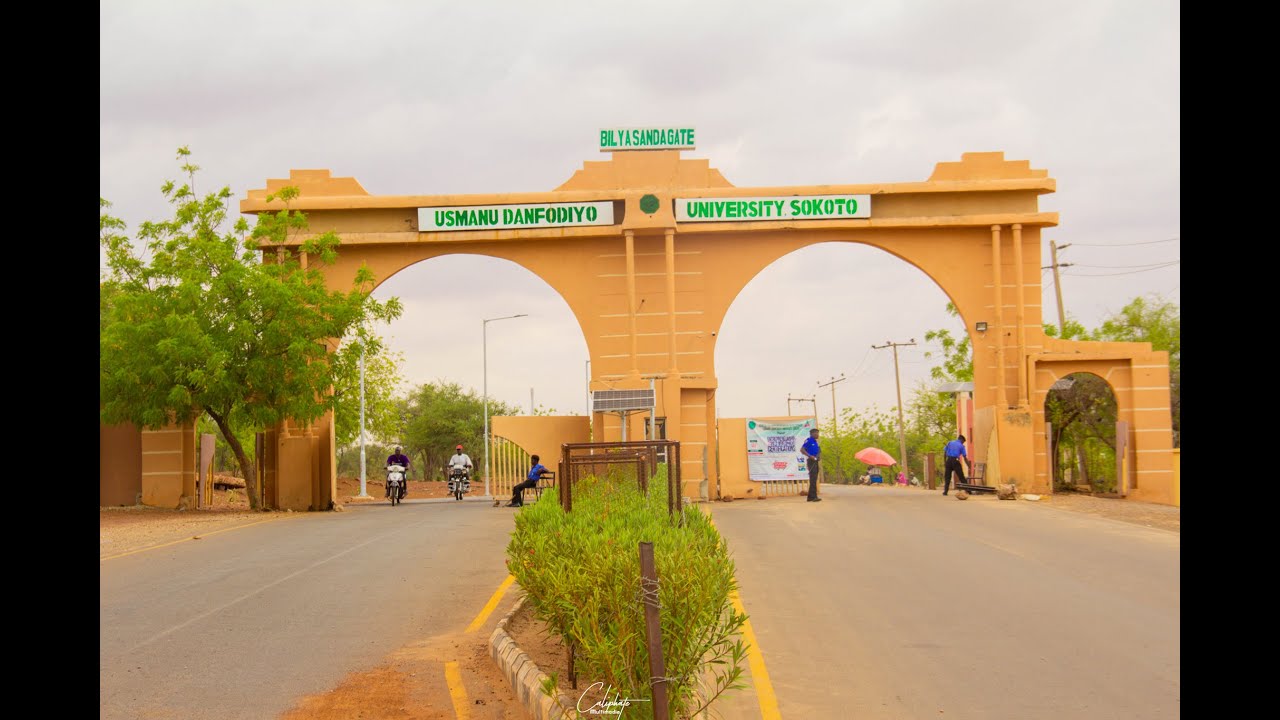
International and regional developments added further complexity to an already strained year. Statements by the current United States President, Donald Trump, asserting that Christians were being targeted in Nigeria and describing the situation as a Christian genocide, drew strong domestic and international reactions, reopening debates about sovereignty, narrative framing, and the external politicisation of Nigeria’s internal security challenges. Almost simultaneously, a reported missile strike in Sokoto, justified as an operation against the so-called Lakurawa terror group, raised serious questions about intelligence credibility, civilian safety, and the expanding theatre of counterterrorism. Within the subregion, Nigeria’s foreign and security policy faced its own test when Nigerian soldiers en route to Portugal were detained in Burkina Faso, a development that followed closely on the heels of an attempted coup plot in the Benin Republic and Nigeria’s military support for the Cotonou government. Together, these events underscored the fragility of regional trust and the growing cost of instability beyond Nigeria’s borders.

The health sector revealed fragility in stark terms. Nationwide strikes by resident doctors, followed by allied health workers, paralysed tertiary hospitals. Emergency rooms were stretched. Laboratories and pharmacies operated at skeletal capacity. Citizens faced delays, avoidable loss, and mounting uncertainty. Professional sacrifice, not institutional strength, sustained the system. No nation aspiring to seriousness can indefinitely rely on individual endurance while postponing structural repair.

Midyear brought a moment of national reflection with the death of former President Muhammadu Buhari. Flags flew at half-mast. Tributes poured from private citizens, politicians, and international observers alike. Yet beneath the ceremonial mourning lay unresolved questions: the legacy of decisions, the costs of policy, and the gaps left in leadership. History rarely closes neatly. It lingers, asking questions long after the ceremonies end.

Politically, the year matured with quiet intensity. Alliances shifted, ambitions hardened. Northern cities, Kano in particular, became symbolic mirrors of broader anxieties. Silence, rather than violence, became the language of anticipation. Even without a formal declaration, Nigerians understood that political calculation was underway, shaping the landscape for future contests.

Amid pressure, civic life persisted. Humour flourished in the streets, on social media, and in private gatherings. Satire became a language of participation, reminding those in authority that power is both observed and interpreted. In a constrained civic space, laughter and critique became inseparable.

By the year’s close, one conclusion is unavoidable. 2025 was not a season of miracles. It was a season of exposure. Governance demonstrated competence and direction in some areas, while revealing gaps in empathy and communication in others. Citizens displayed resilience, but also impatience and a refusal to be sustained by rhetoric alone. Reform is underway. Its success depends on trust, empathy, and the leaders’ capacity to carry the public along honestly.

Nigeria did not fall. But we keep hope alive that the giant will rise. It confronted itself, and comfort proved in short supply. This confrontation, uncomfortable as it was, may yet lay the foundation for a more serious engagement with the demands of nationhood. Nations rarely change because they are persuaded; they change because they are compelled to see themselves clearly.

In this, 2025 may yet prove instructive.

Usman Abdullahi Koli wrote via mernoukoli@gmail.com. 

Beyond the riverbanks: Exploring the historic heart of Argungu ahead of the 2026 festival

By Dahiru Kasimu Adamu

Ahead of Argungu International fishing and cultural festival which was scheduled to hold from 11 February to 14 February 2025 we take a look of some tourist centers to visit in the ancient town of Kabawan Kanta.

Argungu International fishing and cultural festival is a unique  global event previously celebrates annually, it rooted in the pursuit of peace and unity. This extraordinary event showcases the rich historical legacy of the Kabawan Kanta and preserves the invaluable cultural heritage of the Kabawa people.

More than a festival, Argungu is a world-renowned tourism destination, significantly contributing to the socio-economic development of the town, Kebbi State and Nigeria as a whole.

Most people don’t know that, beside the famous fishing festival, there are so many colorful cultural and traditional activities, which are observed concurrently, during the same period. Some of  these activities which are attached to the festival include, 

  1. Traditional Boxing, 
  2. Durbar, Horse Racing,
  3. Motor Rally,
  4. Kabanci Display,
  5. The Grand Fishing Competition and many more.

Apart from the series activities of the festival, visitors also would have opportunities to visit historical and tourist centers of the town such as; the famous Kanta Museum.

Kanta Museum, is a Historical and cultural Center, which was the Emirs palace between 1831 and 1940, but it was converted to a Museum in 1942 after the European colonialists built the new Emir Palace in Tudun Wada Area of the ancient town of Argungu during the reign of Muhammed Sani.

Since then, the place has been a tourist center for many years. It showcases the true meaning of diversity with different cultures and histories of the Kabawan Kanta on display. It was named after Muhammed Kanta, who founded the Kebbi Kingdom in 1515. The Museum boasts a collation of historical artifacts and a testament to the ancient architectural beauty of the people.

It has eleven sections and contains historical and cultural elements related to the Kabawa and their history, which include the Royal Palace, then the Cultural section, the people and their religion section, the traditional crafts and the music section, the antiques section, a section dedicated to Surame, the first settlement of the Kabi Kingdom, war equipment, (such as spears, swords, woods, stones, bows and arrows and even drums on display) fishing tools section, amongst others.

Many people, including students from different schools and neighboring countries visit the museum at all times, for different purposes including educational and cultural research, although during the festive season about five to seven hundred people visit the Museum a day.

The Matanfada River

Matanfada river is a very special stage of the famous Argungu Fishing Festival competition. Over five hundreds fishermen storm the river for fishing competition. Visiting the river and the scenario give a deeper appreciation of its cultural and historical importance.

Another river site is the Mala River, which is another significant tributary in the Argungu. It forms part of the fertile river system that feeds the farmlands and fishing grounds of Argungu and its stage of Kabanci display.

The Argungu Bridge:

It is a prominent bridge that crosses the river connecting local governments of Argungu Emirate and also a route to Niger republic. It is a central landmark and a prime viewing spot for spectators during the fishing festival, offering a vantage point over the competitions. If you have a chance to be there during the event, try and climb the bridge!

The Argungu Fadama Land is a vast fadama land, which is nourished by the rivers. It is exceptionally fertile and crucial for agricultural activities, producing crops like rice, vegetables and many others, supporting the local economy of the residents.

The Emir’s Palace: Argungu Emir palace which is also known as Kanta Palace is located at Tudun wada Area of Argungu. The palace is the seat of the Emir of Argungu, the overall constituted authority of the Emirate. The palace also showcases historical and administrative system of government of the Kabawa, and it’s many sections reflecting living heritage of the Kabawan Kanta.

For equestrian culture, the Horse Racing Course roars to life during the festival and NSK Polo Ranch hosts the Polo tournaments and fates illustrating the horse sporting in the region.

There are 7 historical gates in Argungu and all are connected to the history and culture of the town, this gates are; Kofar Maicibi, Sagware, Kofar Tudu, Kofar Mala, Kofar Marina, Kofar Dankoji and Kofar tsohi.

Some of the gates such as Kofar Maichibi, Kofar Tudu had been rehabilitated and they serve as a symbolic of Argungu’s past history, marking and signifying old boundaries and stories of the community, its trade, strength and defense.

All these locations are interconnected elements of Argungu’s geography and culture and they are stages for a major cultural event contributing greatly to the socio-cultural development of Kebbi State and Nigeria at large.

See you there, and you will surely thank me for what you get.

Kannywood Movies Review: Bakan Gizo

Director/Producer: Kamal S. Akali

Language: Hausa

Company: Kamal Films International

Premiere: 23/01/2026

Cast: Isa Adam (Feroz Khan), Lawan Ahmad, Zahrah Aliyu, Yusuf Saseen, Bilkisu Abdullahi, Hauwa Farar Lema, etc.

The new series, Bakan Gizo, is unique for departing from the usual Kannywood storytelling. It is much like a thriller, narrated with suspense and tension, while exploring the immoral lifestyle that is rampant among young people today.

Directed by Kamal S. Akali, the story follows Sharifa (Mommy Gombe), a young woman who leaves her home state, Gombe, to study at Bayero University, Kano. There, she is drawn into a new social circle through her free-spirited friends, Salma (Zahrah Aliyu) and Zee (Bilkisu Abdullahi). She also begins an affair with Abba (Yusuf Saseen), who is deeply in love with her but increasingly possessive.

Sharifa is not content with Abba as her partner. She, therefore, enters a new relationship with Sharif (Isah Adam Feroz Khan), a spoiled brat from a wealthy family. However, things take a violent turn when her two lovers discover each other, leading to Sharif being stabbed in the stomach.

Judging by its genre, which is well-suited for a series film format, Bakan Gizo promises to be a compelling and attention-grabbing production. Viewers are already left in suspense to see how the story unfolds, particularly how Sharif’s wealthy mother, a high-ranking police officer (played by Hauwa Farar Lema) who also sleeps with Abba, will investigate the unfortunate incident that befalls her son.

The series appears to draw stylistic inspiration from Indian cinema. This is unsurprising, given director Kamal S. Akali’s creative history, including adaptations of films like Velayudham (as Kanwar Dubarudu) and Drishyam (as Umar Sanda) for Kannywood audiences.

The narrative revolves around a single storyline with interrelated characters. However, while the characters are well connected, some scenes feel disjointed, making the transition between episodes one and two almost convoluted.

On the other hand, although the performances come across as slightly over-the-top, the stellar cast remains highly effective. Seeing Mommy Gombe and Zahrah Aliyu reunite their chemistry from Gidan Sarauta, alongside the rivalry of Isah Adam (Feroz Khan) and Yusuf Saseen (as seen in Labarina), makes for an enjoyable watch.

Finally, it is too early to pass judgment, but I recommend Bakan Gizo for its fresh storytelling approach in the Kannywood series.

Reviewed by:

Habibu Maaruf Abdu

habibumaaruf11@gmail.com