Opinion

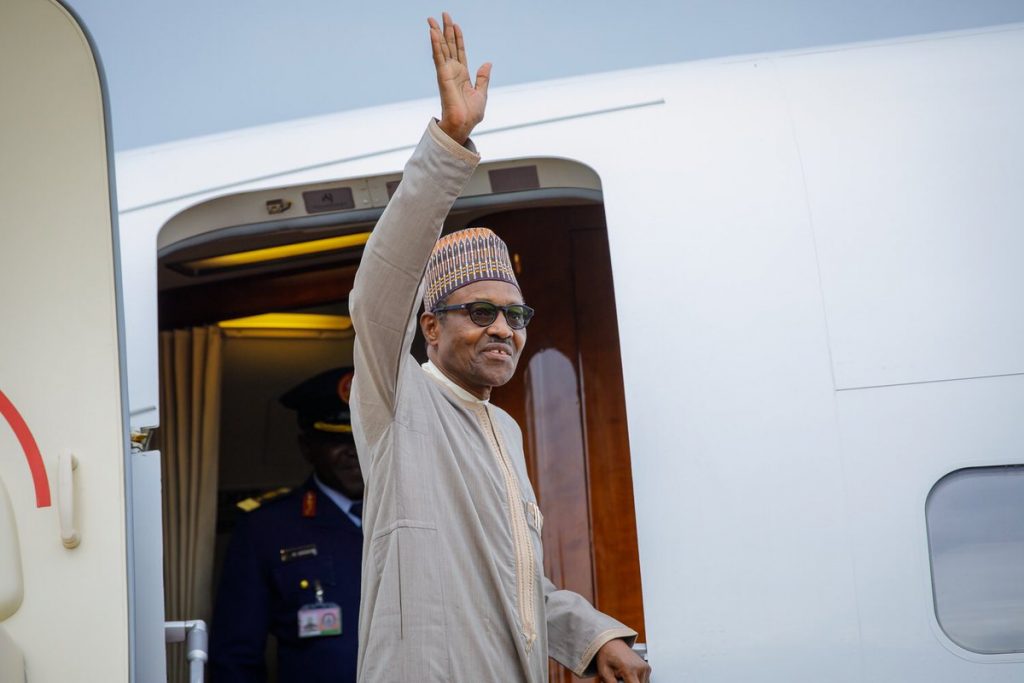
Goodbye, Muhammadu Buhari, I love you

By Prof. Abdussamad Umar Jibia

“Fellow countrymen and women. I, Brigadier Sani Abacha of the Nigerian Army, address you this morning on behalf of the Nigerian armed forces. You are all living witnesses to the grave economic predicament….”

That was on the 31st of December 1983. I was a Form Five student at the Government Secondary Technical School,Mashi. But the school was on its first-term vacation. So, I was at home. I was sitting with my father that early morning when someone came in to announce that the Army had overthrown President Shehu Shagari and that “rediyo baya Magana”, meaning the radio was silent. It was after my father sent for his transistor radio that I understood what the man meant. Normal radio programmes were not running. The radio station we listened to those days was mainly Radio Kaduna. Occasionally, we listened to Rima Radio, Sokoto, a Nigerien radio channel and Radio Kano. There was no Katsina State, so no Radio Katsina. No FM. No social media.

The only voice Radio Kaduna was airing was that of Brigadier Sani Abacha with the historical coup speech at regular intervals, filled with military music. Since my father did not go to Makarantar Boko, he asked me to translate, and I did that with the confidence of a final year student ready to take the WAEC examination in five months. Yeah, only WAEC. No NECO. No NABTEB. Nothing else except WAEC. 

But that was not the point. Everyone was anxious to know Shagari’s replacement. It didn’t come immediately. Later in the afternoon, a Yoruba voice (later identified as Tunde Idiagbon) spoke to announce the acceptance of the “voluntary retirement” of service chiefs. While they were still waiting, another General (Ibrahim Badamasi Babangida) spoke; he asked Nigerians to remain calm as they awaited the speech of the new Head of State and Commander-in-Chief of the armed forces. 

The speech did not come until midnight, when many of us were already asleep. The following morning, my father didn’t need me for translation as Radio Kaduna was airing the translated speech of the new Head of State, Major General Muhammadu Buhari. I saw happiness on the faces of the adults. I understood that they were happy because the new Head of State was not another Kaduna Nzegwu or an Aguiyi-Ironsi. 

That was the beginning of the Buhari story. For those of us in secondary schools, nothing changed. Our holiday ended and we went back to our boarding school. In the whole of what is now Katsina state, I knew of only one day secondary school. That was the one in Katsina town, and it was owned by the Government. All the other schools I knew were boarding schools and public schools.

We sat for the WAEC GCE O-level exam and passed with the necessary credits and distinctions. My BUK pre-degree admission came quickly, and it was after I reported and registered that I understood that Buhari had removed the feeding subsidy in tertiary institutions. So, we were on our own.

Buhari was overthrown in August 1985, and that was the beginning of his popularity. Four months after he was overthrown, Nigerian students went on a rampage to protest the IMF loan. It was followed by the unpopular SAP. The more General Babangida introduced new policies, the more popular Major General Buhari became, even though he was in prison. People were tearing Babangida’s pictures and pasting the pictures of Buhari, his prisoner, on their vehicles and business premises.

The interview Buhari gave The News magazine after his release from detention made him even more popular among the elites and demonised Babangida. In the interview, Buhari spoke about the “fifth columnist” in his administration,which was understood to be a veiled reference to Babangida.

Fast forward to 2015, as a democrat, Buhari became the President after three failed attempts. The experiences of Nigerians were bitter, depending on who was involved. To the victims of banditry like us, he was a failure. To university lecturers like me, he destroyed tertiary education. To the Shiites, he was a murderer. To the masses, he is synonymous with hardship.

However, regardless of how you see Buhari, you must admit that he was sincere. He was incorruptible and meant well for Nigeria. Buhari would have been the best president Nigeria had if only he had ensured accountability in his Government.

May Allah have mercy on the soul of Muhammadu Buhari and admit him into the highest level of Firdaus. Amin.

Professor Abdussamad Umar Jibia wrote via aujibia@gmail.com.

Debunking the Claims: A closer look at governance and opposition in Katsina State

By Ahmed Abdulkadir

It was with a mix of curiosity and concern that I came across an article published by The Daily Reality on July 12, 2025, titled “How the Lack of Strong Opposition Masks the Government’s Failures in Katsina.” The write-up was emotionally charged, laced with sweeping generalisations and unverified claims against the administration of Governor Dikko Umar Radda. But beyond the passion and provocative headline lies the need for a more measured and fact-based perspective—one grounded in reality rather than rhetoric.

Let us take a closer look at the major allegations raised in the article and critically examine them with verifiable facts and thoughtful context.

The “Failure” of a PhD Holder? A Misplaced Premise

One of the more glaring assertions in the article is the idea that Governor Radda’s possession of a PhD was oversold during his campaign and that his government has since failed to meet expectations. But such a claim is not only simplistic—it is unfair.

Yes, Governor Radda holds a doctorate degree, a fact that underscores his academic pedigree. However, governance is not a matter of titles or certificates—it is about policies, programs, and political will. The proper question should be: What has he done since assuming office in May 2023?

So far, the Radda administration has rolled out programs in agriculture, healthcare, and security reform. For instance, his data-driven community development model now guides the distribution of fertiliser, agro-support, and loans, ensuring that those who truly need support get it. His collaboration with the Bank of Industry for interest-free loans to MSMEs is unprecedented in the state. His administration has also launched the Health Insurance Scheme for Retirees—the first of its kind in Katsina’s history.

If there are areas needing improvement, no doubt. But to write off the administration as a “failure” just two years into a four-year mandate without a balanced assessment is more political than logical.

Insecurity: Who Really Bears the Blame?

The article devotes significant attention to the security situation in Katsina State. It laments the rising tide of banditry and communal violence, laying the blame squarely on the state government’s shoulders.

There is no denying the pain and fear that many communities in Katsina face. Attacks in places like Yargoje and Faskari are fresh scars in our collective memory. But to understand the security challenge in Katsina, one must first recognise that it is a national crisis, not a localised failure.

Security in Nigeria is under the exclusive control of the Federal Government. The police, the military, and the intelligence agencies all answer to Abuja. Governors, including Dr. Radda, are often described as “chief security officers” in name only—they command no troops, control no weapons, and fund security operations from limited state budgets.

That said, the Radda administration has not folded its arms. It has recruited and trained community vigilantes, equipped local security outfits, and created a Directorate of Humanitarian and Social Support to cater to victims of banditry and displacement. These interventions may not be silver bullets, but they reflect proactive governance in a highly constrained security architecture.

Education: A Long Road, not a Quick Fix

Another issue raised in the article is the high number of out-of-school children in Katsina. On this point, the critics are absolutely right. Katsina ranks among the states with the highest rates of out-of-school children in Nigeria. But what they failed to mention is that this is not a new problem, nor one created by the Radda administration.

The roots of the educational crisis in Katsina go back decades. Years of underfunding, weak infrastructure, socio-cultural barriers, and insecurity have combined to undermine education in the state. What matters now is what the current government is doing to address it.

Governor Radda has begun the process of improving school enrollment, especially for girls. New schools are being built in underserved areas. He has introduced teacher recruitment and training initiatives. And there are plans underway to integrate Qur’anic education with formal curriculum to bridge the gap between Almajiri and Western education.

Is it enough? Not yet. But progress is being made—step by step.

Opposition Politics: Is There Really a Vacuum?

Perhaps the most politically charged claim in the article is that Katsina suffers from a lack of effective opposition, which allows the government to operate without scrutiny. This is an old and recurring lament in Nigerian politics, especially in states where the ruling party dominates.

Yes, the All Progressives Congress (APC) won the 2023 governorship with a comfortable margin. Yes, the party also secured all three Senate seats and most House of Assembly positions. But to interpret this dominance as the death of opposition politics is disingenuous.

The PDP remains active in Katsina. The SDP fields candidates. Civil society voices are alive and well. In fact, the very article in question—published without censorship—is evidence that dissenting voices are being heard.

If opposition parties are underperforming, the responsibility lies with them to reorganise, re-strategise, and connect meaningfully with the grassroots. Democracy is not sustained by the volume of complaints but by the quality of alternatives.

A Balanced View, not a Biased Verdict

In conclusion, while the concerns raised by Daily Reality are important and deserve public discourse, their presentation lacks balance and fails the test of objectivity. The article reads more like a political broadside than a serious critique of governance. It ignores nuance, omits progress, and assumes malice where complexity exists.

Katsina State, like much of Nigeria, is grappling with real challenges—security, education, healthcare, and youth unemployment. But it is also a place where honest efforts are being made to build a better future. The truth, as always, lies somewhere in the middle, not in the extremes of praise or condemnation.

Governor Radda may not have achieved everything yet, but his administration has not been idle, incompetent, or indifferent. Let us hold him accountable, yes—but let us also be fair, factual, and future-minded in our assessments.

Ahmed Abdulkadir is the Board Chairman of Katsina State Radio and Television Services.

How the lack of strong opposition masks the government’s failures in Katsina 

By Muhammad Isyaku Malumfashi

One thing I despise about Katsina’s political realm is the absence of a strong and formidable opposition that will tackle the government’s dormancy and make them very focused and renaissance-like toward their responsibilities by using both envious and constructive criticism against those in power, so that at least the citizens may witness democratic dividends seen in some states.

But for the opposition to hold hands and keep mute without holding those in power accountable for any misfortune is unhealthy, and that’s the reason why we are here. Many citizens have questions about the power, but they are afraid to ask due to threats of arrest or intimidation by those close to the power. Perhaps some would disguise themselves in the name of advice to convince you not to oppose this failed government led by the so-called PhD, but they will not prove to you that what you said about the government is not true.

It’s a good thing to advise one to be cautious and watchful of his tongue, but it’s cowardice to intimidate him with arrest or cite the quibbles of his words without pointing out the error in them. The present Katsina government at all levels has become a failure despite the boasting made about the ‘educational qualification’ of the governor during the campaign and even after in his first year of office.

The governor made it clear that he would work with only ‘educated people’ because he is a PhD holder. His academic position was also used to deceive people into believing that Katsina would have a governor for the first time who had attained such a high level of education, unlike his predecessors, who were only master’s degree and diploma holders. People believed that the highest level of education equates to good governance until Governor Radda spent two years in office with nothing to show, or at least outshine or perform better than his predecessors.

That’s when we realised that a secondary school leaver may do better than a PhD in governance because it’s not about the qualification but fear of God, experience, integrity, and honesty. This administration of a PhD holder has not endangered any sector in Katsina. Take the security issue first, which is the most pressing issue in the state.

During the campaign, the governor made it clear that even if it’ll cost him not constructing a single gutter, he’ll eliminate insecurity in the state. We were happy to hear that and even began to see some desirable steps toward actualising that by distributing ammunition to citizens, launching the Katsina State Security Watch Corps, and arresting and killing many people found sabotaging the fight against insecurity. But what happened along the way?

The emphasis was later shifted to politics; the bold promise of no negotiation with bandits at the weak point was broken, and we saw negotiations made in some local governments when it was apparent that the bandits breached many trusts that had been placed in them by the previous government after the talks, and the insurgency escalated. It’s only during Radda that we’ve seen the worst of banditry, especially in my hometown of Malumfashi.

Initially, they only attacked villages, but later they expanded their attacks to cities. People are no longer safe. The son of our immediate local government chairman has been in bandits’ captivity for months now. My sibling, a sister of the same father and the same mother, was kidnapped in the same area where the ex-chairman lived while in office, and his child was abducted.

Many people inside Malumfashi were kidnapped; some were killed, and some had ransom paid to release them. Even today, I woke up seeing the sad news of the death of a PDP leader in Malumfashi from bandits. It’s under this government that dozens of villages in Malumfashi were evacuated due to banditry, and a whole brigadier general from Tsiga was kidnapped and spent more than 50 days in their hands before gaining freedom after millions were paid to them as ransom.

And a first-position winner from Katsina of the National Qur’anic Competition (Musabaqa) held in Kebbi was also kidnapped with his parents along their way back to Faskari from Katsina, where the governor gave him prizes and gifts, but was not able to ask security to escort him home despite the apparent danger of their town. And the governor made a blatant lie in a video, which I saved for my unborn children to remind them that ‘he’s the one feeding every family whose head is kidnapped in the state.’ This is not just a capital lie but a grievous one.

If you take education, you still have nothing to show. The previous government was paying WAEC and NECO for every student in government schools who passed the qualifying exams. Still, this government of ‘PhDs’ paid only NECO to every student, even if he or she passed both WAEC and NECO last year. Katsina’s NECO result was released late last year, after many schools had concluded their admission processes, and the pass rate was very low. Katsina was ranked among the three lowest-passing states in the NECO exam last year.

The governor employed thousands of teachers and a few from the health sector. I agreed, but he did not tell us how many thousands have retired in every sector every year and how far along the replacement process is. No school will go without seeing a shortage of teachers, and the same goes for clinics.

How long did it take him to implement the 70k minimum wage, and has it been implemented 100%? You’ll hardly see a civil servant who saw an increase of up to 50k in his salary, like in other states. What was the cause of his dispute with the university staff about the minimum wage implementation, and how many times did they reject his low implementation of minimum wage for them?

The tertiary school fees were raised when many students were dropping out due to the high cost of education, even though the governor is now earning more than his predecessor because of the removal of subsidies. His predecessor did not increase the school fees, but PhD did. In his just two years in office, he claims to have spent more on security than the previous government did in 8 years, yet there has been no clear difference between the two governments in their success against banditry in the state.

Only these two crucial areas are sufficient to condemn this Yan Boko government, but the lack of opposition in Katsina is giving the governor the confidence to speak badly about the coalition. 

Coalition/opposition has come to stay in Katsina, and no man born of a woman can stop it.

The alarming rise of thug violence and phone snatching in Kano State 

By Alhassan Hassan Salihu

The shocking surge of thuggery and phone snatching in Kano State has evolved into a grave crisis. This escalating violence threatens the safety, security, and well-being of residents, particularly in the metropolitan areas.  

Despite the overwhelming fear gripping communities, remaining silent is not an option; silence could very well mean becoming the next victim of these ruthless gangs preying on innocent people.

Kano’s Youth Violence

From the streets of Kurna to Dorayi, and Rijiyar Lemo to Gwagwarwa, chilling reports of violence have become commonplace. Street clashes, stabbings, daylight robberies, and innocent lives traumatised by gangs wielding machetes, stones, and knives have turned these areas into unsafe zones. 

The brutality of these gangs is more devastating. Social media platforms are inundated with graphic videos and images depicting these violent incidents. 

Terrified bystanders film young thugs attacking victims who resist having their phones snatched, with many victims bleeding from multiple stab wounds. 

These violent encounters are no longer isolated incidents but part of an alarming pattern that threatens the peace and stability of Kano.

A Personal Near-Miss in Dorayi

Just days ago, a student narrowly avoided becoming a victim during a routine trip from Zoo Road to Dorayi in a commercial tricycle (Keke Napep). 

Two young men suddenly jumped into the vehicle; one sat beside them, the other beside the rider. Despite explaining that it was a private drop-off, one of the youths became aggressive. 

Thankfully, the presence of a nearby police outpost likely deterred any violent intentions. They dropped off at a university gate without incident.

This encounter serves as a sobering reminder that violence can erupt anytime, anywhere. Such an incident was lucky, not guaranteed. For many others, it ends in tragedy.

Violence Spreads Beyond Kano

The wave of thuggery and phone snatching extends beyond Kano State. In neighbouring Kaduna, the tragic stabbing of a naval officer, Lieutenant Commander M. Buba, shocked the region. 

While changing a flat tyre in the Kawo area, he was attacked and stabbed in the chest after he refused to surrender his phone. Despite intervention by local vigilantes, he was pronounced dead on arrival at Manaal Hospital.

Authorities have since detained at least 13 suspects and initiated covert operations to dismantle gangs terrorising Kaduna’s streets. Yet the spread of this violence signals a regional issue that calls for coordinated responses beyond the borders of individual states.

 Tragic Loss of a Community Leader

Closer to home, Kano mourned the brutal murder of Alaramma Jabir Lawan Abdullahi, a respected Islamic teacher and tech expert. 

On the evening of May 17, 2025, near Gidan Sarki, he was attacked while travelling in a commercial tricycle amidst heavy traffic. When he resisted attempts to snatch his phone, he was stabbed multiple times by suspected thugs and left to die on the roadside.

This horrific act has ignited outrage across Kano. The fact that a well-known and respected educator could fall victim so brutally sends a clear message: no one is safe in the current climate of violence. 

Arrests Made, Yet Violence Continues

According to the Kano State Police Command, over 200 suspected thugs and phone snatchers have been arrested over the last six months. 

In March 2025 alone, the police paraded over 85 suspects from hotspots such as Kofar Ruwa, Dan’agundi, Zango, and Dorayi. Weapons, stolen phones, and illicit drugs were seized.

Despite these efforts, the menace persists, the gangs’ deep-rooted networks rapidly replenish lost members, highlighting the inadequacy of enforcement alone. 

Underlying socio-economic challenges, including high unemployment, widespread drug abuse, and poor educational opportunities, fuel the cycle of crime and violence.

Steps Taken, But More Must Be Done

The Kano State Government has made commendable strides in tackling this crisis. 

Rehabilitation centres in Kiru and Dorayi, alongside the National Drug Law Enforcement Agency’s (NDLEA) facility for addiction treatment, are important tools in combating the link between substance abuse and violent crime.

However, these centres require urgent expansion and increased funding to meet growing demand. With rising numbers of youths affected by drugs and crime, scaling rehabilitation services is essential, and more compulsory.

Need For Holistic Action

Security agencies cannot rely solely on arrests to solve such enduring crises, which require a community-based approach. 

Strengthening community policing, empowering neighbourhood vigilante groups, improving local surveillance, and fostering trust between residents and law enforcement are critical for restoring safety. Equally important is addressing the root causes of youth involvement in crime. 

The government must urgently invest in job creation schemes, vocational training centres, and youth empowerment initiatives such as sports and cultural programmes. 

Idle youth are more vulnerable to gang recruitment and drug addiction. Productive engagement is the key to prevention. Moreover, effective rehabilitation programmes and mental health support for addicted offenders must be prioritised. Without this, many youths will remain trapped in a vicious cycle of crime and incarceration.

Lastly, the justice system must be reformed to ensure quick and fair prosecution. Many arrested criminals return to the streets quickly due to weak legal follow-up, undermining deterrence and public confidence. Stronger, faster legal processes and appropriate sentencing are necessary to break the cycle, as it was previously demonstrated.

Conclusion

The menace of “fadan daba and phone snatching” in Kano has reached a tipping point. No one is immune, from students and traders to community leaders and law enforcement.

Prof. Amoka slams SAN over “Unpopular Opinion” on Nigerian professors

By Muhammad Abubakar 

Professor Abdelghaffar Amoka of the Department of Physics at Ahmadu Bello University, Zaria, has responded strongly to what he calls a “misinformed and politically biased” opinion by Sunusi Musa, SAN, regarding the state of Nigerian academia.

In a lengthy rejoinder titled “The Impoverished Nigerian Professors and the ‘Unpopular Opinion’ of a Misinformed SAN,” Prof. Amoka criticised Musa for attributing the poverty of Nigerian professors to their alleged lack of productivity and large family sizes. 

Amoka argued that the true cause lies in the systemic neglect and chronic underfunding of the Nigerian education sector, particularly university staff salaries and research funding.

He noted that academic salaries have remained stagnant since 2009, with professors now earning the equivalent of less than $400 per month, a sharp drop from over $3,000 in 2009. He described the situation as a “crime against humanity,” accusing the political class of starving intellectuals while enriching themselves.

Amoka debunked the claim that Nigerian academics are unproductive, citing the international recognition they receive and their contributions to research and student success abroad. 

He further pointed out the lack of sufficient research funding, comparing Nigeria’s meagre investments to the billions spent annually by countries like the US, UK, China, and even smaller nations such as Norway and Malaysia.

The professor further criticised the SAN for bringing personal life choices—such as marriage and family size—into a discussion about national policy failure. He emphasised that productivity in academia depends on conducive working conditions and appropriate incentives.

Amoka ended the piece by urging fellow academics to prioritise their well-being, pursue legitimate side hustles if necessary, and continue doing their best to sustain a struggling system. He warned that the continued devaluation of education poses a threat to the country’s future.

“We are starving the thinkers and feeding those who can’t think. What sort of system are we expecting to create?” he asked.

The Nigerian illusion of outrage and criticism

By Oladoja M.O

In an age where access to information is boundless and opinions flood our timelines like seasonal rains, one would expect public discourse, especially around issues of governance to be rich with nuance, clarity, and purpose. Instead, what we are confronted with in Nigeria is a noisy theatre of misdirected outrage and watery criticism, lacking both depth and direction. 

One recent trigger came from the viral criticisms surrounding the national budget, particularly the eyebrow-raising figures allegedly earmarked for streetlight poles and similar line items. As is typical in the social media age, the noise began to swell. Twitter went into a frenzy. Threads upon threads emerged, each outdoing the other in outrage. The focus wasn’t just on the figures; it quickly spiralled into yet another populist takedown of the presidency, calling into question the entire moral fabric of governance. But just when the public’s fury had reached a crescendo, a jarring but necessary intervention came from an unlikely source: a senator who, contrary to the collective narrative, took time to explain that the criticism was misdirected. What was being paraded as evidence of executive recklessness was, in fact, the product of legislative insertions. Even the revered watchdog body, BudgIt, which had positioned itself as the conscience of fiscal scrutiny, had peddled the wrong story, and done so confidently.

At that point, a deeper question emerged, one which goes beyond this specific incident: What exactly is the quality of criticism in Nigeria?

What we see across our social and political landscapes is not a culture of informed criticism but a culture of reactive condemnation. The ability to shout the loudest, to gather the most retweets or likes, has replaced the discipline of patient inquiry, structural understanding, and fact-based argument. We have mistaken noise for scrutiny, and in doing so, we have created an illusion: an illusion of outrage and criticism. Here’s the tragic irony: many of these criticisms stem from a good place, the desire for accountability and a better Nigeria. But because the foundation is faulty, the outcomes are futile. One cannot build a temple of truth on a foundation of ignorance. The budget saga is just one example among many.

BudgIt, a civil society organisation that has in the past done commendable work in simplifying the budget for the public, got it wrong this time, badly. Yet, even in the face of clarification, corrections, and new evidence, there was no public recant, no humility to say, “We were mistaken.” That act of refusal: the inability to admit error and recalibrate, is itself a glaring indicator of the intellectual poverty that plagues Nigerian criticism. In a land where saving face is prioritised over seeking truth, errors are not corrected; they are doubled down upon. And the implications are devastating. Public trust becomes confused and misdirected. The presidency gets blamed for what is, in fact, a legislative manoeuvre. Activists spend more time dragging the wrong institutions while the real culprits laugh quietly in the shadows. The people remain stirred but unenlightened, angry, yes, but none the wiser.

This shallow approach to criticism bleeds into other national conversations. Take the fixation on the Lagos-Calabar Coastal Road. A project that, whether justifiable or not, deserves technical, economic, and legal analysis is instead reduced to a carnival of trendy hashtags. Populists slam it without understanding its scope, funding model, or long-term impact. No consideration is given to feasibility studies, displacement issues, or cost-benefit analyses. No proper questions asked about procurement processes or federal-state cooperation. Instead, the discourse becomes a jamboree, a performance of rage designed to court virality, not accountability.

This is not criticism. It is a parody of it.

And just when you think the poverty of insight couldn’t dig deeper, reality offers more proof. Consider Peter Obi’s recent Democracy Day speech. In his attempt to discuss democracy, he instead ended up distorting history and misrepresenting the very fabric of the democratic struggle in Nigeria. A man who, during the dark days of military rule, was cosy with the system’s power brokers, now stands on podiums speaking as though he bore scars from that era. When real patriots were sacrificing their lives, fleeing their homes, and watching their properties burned for daring to speak truth to power, Obi stood closer to the oppressor than the oppressed. Yet today, he speaks with the authority of the afflicted. That, too, is born of ignorance, not just his, but the ignorance of the audience clapping in affirmation, unaware of the truth.

Even more revealing was the reaction to President Tinubu’s Democracy Day awards. Nigerians, young and old, in all corners of the internet, questioned why certain figures were honoured, some even asking, “Who are the Ogoni 9?” Others criticised the President for not awarding campaign allies, as though national honours were a reward system for electoral foot soldiers. It was laughable, yet tragic. How can you even begin to criticise a government when you don’t understand the very history of the democracy you claim to defend? How do you talk about national direction when your knowledge of national evolution is trapped in recent memory, as if Nigeria started in 2023?

It’s not just young people, either. Some of the loudest voices in the room, middle-aged, supposedly experienced, display a kind of ignorance so raw, you’d think the only political event they’ve lived through was a Twitter space. This is why we are where we are: a nation speaking loud but saying little, reacting fast but knowing nothing.

True criticism demands hard work. It requires research, attention to context, historical awareness, and, above all, intellectual honesty. You cannot meaningfully critique governance structures without understanding the separation of powers. You cannot hold public office holders accountable when you confuse federal responsibilities with local ones. You cannot demand transparency when your tools of inquiry are faulty. And in this desert of rigorous public engagement, one cannot help but mourn the absence of voices like that of Gani Fawehinmi: voices forged in the fire of truth, unseduced by populism, unshaken by power. Gani didn’t criticise for clout; he criticised with clarity. He did not shout merely to be heard; he roared because he understood. He was, above all, consistent, a virtue alien to many of today’s keyboard crusaders.

What Nigeria faces is not a lack of criticism; it’s an excess of uninformed, performative, and ultimately useless criticism. And therein lies the danger. Because when the noise becomes the norm, it drowns out the voices that actually matter. When every outrage is manufactured, real outrage loses its power. When critique becomes theatre, accountability becomes a joke.

To move forward as a nation, we must re-engineer our culture of criticism. We must build a new generation of thinkers, activists, and ordinary citizens who understand that to question power effectively, one must first understand it deeply. That it is not enough to be angry; one must be accurately angry. That social media fame is not the same as civic literacy. Until then, we will continue to shout: loudly, passionately, endlessly, but in circles.

Like a dog chasing its own tail, we will perform outrage while the real issues remain untouched, and the real culprits continue to operate in silence. 

The illusion will continue. The theatre will go on. And the nation, tragically, will remain where it is starved, not of voices, but of thought.

Oladoja M.O writes from Abuja and can be reached at: mayokunmark@gmail.com

OPINION: Sexual recession and its deeper implications

By Muhammad Ubale Kiru

A quiet but growing crisis is taking shape across societies, especially among young adults. It’s not about inflation, unemployment, or politics; though all of these play a role. It’s called the sexual recession; a noticeable and measurable decline in sexual activity among people, particularly those under 35. And while it may sound like a trivial or even humorous phenomenon to some, the consequences run far deeper than the surface suggests.

What Is a Sexual Recession?

A sexual recession refers to a consistent and significant drop in sexual activity within a population. In recent studies from countries like the United States, United Kingdom, Japan, and even parts of Africa, researchers have noticed that young adults are having less sex than previous generations. Not just slightly less, but in some cases, drastically so. But sex, in this context, is not merely about physical intimacy, it’s tied to deeper themes of connection, intimacy, identity, mental health, and even national population stability.

Why Is It Happening?

Several interwoven factors explain this modern-day phenomenon:

1. Digital Distractions and Virtual Living

Smartphones, social media, online gaming, and streaming platforms now consume a major chunk of young people’s time. We are more “connected” than ever, yet lonelier than any generation before. Many now prefer screens over real-life interactions, and as a result, dating, emotional bonding, and physical intimacy have taken a back seat.

2. Economic Pressures

The global economic situation is squeezing young people. Unemployment, underemployment, and the rising cost of living mean that many are postponing marriage or serious relationships. Some even avoid dating entirely due to financial insecurities. How can one think about love and intimacy when they are burdened with survival?

3. Pornography and Unrealistic Expectations

The proliferation of free, high-definition pornography has created skewed views of sexuality, leading to performance anxiety, addiction, and emotional detachment. For some, the convenience of porn replaces the effort of real relationships, leading to a drop in desire for real-world intimacy.

4. Mental Health and Social Anxiety

Depression, anxiety, and other mental health challenges have skyrocketed, especially in the post-COVID world. These conditions directly reduce libido, motivation, and the ability to form or sustain intimate bonds.

5. Cultural Shifts and Delayed Adulthood

More people are delaying traditional milestones like marriage, childbearing, or long-term commitments. In some societies, casual sex has also become emotionally draining and less fulfilling, leaving many opting for celibacy, not out of religious devotion but out of fatigue or disillusionment.

6. Hyper-Individualism

Modern culture promotes extreme self-focus: “me first, my goals, my space, my needs.” While self-development is essential, intimacy requires self-sacrifice, compromise, and shared vulnerability. Hyper-individualism often undermines those values.

Why It Matters

Some might argue: “So what? It’s their choice.” But this trend has ripple effects across society.

1. Lower birth rates: Several countries now face demographic crises due to declining fertility.

2. Weakened family structures: Relationships suffer, and social cohesion weakens when people lose touch with intimacy and emotional bonding.

3. Mental health decline: Healthy sexual relationships are closely linked to emotional wellness, self-esteem, and a sense of belonging.

4. Rise in transactional relationships: A vacuum in meaningful intimacy often leads to exploitative or shallow alternatives.

The Way Out: Rebuilding Intimacy in a Fractured World

The solution is not one-size-fits-all, but here are some pathways forward:

1. Teach Healthy Relationship Skills Early

Schools and parents must go beyond basic sex education to include emotional intelligence, communication, boundaries, and empathy. Healthy relationships don’t come naturally – they’re learned.

2. Reduce Digital Dependence

We must encourage digital detox and revive real-world connections. Host physical meetups, foster community spaces, and create tech-free zones to rebuild social skills and real interactions.

3. Address Economic Insecurity

Governments and institutions must tackle the youth unemployment crisis, offer affordable housing, and create environments that make long-term relationships more feasible.

4. Reframe Masculinity and Femininity

Many young men and women are confused about gender roles in today’s world. Society must create balanced narratives that honor emotional vulnerability in men and ambition in women, without turning either into enemies.

5. Prioritize Mental Health

We must normalize therapy, create accessible mental health services, and integrate emotional wellness into everyday life. A healthy mind is a prerequisite for healthy intimacy.

6. Faith and Values

Religious institutions also have a role to play in guiding people toward meaningful love, purposeful relationships, and sacred sexuality. Not through shame, but through compassion, mentorship, and support.

In conclusion, the sexual recession is not about libido; it’s about loneliness, disconnection, and a society drifting away from human intimacy. If we ignore it, we will wake up to a colder, lonelier, and more fractured generation. But if we confront it with wisdom, compassion, and courage, we can rebuild the bonds that make us truly human. It will be naive to wait for more statistics to confirm what we already feel. Let’s act before love becomes extinct.

Muhammad Ubale Kiru wrote in from Kano and can be reached via muhdjkiru@gmail.com

Nigerian Professor Salary: The re-ignited debate

By Prof. Abdelghaffar Amoka

A Hausa interview by a professor from ABU, lamenting academics’ poor pay, is trending and has re-ignited the debate on the salaries of Nigerian academics on social media. The discussion is championed by my brothers from the region, which is considered by the country as educationally less developed. I didn’t know what to say that I hadn’t said before. It will be like repeating myself.

Professors in Nigeria are now blamed for their financial status. They are expected to stop lamenting and get a side hustle to augment their salaries. A professor whose salary was ₦450,000 in 2009, when the exchange rate was ₦140 per dollar, is blamed for his economic state in 2025, with a salary of about ₦500,000, when the exchange rate is ₦1,600 per dollar. 

Some people are referring to professors abroad as if some of us have not had the experience. A number of us have studied and worked there, and we know how their university system works. I got two grants in the UK during my PhD. They said a professor earns more abroad from their research grants. The primary beneficiaries of research grants are postgraduate students and postdoctoral researchers. Professors are not paid from their grants.

Grants have a budget, and personnel costs are not included. They are paid to the university account and managed by the university. The university pays professors to encourage them to think critically and attract grants for the institution. A university lecturer around the world is paid enough to give him the comfort to think and do his job as it should. Any extra cash from stuff like consultancy is for additional comfort. 

The Executive Secretary of TETfund, Sunny Echono, in July 2024, said: “On salary to lecturer, I feel ashamed because I have the privilege to represent Nigeria at a global conference where former presidents and prime ministers were in attendance. I was asked if it was true that a professor, after 20 years, still earns less than $1,000 a month. I couldn’t answer that question; I only said that we are doing something about it.” I think we should be proud of the salaries of our professors and boldly tell anyone around the world their actual salaries. 

Before you, in your narrow-minded state, blame professors for their financial status, ask yourself why the Nigerian government will pay the same professors about two thousand dollars per month under the Technical Aid Corp (TAC) to go help teach in universities in some African countries? The same professors who are given approximately $ 2,000 to teach in Ugandan universities under TAC are receiving an equivalent of $ 320 per month at home.

You know what? Everyone is right—those for and against. The argument won’t change anything, and it will likely end within a day or two. The new reality is that younger academics have learned from the impact of senior colleagues’ commitment to the academic job. The commitment you considered as “our stupidity”. The younger academics are planning for themselves.

A colleague, after the 8-month strike and the withholding of our 8-month salaries, said the university does not deserve his full-time commitment. That he is going to give the university the time it deserves and use a large chunk of his time for a side hustle to pay his bills, I thought, was unreasonable. I later realised I was the unreasonable one. And he is not doing badly from the side hustle. 

Around this time last year, I was passing and met some of my students in the class without the lecturer. In my usual chat with the students, I asked whose lecture it was. I decided to call a younger colleague, as students were waiting for his class in case he forgot. He picked up the call and said he had forgotten he had a class, but that he was on his farm planting, and that he would see them next week. He was at the farm during work hours and forgot he had a class because the farming hustle is paying the bills. He is actually doing quite well with his side hustle. 

Farming during work hours becomes more important. I reflected on that for several days. There are several examples of young academics who won’t be seen on campus, except when they have a lecture or are on campus for something they consider essential. 

People sometimes question why a whole professor would accept being an adviser or assistant to a political office holder. A trip with the political officeholder boss could get him his one-year gross salary as a professor. Since it’s his fault that he is poor, why shouldn’t he accept such an offer or even lobby for it?

As a consequence of defeat, we have accepted one awkward thing as a part of us. Because we can’t do anything about our tormentors and needed someone to blame, we blamed ourselves, the victims. It’s our fault that we’ve been on the same salary for 16 years, from 2009 to date. It’s our fault that successive governments refused to renegotiate the 2009 agreed salary with ASUU. It is our fault that the government of President Tinubu has kept Yayale Ahmed’s 2009 Renegotiation Committee report since November 2024 without speaking about it. They are still studying it, possibly till May 2027 or beyond. 

Universities are designed to attract the best minds from around the world. Universities, including those in Africa, such as those in Ethiopia, Uganda, Kenya, and Chad, are attracting the best brains. At the same time, we justify the poor pay for academics and still blame them for their inability to compete with their colleagues in the UK, the US, and Iran. We’ll continue to breed our best brains for these countries. 

Meanwhile, as we take all the blame for our economic status as professors, younger academics are devising ways to survive. They don’t want to he like their senior colleagues who bury themselves in their books thinking they are serving the country. They are given more time for their side hustle to pay the bills, and leave the students hanging. They’ll attend to them when we can. The system will bear the consequences of neglect, and our survival plans will be affected.

From a reality check, you can’t think when you are hungry. So, what are your expectations when your thinkers are hungry and you are unfortunately justifying it? We may be on a journey of illusion if you expect a man to look for food to eat and think for you. The future will tell who gains and who loses.

Best wishes to all of us! 

©Amoka

Malam Garba Umar Saleh: A teacher with a difference 

By Sani Surajo Abubakar

“Gurubi”, as he was fondly called by his colleagues, the teaching and non-teaching staff of Army Day Secondary School, Bukavu Barracks, Kano, remains a name that resonates in the ears of many who studied in the school in the late 80s, 90s, and years after.

Malam Garba Umar Saleh embodied the spirit of a true teacher. His commitment to education and passion for nurturing young minds were evident in every aspect of his work. 

It is with profound sadness that we reflect on the life and legacy of the late Malam Garba Umar Saleh, a dedicated teacher at Army Day Secondary School and other secondary schools. His passing left an indelible void in the lives of those who knew him, particularly his students, colleagues, and the broader community.

 He approached his role with diligence, patience, and kindness, making him a beloved figure in schools. His dedication to his students went beyond the classroom, as he often took extra time to mentor and guide them, both academically and morally.

The impact of Malam Garba Umar Saleh on his students cannot be overstated. He had a unique ability to make complex concepts accessible and engaging, inspiring a love for learning in countless young minds. His unwavering support and encouragement helped many students overcome challenges and achieve their full potential. His legacy lives on through the countless lives he touched, and his influence will continue to shape the futures of those he taught.

His colleagues at the Army Day Secondary School and other Schools also held him in high regard. His collaborative spirit, professionalism, and positive attitude made him a valued member of the school community. He made significant contributions to the school’s mission, consistently striving for excellence and innovation in education.

While Malam Garba Umar Saleh is no longer with us, his legacy endures. The lessons he imparted, the values he instilled, and the love he showed to his students and colleagues will forever be remembered. His life serves as a powerful reminder of the profound impact one individual can have on the lives of others.

As we remember Malam Garba Umar Saleh, we honour his memory by upholding the values he cherished: dedication, compassion, and a commitment to making a difference in the lives of others. His story is a testament to the enduring power of education and the profound impact one teacher can have.

This tribute serves as a heartfelt acknowledgement of the remarkable life and contributions of Malam Garba Umar Saleh. May it inspire others to follow in his footsteps, dedicating themselves to the noble cause of education and service to humanity. 

A 1982 NCE graduate of the Advanced Teachers College Gumel, the deceased was employed as Master III by the then Kano State Ministry of Education and posted to Government Girls College (GGC) Dala as his first port of service.

In his quest for knowledge, the late Garba Umar Saleh enrolled in a degree programme at Bayero University Kano and graduated with a Bachelor of Arts (BA) in Education/English in 1989.

He spent most of his teaching years, spanning more than three decades, at GGC Dala, Army Day Secondary School (Boys), Bukavu Barracks, and Muhammad Vice Adamu Government Secondary School Kuka (MVAGSS), serving as a classroom teacher, Senior Master, and Vice Principal, respectively.

Towards the tail end of his service period, he was redeployed to the headquarters of the Kano State Senior Secondary Schools Management Board (KSSSSMB) as Deputy Director, Training and Recruitment, a position he held until his last breath, some weeks before his exit from the service. 

  May Almighty Allah, the most Exalted, grant his gentle and innocent soul rest in peace, and Jannatul Fiirdausi be his final abode, the fortitude and solace for all of us to bear the irreplaceable loss. May his legacy continue to inspire future generations? 

Sani was a student at Army Day Secondary School, Bukavu Barracks, Kano, and is currently on the Staff of the Kano State Ministry of Information and Internal Affairs.

Still on El-Rufa’i and Yar’Adua

By Saifullahi Attahir

In his article, titled “Yar’adua: Great Expectation, Disappointing Outcome,” Mallam Nasir El-Rufa’i wrote that the late Umaru Musa Yar’adua graduated from ABU in 1975 and did his youth service (NYSC) at Holy Child College in Lagos as a chemistry teacher.

After the service year, Yar’adua took a government job at the College of Arts, Science and Technology (CAST), Zaria, as a chemistry lecturer. He later obtained his MSc in 1978, while continuing his teaching career at the same CAST until 1983, when he joined his brother’s business after the latter resigned from the National Service as second-in-command to General Olusegun Obasanjo during the handover to civilian rule in 1979.

The above narrative can attest to the clear moral right Yar’adua has over Mallam Nasir, despite the latter’s constant attacks. I’m sure that in the years between 1976 and 1983, the late Umaru could have accessed all the privileges a graduate could have as a brother to a senior military officer and son of the establishment. His service year in the grammar school and his continued lecturing job at CAST Zaria can testify to a great deal about the individual Yar’adua, his brother Shehu, and the regime.

As a young and well-connected chemistry graduate, Umaru Yar’adua could have access to serve in the newly established NNPC, top agricultural firms, top Lagos banks, or even become a legislative aide in the green or red chamber.

Securing a job through connections is a common and sometimes effective method. Networking, which involves leveraging personal and professional relationships, can significantly increase your chances of finding a job. Indeed, many talented and industrious individuals can be harnessed through this process, although it may be perceived as nepotistic. Hadiza Bala Usman got her start at BPE by El Rufa’i through a similar path.

Of course, time has changed; it’s now normal that specific places, such as CBN, FIRS, NPA, BPE, top private firms, and Federal MDAs, are not accessible to ordinary corps members. We can still recall a time when a brother of Nigeria’s second-in-command opted to attend a grammar school and later took a teaching job at a college in Zaria. But still, that doesn’t prevent him from becoming Nigeria’s president.

While the 5th May remembrance has been immortalised in the hearts of Nigerians despite Yar’adua’s short stint as president, Mallam El-Rufa’i was still battling and settling past scores and fights.

Saifullahi Attahir wrote from Federal University Dutse via saifullahiattahir93@gmail.com