Opinion

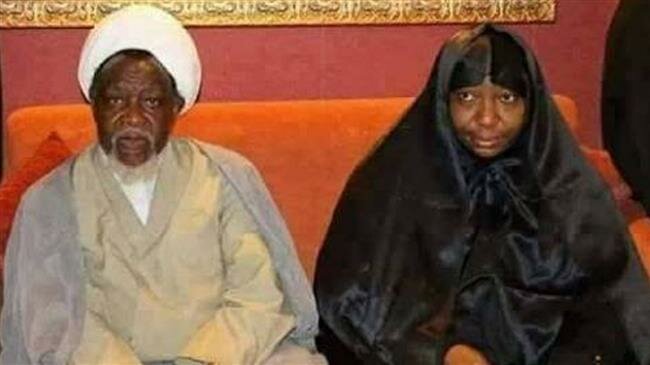
Tribute to my uncle, Sheikh Hamza Muazu (1982–2022)

By Omar Muaz

In the name of Allah, the Beneficent, the Merciful. All praise is due to Allah, the Lord of the world, the Creator of death and life, the Everliving, the Self-subsisting by whom all subsist; slumber doesn’t overtake Him nor sleep; whatever in the heavens and world is His. “Every soul will taste death, and you will only be given your [full] compensation on the day of resurrection. So he who is drawn away from the fire and admitted to Paradise has attained [his desire]. And what is the life of this world except the enjoyment of delusion” —Qur’an

My uncle, Hamza Muaz, is the best definition of detachment as far as the world around me is concerned. “Had it not been our culture to wear babban riga and to put on caps, I would spend my life wearing jalabiya—a white ankle-length shirt, with long sleeves, that buttoned up to the neck.” he once said that to us while advising us to renounce luxuries and worldly pleasure for the one in the afterlife.

I have seen humble people on this earth and have read biographies of thousands of humble people, but what kind of my uncle’s humbleness? That? I have never seen nor have I ever read of its ditto. I have lost words to highlight his positive features. But I know, and yes, they’re confirmed by many people who know who he was, that he was religious, trustworthy, loyal, devotional and very determined.

Hamza Muaz was born in 1982 in a small village of Hawul Local Government Area of Borno state. He attended The Islamic University of al-Madinah al-Munawarah, where he held a Bachelor’s degree in Hadith and Islamic Studies. It’s still fresh in my mind the reading moment we had together. Around 2019, when I visited him in Abuja, I remember he taught me Hadith throughout the days. So, I can say without a number that his hobby was “teaching.”

While battling the throes of his illness, “Only in this world,” he paused, and I realized he needed water “…learn, learn because it’s only through that, you could earn light for the hereafter.” So he told me after taking the water. He barely talked in his sickbed, but whenever he got to, he injected into us “knowledge.”

There was a night when everyone was sleeping except him and me. He smiled and reminded me of two prophetic traditions on sickness. “No fatigue, nor disease, nor sorrow, nor sadness, nor hurt, nor distress befalls a Muslim, even if it were the prick he receives from a thorn, but that Allah expiates some of his sins for that,” I said indeed. He said, “I am nothing compared to our beloved prophet, Muhammad (PBUH)…” while shedding tears, “Aisha (R) reported that she had never seen anybody suffering so much from sickness as Allah’s Messenger (PBUH).”

“This is true!” I interrupted. “Therefore, If Allah wants to do good to somebody, He afflicts him with trials.” He concluded with this Hadith and dozed off. May his soul rest in peace. All he did in the hospital besides taking his medication was reciting Qur’an and teaching people.

Rest in peace, Abban Hammad. He was married with a son, Muaz, named after our grandfather and nicknamed “HAMMAD”, which has overtones of being praiseful. Treasure? I know he left behind over 1000 books (may the books be beneficial to the world). That was him. O Allah, forgive my uncle, Hamza Muazu, and elevate his station among those who are guided. Send him along the path of those who came before, and forgive him and us, O Lord of the worlds. Enlarge for him his grave and shed light upon him in it.

Omar Muaz sent this article via muazuumar45@gmail.com.

Bauchi’s unforgettable Mu’azu

By Tahir Ibrahim Tahir Talban Bauchi. 

I am an active member of The Habu Mamman Foundation group. So when I came across a message shared by Uncle Habu Mamman himself, it got my rapt attention. Uncle Habu is an Engineer turned politician, along with another Uncle, Nuhu Gidado, former Deputy Governor of Bauchi state and commissioner of education. When I got the audio file, I could feel Uncle Habu’s roaring and infectious laughter, but realising that it was a 45-minute long recording, I knew he meant business. I steadied and listened to it.

It was Dr Tilde’s voice, the Commissioner for Education in Bauchi state. I could feel his pain in his voice, and as he spoke, his breath delivered his anger, yet, in a soft-spoken manner. Dr Tilde was the pioneer Chairman of the Bauchi Special School’s Management Board during the Ahmed Adamu Mu’azu administration of 1999-2007. He was sought after by the administration of M. A. Abubakar Esq. (2015-2019), to which he was unavoidably absent. Present-day Bala Mohammed’s government got his services as the Education Commissioner. 

Dr Tilde’s sterling achievements during the Ahmed Mu’azu Administration have brought us to the current efforts to revamp and revitalise the state of education in Bauchi. He spoke at length of the rot in the system, the poor quality of teachers in the sector, and the corruption that is eating away the resources that would have otherwise helped in uplifting the standard of education in Bauchi. He is battling an entrenched system of corruption that doesn’t care about the children’s future—a system where people get paid for doing no work at all.

It’s a system where school children could not write a sentence, neither could they read one, and if they write a word or sentence, you could not read what they’ve written. During his 45 minute delivery, he reflected on the work done during Ahmed Adamu Mua’zu’s administration. He was always pontificating at what they achieved during that time, how they did it, and the quality of the products they hatched at the time. Finally, he declared that today, if you go to the Abubakar Tafawa Balewa Teaching Hospital in Bauchi, you will meet doctors, lab scientists, pharmacists and many other professionals who are products of the special schools of the Ahmed Mu’azu era. 

During Ahmed Mu’azu’s tenure as governor, primary school students’ enrollment rose from 438,350 to 1.3 million within six years. Before he became governor in 1999, only 279 students passed their WAEC exams with five credits or more. That figure rose to 9000 students under his watch in 2005. His achievements in the education sector in the history of Bauchi state are second to none. The quality of education was simply outstanding. 

The Abubakar Tafawa Balewa Teaching Hospital, Bauchi itself, houses a lot of the infrastructural projects of the Ahmed Mua’zu administration when it was the Bauchi Specialist Hospital. The quality of the wards, laboratories and equipment installed are second to none and are still being utilised today. The Amenity ward stands as a perfect example of the standard of works executed at that time. There is no difference between the National Hospital Abuja and the Amenity division of the Specialist Hospital Bauchi.

Ahmed Mu’azu built over 1000km of intra-state roads and over 230km of urban township roads. His rural development strides saw the electrification of 800 towns and villages, where they were connected to the national grid. The Federal Ministry of Information ranked him as the best governor in rural development, and the second overall best in all areas, in the country. 

Ahmed Mu’azu’s first degree is in Quantity Surveying, and his master’s is in Construction Management. I believe this accounts for his quest for excellence when he delivers his projects. He was recently honoured by the Federal University Wukari with an honorary Doctorate, as Doctor of Science, in recognition of his selfless service and visionary leadership. Additionally, he has five other honorary doctorates from notable institutions: the Federal University of Technology Akure, University of Uyo, Abubakar Tafawa Balewa University Bauchi, Igbinedion University Benin, and University of Maiduguri.

Ahmed Mu’azu is widely travelled and well-known across the country, with friends and associates in every nook and cranny. So many groups and movements have sprung up, urging him to run for the Presidency. Even though he hasn’t made any declaration yet. He is undoubtedly an administrator with a most enviable track record of excellence in service delivery, filled with legacies from his tenure as Bauchi governor. Dr Tilde got me nostalgic over our unforgettable Mu’azu of Bauchi state.

Tahir is Talban Bauchi and sent this article via talbanbauchi@yahoo.com.

Are you wasting time or wasting data – or both?

By Engr. Mustapha Habu Ringim

There is a significant thing for university students doing nothing at home, in their neighbourhoods, or going from one town to another town. Still, some of these students just waste their precious time on social media, which can be described as a “waste of data.” Thanks to the students’ lack of the mindset to learn a skill or handwork.

Learning skills will benefit them even after graduating from university. Therefore, the fruitful result is that they will become employed or employers, instead of moving up and down looking for an even non-existent job, just like everyone following events in Nigeria knows today.

Engausa Global Tech. Hub hereby welcomes all enlightened students who have realised that we are now in the age of “Digital Technology”. Thus, because we know of such challenges and joblessness, we established EngausaHub.com, whose main aim is “Breaking Barriers and Bridging Gaps.”

Before suspending the ongoing ASUU strike, students can gain a lot. And even afterwards, what they must have learnt will benefit them, in and outside the university. In fact, it’s ridiculously unwise for a young person not to have where he acquires a modern skill or handwork. Otherwise, he would just be going to the university with an empty pocket, with nothing to buy anything they desire.

The universities themselves should have skills acquisition centres because it has become pervasive for graduates—sometimes, including master’s and PhD holders—to finish school and never get a job. They would just “enmesh” themselves in the so-called “Labour Market” without any fruitful result in the end.

Hence, I advise the ASUU, federal and state governments to establish vocational training centres in our universities and other tertiary institutions. Most of these sustainably developed countries also adopted this same method of getting exceptionally good young people. The Vice-chancellor of Skyline University, an Indian, confirmed this assertion to me when he recently paid us a familiarisation visit at ENGAUSA HUB. 

We seek Allah’s guidance.

Engr. Mustapha Habu Ringim is the Founder/CEO Engausa Global Tech. Hub, Kano. He can be reached via ringims@gmail.com or 070383224643. Their websites are www.engausahub.com and www.chosenglobalech.com.

Character and strategy: The nutritive requirements for Nigerian leadership

By Mubarak Shu’aibu Hardawa

Nigeria is on borrowed time at the moment and not just because of an awful leadership it is experiencing, but for having that ‘onerous’ task of finding the marquee leader that would be her saviour. This arduous mission has become inevitable after many years of failed attempts that defied belief, much less explanation.

The leadership problems in Nigeria are structural and systematic, while the crisis at hand is long-lasting and accelerating. The system has become so overwhelmed by anger and frustrations that even the most basic task of any government, which is securing the lives of its citizens, is becoming increasingly impossible.

While good leadership is essential – especially in a country the size of Nigeria- the anticipation, grit, and determination to inspire the citizens to be there, unfortunately, that looks like a distant hope. Despite the arrays of potentials and the abundance of resources, which, if properly harnessed, would transform Nigeria into an unmatchable place, this runs contrary to reality. The result obtained is a satiric giggle. The reason may not be unconnected to the fact that our leadership group lack the requisite qualities to take Nigeria to a greater level of ceaseless progress and prosperity.

To put it simply, Nigeria has the capacity and nous to be as rich as the United Arab Emirates. Still, due to its poor choice of leaders, it is now as filthy as pigsty moving on India in the pecking order of countries with the highest number of citizens living in extreme poverty. This situation is avoidable. How? By not allowing ethnicity, religion, region and party affiliation to cloud our judgment when choosing the right leader.  

Thus, by eschewing leaders of a good character, grand ideas and strategy, we are restricted only to a bunch of clowns whose leadership style cannot inspire even a cheap hope in anyone. And what is obtainable from such leaders is a failure that we are now seeing as it has metamorphosed to a greater extent that most Nigerians no longer have faith in the government. 

As it is now, it will only take the starriest eyed optimist to make a case for believing in Nigeria at the moment. The dailiness of wanton killings, kidnapping, stealing of public funds, the meteoric rise in poverty index, corruption, and so on say everything about the kind of leaders Nigeria has. With what is obtained today, Nostradamus himself will hesitate to bet that wrecked Nigeria will be great in the near future. (I’m optimistic, though! As optimism oils the wheels of everyday living.) But such a level of demoralisation and crestfallen require a strong antidote whose composition is character and strategy combined to turn things around.

Since the return of democracy in 1999 to date, those touted with the leadership of this country come with asterisks—either of corruption, poor economic management, health challenges, ethnicity, ageing, nepotism, etcetera. Although there were numerous pros with President Yar’adua’s short shelf-life, the hopes were soon taken away by the inevitable finality which laid him and his famous anthem of “7 Points Agenda” to rest. The rest doesn’t have much to write home about.

The point where Nigeria looked set to hit the proper course was in 2015 when President Buhari came with his ‘Change’ mantra, but that ultimately goes to show that he is not the finished article based on his sheer lack of strategy. This imbalance left Nigeria without a vertebra in her spine for a couple of years. Although we had the chance to change the narratives in the 2019 election, with character (Buhari) coming up against strategy (Atiku Abubakar), Nigerians failed to the wisdom in the saying “A leopard never changes its spot” thus persisted with Buhari thinking that things will change in the second term. The majority of Nigerians at that material time held the view that his character, which fetched him the public appraisal of “Mai Gaskiya”, would wave wands and make things magically better. A dogma that is fruitless at best and hazardous at worst.

Some Nigerians even went vigorously beyond delimitation and common sense, arguing that Atiku was plotting to sell Nigeria (NNPC). While some purported that President of the Senate Bukola Saraki, Speaker House of Reps Yakubu Dogara, Senator Dino Melaye and co are the saboteurs of Buhari’s government in the NASS and must therefore be cleared off the deck to allow Buhari an enabling environment. These are publicly sold opinions and thus became very hard to change even when most of the evidence suggests that they should.

This premature decision under predicated conditions of illusionary belief backfired heavily as his weakness for lack of strategy has been laid bare even in the second term, with Nigerians paying the premium price to date.

Today’s Nigeria is unrecognisable from halcyon days, and her golden generation passes. However, some ethos is sacrosanct, such as having the leadership group to look up to, such as Tafawa Balewa, Dr Nmandi Azikiwe and Ahmadu Bello (the Sardauna of Sokoto). Even without the crude oil, they left Nigerians every reason to be optimists. That was a sheer display of character and strategy.

While you would hope to see a similar Nigeria sooner rather than later, the choice to be made should be factored into character and strategy. Nigeria is in a store for hectic decisions to make. However, the cold, hard reality is that Nigeria, like never before, needs a leader whose character will help unify the country through healing, dialogues and not by polarising the recent past. 

A strategic leader will find a way to midwife the return of peace to Nigeria, grow and maintain our economy, asphyxiate corruption, fix our education to be able to stand on our own, and cut down the unnecessary government expenditure all the recklessness we are known for. Meanwhile, a character will help that leader follow the right path in seeing through the above tasks.  All these sound plausible, right? Theoretically, it does. However, in reality, given the constraints of apparent options, debates were ignited on whether we could find such a man in our political arena (that’s a pulsating debate!). 

Nigerians must challenge and X-ray anyone who throws his hat in the ring to avoid falling foul of past mistakes. 

Finally, I insist on a person who embodies these invaluable assets (character & strategy). We hope our leaders and Nigeria itself are going to be alright! And reeling out the rationale for pitching tent behind such a person, Prof Zulum of Borno will suffice.

Mubarak Shu’aibu Hardawa wrote from Bauchi State via naisabur83@gmail.com.

Ukraine-Russia crisis: What should Nigeria do?

By Salisu Uba Kofar-Wambai

Nigeria’s foreign policy of nonalignment is on the right track. Thus, I commend how we keep mute and only call for peace in this ongoing face-off and altercation between Ukraine (backed by Western powers) and almighty Russia under President Putin.

Nevertheless, any attempt to side with one of the warring parties can be a big blow to the international relations prowess we have been displaying over decades. History had it that Russia supported Nigeria during the Biafra civil war. Reportedly, Malam Aminu Kano served as a bridge and intermediary embodiment between the Nigerian government and Russia in arms purchase, which positively impacted winning that war.

Aminu Kano’s Communist stance captivated Russia. Therefore, he successfully had that bilateral thing with them. It was a critical moment for Nigeria when France was solidly behind Biafrans.

However, even our much-talked-about project expected to shoot Nigeria into the league of technologically oriented countries – Ajakuota Steel project – was Russian technology. As a result, many of our technocrats were and continue to be trained in Russia.

Despite the shift in our foreign policy from the East to the West and now to Asia, Russia still maintains fantastic and fine bilateral relations with Nigeria. So supporting Ukraine to please Western powers will not do us better.

We better keep to our callings for peace and leverage primarily on this soaring of oil prices in the international oil market, evacuate Nigerians caught up there. We shall continue to run with the hare and hunt with the hounds.

Salisu Kofar-Wambai wrote from Kano. He can be reached via salisunews@gmail.com.

Pantami’s professorship debate and 2023 elections

By Zayyad I. Muhammad

The debate on the legitimacy of  Dr Isah Ali Ibrahim Pantami’s professorship is back.  The National Executive Council (NEC) of the Academic Staff Union of Universities (ASUU) said that the professorial conferment on Pantami’s didn’t follow the laid-down procedures of the Nigerian university system.  Accordingly, the union directed all its members and branches throughout the country not to recognize, accord, or treat him as a professor of Cybersecurity under any guise.

On the other hand, the Vice-Chancellor of the Federal University, Owerri (FUTO), Prof. Nnenna Oti, has said that the management of FUTO will sue against ASUU’s rejection of Dr Pantami’s promotion to the rank as a professor of Cyber Security by his university. When asked to comment on the issue, Minister Pantami – said ‘No Comment, No Comment, No Comment’- the matter is in the court.

The 2023 election campaigns, horse-trading, politicking, and strategizing have begun. Thus, the debate on Pantami’s professorship will linger, especially in the political arenas, notwithstanding the litigation. How Pantami’s political handlers manage the issue will determine the direction and weight of the debate, including the political impact on him. In contrast, how FUTO’s lawyers handle the case will determine the future of Pantami’s professorship.

Isa Ali Ibrahim Pantami – Honorable Minister of Communication and Digital Economy, an Islamic Sheik, a UK-trained PhD holder,  has found himself in a triangular situation – a federal political appointee, an Islamic Sheik and an academic. This revered status means any issue that affects his personality will always be a hot one.  

Most of the people who criticized Pantami’s appointment as a Professor were academics. So, ASUU’s NEC stand is not a surprise. But, equally, the majority of those who supported the critics were Pantami’s political adversaries.  On the other hand, the supporters of Pantami’s professorship are academics who have soft spots for him, members of religious bodies, his students and his political friends,  and those who are sitting on the fence.

In retrospect, the FUTO chapter of ASUU had set up a five-person panel chaired by Prof. M. S. Nwakaudu, with members: G.A. Anyanwu, C. E. Orji, Mrs O.P. Onyewuchi; and T. I. N. Ezejiofor (Member/Secretary), which cleared the appointment and asserted that due process was followed, a verdict that gave Pantami and FUTO some respite. However, ASUU NEC has reversed the verdict, giving Pantami’s political opponents more strength to fire at him more.

Pantami’s political allies, supporters, and students will be prayerful for the courts of law to clear this issue once and for all. This is because to Pantami’s supporters, his professorship is a significant addition to his already ‘unmatched’ credentials in his own rights. Pantami’s supporters believe that he is young, highly educated with a PhD. from the United Kingdom (UK) at Robert Gordon University, Aberdeen. They argue that Pantami is a good material to balance a presidential ticket politically.

Moreover, Pantami is from northeast Nigeria and fits into the agitation for the northeast to present the vice-presidential candidate in 2023. He is a household name in the northwest. They will feel at home with him – he is their cousin. He is an Islamic scholar with immense, even cult-like, followership nationwide. Pantami is Buhari’s strong confidant and ally.

The general belief among Pantami’s promoters is; Pantami from the north-east as vice-presidential candidate with any presidential candidate from the south, especially the southwest, will balance a presidential ticket and serve as a strategy for the APC to retain the presidency in 2023. Nevertheless, opposition against Pantami’s professorship will continue to have a field-day, striking him. At the same time, his political rivals will clap for them as the nation awaits the courts’ verdicts on the Professorship.

Zayyad I. Muhammad writes from Abuja, 08036070980, zaymohd@yahoo.com

A letter to parents on children’s upbringing

By Musa Yerima Marcha

Dear parents,

If you don’t sit with your children, you will never know who they truly are and what they are capable of doing as they grow up. A caring parent typically raises a reasonable and wonderful ward.

How bad it’s nowadays that most of you don’t have time for your children, listen to them, allow them to confide in them, know exactly how they feel, or most importantly what happens in their inner self help them where necessary.

You should know that your duty is far beyond bringing food to the table and sending children off to school, as we used to see in the Hausa/Fulani culture. So it’s pretty lamentable how raising children is seriously challenging to parents today.

Of course, the brainbox of the house is supposed to be a father, not a mother. Nevertheless, you can count on the mother when the brainbox has objectively projected the way he envisioned his family. Then, the mother should arguably take off the task by adding value and making it a reality.

You can’t just wake up all morning as a father, set up for work to cater to the family, and unfortunately not have any good plan toward building a happy, prosperous, productive, and reliable family. Remember that they say, “When you fail to plan, you plan to fail.”

Many of you ignore bad things committed by your children simply because you don’t know them. When, at some point in life, children are capable of doing the impossible because they grew up being unattended by their parent, and that’s the very reason the influence of peer groups hit them harder.

Try to nurture your children for good. The truth is that; the productive children you see out there were not born out of negligence; their parents stood for them, they mean business at every stage of their lives, and you can so do it if at all you are ready.

If you want your children to be resourceful, you should brace up and never settle for an ordinary child upbringing. Instead, you must go for an extra.

Musa Yerima Marcha sent this article via mmyerimamarcha@gmail.com.

Nigeria’s border closure and its socio-economic hangover

By Salisu Yusuf

Since August 2019, when Nigeria decided to close its border with neighbouring Benin, Cameroon, Chad and Niger, the Nigeria-Niger border has become a boundary for smuggling of especially arms and massive adornment of corruption. Officials of the Federal Government have turned the borderline into a business venture where collecting and giving unearned rewards are the order of the day.

A haulier recently told me that from Maigatari (in Jigawa State), Babban Mutum and Kongolam (in Katsina), there are no fewer than 30 border outposts where officers wave down passing motorists to collect kickbacks. This has resulted in creating more alternate routes where hauliers circumvent border posts.

To fully understand the level of corruption in our border guards, go to the length and width of the borderline between, say, Daura and Babban Mutum. You will easily see bits of laterite earth inlets going north, where these illegal hauliers transport goods in cars and trucks to avoid sandy earth on their way to Magaria in the Niger Republic.

In the midst of this, the new Nigeriene President, Bazoum Mohammed, introduced a free trade route-policy for the teeming youth. Formerly, Niger operated a protectionist economic policy under former President Tandja Muhammadu. Then, importing goods, especially petroleum products, was prohibited, and culprits were duly punished under strict laws. But, don’t forget that Niger, like its counterpart, also exports petroleum products.

Mr Bazoum, I think, implements his free trade policy, where youth are allowed to import goods from Nigeria due mainly to socio-political issues in the neighbouring countries; the raging civil war in Libya and insurgency in Nigeria and Mali. The President wants crime-free youth. Moreover, issues surrounding his election. He was labelled a Western stooge before his election. His policy might have changed that perception.

The free trade policy has given thousands of youth free access to illegally enter Nigeria, buy these products at a subsidized price as we buy, and export them on motorbikes to sell at a higher price. It’s indeed a gain. 

You see them in our filling stations with jerricans queuing for the products daily. The spectre from the filling station to their convoy with a load of jerricans inside huge sacks, their high-velocity speed is so chaotic. They create a scene. Cases of collisions among motorcyclists, knocking down passersby, especially children, result in massive injuries and deaths. Wàllahi, there’s nothing like a border in those areas, only passages!

In addition, daily cases of traversing over the people’s farmlands by these marauding smugglers (because they don’t tread normal paths) pose a threat to possible tillage erosion. Their constant comings and goings leave no hope for agricultural sustainability. 

Recently, smuggling has reached another dimension. Gendarmes in Niger have apprehended smugglers with huge caches of armaments trying to cross the border. Villagers discovered a cache of arms near Daɗin Sarki in Niger. Those who had kept the cache were possibly waiting for the cover of night to take it into Nigeria – a dumping ground for every malfeasance.

The clip of the arms is still viral on the WhatsApp application. Now I retrospectively see sense in former President Trump’s border wall with Mexico in order to evade criminals. Likewise, it’s high time Nigeria erected a border wall with Niger because their leaders, like their French counterparts, stocked in an international conspiracy, are after their country’s survival than the stability of Nigeria.

 Nigeria misses millions of Naira in revenue from closing its borders and the hauliers’ ploys. When you tell the government this sad reality, some government economic mouthpieces put forward classroom economic theories to defend their economic policies. To understand this point, visit an excise office in the outskirts of Magaria in the Niger Republic and see lines of cars and trucks with loads of Nigerian goods. You will swear they all pass through the sky – alas, they pass through alternate routes that are discovered and explored by Nigeriene motorists and their local guides after the border closure.

The recent surge in kidnappings in Gumel and Suletankarkar in Jigawa State is a pointer to a grim future. However, there’s more to this border issue than meets the eye. It’s high time authorities in Nigeria nipped it in the bud before the Nigeria-Niger border becomes a threat not only to Nigeria but Africa. May we see a better Nigeria.

Salisu Yusuf wrote from Katsina via salisuyusuf111@gmail.com.

Unfortunately for Ukraine, US will not fight Russia

By Aliyu Nuhu

Ukraine without US military intervention is somewhat like a sacrificial lamb in the hands of Russia. Putin is not Hitler. He has already outlined his objective; to prevent Ukraine from joining NATO. On this, it seems Russia has a valid reason. If Ukraine joined NATO it will jeopardize Russia’s access to the black sea. It is a war of survival as Ukraine failed to balance its act and be friends to both EU, NATO and Russia.

Unfortunately for Ukraine, America will not fight Russia on its behalf for many reasons, not that America does not have the strength to face Russia. President Putin had done his calculations very well.

America is a democracy and unfortunately for Ukraine, the party in power in America is not a war monger like the Republicans who are neither in control of the White House today, nor in control of the Congress. Under Donald Trump, Putin would never have invaded Ukraine despite the cordial relationship that existed between him and Trump. The second reason why America will not be involved is that, America has no obligation to defend Ukraine because there is no any treaty making it obligatory to do so. Ukraine is not Latvia or Poland who are members of NATO. And Putin knows all these. The third reason is that, the United Nations has not passed resolution asking for the world to stop Russian invasion by military force. The UN resolution also needs the endorsement of China, a Russia’s ally that is unlikely to allow the resolution to fly. Furthermore, Russia has a veto power and can shoot down the resolution.

President of Ukraine

The truth is Ukraine is under unprovoked and unjustified attack on its democracy by a dictator that does not know the value of human lives. Already 46 people, most of them civilians have been killed. But Russia is also careful with Ukraine because Ukraine was the second most powerful state to emerge from Soviet Union after Russia itself. The two countries have been at war since 2014 when Russia annexed Crimea. They are officially at a full stage war today. Ukraine is a nuclear power. Russia must tread with caution. The country has 130 intercontinental ballistic missiles (ICBM) with six nuclear warheads each. It also has 46 RT-23 Molodets ICBMs with ten warheads apiece, as well as 33 heavy bombers, totaling approximately 1,700 warheads. In retrospect Ukraine is not a meatloaf that can be eaten without Russia itself committing suicide.

President Putin said he only wanted to demilitarize Ukraine and de-Nazify it. He has no intention of occupying it. A task that would have been impossible with Western powers meddling in the crisis.

Aliyu Nuhu writes from Abuja, Nigeria.

Goje: Sunset at dawn

By Kabiru Danladi Lawanti

After the modest stewardship of Governor Abubakar Habu Hashidu, may Allah rest his soul (1999-2003), Mohammed Danjuma Goje took over amid tremendous efforts made by patriotic Gombawa to move quicker to the mission and vision of the creation of the state. As Governor, Danjuma Goje realized early the challenges faced by the new state, especially in terms of 21st-century development.

As a Governor, Goje worked hard with his team in laying the foundation for a modern state, where critical infrastructure and development initiatives hallmarked his administration. As Governor, we have to give it to Goje because he remains an illuminating leader of modern Gombe. After his illustrious tenure, he showed the way for competitive stewardship and possibilities in Gombe State.

However, fast forward to his representation as a Senator of the Federal Republic of Nigeria representing Gombe Central. Much was expected from him as an astute politician, a political science graduate, and a two-term governor.

In August 2020, the Daily Trust newspaper listed Senator Danjuma Goje among senators who had only two bills to their names. Therefore, when he announced his retirement from active politics early last year, many thought Goje, an elder statesman, was paving the way for his mentees to replace him in the Senate Chamber. Albeit, a few months after the announcement, Goje ate his words.

According to media reports, Goje was compelled by a group of “stakeholders” to rescind his decision and threatened to take legal action if Goje refused to heed their calls to stand for future elective positions. In an article I wrote last year, I advised Goje not to allow some people, calling themselves “stakeholders”, to drag his hard-earned political reputation into the mud. However, I later learned he sponsored the movement.

Since Goje has decided to remain in elective and active politics, our responsibility as stakeholders is to call his attention to some fundamental issues he plans to do for his constituency. It’s already the 2022 fiscal year, as this may be his final tenure in the senate. It is also essential to remind Goje that he needs to be careful about his legacy to bequeath to those coming after him.

In the constituency projects I sighted, what drew my attention was his intervention in education. All the projects he listed and the amount to be spent on the projects is commendable. However, as someone who works in the educational sector, I think what was mentioned is far from the needs of his constituency. If I may come in here, and if electorates have a voice in the way projects are cited or allocated, I think what I saw in the submission made by Senator Goje is, to say the least disappointing.

For instance, Goje’s constituency project for the 2022 fiscal year included distribution, supply and provision of educational materials, textbooks, educational aids, writing materials, educational charts and fertilizer to schools and farmers across the constituency. The project will cost a whopping N3bn. But, what attracted my attention was the materials to be supplied, provided or distributed.

Since my concern is education, I did a small analysis, looking at the places these “educational materials”, “educational aids”, “textbooks”, “writing materials”, and “educational chart” are going. In that alone, Goje is to spend N2.2bn for this project. However, most of these schools receiving these do not need these interventions; instead, they need good classrooms, qualified teachers, and a conducive environment for learning.

Recently, the Punch newspaper report shocked the world when it visited a community in Akko Local Government, Goje’s constituency, where about 150 children learn under harsh conditions after a windstorm demolished their school years ago. I don’t think Goje or any of his aides is not aware of the plight of these communities. The community is a few kilometres from the NYSC temporary orientation camp at Amada, stressing that they were tired of promises.

It does not make sense for the Senator to put N200m to supply writing materials in Kembu when a whole community has children learning under the harshest conditions you can imagine. Also, even if there are no communities like Wui-wui, does it make any sense to put N2.2bn for the “distribution”, “supply”, and “provision” of educational materials (forget the repetition of one word in different synonyms) while most of our rural communities are without schools or drinking water?

As an elder statesman and a politician of repute, I think Goje ought to know better. History will not be kind to him if these are the legacies he wants to leave as a senator of the federal republic. Goje is not too late to review these constituency projects and channel our resources to where we need them.

Kabiru Danladi Lawanti wrote from the Department of Mass Communication, ABU Zaria, via kblondon2003@yahoo.com.