Opinion

Menopause: Cognition and Mood

By Aisha Musa Auyo

World Menopause Day (WMD) is held annually on the 18th of October. The purpose of the day is to raise awareness of menopause and the support options available for improving health and well-being. Professionals and women are encouraged to participate in this global awareness-raising campaign by printing and sharing these materials, organising events to engage their communities, and sharing WMD social media posts. The theme for the 2022 WMD is Cognition and Mood

Before going into this year’s theme, I’ll explain the basics of menopause as a reminder and enlightenment for those who do not know much about it.

Menopause happens to most women with an average age of 51 years, but it’s normal to have menopause anywhere between 45 and 55 years – although some women have it earlier or later. Perimenopause is the time leading up to menopause, and postmenopause is the time after the final period. So it’s likely that you have reached menopause if you haven’t had a period for 12 months.

What happens at menopause?

From about 35–40 years of age, a woman has fewer eggs left in the ovaries, so one often doesn’t ovulate (release an egg from your ovary) regularly. Menopause means ovulation and periods stop.

Hormones are chemicals in one’s body that relay messages through the bloodstream. For example, your hormones tell your body to eat and sleep. The three main hormones that change as one approaches menopause are oestrogen, progesterone, and testosterone; change in hormone levels leads to different menopausal symptoms and the menopause transition

1. Perimenopause is the stage before your final period (menopause). It’s when your body reaches the end of its reproductive years. Perimenopause is a natural part of a woman’s life, and it usually happens sometime in her 40s. On average, it lasts four to six years but can also last from one to 10 years.

During this time, your ovaries begin to run out of eggs. This causes hormone levels, particularly oestrogen, to fluctuate, causing different symptoms like hot flashes and mood swings. Changing hormones can also affect your menstrual cycle. For example, your periods may be irregular, shorter (or longer), lighter (or heavier), or they may not come for a few months.

Some months you may ovulate, and other months you may not. You may even ovulate twice in a cycle. Symptoms include: Irregular periods, vaginal dryness, hot flashes, chills, night sweats, sleep problems, mood changes, weight gain and slowed metabolism.

2. Menopause occurs when you’ve stopped producing the hormones that cause your menstrual period and have gone without a period for 12 months in a row. Once this has happened, you enter postmenopause.

3. Post-menopause is the time after menopause has occurred. Once this happens, you’re in post-menopause for the rest of your life. Your hormone levels will remain low, and you will no longer have a monthly period. You can’t get pregnant because your ovaries have stopped releasing eggs.

Most people in post-menopause feel lingering symptoms from menopause. However, the symptoms are less intense. In some cases, they almost disappear. Lingering symptoms are caused by low levels of reproductive hormones. Women in post-menopause can feel symptoms such as hot flashes and night sweats, vaginal dryness and sexual discomfort, depression, changes in sex drive, insomnia, dry skin, weight changes, hair loss and urinary incontinence.

Talk with your healthcare provider if your symptoms become more intense or interfere with your daily life. They may want to rule out any underlying condition causing these symptoms.

How do I manage symptoms of post-menopause on my own? Particular lifestyle or at-home changes can help you manage symptoms of postmenopause. Some of these include:

• Using a water-based vaginal lubricant during sex to make it more pleasurable. Lubricating the vagina helps with dryness and pain.

• Regular exercise, meditation and other relaxing activities can help with depression and other side effects of postmenopause.

• Eating a diet rich in phytoestrogens (plant-based sources of estrogen) such as whole-grain cereals, flaxseed, chickpeas and legumes. Reducing caffeine and alcohol intake has also been shown to help.

Cognition and mood in menopause

Cognition

During the menopausal transition, many women complain of memory problems such as difficulty with words, forgetfulness and “brain fog”, thus suggesting that hormonal changes related to menopause may be responsible for changes in cognition. This is due to the deep connection between estrogen and cognitive function. Still, some lifestyle changes one can make may ease symptoms and improve memory.

For example, you should eat a well-balanced diet; a diet high in low-density lipoprotein (LDL) cholesterol and fat may be bad for your heart and brain. Also, get enough rest, and exercise your body and mind.

Mood

Irritability and feelings of sadness are the most common emotional symptoms of menopause. Often, they can be managed through lifestyle changes, such as learning ways to relax and reduce stress. Here are some tips that may make it easier for you to handle your fluctuating emotions: Exercise and eat healthily; find a self-calming skill to practice, such as yoga, meditation, or rhythmic breathing; avoid tranquilisers and alcohol; engage in a creative outlet that fosters a sense of achievement; stay connected with your family and community; nurture your friendships.

Supporting someone through the menopause

Menopause can be associated with many physical and emotional changes for women, making it a challenging and complicated time.

If you know someone who might be going through menopause or perimenopause, it’s helpful to find out more about how you can support them. For example, some women will drop out of the workforce if not supported. Adapting working policies, such as providing access to flexible working, can help women remain in the workplace.

Learn more about menopause

Getting yourself and others informed is a significant step. It will give you an idea of what your partner, family member, friend or colleague might be going through.

A good first step would be to learn about all the various symptoms of menopause, the impact these symptoms may have on your loved one and others, and the potential treatments and support available.

Listen to them

Communication is key. Ask about how others feel or what they’re going through. It’s essential to keep in mind that not everyone might want to talk about specific symptoms or feelings. It is also important to remember that everyone’s menopause is different, so don’t make assumptions about what they are experiencing. However, letting them know you’re there if they need you will make them feel supported.

Encourage them

They might not feel like doing things they usually would, and their self-esteem might be low. Words of encouragement can help make them feel more uplifted and empowered. Inviting them to engage with various people or activities will also provide opportunities to feel good about themselves even when experiencing symptoms.

Help with their symptoms

An active, healthy lifestyle can ease some of the symptoms of menopause. For example, you can encourage them to go for a walk, swim or try a yoga class to get more active. In addition, changing the ways you spend time together, like cooking a healthy meal together.

Menopause and the workplace

Many women have said that they often find managing symptoms of menopause in the workplace very challenging. Coping with symptoms in the workplace can be hard, especially as many women find it difficult to talk about menopause at work.

Workplaces

It is vital that women feel supported to continue working throughout their menopause. Managers and organisations can make many small changes to ensure workplaces are healthy and welcoming places for women going through menopause.

Supporting staff

Menopause is a normal transition for many women. Thus, employers can contribute to a positive work environment by providing help and support for women who are managing menopause symptoms at work.

Menopausal symptoms can also be protected by employment law. Therefore, it is crucial that managers and colleagues feel informed and comfortable about the symptoms and impact of menopause.

Aisha Musa Auyo is a Doctorate researcher in Educational Psychology, a mother of three, a Home Maker, caterer and parenting/ relationship coach.
An open letter to Plateau State Governor, His Excellency Barr. Simon Bako Lalong

Your excellency sir,

The people of the Yelwa community have recently received soothing news of your plan to re-install a head for them, who will help revive and fight for the development of the community and beyond. The community had a joyous celebration at hearing this good news because they had long been waiting, praying for such action. Sadly, however, the tribalism-influenced reactions from some of your tribesmen (Goima people) show how envious they are about this long-awaited development.

Three to four days after the news reached every nook and cranny of the community, some rioters from your tribe were all over the streets of Yelwa Shendam protesting against the re-instalment of the new community chief. Their protest didn’t stop there; it got to a point where they violently defaced many cars, attacked innocent passers-by and set some places afire. My dear Governor, what are we going to call this? Terrorism or what?

According to their unreasonable, selfish statements, the people of the Yelwa community must have been under the control of the Nsher community head, which is impossible if Justice is considered. My dear Governor, how on earth can a 30-year-old village be a mother to a 200-year-old community? Is this something to agree with? No. Nsher is a 30-year-old village, while Yelwa is a 200-year-old community. There’s 170 years interval between the two. Therefore, Yelwa is, whether they like it or not, a grandmother to a mother of Nsher.

Since November 26, 1992, when the community head, chief Adamu Othman died, Yelwa has been without a leader to date (almost 30 years today). The previous administrations, at some point, vowed to re-install a new head for the community but didn’t keep their promises. It is surprising and questionable for a populous community like Yelwa to be left this long without a ruler. Many more villages in Plateau State have less population, businesses and other developmental things than Yelwa, but none is without a head. Why Yelwa?

Truthfully, Yelwa deserves to be upgraded to the status of Local Government, not only chieftaincy, for it has all it takes to be one.

Finally, my dear governor, the people of the Yelwa community really appreciate your tremendous support and care towards them. You are indeed a true definition of a good leader. Yelwa people have no words to thank you enough. But there is one thing you seem to forget. I have already demystified it above.

Thank you, sir.

Muhammad Abubakar

Writing

By Salisu Yusuf

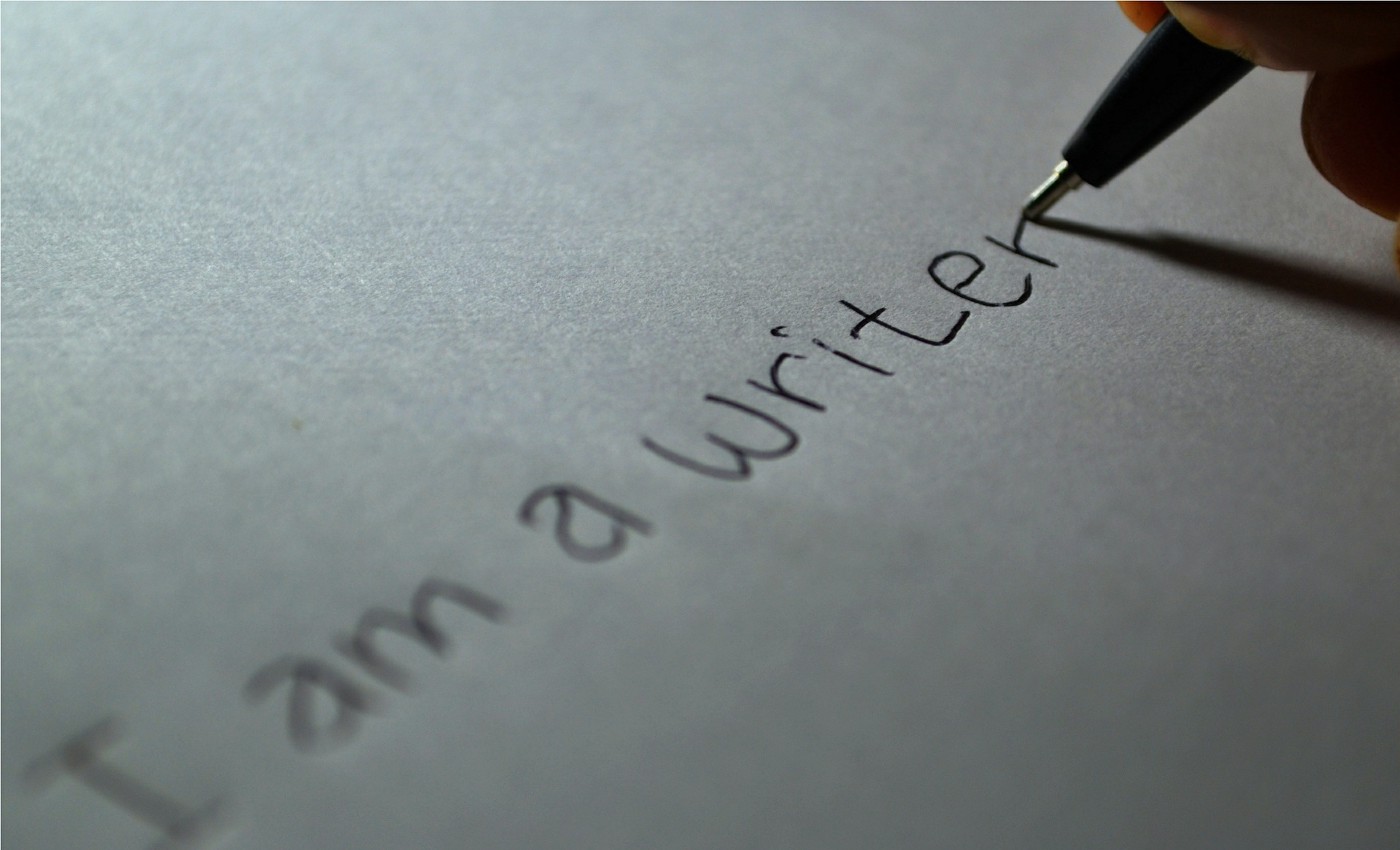
Writing is the act of inscribing some signs, symbols and codes which a reader absorbs, encodes and interprets to act on, connect to, or change an attitude towards something. Writing is the fourth of the four basic language skills: listening, speaking, reading and writing. This, however, does not make writing the least important; in fact, writing is the most critical language skill in the current global context due to its perceived wider, heterogeneous and scattered audience and its permanence.

Speaking is also instant and irretrievable (at least before the invention of modern communication and broadcasting systems). You can only apologise after saying something. Writing can be edited and is retrievable. In other words, writing has some measure of revisability or verifiability. Every other form of communication is ephemeral. Only writing survives time because of its encryption. Moreover, the purpose of reading is defeated if there’s no writing. Writing has preserved divine scriptures.

Writing can make you happy because when you write, you instantly release a pent-up feeling. When you unburden, you feel you’ve got rid of something. Writing makes your day. It makes you great, famous and successful. Writers are known to have defied time and become immortals. Writers are immortals because their names defy times: Chinua Achebe, Khaled Hossein, Nuruddeen Farah, Newal Elsadawy, etc., are timeless names. The power of the pen has bound people and made the world better.

Good writing skills, the ability to convince, and the ability to communicate with a good command of language will likely attract a mass audience. These make public relations and propaganda tools for controlling narratives and persuasion.

One secret to writing is that writing widens your horizon and increases your critical thinking and sense of reasoning. It broadens your analytical skills. Writing makes you more sensible. It opens new vistas and can lead you to explore lands and thoughts that men have never explored. So, write, write, rewrite until you write the right.

Writing is, however, a slippery slope. Lest you forget, writing reveals you- it lets your audience know your personality, character traits, likes and dislikes, troubles, etc. This is because, when you write, you leave out gaps, aporias which the reader fills.

Though writing is a joyful venture, it can be a self-destructive escapade. So, know your subject matter well and write on what’s verifiable. Avoid defamatory, slanderous materials. You should know that laws of defamation cover writing, so don’t bring an issue that will likely injure the reputation of an innocent one. Men are dignified creatures. Don’t dare denigrate them.

Moreover, while writing, do not infringe on others’ copyright. Make your copy the right one. Copyright laws strictly bind writing; when you quote, acknowledge your source correctly.

As a writer, you should know that writing is fluid; it has no fixed shape. Therefore, it yields explications, expositions and interpretations. So, when you write, as Roland Barthes said, you’re a dead author. People rightly interpret your write-ups and derive multiple meanings. Therefore, when you write, you’re no longer in control of your text. You’re a dead author. Only the readers are alive and in control of the meaning.

As a writer, the sensibility of your audience is respected. Writing always goes with its moral appeal. I have not seen a fool as one who writes to level old scores, which hurts feelings. That’s the definition of a fool. 

For some, writing is a profession. For others, writing is a skill, while some look at writing as an escapement. Whatever it’s to you, write and rewrite until you write the right.

Salisu Yusuf wrote from Katsina via salisuyusuf111@gmail.com.

On Climate Change: We Need to save our environment

By Nusaiba Ibrahim Na’abba

Regretfully, the calamities unfolding these days are unceasingly proving that our climate is indeed shifting in ways we’ve at no time conceived. Whether climate change will remain a hoax or not is something that can only be proven over time. But, the world isn’t at peace knowing that we are living in desperate times, courtesy of weather conditions our environments haven’t experienced before, even worsening our disorderly states. The experiences of these calamities have massively multiplied and are painting a dusky time ahead.

Poverty levels are increasing as people are forced to flee their homes and farms in search of safety, not because of only insecurity but as a result of deadly climate-related catastrophes. Many of these climate problems are associated with human and natural causes. However, they are also primarily associated with how public development initiatives have, over time, been neglected, grossly squandered and unaccounted for. Now, we are all paying the price. Unlike health, economy and education issues, the environment barely segregates the poor and rich, illiterates and literate, among other unfounded claims used, to create divisions within developing societies like ours.

Climate change is mainly explained within the purview of science. However, not all scientific evidence sits well with religion and culture, core pillars held in high esteem in developing societies worldwide. This is quite understandable as scientific outcomes often contradict cultural and religious perceptions, hence the disagreement. However, communities are now mindful that everyday living is enveloped by gigantic piles of plastic wastes, massive refuse-clotted drainages, insufficient foods, low agricultural turnout, excessive heat and flooding.

On the premise of religion and culture, disagreeing with and disproving new concepts happens to everything alien. It had occurred to diseases like HIV/AIDs, Sickle Cell Anemia, Tuberculosis and, recently, Covid-19 before they were finally accepted as problems in places like Nigeria. Similar to older rejections, climate change has also faced backlash. There are underlying elements of political and economic contestations fueling quests for advanced economies in the world alongside cultural and religious underpinnings. However, that does not erase the authenticity of such events as the current realities are proving them.

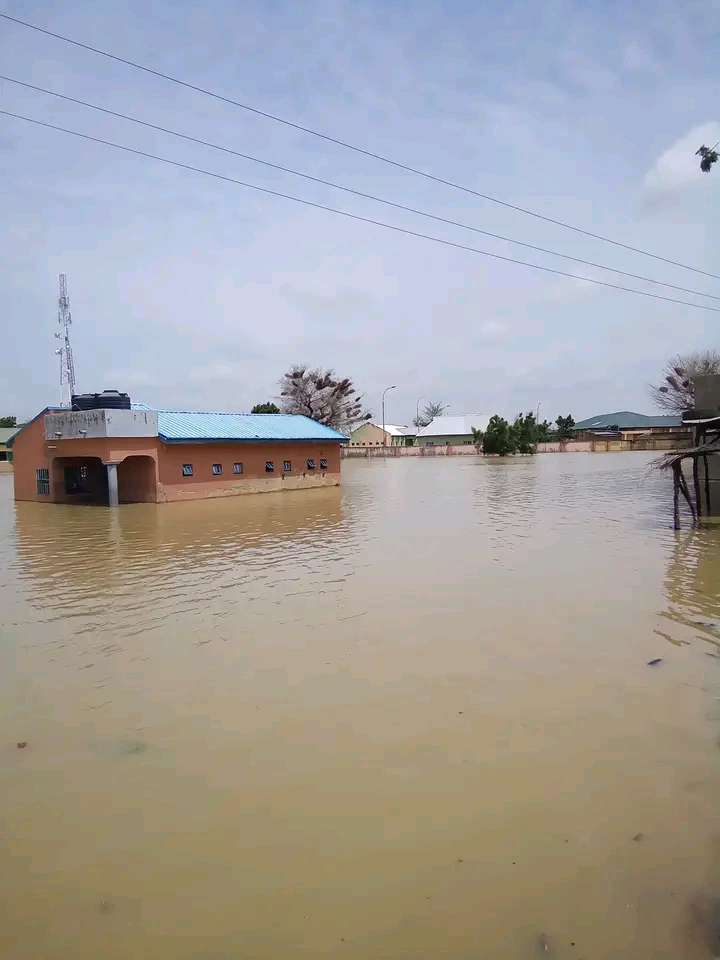
The detrimental consequences of climate change have transcended boundaries and excessively destroyed societies. Calamities like flooding, which we spot from afar, are now occupying top spots on our disaster checklists, which is quite frightening. The recent downpour witnessed in Nigeria degenerated into floods that consumed lives and displaced many communities in some parts of Jigawa, Kano and Yobe among the 24 states listed by NEMA through its director of Relief and Humanitarian assistance, Alhassan Nuhu. And with existing IDP camps around the northern part of the country, more devastation has hit the nation.

Until it became a global discourse, the spontaneous activities happening in developing countries like Nigeria were never seen as causatives of climate change. However, the corrupt nature of our systems enables substandard building structures. It fuels illegal dumping of refuse, deforestation, desert encroachment, and various climate problems. Now, these challenges have united to unleash colossal damage to our environment.

Recurrent flooding forcing people out of their homes signals a huge alarm as Nigeria remains in economic chaos and a messy political scene. Unfortunately, no particular problem was attributed as the sole reason for the unusual persistent floods we face in Kano and other neighbouring states. And the reason is mainly that multiple mismanaged natural and human causes have piled up over the years.

With dynamics intrinsic to climate change, the communities in the Northern part of Nigeria, like Kano, Yobe, and Bauchi, among others, have been selected to be part of the Great Green Wall Initiative to combat these environmental changes. Essentially, the project focused on battling climate crises, including desertification, erosion, and other problems related to shifting climate conditions in the Sahel region of the World, including Nigeria.

Whatever the more robust economies are set to achieve, these times are not the best for the independence of thoughts and decisions. We have a collective responsibility to save our environment to save humanity at large. And it is only through collaborative and calculative efforts of communities and the government that the consequences of climate change can be averted to halt its rapid advance. Our duty as humans is to consistently avoid harming the environment and adopt sustainable ways of creating energy, practising agriculture, waste management and other viable solutions offered by experts.

Utilizing these available sustainable methods is highly strategic to align Nigeria with global best practices in the fight against climate change. But on the other hand, our governments at all levels must provide robust and all-inclusive policies that align with citizens’ goals to propel development and support sustainable-driven initiatives to achieve massive, unprecedented mutual successes for humanity and the environment.

Nusaiba Ibrahim Na’abba is a master’s student from the Department of Mass Communication, BUK. She is a freelance writer and researcher. She can be reached via nusaibaibrahim66@gmail.com.

Obajana (Dangote) plant invasion: Implications for public-private partnerships in Nigeria (II)

By Tordue Simon Targema

At a time like this, Public-Private Partnership is undoubtedly the surest blueprint for economic prosperity in Nigeria. This explains why Prince Abubakar Audu, the visionary Executive Governor of Kogi State in 2002 invited the Dangote Industries Ltd. to the State to partner on cement production, a venture that has been so far productive and economically rewarding to both the State and Dangote Industries Ltd., and indeed, Nigerians at large.

It thus smacks of apparent permittivity for the State Government to wake up today, over 20years after the deal was struck with Dangote Industries Ltd. and shut down the Company on the grounds of alleged illegal acquisition.

Apart from the physical damage that this dastardly act will incur the Company, it is also important to consider the bad signal it sends to prospective investors preparing to go into public-private partnerships with governments at all levels.

At the moment, calls are rife for governments in Nigeria to privatize moribund ventures and hands-off their operations in the interest of productivity. NNPC has just been privatised with the registration of the NNPCL, so also are calls for privatization of other assets that gulp billions in annual budgets without tangible results.

Yet, it is at a time like this that Governor Yahaya Bello and the Kogi State House of Assembly consider it most appropriate to wield their sledge hammer on Obajana Cement Company and shut it down in the most primitive manner possible.

A statement by the company’s management indicates that the invasion by armed vigilante groups has caused enormous damage on the plant ranging from physical destruction of the Company’s assets to wounding about 26 staff among other scores of incurred damages.

The report of death of a staff that was shot during the invasion cannot be substantiated at the moment, and appears as an exaggeration to attract public sympathy to the Company. It must be noted at this point that Dangote Industries Ltd. cannot be absolved completely of sharp practices in the course of its operations.

Just recently, the Benue State Internal Revenue Service shut down Dangote Cement Plant in Gboko due to the unwillingness of the Company to remit due taxes to Benue State. Like the current saga at Obajana, a war of words trended between State officials and the Company’s management over claims and counter claims regarding remittance of taxes.

Prior to the incident and until recently, the road around the plant was a terrible nightmare to commuters plying the busy Katsina Ala – Makurdi federal highway which leaves many wondering how serious Dangote Industries Ltd. is with its corporate social responsibility.

The road around Savannah Sugar Company in Numan, Adamawa State is equally a nightmare, so much such that commuters would always ask whether it is customary to Dangote companies to live roads around their plants terribly devastated.

A visit to Obajana where the cement factory is situated leaves one wondering if at all it hosts a company of that magnitude, as no meaningful development project commensurate to the company’s prestige can be spotted around.

One would have expected critical interventions of the Company in basic infrastructures of the town such as educational institutions, healthcare facilities, road networks, water and other critical infrastructure as part of the company’s compensation to the host community for the concomitant environmental effects occasioned by its operations.

This is not the case at Obajana which is but a glorified village remitting billions into Dangote’s coffers, even as Dangote Industries Ltd. is among the most renowned donors doing what one would regard as “Father Christmas” to places that it has no investments!

Another critical question worthy to ask pertains to who owns the remaining 10% of the Company’s shares due to Kogi State as provided in the agreement transferring ownership of the Company to Dangote Industries Ltd.

This question is crucial as the Company in its reaction to the invasion claimed 100% ownership of the plant, even as existing laws stipulate that a State is entitled to 10% equity shares of such investments within its domain, 5% of which belong to the indigenes while the remaining 5% to the State Government.

One must also be curious to ask if all taxes rightfully due to the Kogi State Government are being remitted as at when du. Recall the incident at the Gboko cement factory! These are critical questions that must be carefully interrogated as one wraps his head around the current crisis at Obajana.

Notwithstanding all these, however, given the strategic position of the Obajana cement factory in Nigeria’s economic sphere especially with regards to cement production, distribution and consumption, the consequences of shutting it down at the moment can best be imagined.

Consequently, it behoves on the State Government and management of the Company to shelve their swords and immediately return to the discussion table to resolve the crisis within the shortest possible time in the interest of all and sundry. It is worthy to note that Public-Private Partnership benefits all parties wherever it exists.

Kogi State Government and the Dangote Industries Ltd. should have known this better. In this regard, efforts must be made to strengthen existing partnerships and encourage new ones to emerge exponentially.

Individuals and groups going into such agreements with governments must, as a matter of necessity, exhibit the highest sense of responsibility by constantly dialoguing with government agents towards addressing all grey areas that might arise on a regular basis to ensure peace and tranquillity in the course of their operations.

In doing this, impunity and arrogance must be avoided and business operations must thrive purely based on mutual understanding and corporate best practices in line with existing legal frameworks.

In a similar way, governments going into agreements with private investors must be prepared to respect their fundamental rights and privileges, and must desist from all primitive and draconian acts that are capable of causing untold damage to such investments.

This is necessary if industrial harmony must be attained in jointly owned ventures for greater economic prosperity of Nigeria and her component states.

Tordue Simon Targema writes from the department of Journalism and Media Studies, Taraba State University, Jalingo. Email: torduesimon@gmail.com

Letter to Governor Seyi Makinde, philanthropists

Dear sir, dear all,

That security of this country is in a coma is no news. That Ogbomoso, the land of the valiant in Oyo State, is under the siege of abductors is also an incontestable fact.

 In the dead of night on Monday, September 19, 2022, along the express, in Gbede, Surulere local government area, a man identified as Alhaji Yisa Agric was reportedly abducted from his house brazenly. This is shocking. 

Several heinous abductions of innocent inhabitants of Ogbomoso were recorded weeks earlier. One of the attacks, which led to the death of a student of Ladoke Akintola University of Technology (LAUTECH), Ogbomoso, Oyo state and some people, exacerbated the ire of the people the most. 

Consequently, a rally which was graced with an avalanche of people was launched to engage in the public debate on the issue. After the demonstration, no reported kidnapping case was heard, at least in August. This was jubilated, not knowing their ram moved backwards in anger to garner more power.

The attention of the Oyo State government under the leadership of a good governor, Engr. Seyi Makinde is herein called to this menace of insecurity in Ogbomoso, which is bedevilling his good administration, for hasty panacea be preferred before it goes haywire. 

Also, the philanthropists are beseeched to financially sponsor the unconventional security personnel to launch a manhunt to arrest the unscrupulous perpetrators of the dastardly acts. The earlier, the better.

Olayode Inaolaji wrote from Ogbomoso, Oyo State, via inaolajiolayode@yahoo.com.

Dr Kwankwaso and the moral burden

By M.A Iliasu

Education in Nigeria is not yet indoctrinated because it’s neglected. After all, why dictate what you can deny in the first place? The discord between the intellectual class & the ruling class is a piece of good news that suggests freedom of thought, but not when you realize the latter is intentionally suffocating the former. It’s like the mother who grants an infant freedom despite knowing he’s naturally obligated to her milk; is that called freedom? Yes, but freedom to die a horrible death or to survive and become anything that could have gone wrong in a human being.

Basic Education has never been worse than it is. The universities are on an eight-month-old indefinite strike after coming out of the previous one which lasted for almost a year but isn’t acknowledged because it was overwhelmed by Covid-19. Every tangible and intangible force that’s holding education together is shaking. And such caused me to take a nostalgic look at the good old days with a tearful eye. Back in 2002 when we were first enrolled in Primary School when every pupil gets two sets of school uniforms annually with reading and writing materials every term. When they’ll bring food to our table during the two breakfast hours; firstly at 9 AM and secondly at 11 AM.

We all thought it was a norm that’ll persist forever until two years later everything changed when we were merely in primary three. We enquired why we no longer get school uniforms, reading, and writing materials, and food during breakfast, and the school administration said Rabi’u Kwankwaso is no longer the governor of Kano State. That was the first time I learned about government change at the end of its tenure; and what sad learning that was!

Looking at the reality of political establishment in Nigeria especially as the elections approach will expose any person that’s capable of thinking to one index, which is the length and depth at which education is bastardized. Do they even care? Yes, they do, but in a very bad way! The intellectual output of the emerging bracket of youth in Nigeria is a pity. And the only effort being put in is to further exacerbate it.

When we graduated from secondary school we all failed SSCE. And where we come from usually marks the end of one’s education. But with the little we gained, we were counseled by a group of scholars who got scholarships in Nigerian universities, thus feeling the urge to pay back to their society through mentoring. They told us that we should all apply for CAS Kano, because not only would they allow us to rewrite SSCE before we finish, but we’ll also enjoy the scholarship. Thanks to no one other than the famous Dr. Kwankwaso who won the elections once again. Whose government paid for their scholarships that brought us into contact in the first place? We quickly applied and the rest is history!

I read an interview co-edited by the Nobel Laureate in Economics Sciences Professor Paul Samuelson, and Professor Bannet, elsewhere, that the famous Nobel Laureate in Economics Sciences Professor Franco Modigliani wrote his Magnum Opus at the age of 25. And when Professor Robert Solow, the interviewer and Nobel Laureate himself, asked him how it happened, he said: I hadn’t studied very much in Italy of any use. There was no useful teaching of economics. What was taught there was something about the corporate state. (Thanks to the fascist alliance between Hitler and Mussolini). So all I picked up was at the New School of Social Research in New York with the guidance of Jacob Marschak (with which he wrote the paper).

Prof. Modigliani was pitying himself about how much he would have achieved if there was a functioning education in Italy, which compared to how efficiently he used the little he learned in America, he would have done something far greater at 25. As I’m writing this piece I wonder, would I have had the proficiency to have done so if Dr. Kwankwaso hadn’t served two tenures as the governor of Kano State? What would have happened had all the governments that succeeded his own followed in his footsteps?

Let this be a campaign or promotion or whatever, but as an educated person, someone who can think, who knows the value of education, who loves and knows the use of knowledge; you have got a moral obligation to vote for someone who stands as an outlier in the politics of education in Nigeria. The politician that upgraded the most populous human establishment in Nigeria from informal traders who are content with basic education and undergraduate degrees to an elite intellectual society with numerous postgraduate degree holders and Doctors of Philosophy, with which development occurred the swiftest climbing in the socioeconomic ladder in the history of Kano society. The only politician that satisfied the demands of both the gold-diggers who wish to climb and the patriotic who champions the society; in no way other than giving both the weapon of education.

Dr Rabi’u Musa Kwankwaso is the personification of the only
instance in which individual interest equals collective interest, and perhaps the only time when self-interest is enlightened enough to equal collective interest. He is loved by the working-class comrades because he gives them the weapon to climb and sit at the discussion table through education. He is loved by the liberals because he gives them the intellectual satisfaction through education. He is loved by the conservatives because the class he represents is their class, and he brings new members to it without threatening the establishment or whatever informs their bias.

When voted, he’ll be the president for all and sundry!

Iliasu is an economist, essayist, blogger, public and socioeconomic affairs analyst. He can be reached via Muhada102@gmail.com

Obajana (Dangote) plant invasion: Implications for public-private partnerships in Nigeria (I)

By Tordue Simon Targema

Last week, the Obajana Cement Plant came under siege by armed vigilante groups from the Kogi State Government, acting on the orders of the State House of Assembly who stormed the Company to seal it and ground its operations.

This was followed by war of words between the Kogi State Government and Dangote Industries Ltd. on the establishment, acquisition, ownership and legal rights of operations of the company.

The House of Assembly premised its decision to seal the Company over its management’s refusal to appear before a public hearing on petitions bothering on the acquisition of the Company by Dangote Industries Ltd. This, the House considered arrogant and hence, had to wield its sledge hammer on the Company to serve as deterrent to it, and indeed, other investors in the State.

Reports also indicate that the Company’s management had earlier shunned a Commission of Inquiry set up by the State Government to investigate petitions bothering on its acquisition and operations by Dangote Industries Ltd.

This scenario is unfortunate and regrettable, especially as Nigeria grapples with untold economic hardships and paucity of vibrant private companies that will provide adequate buffers to the nose-diving economy, create job opportunities and mop up the teaming jobless youth that have littered her streets today.

But the fundamental questions lingering on several minds since this crisis erupts, however, are: why did Dangote Industries Ltd. snub the Kogi State Government and House of Assembly, giving rise to this preventable misfortune? If Dangote Industries Ltd. is innocent of the allegations, why evade a Commission of Inquiry and a House of Assembly public hearing that would have provided the best platforms for the Company to exonerate itself?

Again, Why allow the crisis to degenerate to this level, despite the numerous warning signals? Does it mean that the Company operates without a proactive conflict management strategy to arrest this sort of obvious conflict prompters and nib them in the bud?

These questions continue to beg for answers, and have caused many to accuse the operators of Dangote Industries Ltd. of arrogance and blatant disregard to constituted authorities within their operational domains.

Beyond these, however, the behaviour of the Kogi State Government and its operatives suggest that someone somewhere wants to “cash out” from the Company, and has decided to use this brute invasion as the best means of actualising the selfish ambition. Yes, available records have provided sufficient proofs to this effect.

To start with, most of the claims contained in the report of the Commission of Inquiry chaired by the Head of Service to the State Government, Mrs. Folashade Ayoade are utterly mischievous and amusing.

The Committee, for instance, could neither interact with any of the four government representatives that interfaced with Dangote Industries Ltd. to transfer ownership of the Company from the State Government to Dangote in 2002, nor interact with the Company’s management team; yet, concluded its report and made damning recommendations based on selective documentary evidence!

Curiously, the agreement that facilitated transfer of the Company which was duly signed by the then Executive Governor of Kogi State, late Prince Abubakar Audu has been “invalidated” by the Committee on the grounds that it lacks “consideration” 20 years later!

To claim in 2022 that an agreement signed and implemented since 2002 lack consideration is funny, given that the same agreement has been guiding operations of the Company all this while.

Notably, this agreement which the Committee invalidates is explicit in its terms regarding ownership of the Company when it states that: “the State, being the sole owner of the Company hereby offers, and DIL (Dangote Industries Limited), accepts the transfer of 90% of the total shareholding in the Company.”

This transfer was made in the light of the State Government’s apparent inability to adequately exploit the huge mineral deposits.

The agreement notes categorically in this regard that: “in order to actualise the aspiration of the State and its people to exploit and utilize the abundant minerals for establishment in the State of cement manufacturing plant, the State has invited DIL to consider equity participation in the project.”

Clearly, Dangote Industries Ltd. was not an intruder in Kogi State on cement exploration tour ab-initio, but was duly invited by the State Government to help actualize the goal of adequately exploring and mining mineral deposits in the State under a well-articulated equity regime.

So far, the Company has done well on several fronts such as its enormous contribution to the country’s GDP and provision of employment opportunities. The huge financial investment of Dangote Industries Ltd. into the Company gave it life in 2008 when it finally commenced operations after about 20years of its conception in 1992.

At the moment, Obajana Cement Company is the biggest cement plant in Sub-Saharan Africa, with a nameplate production capacity of about 16.5 million metric tonnes per annum across its five production lines.

With sufficient fuel- gas, coal and diesel- the five cement mills are expected to produce 7000, 000kg of cement each per day. When one considers maintenance and circumstantial stoppage of five days per month, the loss of even a day of production is such a huge pain that management of the Company could not afford to risk.

Presently, due to gas and coal shortage that is being experienced across the country occasioned by flooding, only two to three out of the five production lines can run simultaneously. In this circumstances, a shutdown of the Company by the State Government is least envisaged, and is capable of wrecking untold hardships on the Company’s investments.

It is worthy to note that Obajana Cement Plant provides gainful employment to over 3,000 staff. This is apart from casual workers, cleaners and other private individuals who have business dealings with the Company.

With this manpower capacity, the rippling effect that the Company portends to the economies of both Kogi State and Nigeria at large can be best imagined. Yet, even with this production capacity, the cost of cement in Nigeria is excessively high and continues to rise at an alarming rate given the economic uncertainties of the time.

At the moment, a 50kg bag of cement costs around 3,500 to 4,200. One wonders what the implications of shutting down the largest production plant would be on the supply and price of the product within the shortest possible time, not to mention the thousands of people that are most likely to lose their decent means of livelihoods should the unfortunate crisis linger on.

To be continued

Tordue Simon Targema writes from the department of Journalism and Media Studies, Taraba State University, Jalingo. Email: torduesimon@gmail.com

Should we be silent on discussing Maulud?

By Abubakar Suleiman

Many topics that have been generating rancour or heated arguments on Facebook or any other platform today have been discussed or debated exhaustively in the past. Lately, even if I have an opinion about a topic today, I do tarry a while before I write because I have this strong feeling that someone must have written virtually all the things I have in mind. This gives me the pleasure of saving myself the stress of writing; hence I mainly read opinions and sometimes laugh.

One such controversial topic raising dust today is the celebration of Mauludun Nabiyy (S.A.W). Some respected writers, ‘elders’ and creative minds took exceptions in discussing maulud and all it entails, particularly on social media. Maybe they find it counter-productive or think it won’t change anything because people will keep celebrating maulud and embracing anything that comes with it while others won’t celebrate it. Some would say regurgitating this topic or argument year in and year out is needless. I beg to disagree.

This logic or take, in my opinion, is flawed. The fact that some people will keep celebrating Maulud while others won’t should not make us shy away from discussing its legality, Islamically or otherwise, whenever the need arises. A replica of this kind of skewed opinion is Christians should not call Muslims to Christianity and vice-versa hence let’s just concentrate on politics and economy. Impliedly, da’wah is needless.

For sure, people will keep being Christians, Muslims, Atheists etc., and divisions in the understanding of religious diktats will continue till the end of time, but that shouldn’t hinder a sincere call or an honest critique of a creed, ideology or religion. It should also not stop us from enjoining people to do what we believe is good or the truth and forbid what we believe is bad or falsehood based on our understanding. I think discussions on religious matters, and even other matters, should be done with the utmost wisdom, refined words, and sincerity of purpose, and they should also be devoid of ad hominem.

Prophet Muhammad (SAW) was reported to have said: “Whosoever of you sees an evil, let him change it with his hands; and if he is not able to do so then [let him change it] with his tongue; and if he is not able to do so, then with his heart – and that is the weakest of faith.” Yes, one should choose his audience wisely so as to avoid unnecessary ruckus, and one should know when, where and how to say the truth and even who to tell the truth. Thus, one must not force his/her ideology or creed down someone’s throat.

In his book, “Think Again,” Adam Grant espoused that “our opinions can become so sacred that we grow hostile to the mere thought of being wrong, and the totalitarian ego leaps in to silence counterarguments, squash contrary evidence, and close the door on learning.” In another place in the book, he informed us that, “wisdom is also recognizing that we are wrong more often than we’d like to admit, and the more we deny it, the deeper the hole we dig for ourselves.”

Therefore, we should be open to discussions around some ideologies we hold so dear and be willing to stomach an honest critique of these ideologies, especially when these discussions are premised on mutual respect, wisdom and verifiable evidence or facts. Overall, we learn more from these kinds of discussions and/or dispositions. But insulting or talking down on people with a contrary understanding of our ‘cherished ideology’ will only yield a fertile ground for extreme tendencies, and this will further push us away from objective truth.

Unlike political or economic views, you don’t just seek religious knowledge; you practise it and call people to it while you embrace patience in doing so. Consequently, it is not an effort in futility to engage people in such discussions. And what does one gain after discussing all the political or economic issues on earth and ending up in hell for going against a religious teaching rooted in Islamic primary sources of knowledge.

We seem to underestimate the power of information put out on social media platforms and the influence it carries. We have gullible people who join these platforms, and they could be lured into any kind of creed or sect. In fact, these days, more people get radicalised or lured into a sect through social media than the masjids. On these platforms, many people have had discussions with some people, and such has led those people to denounce or accept their religion, maulud etc. However, we can peacefully stay away from toxic discussions after putting out our understanding.

Therefore, it is not about proving to be more intelligent than anyone who holds a contrary religious view or trying to be the gatekeepers of heaven or hell. It goes beyond that. It is about discussing our differences for a good understanding of our religion. Let us simply embrace sincerity and decorum in our discussions while we stay away from toxic people who aren’t ready for honest and open discussions.

Interestingly, opinions or ideas could change due to contexts or circumstances. Over time, people learn from exposure, old age or new knowledge. We may find ourselves opposing some views or ideas we hold so dear today. Conversely, we may be less hostile to contrary views when we continue to seek knowledge or begin to rethink our stands on many issues in the future.

May Allah show us the truth and give us the conviction to embrace it, and may He also show falsehood and give us the courage to turn away from it.

Abubakar Suleiman writes from Kaduna and be reached via abusuleiman06@yahoo.com.

An open letter to the Chairman of Kumbotso local government

By Musa Idris Panshekara

Dear Sir,

I am Musa Idris, an ex-student of Government Secondary School (GSS) Panshekara.

Mr Chairman, news has been spreading like wildfire all over the town that you are planning to sell some parts of GSS Panshekara or build staff quarters on the land.

Mr Chairman, this news became a nightmare not only to the ex-students or the students but to the entire people of Panshekara.

Mr Chairman, I want to let you know that the school bear its name “GSS Panshekara” because it is located there, under Kumbotso local government. The people benefitting from it are not limited to the people of Panshekara or Kumbotso local government. Still, the school accommodates some students from some parts of Madobi and Gwale LGAs.

Mr Chairman, with your plan of selling or building staff quarters in the land, do you know the school has two sections, one in the morning and the other in the evening, senior and junior classes, respectively? This is happening not for style but because of the insufficient classes to accommodate all the students contemporaneously.

Moreover, the school does not have a friendly and conducive learning atmosphere, despite the overpopulation of students per class. As old as the school is, it has no more than four classes with sufficient seats for the students, not to mention the worn-out ceilings and floors which even you, you can not rear your animals inside one of it. The problems are not limited to that – some classes were previously used but are no longer in use now due to the lack of funds for upkeeping them. Nonetheless, about eight incompleted classes have been without cemented floors for over a decade.

Mr Chairman, there are countless problems the school has: liable scientific laboratory, biological garden, etcetera.

Therefore, no one asks you (if so) to rehabilitate the school from your pocket but the local government treasury. If there is no sufficient amount in the local government treasury, you can refer it to the state government. If the state cannot grant, nobody forces you to intervene in rehabilitation.

Mr Chairman, selling this land for the rehabilitation of the school is inept and inappropriate; moreover, it is a lack of priority if you think of building staff quarters on the land. There are previous chairmen before you who left without glancing at the school. So you are not the first and will not be the last. If you could/would not give your contribution, you can leave the school as it is.

In conclusion, Mr Chairman, do not be deceived by all these people parading behind you like a queen bee. They are parasites who would only suck your blood and throw you away. They will not be with you when you leave your position or with you when you go to your grave.

Mr Chairman, I urge you not to consider yourself or people like you. Instead, please consider the vulnerable children of poor masses coming in the 20, 30, 40 years, whose parents can not afford to take their children to private schools.

Mr Chairman, remember that Boko Haram use weapons to kill students, and teachers and destroy schools brutally. So please, you should not use your office to destroy our mother school in the name of reviving the school.

Yours,

Musa Idris Panshekara