Opinion

How Harvard University sponsored students for Umrah

By Muhammad Jameel Yusha’u, PhD

On Friday, I spent the early morning hours participating in a boot camp on negotiation. It was part of the effort of Professor Rand Wentworth to build the capacity of his students in negotiation. The boot camp was facilitated by Monica Giannone.

Immediately after the boot camp ended at 12 pm, my friend Alibek Nurbekov and I proceeded to the Friday prayer. As I was about to enter the prayer hall, Dr Khalil Abdur-Rashid was also arriving. Dr Khalil is the Muslim Chaplain at Harvard University and teaches courses at Harvard Kennedy School and Harvard Divinity School.

“Sheikh Khalil, welcome back from Umrah,” I said as he made his way into the prayer hall.

“Good to see you, Jameel. I need to talk to you after the prayer,” he said, and I nodded in agreement.

Dr Khalil led a group of students and other members of the Harvard Community to participate in Umrah, the lesser Muslim pilgrimage, where Muslims visit Makkah and perform the Umrah rites. They also visit Prophet Muhammad’s (PBUH) mosque in Madina and other historical places in the Kingdom of Saudi Arabia.

I came to know about the Harvard Umrah trip during the welcome orientation for students led by Dr Khalil last year at the beginning of the fall semester. He announced that some donors had provided scholarships for Muslim students to attend the pilgrimage, and he played a video for us on the experience in 2019 when they went on a similar voyage. Many students pledged to join the group for the trip in January.

Organising trips to different countries is a common tradition at Harvard University during the January break. Many trips were organised to Brazil, Singapore, Mexico, Saudi Arabia and more. The Harvard chaplaincy also utilised the break to organise the Umrah from 4th-14th January 2023.

Quoting Dr Khalil, The Harvard Crimson reported that “a generous donation from a graduate of Harvard Business School and a parent of two current Harvard undergraduates allowed the University to offer the trip at no cost to first-generation, low-income Muslim students. The donation for this year’s trip reportedly totalled approximately $100,000.”

As the Friday prayer finished, I waited patiently for Dr Khalil. As he came out, he asked me to walk towards his car. He brought a gift from the car and handed it to me. “This is a gift from the Umrah.” His wife Samia, who is also the female Muslim Chaplain, said, “it is a little gift for your girls.”

I thanked them in appreciation and headed home to enjoy the rest of the evening with my family. You can find the full story on the Harvard Umrah trip entitled “Spiritually Stimulating: Harvard Students Embarked on First Umrah Trip in Four Years.” (https://lnkd.in/et_dEBer).

Takeaway: Spiritual well-being is important in helping students to have a balanced educational experience.

Muhammad Jameel Yusha’u, PhD, is a candidate for a Mid-Career Master’s in Public Administration at Harvard University, John F Kennedy School of Government. He can be reached via mjyushau@yahoo.com.

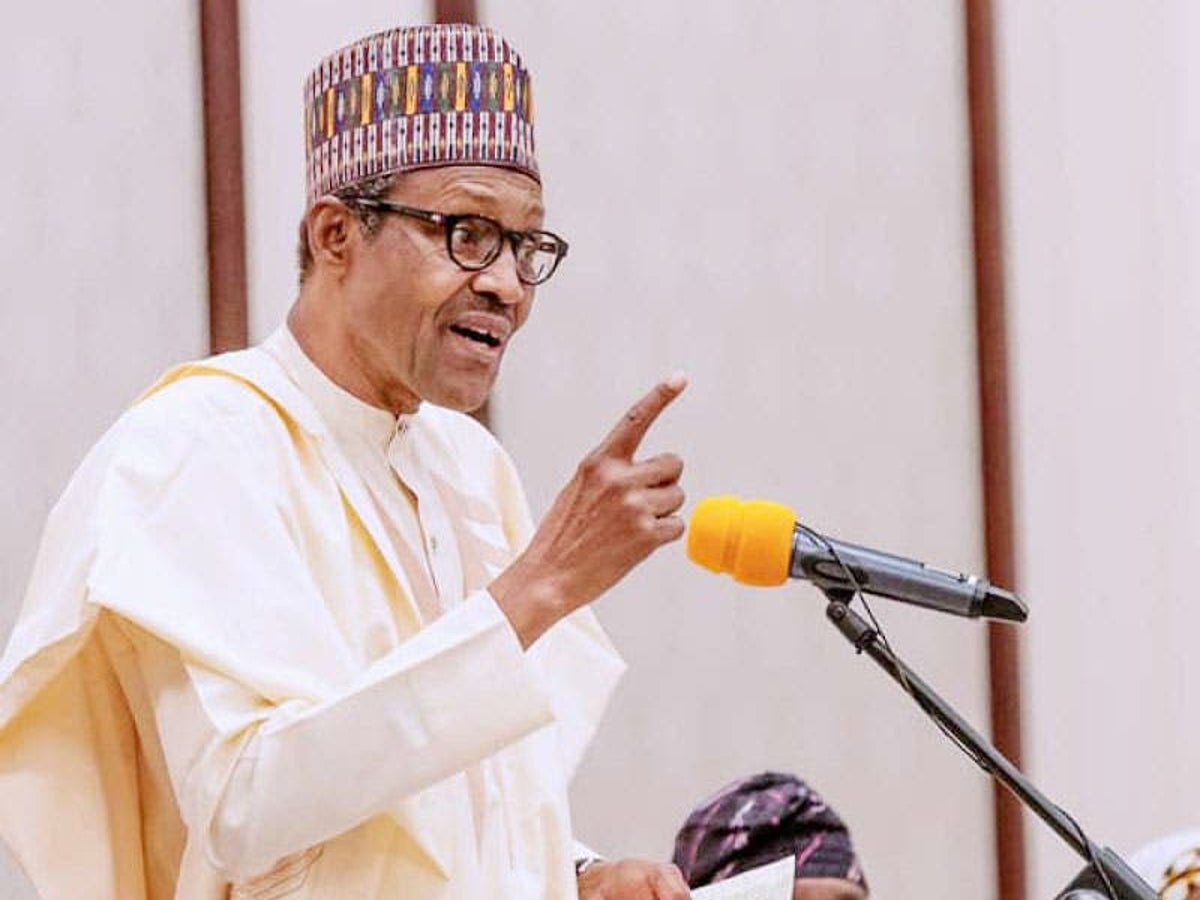
President Buhari: The good, the bad and the ugly

By Mubarak Shu’aib

Portrayed as a fraud. Painted as a failed leader by others, there’s more to President Muhammad Buhari’s tenure than meets the eye. Charged with the titanic assignment of bringing Nigeria back and on track, his ascension to the Number One seat in 2015 highlighted the arrival of a new era. 

No living politician enjoyed the overwhelming support, love, care, concern etc., like Buhari. However, the time he spent in power has proven to be anticlimactic. Rightly so? 

President Buhari’s biggest flaw, his Achilles heel, can be summarised in one word. Narrow-mindedness.

His failure to recognise, acknowledge or accept ideas other than his own, even when reasons suggested, proved to be his greatest weakness. In addition, he’s a staunch critic who sees no good in his political rivals, except for President Goodluck Ebele Jonathan (GEJ), who later handed him power on a silver platter. From labelling fuel subsidy as “Fraud”  and blabbing Jonathan’s efforts in his fight against the Boko Haram insurgency to touting the ASUU strike as something that could be resolved in a blink of an eye.

When he was declared the winner of the 2015 Presidential election, nothing but the second return of Jesus could elicit such a nationwide reaction. 

The Good:

From his inaugural speech, Nigerians, both at home and in the diaspora, were swept in joy. More interesting was his (in) famous line, which rekindled our hope, “I belong to everybody, and I belong to nobody.”  He further added, “My appeal for unity is predicated on the seriousness of the legacy we are getting into. With depleted foreign reserves, falling oil prices, leakages and debts, the Nigerian economy is in deep trouble and will require careful management to bring it around and to tackle the immediate challenges confronting us, namely; Boko Haram, the Niger Delta situation, the power shortages and unemployment especially among young people. In the longer term, we have to improve the standards of our education. We have to look at the whole field of medicare. We have to upgrade our dilapidated physical infrastructure.”

“The most immediate is Boko Haram’s insurgency. Progress has been made in recent weeks by our security forces, but victory cannot be achieved by basing the Command and Control Centre in Abuja. The command centre will be relocated to Maiduguri and remain until Boko Haram is completely subdued. But we cannot claim to have defeated Boko Haram without rescuing the Chibok girls and all other innocent persons held hostage by insurgents.”

Throughout the inaugural speech, President Buhari was full of himself, firing shots across his bow, which almost suffocated the guilty minds. 

The Bad:

The first signs of bad were Buhari’s procrastination, complacency, blame game and failure to take responsibility. His greatest strength, which is the use of rhetoric to scare and naturally bully the guilty minds, slowly grew to become one of the biggest reasons for his fall. Initially, he has established himself as someone strategic, prowess and predatory. However, it later became clear that he was devoid of such qualities, even more obvious after it took him over six months to appoint his ministers. When he eventually did, some dead people made the list of the appointees. Concerns began to leak out around his leadership’s identity as an undefined style. Doubts began to set in. His lackadaisical approach continued to grow, but to doubt Buhari at that material time, was a heinous sin. Nigerians continue to play the sport of attacking ringworms while leprosy festers. Blaming the Sarakis, Dogaras etc., on the NASS floor as saboteurs of his government. This threw the re-election bid of Saraki, Dino, and Isah Hamma under the bus in the 2019 election to pave a clear pathway for Buhari. 

The ugly:

Nigeria’s Jekyll and Hyde performances under Buhari grew out of control. While Buhari struggled to explain the abnormal nature behind his government’s inconsistent performances, his puzzled supporters appeared equally as confused. 

His record in infrastructural development is good without being impressive. And, better not to visit the issue of insecurity, which assumed many dimensions (banditry, kidnapping, etc.), corruption/looting in billions, high unemployment rate, the exorbitant cost of living, fuel scarcity, the marathon ASUU strike, 8 months old. Cutting a long story short, the most anticipated “Jarmiya” and the aspirations to see Nigeria back and on track during “Mai Gaskiya” went up in flames. 

There were a series of decisions that had repercussions. Such as the border closure, adopting the economy of ‘borrow-and-spend’, unaccounted CBN loans, etc. A disturbing reflection of his tenure was the gruesome murder of innocent souls by the bandits, rampant ransom demand by kidnappers, attack on the Abuja-Kaduna train, Abuja Central Prison, and the Presidential convoy. 

Is Buhari Unfortunate? 

The economic recession, the coronavirus pandemic, oil doom,  etc., could all be attributed to his below-par performance. However, even at that, with good economic policies, and shrewd investment in the critical areas, he can do more. Even better, had he accepted responsibilities and moved on?

Final Days:

To borrow a word from the intimidating Mike Tyson in Dark Trade, “The leader’s always by himself in a time of doom.” As is Muhammadu Buhari. 

As Nigerians started counting down to just some days to the General Election, the frustration of the “talakawas“, like a rolling ball, is just getting bigger and bigger. First, it was in his home State, Katsina and later, Kano, where he was jeered and stoned. An incident which summarised how everything had turned ugly for him. Uglier still was his inability to understand the frustration of Nigerians. The love and support he enjoyed in those days have ebbed away. 

Conclusion

Nigeria had deteriorated in and around Goodluck Jonathan’s final years as a President, which Buhari recognised. 

He did fairly well in the security sector during his first tenure, but his second tenure spiralled into chaos once more, as he was eventually unable to liberate the country from turmoil. 

Although it didn’t sit well with my spirit that he was jeered and or stoned, Buhari of the masses failed to love them. He dropped the most critical ball that saw him claim victory against a sitting president. And it hurts to love and not be loved in return.

Mubarak Shu’aib write from Hardawa. Misau LGA Bauchi State, Nigeria. He can be reached via naisabur83@gmail.com.

Tinubu and blueprint for the North

 By Zayyad I. Muhammad

Outspoken northern politician and a former Presidential Campaign Council Director for the Civil Society Organization of the All Progressives Congress (APC), Naja’atu Bala Muhammad, has said that the APC presidential candidate, Asiwaju Bola Ahmed Tinubu does not have a blueprint for the North’s development.

Naja’atu was quoted to have said, “I met with Tinubu in London, and he told me he doesn’t have a blueprint for the North”. In short, Naja’atu implied that Tinubu didn’t know what to offer to the north.

In its response to Naja’atu, APC Presidential Campaign Council, through a statement by Mahmud Jega, its adviser in public affairs, said, Naja’atu was sacked for incompetence, quarrelsomeness, and after being uncovered to be a mole planted in APC’s winning campaign.

To many people in the north, Naja’atu’s accusations were ‘heavy’ and ‘Tinubu does have any agenda for the North’s progress’. However, Naja’atu’s accusation became ‘weightless because, less than 48 hours after, she resigned from the APC and quit partisan politics, and accused Tinubu of having no blueprint for the north, she was seen at Atiku Abubakar’s residence and joined the Atiku’s campaign train.

Political pundits are of the view that no serious presidential candidate, whose candidature was 75%-made possible by the Northern APC Governors Forumwill carelessly open his mouth and say he doesn’t have a blueprint for a particular region, especially the north with its massive attractive votes.

Naja’atu Mohammed was just playing politics. Nevertheless. Let’s ‘keep’ Naja’atu aside; the big questions are: does Tinubu have any blueprint for the north?  If yes, is it what the north needs after 8 years of being in power at the centre?

The basic issue facing the north is insecurity- banditry, farmers-herders conflict, and poverty. To be fair to President Buhari and the APC, they did some well-done jobs in the agricultural sector, restoration of security in communities in the northeast, provision of new infrastructure, and the rehabilitation of the old ones, including the successes in the social intervention programs; especially petty cash distribution to the masses.

On October 17, 2022, Tinubu, at Arewa House, told the north his blueprint for the region. He said he would fight bandits and terrorists with technology which Buhari just started in 2022. Tinubu said he would turn the North’s fertile land into grain fields, and the North would become the hub of agriculture. The dairy economy and agro-allied industries will be promoted.  He said he would accelerate the Mambila Project and rejuvenate the existing power Stations. He assured to exploit of the gold in Zamfara and iron ore in Kogi State.

Tinubu also promised to bring back to school the millions of North’s out-of-school children through incentives. He further promised to create a special commission for Almajiri education, including employing Almajiri’s teachers.

Are Tinubu’s promises to the north enough and in line with the region’s needs and wants? Some political pundits believe that the promises are good, but development experts say the north needs more and a new approach, thoughts that resonate with this writer. Apart from these promises, the north extremely needs some strong-willed approach to the current monster of banditry in the northwest – a calculated crime that is as complex as Nigeria. A deployment of massive force and technology against the bandits in the villages where they operate is compulsory.

The North also needs a special economic recovery program in the area of youth empowerment, poverty reduction, and the uplift of business people.

President Buhari, in his own intuition, tried to tackle these issues by appointing many seasoned northerners into various positions of authority. But this has not worked. in fact, this political patronage strategy has failed. Most of the president’s appointees from the north have not served as a link between the president and his support base nor effectively reached the poor, who formed Buhari’s 12 million supporters, which APC is still banking-on.

As part of the agenda for the North, Tinubu, in his campaign, promises the region should also promise the north that- he will identify 50-100 business people and business enthusiasts in the north and assist them directly in their area of competence or choice. Imagine the impact new billionaires would have in the business sector, like new industries in the manufacturing and agricultural value chain, ICT, media, trading, etc.

Tinubu’s promise to North’s youth is still hazy. Since the North’s young people have lost in their quest to clinch the APC Vice Presidential candidate ticket, though, few young people have benefited from the APC Youth Wing appointments,  but most of the positions were not influential and direct, like the appointment of Abdulrasheed Bawa as EFCC Chairman, which got massive commendation throughout the country, with young northerners feeling well-recognized. Tinubu should directly ‘talk’ to the North’s youth via important and strategic appointments in his campaign council; bringing on more youngsters from the north would be a joker card in the north.

Most people support Tinubu in the north on the belief that he is a ‘builder’ of people. So the north expects from Tinubu three more things on his blueprint for the north- a promise to  ‘build’ some people who can as well build thousands of others and new businesses, to have direct contact with the youth – meaning using his today for their tomorrow; lastly, to confront head-on the senseless insecurity in the northwest, which is not just mere banditry.

Zayyad I. Muhammad writes from Abuja via zaymohd@yahoo.com.

Assent to Mental Health Bill, better late than never

By Lawal Dahiru Mamman

Ann Soberekon, a retired laboratory scientist, was almost lynched by a mob in Port Harcourt following an accusation of witchcraft. Ann was actually suffering from dementia – a condition of the brain characterised by impairment of brain functions such as memory and judgment that interferes with doing everyday activities. 

The incident led a rights group, Advocacy for Alleged Witches, to decry the ill-treatment meted out to those with mental health challenges. According to the group, the attribution of dementia and other mental disorders is rooted in irrational fear, misinterpretation and ignorance of the cause of disease. 

Living in fear of being called names and other forms of stigmatisation is the way people with mental health issues live in Nigeria and even other African countries. Mental disorders are viewed as spiritual attacks, and patients are mirrored as those under the influence of evil spirits, bewitched or hexed. The only way to cure the world of such back in the dark days and put victims out of their mystery is to send them 6 feet down, while in more recent times, stigmatisation and other forms of inhumane treatment are dished out to mental health patients forcing them to instead of seek for solution drown in their unfortunate circumstances. 

With the proliferation of knowledge of mental health, some African nations started signing Bills to protect the right of people suffering from mental health issues. Foremost among are countries like South Africa which signed the Mental Health Care Act 17 of 2002 on October 28, 2002, which then took effect on December 15, 2004, to cater for treatment and rehabilitation of persons with mental health illness. In 2012 Ghanaian government signed Mental Health Act 2012 into law. Zambia signed its Mental Health Act in 2019, and then in June 2022, Kenya’s President Uhuru Kenyatta signed the Mental Health Bill into law.

Nigeria followed suit when President Muhammadu Buhari, as a parting gift, bequeathed Nigeria on the 5th day of January 2023 the long-awaited Mental Health Bill by signing it into law, repealing heretofore extant law, which was known as the Lunacy Act CAP 542, of the laws of Nigeria 1964. 

This is coming after the Bill has failed two attempts. Firstly, it was after the presentation in the National Assembly in 2003 before its withdrawal in April 2009 and secondly, in 2013 when the National Policy for Mental Health Services Delivery set out the principles for the delivery of care to people with mental, neurological, and substance abuse problems, but it was not signed into law.

The Mental Health Bill is a piece of legislation that covers the assessment, treatment, care and rights of people with mental health disorders while also discouraging stigmatisation and discrimination by setting standards for psychiatric practice in Nigeria, among other provisions. 

The assent of the law generated a positive response, with physicians saying the law will afford those in the field the power to work unhindered and also enlighten Nigerians of the dangerous lifestyles that may lead to a breakdown in one’s mental health. 

Doctor Olakunle Omoteemi, a physician in Osun State, said, “Due to the negative perception attached to mental health issues in Nigeria, the society still sees any case related to it as that of lunacy, and as a result of this negative perception, individuals shy away from making known, discussing or approaching professionals to discuss or reveal their mental health status.

“People also often cannot go for counselling based on the prejudice from the society. There is also the issue of stigma attached to it, as people are afraid to be called certain names. With this law, it is hoped that the prejudices and stigma attached to mental health issues will be laid to rest.”  

The World Health Organisation (WHO) said at the 2022 World Mental Health Day on the 10th of October that One Hundred and Sixteen million (116,000,000) Africans suffer from one mental health disorder or another, and according to the President of the Association of Psychiatrists in Nigeria (APN), Taiwo Obindo, over sixty million (60,000,000) Nigerians agonise from mental illnesses. 

Since the Bill this time around was not allowed to fade in oblivion, it will be safe to say ‘it is better late than never’ considering the statistics of the WHO and that of the president of APN. What is left is for those responsible for the bill to take charge in ensuring that the purpose for which the bill was signed is not defeated.  

Lawal Dahiru Mamman, a corps member, writes from Abuja and can be reached via dahirulawal90@gmail.com.

The currency change in Nigeria: Balancing progress and people’s interests

By Yakubu Sani Wudil, PhD

The Central Bank of Nigeria’s announcement that some of the country’s old notes will cease to be legal tender by the end of January 2023 has caused significant concerns among citizens and businesses. While the move towards a cashless economy has its merits, such as increased security and transparency of monetary transactions, it is crucial to consider the potential negative consequences and ensure that proper measures are implemented to mitigate them.

One of the most pressing concerns is the availability of the new Naira notes. Many citizens have reported difficulties in exchanging their old notes for the new currency, and banks have been dispensing the old notes until only a few days ago. This has led to confusion and frustration among citizens, particularly those in rural areas who may not be as familiar with bank procedures. Therefore, the government should mandate banks to release the new notes in abundance to prevent any shortage or hoarding of the new currency.

Another primary concern is the impact on small businesses. Many small businesses have already shut down because they can no longer accept the old Naira note while the new Naira is scarcely inadequate. This has resulted in job loss and financial hardship for small business owners and created artificial inflation. To mitigate this, the apex bank should consider extending the deadline for the old notes to cease being legal tender to give citizens and businesses more time to adjust and exchange their old notes.

Policymakers need to consider the well-being of the citizens when implementing such a critical change to the country’s monetary system. The decision to cease the old notes as legal tender could disproportionately affect low-income and rural citizens who may not have access to the necessary technology or banking services to conduct electronic transactions.

To address this, the government must provide support and education on the benefits of a cashless economy, especially in rural areas. Such sensitisations should involve traditional and religious leaders because they are respected and trusted figures in their communities. They can help explain the system’s benefits and dispel any misconceptions or fears that people may have about the change. It is also important to note that the success of this transition will depend on the cooperation and participation of the public. Therefore, the government must provide adequate education and support to ensure that everyone can easily navigate the new system.

Undoubtedly, the cashless economic system constitutes the model of transactions embraced by all technologically advanced nations. With most transactions being conducted electronically, it becomes easier for the government to monitor and detect illicit activities such as money laundering or tax evasion. Additionally, a cashless economy can help reduce the risk of kidnapping for ransom, as there would be limited cash in circulation. It would also help curb buying political votes in the forthcoming general elections.

However, the sudden transition to a cashless regime also has its drawbacks. One of the most notable concerns is the potential decline in the value of the currency. The Naira has been facing significant inflationary pressures in recent years, and the cessation of the old notes could exacerbate this problem. Furthermore, the change in the currency and the scarcity of new notes may halt economic activities, which will hurt the economy and the well-being of the people.

It is important for the apex bank to consider the challenges people face and adjust accordingly. The deadline for the transition to a cashless economy should be reconsidered, and more time should be given for proper planning and implementation. The banks should also be mandated to release the new notes in abundance and ensure they are readily available to the public. The policymakers should also consider the impact of this change on small businesses so that the economy and livelihoods of the people are not negatively affected. The purpose of government is to develop policies that would improve the well-being of its citizens and not burden them with unnecessary hardships.

Dr Yakubu Wudil writes from King Fahd University of Petroleum and Minerals, Saudi Arabia, and can be reached via yswudil@yahoo.com.

Principles

By Faruk Ak Waziri 

Principles are the product of strong convictions and their ability to exert influence on what we do or don’t, how we react, and our behaviour in general. The principle is to a person what a container is to a liquid of a certain mass—like how the shape of water is dependent upon the shape of that which it is contained, a person’s action is often shaped according to their principles.

Principles are moral rules self-imposed upon oneself with the intention to live by them strictly. These rules, to the person following them, function as guides to a particular way of behaving or manner of doing things—they act as instructions as to what a person should consider appropriate or otherwise. One may refuse to entertain an idea, reach an agreement, or take part in an activity whose conditions and terms collide with their self-established moral values—their principles.

Does everyone have principles they follow?

As principles are rules or beliefs individually espoused, they vary between people, and not everyone has or follows them. A principled person is one who insists on behaving in a certain way, usually adhering to a fixed set of rules. An unprincipled person, on the other hand, is unscrupulous—they are fickle and dishonest, often without ethical standards.

Is it important for one to have principles they follow?

While many believe having principles is important, some believe that it is actually not—as to them, they are nothing but self-imposed restrictions that delude a person’s mind always to consider them when going about a previously encountered situation or thing. They believe principles enforce rigidity of approach where flexibility is a better suitor.

Yet despite the above opinion, principles are, however, seen by the majority as tools that facilitate the practice of right behaviour. Since they are formed to act as pillars of morality, principles help the person following them stay on track without deviating from doing what is right and good to what is considered bad and wrong. A person of principles tends to be more rational in choice and judgement than one who is not. As opined by Christopher Charles, “A man without principles is as a ship without a rudder—at the mercy of every wind and wave” 

Is it okay to compromise one’s principles when convenient?

Compromising some of one’s principles in specific circumstances that necessitate doing so is okay, so long as that does not temper with the exercise of justice, honesty, fairness, equity, or integrity or done at the expense of any of the guiding values of life.

To emphasise the importance of having principles, Henri Frédéric Amiel, a nineteenth-century Swiss philosopher, critic, and poet, stated thus: “He who floats with the current, who does not guide himself according to higher principles, who has no idea, no convictions-such a man is a mere article of the world’s furniture-a thing moved, instead of a living and moving being-an echo, not a voice.” 

Faruk Ak Waziri writes from Misau and can be reached via farukakwaziri019@gmail.com.

Marriage is doubles tennis

By Umm Khalid

I used to play tennis in high school on the girls’ tennis team. I always preferred playing singles to playing doubles.

Playing singles means you are playing by yourself with no one else on your team. You face off against another individual opponent. I found playing singles easier because it was simple: I knew that every ball that comes over the net was my responsibility. No one else was there to share the responsibility with. Playing a singles game is straightforward. One on one.

But it is exhausting. Every ball is your responsibility. There’s no one to help you, no partner to get the balls you can’t reach, no one to back you up. You have to run back and forth to cover the length and width of your side of the court by yourself.

Playing doubles tennis, on the other hand, means you have a partner and the two of you are a team facing off against another team of two. You and your teammate work together to hit the ball back over the net, so each of you has fewer balls to hit, less court space to cover.

But I hated it because it’s very easy to lose when you play doubles. Very often, the ball comes sailing right between the two of you as both of you look, startled, at one another and neither person hits the ball.

The first person assumed that the second was going to get it, and the second person assumed that the first person was going to get it. Neither gets it, and the ball bounces off the court and you lose the point.

Continue playing like this, and you lose the game, the set, and the match. You walk off the court, defeated and disappointed.

Marriage is a little like playing doubles tennis. The only way to win is to have well-defined tasks and to communicate CLEARLY with your partner. The two of you must coordinate so that nothing falls through the cracks. Each person knows exactly what he or she is going to cover. You know you’re on the same team and that you’ve got each other’s back–but you still need to talk about who’s going to do what and what your expectations are and ask for help when you need it.

To have a good marriage, the husband and wife need to work together like a well-oiled machine.

It is, of course, challenging to work so closely with another person, to coordinate tasks, to divide labor evenly based on each person’s strengths.

This is why many modern women prefer to just play singles games, living the single life without the hassle of being on a team or dealing with another person.

But living that single life is exhausting and lonely. Sure, you don’t have to work things out with anyone else and can do things all by yourself…but… you are all by yourself.

Marriage is a joint effort for the sake of Allah, a combined struggle of both the husband and the wife to build and maintain a strong Muslim family. The husband and the wife are a team: they each have clearly-defined assigned roles, but they also don’t hesitate to lovingly step in to help one another if it’s needed.

If you play it right, you can reap all the benefits of playing doubles tennis without the drawbacks.

Make sure that you:

  1. Have a clear division of labor, so each person knows which side of the tennis court they’re responsible for. In marriage, we call this gender roles.
  2. Communicate clearly, so no points are lost due to each person expecting the other to hit the ball. In marriage, the husband and wife have to communicate effectively with each other to decide which non-obvious tasks fall under whose domain so that all tasks are covered.
  3. Ask for help if you need it, so that unlike in a singles game, your doubles partner can bail you out or back you up if you try to hit your ball but miss. In marriage, each spouse has a well-defined role, but one of the beauties of marriage is the ability to ask your spouse for help if you need help. Marriage is a soft, loving relationship between a man and a woman who have love and mercy for one another. You have someone who will willingly step in to carry your load on the days you find it to be too heavy, until you get back on your feet.
  4. Be a team player, not selfish, self-centered, or negligent of your role. In our modern age, hyper-individualism has made many people selfish and narcissistic, putting themselves and their own individual whims above the needs of the group or their role in the collective. When you play selfish, whether in tennis or in marriage, you lose.

May Allah bless our marriages, our homes, and our families, ameen.

Celebrating Prof. Pantami: The architect of Nigeria’s digital revolution

By Yakubu Sani Wudil, PhD

During the last three and a half years, Nigeria’s Minister of Communications and Digital Economy, Prof. Isa Ali Ibrahim Pantami—a digital dynamo—has demonstrated quality in leadership and has raised the bar of good governance in the country. Specifically, the Digital Economy sector has come to the limelight under his stewardship.  Since his assumption into office, he has become the champion of Nigeria’s digital revolution.

Prof. Pantami has exhibited exceptional leadership skills in driving the Communications and Digital Economy sector to record several unprecedented achievements. His leadership has not only escalated the sector’s quarterly revenue generation by more than 500 per cent due to his digital innovations but also played a pivotal role in lifting the Nigerian economy out of recession.

Under his watch, the Digital Economy sector has multiplied the revenue generated from fifty-one billion Naira quarterly to about four hundred and eight billion Naira, according to an independent assessment carried out by the Foreign, Commonwealth & Development Office (FCDO). On the other hand, the ICT sector recorded the highest growth rate in the year 2022, as reported by the National Bureau of Statistics.

From the onset, Professor Pantami has identified eight priority areas for development: developmental regulation, digital skills, solid infrastructure, service infrastructure, digital services development and promotion, soft infrastructure, digital society and emerging technologies, and indigenous content development and advancement. The Minister has done exceptionally well in these areas by implementing policies and projects that have significantly impacted the Nigerian economy.

For instance, he has established ICT skill acquisition centres across the states and has recorded over 219,000 direct beneficiaries of digital skills training. Additionally, he has laid about 19 kilometres of fibre cable to expand reach and coverage to MDAs (covering 28 MDAs). Furthermore, he has established digital economy centres to support the growth of the economy in the country. He has also developed policies and initiatives to promote indigenous content and created an enabling environment for the sustainable development of Nigeria’s economy, which has been able to resolve challenges that have lingered for decades.

Under Professor Pantami’s leadership, a significant number of National Policies have been developed. Currently, over a dozen of these policies are already being implemented, one of which is the National Digital Economy Policy & Strategy 2020-2030, which sets out a comprehensive plan for the growth and development of the digital economy in Nigeria.

The Minister has also executed several projects, too numerous to mention, which have significantly impacted the Nigerian economy. Nevertheless, some of these projects include the establishment of ICT skill acquisition centres in most of the states, registration of all mobile sim cards, emergency communication centres, virtual examination centres, Data Sharing Centres, Digital Industrial Parks, Wireless Internet Cloud, Digital Capacity Training Centres, NITDA Community IT Training Centres, IT Innovation Hubs, IT Capacity Building Centres, and Provision of ICT Facilities in our Institutions of learning.

In his effort to transform governance to the 21st-century model, the minister has established the E-Government Training Centre to equip stakeholders with the necessary skills to achieve optimum productivity. He also constructed several E-Health Facilities, E-Libraries, and E-Accessibility Projects. Furthermore, the minister has coordinated the establishment of multiple Community ICT Centres, NIPOST Digital Centre, Tertiary Institution Knowledge Centres, School Knowledge Centres, Rural Broadband Initiatives, National Centre for Artificial Intelligence and Robotics. He also empowered Farmers through the National Adopted Village for Smart Agriculture Program.  The Accelerated Mobile Phone Expansion-Base Transceiver Station was also accomplished under his watch.

Furthermore, to complement the efforts of security agencies in ensuring adequate National security, there have been over 92 million unique National Identification Number enrolments as of November 2022.  These achievements are a testament to the hard work and dedication of Professor Pantami, who has been tireless in his efforts to drive the digital revolution in Nigeria.

It is worth acknowledging that President Buhari must be commended for the wise decision to appoint Professor Pantami as the Minister of Communications and Digital Economy. He is one of the best-performing ministers in the cabinet and has succeeded in delivering on his mandate to the Nigerian people. The country needs more brains like him to drive the nation’s development and ensure that we can compete on the global stage.

As we look to the future, it is clear that Professor Pantami has the ability and vision to continue to drive the growth and development of Nigeria’s Communications and Digital Economy sector. The erudite scholar has distinguished himself for integrity and selflessness. In addition, he has been a worthy ambassador for Nigeria’s young population.

We pray that he will have the opportunity to serve the country in many capacities and higher positions in the future. His leadership and expertise are vital to the continued progress of our nation. The policies and projects executed under his leadership have significantly impacted the Nigerian economy and have laid the foundation for a sustainable future in the sector.

Dr Yakubu Wudil writes from King Fahd University of Petroleum and Minerals, Saudi Arabia, and can be reached via yswudil@yahoo.com.

Advantages of foreign reserves: the case for Nigeria

By Aliyu Nuhu

Here is the use and advantages of foreign reserve currencies for nations that take their economy serious and have development and growth of their nations in mind.

First, countries use their foreign exchange reserves to keep the value of their currencies at a fixed rate. A good example is China, which pegs the value of its currency, the Yuan, to the dollar. When China stockpiles dollars, that raises its value when compared to the Yuan. That makes Chinese exports cheaper than American-made goods, increasing sales.

Second, those with a floating exchange rate system use reserves to keep the value of their currency lower than the dollar.

They do this for the same reasons as those with fixed rate systems. Even though Japan’s currency, the Yen, is a floating system, the Central Bank of Japan buys U.S. Treasuries to keep its value lower than the dollar. Like China, this keeps Japan’s exports relatively cheaper, boosting trade and economic growth.

A third, and critical, function is to maintain liquidity in case of an economic crisis. For example, a flood or volcano might temporarily suspend local exporters’ ability to produce goods. That cuts off their supply of foreign currency to pay for imports. In that case, the central bank can exchange its foreign currency for their local currency, allowing them to pay for and receive the imports.

Similarly, foreign investors will get spooked if a country has a war, military coup, or other blows to confidence. They withdraw their deposits from the country’s banks, creating a severe shortage in foreign currency. This pushes down the value of the local currency since fewer people want it. That makes imports more expensive, creating inflation. The central bank supplies foreign currency to keep markets steady. It also buys the local currency to support its value and prevent inflation. This reassures foreign investors, who return to the economy.

A fourth reason is to provide confidence. The central bank assures foreign investors that it is ready to take action to protect their investments. It will also prevent a sudden flight to safety and loss of capital for the country. In that way, a strong position in foreign currency reserves can prevent economic crises caused when an event triggers a flight to safety.

Fifth, reserves are always needed to make sure a country meets its external obligations. These include international payment obligations, including sovereign and commercial debts. They also include financing of imports and the ability to absorb any unexpected capital movements.

Sixth, some countries use their reserves to fund sectors, such as infrastructure. China, for instance, has used part of its forex reserves for recapitalizing some of its state-owned banks.

Seventh, most central banks want to boost returns without compromising safety. They know the best way to do that is to diversify their portfolios. That’s why they’ll often hold gold and other safe, interest-bearing investments. 

How much are enough reserves? 

At a minimum, countries have enough to pay for three to six months of imports. That prevents food shortages, for example. Another guideline is to have enough to cover the country’s debt payments and current account deficits for the next 12 months. In 2015, Greece was unable to do this. It then used its reserves with the IMF to make a debt payment to the European Central Bank.

If Nigeria had been a prudent nation we should be having $900bn as our foreign reserve by now, and according to world bank, a Naira will exchange Dollar one for one.

But look at us. We neither have robust national saving, nor an infrastructure to show for the money we earned. A wasted nation. Aliyu Nuhu is a renowned social commentator on African affairs. He writes from Abuja, Nigeria.

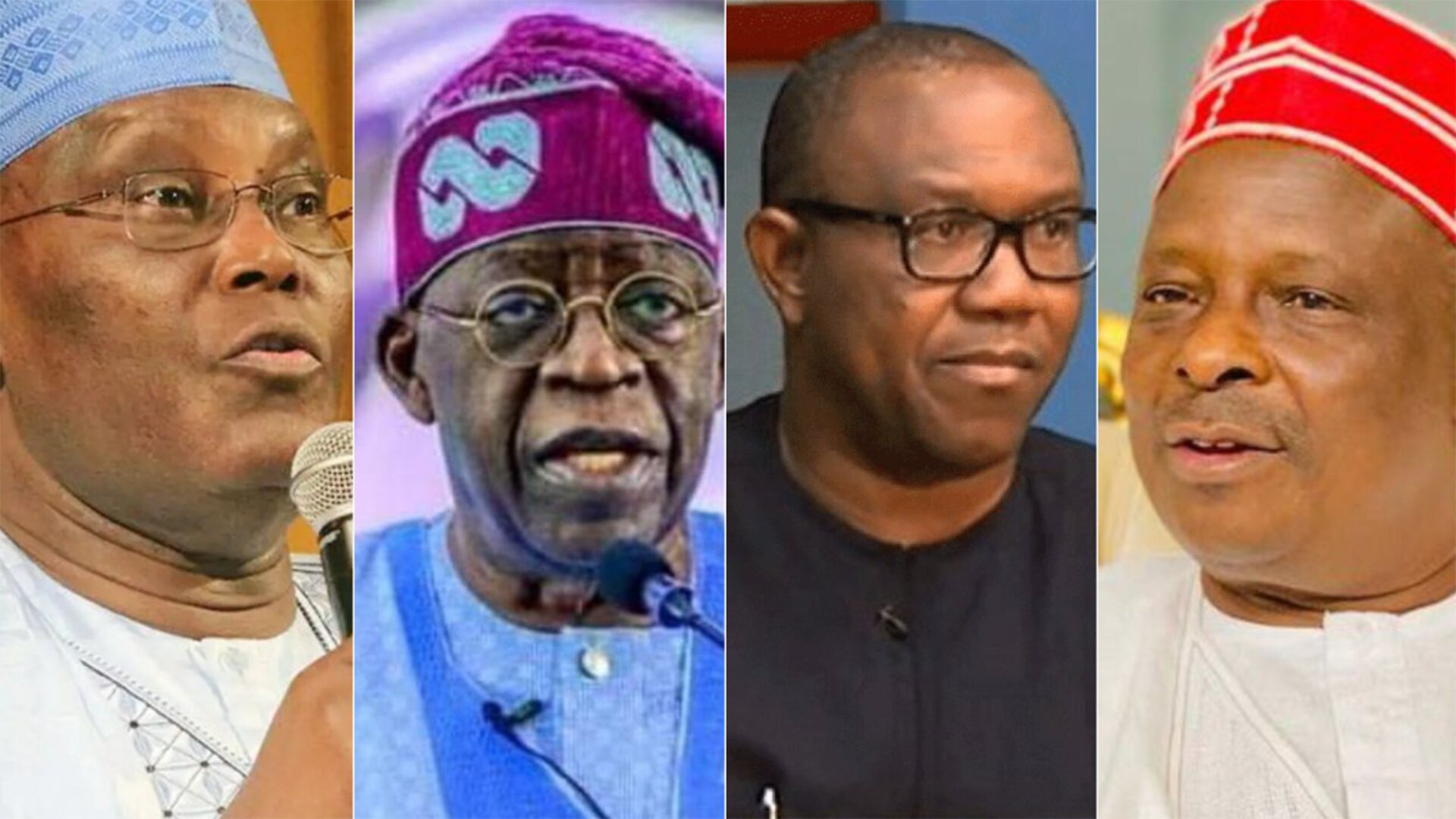
Is the Southern Nigerian press scared of Kwankwaso?

By Muhammad Sulaiman Abdullahi, PhD

Dr Rabiu Musa Kwankwaso’s NNPP has seemingly become the nightmare of many politicians in the Northern and Southern parts of Nigeria. This is simply because many Nigerians are not truly yearning for a better country.

Some Southern press, especially those who used to set the agenda for the country years ago, downplay Kwankwaso’s candidature and deliberately omit, ignore and replace Kwankwaso’s more prominent and more formidable party with someone who is not known beyond Twitter in their coverage.

The Southern press may be scared of Kwankwaso due to several reasons. These could be myopia, tribalism, regionalism, and religious mischief. Yes! I agree that Atiku Abubakar of the PDP and Asiwaju Bola Tinunbu of the APC may be considered as forefront candidates in some contexts. Thus, they may be regarded to be above Kwankwaso in terms of age, venturing into national politics, and political spread but nothing more.

Kwankwaso is naturally ahead of them in terms of integrity, health, foresight, political sagacity and shrewdness, and above all, the love and commitment towards the development of Nigeria. Moreover, his academic credentials are higher than all those who are contesting.

Furthermore, the Southern press thought they could do as they wished without being noticed. So, they cunningly choose to propagate one Yoruba (Tinubu), one Hausa (Atiku) and Peter Obi (Igbo). The latter cannot even publicly and unambiguously condemn the IPOB secessionists’ evil atrocities. Does he even believe in one indivisible Nigeria himself?

The Southern press is not alone in this mischief and tribalism. Some Northern writers who are, to some extent, their puppies and puppets downgrade Kwankwaso and fail to point out a single reason. They even tag him as a local champion. What is bad in being a local champion? All champions should be local, otherwise they don’t have any base.

If you check newspapers, both print and online, such as Vanguard, the Guardian, Punch, Premium Times and the likes, they are at the forefront of this amateur journalism. How can someone be so glaringly subjective in their journalism to the extent that even a blind can see? What kind of a country is this? Are they not aware of Kwankwaso’s credentials and positive antecedents? Are they unaware of how Kwankwaso transformed and developed Kano rapidly? How on earth can you compare Kwankwaso to all those contesting if someone is sensible and objective in his assessment? Most of them are either tribalistic or looking for big brown envelops filled with foreign currency.

These Southern press are not helping matters and are not objective. They are so divisive and tribalistic. To borrow from Orubebe’s outrage when he intended to save the nation from the ongoing catastrophe this Buhari-led government brought, while referring to Jega, he said: You are tribalistic. You are myopic, and we can’t take it!

Finally, the Southern media has achieved much in their agenda-setting warfare. Even some international media outlets borrow a leaf from them and mention Atiku, Tinubu and the other Igbo guy and, conspicuously, leave out Kwankwaso.

However, suppose we are to be sincerely and patriotically fair, let us put all the leading contenders on a scale of preference which is based on capacity and capability and see what happens. In that case, Kwankwaso is the best, followed by the Igbo man, and then Atiku while Tinunbu comes last. At least if they are to be objective, we have four leading contenders and not three, as they are falsely portraying.

Our votes are for Kwankwaso. And he will surely get more than many corrupt contenders and will win the presidential elections.

Muhammad Sulaiman Abdullahi, PhD, wrote from Kano. He can be reached via muhammadunfagge@yahoo.com. @muhammadunfagge.