Opinion

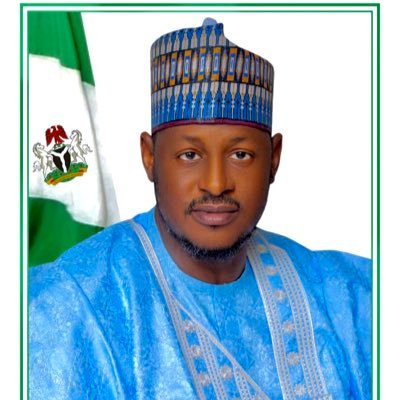
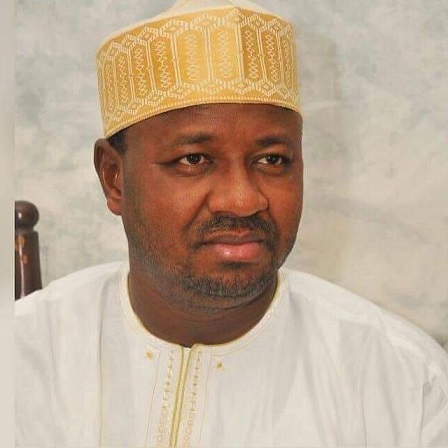
Barau Jibril, Nigeria’s 10th senate leadership and BAT

By Aliyu Gadanya

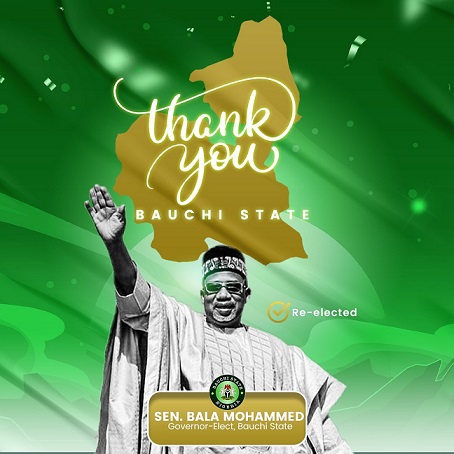
Though I am an Abba Kabir Yusuf’s staunch supporter and a Kwankwasite by political ideologue, I strongly argue that as a matter of decorum, competence, fairness and justice, Barau I. Jibrin known by many as ‘Maliya’, the Senator representing Kano North, who also is the Senator-elect for the zone at this moment, should be allowed to emerge as the senate president of the Nigeria’s 10th Senate. Taking a few glances down the memory lane of the Nigerian polity as well as the tradition of the Senate itself will validate the above proposition.

The Nigerian Senate is the upper legislative branch of the government which is administered based on its defined rules and regulations whose main function is making laws for the country as enshrined in Chapter One, Section Four of the 1999 Constitution of Nigeria. By rule, after every national election which holds within each four years, a leader, Senate President (SP), who is saddled with the responsibility of presiding over the affairs of the Senate is elected with other excos. The election of the SP is, no doubt, done based on some premise all of which are, arguably, satisfied by Maliya.

The first, though not the most important, is winning a senatorial position on the platform of the ruling party. Jibrin, being loyal to the ruling APC since he began his ambition to become a senator, has won the senatorial position three times; his going to Senate is as old as the ruling party, APC. However, his reelection into the legislative chamber for the third time, as noted by keen observers, is not without obstacles, intrigues, bitter challenges, and intra party political tussles. Notwithstanding, Barau’s allegiance to his party remains unalloyed. He fought dodgedly and tenaciously until he, in the long run, secured the ticket. “I have chosen to stay in APC”, he would always affirm, “even if I will be denied the ticket”.

Next is the candidate’s political geographical location. Nigeria has six geopolitical zones which include, Northwest, Northeast, Northcentral, Southwest, Southeast and Southsouth. For equity and fairness, it has since become a norm for the Nigeria’s major political parties to share the most lucrative positions based on these zones, so that none will feel discriminated against from the affairs of the country. Nevertheless, the contribution of votes from a zone to a party that wins the presidency is an added advantage.

Southwest produces BAT who is the President-elect while Northeast produces the Deputy President. Southeast, Southsouth and Northcentral (produces the party Chairman) being the stronghold of the oppositions, particularly LP and PDP, thus, it will only be fair to pave way for the Senate President to emerge from Northwest, from where Barau coincidentally comes, considering the concentration of votes APC garnered from the zone.

Another salient factor has to do with seniority. According to the Senate standing rules, electing a Senate president should be based on the frequency of one’s going to the house. The higher one is elected into the red house, the more qualified one becomes to captain the chamber. Of all those who have won the positions into the red chamber from Northwest in this election period, in fact, of all those who have made their intentions public to seek for the third most exalted office irrespective of their localities, none is as experienced as Barau Maliya. He was in the lower chamber where he ably represented Tarauni Federal Constituency from 1999-2003. He won senate the first time from 2015-2019 to represent Kano North and, satisfied with his performance during his first tenure, the electorates accorded him the subsequent mandate. Barau is entrusted by his constituents with yet another four year term which is due to commence on 29th May, 2023, as a way of saying “thank you” for an outstanding representation.

If not for him alone, the NNPP, my party, which has won the gubernatorial election in Kano, would have devoured all the political positions contested for in the State.

Moreover, competence and internal politicking are significant shapers upon who is elected into the third most important position in Nigeria. Among the aspiring candidates for this position, none equals the Kano based politician, taking a cursory look at his legislational background. The positions he held in the National Assemblies, among many others, include Chairman House Committee on Appropriation, a member House Committee on Power, Vice Chairman and Subsequently Chairman of Petroleum Resources Committee in 2016 and Chairman of the Senate Committee on Tertiary Institution and Tetfund. He was also a member of the Senate Committee on Niger Delta, Industries, Land Transportation and Appropriation and he is rounding off the 9th Senate as the Chairman Senate Appropriation Committee, a position he has been holding since the beginning of the 9th Senate.

Talking about the Senate internal politics, Barau, exploiting his dexterity and expertise, spearheaded the elections of two Senate Presidents; notably Bukola Saraki and Ahmad Lawan. He was the Secretary of Ahmad Lawan’s campaign organisation which culminated into Lawan’s eventual success. Barau sponsored and co-sponsored numerous bills which are now passed into laws. Some of them include Sexual Harassment in Tertiary Institution Prohibition Bill, Federal Polytechnic Kano Bill, Microbiology Council of Nigeria Bill, Federal University of Agriculture, Dambatta Bill to mention but few. All these buttress the fact that Maliya is fully conversant with the processes of legislation which is an important weapon for anybody seeking to vie for the office of the Senate President.

Furthermore, the presidency factor seems certain in determining who becomes the Senate President or not since the days of yore. However, with the gradual transformation and improvement in the country’s electioneering processes that, obviously, transcend the national general election to other sectors, many commentators maintain that Bola Ahmad Tunibu, the Nigeria’s President-elect, will let democracy take its full course. Being a product of such democratic processes himself. I, similarly, can vouch on BAT that he will not renege or rescind his earlier promise of not interfering, thereby skewing the results of SP and the Speaker’s elections in anyone’s favour.

Finally, on Tunibu’s success, it will not in anyway be an exaggerated statement if it is claimed that no APC member be s/he a governor, senator, member House of Representatives or an exco in the party’s echelon that has contributed in whichever way as immensely as Maliya did. The highest votes for BAT came from Northwest, within the zone, the state that cast the most votes for him is Kano. Examining the voting pattern further confirms the above assertion that Kano North which is Barau’s senatorial district contributed the largest votes in the state.

Notwithstanding all these, we are not asking for the President’s facilitation for the Kano’s son to win the seat, despite having what it takes to be his favourite, because we believe he is the leader for all, all we are asking for is letting the process go without encumbrance.

With Barau Jibrin at the helm of the 10th Senate, considering his loyalty, experience and expertise, it will be a very big plus for the government as it sets out on a journey to deliver on the mandate given to it by the Nigerian masses. It would also ensure that despite losing gubernatorial position in the Nigeria’s most populous state, APC’s structure remains vibrant in Kano. If as a Senator, Maliya can influence the votes that turned out to be the game changer in the election, I believe he will replicate such gesture as the SP.

Hausa names as ethnographic identifiers

By Prof. Abdalla Uba Adamu

It happened 40 years ago. A friend’s wife in Kano had delivered a bouncing baby boy. My friend chose Maikuɗi as the name for the baby. The families on both sides were having none of this. Maikuɗi was not a name, they argued. But he saw nothing wrong with it – a nice traditional Hausa name. He was adamant. They were adamant. Cue in A Mexican Standoff.

Three days before the naming ceremony, he blinked first and apparently gave up. With a glint in his eyes, he decided to name the child Ibrahim. A beautiful Hebrew name but cognately shared by both Muslims and Christians (from Abraham, the father of all). Everyone was happy – until it dawned on everyone that Ibrahim was the name of my friend’s father-in-law. Tricky. In Hausa societies, the names of parents are never uttered. In the end, everyone ended up calling the boy Maikuɗi! Right now, the boy is a successful international businessman living in the Middle East. Earning serious cash and living up to his name – which means one born on a lucky day. Or Tuesday.

A few years later, the same friend’s wife gave birth to a beautiful baby girl. He decided to name her Tabawa. Objections reloaded. Cue in Dog Day Afternoon. As previously, my friend blinked first. He decided to name her Hajara, another cognate of Hagar, the wife of Abraham. It also happened to be the name of his eldest sister. His mother could not utter it – both the Hausa and Fulani system of cultural relations prohibit mothers from calling the names of their first series of children. In the end, everyone ended up calling the child Tabawa. She is currently a university lecturer and a doctoral student in Nigeria. Living up to her name – which means Mother luck, or the name given to one born on Wednesday (in Kano; in Katsina, it is Tuesday) is considered a lucky day. Two children, both lucky in their lives. Their traditional Hausa names became their mascots as they glided successfully through life.

So, why the aversion to Hausa ‘traditional’ names? You can’t name your child Maikuɗi, but everyone will applaud Yasar (wealthy – mai kuɗi?). Or Kamal (perfection). Or Fahad (panther). Or Anwar (bright). Or Fawaz (winner). You can’t name your daughter Tabawa, but it is more acceptable to call her Mahjuba (covered). Or Samira (night conversationist –TikToker?). Name your daughter ‘Dare’, and you are in trouble. Change it to Leila, and you out of it, even though this is an Arabic for ‘dare’ (night).

A lot of the names the Muslim Hausa currently use have nothing to do with Islam. Bearers of such names rarely know their actual meaning or context. They were Arabic and forced on us by the Cancel Culture that attaches a derogatory ‘Haɓe’ coefficient to anything traditional to the Hausa.

Therefore, my friend, whose family story I just related, another friend and I decided to get together and be Wokish about traditional Hausa names. Paradoxically, none of us is genetically Hausa (whatever that might mean) – one had roots in north Africa, another had Kanuri heritage, and one had Agadesian and Torodbe roots – but all of us self-identified, with absolute honour and tenacity, as Hausa. None of this ‘Hausa-Fulani’ aberrational nonsense.

‘Hausa-Fulani’ appellation, in my view, is a Nigerian Cancel Culture device to suppress the Fulani culture. The Fulani may have conquered the ruling of the Hausa (except in one or two places) and imposed their rule. The Hausa, on the other hand, have linguistically conquered the Fulani. In Kano, claiming Fulani heritage is considered anthropological purity – without knowing a single word of Fulfulde (the Fulani language). Substituting rulers does not get rid of the general populace who remain what they are.

The third friend then took the task with gusto. He spent over ten years compiling authentic traditional Hausa names that have absolutely nothing to do with ‘Maguzanci’ (the label gleefully and contemptuously attached to any Hausa who is not a Muslim by the Hausa themselves) before Islam in about 1349, at least in Kano). He also collected names that had only a tinge connection to Islam. The end product was a hitherto unpublished list of 1001 authentic, genuine, traditional Hausa names that reflect the cosmology of the Hausa.

Hausa’s anthropological cosmology reflects the worldview and belief system of the Hausa community based upon their understanding of order in the universe. It is reflected in their naming system – just like any other culture. The Yoruba Muslims, for the most part, have retained this attachment to their traditional cosmology. Farooq Kperogi has done wonderful work on Yoruba naming, although with a focus on their adaptation of Muslim names. The failure of the Hausa to do so was, of course, due to the suffocating blanket of Cancel Culture that the Hausa had been suffering for almost 229 years.

Now, let’s look at the names and their categories. The first category I created from the 1001 Names, which I edited, revolved around Being, Sickness and Death. As noted earlier, the traditional Hausa centre their naming conventions on ecological and cosmological observations—using time, space and seasons to mark their births. Based on this, the first naming convention uses circumstances of birth. This category of names refers to the arrival of a child after another child’s death, the death of a parent, the sickness of the child immediately after being born or a simple structure of the child that seems out of the ordinary. Examples include:

Abarshi. This is derived from the expression, ‘Allah Ya bar shi’[May Allah make him survive]. A male child was born after a series of miscarriages. A female child is named Abarta. A protectionist naming strategy is where the child is not given full loving attention after birth until even evil spirits note this and ignore it and thus let him be. Variants include Mantau, Ajefas, Barmani, Ajuji, and Barau. Now you know the meaning of Hajiya Sa’adatu ‘Barmani’ Choge’s name – the late famous Hausa griotte from Katsina (1948-2013).

Then there is Shekarau, derived from ‘shekara’, a year. A male child is born after an unusually long period of gestation in the mother’s womb. A variant of this name is Ɓoyi [hide/hidden]. A female child is named Shekara. Now you know the meaning of the surname of Distinguished Senator Malam Ibrahim Shekarau from Kano.

A third example is Tanko. This is a child born after three female children. Variants include Gudaji, Tankari, Yuguda/Iguda/Guda. I am sure you know the famous Muhammed Gudaji Kazaure, a Member of the House of Representatives of Nigeria and his media presence in late 2022.

Each of these sampled names reflects a philosophical worldview, reflecting spiritual resignation or slight humour. They, therefore, encode the traditional Hausa perspective of living and dying as inscribed in the way they name their children.

Names that even the contemporary Hausa avoid because of bad collective memory are those linked to wealth and being owned or slavery.

Slaves have prominently featured in the political and social structure of the traditional Hausa societies, especially in the old commercial emirates of Kano, Zaria, Daura and Katsina. Their roles are clearly defined along socially accepted norms, and they are expected to perform given assignments demanded by their masters.

Slaves in Kano are divided into two: domestic and farm-collective. Trusted and, therefore, domesticated slaves are mainly found in ruling houses and are prized because of their loyalty to the title holder. Farmyard slaves were often captured during raids or wars and were not trusted because of the possibility of escape. They were usually owned by wealthy merchants or farmers and were put to work mainly on farms

Although the institution of slavery as then practised has been eliminated in traditional Hausa societies, the main emirate ruling houses still retain vestiges of inherited slave ownership, reflected even in the categorisation of the slaves. For instance, in Kano, royal slaves were distinguished between first-generation slaves (bayi) and those born into slavery (cucanawa).

At the height of slave raids and ownership, particularly when owning a slave was an indication of wealth, the names of the slaves often reflected the status of the owner. Examples of these names include Nasamu (given to the first slave owned by a young man determined to become a wealthy man), Arziki (first female slave owned by a man), Nagode (female slave given away to a person as a gift), Baba da Rai (first gift of a male slave to a son by his father), Dangana (male slave of a latter-day successful farmer or trader, although later given also to a child whose elder siblings all died in infancy. The female slave variant is Nadogara), and Baubawa (slaves with a different faith from the owner), amongst others.

The changing political economy of Hausa societies since the coming of colonialism has created new social dynamics, which included the outward banning of slavery. Thus, many of the names associated with slaves and ‘being-owned’ in traditional Hausa societies became disused, unfashionable, or, which is more probable, to be used without any idea of their original meaning. It is thought that some records of them may be of value. An example is ‘Anini’, usually a slave name but later used to refer to a child born with tiny limbs. The ‘smallness’ is also reflected in the fact that ‘anini’ was a coin in the Nigerian economy, usually 1/10th of a penny—a bit like the small Indian copper coin, ‘dam’ (from which the English language got ‘damn’, as in ‘I don’t give a damn’).

Further, with the coming of Islam, slave names were eased out and replaced by conventional Muslim names as dictated by Islam, Retained, however, are slave names that also served as descriptors of the functions of the slave, even in contemporary ruling houses. Examples of these slave titles, which are rarely used outside of the places, include:

Shamaki (looks after the king’s horses and serves as an overseer of the slaves), Ɗan Rimi (King’s top slave official and looks after all weapons), Sallama (King’s bosom friend [usually a eunuch], same role as Abin Faɗa), Kasheka shares the household supplies to king’s wives [usually a eunuch], Babban Zagi (a runner in front of the king), Jarmai (the head of an army), Kilishi (prepares sitting place for the king), amongst others. These names are almost exclusively restricted to the palace and rarely used outside its confines. Cases of nicknames of individuals bearing these names remain just that but had no official connotation outside of the palace.

The coming of Islam to Hausaland in about the 13th century altered the way traditional Hausa named their children and created the second category of Hausa beside the first ‘traditional’ ones. This second category became the Muslim Hausa, which abandoned all cultural activities associated with the traditional Hausa beliefs. This was not an overnight process. However, taking it as it does, centuries. Even then, a significant portion of Muslim Hausa material culture remains the same as for traditional Hausa. The point of departure is in religious or community practices, which for the Muslim Hausa, are guided by tenets of Islam.

Affected at this point of departure is naming conventions. This is more so because Islam encourages adherents to give their children good meaningful names. These names must, therefore, not reflect anything that counters the fundamental faith of the bearer or reflect a revert to a pre-Islamic period in the lives of the individuals.

However, while predominantly accepting Muslim names, traditional Hausa parents have domesticated some of the names to the contours of their language. For instance, Guruza (Ahmad), Da’u (Dawud), Gagare (Abubakar), Auwa (Hauwa), Daso (Maryam), Babuga (Umar), Ilu (Isma’il), amongst others.

So, here you are. If you are looking for an authentic, ‘clean’ traditional Hausa name or trying to understand your friend’s traditional Hausa name (or even yours), you are welcome to 1001 Traditional Hausa names.

The list is divided into two. The first contains 869 authentic traditional Hausa names. The second contains 132 Arabic/Islamic that the Hausa have somehow domesticated to their linguistic anthropology.

The file is available at https://bit.ly/42HJl97.

“All this hardship I am going through is for you to be educated”: My Mother’s words that always sound in my ears

By Hamza Basiru Tsoho

My name is Hamza. My father had two wives.  The family comprised ten children from two different mothers. I was the eldest and the sixth in my mother’s room and the family, respectively. We were three in my mother’s room. 

One fateful day, our father, Alhaji Basiru, and his friends travelled to Katsina. Unfortunately, they had a ghostly road accident returning to Funtua, our hometown. Only one person survived. I was not enrolled in a public primary school at that time, not to talk of my younger brothers. Our mother became our father and mother; for she had taken all the responsibilities of the father. 

Glory be to the Sustainer.  Since before our father gave up the ghost, she had embraced some petty trade at home like selling ruwan leda (water, then, usually,  packed in a medium-sized leather after being cooled by a Randa ‘earthy pot’), roasted groundnut and selling food later. Her local restaurant, which was home, had become renowned in the locality and the neighbour then, as there were fewer restauranteurs in the area. 

She used to sell a bag of rice in two or three days in the comfort of her home. Over time,  competition increased. Sequel to that, she boiled to cook only a few measures of rice. I hawked the food on a silver tray when things started getting out of hand. The hawking was usually done after I returned from morning school and sold before late afternoon prayer (Asr), after which I had the opportunity to go to Islamiyya.

Furthermore, she ensured we had all we wanted so that we had the equal privilege to be educated like other children whose parents are alive. I can never forget when I told her what someone told me about what seemed to them like we were chasing education. He said one of his friends said, “If he (referring to me) must further his education, we will see who will sponsor him.” 

I felt sad even after narrating the story to our mother. She said, “You see, all these hardships that I endure are for you to be educated. I wish I had money to sponsor your education to university; I can spend any amount in my belongings for you to be educated”. She continued, “Although I do not have enough money to sponsor your education, I believe you will get someone to help you, and that is what I always pray for.” Whenever I remember that, I feel motivated. 

Fortunately, I sat for my SSCE and came out with flying colours. It was in the school of our neighbour and brother who sponsored a duo of us, my half-brother and I, in his school. May Allah (SWT) reward him and add to his wealth, amin. 

I then applied to Ahmadu Bello University (ABU) Zaria with a JAMB score of 252 for MBBS in 2020. After some years of waiting, due to Covid-19 and the lingering strike, I sat for post-UTME and scored relatively well. However, afterwards, I did not secure admission. That may be due to too much competition.

Still, I did not give up. I knew MBBS was, most of the time, not a one-off thing. So the following year, I sat for another one, prayed, and worked harder. This time around was Federal University Dutse (FUD) and still the MBBS. After all, I got it in that school in early January this year (2023). 

I owe my success to my dearest mother. As Prof. Abdalla  Uba wrote, her likes are the “REAL woman of substance.” In a few years, I hope to become a feather in her cap ( to be a professional medical doctor ), become an important person to society and save the lives of many victims.

Hamza Basiru Tsoho wrote from Funtua via hamzafta212@gmail.com.

RAAF laid the foundation for the sake of Rigasa

By Pharm. Mustapha M Umar

Rigasa is a ward in Igabi local government in Kaduna State endowed with people. It has an estimated population of 3 million people. Politically, Rigasa as a ward provides the largest number of votes, even higher than some local governments, in the state. The people of Rigasa are zealous about any development, which gives birth to different community-based organisations working tirelessly to move the community forward. Rigasa Action and Awareness Forum (RAAF) is among those organisations regarded as the most collaborative and active pressure group in Rigasa.

Elections are won and lost due to voters’ choices. There are no voters without voter cards. Every person who got a new voter’s card or transferred from anywhere to the Rigasa ward did that through the RAAF effort.

After the conclusion of the initial phase of Continuous Voters Registration (CVR) on 21st September 2021, RAAF observed poor awareness in the Rigasa community. With the new polling units added to Rigasa from 23 to 153 and the big dream of having an LGA or constituency one day, we realised that we must come together and mobilise to ensure all new polling units have the required number of voters to avoid cancelling any polling unit.

To achieve this, RAAF constituted and inaugurated a CVR committee in October 2021.  This committee works day and night. It enters all the nooks and crannies in Rigasa. Single-handedly, RAAF’s CVR committee members registered and transferred more than 11000 voters, the highest in the nation as a ward.

The committee worked from October 2021 up to July 2022. To ensure the new and transferred voters collected their cards, RAAF extended the period of the committee work to help mobilise and ensure the Rigasa community had collected their cards. It was a successful job, and about 90% collected their cards.

The presidential election came with poor voters turning out, which was the same nationwide. For our efforts not to be in vain, a voter’s mobilisation committee was inaugurated to ensure people come out in mass during the governorship and state house of assembly election.

One of the issues observed as the cause of the poor voters turning out is the voters’ migration, which affected many people unaware of where to vote.

The committee members worked tirelessly by printing signs to help people locate their new polling units. Then, immediately, it stationed its members at every main polling unit to check and direct voters to where they are to vote using the INEC website. It was fantastic to work that significantly increased the number of votes cast.

Every single time, energy and resource spent by the members of the RAAF with little or no help from anyone are for the betterment of the community. We thank the Almighty that our effort has yielded a result.

The best ladies and gentlemen always volunteer to develop the Rigasa community, not for personal gain. We are game-changers.

The winner of the Igabi West State assembly seat, the speaker, Hon Yusuf Zailani, got almost half of his winning votes from the mighty Rigasa ward, which is 46.28% of the total votes. The remaining six wards combined gave him 53.72%. With this, Rigasa cannot be ignored for any reason.

Rigasa gave the governor-elect, Hon. Uba Sani, 32.06% of the total votes from Igabi LGA, the second LGA with the highest vote for his victory. No single ward in Kaduna gave the governor-elect this percentage of votes.

We have done our part of the bargain. The winners must do their part. Our community needs to get representatives in this government, structural and human development, and adequate government support equal to the effort we put together toward your victory.

Always remember those that help you when you are in need. There will be another time when you will need them again. What you did today to reward their efforts determines what will happen next time you need them. Four years is just around the corner. Time and history will always judge us.

His Excellency Governor Nasir El-Rufai needs all the gratitude from the winners of this election because we couldn’t have convinced people if he had not done all he did for Rigasa. May Allah bless and protect you, sir, as you hand over to the next governor, which we are hopeful will make Rigasa Community proud as they made them proud.

Pharm. Mustapha M Umar wrote from Rigasa Kaduna and can be contacted via mustaphau03@gmail.com.

The consequences of religious politics in Nigeria

By Usman Muhammad Salihu.

Religion has been a part of Nigeria’s political landscape for decades. The country has a diverse population with multiple religions, such as Christianity, Islam, and traditional faiths.

The influence of religion on Nigerian politics cannot be overemphasised, as it plays a significant role in shaping political decisions and outcomes. However, the involvement of religion in politics in Nigeria has come with both positive and negative consequences.

One of the positive consequences of involving religion in Nigeria’s politics is the promotion of moral values. Religion teaches moral values such as honesty, integrity, and justice, which are crucial for a stable and just society. Religious leaders can use their platforms to advocate for these values and hold politicians accountable for their actions. Additionally, religion can inspire people to participate in politics and contribute to the development of their communities.

On the other hand, the involvement of religion in Nigeria’s politics has also led to negative consequences. One of the most significant adverse consequences is the proliferation of religious extremism and intolerance. The politicisation of religion has fuelled religious conflicts and violence, leading to the loss of lives and property. The Boko Haram insurgency, which began in 2009, is an example of the consequences of religious extremism in Nigeria.

Another negative consequence of involving religion in Nigeria’s politics is the erosion of the country’s secularism. Nigeria is a secular state, but the involvement of religion in politics has led to the blurring of lines between religion and state. This has resulted in the adoption of policies that favour one religion over the other and the exclusion of minorities from political processes.

Furthermore, the involvement of religion in politics has also resulted in the emergence of religious leaders as political power brokers. This has led to the entrenchment of corruption in the political system, as religious leaders often use their positions to secure political appointments and contracts for their followers.

In conclusion, the involvement of religion in Nigeria’s politics has both positive and negative consequences. While religion can promote moral values and inspire people to participate in politics, it can also fuel religious conflicts and lead to the erosion of secularism.

Therefore, it is essential to strike a balance between religion and politics to ensure that the positive consequences of faith are maximised while minimising the negative effects. This can be achieved by promoting interfaith dialogue, adopting policies that promote equality and inclusivity, and establishing effective mechanisms to hold politicians accountable for their actions.

Usman Muhammad Salihu writes from Mass Communication Department, Abubakar Tatari Ali Polytechnic, Bauchi, Bauchi state. He can be reached via muhammadu5363@gmail.com.

On Jonathan AC Brown’s Slavery and Islam

By Dr Shamsuddeen Sani

In a flurry of literary exploration, my daughter recently stumbled upon the book entitled Concubines and Power. Her curiosity was piqued as she asked me to explain the meaning of “concubine”. A seemingly simple inquiry prompted a deep and complex conversation encompassing a broad range of considerations about slavery, including its religious underpinnings and contemporary relevance.

That exchange reignited my intellectual curiosity, leading me to revisit the noteworthy insights presented in Jonathan AC Brown’s seminal work, Slavery and Islam. I was compelled to reflect on and share some of the most insightful revelations from this ground-breaking work.

The book meticulously examines the historical context and practice of slavery within the Islamic tradition, as well as the ways in which Islamic law and theology have addressed the institution of slavery. Brown argues that slavery was ubiquitous throughout much of human history and was not unique to Islam.

However, Brown also acknowledges that slavery played a significant role in the development of Islamic civilisation and that the Islamic legal tradition provided a framework for the regulation of slavery. He offers an insightful and nuanced perspective on this complex issue, providing valuable insights into the intersection of religion and human rights.

Brown’s book highlights a fundamental premise: the Islamic tradition’s nuanced and intricate approach to slavery. On the one hand, Islamic law allowed for the practice of slavery; on the other, it imposed stringent limitations on how slaves could be treated and offered opportunities for manumission. According to Brown, these regulations illustrate a deep-seated concern for the well-being of slaves and a profound appreciation of their inherent human dignity.

At the same time, Brown acknowledges that there were significant abuses of the institution of slavery within Islamic societies. For example, he notes that some Muslim scholars and rulers sought to justify and perpetuate the practice of slavery through a misinterpretation of Islamic teachings and that many slaves were subjected to inhumane treatment.

He argues that while there are certainly instances of slavery and human trafficking that occur in Muslim-majority countries, these practices are not inherently Islamic and are often the result of broader social and economic factors.

How to survive without a housemaid

By Aisha Musa Auyo 

The current trends of housemaids poisoning their employers are so sickening and scary. It happened countless times, and one can’t escape seeing one or two videos of such heinous acts. From sexual and physical to mental abuse, housemaids and their masters always have these issues in their relationship.

Whenever I encounter such an incident, I wonder why we continue to employ maids or why others leave their homes and work with people they hate. I had maids, and I grew up with maids in our house. But things are different now. People do not fear God. Humanity is lost. From the employee to employers, we are all at fault. 

As much as we agree, the maids are vulnerable and more likely to become victims. Unfortunately, these maids have upped their games, and the family employed them are becoming the victims. I’m not here to tell who is right or wrong, but I know that maids had abused us, taken advantage of our kindness, stolen from us, and deceived us to the extent that we decided we no longer have maids in our home.

Is it easy? No. Is it doable? Yes. We can bring an end to this problem. This issue is almost none existence in developed countries. Regardless of how educated or wealthy you are, cleaning your home is something one takes pride in doing, except for celebrities and rich people who employ the services of cleaning agencies who can hardly be cheated on and are less likely to betray too.

Another advantage of doing your house chore is that it helps you burn calories. Moving your body here and there, doing this and that makes you burn calories, makes you more energetic and more alert. As a result, you gain most of the advantages that come with doing exercise. Researchers have proven that active women around the home are healthier and less likely to be attacked with a certain illness than women who sit and do nothing all day.

As a homemaker, I’ve devised ways to survive without a maid, and with the help of Allah, I’m doing fine, if not great. I don’t have the constant apprehension of trying not to harm another person or be hurt by that person. The peace that comes with this feeling is priceless. 

1. Wake up earlier than others, or simply reduce your sleep hours. You will be surprised what an extra hour will do to make your work faster and your home cleaner. This can be an hour before everyone wakes up or an hour after everyone else sleeps. This will give you undivided attention to do whatever needs to be done.

2. Engage other family members. From your kids to whomever you are living with, allocate an age-appropriate chore to everyone, and ensure they do it. Even if it’s just cleaning up after their mess. A five-year-old can wash their plate and spoon. Can pick up toys, and older than/six years old can change the bedding, bathe themselves, and clean up after using the loo.

3. Clean as you go. From always picking up dirt and cleaning drops with wipes or napkins to washing dishes as you cook and immediately after eating, you will manage to have a clean space almost all the time.

4. Reduce the number of plates for dishing up. All those fancy food flasks, jugs, spoons, forks, saucers, knives, and big trays are not a must. Use only what you need except when you have visitors. I mostly dish up from the pot straight to the plate (there are elegant plating styles to please the eyes) or a plate and a bowl. Fruits could be served or arranged in a big bowl for everyone to eat together. Drinks can be served directly in used water bottles or paper cups, so you can just throw them away after use. 

5. Hire a one-day help at intervals. The point here is to get someone to help you with things you find hard and time-consuming. For example, laundry is my number one weakness, so we employed someone to do this, as the person doesn’t have to go and stay with us to achieve this. You can engage them weekly or bi-weekly, so they can help you with bulk cleaning, like removing the cobwebs, cleaning the compound, brushing sofas and rugs, and doing other deep cleanings that will help keep the house sane throughout the weeks. If this is not an option for you, you can just take the clothes to laundry services, as you will need all the help you can get.

6. The toilets. Depending on the number of people using it, a bathroom should be washed every other day. In between, ensure that every mess is cleaned after usage.

7. Fridges and freezers; the fridge can be cleaned and decluttered once a week, and the freezer can be cleaned once a month, depending on how you shop and cook.

8. Buy machines that will make your work easier. From a washing machine, a strong blender that can blend Tiger nuts and beans, a vacuum, a dishwasher, and many others, depending on your pocket size, you need all the help you can get. This is where your husband comes in. He should know that you made a sacrifice for the safety and sanity of the family, and you need his financial support and understanding.

9. Husbands, we need your support here. You see, all those allowances that should have been used to pay a maid, we need it, in two or three folds. We are the glorified house helps now. We keep the home set and safe. A token will motivate us to do better.

Verbal support is a must. Commend her efforts for taking good care of the homeland and everyone in the family. It’s not easy. I know it’s her duty, but one or two good words won’t hurt, you know?

Still, the husband should try to overlook when she sometimes errs in caring for the house. She is only human, with two hands. And if you can sometimes help with one or two things when you are less busy, that will be a plus for you and her, if you know what I mean.

If you can afford it, make water and electricity 2/47-thing. This is a necessity, not a luxury. She needs this to make work easier for her. Almost all the tasks at home need either electricity, water, or both.

10. Look for temporary help when you are sick or pregnant. Find someone reliable from your family or friends to help you before you get back on your feet.

11. If you can afford it, carve out a playroom or a play area for your kids so that they limit their playing objects to that place. Your living room should always be clean; a toy here and there will make that mission impossible.

12. Lastly, start the day with prayers and a potent stimulant. A hot black tea or coffee will do the trick. Trust me; you need it. If you are an addict like me, ensure you never run out of it. Also, habitually do the zikrSubhanallah, Alhamdulillah, and Wallahu Akbar – while you go around your daily routines. Our prophet taught Nana Fatima this when she asked him to give her a slave to help her with domestic chores. He said this would be best for her, here and hereafter. Listen to radio, podcasts, Quranic recitations, music, or audiobook. This will energise, entertain, educate and make housework less burdensome and easy for you.

My fellow woman, this piece is not for the sick, pregnant, lazy, or full-time working mom (9-5). If you are lucky with your maid, hold on to her, don’t come and kill yourself with work.

But if you are healthy, up and doing, have a flexible job, or not working at all, this is for you; congratulation. You will be rewarded immensely for this. You will have peace of mind, thus not constantly worrying about what’s happening in your house. You will raise a family who will learn to manage a home without depending on others. You won’t raise another person’s child at the expense of yours. And trust me, it won’t last forever. Once the kids are all grown, you can relax and do minor chores.

Whenever I feel overwhelmed and think of getting a maid, this idea will often cross my mind, especially if I can afford it. I ask myself, how will I cope if I live in a Western country? This resets me.

Aisha Musa Auyo is a Doctorate researcher in Educational Psychology, a mother of three, a Home Maker, a caterer and a parenting/ relationship coach.

Kano elections grand finale: The echoes of competence

By Nusaiba Ibrahim

The 2023 gubernatorial elections will go down in history as one of the most highly contested, especially in Kano. After eight years of Dr Abdullahi Ganduje-led government, his party, APC, could not secure the first position. Neither the victory of the President-elect, Bola Ahmed Tinubu, nor the popularity of President Muhammadu Buhari was significant in the tight race that was fiercely fought between the governorship candidates. 

There were just countless permutations, combinations, analyses and whatnot on the proposed outcome of the gubernatorial elections coming from different viewpoints and existing realities, especially after the presidential and upper chamber elections. However, one thing that stood out was the incredible performance of the NNPP in Kano. And this became a challenging point for the ruling APC until the opposition candidate Abba Kabir Yusuf of NNPP emerged victorious.

While the Presidential elections had minimal cases of vote buying, Kano recorded massive acts of vote buying with petty items like soaps, detergents, wrappers and spaghetti during the gubernatorial and state house of assembly elections. In addition, in some strategic locations, there were significant disruptions in the voting and counting processes. But, of course, all of these aren’t out of the normal as tensions had already heightened after the presidential polls.

Nothing summed up the 2023 elections in Kano for me more than the chants of competence over spaghettis. Indeed, “taliya ba ta zabe” (loosely translated – spaghetti doesn’t vote). The likes of Senator Barau Jibrin, among others, only escaped losing their seats because of the hard work they channelled to community service and distinctive competencies. I’m in awe of how each candidate has been weighed based on the capacity to earn the invaluable mandate of the people. Here are my takes on each candidate.

Governor–elect Abba Kabir Yusuf: By resisting all odds to emerge the winner of the elections in Kano State, the heart of Northern Nigeria, you deserve resounding applause. You have also proven your worth to the electorates after losing the 2019 election, which was first declared inconclusive. So, your victory is a testimony of a relentless effort to achieve this desired objective. More so, preserving a loyal fanbase over these years is unimaginable and a strategic tool for your success. But you need to understand that more must be done. The game has just begun.

You would be serving the entire citizens of Kano, which includes your loyalists and a bunch of opposition. It would be easy if you’ve not made many promises during your campaigns, and even if you haven’t, you’ll still be judged anyway. You might face the gigantic task of restoring Kano State to what it used to be. The truth is, that might be impossible to do. Do not waste your time unveiling the errors of the past administration; the people are already full of new yearnings and aspirations. Focus on health, security, education, economy and adverse effects of climate change. They are the priority now.

Nasiru Yusuf Gawuna: Kano is proud of a citizen like you, though you have yet to accept defeat. Nothing compares to being crushed in a public engagement. You’ve taken a wise decision of not resorting to leading thugs to disrupt collation processes this time because you would make news for the wrong reasons, coupled with a widely shared photo of you explaining what happened to police offers. You must have performed your best after serving the people of Kano under three with three administrations in your lifetime. You should be thankful for this rare achievement that not everyone is fortunate to have. You’ve also made the history of being a loyal assistant for eight years – not so many deputies were lucky as you are. Better still, you can go to court if unsatisfied with the results.

Shaaban Ibrahim Sharada: When all youths were wary and incompetent to approach the governorship candidacy, you dared all doubts to stand out. Your candidacy was an ideal reflection of the future of the northern youths. There was so much to cull from what you exuded until the election. Your confidence reminded youths about the times of Tafawa Balewa, Sir Ahmadu Bello Sardauna, Malam Aminu Kano and Maitama Sule. Your grasp of the Kano situation wowed the audience anytime you spoke. You were ready to oppose the status quo even at the risk of your dearest life. But, unfortunately, the political trajectory was faulty. Defeating candidates with an established loyal fanbase needs more time, not a dying-minute preparation.

Mallam Ibrahim Khalil: Like Shaaban, you tried hard to showcase that an Islamic cleric is efficient enough to contest an election. You boldly did not play politics lowkey by supporting some politicians during your sermons and lectures. You challenged the maxim of playing politics as a war without or sometimes with bloodshed. You blocked your ears on people’s thoughts about the inappropriateness of clerics going into politics despite its indecency and ruthlessness. Although you lacked the support of other clerics, you were still confident in your quest. I applaud your effort, mainly because, unlike others, you didn’t hide under religion to back dubious politicians. Unfortunately, the current political trend is not ready for your clean style.

Results from around the country show signs of revolution from all over the nation. It is not just a red cap revolution in Kano but a ‘wake da shinkafa’ [rice and beans] revolution across the country – Zamfara State is one interesting illustration. I’m overly pleased that competence was echoed until it transformed into an actuality.  I hope these revolutionary divergences will be a reason for the prosperity of Kano and Nigeria.

Nusaiba Ibrahim Na’abba is a master’s student from the Department of Mass Communication, BUK. She is a freelance writer and researcher. She can be reached via nusaibaibrahim66@gmail.com.

We need more of Binani

By Aliyu Idris

It’s undeniable that Sen. Aisha Dahiru Ahmed Binani’s name has travelled in the ears of many Nigerians. Her emergence as the flagbearer of the Adamawa State Governorship Candidate of APC grasped and arrested the attention of the country’s populace. With these, she received massive support and countless prayers from the people in the country and even the diaspora. Without a doubt, she’s a notable personality in this year’s election.

Binani might win or lose the election, but she won the people’s hearts. She has become influential and has set a pace for people to follow in the country’s politics. Among her influence is making the incumbent governor (Ahmadu Umar Fintiri) substitute his male running mate (Crowther Seth) with a female (Prof Keleptawa Farauta). This remarkably uplifts the status of women’s participation in politics and dismantles the common sense of some people that women don’t have a role to play in politics.

Binani’s bravery is incomparable; her audacity and capacity have shaken and made the sitting governor shiver and quiver. She made him initiate last-minute empowerment and execute some projects at the election deadline. Similarly, how she defeated strong male candidates during the party’s primary election is encouraging.

Binani will now be leaving the red chamber. Her four years as a senator representing Adamawa Central Senatorial Zone birthed legacies that will live on forever. Her projects in different sectors such as education, health, poverty alleviation programs, the establishment of Federal Medical Centre Mubi, upgrading Federal Medical Centre Yola to a Teaching Hospital and Modibbo Adama University Yola (MAU Yola) from a technology University to a conventional university, solar power lights supplies, unending and unbiased empowerment of hand workers, donations to religious organisations, youths association, and other life touching projects during her single tenure as senator will remain a testimony of making her the best-elected representative in the state.

Binani’s attracted even the opposition and proved to the present administration that their chanting and ranting of no opposition in the state is merely an illusion and a mirage but fortunate enough. They have now realised her intense display of spirit towards achieving a goal can never be underestimated, like Shakespeare’s lady Macbeth still gives them sleepless nights. Binani is a beacon of steadfastness that motivate the two genders, and her political career is now a fad, and she remains vivacious.

We need more Binani in us, around us and with us. The pavement of strong female participation in contemporary Nigeria has been set and revived by Binani. 

Binani is energetic, and the declaration of inconclusive is not the end of the journey but rather a fresh beginning to return and positively impact people’s lives. May Adamawa State and Nigeria succeed.

Aliyu Idris writes from Jimeta (Yola North) and can be reached via aliyuidreesali@gmail.com.

Nigerians expect more from the 10th National Assembly

By Mukhtar Sani Yusuf

The general election has come and gone. Nigerians are now focused on the National Assembly politics as jostling for the positions of presiding and principal officers of the incoming 10th National Assembly has begun. While the tenure of the outgoing 9th National Assembly expires on June 11, the next Assembly will be inaugurated on June 13, and expectation from the citizenry vested in the members of the incoming assembly is so high, going by their diverse backgrounds. 

The outgoing assembly is seen as a rubber-stamp legislative body and criticised by many Nigerians that the two hallowed chambers are underperformed National Assembly that ever happened to the country. 

Many Nigerians see the tenure of the current assembly as unproductive that the two chambers spent the whole four years at the beck and call of the executive arm well-nigh by succumbing to everything brought before them by the executive arm with little or no protest. Some people even believe that in this 9th National Assembly, the purpose of the principle of separation of power and checks and balances characterised by constitutional democracy has been defeated and jettisoned.

Notwithstanding, from the official results released by INEC on the newly elected and re-elected members of the Senate and House of Representatives, one may begin to be optimistic with the rainbow composition of the incoming National Assembly that this time around, the business might not be as usual.

Among other reasons that rekindle the hope of Nigerians about the upcoming Assembly is that it’s the most diverse National Assembly with eight political parties representation since 1999. Although some seats in the Senate and House of Representatives were not decided during the February 25 National Assembly elections and remain vacant due to the supplementary elections expected to be conducted on them, in the Senate, the ruling party APC has 57 seats, PDP occupied 29 seats, Labour Party got 6 seats, SDP and NNPP won 2 seats each, then APGA and YPP gained 1 seat each. In the House of Representatives, APC occupied 162 seats, PDP secured 102 seats, Labour Party garnered 34 seats, NNPP 18, APGA 4, ADC and SDP got 2 seats each, and lastly, YPP got 1 seat.

The ruling party APC has majority seats in the Red and Green Chambers. However, the breakdown shows that it doesn’t get the simple 2/3 majority where its wish must prevail. This is enough opportunity for the opposition parties to form a formidable group that will checkmate the excesses of the ruling party to improve the performance of the executive arm. Even though the executive arm can’t perform its duties without the cooperation of the legislative arm, nevertheless, we expect the opposition parties to be constructive while challenging the executive arm or the ruling party.

Democracy will not grow without opposition. We don’t want a situation where our representatives become rubber stamps; they’re our voices and represent our interests. The Constitution of the Federal Republic of Nigeria has empowered them with three core responsibilities, i.e. law-making, representation, and oversight function.

Therefore, the doctrine of trias politica or separation of power, which help to limit any one arm from exercising the core function of another and prevent concentration of unchecked power by providing check and balances, is of no use if the legislative arm reduces itself to mere stooge of the executive arm. We hope to see changes this time around.

Mukhtar Sani Yusuf wrote from Kano and can be reached via mukhtarsaniyusuf678@gmail.com.