Opinion

Nigeria in global malnutrition crisis’ web: A sad commentary

By Lawal Dahiru Mamman 

Malnutrition, generally, is when humans or any other living organisms get little or insufficient food nutrients, resulting in health problems. Nigeria is one of the 12 world countries recently declared as the epicentre of the global nutrition crisis. 

The other 11, mostly African countries, include Burkina Faso, Chad, Ethiopia, Kenya, Mali, Niger, Somalia, South Sudan, Sudan, Afghanistan, and Yemen.

COVID-19, war in Ukraine and conflicts in some of these countries are factors that have exacerbated the situation. Barely seven years ago, the number of under-nourished people in sub-Saharan Africa rose from 181 million in 2010 to almost 222 million in 2016. This figure increased to 264.2 million according to a study titled, “Malnutrition: An underlying health condition faced in sub-Saharan Africa: Challenges and recommendations,” published in a medical journal, Annals of Medicine and Surgery, in October 2022.

Recently, Anne Patterson, the Director, United States Agency for International Development (USAID) Mission, at the Trade Fair for Ready-to-Use Therapeutic Foods and Other Life-Saving Nutrition Commodities in Abuja, disclosed that Nigeria is ranked as the country with the second-highest malnutrition rate in the world.

This is according to the recent Food Consumption and Micronutrients Survey, she said.

In reality, Africa, with its abundant water body, aquatic life and favourable climate (which supports the growth of various food crops, including fruits and vegetables), has all that is necessary to produce the macro and micronutrients required to nourish the body for optimal growth and health.

For Nigeria, in particular, which has agriculture written all over its national symbol (as the green on our National Flag signifies agriculture, and the black shield on the coat of arms symbolises fertile soil), the country should not be mal- or undernourished, even ranking second globally.

There are also about 200 species of fish, thanks to the large water body nature has blessed our country with. This, along with other aquatic lives, can be harnessed for healthy foods. There are livestock of various types, giving quality nutrients, too.

A lot is invested by the government in building more resilient health systems medical technologies, training of medical practitioners, and treating illnesses. It is time the same energy and resources are invested in nutrition.

For example, during this year’s World Malaria Day, Nigeria still routinely spent an estimated sum of N2.04 trillion on malaria annually.

Breaking this figure further, the Chairman of the Pharmaceutical Society of Nigeria (PSN) said, “The estimated cost for an individual to treat uncomplicated malaria in Nigeria ranges from approximately N700 to N3000, depending on the type of treatment, and the healthcare facility visited.

“While treating complicated malaria could be significantly higher, ranging from N20,000 to N60,000, or more”. 

On the cost to the Nigerian government, the consultant pharmacist said: “This cost includes expenditures on healthcare facilities, medication, and personnel.”

Tackling the menace of investing heavily in treating illnesses and sicknesses affecting citizens would be to invest in its prevention. And that entails boosting the masses’ nutritional health by ensuring the availability of good and nutritious meals. 

This will help in fortifying the immune system of Nigerians and combating all forms of malnutrition troubling citizens, especially Nigerian children from less privileged backgrounds. 

Being a nation that also engages in massive agricultural cultivation of food and tearing of assorted livestock, the last thing citizens should have as a companion is hunger. Therefore, the federal government and other concerned authorities should worry about the global survey that ranked us as one of the world nations battling with the malnutrition crisis. It is a sad commentary.

Lawal Dahiru Mamman writes from Abuja and can be reached via dahirulawal90@gmail.com.

As oil subsidies made a comeback

By Yusufu Musa

During his inaugural address, President Bola Tinubu made what appeared to be a bold statement – ‘fuel subsidy is gone’- which I received, as many people who advocate for channelling public resources to nation building,  in an inexpressible ecstasy. Though discontinuing subsidy payments made the list of his campaign promises, like his close rivals, the duo of Peter Obi of the LP and Atiku Abubakar of the PDP, the declaration came sooner than expected. 

After watching his debut speech as president, many people were unsure when the order would come into force. For instance, a news item made the rounds in the first quarter of this year, suggesting that the immediate past government had dropped its plans of removing the PMS subsidy. The then minister for finance, Zainab Ahmed, swiftly issued a release to discredit the story. She said the public misunderstood their stance.

According to her, the government only expanded the hitherto planned implementation of the subsidy removal team to allow for the participation of representatives of the incoming government. She insisted that the federal government made estimates for subsidy payments until June 30, and there would be no funds for that after this date. 

We gathered that Nigerians would continue buying fuel at the subsidised rate of N195 per litre. We misinterpreted it. A day later, the NNPCL raised its pump price to N550. But, had the company waited until July 1 to adjust, Nigerians would have spent long hours in petrol retail outlets. Marketers would have hoarded the fuel to create an artificial scarcity to ‘cash out’ after July 1.

It took Nigerians not long to feel the attendant effects of the policy. Transport fares immediately tripled, and prices of consumable goods have been on the increase. However, an average Nigerian is convinced that the action is necessary and is for our collective good. So, we are ready to make sacrifices for the nation. Two, a worker in Abuja who boards a cab to go to his workplace and visits his hometown only during festive thought that big men fuel their motorcades and the government only subsidises their ostentation.

From Jonathan to Buhari, corruption in the system is the loudest criticism against the subsidy. Critics of it argued, and still do that it benefits a handful of people, ‘the oil cabal’. For instance, Malam Isah Yuguda, a chieftain of the APC, disclosed that one of the cabal members approached President Buhari to say they were tired of making money [from subsidies]. Another reservation is that some marketers illegally export the product to our neighbours such as Niger, Cameroon and Benin, thus placing a heavier burden on our government to pay subsidies for what other countries enjoy. They told us that our daily consumption was not consummate with our needs. 

In 2012, Ngozi Iweala, the then coordinating minister of economy, was in Lagos to tell proponents of subsidies that the subsidy funds would reduce maternal deaths in the country and the infrastructural deficit. Sanusi Lamido Sanusi followed the same pattern of thought. Their articulate points could not help convince Nigerians that paying subsidies was evil.

President Buhari was the fiercest in putting forward arguments against subsidies. He is credited with a question he did not answer in his eight years as our president – ‘Who is subsidising who?’  One of those being subsidised was in his office, but he did not take the opportunity to ask him questions. Nonetheless, his administration undertook to let the subsidies go, but in phases. The plan was to go after the PMS subsidy in the final phase.

Governors, who budget billions of naira in the name of security votes whose details are never in the public space, were angry that Buhari was too slow in abolishing subsidies for the health of the country’s economy. 

With borrowing that became a ritual under the last government and the constant blame on the subsidy as the greatest impediment to our development as a nation, we were looking forward to departing from the tradition to set the economy on the path of prosperity.

Four months after making one sentence, which we believed ended the subsidy regime, several papers reported that the government paid about 162bn for subsidy in August.  Onlookers have a reason to ask whether this removal will answer its purpose. Despite the hardship in the country, this news is utterly bad for Nigerians.

If the system encouraged corruption in the past and the government did away with it, how does it intend to convince Nigerians that large-scale corruption would not continue now that the subsidy is back? What assurance would the Tinubu’s government give Nigerians that importing the product to other countries will no longer continue? 

Continuing to vote for such a big figure in enriching oil titans, it repeatedly pointed out they are the actual beneficiaries of subsidies, which means it has no satisfactory cause to starve the poor Nigerians any longer. The philosophy has been thrown out. The amount is not much different from what the previous governments were paying. It should unconditionally reverse the policy. 

Suffering is pronounced in towns and villages. Practical strategies to alleviate the hell are not forthcoming. The government, last month, considered distributing food items to the poor. It went as far as handing funds to state governors. That is not sustainable. It would be difficult, if not impossible, for one man to take more than a sack of grain home. This man has, say, five wards under his roof. There is another chapter of life after the palliative is gone. 

Yusufu Musa writes from Kaduna.

A welcome to Gov. Fintiri’s Fresh Air metro buses 

By Zayyad I. Muhammad

Governor Ahmadu Umaru Fintiri ‘Fresh Air Metro Buses’ have commenced operation in the Jimeta-Yola metropolis, shuttling between Jimeta and Yola town, Jimeta Modern Market to Sangere. Modibbo Adamawa University to the Market, Sangere, Welcome to Yola City-Gate to the Market axis, etc. The government also said it planned to take more buses to other local government areas.

The metro buses significantly impact the citizens’ lives, as the fare fee is a mere 100 naira to any destination. Students, market women and men, farmers, and civil servants have expressed their joys and delight and excitement as one big issue in the common man’s difficulties—the high cost of transportation—has been solved.

Three cardinal things are the lubricants of a decent life: good healthcare, proper education, and easy transportation. Once a family had these things eased for them, all other things are now secondary. 

Politics apart, Gov. Fintiri has impacted healthcare by constructing new cottage hospitals and rehabilitating general hospitals. The payment of WAEC and NECO examination fees, rehabilitation of schools, and teacher welfare. And now, with the commencement of the metro bus service, which has transformed people’s lives not only through easing pressure on their pockets but also through the luxurious nature of the buses while being transported to their places of work, etc.

Recall the arrival in the state of the 58-seater luxurious ‘palliative buses’ was a big surprise to many people, including those in the opposition. Within less than a week of the government’s intention to procure the buses, the buses arrived in the state capital. This is commendable. This writer also says the metro buses are part of the ‘systemic approach’ of the Fintiri government in tackling the economic hardship associated with the removal of the subsidy on petrol, commonly called PMS, by the federal government.

Apart from providing cheap, affordable, and comfortable transportation to the masses, the purchase of the buses by the Fintiri government from Innoson Vehicles Manufacturing (IVM) is a true reflection of the government’s desire to support the local industries, whose multiplier effect can even reach the Adamawa people since the buses are being operated through public-private partnerships (PPP) to create jobs, maintain the buses, and create a friendly business environment to attract more investment.

The Fresh Air Metro buses will assist workers in their daily transport to their offices, pupils to their schools, and the movement of people from one point to another, including the ease of doing business in the state. Furthermore, the buses will greatly eliminate the hustling of using KEKE NAPEP tricycles.

One of the most important aspects of it is that the buses will greatly eliminate the insecurity that Shila Boys associate with the KEKE NAPEP; people will now freely and comfortably use the buses even at night without the fear of anything happening to them as each bus has security personnel attached to it. Urban planners have looked to such public transportation to facilitate improvements in community health and well-being.

Zayyad I. Muhammad writes from Abuja.

On our nonchalant attitude towards preserving and maintaining infrastructure

By Muhammad Dauda Muhammad

About two years or so, I was in Jimeta, the capital city of Adamawa State, where I went to visit my family. And, from my observation, the city had witnessed a significant infrastructure improvement and, more significantly, the roads. 

I was amazed to see many areas where new roads were constructed. In the past, I would have never imagined that those places would one day be tarred, but all thanks to the former and the present administrations.

Now, I will state what triggered me to develop this piece. During my visit, I noticed something ill about people’s behaviour towards the new road infrastructure put in place to ease their daily routine, especially in the rainy season. 

Though I am not an engineer by profession, from experience, I know that roads that have already been constructed don’t need any form of substance to stay on them, be it water, oil or anything such. But instead, for people to be more careful and ensure the cleanliness of the roads, they choose to make the drainages built beside the roads for the successful passage of water a place to dump wastes. However, this act congested the drainages, thereby resulting in the stoppage of the water flow, making it spilt all over the roads.

Forget about Adamawa state, which is like a development area compared to states like Lagos and Kano. Kano State is not an exception when it comes to the issue of lack of maintenance of infrastructure. Looking at the ongoing road construction along Gwarzo Road, one will wonder why and how a whole road construction company will block a road for years, all in the name of construction, which is causing more damage to the already constructed road than is good. I am referring to those places they blocked planning to build a new roundabout.

This negligence didn’t stop on properties owned and controlled by the government alone but also in learning institutions like ours. Look at the Ibrahim Gambari Square, built and commissioned a few years ago and the first on our campus. 

Almost all the features set for the beautification of the facility have lost their structure. The fine bulbs that lighten and brighten up the place at night, the concrete chairs that students use to sit and catch a glimpse, the taps that splash water stylishly in the air, and the water flow system that has already been blocked. 

It has not stopped there, but some roads need urgent attention due to eruption, not to mention the grasses that have taken over so many places, greatly threatening the people and the environment.

NB: this piece is not an exposè but a mere candid call to all concerned citizens, both from the public and those in authority, to work collectively in ensuring a transparent and dirt-free society.

Muhammad Dauda Muhammad is a final year student of Mass Communication, Faculty of Communication, Bayero University, Kano. He can be reached via muhammaddaudamuhammad@gmail.com.

Does it matter the course you studied?

By Bello Hussein Adoto

I am a microbiologist. A colleague asked recently in my set’s WhatsApp group if we are practising as a microbiologist, and another colleague replied: “Virtually everyone!” His reply was laced with sarcasm.

A common belief amongst Nigerians is that if you are told you can work anywhere with your course, you are probably studying one of the so-called useless courses. Microbiology falls into this category.

My colleague’s reply suggests that it doesn’t matter whether you are a banker, a tech bro, or a journalist. You’re a microbiologist regardless of what you do. After all, “you can work anywhere.”

Sarcasm aside, the idea of being able to work anywhere with the course you study should not be a source of mockery. Instead, it should be a testament to the transferable skills that university education should equip you with.

All courses are not created equal. Human Kinetics Education is not as lucrative as Medicine; neither is History and International Studies as prestigious as Law. At least, many don’t believe they are. Nevertheless, each course is a product of university education, which should count for more than a patronising line that “you can work anywhere.”

I don’t use my university degree certificate today, but the training I got for it has served me in multiple fora. The communication skills I acquired from my practicals, presentations, and assignments helped my work as a freelancer, student, and team lead.

My team-playing experience from lab work, time management from projects, independence, ruggedness, and the capacity to improvise, adapt, and evolve came mainly from my time studying at the University.

Of course, these are not part of the curricula. The training I received on writing came via GNS 111 and MCB 311, and they were not even thorough. I only did them in “partial fulfilment of the requirements for the award of ” XYZ—the others I picked up ‘ear and dear’ as a student, without necessarily having to write exams. Still, I am not sure I could have picked all that without having the formal structure of a university to inspire and support me.

I’m not holding brief for courses that have probably outlived their usefulness and should be scrapped or those better as a six-month online course than a four-year classroom programme. Those courses should be reviewed and made more relevant now that education is more expensive and the labour market is more competitive.

Beyond universities and educators, students must reflect on who they want to be. The era of special courses that fetch cool jobs and fat salaries is fast coming to an end. It’s no longer just a matter of what you studied but who you are and what you can do. Some may add who you know, but that’s open to debate.

Besides, the usefulness of a course is also becoming a matter of perspective. Is studying medicine useless if you can earn more as a tech bro.? Is going to school even necessary when you can make a lawyer’s annual salary from creating videos on YouTube and TikTok? Students must find their answers early. Proper career guidance could help here.

We need people in various departments to practice in diverse fields. Not everyone will be a medical doctor or earn thousands of dollars from writing codes or doing affiliate marketing. We will still need farmers, teachers, and communications specialists in the future.

While studying a not-so-prestigious course and earning good money are not mutually exclusive, it’s better now, to begin with the end in mind so that you don’t get to the “top of the ladder and only then realise it was standing against the wrong wall,” as Stephen Covey wrote.

Meanwhile, if you are studying any of the so-called useless courses that allow you to work anywhere, immerse yourself in it. Make your time worth your while. Come out enriched with skills and experiences that can serve you anywhere and at any age.

Don’t fall for the condescension or pity yourself for wasting your time at the University. You are already studying the course, so it’s in your best interest to help yourself and make the most of the course. Who knows, you might graduate and realise the course is not useless after all.

Bell Hussein writes via bellohussein210@gmail.com.

Cyberbullying and female social media users in Northern Nigeria: A story of Zainab Naseer Ahmad and her struggles

By Nusaiba Ibrahim Na’abba

Over time, social media platforms have gained unmatched acceptability over the legacy forms of communicating or exchanging messages – newspaper, radio and television. Their rapid rise has also corresponded with the swift increase in the development of social media platforms – Facebook, Twitter and WhatsApp – widely embraced by youths in Nigeria.

According to Statista, a known global database organisation, as of 2022, Nigeria has approximately 84 million internet users despite economic hardships that have affected the majority of Nigeria severely throughout the years.

This report projects that there will be a significant rise of 117 million internet users in 2027. “Nigeria is one of the most populous countries worldwide, more internet penetration amounted to over 38 per cent of the population in 2022 and is set to reach 48 per cent in 2027,” read a Statista report.

Already, there are several projections about a massive increase in the population of Internet users as the population increases.

Social media platforms are acknowledged worldwide as important communication forums facilitating wider discussions that cannot necessarily be done offline. Discussions here are indeed quite pervasive as opposed to one-on-one or group discussions. According to Dingli and Tanti (2015), in their study titled ‘Pervasive Social Network’, a pervasive social network is an extension of the traditional social network. The most important aspect borrowed from the traditional social network is the recent intrusion in the field of mobile technology – mobile social networks.

In the past decade, social media platforms such as Facebook, WhatsApp, and Instagram have proven to perform exceptionally well in aspects of e–commerce, changing perspectives of business dealings with a touch of speed and inclusiveness. USAToday (2019), over the past ten years, social media has evolved mainly from keeping in touch with others to flaunting what we have for attention or curating unrecognisable versions of ourselves.

Adding to its purpose of improving personal interactions, social media platforms have enabled youths worldwide to be engaged in businesses by creatively coming up with marketable ideas through unique content creation strategies. Such include online learning, personal life blogging and politics, among many others.

Most businesses use online marketing strategies such as blogger endorsements, advertising on social media sites, and managing user-generated content to build brand awareness among consumers (Wang and Kim, 2017).

People worldwide have embraced the vast opportunities created by social media and have greatly transformed them into gigantic opportunities. In Northern Nigeria, several blogs, including Open Diaries and Northern Hibiscus, have vast followership, raising the bar of social discussions around various topics on relationships, marriage, divorce and digital marketing. From 2016 till date, Northern Hibiscus has over 521,000 followers, while Open Diaries, which also started in 2016, has over 248,000 followers.

According to Rani and Padmalosani (2019), “Social media activism is a form of media activism which brings in a larger audience because of its interactive features towards a great mass. The information that breaks in social media becomes viral in fractions of a second”. More so, “the campaigns and protests-related information on social media can increase the number of supporters. Thus, social media is far superior to traditional media. There are various social media platforms like WhatsApp, Facebook, Twitter, and Instagram, where information can trend in no time”.

Zainab Naseer Ahmad, a social media activist whose role is to influence people on social media, has raised the bar of activism and opened the doors for women to contribute their ideas and suggestions for societal development on social media platforms. From 2019 till date, Ms Ahmad has toiled through the toxic infiltrated space to support the development of beneficial government policies for the larger society in Kano State and beyond.

Gender-based cyber-bullying and trolling

In Nigeria, there is widespread gender-based violence through electronic communication devices, according to Premium Times. Furthermore, “it was noted that technologically facilitated gender-based violence occurs in Nigeria amid a climate of pervasive gender-based violence. The new digital era has given bigotry and misogyny new opportunities to thrive. This is in addition to Nigeria’s different cultural makeup and traditions that have made toxic belief systems that reaffirm patriarchal views that seek to silence women and restrict their liberties in all settings, offline and online, even worse”.

The renowned online newspaper also explains that “Violence against women online is often perpetuated via digital social media platforms like Facebook, Instagram, TikTok and Twitter. This form of violence, especially suffered by women in the public eye and feminist activists, has a detrimental effect on their rights to freedom of expression, keeping them from actively participating in discourse and silencing their voices”.

The online bullying and trolling women face in the online space is an extension of the existing gender-based violence that engulfs a larger part of Northern Nigeria communities. As a result, it is very easy for users to use condescending statements to women, especially on Facebook, which is a massive community of networks.

As a social media activist, Muhammad Khalifa believes that “most of the female activists are seen as a wayward, and their activities are a departure from the generally accepted norms and values of a typical northern woman”. According to Muhammad, “Every northern Nigeria woman is supposed to have a sense of modesty of abstaining from social discussions that happen online.

Khalifa’s claims corroborate some of the experiences shared by Zainab after she decided to become a social media activist. Her phase of activism began in 2018 when she led the commencement of a movement tagged “free pads for girls” on Facebook. 

The campaign was rebutted by fierce backlash from her community and the online community, who saw the concept as mainly indecent and capable of corroding existing values that a “lady” should have in the North. The campaign was purposely led to ensure the availability and accessibility of sanitary napkins for young women in schools.

With the excessive prices of sanitary pads in supermarkets, Zainab joined forces with other online users to call on the government to take the initiative on the health issues confronting learners.   She said, “My worry was how students in Government-owned secondary schools can have access to proper hygiene with relative ease”.

Paradigm Initiative, an initiative that works to connect underserved young Africans with digital opportunities and ensures the protection of their rights,  condemns online violence against women, sexual harassment online, cyber-stalking, doxing, online trolling, targeted hate speech, and identity theft. Also, Paradigm Initiative reports that “Reports from the Federal and State Ministries of Women Affairs in Nigeria have shown that there has been a 149% rise in reports of gender-based violence from March to April 2020 in 23 out of 36 states in Nigeria in which data is available”.

The experiences narrated by Zainab and other female online social media users indicate that even women of older ages are not exempted from cyberbullying. Ziyaatulhaqq, formerly FatIbolady, who surfaced on Instagram, had a bitter experience with social media trolling and bullying. During an interview with Mahangar Zamani on BBC Hausa, Ziyaatulhagg said, “From 2016 to 2018, the same thing happened in my life: over 20 accounts were opened, and peddling lies about my life. It was pure hell”.

Not only Zainab, Ziyatulhaqq and Aysha, but many women also lament the blackmail, lack of confidence, self-sabotage and body shaming online. This is also another challenge for women activists in cyberspace. The challenge also destroys their ideas for development or a desirable change.

Abba Gwale, an active social media user for ten years in Kano State, said, “There is a general assumption among society that women are not capable of participating in activism and sees any girl involved in such online activities as immoral.”

 “They think women should not engage themselves with issues on social media platforms such as marriage, politics, etc,” said Gwale.  These are the experiences shared by Zainab and other female social media users.

The positive influence of female-led social media activism

With the increase in social media usage and the realisation of business opportunities in tech and digital platforms, there has been a rise in positive contributions by women, which societies at large have felt. The global COVID-19 pandemic significantly disrupted businesses in Nigeria, especially Kano State, a known hub for commercial activities. It also opened new doors as women creatively leveraged the Internet to start remote businesses.

The popular social media influencer Aisha Falke engaged a large community of women and men who taught different ideas in tech, businesses and several online opportunities on social media. Numerous youths were exposed to the immense online opportunities available, and many benefitted.

Like other social media users, Zainab also climbed the ladder to prominence. Zainab says visibility on social media platforms takes time, effort and consistency. “I’ve been an active social media user for over five years now, but I only used to chat with friends before 2018. It was in 2018 that I developed a passion for social issues and decided to harness the social media platform – Facebook”.

To have a noticeable impact, you’d have to spend appreciable time on a particular platform and consistently nurture your niche. According to Aysha Tofa, the co-founder of ‘Start-up Kano’, a tech hub that incubates youth businesses in Kano State, the hub has mentored over 500 start-ups, and women have proven to be very capable in the online space. “Many businesses are single-handedly run by women who have gained with significant returns,” said Tofa.

Despite cyberbullying, women are gaining prominence in the online space. Zainab Naseer was able to receive about 700 pads that were handed to vulnerable women in Kano State. “This is one of my greatest accomplishments, and I’ll cherish it forever,” she says. In recognition, Khalifa Muhammad, a social media user who has spent over eight years on Facebook, shares that “there are some issues that can only be discussed by women because of cultural and religious norms and ethics. The few women online like Zainab are doing well to educate our communities on that”.

On the part of other women, the likes of Zainab have opened the doors of opportunities and how to overcome greater challenges ahead in cyberspace. Hannatu Suleiman, an active social media activist and an aspiring journalist, has also gathered the courage to post on social issues bedevilling her community in Kano. She says, “Zainab is one person that I look up to in cyberspace. I’m now confident about writing online despite the challenges of bullying and trolling”.

Zainab was strategic during Dr. Abdullahi Umar Ganduje’s just-concluded term as the Governor of Kano State. Her sanitary pad campaign propelled the government’s decision to distribute sanitary pads to secondary school students for free.  She says, “It was a big achievement to me when I heard that, as it was what I have been advocating for”.

Future Prospects of Social Media and Digital Rights for Women

As technological opportunities continue to gain accolades and acceptance, women are hopeful of embracing their deserved rights online. They would also be acting more responsibly to present other social challenges tormenting the lives of women at local levels.

Before becoming the President of the Youth Society for the Prevention of Infectious Diseases & Social Vices (YOSPIS), Zainab mobilised youth in Kano State to peacefully protest the killings that surfaced in Northern Nigeria. She gained recognition from her live videos on Facebook. The protest left trails of its effects as she was invited to answer some questions by the Department of State Security (DSS).

Zainab said, “I was softly cautioned to refrain from the protest as it may lead to unwarranted results. This made me desist from the protest”.

Through YOSPIS, Zainab has conducted many online and offline activities, including raising youth awareness of the negative impacts of social vices and election monitoring, among other things. The organisation has been particularly keen on equipping youths with information about their relevance in development.

According to Zainab, “Women can only own their sect in the online space by supporting each other. Women must understand that the online space is a free space that seeks the contribution of all people. There’s also an opportunity to report cases of bullying and trolling like I once did, and action was taken. I had to report to the Kano State Police, which summoned the culprit. He was interrogated and later asked to apologise on the Facebook platform he used after confessing he used my photo with a derogatory statement without my consent on his page”.

She adds, “From that moment, all blackmail, insults and other sorts of cyberbullying against me has drastically reduced. There are several privileges to meeting with influential people which are necessitated by social media platforms among thousands of opportunities”.

According to Mr Abdulhameed Ridwan, a lecturer in the Department of Mass Communication at Skyline University Nigeria, a cybercrime act in Nigeria was established to serve as redress for cyberspace crimes such as cyberbullying, cybersecurity, and cyberstalking, among others. When offenders are caught, taken to court, and found, they either pay a fine or spend a substantial time in prison, depending on their crime.

Despite the availability of the law, there is still a low level of awareness on the part of social media users, and other users feel there is a delay in the judicial system, he added. His views corroborate well with that of Zainab, that many social media users in Nigeria are unaware of their rights and the available laws for protecting them.

This work was produced due to a grant from the Africa-China Reporting Project at the Wits Centre for Journalism at the University of the Witwatersrand. The opinions held are of the author(s). Nusaiba can be contacted via nusaibaibrahim66@gmail.com.

Young Nigerians, turn your ideas into capital

By Kamal Alkasim

In these tough economic times in Nigeria, young people, your ideas are more valuable than you think. They can be your ticket to success if you present them well. You can start small or go big, online or offline. Don’t start a business without knowing the ropes. Here’s some straightforward advice: Begin a small business, regardless of your education. Education helps but doesn’t limit you.

If you want to make it, learn from the experts in your field. Avoid diving into something you don’t understand. Ignorance won’t get you far. Remember, being a job creator is better than being a job seeker.

Procrastination is your enemy. Act on your ideas quickly. As Pastor Reno Omokri wisely said, “Your mind is your supercomputer.” Believe in the power of positive thinking, as Islamic Scholar Malam Ibrahim Khalil noted: “A rich person grows through investments, and a poor person through positive thoughts.”

Don’t believe opportunities are scarce. Every day is a chance to work on your ideas wisely and diligently. Even the slightest idea can lead to something great. Small steps pave the way for significant achievements.

Always remember that your ideas hold immense potential. The choice is yours: build on them or let them go to waste. Your future is in your hands. May God bless the brilliant young minds of Nigeria as they turn their ideas into reality!

Kamal Alkasim writes from Kano via Kamalalkasim17@gmail.com.

Hamas did not start this war, Israel did

By Ismail Obansa Nimah

Theodor Herzl must be restless in his tomb for what is happening in Palestine. He must have forgotten to remember that even though he succeeded in creating Zionism to champion his vision for a Jewish state in the heart of Palestine, the territory he uprooted people from and where he currently rests was never really his. In it were millions of good-hearted people, living a beautiful life in their homes, farms, families, freedom, peace and prosperity. Until all they had was brutally taken away by the entity Herzl created, the state of Israel.

The Jewish homeland chanted by Herzl since the first worldwide Jewish conference in 1897 and seen by thousands of Jews as their God-given right and as “a land with no people for a people without land”, is for the first time since its creation up in an unprecedented amount of flames.

The West championed the Balfour Declaration after the First World War. It gave the territory of Palestine to a foreign occupation to establish the apartheid state of Israel in total injustice and disregard for the basic human rights of the indigenous people of Palestine.

After the Balfour Declaration,  the Zionist movement gained momentum and confidence. Jews worldwide, particularly in Europe, began to migrate and seek refuge in Palestine. The Palestinians welcomed and gave refuge to the Jews escaping persecution, particularly during the second world war and the Holocaust by Nazi Germany. But to the Palestinian’s dismay, their kind gestures were met with a very painful backstabbing.

 Following the Second World War, the Israeli Declaration of Independence, formally the Declaration of the Establishment of the State of Israel, was proclaimed on 14 May 1948. That declaration triggered resistance from the Palestinian and neighbouring Arab states. It questioned how people’s lands and homes could be stolen from them that easily.

The resistance led to the first armed confrontation between Palestinians and the newly founded state of Israel, together with their allies, resulting in the 1948 Nakbah, which not only saw  78% of Mandatory Palestine become illegally occupied by Israel but also saw the expulsion and flight of 700,000 Palestinians, the subsequent depopulation and destruction of over 500 Palestinian village and geographic erasure, the denial of the Palestinian right of return, the creation of permanent Palestinian refugees in their lands, and the “tyrannical destruction of the Palestinian society, all of which has continued till date.

The events of 1948 uncovered fierce resistance across occupied Palestinian territories and other Muslim nations—one that gave birth to the likes of Hamas, Hezbollah, and the Palestinian resistance fighters.

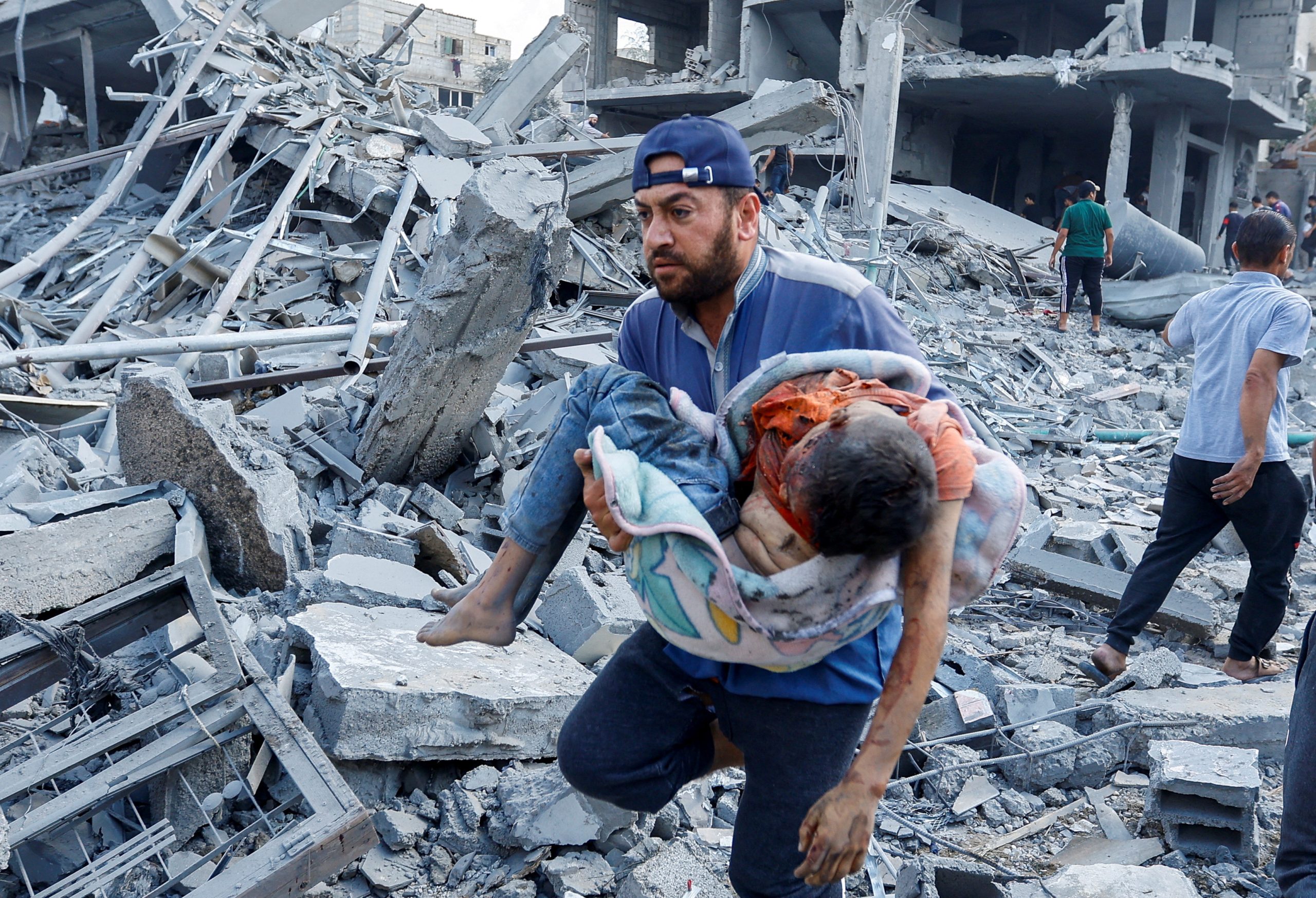
Since 1948, Israel has continued expanding its occupation and settlements in the Palestinian Territories. It thrashed the two-state solution and violated almost every international law in its systemic oppression, tyranny and ethnic cleansing of the Palestinians. It has carried out numerous indiscriminate attacks and killings of innocent Palestinians. The apartheid regime in Israel has illegally demolished thousands of Palestinian homes, destroyed heritages, desecrated religious sanctuaries, particularly Al-Aqsa Mosque, murdered countless unarmed civilians, including numerous children, women and the elderly and denied Palestinians basic human rights, including their freedom.

At the heart of the Palestinian resistance is the Gaza Strip (the headquarters of Hamas), which has endured decades of Israeli terror, bombardments and siege. The Gaza Strip is a densely populated area with a land, sea and air blockade by Israel since 2007. It is basically a prison.  Israel has carried out countless inhumane, unprovoked attacks across the strip, with the most deadly being in 2014 and the most recent occurring just five months ago. On average this year, 2 Palestinians have been killed daily by Israel across its occupied territories.

The hypocrisy of the Western powers fuelling the Israeli regime for decades has allowed successive generations of Palestinians to take bold and brave initiatives, like what is currently unfolding, to defend and resist the Israeli apartheid occupation. And it appears that the more fight they put to resist, the better they get at it. One may ask, what makes the Palestinians so different from the Ukrainians?

 With the seeming cowardice stance of the Arab Nations in their pursuit of a normalisation agenda at the expense of the Palestinians, it became increasingly clear that if the Palestinians would achieve anything at all, then they would either have to fight bravely and indeed as they currently are or die trying but retaining their honour and dignity with them.

This recent attack has sent a clear message to the world that if peace and stability must be achieved, then attention must be paid to the oppressed and not the oppressor. A man who has already lost so much would not mind throwing all that is left to defend his honour and dignity. The Palestinians have been stretched too thin, and they, more than anyone, have all the right to defend themselves in this war that the creation of Israel started.

Ismail Obansa Nimah wrote via nimah013@gmail.com.

An urgent plea for improved power infrastructure

By Mukhtar Jarmajo 

It is a tragic reality that Nigeria has been plagued by the incessant collapse of its national grid for the past few years. The nation has never been capable of generating, transmitting, and distributing sufficient electricity to its vast population. Daily life in Nigeria is synonymous with power outages, leaving citizens in perpetual darkness. The country’s electricity infrastructure is not only old but woefully inadequate to meet the needs of its growing population. This dire situation calls for immediate action from relevant authorities.

For years, Nigeria has been grappling with its power crisis. The nation’s outdated and insufficient infrastructure has failed to keep up with the times and the growing population, perpetuating the ongoing power outages. This has led to frustrated citizens and even more frustrated businesses. With the current state of the economy, power outages only worsen matters. The sector’s neglect and waning attention have only contributed to landing Nigeria in an unenviable situation.

The impact of Nigeria’s power crisis has been felt in every sector. It has taken a toll on schools, which cannot provide the quality of education necessary for the future generation. The constant blackouts also put lives in danger in hospitals as equipment fails and medical procedures abruptly halt. Businesses and industries are hit worst, struggling to remain productive amidst the darkness. Countless jobs are lost each year because of this lack of reliable infrastructure.

It is high time the authorities take these vital issues seriously and collaborate to develop solutions for the ailing power infrastructure. There needs to be a concerted effort towards investing in modern and efficient technologies, rehabilitating existing power plants, and improving power transmission and distribution systems. The current situation only highlights the pressing need for diversification in the sector, with greater emphasis on alternative and renewable energy sources.

The government must adopt pragmatic policies that attract investment in the power sector and provide incentives for clean energy solutions. It is a long-term solution that should not be underestimated and goes beyond serving the immediate needs of citizens but ensures the country’s future development.

Nigeria has the potential to generate power from a wide range of sources, including solar and wind power. Investing in these sources of energy promises considerable benefits for the nation in the long term. Efforts to tap into these sources must be expedited, and plans must be established to incorporate them into the existing power infrastructure.

Nigeria’s power crisis must be resolved today rather than tomorrow. The authorities must act urgently and focus on implementing long-term solutions that address Nigeria’s power needs. Efficient technologies and infrastructures should be prioritised to usher Nigeria into an electrified future. Only then will the country be able to realise its full potential and offer a brighter future for its people.

Jarmajo writes from Wuse Zone 2, Abuja. 

Reminiscence: My 21-day experience at the NYSC orientation camp

By Muhammad Muzzammil Bashir

She is a tall, plump, fair lady from the South. For the sake of privacy, let us call her Joy. She looked at me from head to toe and hissed, saying, “You should by now be in level 100 or 200.” I smiled uncomfortably. She added, “In fact, you’re supposed to be writing JAMB by now.” I asked her why. She replied, “You are too small to be in camp.” I managed to smile again and asked her how old she was. With a sheer, larger-than-life composure fully materialising on her face, she answered, “I’m so-and-so-year-old.” I humbly replied with my age number, and it became clear to us that I was two years older than her. She was full of apologies instantly. And guess what transpired after? We became friends.

It never occurred to me to write about my life on the camp until a day before our passing out when I was lying on my bed reflecting on the experiences I had had on camp. I wanted to write this piece immediately after we were out of camp, but many things took my attention elsewhere. I pray this piece may inspire those yet to enter the camp to open up their minds and embrace the life they are about to find inside the camp, as well as the general public to keep an open mind whenever they find themselves in a strange environment.

The National Youth Service Corps (NYSC) is a one-year mandatory service that Nigerian graduates under 30 must undergo to teach unity and discipline. I had the opportunity to camp in Kano State in Batch B, Stream I. The camp opened on the 12th of July and closed on the 1st of August. It’s located in the Kusala Dam area of Karaye local government. The camp is bounded by the dam to the west and an army barracks to the north. The east border is where the local communities are settled, and the camp’s main entrance is at the south border. I read and heard a variety of suggestions from people who had camp experience on when I should set my travel to report to the camp on either the first day or on the second or third day, with some even suggesting one week after opening the camp while backing the benefits of their claims.

I weighed the options based on what I wanted to experience and achieve during camp. I chose to schedule my travel to reach camp on the first day. I got to the camp on Wednesday, July 12th, around 11 a.m. The first thing I noticed from the gate where our luggage was being checked before we moved on to the registration process was how the NYSC officials and the security personnel treated the corps members (CM). We were treated cheerfully with dignity and respect. After completing my registration, I moved to my hostel while others were going through the same process I went through. At around 3:45 p.m., the soldiers—instructors—asked us to go and wear our white shorts and T-shirts, the dress we were to spend our 21-day stay on camp wearing except on ceremonial occasions.

Among the first things you will hear from the NYSC officials at camp is that you do not own your time. The camp officials acknowledged it. They are the ones who tell you what to do at what time. You have to abide by it if you want to finish your orientation course in peace; otherwise, you will be decamped or punished depending on the severity of your misconduct. At around 4:05 p.m., they started blowing the bugle, a valveless sound instrument that serves as an alarm system in the military or paramilitary barracks. All the CMs that were able to finish their registration were marched to the parade ground, where we started receiving training on the basics of the match pass from the instructors after the usual welcome pleasantries. We were not released until 6:30 p.m., leaving most of us tired and stressed. After the Maghrib prayer at around 8 p.m., we went to the kitchen to collect our dinner. We were told there were no other activities for that day since it was our first day at camp. We, the Muslims, went to pray the Isha prayer and joined the rest at the mammy market to buy some items and other consumables for some of us who could not cope with the camp food. By 9:00 p.m., most of us had retired to the comfort of our beds to relax our bodies from the weariness of travel and parade activities so that we would have enough sleep and make tomorrow upbeat.

We sometimes hear many things about camp life before we enter camp. One such is that soldiers wake you up from sleep as early as 3:00 a.m. On our first night at the hostel, around 3:00 a.m., most guys were awake, fully kitted out in their whites, awaiting the bugle sound. The guy in my corner tried to wake me up at that time. I refused and told him we still had enough time to sleep because I had already checked it on the orientation guidebook given to us. I managed to cope with the noise and continued my sleep until 4:10 a.m., when I set my alarm before sleeping.

Alas, the sound of the mighty bugle came at around 4:45 a.m. By then, I was fully set to go out. The Muslims went to the mosque to do our Subh prayer, and the Christians went to the parade ground to observe their morning prayers. We joined them on the floor for morning meditation. The camp officials and instructors were there. Man O’War was there too. The camp PRO is in charge of moderating most of the events on base. She is a lady of average height, chubby, and black in complexion. She came to the front, took the mic, and greeted us, and we greeted her back. She then introduced the staffers, gave some instructions that would guide our peaceful stay on camp, and told us the schedule of activities for that day. She taught us the NYSC anthem and the national prayer (second stanza).

The first two to three days on camp are the most stressful for most coppers. We were subjected to only physical exercises and rehearsals for the swearing-in ceremony for those three days. The ceremony was scheduled to take place on Friday. So we started rehearsing on Wednesday afternoon of our first day of arrival. We were stressed out doing drills on the parade ground for most of the second day; even on the ceremony day, we did a final rehearsal in the morning before we were allowed to go and dressed up in our khaki trousers, crested vest, and jungle boots. The ceremony started at around 1100 hours after the arrival of the deputy governor of Kano State. After all the pleasantries and salutary parade went off, we were sworn in by the representative of the chief judge of Kano State.

From then on, the deputy governor gave his speech in English and Hausa and declared the orientation exercise open. We were then allowed to move around, socialise, and take pictures for memorabilia after the deputy governor was escorted back to his motorcade by the quarter guards and the NYSC officials. While on the parade ground during the ceremony, the sky started to go cloudy, giving all signs to start raining; we were forewarned that we were not allowed to move anywhere if it began to rain whenever we were on the parade ground, and more in particular during the ceremony in the presence of the special guest. Fortunately, in the first place, the rain started dropping lightly and stopped abruptly within a few minutes.

One of the core missions of the NYSC is to foster unity among Nigerian youths. This is achieved at camp through social activities and competitions between the different platoons; this brings harmony, gives a sense of belonging to the CM, and keeps their stay at camp from being boring. On this note, the NYSC orientation exercise, as some of us thought, is not entirely about drills during the three weeks. There are a lot of activities that are organised for the CM. Among them are sensitisation lecture series from various government and non-governmental organisations, skills acquisition and entrepreneurship development (SAED) training, sports activities, cultural carnivals, social nights (where competition from drama to cultural and afro dances is observed), and cooking competitions, among others. After our swearing, the real camp life started, and we began to enjoy our stay there, with every day becoming increasingly impressive. Most camp friendships and love relationships form during this period and some even end in marriage. I made many friends, notably from the south and most from the north. From my short stay at camp, I cannot quantify the experience I gained, mainly from the coppers and some from the camp officials and non-camp officials (many market people). I had difficulty with the instructors’ (soldiers) language of instruction during the drills. They mostly give instructions in Pidgin English, and most of us from the North don’t understand it. I supposed they would use English, not vernacular, as a language of instruction since we are all graduates and should be treated as such.

One thing in common that most of my mentors have been advising me on is to seek leadership positions wherever I find myself. This will give me ample opportunities to gain leadership experience, build networking opportunities, and know how things are going in their grand scheme. This conviction led me to seek leadership positions and volunteer activities during my stay at camp. Everything in camp, from the level of the officials to the nonofficials and copper strata, is designed to have leadership roles. CM are each assigned to 10 different platoons by a computer algorithm. I found myself in Platoon 4. Each platoon is expected to have leaders who will coordinate its activities.

Leaders are mostly chosen through election or consensus by platoon members under the supervision of a platoon officer—an NYSC official. Hence, I had the opportunity to contest for the role of platoon leader. Two of us challenged: me and my colleague, Whinny. He was elected. Since we were both males who contested, an offer was thrown to the ladies for the position of deputy. Hence, I volunteered to take on the position of platoon secretary. Again, almost all the social activities have representatives from each platoon, mainly two people from each platoon. From social reps to sports reps, lecture reps, OBS (orientation broadcasting service) reps, parade commanders and their sub-guard commanders, and man o’ war, among others. These representative positions are primarily based on volunteerism and some on proficiency.

Upon all the rep’s volunteers during the process of selection, it never occurred to me to volunteer for anyone but lecture reps. I did that based on gut feelings; I instantly felt the urge to volunteer when it was announced. We were 20 lecture reps in number, two from each platoon. NYSC officials head the committee. Our main role is to come early in the morning, arrange the hall while morning meditation is going on at the parade ground, and help coordinate lecture activities. Also, six of us volunteered to take on the role of repertoires—the role of taking down key points of the lectures while they’re going on, typing them, and sharing them in our respective platoon WhatsApp groups for the sake of CM that were not around or not able to listen to the lectures attentively. This proved to be one of the two most demanding roles I had. It requires me to give my absolute attention to the lectures going on and, at the same time, take down important points. It deprives me of the informal opportunity to take a 2-3 minute nap that CM usually enjoy by cunningly dropping their facecap a little down to cover their eyes and escape being noticed by the officials during the lecture time. But the experience I had was worth the sacrifices. I met one of the most amazing people on camp on the committee. There is one of my Facebook friends, Abdoull Toro, whom I had never met face-to-face until in that committee. Surprisingly, we did not recognise each other until several days after we met in the committee during a normal chat we used to have while carrying out our assignment.

The other role that was so demanding was when I took on the position of Governor of Financial Inclusion Ambassadors with Chinecherem as my deputy, a very calm, intelligent young lady. This was during a 6-day training of financial inclusion ambassadors under the Federal Ministry of Youth and Sports Development in collaboration with NYSC and other sister federal agencies. The training aim is to train us with adequate knowledge to raise awareness of the knowledge and skills needed to manage individual, household, and business finances effectively, to build confidence in using financial products and services, and to strengthen participation in the formal financial sector in the community we are serving. This will serve as our CDS (community development service) during our service year, one of the four cardinal programs of NYSC; others include camp orientation, serving at the place of primary assignment, and winding up or passing out.

This training was one of the most insightful moments of my stay at camp. I found myself amid ambassadors who are majority holders of degrees in accounting, banking and finance, economics, and business administration, with me, a holder of a human anatomy degree, as their leader. The training session was mainly interactive and lively, to the point that time used to escape our notice. I met great people there who taught me many things about financial literacy and inclusion, especially our training instructor from the ministry, Mrs. Ruth Hussein, who was very accommodating and compassionate to us.

Even though holding a leadership position necessitates responsibilities, it usually comes with sacrifices. Among the camp activities I dearly missed were my drills. Members of our lecture committee do not usually attend morning meditations and parades. This left me only free to participate in afternoon parades when sports and rehearsals for parade competitions started. I was in first place among the competing parade CM. Then, out of the blue, financial inclusion training came, making me weigh my options. I chose financial inclusion based on personal convictions and other reasons. This caused me to be dropped from the parade group of my platoon because of my absenteeism. The six days of the training were the most stressful of my stay at camp. I will be in the hall from 5 a.m. until 7:30 a.m. in the morning for hall arrangements and morning lectures.

Then, I will return to the hall after breakfast from 9 a.m. until 2 p.m. for another lecture series while doing the repertoire work. By 2:30 pm, after taking my launch, I will move to the training class to be there before anyone else as a leader to arrange the class and provide everything that we may require for its smooth running. We will not leave there until 5:30 p.m. when I will have a chance to go and watch football and volleyball marches. Between the periods of Magrib and Isha prayers, that is where I mostly used to have time for chats with my roommates and other friends. Immediately after Isha’s prayer, I will move to the hall and locate a place, mainly in the front row, for social nights. I slept most days from around 11 p.m. to 4:30 a.m.; this enabled me to compensate for the siesta I was supposed to have in the afternoon and relieve my stress during the day.

While navigating the hilly valley camp life, trying to carry out all the responsibilities on my shoulders, as a human being with a desire for knowledge and life ambition, I have to make sure I create time for extracurricular activities that keep me spiritually active and intellectually creative. Under normal circumstances, even when I was in school, when it was time for semester exams, what I normally did first thing in the morning after Fajr prayer was my recitation of the glorious Qur’an before embarking on any other activity.

Camp life comes with different scenarios, and I don’t have the liberty to own my time for the time being. Despite that, I found time to recite 1-2 hizb daily throughout my camp stay. This enlightened my heart and gave me a sense of connection with my Creator. Even though all these were going on, as an avid reader of books, spending 1 or 2 days without reading makes me feel like a part of my body is missing, which I must find and place back to feel complete. I managed to read one book in camp—the book that we were reading at The Literati Book Club that month. This at least gave me a sense that I’m still moving on the right path towards my life purpose.

Apart from the experience I gained from the leadership positions I held and the volunteerism in which I engaged myself, I was given favours from the officials I interacted with and some from friends and colleagues during my stay at camp. Since before my graduation from the university, I have had the ambition to serve in Kano due to its ample opportunities, particularly in the commerce sector. My ambition later changed to Lagos, which I dropped for some reasons. Our call-up letter was not uploaded to the portal until a day before the commencement of camp in the afternoon.

I was so happy when I saw I was posted to Kano State, the state I desired. I had nothing better to do than thank the almighty God. Under normal circumstances, CM seeks to relocate to their desired state for health issues, marriage, or personal reasons. Some CMs follow the lawful means to get approval for their relocation if they meet the criteria. While some follow unlawful means, resulting in many of them falling prey to scammers. My engagement with officials gave me the privilege to relocate wherever I wanted. But what I wish to do is Kano. I was privileged to choose where I should be posted for my primary assignment. I did not have anywhere in mind. My response was always anywhere that is pretty good.

My 21-day stay at the NYSC orientation camp is momentous, with bundles of experience, knowledge, and networks I will continue to cherish.

Muhammad Muzzammil Bashir wrote via mbashir199@yahoo.com.