Opinion

Contrasting priorities and policy impact between Abba and Ganduje

By Mansur Hassan, PhD

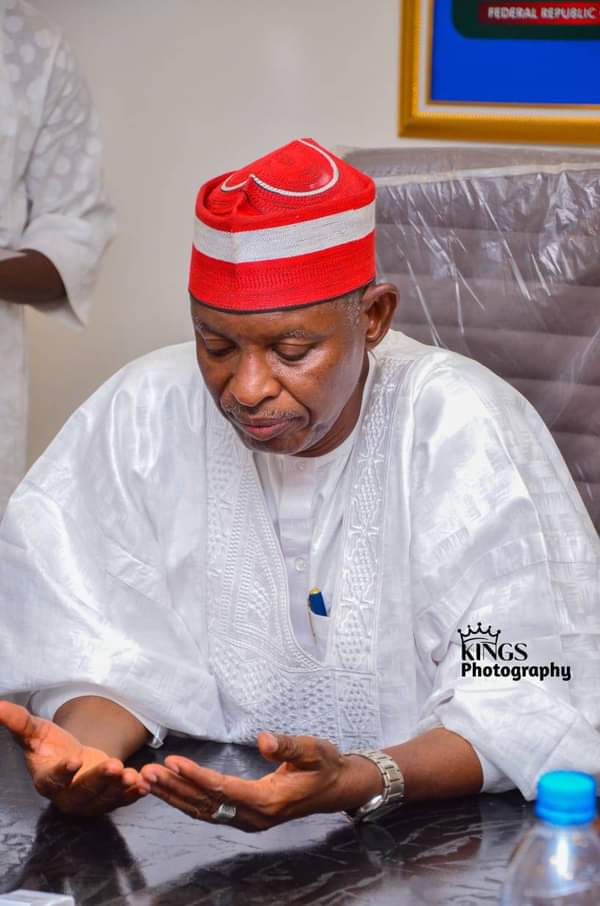
Engr. Abba Kabir Yusuf, the Executive Governor of Kano State, has recently shed light on the alleged misappropriation of funds by Nigerian governors, exposing lack of impactful policies.

Over the past eight years, Kano State witnessed a dearth of policies that benefit the less privileged directly. In contrast, the Kwankwasiyya administration, led by Abba Gida Gida, has swiftly demonstrated its prowess in governance within five months, particularly through transformative healthcare and educational ‘revolution’ spanning from primary to tertiary levels.

Under Kwankwasiyya’s leadership, there has been a significant focus on education, including sponsoring first-class graduates to foreign universities—an initiative emulated by other nations. The educational revolution initiated during the 1999-2003 and 2011-2015 periods has left an enduring mark, with numerous scholars benefiting from foreign scholarships.

However, the governors who presided over the state from 2015 to 2023 failed to implement any substantial policies for the state’s improvement. Criticism was leveled against the transformative programs introduced by H.E. Abba Kabir Yusuf, particularly after the mass wedding event known as “auren ‘yangata.” The sponsorship of 1001 first-class graduates further intensified opposition, with the former Governor of Kano State, Abdullahi Umar Ganduje, dismissing the program as useless.

This criticism seemingly stemmed from the program’s focus on underprivileged children, contrasting with Ganduje’s past sponsorship of his own children’s education abroad. The clash underscores a debate on priorities and equitable policies in Kano State.

Dr. Mansur Hassan is a Senior Lecturer, Department of Mathematics, Yusuf Maitama Sule University Kano

Budget and National Planning

By Bilyamin Abdulmumin

Last week, during the FEC meeting, the Minister of Budget and National Planning, Senator Abubakar Atiku Bagudu, made a groundbreaking announcement by revealing the budget forecast for 2024. It sent shockwaves through the nation, and understandably so, as the projected budget of 26 trillion naira was unprecedented; it was a staggering  4 trillion compared to the previous year.

Nigerians have consistently expressed concerns about the ever-increasing budget forecasts year after year. Regrettably, this budget inflation trend has persisted. For instance, the budget started at 299 billion during the Obasanjo government in 1999 but ballooned to 2.3 trillion when he left office. Yar’adua handed over a 4.4 trillion budget to Jonathan, who returned the exact figure in 2015 (despite presenting a 4.9 trillion budget in three previous years). The budget increase went wild during President Muhammad Buhari’s tenure, reaching a staggering 21 trillion in 2023 when he left office.

Although I am not an expert on budget matters, it’s apparent that every budget must consider factors such as market dynamics, inflation, and the growth of the national population and its demographics.

Rather than fixating solely on the budget figures, we, as citizens, should focus on the prudent and effective utilisation of these budgets. If the Nigerian budget had been prepared and executed more efficiently, we might have already achieved the promised Eldorado.

For example, 43 years have passed since the Shagari and Gowon green revolution, 33 years since Vision 2000, and a decade since Jonathan’s Agricultural Transformation Agenda. However, the majority of Nigerians still lack access to quality housing and healthcare, and we continue to struggle to feed ourselves. Similar ambitious visions have come and gone, including IBB’s structural adjustments, Abacha’s Vision 2010, Obasanjo’s Vision 2020, Yar’adua’s seven-point agenda, and PMB’s Vision 2050.

One crucial issue highlighted by BudgIT, a civic organisation monitoring the Nigerian budget, is the disconnect between our budget and national planning, hindering the realisation of the promised utopia. Our budget is not aligned with our national planning, and it seems that from the beginning, Nigeria has not been drawing the budget structure from national planning.

In the words of Oluseun Onigbinde, Global Director of BudgIT, “The Nigerian budget has delivered sub-optimal results because it has not been linked with national strategic plans written for the medium or short term. The current President has a public manifesto, and the Federal Government recently, at a significant cost, also delivered strategic plans that terminate in 2025 and 2050. It does not make sense if the national budget is not linked to these documents. The budget needs to stop just being a contract vending machine stuffed with varied interests but a thorough planning document.”

If the masses can redirect their attention to this issue rather than merely reacting to budget forecasts, expecting more effective and desirable results is plausible.

Interestingly, the Minister of Budget and National Planning, Senator Atiku Bagudu, has pledged to address this issue and reached out to the public for understanding and engagement. This outreach occurred during an official visit by the House of Representatives Committee on Alternative Education. The minister reaffirmed the government’s commitment to the APC comprehensive plans, particularly Agenda 2050 and the 5-year development plan.

Dear Nigerians, it’s time to refocus our priorities and stop chasing after the shadows.

Kogi 2023: Countdown to an election whose campaign is characterised by ethnic agendas

By Prof. Abdelghaffar Amoka

Kogi state still remains one of the worst-governed states in Nigeria since its creation in 1991. We are 14 days away from electing the man who will run that state for another four years, and every camp is doing its bit to enhance its victory at the poll. The zones of the candidates of the major political parties are all hopeful. Kogi West is hoping for a miracle to happen as the 139,485 votes from the senatorial election can’t win the election, supposing Dino Melaye can mop up all those votes from Kogi West. Unfortunately, Dino’s presence at the East and Central seems weak.

Kogi East is leveraging on its strong voter strength to reclaim Luggard House after eight years break. The truth is that the zone has the largest votes, and there are 217,460 votes from the Senatorial election to hold onto, supposing Muri Ajaka can mop up every one of those votes from Kogi East. The zone actually doesn’t believe that any other zone deserves to occupy the Luggard House. You can’t blame them. An election is said to be a game of numbers. Those with the number can even make an idiot to lead the wise.

Kogi Central, no doubt, has the least voter strength. They have a total of 106,303 votes from the Senatorial election, which cannot win the governorship election. But just like everyone else, the governor is working hard to make his preferred candidate succeed him. He has picked Usman Ododo, a potential successor, from his Local Government. His candidate has now been adopted as the KC Agenda. He is using the incumbency factor to get support from the East and West for his boy.

There was the emergency establishment of the third state university in the West, and the ministerial slot went to Kogi East. That is a nice political calculation, but is that enough to swing votes from these zones? Commentators are wondering what will a state that can’t pay LG and primary school teachers do with the burden of another state university.

There was a recent report that the state government has appointed over 200 SAs. 215 Special Assistants in an election period and a few months to the end of the government does not make sense to an ordinary person, but it makes a lot of sense to politicians. They are likely special assistants on election matters. Nearly all the traditional rulers, including that of my clan, are now first-class chiefs. Will my clan and the other clans across the state work for the victory of the governor’s candidate just because our traditional rulers are now upgraded to first class?

There is also an ongoing reconciliation within the Kogi Central. There are ongoing radio programs telling the people that they know they have wronged people and appealing to them to forgive and forget. It’s like the governor realises that it’s not everything that can be achieved with force and no more sending glowing fire to perceived enemies. He is trying to deploy a peaceful approach. We have not heard much of threats in recent times. That’s not a bad idea.

I read the names of some professors and other respected elites on a reconciliation tour. My question was this: where were these people when they were busy excavating and digging trenches on the roads of the opposition zone that they refused to fix? Where were they when criticism was considered as “haram” and critics were hunted? Where were when our public schools were left without teachers for the past seven years?

I wish these respected individuals had played an advisory role to right these wrongs before now. I hope the LG and primary school teachers and their families will find it easy to forgive and forget our ethnic and Kogi agendas

Is the reconciliation move late? It may be, and it may not be. Human beings, especially Nigerians, are known to have very short memory. We live by the moment. We are quick to forget yesterday if today is favourable. If I were the Governor, I would have started the reconciliation in January 2023 in preparation for the election and my agenda.

One of the basic problems is salary payment. No matter his achievements in other areas, the salary issue has shrouded them. If I were him, I would have blocked the loopholes and mopped up the available cash to improve the percentage of the salary paid to LG workers and primary school workers. Promise the workers that the next government will improve on it. Make them see reasons why they need to support me to actually the Ododo Agenda for “renewed hope”, especially on salary payment. The people need a glimpse of the promised hope before they can key into your project. That would have resuscitated his battered image and attracted support from unexpected places. He could have found it easy to sell the candidature of Ododo across the state without much stress.

Nobody is even discussing the future of Kogi state and the well-being of the people of the state. It’s all about selfish agendas. However, it’s about two weeks to the election, and I am still struggling with the choice of who to support. So, who should I support? Ododo for KC, my zone, to retain power for another 4 to 8 years? Muri for KE to reclaim their birthright? Or Dino for KW to also have a taste of Luggard House? It doesn’t matter if the candidate is said to be a clown.

The people of the state have gone through a lot over the last seven years. It was tough and tougher now economically.

My appeal is for the election gladiators to ensure that we have a violent, free election. Please, let’s have a peaceful election.

Abdelghaffar Amoka PhD, wrote from Ahmadu Bello University, Zaria. He can be reached via aaabdelmalik@gmail.com.

Who will rescue the Naira?

By Aliyu Nuhu

No easy way for a country with bizarre economic behaviour. The economic laws are there for easy implementation in a normal society. But Nigeria is not normal. Everyone, from the leases to the ordinary citizens, is looking for ways to damage the country for personal gain. NIGERIA operates its economy with laws made from hell.

We all know our huge appetite for the dollar is driven by our need for foreign goods which we are unable to produce. If we don’t need foreign goods, there will be no demand for dollars since we only need the currency for imports. But who is not guilty among us here?

Naira supply affects inflation since too much money is chasing a few goods but is not the direct cause of the fall of the Naira in the forex market. Laws of demand and supply drive the forex market. More Dollars available will lower its value and vice versa with Naira. But these laws don’t work in Nigeria because of distortion in all economic policies created by the government, mostly by greedy Nigerians and the officials themselves.

The forex window allows funding of critical sectors with dollars by the Central Bank of Nigeria (CBN). But the distortion here is that those given dollars to import goods will take the money to the money market for round-tripping. The CBN officials will also take the dollar and exchange it for quick gain. Each governor that gets FACC allocation in Naira will take it to market chasing the dollar.

With such behaviour, the Naira can never get a breather. It is this distortion that makes it difficult to explain the reasons why Naira is not only weak but unstable. Currency instability is the worst thing that can happen to a country. At any point in time, investors can never know their profits and losses. It is the reason why companies like Emirates, ShopRite and Game are closing shop.

After looking at some of our promising macro trends, Nigeria is still unable to keep Naira strong because of the depletion of the country’s foreign exchange reserves. The major function of foreign reserves is to keep the Naira strong. But regime after regime keeps spending the reserve account to a point that no one can precisely say the balance of NIGERIA’s foreign reserve.

World Bank said irrespective of all other macroeconomic shortcomings, the Naira can still be exchanged for a dollar one-on-one if we can have $900bn in our foreign reserve. But what do we have today? Less than $30bn!

Kuwait is a consumer country like Nigeria, but because it has a foreign reserve of $137bn and a gold reserve of 78.97 tonnes, it has the strongest currency in the world. But Nigeria has 21.37 tonnes of gold in its reserve and a $34bn reserve for an economy with a GDP of $489bn. Kuwait is able to save with a GDP of $106bn! There is evidence that shows that GDP growth and employment growth increase in response to positive shocks to foreign currency reserves (forex reserves) accumulation, whereas unemployment declines.

Read the reports on the new government report on CBN, and you will understand that the Naira is only competitive by sheer luck, if not a miracle. Everyone, including people in charge of Naira’s health, is out to destroy the Naira.

From doubt to determination: My journey to HND in Mass Communication

By Usman Muhammad Salihu

In the world of education, some paths are straightforward, while others are winding, challenging, and filled with unexpected detours. My journey towards obtaining an HND in Mass Communication at Abubakar Tatari Ali Polytechnic (ATAP) in Bauchi State, Nigeria, certainly falls into the latter category. It’s a tale of determination, sacrifice, and the unwavering support of family, mentors, and friends.

The story began in early 2020 when a conversation with my model, Abu-Ubaidah Ibrahim Kuna, led to my contemplating furthering my education. During my diploma days, I had already embarked on a professional course, Mass Communication, but some circumstances are forcing me to delve into sociology. Abu-Ubaidah’s advice struck a chord in my heart, prompting me to reconsider my choices.

Yet, life had its complexities. I was now a family man, responsible for providing for my loved ones. Pursuing my passion for Mass Communication while residing in Gombe seemed daunting. The course was unavailable nearby, and sponsorship was scarce. This predicament led me to opt for sociology. As they say, “In the absence of desirability, you make the availability your desirability.”

As fate would have it, the Direct Entry application period had elapsed, and waiting for another year was not a viable option for me. I thought of returning to Abubakar Tatari Ali Polytechnic in Bauchi, but the distance from Gombe presented its challenges. Who would sponsor my education and care for my family during this journey?

With courage and determination, I applied for HND in Mass Communication at ATAP and, to my delight, secured admission. In November 2021, I embarked on a motorcycle journey from Gombe to Bauchi State, joining my fellow students as lectures had already commenced.

As if the journey had become more challenging, I found myself in Stream B, paying registration fees every semester without a sponsor. However, divine intervention came through my elder brother, Jubril Salihu (Baban Hajiya), who provided much-needed support.

Balancing lectures and providing for my family back in Gombe was no easy feat. I travelled back almost every week, seizing every opportunity for sustenance that came my way. Skipping breakfast and even lunch became the norm, but our determination to succeed remained unshaken.

The challenges were numerous, from putting food on the table to completing assignments with limited resources. Still, we pressed on, making our presence known inside and outside the classroom as we joined the school unionism.

Our lecturers, especially Mal. Abdul Ahmad Burra singlehandedly led us to the membership of the pen profession, Mal. Nazir Abba Pali and Mal Abdul Rasheed Bala Tulu were pivotal in our journey. They nurtured us into aspiring journalists, and our articles began appearing in renowned Nigerian dailies and online media outlets. Friends like Muzaffar, Adams, Raheenert, Bello class rep, Jalam, Alpha, Aliyu, Yahya, Ibrahim, Wale, Usaina, Saeedah, Celestina, A’isha, Rinret, Anas, Baba Fema, Baba Damina and many others became our pillars of strength.

I would be remiss not to express my gratitude to my family, especially my parents, brothers and sisters, the heads of department at ATAP, my mentors, and Dr. Saidu Wanzami, who supported us during our educational journey.

In the face of adversity, we persisted. With the unwavering support of our loved ones and mentors, we overcame the obstacles on our path. Our journey to an HND in Mass Communication is a testament to the power of perseverance, determination, and the support of a strong community. As we graduate, we look back with gratitude and forward with hope, ready to embrace the challenges that lie ahead, knowing that with faith and resilience, nothing is impossible.

Usman Muhammad Salihu writes from Jos, Plateau State, Nigeria, and can be reached via muhammadu5363@gmail.com.

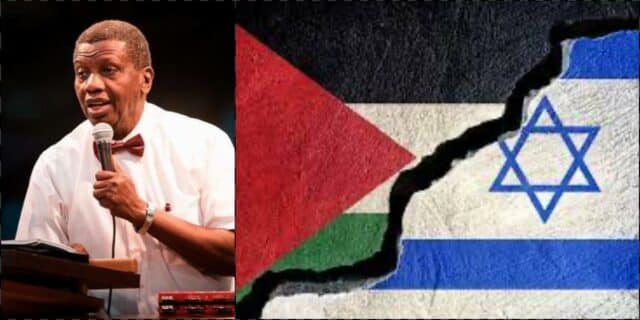
Israeli apartheid regime and Adeboye’s laughable prayers

By Professor Abdussamad Umar Jibia

In 1992, about 20 years after Nigeria severed ties with Israel, General Ibrahim Babangida’s administration restored diplomatic relations with the Jewish occupier state. This followed incessant calls for doing so by Nigerian Christians. 

Islamic scholars berated the Christian clerics who called for restoring ties with Israel for their blatant ignorance of the Jewish state and what it stood for. Contrary to what is believed by the Nigerian Christian clergy, Israel is not a Christian state, and Jews do not believe in Jesus Christ either as a Messiah like the Christians believe or even as a Messenger of God like I, a Muslim, believe. As far as the Jew is concerned, Jesus is an illegitimate child of Mary who is a product of fornication committed by his mother.

And what is special about Israel? Unlike Ghanaian, Nigerian, Pakistani and other nationals who feel at home whenever they are in their countries, the Israeli carries the guilt and discomfort of an occupier even while “at home” in the land now called Israel. Many countries do not recognise the existence of Israel as a state. 

What followed Babangida’s diplomatic decision is a shame. A Christian Pilgrims Commission at the centre and a Christian Pilgrims Board in each state. That’s not all. While my own grandfather travelled to Saudi Arabia to perform the hajj on foot without any Government facilitation, and I saved my own money to go on hajj by air because we believe in hajj as part of our religion, an average Nigerian Christian is waiting for Government to pay for him to visit Israel to do what they call a “religious” duty. The journey, year in and year out, by Nigerian Christians to visit Israel for ‘pilgrimage’ has thus been a huge burden on the Nigerian Government. I believe there should be an act of the National Assembly to criminalise the sponsorship of pilgrims by Governments at all levels to whichever holy land the former want to go for their worship. 

The latest struggle by Hamas to free Palestine from Zionist occupation is now in its second week. Governments and individuals worldwide have been voicing their opinions, with many taking sides and others calling for cessation of hostilities. One would commend the Christians Association of Nigeria (CAN) for being cautious this time. The Nigerian Christians’ umbrella body spoke against bloodletting and preached the sanctity of human life. I am personally impressed. The leadership of CAN under Daniel Okoh should go a step further to end hostilities against non-Christians in Christian-majority communities of the North. This would contribute towards the desired peace and development that has eluded Nigerians.

If CAN exercised caution under Most Rev. Daniel Okoh, the same cannot be said about the overseer of the Redeemed Christian Church of God (RCCG), Pastor Enoch Adeboye. When I saw him calling Jews his “brethren”, I wondered whether I would laugh or cry. No matter how one tries to give Pastor Adebayo the benefit of the doubt for being a Nigerian respected by many, one will have to admit that the Pastor has, in this case, behaved like one of those roadside church-goers who have not been to school. Otherwise, how on earth would a Christian refer to Israeli criminals as his brethren and even ask thousands of unsuspecting RCCG members to pray for them?

Perhaps Pastor Adebayo is unaware of the Jewish state’s atrocities against innocent Palestinian Christians. Only recently, the head of the Roman Catholic Church in Jerusalem, Pierbattsta Pizzaballa, was reportedly complaining of increasing attacks by Jewish extremists “emboldened by [the] Israeli Government”. 

The attacks on the Christian community in Israel, whose record is handy for anyone looking for it, include attacks on Christian sites, which people like Adeboye say they go to Israel to visit and Christian worshippers whom the attackers refer to as idol worshippers who should be, “killed according to Torah”.

According to a recent NBC News report about Jerusalem, “Churches have been graffitied and clergy who live and work here report being frequently spit on, harassed and even physically attacked by extremist Jews”. The report concluded that “Christian leaders say most incidents are never thoroughly investigated,” confirming that it has the backing of the Zionist state.

Hear Pastor Adeboye, “It is my prayer for all our brethren in Israel that the Almighty will grant you absolute peace from now on in Jesus’s name”. Haba Pastor! What does Jesus have to do with Zionists? And what do Zionists have to do with Jesus? The only non-Christian group who accepts Jesus, the son of Mary and believes in the virgin birth, are Muslims. 

And he said, “The almighty God, the only one of Israel…”. My dear pastor, which God are you referring to here? Is it Jesus Christ whom they refer to as an idol or the only God who created Jesus without a father, just like he created Adam without two parents?

Adebayo and other African Christians should get their priorities right. Palestinian Christians have done so long ago. They have always identified with Palestinian Muslims in their struggle for freedom. 

Professor Abdussamad Umar Jibia wrote from Kano via aujibia@gmail.com.

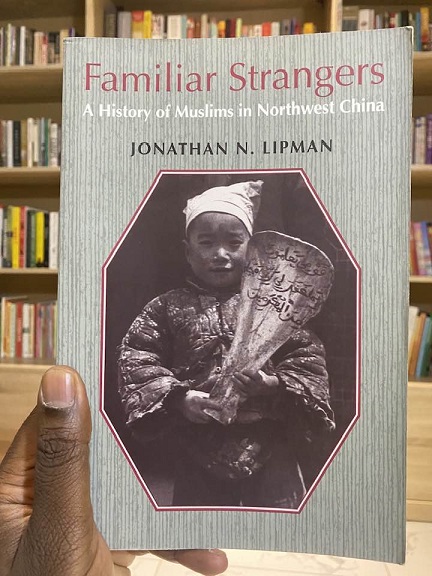
BOOK REVIEW: Familiar Strangers: The History of Muslims in Northwest China

By Dr Shamsuddeen Sani

It is easy for the narrative about Uyghur Muslims of China to draw your attention due to the fierce East-West political drama about them. Before now, I had no clue of the profound complexity inherent in the history of Islam in Muslim northwest China.

Jonathan N. Lipman skilfully avoids the more sensitive politico-religious aspects, as he aptly puts it, making it not a book about the history of the Muslims in northwest China but a comprehensive account of the history of Muslims living in northwest China.

This book offers a critical analysis of the origins of Islam in northwest China, the evolution of Muslim identity and culture in the region, and their intricate connections within the broader context of greater China. This examination spans six comprehensive chapters and incorporates both pre and postmodern contextual perspectives.

Following an elaborate introduction that combines geography and ethnography in northwest China, Lipman offers an extensive overview that spans nearly a millennium, encompassing the entire cultural landscape of China. He achieves this by positioning Muslims as unique elements within the familiar historical context of China from the Tang dynasty through the Ming dynasty.

After the Qing conquest of the 1640s, he investigated specific solidarities among Chinese Muslims and their leaders. Additionally, he examines the development of Sufism in northwestern China and the integral role played by the Shuyuks and Tariqa in the region’s social fabric. By the mid-18th century, as the book highlights, Sufi orders had already ignited a significant drive towards political activism, community cohesion, and horizontal competition.

Coming to the early 19th century, Lipman looks into the era marked by the transition from the Qing Empire to the Chinese nation-state. He explores the intricate processes of change, driven by internal factors and influences originating from Europe, America, and the Muslim world, which swept across the outskirts of China. These forces compelled individuals to make decisions under unfamiliar and challenging circumstances. The book took a tangent to meticulously analyse four key Sino-Muslim figures who embarked on distinct yet equally complex journeys towards finding common ground with a modernised China.

This book is not an easy read, given the unfamiliar names one must remember, but it is worth every minute of your time.

Dr Shamsuddeen Sani wrote from Kano, Nigeria.

Gaza hospital bombing: Will this open your eyes now?

By Ismail Obansa Nimah

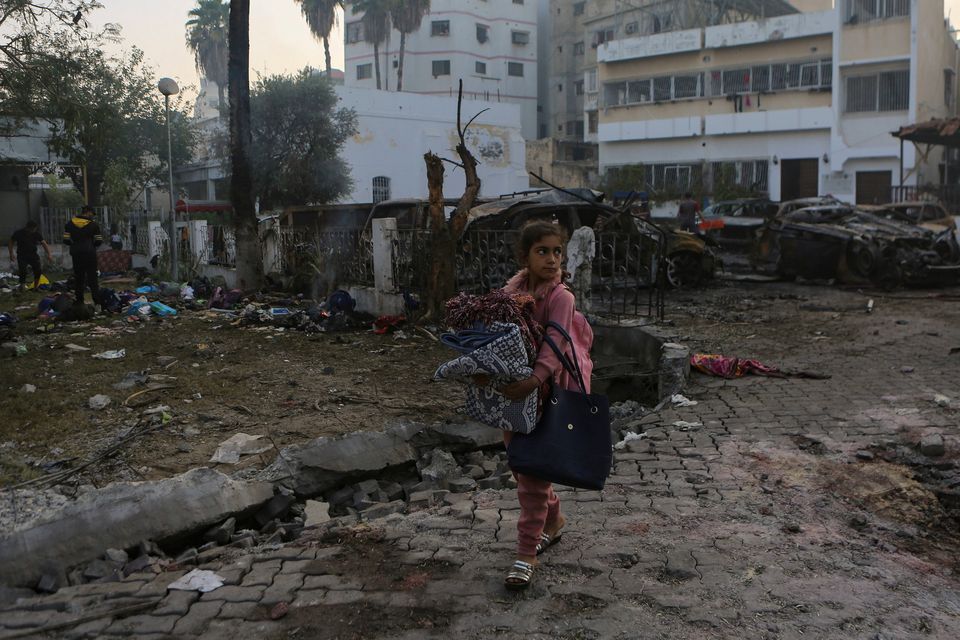
Moments before the deadly Israeli strike on the Al Ahli Baptist Christian National Hospital, an official Israeli government page posted the following on X (formerly Twitter):  “Due to the lack of medical equipment and the lack of medical staff, it was decided to bomb the Baptist hospital in Gaza and give them euthanasia death”.  

The attack is the worst to hit a hospital since World War II. It has so far killed more than 500 people, with many still under the rubble. The tweet has been deleted, and as usual, Israeli and mainstream Western media have begun damage control to embellish the ignominy with half-truths and outright falsehood.

There is no sitting on the fence in this conflict. You are either here or there. You either stand for the Palestinians against the monstrous apartheid regime of Israel, or you are with the Israelis, of whom a significant majority, save just a few, are so inhumane.

And when I say Palestinians or Israeli, it does not just equate pitting Muslims against Jews. If you must know, Bethlehem, the birthplace of Jesus himself, is amongst Palestine’s illegally occupied and besieged regions and has been under constant attack and bombardment by Israel for the past seven decades.

I hope our Christian counterparts also realise that cheering Israel on and being sympathetic to their cause on whatever basis or allusion, scriptural or not,  erodes the very humanity in us and is tantamount to aiding the systematic tyranny and barbarism that entity represents – the same barbarism we all spoke against and condemned when it occurred in South Africa.  We are all targets. This is a war on our collective humanity. Upon deeper reflection, we will find examples of similar demagoguery against Jesus and his Mother, Mary, in the scripture.

Ask yourself, is it not insane and malevolent to think that the Just and Merciful Creator will choose a group of people as his beloved or ‘chosen’ and help them commit atrocities of this scale to fulfil some prophecy?

We, Muslims, are not your enemy. We are not what the propagandists of the West and Israel propagate. We have an entire chapter in the Qur’an named after Mary in deference to her honour. We have numerous verses exalting her status in the sight of God, away from what the Jews still assert. No Muslim is a Muslim until he/she loves, respects and honours Jesus Christ as one of the mightiest messengers of God. We do not call his name, except we add “peace be upon him” to it. We make no distinction between him and other great messengers of God. Yet you somehow think we are your enemy? And help the Jews who curse Mary and Jesus further their evil plot, particularly against us?

For more than One thousand years, the Muslims ruled Palestine, with Jerusalem as its capital. During these years,  Muslims, Jews and Christians coexisted together in goodness, peace, justice and prosperity. Every Muslim was obligated to respect and ensure the human rights of those living under the Islamic Caliphate, no matter who they were and what they worshipped. It was and still is a huge sin and a punishable offence for any Muslim to trespass on the rights of a non-Muslim living under the protection of a Muslim government. No non-Muslim blood was allowed to be illegally spilt without justice. No one was made to unduly suffer on account of being different in any regard.

And even when the European Christian crusaders sacked Jerusalem and massacred hundreds of thousands of its inhabitants in the 11th century, the  Muslims under Salahudeen Al-Ayub did not spill a single innocent blood when they took the city back from the crusader occupation some 88 years later. Not even the blood of many cruel crusaders who had massacred Muslims in their thousands.

It may be that history is repeating itself all over again. But I am sure Palestine will again survive this cruel attempt at extermination and targeted ethnic cleansing. And I know that it will be soon, very soon. Until then, hang in there, brethren, for the help of our Creator is near.

I hope this opens your eyes and we all see more clearly away from sentiments and propaganda.

Ismail Obansa Nimah wrote via nimah013@gmail.com.

Climate change will affect everywhere: Are we at more risk?

By Saifullahi Attahir

Our grandparents used to remember with nostalgia how, in the past  50 years, they usually had a high-yield harvest yearly-round in the farms and surprisingly with total abstinence from using fertilisers and other modern additives. The bushes are full of trees of all sorts, vegetative forests with various colourful and nutritious leaves, guavas, mangoes, paw-paw, and dates, to name a  few. A farmer was almost always sure to have a sufficient harvest for the family with little manure from his domestic animal dungeons. They always harvest enough to feed themselves and their families, even more for the neighbourhoods.

Surprisingly, today, with all the powerful tools for mechanical farming, with all the ‘Almighty’ fertiliser, with all the agricultural institutions, with all the army of PhDs in academia, we harvest less and less. For the past two decades, our weather has constantly fluctuated with no certainty of what to crop this year or next. For instance, a  farmer would cut rice this year on clay land and experience drought, so precisely the following year, when he decided to switch to grains ( millet or sorghum), which would perfectly suit the dry land, unexpectedly, there would be a massive flood.

I live in Jigawa State and had first-hand experience with this scenario. Our farmers constantly switch between sesame (‘ridi’), groundnut, millet, and even rice. Places once dry land for sorghum and groundnut are now perfectly turned into rice farming lands. If you are doubting, come to areas around Sara town in Gwaram Local Govt, Jigawa state.

Jigawa state was initially named ‘Jigawa’  because of the large number of dry land primarily available for farming crops requiring less water. How are these vast areas becoming a mix-up, and even some submerged below water? How did we arrive arrived at this juncture? Why do we experience more floods and erosion disasters yearly?

Some of those answers are written on the wall as an effect of climate change caused by man-made activities that we failed to take any heed or measures. Some of those effects result from our ignorance to look into our environments and how we take care of our stomachs. These effects result from continuously perpetuating natural resources to satisfy our insatiable human greed.

Over the past decade, scientists and the media have been constantly alerting the populace on the danger that global temperature changes pose to the living conditions we are currently enjoying. Some of those warnings were already in effect in many parts of the globe. Research has shown how the continuous depletion of the ozone layer by emission from fossil fuel by our engines and industries poses a  great danger to the protection we once enjoyed from the Sun. The direct ultraviolet radiation from the heating Sun is no longer protected by the ozone layer, making it descend directly into our atmosphere. This led to the increased rise of the earth’s temperature to a fraction of a degree. The earth’s temperature has reached almost 2°c ( degree centigrade), with future expectations to reach 3°c.

The rise in earth’s temperature led to the constant melting of polar ice in the global North around Greenland. If you don’t know, these ices served as a pillar to the seas, habitation of billions of aquatic life, and a source of living for humans. If that ice melts, it will continue to kill those animals, shifting the ecological balance to the negative. Not only that, but mass migration of those living around the Poles would lead to overcrowding in other parts of the world, probably Europe or Africa.

Most of the current danger of global warming was caused by the developed Nations in the global North, especially Europe, which for over 200 years possessed engines that constantly polluted the air with carbon. Those countries include the US, UK, Germany, Russia, and China. Ironically, the underdeveloped countries in the global South are at the receiving end of the punishment, where floods, famine, earthquakes, storms, desertification, erosions, and drought constantly threaten them. The global South countries at constant risk of global warming are Pakistan, India, Indonesia, South America, and West and Sub-Saharan Africa.

One of the effects of global warming that people hardly pay attention to are as follows ;

1) Whenever any part of the world experiences a flood, famine, or earthquake, that part automatically becomes uninhabitable, and most of its inhabitants tend to migrate to safer places and greener pastures, especially cities. This would lead to overcrowding of urban areas, the creation of more slums, an increased crime rate, fewer job opportunities, and a reduction in the available land for farming and farmers themselves. These are the natural causes of food insecurity we see daily, the natural causes of the xenophobic attacks we hear daily, and the natural causes of the immigration problem we experience daily.

2) Overgrazing of the land without proper ways of replenishing and the constant encroachment of those specific forests and environments reserved for nomadic livestock in Northern Nigeria have forced the Nomadic Fulani to travel far to Southern Nigeria in search of pasture. This would automatically cause some altercation regarding rights, privacy, and intrusion, which causes the constant farmer-herders conflict escalating and metamorphosing into something else.

3) Many of those Fulani were now barren of their millennia-old source of livelihood (livestock) or were forced to abandon the practice because of the scarcity of grazing fields through encroachment by expanding Government or Private projects ( roads, railways, colleges, companies, hydroelectric dams). Worse, they could not attend schools or learn modern skills and mostly lived deep in the forest, so Government social amenities were scarce or absent. What do you expect from this scenario: aged old frustration accumulating over the years of negligence, ignorance, poverty, despair and envy? So those kinds of young idle minds can become a devil’s workshop if care is not taken. It’s easy to convince them through propaganda to carry weapons, which we now see as a form of banditry, armed robbery, kidnappings, and terrorism.

4) We have been witnessing the constant conversion of places once ecological habitats reserved for forestation and farming various food crops that our lives depend upon. These places are now becoming Universities, companies, barracks, airports, hotels, and rail tracks. These activities lead to less land for farming despite the exponential growth in the world population, hence the less harvest. This is the cause of hunger. Hunger leads to conflict, wars, illness, and debasement of human capital development.

The effect was not only caused by the developed Nations. We, too, have our share of the problem. I’m sure everyone raised in a rural area is aware of the constant deforestation by our people to gather burning sticks, and the worrying part is we cut the trees without planting others in their place. According to research, we need to plant ten trees instead of each one we cut down. But the sad story is that we are not even practising 1 for 1 (i.e. cut down one tree and plant one tree).

Sub-Saharan Africa is constantly threatened by desert encroachment, which would only be averted by planting more trees, especially along our roads and desert belt. People living around Jigawa State are aware of the continuous desertification yearly by metres in previously non-desert environments. This has a human and economic cost.

 Over the past five decades, the world has continually witnessed the gradual extinction and disappearance of many species of plants and animals from the earth’s surface whose research shows they enormously contribute to the stability and maintenance of ecological equilibrium. For instance,  vultures were once abundant over the skies, contributing to the degradation of carcasses that pollute the air, but today, rarely can you spot the vultures.

Hyenas, tigers, elephants, kangaroos, giraffes, swans, and thousands of other sauna and floras in aquatic and terrestrial forms were nowhere to be found. Some of those missing animal species have migrated to other parts of the globe with favourable weather. At the same time, many were wiped out through perpetual game hunting industrial and chemical poisoning. Did we know the catastrophic effect of the disappearance of these species from our planets?

It’s unsurprising that one day, humans too may start migrating to more favourable weather conditions if adverse climatic effects ravage them.

Some of the popularly known places affected daily by climate change include Jakarta, one of the world’s most densely populated cities in Indonesia, with floods destroying homes and lives every year. Hurricane Katrina in the US was a storm and mighty wind that destroyed houses, bridges, and humans. Makoko Slum in Lagos, Nigeria, is a densely populated area above water, inhabited mainly by immigrants searching for job opportunities from the deserted rural part of the country. Auyo in Hadejia Jigawa State, an area stretching many local Governments yearly affected by floods and erosion, causing devastating destruction and loss of human lives. Greenland is part of the globe at the far north pole around Antarctica. Those places are mostly covered with ice, but today, this ice melting rapidly, causing migration of the people around those parts.

The climate change effect is putting the world into a dilemma, with rising sea levels on the one hand and extreme drought and desertification on the other.

Some archaeological exploration has shown that today’s mostly desert Middle Eastern world flourished with vegetation and abundant water, lives, and different aquatic and terrestrial species. It’s only time that would tell whether we are retracing back to that same period conditions.

SOLUTION

Finally, the developed nations should continue diversifying their energy source through electric vehicles, solar stations, biodegradable energy, and hydroelectric power sources to abandon the toxic fossil fuels that pollute the atmosphere with excess greenhouse emission gases ( methane and carbon monoxide).

Also, the global South, including Asian, African, and Middle Eastern countries, should embrace conserving our God-given resources by planting more trees, regulating deforestation, and creating robust public awareness of the importance of Ecological Conservation.

Saifullahi Attahir wrote via saifullahiattahir93@gmail.com.
The Marital Mosaic: Beyond love – key elements that sustain marriage

By Aisha M Auyo

Rider: “In the intricate tapestry of marriage, love is but one thread”.

Marriage is not just the union of people who are genuinely in love with each other. It requires a whole lot of other factors to keep it going. I can confidently tell you a marriage can exist without love if the other factors exist. Our grandparents and generations before them have done it, and the divorce rate was very low compared with ours. Their marital relationship is stronger than ours, which capitalises on love.

Theirs is a relationship built on patience, understanding, selflessness, respect, belief in qadr, devotion, and peace. Not on lust. Not on love. Not on desire. Not on physical look. Not on avarice. It is almost the total opposite of marriage nowadays.

A strong marriage is determined by the sacrifices and struggles a husband and wife go through and their ability to stay strong and be patient with each other. There is no marriage without problems, issues, or tests. Even in the noble house of our Rasool, SAW, they had issues. From small ones that involve petty actions fuelled by jealousy within the wives to bigger problems that involve an accusation of adultery levied against Aisha, RA, also known as the “event of Ifk“, which can be traced to Surah An-Nur.

Couples should try not to give up when undergoing tests, DIVINE TESTS such as poverty, infertility, illness, polygamy, etc. Please understand that I am not saying we should condone HUMAN MADE CHALLENGES such as bad character, SERIAL infidelity (there may be exceptional cases of being victims or moments of weakness which should not be more than once), abuse of any kind, (mental, verbal, physical, or emotional), etc. We should be able to explore the fine line between Allah’s tests and man-made issues.

Allah says in the Qur’an, “We will test you with something of fear, and hunger and loss of wealth, and souls and vegetation. And give glad tidings to those who have patience. Those who, if in any difficulty or trial, or tribulation occurs to them or happens to them, they say: ‘Verily we are from Allah and to Allah we return.’ They are those who will receive prayers from their Lord and Mercy, and it is those who are guided.” Al baqarah.

The missed nuances in Northern Nigerian marriage customs, emphasising materialism over the essential attributes of lasting matrimony, have contributed immensely to the high divorce rate in our community. Parents neglect the core aspects of marriage and pay more attention to the superficial and materialistic aspects. Instead of counselling their kids on how to live with each other, the groom side will be busy making plans on ‘Kayan life‘ and ‘gida na gani na fada’. The bride side will be busy buying expensive furniture and ‘gara’, ‘kada a raina mu‘. The couples will be busy organising ‘Instagrammable’ wedding events that will trend for a week.

At least, the bride’s family does not joke with kayan mata and little Nasiha on ‘Yi, nayi, bari na bari’, ‘A yi haquri’. But on the groom’s side, no one says anything to him regarding how to live his life with the bride.

Then, after all the events, reality sets in. Expectations not met. The pretence energy is exhausted. Before you know it, ‘hide my ID’, parents’ intervention and divorce will happen. In less than five years, the marriage will be dissolved, with two or three innocent kids involved.

Many people would look at the marriages and successes of others and wish they were them, not knowing how much they struggled to get there or the sacrifices they made to succeed in their marriages.

In sum, I have delved into the enduring factors that fortify matrimonial bonds beyond love, drawing wisdom from the timeless legacy of our forebears. The essence of patience, understanding, selflessness, respect, belief in destiny, devotion, and peace is the age-old recipe for marital success. How strong unions are forged through trials and sacrifices. I hope this will guide parents and couples in nurturing resilient marriages by shedding light on the struggles behind seemingly idyllic unions.

May Allah make it easy for all those going through hardships in their marriages and protect us from such calamities, amin.

Always remember that, with divine guidance and patience, weathering marital storms can lead to stronger, more enduring love.

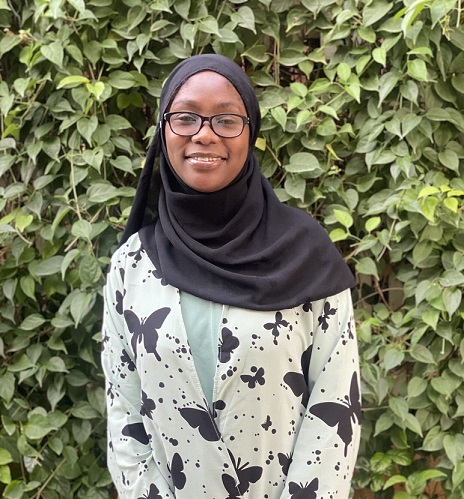
Aisha Musa Auyo is a Doctorate researcher in Educational Psychology. A wife, a mother, a homemaker, caterer, parenting, and relationship coach. She can be reached via aishamuauyo@live.co.uk.