Opinion

Sickening state of hostels’ toilets in Nigerian Universities

By Abdullahi Adamu

THE rot in federal and state institutions is taking a toll on the hostels and most especially in the national ivory towers.

Besides being overcrowded, many of the hostels lack basic amenities. Investigation in some public high
institution across the country revealed that many of the hostels were filthy as the taps in the toilets and
bathrooms were dry. Most of the taps are only there as decorations, and some of them have never worked for once. They never dropped a single drop of water since their installation.

As an undergraduate, back then, taking one’s bath in the bathroom or even easing oneself in the toilet
was usually a hurdle because of the sanitary conditions of the facilities. Even though there were porters
who came daily (apart from Sundays) to clean, the high number of persons using the facilities coupled
with the water situation was a major challenge. Also, some of the few staff, who sometimes do their best, leave the place at the hands of the killer viruses and bacteria around.

“Due to the limited number of students which the available hostel spaces could cater for, we found ourselves in a situation where a room that is originally meant for four students was being shared by eight students – that is to say, each of the legal and bonafide occupants had a “squatter”. This is in addition to students living off campus who also had to share the same facilities as there were none (toilets) around the lecture theatres – a number that is far beyond the projection at the inception – effectively making it almost impossible for the toilets to be neat.” in many tertiary institutions across the country. The nasty situation in hostels in many tertiary institutions leaves a sour taste in the mouth.

A student in IMO state University said the situation has worsened to the extent that some students take
their bath outside the bathrooms due to long queues and the ugly scene inside.

Another factor which leads to this unhygienic and ugly conditions of the toilet facilities in our public high institutions is the crude and improper usage by the students. Most of the students in Nigeria campuses throw away their internal dirt and defecate like uncivilized people.

For the girls’ hostel, it is also another nightmare. Most girls defecate and urinate in plastic or rubber containers, then empty it into the toilet to avoid contracting infections. Even at that, the toilets are not a place to even visit for any reason, unless when it is the last and only option.

It is more comfortable for me to defecate inside the bush along the post-graduate school to avoid
contracting any disease or foul smell of the school’s toilets.”, one postgraduate student said. Despite fee increasing and enormous internally generated revenues (IGR), including subventions from the
federal and state government amounting to billions of Naira, sanitary conditions of toilets across hostels
in Nigeria universities is appalling. May be this is why almost all our toilets across the country look so bad and unkempt. This is place where knowledge and morals are expected to be, but even the basics of a healthy and decent life are completely absent. No wonder!

Abdullahi Adamu can be reached via; nasabooyoyo@gmail.com

Challenges of street photography

By Misbahu El-Hamza

My discomfort taking pictures of people in a social event is obvious even to some people around me; friends and families.

There was a time I was commissioned by a place I once worked for to cover an event, a woman honorably stood from her seat and whispered in my ears, “please try to avoid me in your photos.” “Thank you so much for letting me know, Hajiya.” I replied. To this day, I respect the woman, but had she known, it was also against my wish doing that.

Now I know better how to cover an event with people consent. A skill I learned in 2023. But how about the streets?

I love #streetphotography. Looking at most of my photos, you’ll notice that I rarely capture people in my frame. That’s partly because I don’t like being interrogated for pointing my camera and shooting at random strangers, rightly, against their will.

It made me so uncomfortable for someone to perceive that I breach their privacy. So, I choose to capture only landscape and other objects I found interesting.

However, in Nigeria — at least in my experience, even pointing your at your feet can provoke anger. People will question you for that aggressively.

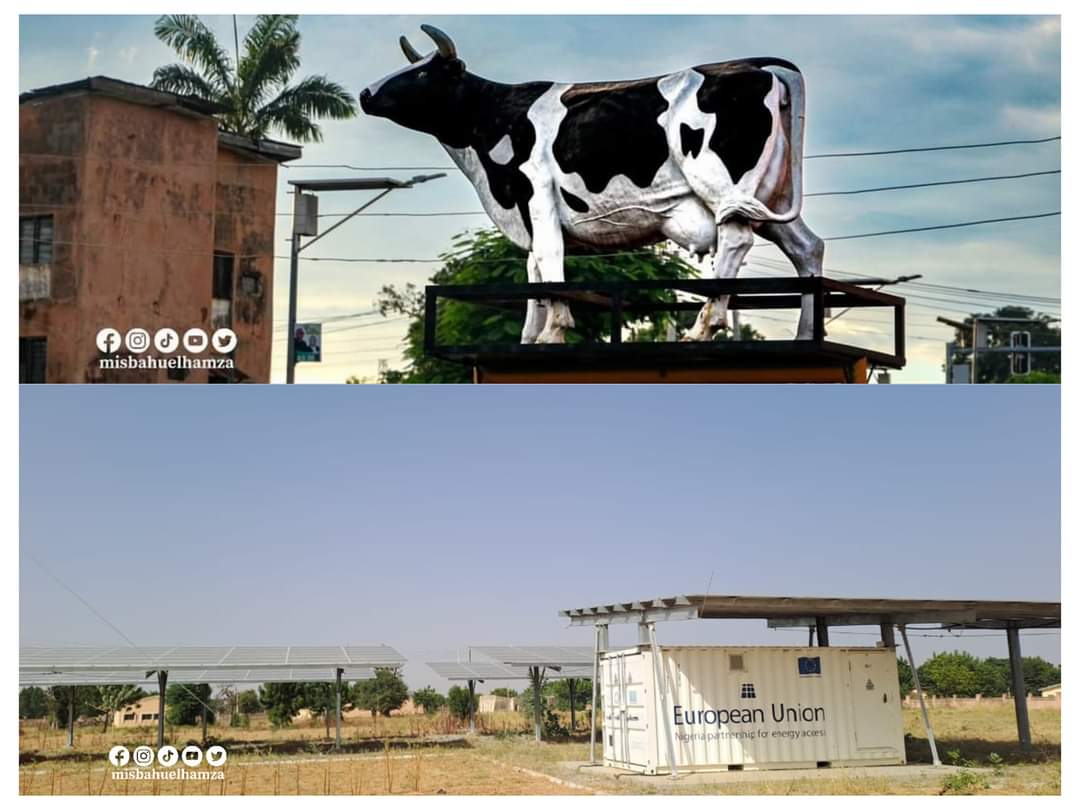
Let me further illustrate two experiences: a few months ago in Benue State, I bought yogurt in a restaurant opposite a market and noticed a beautiful statue of a milk cow. While taking a photo of it, a police officer, holding a gun obviously to intimidate me, questioned why I hadn’t obtained permission from him. This was a man emerging from nowhere near the restaurant. With my assertion that I didn’t know permission was required, he grew angrier. Eventually, I realized he sought only for a bribe, and I insisted we consult the restaurant manager. And that’s why he reluctantly let me go with my photo.

Fast forward to an LGA in Kano State where my colleague and I saw a remarkable solar plant at a healthcare facility generating 24/7 electricity. When I tried to capture it on my phone, from a distance, three hostile men confronted us, questioning why we were “staring” at the plant without their permission. Staring at it! They treated us as if we were informants or criminals. One of them even threaten us — and I dared him to try laying hands on any of us. But eventually, witht the arrival of the officer in charge of the facility, that hostile man was even the one stopping a bike for us at last.

As much as I respect people’s privacy (which is one reason why I don’t fly my drone these days), I understand that streetphotography is a hard thing for me in this country because people are unnecessarily angry. Even as you try to avoid them, they’ll find a reason to engage you.

This year alone, I have developed more than five extraordinary ideas of streets photography with northern Nigeria as the setting, but I am still skeptical. And I wonder how photographers developing content around this area do it without much troubles.

Please, how can I peacefully execute my projects in 2024 without inviting trouble on the streets?🤔

— Misbahu El-Hamza is a social analyst from Kano State, Nigeria.

Growth vs. Profitability: Lessons for Startups

By Salisu Uba, PhD FCIPS

I have read some devastating news over the last couple of weeks in relation to the ecosystem in Africa, some promising startups are shutting down operations. I am sure the recent events will affect any potential investments in our startups.

I want to address some concerns around two contrasting paths that often emerge: the allure of rapid growth without immediate profitability versus the steadier route of slower growth with assured profits. Let’s explore these models and the lessons they hold for startups in attracting investment.

High Growth, No Profit: the temptation of business sprinting towards expansion, capturing attention with its rapid growth but yet to turn a profit (wework case study). These ventures entice investors seeking significant returns. They prioritize scaling up, seizing market shares, and envisioning a lucrative future, often emphasizing customer acquisition over immediate profitability.

Slow Growth, Steady Profits: the assurance one perhaps, on the other side, is progressing at a more measured pace prioritising sustainable growth and consistent profitability. While not racing ahead in growth, they maintain stability, focusing on operational efficiency, nurturing loyal customers, and ensuring profitability from the outset.

Investment Magnet: the high growth appeals to investors as it favours the high-growth model due to its potential for explosive returns. African startups are promising and bustling markets, venture capitalists are scouting for opportunities everywhere, and the allure of substantial growth can overshadow concerns about immediate profits, maybe! However, sustainable profitability forms the backbone of long-term success, offering stability even in market downturns (don’t aim for what’s not realistic).

Learning from Both Models: from experience, the winning formula for our startup founders is to glean invaluable lessons from both models. By embracing the innovation of high-growth ventures and adopting prudent financial practices from profitable businesses, a potent combination can emerge. Striving for growth with an eye on achieving profitability can attract investors while ensuring long-term viability.

Striking the balance between growth and profitability is to find the equilibrium between high growth and profitability. It involves building a robust foundation for scalability while ensuring financial viability in the long run. This hybrid approach could be the linchpin to captivate venture capitalists eyeing the burgeoning African startup landscape, offering excitement and stability in equal measure.

Perhaps as we always aim to make a positive impact and make economic progress, investment is key to a successful venture. Therefore in the quest for investment opportunities, startup founders and entrepreneurs should combine the dynamism of high growth with the solidity of profitability.

Salisu is a fellow of the Chartered Institute of Procurement and Supply (CIPS) and a member of the CIPS Education Committee in the UK. He is the founder and CEO of NarQuest Limited – a supply chain technology company based in Glasgow, UK. 

Blessings of Sharing: How our acts of giving little can transform lives

By Usman Muhammad Salihu

In our busy lives, we often overlook a fundamental truth: sharing what little we have can bring blessings to others and ourselves. It doesn’t require grand gestures or lavish gifts; sometimes, small acts of sharing can profoundly impact lives and illuminate the world.

Sharing fosters connections between people, whether it’s with a friend, a family member, or even a stranger. These bonds can be significant, reminding us of our shared humanity. Sharing brings joy, whether you’re offering your time, food, or old clothes. Giving, even in modest amounts, can bring immense happiness and contentment. Knowing you’ve made someone else’s day better is a joy.

What might seem insignificant to you could mean the world to someone in need. Your extra meal or a warm blanket could mean the difference between hunger and comfort for someone less fortunate. Sharing eases the burden of those in hardship and can inspire others to do the same, creating a cycle of kindness that brightens the world one act at a time. Moreover, it cultivates gratitude for the small blessings in your life, fostering a more positive outlook.

Across various cultures and beliefs, there’s a common understanding that what you give is what you receive or even more than that (givers never lack). The universe has a way of rewarding those who share, although not always in the same form. Sharing also minimises waste, putting resources to good use and contributing to a more efficient use of our planet’s resources.

Your act of sharing has a ripple effect, touching the lives of many. These blessings extend far beyond you, positively impacting the world. It’s not about the quantity you give but the quality of your heart when you give. A warm smile, a meal, or a helping hand – each act of sharing can change lives and enhance the world, one kindness at a time. Therefore, never underestimate the profound impact of sharing. It’s only in giving we receive the true blessings of life.

Usman Muhammad Salihu writes from Jos, Nigeria and can be reached via muhammadu5363@gmail.com.

Max Air: Why always you?

By Fatima Ibrahim

I humbly write to draw the attention of Max Air Nigeria Limited to the plight of their clients regarding the delay and disappointment of their service. For a very long time, people have been lamenting the Max Air company flight delays.

To advise you, you have to always dance to the tone of your customers and make their interests your top priority. Scott D. Cook once stated, “Be dramatically willing to focus on the customer at all costs, even at the cost of obsoleting your own stuff.” Judging by this statement, you have to pay much attention to the satisfaction of your customers to wipe away the tears provoked by your unsatisfactory services.

People’s—your customers in question—lamentation over your disappointing services will make you lose them. This is because customer satisfaction is the foundation of any successful business. Therefore, by addressing this primary concern and improving service quality, you can retain your existing clients and attract new ones. By so doing, you would uphold your reputation for reliability and customer satisfaction in the competitive aviation industry.

Notwithstanding, taking prompt action to rectify issues such as flight delays will not only enhance customer loyalty but also contribute to the positive perception of Max Air. Bill Gates once said, “Your most unhappy customers are your greatest source of learning.” Embracing feedback and actively working towards improving service efficiency will undoubtedly lead to a more content and loyal customer base.

Therefore, I urge you to prioritise your customers’ satisfaction, for it is not just a business strategy but a commitment to building enduring relationships.

Fati Ibrahim wrote from the Department of Mass Communication, University of Maiduguri.

Free Niger, free Bazoum

By Dr. Aliyu U. Tilde

The stalemate between ECOWAS and Niger Republic needs to be broken urgently for humanitarian and strategic reasons. The decision should be taken tomorrow at the meeting of the Heads of State of the regional body to shorten the unnecessary suffering of 26 million ECOWAS citizens in Niger.

Humanity

The world is appalled by the ongoing starvation in Gaza, and it is rightly calling for its end. In a similar way, the humanity in us should trigger our conscience to open Niger’s borders and restore its electricity. There is just no reason why we should superintend over the death of African lives and the destruction of the economy of a member state in the name of democracy. It is no longer about Mohamed Bazoum or General Tchiani or the neo-colonial interest of France. It is about the people of Niger.

Democracy is not as important to Africans as it is to their lives and livelihoods. In a year or two, Niger can return to democracy, and heavens will not fall before then. However, the longer we strangulate Nigeriens now, the longer our guilt for the collective punishment we meted on them last later. On their part, the Nigeriens will retain—and recall—for generations the long memory of ECOWAS’ suffocating sanctions, and they will bring it to bear on every future association with Nigerians in particular.

A Shot in the Foot

Apart from the imperatives of history, DNA, culture and contiguity, the Niger Republic will, through River Niger and our future Europe-bound gas pipeline, continue to play a crucial role in our economy, not to mention the daily cross-border trade relations worth billions of Naira.

Our weaponization of electricity to Niger will seriously undermine future strategic cooperation with the Republic regarding River Niger. Nothing will stop it from damming the River in a big way to ensure its national electricity and food security, letting us get sufficient water in Kainji and Jebba Dams only when there is an overflow. We will be forced to rely solely on gas for power generation.

Our national security will also be at great risk when Niger inevitably develops cold feet, as a payback, on our strategic partnership against Boko Haram and Bandit terrorism. Niger is just a neighbour too important for Nigeria to call off. I am not sure if we haven’t shot ourselves in the foot already.

Forward

The July coup is now a standing reality. I suggest, as a way out, that ECOWAS demands two assurances from Niger, with a third party, say America, serving as a guarantor to the agreement: The release of Bazoum and a short timetable for a return to civilian rule in exchange for immediate removal of sanctions. This ‘Niger free, Bazoum free’ formula will immediately relieve the population of the horrendous difficulties it is undergoing and save the lives of the sick, including women and children, who are dying in Nigerien hospitals due to the blackout. It will also save the investments of hundreds of Nigerians whose loaded vehicles have been stranded at the borders for months now.

Bazoum’s government is spilt milk which cannot be recovered. ECOWAS should let this go and prepare for the future. It can consider establishing a standing force to immediately intervene in future incidents if necessary without procrastination. But how democracy is proving to be a conveyor of poverty and bad governance in Africa makes it a creed not worthy of such a financially heavy enterprise.

Instead, ECOWAS should develop mechanisms to promote good governance as the only assurance of stability and prosperity and a panacea against future coups. No matter the situation, in the future, measures that will bring hardship to citizens and ruin the economies of member states should be avoided as much as possible by ECOWAS. We cannot be Americans in Iraq. Otherwise, we will only be surrogates of colonial masters. So far in Niger, we have cut our nose to spite our face. Tomorrow, December 10th, is the date to start stitching it.

Dr. Aliyu U. Tilde can be reached on Twitter: @Dr_AliyuTilde.

Antibiotics Abuse Outside Hospitals (III)

Dr. Ismail Muhammad Bello

Beyond hospital settings, harmful practices persist, particularly in developing countries where obtaining drugs over the counter is prevalent, and drug vendors may lack comprehensive knowledge of medications and diseases. From Penicillin to Ceftriaxone, these precious drugs, which require protection, can be obtained without prescriptions, posing a significant threat.

The ease of access to drugs has paved the way for self-treatment or “chemist” consultations, fostering malpractices. Again, a frequent occurrence is the prescription of antibiotics for the common cold. Research indicates that the common cold is predominantly caused by viruses, which are not responsive to antibiotics. It is a self-limiting condition that can be managed with measures such as steam inhalation, antihistamines like loratadine, and decongestants.

Similar to the common cold, most cases of sudden onset of watery stool, not stained with blood or mucus, with or without vomiting, are often of viral origin. This is typically a self-limiting condition that usually does not require antibiotics. In the management of diarrhoea, especially in children, the primary focus is on fluid therapy using Oral Rehydration Solution (ORS). Drug treatment is seldom beneficial, and antidiarrheal (antimotility) drugs can be harmful. Unfortunately, many individuals quickly resort to taking Flagyl, Loperamide, or Lomotil at the onset of diarrhoea.

However, bloody or mucoid stool, high fever, severe abdominal pain and prolonged diarrhoea are pointers to more serious conditions that may warrant antimicrobial use and should be quickly evaluated by a qualified doctor. In such instances, the use of antimotility agents is highly discouraged as it could lead to catastrophic outcomes like bowel perforation.

Another problem that continues to fuel this issue is the widespread and perplexing “Malaria-Typhoid diagnosis.” The lack of clinical skills needed to appropriately discern acute febrile illnesses coupled with excessive reliance on the outdated Widal test is driving an alarming prevalence of this peculiar diagnosis. 

Most cases exhibit a sudden onset of high-grade intermittent fever with chills and rigours, particularly worsening in the evening. This is usually associated with generalized body weakness and pain, with no symptoms attributable to the gastrointestinal system (abdomen). In a region and time where malaria is quite prevalent, this most likely suggests a simple case of Uncomplicated Malaria that should be managed as such. Strangely in our setting such cases are quickly subjected to not only Malaria but also Widal (Typhoid) tests at the request of a healthcare worker or even on self-referral.

Numerous studies have consistently demonstrated that the Widal test lacks high specificity, particularly in endemic zones such as ours, where repeated exposure to the bacteria is prevalent. Cross-reactivity with various diseases, including Malaria—a frequent cause of fever in Nigeria—and challenges in interpretation further restrict its reliability as a diagnostic indicator. 

It is therefore evident that the indiscriminate demand for the Widal test is causing the over-diagnosis of Typhoid fever, leading to the inappropriate use of antibiotics. 

This practice has also led to the wrong notion of “chronic symptomatic typhoid” among gullible persons. Typhoid fever is not in the league of HIV & Hepatitis B. Infection in typhoid does not endure indefinitely but could recur, especially when the underlying risk factors like unsafe water and poor hygiene persist. 

Chronic carriers do exist but are typically asymptomatic, holding more significance for public health due to their ongoing shedding of bacteria in their stool, a phenomenon reminiscent of the famous story of Typhoid Mary. Hence, statements like “Typhoid dina ne ya tashi” (I have a flare of a longstanding typhoid infection) and “Typhoid dina ne ya zama chronic” (I have a chronic typhoid infection) are grossly inaccurate.

While not antibiotics, antimalarials, unfortunately, face their fair share of misuse. A prevalent mispractice involves the irrational use of injectable antimalarial drugs such as IM Arthemeter and even the almighty Artesunate. Nowadays, individuals often opt for injections, citing reasons like “I prefer not to swallow pills” or the perception of faster and more effective results. The most concerning scenario occurs when the condition is misdiagnosed as Malaria, especially in many “chemist” settings. This not only entails misuse but also results in economic waste, unnecessary stress, and the potential risks associated with injections.

Regrettably, injectable antimalarials are meant for treating severe forms of malaria, which someone walking into a chemist likely does not have. This is akin to deploying elite special forces for a minor crime. These forces should be mobilized only for significantly heightened threats or when the situation surpasses the capacity of initial responders.

Recommendations: The government plays a crucial role in this battle. Policies and regulations must be established to ensure the optimal utilization of these drugs. To address our persistent issue, these policies should not remain mere documents in offices but must be strictly enforced, with penalties imposed on those who violate them. These regulations should encompass various aspects, including the use of antibiotics in veterinary practice and food production, as well as proper oversight of the opening and operation of patent medicine stores.

Prevention is certainly better than cure. Tackling infectious diseases at the primary level is more impactful and cost-effective. The COVID-19 pandemic has underscored the significance of Water, Sanitation and Hygiene (WASH) in disease transmission & control. Hand hygiene, a practice widely adopted in 2020, stands out as the most crucial measure to prevent the spread of infections. Therefore it is crucial to provide communities with access to potable water and sufficient sanitary infrastructure to forestall the spread of these diseases in our society.

In managing most infections, a standardized treatment guideline outlines the specific drugs, their timing, and proper usage. You might be intrigued to discover that many practitioners may not even be aware of a specific Nigeria Standard Treatment Guideline document or other guidelines for various medical conditions.

In the absence of a local protocol, variations in management may arise among colleagues due to diverse backgrounds and training. Nowadays, particularly in secondary healthcare, many learn primarily through apprenticeship without referring to standards or understanding the rationale behind certain “innovative” practices. Unfortunately, what one is accustomed to may be incorrect and potentially harmful, or at best suitable only within the constraints commonly found at lower levels of healthcare.

Therefore, despite the challenges in our setting, doctors must prioritize continuous medical education to stay updated on global trends and standards while navigating the complexities of our setting. These innovations should not only be embraced as centre-specific practices or based on individual preferences like “this is how we do it in our centre” or “this is how Prof XYZ does it,” but they should also serve as opportunities for research and scientific validation.

Also, hospitals should formulate treatment protocols tailored to their unique circumstances, disseminate them widely, offer them as job aids at points of care, and ensure strict adherence by practitioners.

Furthermore, healthcare practitioners should dedicate time to counsel patients about the significance and potential risks associated with adhering to the prescribed dosage and duration of treatment. In well-established hospitals, it is imperative to institutionalize antimicrobial stewardship to ensure effective utilisation and surveillance of resistance patterns. 

Ultimately, this is a battle declared by the microbial world on humanity, and everyone has a crucial role to play. Individuals should actively seek sound medical advice regarding diseases and treatments, avoiding the inclination to resort to self-help or patronize quacks. So when you take antibiotics for a simple common cold, know that you may be endangering humanity. When you fail to complete your antibiotics for the duration prescribed, you are surely endangering humanity. When you continue to treat typhoid when it is not the culprit, you are harming the patient and the world at large. Even you the medical practitioner, if you prescribe inappropriately, you are hurting the system.

Lastly, I encourage everyone to be advocates for responsible antibiotic use. Let’s utilize these valuable and endangered assets judiciously to avert a future where no drugs can cure pneumonia, syphilis, or meningitis – a potential regression to the 19th century. Remember, this is natural selection in action – it is not a lost battle but a fight for survival, one that we must undoubtedly triumph in. Dr. Ismail Muhammad Bello is a proud graduate of ABU Zaria. He is a Malnutrition Inpatient Care trainer and currently serves as a Medical Officer at both Khalifa Sheikh Isyaka Rabiu Paediatric Hospital in Kano and Yobe State Specialists Hospital in Damaturu. He can be reached at ismobello@gmail.com

On Manchester City’s treble hangover

By Aliyu Yakubu Yusuf

It is challenging for any group of players that has won all the available trophies on offer to maintain the same focus and motivation the following season. There’s only one way for any club to win a treble of league title: UCL and the domestic cup. That way is downwards. In this context, I am not overly surprised about Manchester City’s struggles so far this season.

Pep Guardiola is a gaffer who prioritises control and patient buildup in the middle of the park. The current Manchester City team lacks these attributes. Their matches are often chaotic end-to-end affairs that produce plenty of goalscoring chances. This isn’t a quintessential Guardiola team that routinely deprives their opposition of a sniff of the ball, let alone scoring opportunities. I attribute Manchester City’s recent travails to three critical factors:

1. Rodri’s frequent suspensions

Manchester City have lost four games so far this season. A common denominator in all these games is that Rodri missed ALL of them. Make that what you will.

2. Kevin De Bruyne’s Injury

Do I even need to mention the importance of the blond Belgian to this team? Julian Alvarez has deputised in the KDB role, often admirably. However, the Argentine is no midfielder and will never bring the same midfield control and assurance.

3. Gundogan’s Departure/Kovacic’s Poor Form

Pep Guardiola signed the Croatian as a direct replacement for Ilkay Gundogan, who left for a Bosman ruling in the summer. The German was a cornerstone for Manchester City for several years. True, Kovacic is no Gundogan. Still, he has often been poor whenever he steps onto the pitch. He was subsequently relegated to the bench. Guardiola and City surely expected more from the former Inter Milan, Real Madrid and Chelsea man.

There you have it. For the record, I still expect Guardiola to sort things out and mount a title challenge as usual. Come the end of the season, the Citizens will be there or thereabout. Write them off at your own peril.

Aliyu Yakubu Yusuf wrote from Kano, Nigeria. He can be contacted via aliyuyy@gmail.com.

Atiku Abubakar: A unifier?

By Kamal Alkasim

Atiku Abubakar, former vice president and perennial presidential candidate, has long styled himself as the “Unifier” of Nigeria. Yet, recent events raise questions about his ability to live up to this label.

Internal Divisions and G5 Exodus:

Atiku’s party, the People’s Democratic Party (PDP), has been plagued by internal divisions. The G5 group of five aggrieved governors, led by former Rivers State Governor Nyesom Wike, have publicly parted ways with Atiku and the party leadership. This exodus has significantly weakened the PDP’s chances in the 2027 presidential election.

Lost Allies and the Rise of New Political Alliances:

Further complicating the picture, two major figures who ran for president in 2023, Peter Obi and Rabiu Musa Kwankwaso, have left the PDP. These departures have deprived Atiku of potential allies and created a new political landscape with the emergence of a possible merger between the PDP, Labour Party, and New Nigeria People’s Party.

Unifying Action Needed:

While the details of this potential merger remain unclear, it presents a fresh challenge for Atiku. Should the merger materialise, it will demand exceptional unifying skills to navigate the competing ambitions of Obi, Kwankwaso, and other stakeholders within the new entity.

Unification Through Action, Not Words:

The question remains: when will Atiku be a “verified Unifier”? While words are persuasive, concrete action will ultimately determine his ability to bring together disparate political forces and forge a unified front.

Negotiations and the Struggle for Power:

Atiku faces a tough road ahead. He must navigate the complex negotiations with Obi, Kwankwaso, and other influential figures while overcoming internal party divisions. Ultimately, his success in securing the presidential candidacy and uniting the disparate political forces will be the true test of his unifying credentials. 

Kamal Alkasim is a freelance writer. He can be reached via kamalalkasim17@gmail.com.

Nigerian Academics: The job, the passion, the disappointment

By Abdelghaffar Amoka

I travelled home in 2012 after my PhD and one of my older cousins asked when I would become a Professor. I laughed and told him it would still take some years, and I jokingly told him I was not keen on becoming a Professor. He became angry at my response and said I should get the Professor for them even if I didn’t want it. After I left him, I began to wonder what is in that rank that some people want at all costs.

I can still remember the huge congratulatory messages I received after my friend and colleague shared on Facebook the news of my promotion to that rank. Sometimes I reflect on those messages and imagine how rich I would have been if those congratulatory messages could be transformed into cash. Here we are struggling, and some of us can’t even drive our cars any longer.

The Nigerian Professor

Becoming a Professor, the peak in academia, is something most academics look forward to. The title still comes with some prestige and perceived false benefits attached to it by outsiders. I once read a post on Facebook that said professors are stingy. Poor professors and the public want them to spend the money they don’t have. I went to buy a seat cover for my car a few years ago and the seller said lecturers have money but refused to spend it. I asked how much he thinks a professor is earning, and he said it can’t be less than N700,000. I laughed very hard.

I have written a lot on the remuneration of academics in Nigerian public universities, but many still don’t believe the figures. Yeah! Too bad to be true as compared with their perception. I had a discussion with one of our PG students, who is a lecturer in a state polytechnic, about salary disparity in the Nigerian public sector yesterday, and the salaries of university lecturers came into the discussion. I told him the figures, and the smile on his face showed that he didn’t believe it but couldn’t say I was lying. So, I logged in to the university portal and showed him my payslip. The gross, the deduction, and the net. We met again today, and he said that until yesterday, he never believed that a Professor on step 4 was earning less than N600,000.

Again this is the salary of academics in any federal government university in Nigeria. The quoted value is for step 2, the rank:

~The Assistant Lecturer’s net salary with all his allowances is N118,279 (105 USD).

~Lecturer II’s net salary with all his allowances is N129,724 (115 USD).

~Lecturer I net salary with all his allowances is: N160,809 (142 USD)

~Senior Lecturer’s net salary with all his allowances is: N222,229 (197 USD)

~Reader (Associate Professor) net salary with all his allowances is: N277,179 (245 USD)

~The professor’s net salary with all his allowances is N332,833 (294 USD).

The University workers are perhaps the only federal government workers whose salary is yet to be reviewed since 2009, that is for 14 years despite inflation. Those who were already professors in 2009 are still receiving the same salary since then. Your comfort is key to your output.

Aside from the academic work and the research and publication work that forms the bulk of your promotion criteria, you are loaded with administrative responsibilities without responsibility allowance. They call it ‘community services’. You can be denied promotion if you don’t have enough of the said “community services”.

If you happen to travel outside the University for a conference and you are lucky to be funded, the travel allowance is as follows:

~Duty Tour Allowance (DTA) for the professorial cadre is N16,000 per night.

~Duty Tour Allowance (DTA) for Senior Lecturer cadre and below is N12,000 per night.

~The transportation allowance is N20 per km.

If a Professor is to travel 200 km for an assignment that lasts for a day, he will get a DTA of N32,000 for 2 nights for his hotel accommodation for 2 nights and feeding and N8,000 for transportation. That is a total of N40,000. Despite the fact that FG has approved a new DTA for public service in September 2022, the universities can’t afford the new rate a year later. I applaud the patience of my colleagues, but the patient dogs are dying of hunger.

Meanwhile, education is said to be key to national development.

Dear prospective academics, I love academia. For me, it is not a job but a way of life. However, ask questions before you wish to join academia and become a Professor. The job as it is at the moment can’t pay your bills for a decent life.

Abdelghaffar Amoka Abdelmalik, PhD, wrote from Ahmadu Bello University, Zaria. He can be reached via aaabdelmalik@gmail.com.