Sports

You can add some category description here.

Sergio Ramos moves closer to buying Sevilla FC after preliminary agreement

By Sabiu Abdullahi

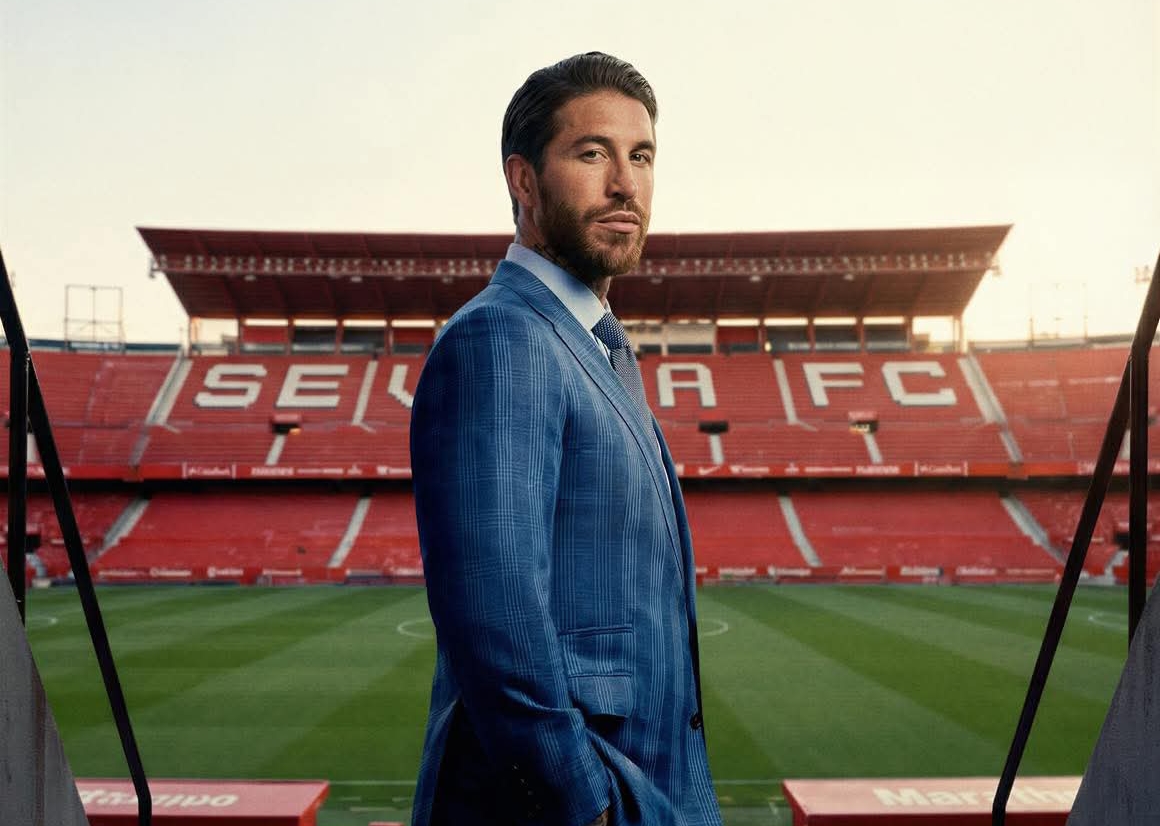
Sevilla legend Sergio Ramos has reached a preliminary agreement with a reference shareholder group to acquire Sevilla Fútbol Club, marking a major step toward a potential takeover of the Spanish side.

Ramos, who first joined Sevilla in 1996 before returning to the club in 2023, has now entered an exclusivity and due diligence phase with the investment group. This stage will allow both parties to examine the club’s financial position and governance structure ahead of any final decision.

According to a report by Carrusel, Ramos and his partners have a three-month window to assess Sevilla’s finances and overall situation before completing the transaction. Sevilla currently occupy 11th position on the La Liga table.

The development has fueled widespread excitement among supporters, as the former captain’s deep ties to the club strengthen hopes of a successful transition in ownership. With negotiations now progressing into a critical phase, the prospect of Ramos returning to Sevilla in a leadership role appears increasingly realistic.

Heavy rain exposes leakages at Barcelona’s stadium, Spotify Camp Nou

By Sabiu Abdullahi

Heavy rainfall at the Spotify Camp Nou on Monday revealed leakages at the stadium, forcing fans to seek shelter during the downpour.


Videos and photos circulating on social media showed water dripping through parts of the facility as the rain intensified. The incident has sparked fresh discussions among supporters about the state of the stadium, which is currently undergoing redevelopment.

There was no immediate comment from club officials at the time of this report.

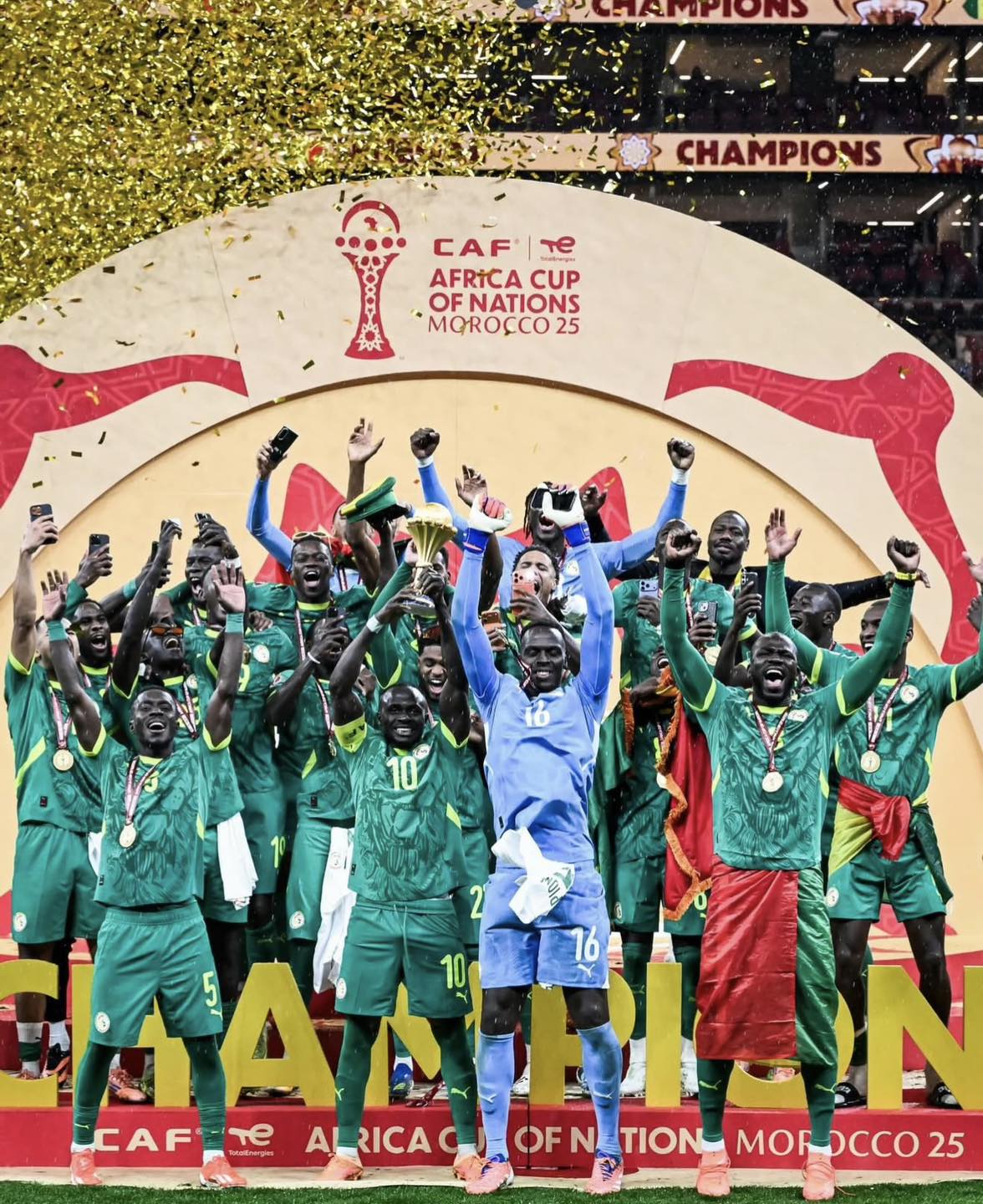
Senegal’s AFCON winners receive cash and land in presidential honour

By Muhammad Sulaiman

President Bassirou Diomaye Faye has awarded Senegal’s AFCON 2025–winning squad a total of $6.2 million in cashand 68,000 square meters of land, marking one of the most generous state rewards in African football history.

Each player will receive $135,000 and a 1,500-square-meter plot on the Petite Côte, while members of the technical and backroom staff will be awarded $90,000 and 1,000-square-meter plots, according to the presidency.

Senegal clinched the continental title with a disciplined 1–0 victory over the Morocco national football team in the final, a tightly contested match that underscored the Lions’ defensive organisation and tactical maturity.

Led by head coach Pape Thiaw, the Lions’ triumph has been celebrated as a symbol of national pride and sporting excellence, with officials saying the rewards reflect the country’s gratitude for a team that once again placed Senegal at the summit of African football.

As a sideline to every soccer tournament

By Abubakar Muhammad

AFCON has just concluded. Senegal won the trophy, but many football enthusiasts know that the actual play of the game is only half of the big spectacle. There are many things going on backstage that take time to materialise. When you look at the countries, roll the camera, and see them doing well, you will see patterns lock into place. There might be visible investment and development of physical infrastructure, but there is also something more to it. 

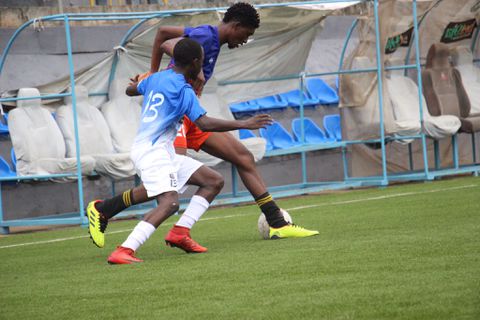
As a sideline to every soccer tournament, one of the things I pay attention to is the grassroots, street-level infrastructure that feeds talent to the national team. In these tournaments, you would not only pay attention to the official game or what happens in the big arenas, but also to the images that come out from foreign visitors depicting themselves playing outside the formal venues. The soccer crowd, wherever they are, tend to find where to play.  To host a tournament, you really need a solid infrastructure for both formal and informal arenas. But more so, this tells us stories about the status of the game, leisure and where citizens play. 

As usual, it seems Nigeria is left behind when it comes to grassroots soccer infrastructure. Senegal, Algeria, Angola, etc, have a thriving street soccer infrastructure. This infrastructure is not formal, but it seems to enjoy greater consensus that cuts across the formal-informal divide between citizens and governments. 

In Latin America, there are spaces in favelas and barrios where local kids can play the game. The spaces may not be the same, may use different nomenclature, may straddle the line between the formal and the informal, but they retain the same purpose and spirit.

In Senegal, they are in the form of navétanes, a semi-formal regional tournament played in local spaces. These spaces are not owned by the government or private individuals, unlike, say, primary school premises or other government buildings. They are simply communal spaces where the navétanes games are played. These spaces are respected by everyone; no encroachment or erection of structures, public or privately owned. Kids start their careers in their neighbourhoods and progress to regional teams, then to the professional league, the national team, and onward to international careers. You find similar spaces in Brazil as developing ground for talents that would later go on to dazzle a global audience. 

In North Africa, they have a thriving culture of street football played in what we can call in Nigeria a 7-aside stadium. The difference is that these spaces in North Africa are free and open to everyone. They sit in open spaces in the middle of neighbourhoods. The key idea here is access and openness. The use of open space for soccer must not require any payment and must remove any other impediments that can exclude people. A truly public space is one that lets you in without charging a fee or asking for proof of innocence.

In Nigeria, empty lots and vacant spaces are constantly being developed. There is no respect for spaces where kids can play. The idea is that in places where formal sporting infrastructure is not in place, small-scale community members use these spaces for leisure and sporting activities. Kids will have a chance to play the game from a very young age until they dribble their way to the national team. The grassroots in many parts of the world are where players are developed and imbued with the spirit of the nation before they enter the academy for the refinement of their talents. 

African soccer, like its South American counterpart, is largely dependent on informal infrastructure, with local people coming together to build their own. People-as-infrastructure is a concept in which citizens enter into a series of temporary, makeshift arrangements with one another to provide services that authorities are unable to deliver.

By killing these spaces, Nigeria is killing her young talents. It makes it difficult for the local kids to develop an interest, let alone play the game and nurture their talents. Angola, not really a footballing nation, has a thriving street football culture. I noticed from the videos I watched that street lots exist, and they are everywhere. They don’t seem to be developed or encroached so rampant as we see in Nigeria. It seems these spaces are protected by consensus, just like they are protected in Brazilian favelas and Argentina’s barrios. 

Football is the game of the poor. Commercialise football, and you create a barrier where only the rich can afford to play. Commercial football delivers more money to the pockets of a few individuals without bringing much-needed collective glory to the national team. The English Premier League is the wealthiest league in the world, but the country has fallen far behind other footballing nations.  Germany has an academy system in place, but their overall sporting culture is anchored around a process that resembles socialist democratic football more than an individualistic, capitalist model that Nigeria tends to lean towards. 

One of the biggest problems that Nigeria’s football faces as an institution is the seeming, increasing reliance on the academy for its national talents. Academies are simply there for money. Another thing is the seeming sole reliance on foreign-based players. This is understandable for the refined talents abroad, but there seems to be a problem with that in Nigeria. 

There is nothing wrong with foreign-based players populating the national team. Countries tap into their talents abroad, sharpened by cutting-edge training models and infrastructure. One of the biggest problems with this, in the case of Nigeria, is that players know exactly why they’re called up to the national team. They understand why, and there is no confusion about the nature of the transaction. There is nothing that dilutes or softens the nature of the transaction. The country only sees them when it needs them. The country is not there when they need her, and so, in their bloom and glory, they may not give their all. They will not play with their blood and heart. 

Secondly, tapping into foreign players in Nigeria is not grounded in any philosophical sporting policy. For instance, what does it mean for a player to play for the national team? What does the national team mean to them? What is that one thing that all players can understand as a common language and shared values? Something like a unique national culture common among the youth? You can only find this in street football played across the country. Pick that ideology and craft it into the national sports policy. What we see instead is total indifference at best, if not outright obstacles thrown in the way of the nation’s youth by the government and private interest groups. 

By eliminating informal spaces, we have destroyed the conviviality and socio-spatial relations that emerge from street games. Street soccer gives the manager of the national team a foundation, something to start with. The street is where every player understands what it means to play for the national team. From the ground up, the Nigerian player can develop a sense of Nigerianness, just as French players are instilled with French values and what it means to play for the national team. But since we don’t have the formal structures and arrangements of the French, Germans, or English, where players are developed through various academies under the guidelines of the national football federations, the street is where our players should build their character. The Senegalese have taken the navétanes and use it as a national sports policy. It is an informal, grassroots football that develops independently of the government. The coach and players speak the same football language that came from the streets. 

By erecting structures on every available space in Nigeria, you tighten the rope for the children in local communities and make it hard for ordinary folks to make their way to the national team. So many talents would slip through the cracks before rising to the top and reaching their full potential. We are already importing a dangerous trend from abroad, where only kids from wealthy backgrounds can play the game and reach the professional level.

And since we don’t have meaningful ways in which citizens feel indebted to their governments and their countries beyond familial ties, the very few that already found their way to the highest level of the game know why they’re playing. They’re simply playing commercial football. They have already paid the price on the way to Europe without the aid of any national structure. When you call them up to the national team after this, they will not play with their heart and their blood. 

Abubakar Muhammad is from Kano, Nigeria. 

Xabi Alonso leaves Real Madrid after Super Cup defeat

By Muhammad Abubakar

Xabi Alonso has left his role as head coach of Real Madrid by mutual agreement, the club confirmed on Tuesday, following a defeat to Barcelona in the Spanish Super Cup final.

The decision came shortly after Madrid’s loss in the high-profile clash, a result that intensified pressure on the former midfielder, who had taken charge amid high expectations.

Sources close to the club said both parties agreed that a change was necessary as Madrid look to reset their season.

Real Madrid thanked Alonso for his commitment and professionalism during his tenure, while Alonso expressed gratitude to the club and supporters, wishing the team success in the future.

The club is expected to announce an interim coach in the coming days as it considers long-term options for the role.

Abdul Samad Rabiu pledges massive cash for Super Eagles after Algeria victory

By Muhammad Sulaiman

Nigerian businessman and philanthropist Abdul Samad Rabiu has announced substantial financial incentives for the Super Eagles following their impressive victory over Algeria, a win that has lifted national morale and secured Nigeria a place in the semi-finals.

In a congratulatory message released on Friday, Rabiu praised the team for making the nation proud and pledged USD $500,000 to the players should they win the semi-final, with an additional USD $50,000 for every goal scored in that match.

He further stated that if the Super Eagles go on to win the final, he would reward the team with USD $1,000,000, alongside a bonus of USD $100,000 per goal scored in the final.

Rabiu described the players as symbols of national pride and unity, expressing confidence in their ability to carry Nigeria forward in the tournament.

He ended his message with a call for continued excellence, reaffirming his pride in the team and the country.

The announcement has been widely welcomed by fans, adding extra motivation as the Super Eagles prepare for the decisive stages of the competition.

Indomitable Lions’ AFCON preparations descend into chaos

By Muhammad Abubakar

Cameroon’s upcoming Africa Cup of Nations (AFCON) campaign is in turmoil due to a major power struggle between FECAFOOT President Samuel Eto’o and head coach Marc Brys, who remains under contract until 2026. Eto’o unilaterally declared Brys’s role was over.

The dispute has resulted in two rival 28-man AFCON squads.

Eto’o’s faction released a list naming David Pagou as coach and controversially omitted stars Andre Onana, Eric Choupo-Moting, and captain Vincent Aboubakar. Reports suggest Aboubakar was dropped to protect Eto’o’s national scoring record.

Coach Brys responded with his own squad announcement, restoring the high-profile players and questioning the team’s ability to compete in Morocco without them. This internal conflict severely undermines the Indomitable Lions’ preparations.

Salah calls out double standards in media coverage

By Muhammad Abubakar

Liverpool star Mohamed Salah has ignited fresh debate over media bias in football after highlighting what he sees as unequal treatment between himself and fellow striker Harry Kane. 

Speaking in a recent interview, Salah recalled a past spell when Kane went 10 matches without scoring, yet continued to receive strong backing from commentators.

According to Salah, the tone was markedly different when he experienced similar difficulties. “The media were like: ‘Oh, Harry will score for sure.’ When it comes to Mo, everyone is like: ‘He needs to be on the bench,’” he said. The Egyptian forward stressed that his point was not a personal jab at Kane, adding humorously, “I am sorry, Harry!”

Salah’s comments quickly circulated on social media, garnering millions of views and sparking widespread discussion. Analysts and supporters have since weighed in, with many arguing that the incident reflects broader inconsistencies in how players from different backgrounds are portrayed in mainstream football coverage.

The episode has added a new layer to ongoing conversations about fairness, perception, and representation in global sport, especially in Europe.

1-1 draw against Girona: Real Madrid still confident in Alonso

By Ibrahim Yunusa

After their draw with Girona and losing the top spot in the La Liga standings, once again Real Madrid players are facing heavy criticism, and the rumors about Xabi Alonso’s departure are heating up.

Real Madrid drew 1-1 with Girona away from home on Sunday night.

This marks the third draw for the club in the La Liga season, and it’s the first time since 2019 that such a result has occurred.

Following the draw, the Spanish newspaper AS stated: “Most Real Madrid players are performing below their usual level. In their last three away matches, they have failed to maintain the confidence that Alonso built at the start of the season, and it’s as if that momentum has been lost.”

Due to the team’s poor performance and results, many recent rumors have emerged regarding the possibility of Xabi Alonso’s departure.

However, Spanish journalist Félix Díaz stated, “Xabi Alonso still has confidence within the Real Madrid management. While patience with the coach is needed, unity is also essential to get things back on track, especially now that doubts are rising and they have lost the lead in the standings.”

Real Madrid will resume training and preparations this afternoon, and on Wednesday, they will face Athletic Bilbao in an away match.

Mainz lose court appeal over Anwar El Ghazi’s dismissal

By Maryam Ahmad

Bundesliga club Mainz 05 have lost their appeal against the unfair dismissal ruling in favour of Dutch winger Anwar El Ghazi, who has been awarded €1.7 million in compensation.

A German labour court had earlier found that the club acted unlawfully when it terminated El Ghazi’s contract in November 2023 following social-media posts he made during the Gaza–Israel crisis. The arbitration panel upheld that decision, rejecting Mainz’s argument that the posts constituted grounds for immediate dismissal.

In a statement, Mainz said it accepted the ruling but stressed its commitment to maintaining its internal code of conduct. El Ghazi welcomed the outcome, describing it as a vindication of his right to express his views.