Kannywood

Kannywood actress Aisha Humaira vows to settle late colleague Aminu S. Bono’s debts 

Kannywood actress Aisha Humaira has pledged to clear all outstanding debts left behind by her late colleague, Aminu S. Bono, who passed away on Monday following a brief illness. 

Taking to her Instagram handle to convey her condolences, Ms Humaira called upon anyone with legitimate claims against the deceased to step forward, assuring them that she would take responsibility for settling his debts. 

“I call on everyone who is owing Aminu S. Bono money or has sold anything to him on credit and was yet to pay before his death to come forward,” she stated.

“By God’s grace, I will offset the debt so long as it is not beyond my power. If the person wants to get the money even before his funeral, I will relieve him of all the burdens as long as it is not beyond my power.” 

Reflecting on the amiable character of the late actor, she expressed fond memories of their friendship and urged forgiveness from those who may have been offended by him. 

As the Kannywood community mourns the loss of Aminu S. Bono, Aisha Humaira’s compassionate gesture stands as a testament to the solidarity and support within the industry.

Murja Ibrahim Kunya, a TikToker, in the Curriculum? Why the heck not?

By Prof. Abdalla Uba Adamu

I was tagged in a Facebook thread lamenting the perceptions of Hausa popular culture studies by Muhsin Ibrahim on how such a course of action is looked down upon. Indeed, he related personal bad experiences on his encounter with what one might call ‘culture purists’ who do not see anything worthwhile studying about contemporary popular culture. I feel that my response should be enlarged beyond the one I gave in order to reach wider audiences and stimulate debate.

‘So, what exactly is ‘popular culture’? Without being bogged down by technicalities, it is simply what people like. Often referred to also ‘mass culture’. Which differentiates from the ‘elite culture’ preferences of the high order of the society. Elite culture is often favoured because it is seen as cultural representative due to its historical purity. For instance, Shata is an elite culture, while Rarara is a popular culture. Both are singers. But while Shata was a griot whose lyrics represent the historical antecedents of his society and culture, Rarara is a singer whose lyrics represent his pocket.

Thus, everything people do can come under the purview of popular culture – fashion, food, literature, cyberculture, sports, architecture, theatre, drama, films, music, art, you name it, it is popular culture. It is the dominant culture. Some of the universities that teach popular culture in the world include Harvard, Cambridge, MIT, and Stanford, to name some of the top ones, plus thousands of others.

So, why study popular culture? There are many reasons, but one of the most compelling is social awareness. Such a study makes us aware of important social issues. You may not follow Hausa TV show operas, but they illuminate critical tensions within communities, and some reflect the ideals of the political culture; Ado Ahmad Gidan Dabino’s “Kwana Casa’in” is a case in point. Mediated popular culture gives creators opportunities to be creative.

Thus, popular culture can raise awareness about important social issues. TV shows, films, and music often address topics like discrimination, environmental concerns and mental health, sparking discussions and encouraging positive change. For instance, in Kano in early 2023, AA Rufai Bullgates [sic], an individual with mental health issues, became a popular culture media celebrity due to his delusions of grandeur; at one stage, he bought Kano State for ‘gangaliyan’ naira – his coinage. It took social media to make people aware of the extent of his illness – and stop exploiting his guile.

The contempt with which we approach studies of Hausa popular culture – or, let me modify, modern/contemporary culture – allowed a big room for others to be experts on us. In this way, researchers such as Mathias Krings, Carmen McCain, Novian Whitsitt, Brian Larkin and Graham Furniss came to dominate the documentation of Hausa popular culture.

In 2007, I was a visitor to Graham Furniss’s house in London for lunch, and I was blown away by a bookshelf covering a whole wall devoted to his documentation of Hausa romantic (soyayya) fiction containing over one thousand volumes. In Kano, we refused even to acknowledge such novels existed, and at one conference, I heard a University librarian describing them as ‘trash’. Now, if you want to study the earlier novels in the genre, you can only find them in the Library of the School of Oriental and African Studies, courtesy of Graham Furniss – while they are not available at Bayero University, Kano.

Novian Whitsitt, an American, became an expert on the feminist ideologies of Bilkisu Salisu Ahmed Funtuwa and Balaraba Ramat Yakubu – two wonderful and brilliant female writers we ignored. He made a name out of researching their novels – and he had to learn the Hausa language first before he could even read the novels. In Kano, where we speak Hausa, we looked down on these writers. Now, if you want any reference to the works of these ladies, you have to go to Amazon for his books, for he is considered an expert on Hausa feminist writers.

Matthias Krings collected more Hausa cinema tapes than any European researcher and established a vibrant Hausa film reference library at Johannes Gutenberg University, Mainz, Germany, where he is based. In Kano, we refused even to acknowledge that Hausa film is worth studying – until we gave the study a shove and held an international conference on Hausa films in 2003 – the first of its kind in the whole of Africa in studying an indigenous African language film industry. Even the practitioners – filmmakers, producers, directors – don’t see the value in studying their works, believing that such is done to denigrate them rather than a critical analysis of their art. When I established Yahoo! Groups social network in 2001 – long before Facebook – those who entered the group were constantly fighting us for studying their art.

In any event, it was Brian Larkin from New York who even opened up the doors in 1997 with his brilliant paper, “Indian Films and Nigerian Lovers: Media and the Creation of Parallel Modernities.” Soon enough, he became the only reference point on the emergence of modern-mediated Hausa popular culture. I could go on, but you get the point.

As for music, no one cared – until the Talibanic censorship regime from 2007 to 2013 in Kano favourably enabled the separation of Nanaye soundtrack music from Hausa films, creating an independent Hausa Afropop music genre. It also led to the emergence of Rap music among young Hausa lyricists in 2013 – the year of creative freedom for Hausa popular culture. Billy-O produced the biggest hit Hausa Afropop hit of the year with ‘Rainy Season’, producing a brilliant Engausa song accompanied by Maryam Fantimoti.

No attempt was made to internationalise the study of the emergent music genres by anyone. They were all obsessed with studies of the songs of griot acoustic musicians, believing that the Afropop genre was a passing fad. Seeing a room for documentation, I entered into the field. In any event, I was considered a loose cannon in the whole Hausa ‘adabi’ canon. Luckily for me, my foray into Hausa popular culture, or ’Adabin Hausa’ as they often call it (while I prefer ‘Nishaɗin Hululu as the Hausa term for popular culture), was from the prisms of Stuart Hall (Birmingham School) and Frankfurt School critical theory perspectives.

Most importantly, I was analysing popular culture as a mass-mediated communication, rooting myself firmly in communication theories. I was not interested in etymology, morphology, syntax, grammar, pragmatics, stylistics or other branches of the study of literature in my analysis (I profess ignorance of these branches). My focus was that something was happening; it was providing a stethoscope on the social awareness pulse. We need to document it. It was no longer acceptable to let others become experts on us.

Thus, studying or even debating mediated popular culture was definitely frowned upon in northern Nigeria. I believe I am one of the few flying the flag of the discipline – such that it has now crept its way into a university curriculum. Next semester (December 2022/23), I will be teaching M.Sc. Popular Culture in the Department of Mass Communication – one of the very few Departments in the country courageous and bold enough to do so. It’d be a fully interactive class, touching all aspects of what gives us social awareness through mediated popular culture.

Now, to the question of Murja Ibrahim Kunya, a TikTok influencer who speaks at more than 100 km per second. She is important enough to have a Wikipedia page. Dr. Muazu Hassan Muazu was one of the lecturers teaching the EEP 4201 – Venture Creation and Growth course in the School of General and Entrepreneurship Studies (SGES), Bayero University Kano. We once taught the course together. In the first semester (2022/2023) examination, question #5 went like this: “Murja Kunya and Me Wushirya are bloggers who trend by causing scandalous contents on their social media handles, for that reason, they are given advertisement jobs. If they do that, they become – (a) influencer marketers, (b) brand ambassadors, (c) trading agents, (d) marketing managers.” Students are to choose one which they believe was the correct answer.

What drew attention was the focus on the activities of TikTokers – activities not taken seriously, especially those of Murja Kunya, who elicited different reactions from different people. One posting on Facebook even labelled her a mental health patient. And yet, here, a university is asking academic questions about their activities. The entire 70-item question paper included references to various brands – KEDCO, Rufaidah, Salima Cake, A.A. Rano, L&Z Yoghourt, Sahad Stores, MTN, Chicken Republic, and so on. All these are marketing HUBS. Why not TikTokers?

Marketers are looking for audiences – notice how those silly and irritating videos pop up on news sites on your device to attract your attention. Dr. Mu’azu’s inclusion of cyber popular culture in his course – and Chicken Republic, dealing with food, IS part of popular culture – to me, is a brilliant acknowledgement of popular culture and its social relevance. Crazy, drugged, attention-seeker or not, people follow Murja Kunya. That means audiences, that means market – making her a perfect vehicle to advertise products. So, what’s wrong with that? If a woman frying ƙosai by the roadside has the same level of audience attraction, we should also acknowledge her as a marketing potential. That does not mean we endorse what they do – it means we are interested in reaching out to their audiences to buy our products.

Without pop culture, we wouldn’t be able to understand generations, so knowing gives us all a better understanding. Overall, a critical analysis of pop culture and media can help to shed light on the ways in which media interacts with society and can help to promote a more informed and nuanced understanding of media’s role in shaping our world.

Now, print Ale Rufa’is Bullgates gangaliyan note and purchase your village.

BREAKING: Ahmed Musa donates millions to veteran Hausa actor, Karkuzu

By Abdurrahman Muhammad

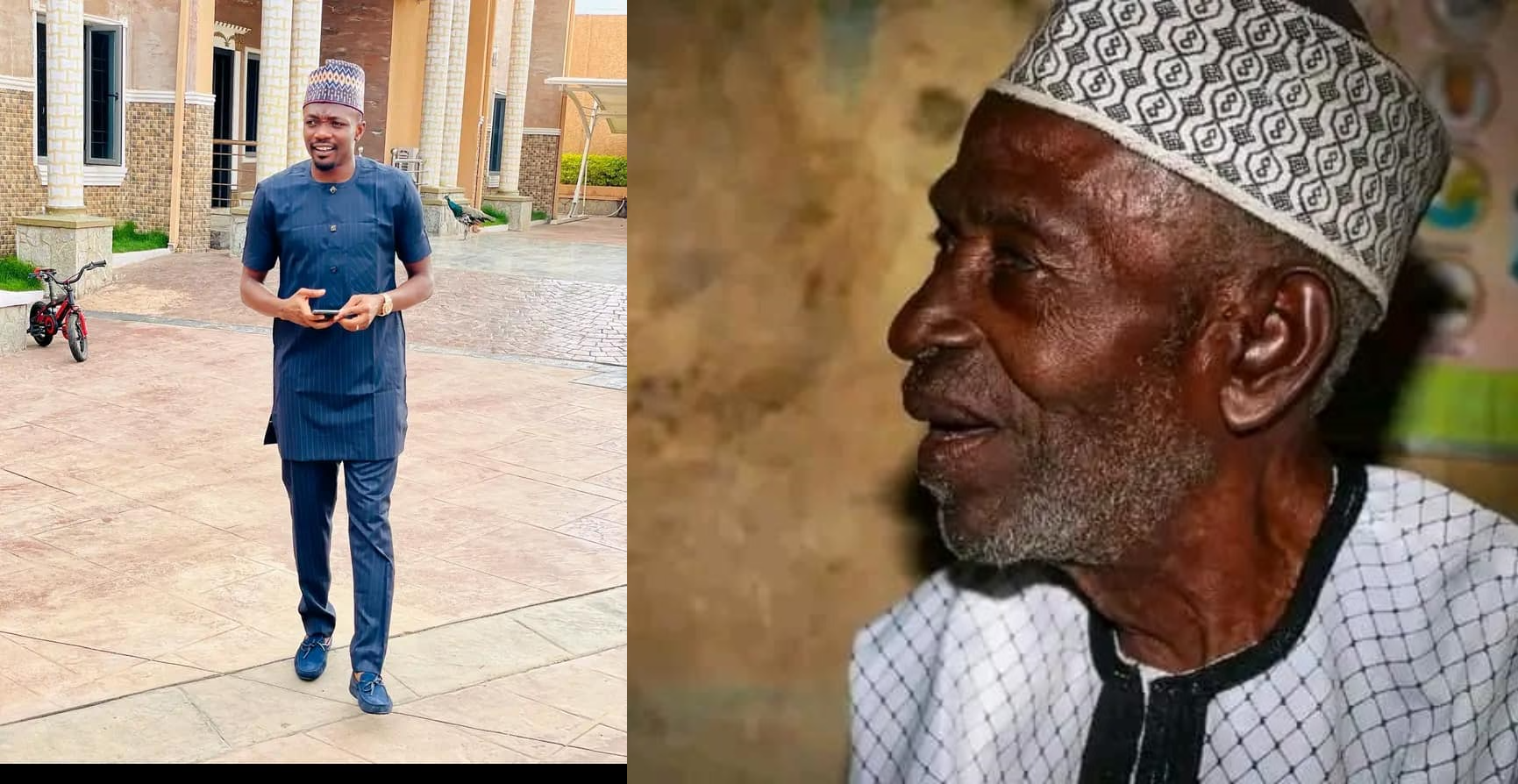
The former Super Eagles captain and philanthropist, Ahmed Musa, donated the sum of ₦5.5m to the embattled veteran Hausa actor Abdullahi Shu’aibu, alias Abdullahi Kano or Karkuzu.

In a viral social media video, the aged actor, who has also gone blind, pleaded with the general public for help.

He further spoke about his daily struggle to feed, adding that he had even been threatened with eviction. Thus, he wanted people to help him own a house before his death.

The Daily Reality has yet to be able to contact Karkuzu, his family in Jos, Plateau State, or Ahmed Musa during this report. However, sources and reports have confirmed the donation.

A visit to an ace Hausa ethnomusicologist – Muhammad Kalarawi

By Prof. Abdalla Uba Adamu

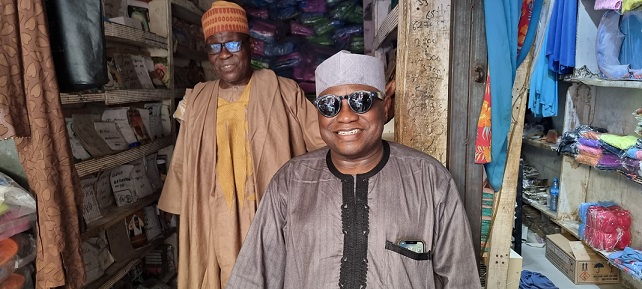
In an attempt to gauge the current popular culture market in Kano, I visited my old haunt at Kasuwar Ƙofar Wambai today, 2nd August 2023. It was the place where virtually all Hausa popular culture media products were distributed in the late 1990s to 2000s. It was simply the best in West Africa, as media products from this market – which took over from the Bata market – were distributed to other parts of Hausaphone West Africa.

I was shocked at the fact that there were only three shops selling CDs/DVDs and cassette tapes. The market had been taken over by plastic household items and blouses/football jerseys! It was so sad to see such a vibrant market – the best in West Africa – down on its luck. Discussions with three forlorn merchants reveal two main reasons for this sorry state of affairs of consumptive popular culture media in Kano.

The first was the proliferation of Download Centres. In these places, films were ripped off DVDs or CDs and with a reduced resolution to fit a Smartphone screen – and dozens were packed on a microSD card and sold for peanuts. This denies the content providers of profit from their hard labour. A licensing compromise was agreed between filmmakers and Downloaders to everyone’s satisfaction. Thus, no more CD purchases that require both a CD player, a TV and electricity to play. Downloaders often get their primary source directly from the producers – thus eliminating the media production processes.

Second was the rise of TV series, popularised massively by Arewa24’s Dadin Kowa (although it was not the first). Now almost every producer has jumped on the TV series bandwagon and using YouTube to distribute their programs. With data getting cheaper, it means viewership has migrated to YouTube series dramas – where more money is made with AdSense clicks. Rarely does a producer bother now with a feature film.

Sad as I was with these developments, I perked up when I visited the shop of Alhaji Muhammad Kalarawi. He is quite simply the best ethnomusicologist in the market. His nearest rival, Musa Nasale, passed away some time ago (and no one knows what has happed to his catalogue of unique and rare music field recordings).

Alhaji Muhammad Kalarawi got his name from being the recordist of the late Kano-based Islamic cleric, Alhaji Lawan Kalarawi (d. 1999). The term, “ƙala rawi” means ‘the narrator said’. Kalarawi established himself as a fearless, acerbic preacher in Kano – earning him numerous jail sentences. He was really telling it like it was – bringing his incredible interpretations on leaders (both modern and traditional) and commoners alike. Thanks to modern media technologies, there are hundreds of Lawan Kalarawi’s archival recordings on YouTube and MP3 trawler/caching sites.

Kalarawi’s popularity was enhanced by his street speech mode with jovial, often bawdy commentaries, which made him immensely popular. I personally count three Islamic preachers in Kano as those I avidly listen to: Lawan Kalarawi, Ibrahim Khalil and Aminu Daurawa. All down to earth. Just as it is, without any excess baggage or appendices.

The current Muhammad Kalarawi has almost every incidence of the late preacher’s recordings. That is a huge treasure trove. In addition, he still has stacks of tapes and CDs of traditional Hausa griots, which are simply not found anywhere. I was so elated to know he is still in the game, despite the suffocating pervasive influx of Hausa Afropop in Kano (which studiously avoided the Wambai market). I wish research institutes such as the History and Culture Bureau in Kano, or Arewa House in Kaduna, would license Kalarawi’s priceless catalogue and digitise them for posterity. Once they are lost, they will be gone with the wind.

Tension as Saudi, Iran summon Swedish diplomats over Qur’an protests

By Uzair Adam Imam

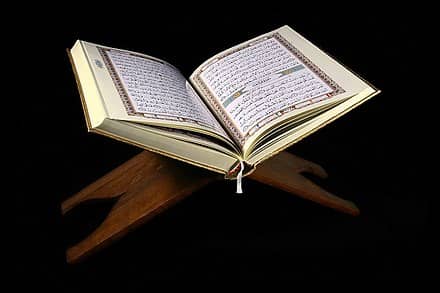
Saudi Arabia, often described as the Middle East powerhouse, and Iran have summoned Swedish diplomats to denounce the Stockholm’s permission for protests that meant to desecrate Qur’an, the Muslims holy book, on free speech grounds.

The calls by the two majority-Muslim countries, which came separately, were in statements made available late Thursday.

This is coming amid heightened tensions between Sweden and Iraq over a Sweden-based Iraqi refugee, who last month burnt pages of Qur’an outside Stockholm’s main mosque.

The Daily Reality learned that, in the latest such incident on Thursday, the refugee, Salwan Momika, stepped on the Qur’an but did not burn it.

Monika’s action was considered to be the reason that triggered the renewed condemnations and calls for protest across the Muslim world.

According to a foreign ministry statement, Saudi Arabia, it would hand the Swedish charge d’affaires “a protest note that includes the kingdom’s request to the Swedish authorities to take all immediate and necessary measures to stop these disgraceful acts”

Nasser Kanani, the Iranian Foreign Ministry Spokesman, said Sweden’s ambassador to Tehran had been called in to censure the permit granted to Momika’s protest and to warn Stockholm of the consequences of such actions.

“We strongly condemn the repeated desecration of the holy Koran and Islamic sanctities in Sweden and hold the Swedish government fully responsible for the consequences of inciting the feelings of Muslims around the world,” Kanani said.

My kids will choose their career – Ali Nuhu

By Muhammad Sabiu

The famous Hausa film star, Ali Nuhu, states why he would allow his own children to choose the career of their choice.
 
He added that he would like his son to succeed him in the Kannywood film industry.
 
However, in an interview he granted to the Hausa Section of the BBC, he says his son is more interested in football, which is why he supports him so that he can achieve his goal.
 
Ali Nuhu was quoted as saying, “What the modern age has brought is that if you see your son or daughter wanting something, as long as it is not against religion, then support him and give him encouragement to achieve his goals.”
 

Notes on “Manyan Mata” series

By Abdullahi Haruna Kandash

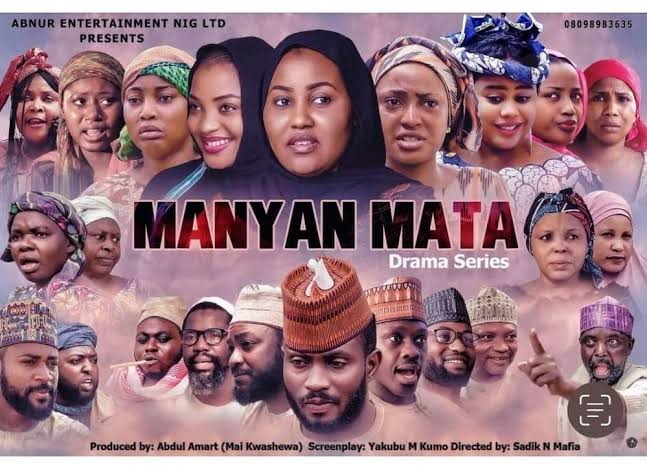
In my opinion, Mayan Mata is one of the best series, if not the best movie ever produced in Kannywood. The movie portrays the vicious circle of poverty, a retinue of marriages, the mutilation of pregnant women and how children in society are raised with no regard for their futures.

Sadik Sani Sadik thinks nothing a man should be ashamed of if he bullies his wife. In the series, his pregnant wife faces a crisis despite her pregnancy. Unfortunately, they lost the child by miscarriage. Jamila Nagudu experiences petty humiliation after her one and only child is taken to Almajiranci. Daso’s son is a nasty disciple, too, a spoiled one. He was taken to Almajiranci when he was a child. He follows the gang and gets spoiled.

The movie portrays what really sabotages relationships, couples and children’s futures. The best part of this movie tells us that there are people in society with more clout who show no concern for other children and other women whose lives have been shattered by the cruelty of their spouses. I became truly interested in the movie after I watched some episodes. And I have seen many things that happen in real life portrayed in the movie. The director has done a wonderful job.

Kannywood should continue to bring cultural identities into its movies. The director also depicts literature, art and culture in the movie, and all these can be vividly seen in the different scenes of the film. Literature, art and culture are not something we can simply despise. They are like the air we breathe. And If we cut them off, the whole world will suffer.

Literature has enormously helped so many movies to gather an audience because of its literariness. Manyan Mata pictures exactly what is happening in our communities nowadays. It shows how parents treat their children with contempt. The director shows us how our societies are sliding backwards and experiencing immaturity.

But the best part of it, however, is that it teaches us how to understand the beauty of humanity, that everyone’s life matters.

Fati Washa experiences a worst-case scenario with her deceased mother’s co-wife. After watching the scene where her mother’s co-wife was trying to burn her schoolbooks rudely, I sensed that the movie is trying to tell us that societies that achieve better prosperities are those where huge investments are made in education. These are societies where every child is allowed to go to school to learn. This part also attempts to show us that every child should have access to education so that just and egalitarian societies can be built.

I hope the director will continue to fight inequality and bring sameness because that is what brings safety, security and a sense of belonging among people.

Kannywood in London: Actors bring Northern Nigerian culture to the global stage

By Aliyu Abubakar

Kannywood actors Ali Jita and Ali Nuhu recently took to the stage at Success Hall in London on Saturday, April 22, 2023, showcasing the talent and artistry of Northern Nigerian culture for the first time as part of the 2023 Eid celebration party. Their performance not only highlighted the cultural richness and diversity of the Hausa and Arewa people but also demonstrated Kannywood’s growing reach and influence beyond Nigeria’s borders.

As Ali Jita and Ali Nuhu performed in London, their fans watched in awe as they seamlessly blended music and dance to showcase the beauty of Hausa and Arewa culture. The audience was treated to a stunning performance that celebrated the talent and creativity of the actors and showcased the unique heritage of Northern Nigeria.

For those who may not be familiar with Kannywood, the film industry produces movies in the Hausa language in Northern Nigeria. It has been gaining popularity recently, with a growing following among Nigerians and beyond. The success of Ali Jita and Ali Nuhu’s performance in London is a testament to Kannywood’s increasingly global reach and influence.

This achievement is a proud moment for the actors, their fans, and the entire Kannywood industry. Moreover, it marks a significant milestone in the growth and development of Northern Nigerian culture, highlighting the resilience and creativity of its people.

Ali Jita and Ali Nuhu’s performance in London was significant for the Kannywood industry and the Hausa and Arewa communities in the diaspora. For many Northern Nigerians living outside their homeland, the performance reminded them of their culture and heritage, bringing a sense of pride and joy to their hearts. In addition, the event provided an opportunity for the diaspora community to come together, celebrate their traditions, and connect with their roots.

The success of Ali Jita and Ali Nuhu’s performance in London also reflects the power of culture in fostering cross-cultural understanding and promoting unity. The event brought together people from different backgrounds and cultures, providing a platform to showcase the beauty and diversity of Northern Nigerian culture. It also helped to break down stereotypes and promote a deeper appreciation of the vibrant cultures that exist in Nigeria and Africa as a whole. As Kannywood continues to grow and gain global recognition, it has the potential to serve as a bridge between different cultures, promoting understanding and fostering unity.

In conclusion, Ali Jita and Ali Nuhu’s triumphant performance at Success Hall in London as part of the 2023 Eid celebration party is a significant milestone for the Kannywood industry and a proud moment for the Hausa and Arewa people. It celebrates the beauty and richness of Northern Nigerian culture and showcases the talent and creativity of the region’s actors and filmmakers. Furthermore, the event has helped promote cross-cultural understanding and foster unity, highlighting Kannywood’s potential to serve as a bridge between different cultures. As the industry grows, we can look forward to more exceptional performances from Northern Nigeria’s talented actors and filmmakers.

Aliyu Abubakar is the MD. Rbm e-Tech and Digital Services, Hadejia, Jigawa State. He can be reached via aliuabubakar852@gmail.com.

A crack on Hadiza Gabon’s wall: Humanizing Northern Nigerian stories

By Sa’id Sa’ad

Being a lover of reality shows, award nights, behind-the-scenes and documentary movies, I’d always dabbled from one interview to another, especially exclusive interview rooms that humanise celebrities from various industries. Something that often allows me to see these people beyond their screen-portrayed selves, beyond their polished English-speaking tongues in sets, and beyond their filtered pictures on Instagram.

From Steve Harvey’s show to Trevor Noah’s. From Coffee with Karan to dozens of international shows of the same make-up. Each of them has always fed me the dose of vitamins I needed to see different fantastic interviewees in their human form. Sometimes, I would wonder deeply how one person could have this widened, divergent existence.

However, in Nigeria, shows like #WithChude hosted by Chude Jideonwo have become relevant to Nigeria’s entertainment industry, bringing music artists and Actors – Nollywood – to live through personal exclusive discussions that spark varying conversations. Meanwhile, the advent of Ebuka Obi Uchendu’s Black Box Interviews has presented a new dimension for this art. Through bringing similar personalities as #WithChude’s, the Black Box interviews – geared by Ebuka’s mastery in media and moderation makes it more humane, deep – yet story-driven and intense conversations that would take about fast-phased 2-hour discussion that would leave you wanting more. Undoubtedly, these contents have been the source which news media and bloggers would often plug their ‘stories’ and ‘gossips’ from, giving more relevance to the celebrities and promoting their art. And above all, selling the stories of these people, majorly, using it to their career advantage.

As you might already predict, Northern Nigeria’s entertainment industry has lagged same platforms, except for a few interview programmes produced by media companies. BBC Hausa’s Daga Bakin Mai Ita and Arewa24’s Kundin Kannywood are a few examples of what it was for the industry. Perhaps – as perceived by many – as a lack of “capacity” or “interest” to pursue the same, especially from the industry players. Or rather, others believe that as a result of the notion that northerners do not appreciate northern content. The latter, as sad as it may sound, has continued to place a borderline between contents from the region and its market. However, a robust attempt – from the industry players as thus they benefit from it – would have been a Noah’s Ark to what northern Nigeria’s storytelling would become and even the industry market. Hence, Hadiza Gabon’s Room.

Since the advent of the show – as much as I hardly ever skipped Daga Bakin Mai Ita – I am one of those who’ve watched every episode of Hadiza Gabon’s Room since its inception. Being a household name in northern Nigeria, Hadiza Gabon’s Room, a personal show produced by the actress lately, has gained attraction in the region. This should raise an eyebrow as to how northerners react to northern content or stories specifically produced in Hausa. Prior to the production, the most likely, perhaps consistent programme that ‘tries’ to do this task of humanising the northern entertainment artists has been Daga Bakin Mai Ita which, of course, contributed, though very shallow.

Another close ally to that was what used to be Kundin Kannywood, produced by Arewa24 – the first indigenous Hausa-speaking TV channel – and hosted by ace Kannywood actor Aminu Sheriff Momo. With the wider reach and technical skills invested in producing them, the duo have proven to have a lighter foundation of sustainability as they are run, produced and aired by media organisations who might – at any moment – halt, pause or terminate the programme, especially if any of its episodes attempt to wobble with the organisation’s reputation. But one would never separate celebrities and trends. Or can we?

I agree that “northern Nigeria does not appreciate northern Nigerian content” due to my experiences with middle-class-elite Hausa-speaking northern Nigerians who find their faces wrapped in shame to consume anything northern or anything Hausa. Be it music, film or any form of art. But even more, sometimes you could drop your jaw at how much northerners “dismiss” what becomes of Hausa celebrities from the region. Many were caught “bragging” about how much they didn’t recognise a certain northern celebrity they bumped into at a shopping mall.

But this is not so much different from what the same generation of Yoruba and Igbo does to their indigenous language promoters and contents as well. Perhaps the only difference between the Hausa-consuming northern Nigerian population and the others is that the typical educated middle-class or elites half-baked exposed northerner consume Hausa-produced content with ‘shame’. While a Yoruba or Igbo population consumes these contents in their own languages with ‘pride’. Unless for few who are bold hit the table, some have made it a subject of mockery to their friends who listens to Hausa songs or watch Hausa movies. Making it a “measure of exposure”.

Ordinarily, I’d assume that only a few people like myself – who are interested in storytelling and care about northern stories – consume Hadiza Gabon’s Room until a few weeks ago when the host interviewed a Kannywood actress who’d broken down on the show over what people would describe as “poisonous love” with another unnamed artist. This brought numerous comments from different people in the industry and beyond. But most surprising, from the same “typical educated middle-class or elites half-baked exposed northerners” admitting to having “been watching” the show. Perhaps this can also reflect a hypocritical-denial and intentional lack of acknowledgement. So, it’s safe to say these two contributed to placing the region’s storytelling where it is. Maybe even moved it farther.

Now, self-made analysts on social media have been placing the show on a scale weighing Hadiza Gabon’s skills in media or journalism, and some even going to the extent of breaking bits and pieces of how the questions should be asked. In all honesty, it is not balanced to completely dismiss the fact that there is still more to do from the producer in terms of the technicalities of the show, but it is also imperative to understand that Shows like these grow, get better and improve, with time. This could be reflected in what Ebuka Obi Uchendu or Chude Jideonwo’s shows were ten years ago and what they are now.

However, as a writer and a communications specialist, I would rather than analyse, admit that Hadiza Gabon would have become one of the bravest from northern Nigeria’s entertainment industry to self-produce such funnel that would feed – good or bad – stories from what creatives do in northern Nigeria. At least, a good or bad story is better than no story. Or better still, if Ebuka’s Black Box Interview Show could tell deeply personal stories about the life, career journey and even growth of certain entertainment stars from other parts of Nigeria, then there is a likelihood that Hadiza Gabon could be to northern Nigeria celebrities what Ebuka Obi Uchendu is to Nigerian Celebrities.

Though balancing stories is an essential part of storytelling, it is also unimaginable to think that one day you would find Chude Jideonwo interviewing Hamisu Breaker or Ado Gwanja on his show. This is not to be dismissive about the possibility of that, but the prospect as of now is blurry. Therefore, these stories from these people from northern Nigeria have to come out from northern Nigeria. And that is why Hadiza Gabon should be commended for that.

On the other side, celebrities have soon produced multiple of these shows – using their popularity to sell their stories – while putting a spotlight on their artists, storytellers, entrepreneurs, writers, tech gurus and even educators. And like tomatoes spread out on the front line of an open market, these have been central to the stories they tell the world about themselves. Since we refused to do the same, we are left with our favourite duo, “Almajiri and poverty” narratives.

Imagine if Hadiza Gabon’s Room is a Live show where these guests will speak – without filters, editing or CUT!? Such that truth will be told as raw as it should be, and the eyes will communicate a lie? Imagine if other writers and journalists would consistently write about whatever in-creatives-sake is coming out from northern Nigeria in theatre, movie, and music, such as Muhsin Ibrahim? Imagine if there were multiple consistent shows produced by the industry players who would use their popularity to air their stories, such as what Hadiza Gabon does in her Room? Imagine if consuming these contents in local languages is seen as mere “interest” rather than as a “measure of exposure”? Imagine! Imagine! Imagine!

This is a crack created by Hadiza Gabon’s Wall. We have now seen the gap. And there is more to see. Storytelling does not rest on the edge of a singular art form. Rooms as well, have ways of speaking. They have walls that portray. They have a roof that reflects. They have floors that nurture. We can only humanise our stories when we hang them on the walls and paint them. But what will become of us if our walls continue to crack?

Sa’id Sa’ad is a Nigerian writer, poet and playwright from Maiduguri. He is the NFC Essay Award Winner 2018 and the Peace Panel Short Story Prize Winner 2018. He tweets at @saidsaadwrites and can be reached via saidsaadabubakar@gmail.com.

Manyan Mata: A new, worth-watching Hausa series

By Salim Toro

Yesterday, after meeting with Usman Toro, I returned home immediately to have dinner before retiring to bed. My siblings were watching a Hausa web series, Manyan Mata. So, while having dinner, I caught half of the episode they were watching. I found it captivating and worth watching.

I later learned it’s a new Hausa web series that premieres on YouTube and airs on Arewa24 every Saturday at 9 pm. The series is produced and directed by Ahmad Amart and Sadiq N Mafia, respectively. It brings all the leading Kannywood actors and actresses, such as Ali Nuhu, Adam A Zango, Sadiq Sani Sadiq, Hadiza Gabon, Fati Washa, Saratu Gidado, Momee Gombe and much more.

The storyline of the series is fascinating, entertaining, and educational as well. It highlights and depicts most of the trendy issues in our society (Arewa), such as marital and parental responsibility, girl child education and Almajiranci.

While I find the series riveting and worth watching, I recommend it to everyone here. Rest assured that you will benefit from it in one way or another. Happy watching!

Salim Toro sent this via salimabdulhamid0909@gmail.com.