Education

Career choice in Universities: A tribute to academic giants

By Aldelghaffar Abdelmalik Amoka

When I was admitted into the Ahmadu Bello University School of General and Remedial Studies (SGRS) in the 1992/1993 academic session, I registered with the intention to study medicine after the one-year remedial program. During the program, I started having a second thought on medicine and was considering Engineering. But by the end of it, I was offered Physics. I was like “what will I do with physics?”. This is a subject you can hardly find a qualified teacher to teach in secondary schools. So why physics? I wanted to change, but transfer rules changed that same academic year, and changing courses, especially to the so-called professional courses, became difficult.

I had two choices at the end of my first year when it was obvious I can’t change from physics. It was either I carry on with my studies or leave. So, l chose to stay but without any love for the subject. That continued till my final year when we were taught Solid State Physics by this Professor, an Indian, that changed my mind about physics. He made us see the beauty of physics. He made us see how basic physics is changing the world. He told us how physics concepts like the total internal reflection in optics have revolutionalised medicine and telecommunications. He was an inspiration. What he taught us in 1999 came to my mind when I had a shoulder operation in the UK in 2011 that was done without a visible scar on my shoulder.

That interaction in our final year made me desire I do my final year project under his supervision. I eventually returned to do MSc Physics under his guidance to tap more from his wealth of knowledge and personality. He introduced me to the field of dielectric physics, the field that opened the opportunity to my travel to some countries and has made me meet great minds. At the end of the MSc program, his recommendation got us a job in the department in 2005. I was walking towards the ABU North Gate when Prof’s call came in: “Amoka, where are you? Congratulations, the VC has approved your appointment. Please inform Tajudeen”. The best news for an unemployed graduate.

I was employed as an Assistant Lecturer under his guidance, registered for PhD in ABU in December 2005, and the work on dielectric physics continued. In August 2007, I informed him of the Islamic Development Bank (IsDB) scholarship opportunity that my brother told me about. Like he knew he had not more than a year to live from then, he encouraged me to apply. He followed it up till I submitted the scholarship application with the full PhD proposal that I was working on under his guide. A few weeks later, I was returning from Italy on a 2 weeks workshop trip in October 2007 and I called to inform him that I had arrived in Lagos when he informed me that he was sick and on his way to the airport. He got to India and was diagnosed with Cancer of the Colon. I became scared.

In January 2008, I received a handwritten note from him with a prayer request to make it through the cancer treatment. From the handwriting, I could figure out he was weak. I prayed hard that he get well and return soon. It was a shock when I made that call to India that early morning on Thursday, 17th April 2008, and I was informed that Prof was no more. The Giant was gone. He gave up that morning after about 6 months of battle with Cancer. I was broken. I have never seen anyone as humble as him. He has regard for everyone and he finds it so easy to relate with everyone including the cleaner. As the Head of Department, he made me realize that with proper management and financial discipline, which we lack these days, you can achieve a lot with little.

While I was still wondering how to proceed with the PhD without the only person that could supervise research work in material physics in the department, I got an email from IsDB of an award of scholarship for PhD under their Merit Scholarship Award for High Technology. The scholarship application was successful. It was unbelievable. Then the University of Leicester offered me admission for PhD in engineering research. That was how I met the famous Prof. John C. Fothergill, another Giant that I am standing on his shoulder.

Prof. Fothergill was such an amazing supervisor and shared similar characteristics with Prof. Hariharan. The 3 years 3 months with him was an amazing one with lots of memories. He doesn’t just bother himself with your personal development and the progress of your research but also your welfare. As he commends your efforts so do he point out the weakness to work on. With his tight schedule and the head of the department, I was always on his priority list.

Even after the PhD, John was concerned about my career development in my home institution. He sends to me any materials he finds useful to help my career growth and development. His notification and recommendation for a postdoc job in Norway got me the 2 years job. The postdoc job introduced me to partial discharges in power equipment components. He inspired me to start a lab. I did not just learn how to do dielectrics and electrical insulation research from Prof. John C. Fothergill, the British Professor of Engineering also taught me the benefits of writing in simple sentences. The Giant is still there for me to this day.

In my struggle to survive as an academic with all the peculiarities in our Universities in Nigeria, my path crossed with another Giant on whose shoulder I am standing. Academics are trained critics. They are also expected to have leadership skills. While I enjoyed being a critic right from my university days, I run away from leadership responsibility till I got a phone call in May 2020 during the ASUU strike about a letter for me and I told the caller I will pick it up when I get to the university later in the afternoon.

I opened the envelope and it was an appointment letter. I didn’t see that coming and could not run. The Giant found me worthy to lead (head) a Unit of the University. I was confused and scared as I have always had this feeling that critics hardly make good leaders. I later took it as a chance to see the other side of just being a critic. It has been tough but an amazing experience and have made me learn a lot. A colleague jokingly told me that I am an expert in reviving dead areas. I hope I will be able to live up to that expectations.

I think I am really lucky to have got many Giants on whose shoulders I am standing to see farther. If I have ever inspired or impressed you with my little efforts as an academic in the university, it was because God made it possible for me to meet these Giants in my life. They among other people paved the way for me to get here.

As the 2021 calendar year comes to an end in a few days, I wish to appreciate Prof N.I. Hariharan, Prof. John C. Fothergill, Prof. Kabir Bala, and all the giants on whose shoulders I am standing.

©Amoka
TETFUND at 10: The giant strides of the ‘Apostle of Research and Development’

By Tahir Ibrahim Tahir (Talban Bauchi)

Tertiary Education Trust Fund (TetFund) recently celebrated its ten years of service, having gone through many changes in its functions, duties, coverage and composition. It had existed under different names before now. Still, the amendments to the act establishing it have turned it into a Tetfund, with more coverage of tertiary education in the country.

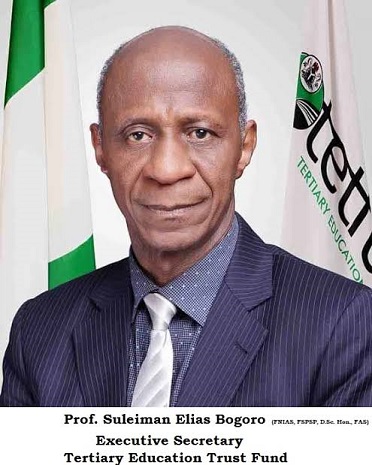
At the Tetfund at Ten event, its Executive Secretary, Prof. Suleiman Bogoro, was introduced as the apostle of research and development. A very apt description, narrating how he has turned the tide of the impact of Tetfund from infrastructure to research. The previous administration first appointed Bogoro, and barely two years after, the new administration of President Muhammadu Buhari (PMB) relieved him of his duties. Not long into the PMB administration, Bogoro was again re-appointed. This is a glaring testimony of the quality of stewardship he brings to the running of Tetfund. Tetfund staff rolled out the red carpets for him and welcomed him back to their fold amidst celebrations.

At Tetfund at 10, it was disclosed that 152838 infrastructural projects had been executed across the country. Thirty thousand lecturers have also been sponsored for Masters and PhD programmes. In addition, 68000 academic and non-academic staff of tertiary institutions have also been sponsored to attend local and international conferences. Tetfund has also supported 71263 lecturers under the Teacher’s Supervision Programme. Moreover, over two million books and 152000 E-resources have been procured by Tetfund.

The apostle of research and development came to improve funds for The National Research Fund, which had started with seed money of just 3 billion naira in 2011. Bogoro saw this fund’s growth by over 50 per cent, to an unprecedented 8.5 billion naira in 2021. So far, 9 billion has been accessed by lecturers to fund their research activities. Tetfund played a significant role in Covid-19 research. Tetfund approved four mega research clusters for Covid-19 vaccines and drug research and security and dairy research. The clusters had within the range of 250 million to 450 million to fund their research activities.

As the most pushful advocate for research in Nigeria’s tertiary institutions, Prof. Bogoro has achieved near-global fame among education sectors’ stakeholders. In recognition of his efforts, Afe Babalola University, Ado-Ekiti, named its research centre after him. This particular university is not even a beneficiary of Tetfund’s interventions and so cannot be accused of repaying him for any interventions in their school. Speakers at this event said Bogoro had earned for himself the appellation of Senior Advocate of Research, SAR. Bogoro emphasises advancing learning through research.

True to Bogoro’s advocacy for improved research and development, the Federal Government just received a draft executive bill for establishing the National Research and Development Foundation led by Tetfund. Bogoro, who received the bill on behalf of the Minister of Education, Mallam Adamu Adamu, thanked the Justice Ministry for drafting its staff to the exercise. This is a direct drive in turning Nigeria into a knowledge-driven economy. At the event, Bogoro stressed that Nigeria’s economy could not be competitive if it did not institutionalise Research and Development. He said that the most competitive nations placed innovation and creativity as the lead elements that drive society.

The Chairman of the drafting committee, Prof. Yadudu, commended Prof. Bogoro for putting the committee in place and his vision for the Research and Development Foundation. He also said that the country stands to reap bountifully when the bill is passed. “This is a bill which seeks to establish a National Research and Development Foundation to institutionalise, mainstream, and commercialise research and development; promote innovation and support enterprise development for job and wealth creation, for a knowledge-driven economy. This is the key thing,” Prof. Yadudu said.


Tahir is Talban Bauchi.

Why Geography Matters: The need of Geospatial Technique in Addressing Nigeria’s Security Challenge (I)

By: Murtala Uba Mohammed (PhD)

Recently, Nigerian government took an audacious step by throwing a baby and its bath water not only into a river, but to a deep and distant ocean. It was in 2013 that the country in its attempt to reform its educational system particularly at secondary school level, relegated some important subjects to the background; bringing up some newer ones. Subject such as geography and history suffered from this restructuring of making these corner stone subjects- in terms of what they offered in the understanding of man and his physical environment as well as the historical explanation of the past to build the future. Making these subjects optional at the crucial level of building an imprint of human-environment relationships in the minds of our younger is synonymous to drawing the country in terms of a better well-informed society. While one may not completely agree with the argument advanced by the authorities that the reform was made to introduce subjects that aimed at fostering self-reliance and entrepreneurship with a view to curving the rate of unemployment in the country. It is important to note that the reasons given were quite inadequate to justify the need for the replacement. It is imperative to note that a lot were written to convince the government on the need to revert back the curriculum to the status quo, especial considering the importance of the subjects in creating national consciousness and self-awareness in the case of history and on learning about the country and of being foundation to most environmental related discipline in the case of geography. This writing decides to differ a bit, approaching the issue from the perspective of national security challenges.

Nigeria is currently witnessing the most difficult challenge it ever faced in its history and territory; no part of the country is presently spared from one or more security threats. From its relatively wetter southernmost part to its most-drier north, the country is at war with itself, facing threats such as banditry, armed robbery, ethno-religious bigotry, tribal clashes and political thuggery. The threats of Boko-haram, IPOB and to a lesser extend Afenifere are sufficient enough to sink the already overloaded and about to crash ship called Nigeria. Most worrisome, is the daily reportage of killing of its citizenry by both known and ‘unknown devils’ that terrorize almost all part of the country. This is most especially in Northwestern Geopolitical Zone where daily killing and abduction for ransom has become a norm, more especially in Katsina, Zamfara and Sokoto States. In the mid of crisis at the periphery, one hopes the center to be secured; but in the case of Nigeria the ailment has afflicted all her body. Niger state is now so powerless that ‘bandits’ are now having their field days in many parts of it. Just like Niger, Kaduna to Abuja Road is so unsecured that travelers to and from Abuja were compelled to go for rail. Even in the nation’s state, the suburb is unsecured as most part of the country. While most people end up in nostalgic mood, recollecting mainly the past peaceful experiences the country witnessed and some such as general TY Danjuma had long time condemned the country as ‘failed state’, this article hopes the issue will be addressed by deploying the knowledge of this important subject. It is (without any doubt) through geography that colonialism was achieved in the past and it is through it that societies were both dissemble and assemble, creating new states and modifying many ones. The subject can equally be used as discussed below, to arrest the security situation of Nigerian State.

While the values of the geography are so much, this piece highlights some of security related areas in which geography would be of critical support:

  1. Regional Planning

As a discipline geography focuses on space which includes location and its attributes. In order to achieve the aim of place description, geography pays attention to details of location and tries to distinguish one location from another. Doing this helps in identifying uniqueness of an area which forms the basis for regional planning. Because each region is unique, its planning is based on its distinct characteristics which are used to harness its economic potentials. A vast country like Nigeria that traverses many climatic, geological, edaphic and demographic regions, is blessed in some way and have a particular advantage that can be tapped. The inhabitant of the region might have idea about this opportunity(ies), but it is government initiatives that can foster the best use and utilization of them. Regional planning especially at moderate to large scale is a domain of geography, and candidates with sound knowledge of geography particularly its regional sub-field will help a lot in regional planning which is conspicuously missing in the country. The way we are today is that the various entities that make up of the country are lacking in unique contribution each can offer to the country’s development. While governments are doing a lot, they hardly consider regional specialization in their programmes. They are rather imitating one another, and in many instances compete in urban based project. Recently, states in Northwestern Nigeria were suspected on competing in building bridges and underpasses in urban areas rather rural and agricultural development projects. This urban based development may only worsen the situations of the already poverty striking states by encouraging rural-urban migration which put more pressure on urban infrastructure and deprived hinterland its able builders. A combination of edaphic, eco-climatic and relief factor alone can be used in zoning the country for agricultural production which will not only cushion the current poverty level in the country, but foster regional complementarity and economic diversification. The country is also rich considering the various mineral resources gift of its diverse geology which can also the basis for planning. Also its cultural landscape and physiography can form the base for regional planning.

  1. Identifying and Modelling the Crime Hotspot

One of the recent and most used geographic tools is the geographic information system (GIS). As an information system GIS is unique in that it gives emphasis to location in all its analyses; it is the capability of GIS to analyze display and model location-based events and situations that makes it appealing to all other fields and disciplines. Crime and conflicts have both temporal and locational attributes and can therefore be addressed through GIS. With GIS pattern(s) of conflicts and criminal activities can be established in more robust way, and can be arrest in a better way. GIS can tell the areas of high crime probability often known as hotspots with high level of precision. Modelling and prediction can be done for various crime types. This is essential for security and safety of the territory. With good data recording, digital based maps can be produced to inform users on security situation as they travel via road or train. GIS integrates various layer of information which can be used to explain and describe why crime happened in a location or time trajectory. When GIS is employed with it multi-layer combination capability, it has higher tendency to explain three key security questions of when, where and why. With answers to this question management of crime become becomes better. Doing all these require manpower with good background in geography.

Dr. Murtala teaches geography at Bayero University, Kano and can be reached via email: murtalamuhammadu@gmail.com

Why we must eradicate the menace of campus prostitution

By Lawi Auwal Yusuf

Prostitution is a global phenomenon and not particular to one society. However, it’s a worsening problem in tertiary institutions as female students take it as a means of livelihood and accomplishing their academic objectives. Moreover, extravagant lifestyles, peer-group influence, and drug addiction are also reasons for such deviance in academia.

This is the business of providing relatively indiscriminate lustful services to another person who is not a spouse in exchange for immediate payment, valuables, or a contracted favour. The absence of deep emotional liking is an essential element of passionate relationships.

These students readily accept these benefits in return for services to virtually everyone willing to pay, with few exceptions of relatives. Hence, the basis for engaging in the act is the reciprocal material benefit or favour while the male partner participates for pleasure.

The immoral students provide these illegitimate services to nefarious staff, co-students and off-campus lovers. They exhibit themselves enticingly to get undeserved favours like altering the marks of their failed courses to pass, upgrading their CGPA, divulging examination questions and other confidential information or giving admission to unqualified candidates. Moreover, their indecent and seductive dressing, revealing sensitive parts of their bodies, is an open invitation to lure men.

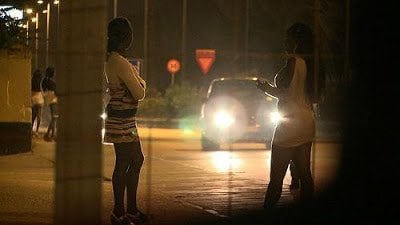
It is incredible to see how boisterous female hostels are at dusk and the splendid cars that pick up girls to hotels, nocturnal occasions, jamboree parties, clubs, and other joyous night entertainment. Affluent clients are supplied with enough quantity to satisfy their amorousness as simple as pressing a button. Similarly, tourists, especially those travelling from foreign countries, also patronise them. These harlots are also hired for politicians at the expense of taxpayers.

The effects of this illicit trade are enormous. It should not be perceived just as a victimless crime. It leads to other heinous crimes and unpredictable consequences. Corruption, favouritism, infidelity and the spread of venereal diseases are also repercussions of prostitution. Similarly, it contributes to the precarious state of education and the nation at large.

Higher institutions churn out these incompetent graduates who are employed into various positions to provide services to the public which require expertise. Today it’s so sad that jobs are given to the highest bidders or these strumpets who engage in the wicked services with employers before they are recruited. Lack of specialisation leads to rendering poor services. Thus, meritocracy as a core principle of bureaucracy and a catalyst for Nigeria’s advancement is at its lowest ebb.

The proliferation of brothels is noticeable in the neighbourhood of most schools. Student-whores find men on campus and in town whom they may never meet again and contact STDs. They subsequently infect several others, which may include innocent wives or husbands. These dangerous or fatal ailments are impediments to a healthy and productive population. Furthermore, the used paraphernalia not correctly disposed of are potentially hazardous to public health.

Violent crimes are also perpetrated on campuses as prostitution attracts anonymous visitors and criminals who rape, assault, dupe or even slay their lovers and other students. These criminals also engage in drug dealing and addiction. Crime is so dangerous when rates of victimisation are high because communities become dismembered. People become distrustful of one another and prefer to stay indoors. This will make students and staff uncomfortable and hinder teaching and learning.

Prostitution facilitates corruption and favouritism in government whereby politicians and civil servants steal public funds or make unmerited favours in exchange for the services. Policing also worsens extortion and bribery as it creates opportunities for police and college guards to engage in unethical conduct like collecting bribes in exchange for non-enforcement.

Furthermore, it is a nuisance to uninvolved people. Legitimate businesses lose customers who avoid the area due to inconvenience and traffic congestion, affecting the local economy. In addition, married people engaged in these promiscuous activities seem lackadaisical about the consequences when their spouse realises. Indeed, they run the risk of separation, resulting in higher divorce rates and broken families.

The untainted students can develop an interest in prostitution by intermingling with tainted ones, especially intimate groups and friends. The senior prostitutes influence those close to them in the environment and serve as the source of learning for new ones.

Moreover, such activities give room for ungodly male students and staff to sexually abuse innocent female students. They put them under duress or undue influence to concede and give in.

This makes numerous parents and husbands apprehensive and reluctant to let their daughters and wives pursue further education. In addition, some hate and stereotype Western education, which causes significant setbacks to girls’ education and gender equality.

Many of these erring personnel are apprehended and their appointments terminated while others are prosecuted. Unfortunately, this punishment seems to have no appreciable effect because it is becoming more rampant nowadays.

Finally, I hope this article will attract the attention of all the stakeholders more to make concerted efforts to exterminate this menace from our campuses.

Lawi Auwal Yusuf wrote from Kano, Nigeria. He can be contacted via laymaikanawa@gmail.com.

NUC University ranking and the looming 2021 ASUU strike

By Abdelghaffar Abdelmalik Amoka

There was this piece of trending news over the last week on a certain ranking from the National University Commission (NUC) where the University of Ibadan was the best, and Abubakar Tafawa Balewa University came last. The ranking received a lot of reactions. While there were jubilations from the graduates and students of the relatively younger universities (TETFund Universities as they are popularly called) as they were highly rated on the ranking, the students of some old universities (allegedly living on past glory) were not pleased with the ranking, especially those that were ranked very low despite their gigantic structures. On the other hand, some new universities without research infrastructures were reported to have high per capital google scholar index. Not sure how that was achieved, though.

While the argument was going on among the students about the ranking, ASUU members were having meetings across the universities on another looming strike. The ASUU NEC was reported to be in a meeting this weekend to decide on the looming 2021 strike. While we are awaiting the outcome of the meeting, the students seem to be more concerned with the ranking than the state of the universities and the ASUU strike.

I have been trying to imagine the merits and demerits of the NUC ranking but still trying to figure out one. All the public universities are in terrible shape. Is the ranking based on the best among the chronic underfunded public universities? The 2013 NEEDS Assessment committee of the former president, Goodluck Jonathan, chaired by Prof Mahmood Yakubu, the then TETFund Boss and currently the INEC Boss, revealed the terrible state of public universities and their lecture halls/rooms, and students’ hostels. Some of the hostels occupied by the students were reported not fit for humans.

Has all that changed in 2021? What are we ranking? FG is still dragging the revitalisation of public universities and releasing crumbs to the universities whenever ASUU barks. What are we ranking? Research is not adequately funded in public universities, younger universities have no research structure, and most of us are publishing papers just for promotion’s sake. What are we ranking? We can’t address several challenges from the university, a supposed hub for solution development. We can’t even develop solutions to solve our own challenges within the university. So, what are we ranking?

Who is NUC ranking the universities for? The government, with their deep poverty of sincerity on education, political class so that they can start patronising the universities rather than taking their kids abroad? The parents/students who care not about the quality but certificate, the few committed lecturers or the meal “ticketers”, or the International communities? If we have a structure to rank, there won’t be anxiety over another ASUU strike just a year after the suspension of a nine months strike.

Rather than expending resources on a ranking that changes nothing, the commission should have rather diverted the resources towards putting up a structure that will make the universities rank-able. We must develop strategies to fight both external and internal aggression.

The owners terribly underfund the Universities (Federal and state governments), and the academics are dreadfully paid with an Assistant Lecturer earning a net salary of about N115,000 per month and a Professor on the last step earning a net salary of N416,000. The quest for proper funding and better welfare has resulted in uncountable strike actions. However, I still maintain that if we define our priorities well, there is the fund to provide quality education for Nigerians.

Meanwhile, we also have internal issues to sort to improve the system. For example, we have Civil Engineering, Building, and Architecture departments in the universities where we train Civil Engineers, Builders, and Architects. Yet, we have awfully built new buildings and poorly maintained old buildings. We are training leaders in the universities but have terrible leaders in the universities who behave more like local politicians. We are training business and financial experts, but we can’t help the universities manage their resources and can’t help the universities to make money from the resources within the universities. We are training researchers to develop solutions for the world, but we can’t develop solutions for our challenges within the universities.

While the universities need proper funding, we have a lot to do internally to make the university work. Else, no matter how much money is injected into public universities, without responsible leadership to properly utilise the available resources for optimum impact, without academics (not meal ticketers) that are prepared to make things work and will objectively perform NUC accreditation, the funds will never produce the desired result.

Let’s do the cleanup, and everyone will be eager to see the ranking of our universities. You will see healthy competition where universities and departments compete to outperform each other.

Abdelghaffar Amoka Abdelmalik writes from Zaria and can be reached through aaabdelmalik@gmail.com.

ASUU: FG impoverishes us, no going back on strike

By Uzair Adam Imam

The Academic Staff Union of Universities (ASUU) has threatened that there is no going back on its planned strike action as long as the government did not meet its demands.

The union also tackled members of the National Assembly for earning  ₦1.5 million or thereabout monthly to the detriment of professors with ₦416 000 monthly takehomes.

Mr Adelaja Odukoya, the Zonal Coordinator of ASUU, Lagos Zone, made the disclosure on Tuesday while addressing journalists at the end of the zonal meeting of the union held at the Federal University of Agriculture Abeokuta (FUNAAB), Ogun State.

Odukoya also criticized Senators and House of Representatives members over “jumbo pay”, adding that academic members “are being impoverished by the federal government.”

NBAIS to release 2019/2020 Examinations Results for Kano students

By Abdurrahman Muhammad

The Kano State Government and the National Board for Arabic and Islamic Studies (NBAIS) have reached an agreement over the release of the state students’ 2019/2020 examination results. This was made known in a press release on Thursday, December 9, 2021.

The release, signed by Aliyu Yusuf of the Education Ministry, states that the Kano State government paid over Seventy Million Naira (N70,000,000) to the board for the results.

Kano State Commissioner of Education, Muhammad Sanusi Sa’id Kiru, explained that “the results will be ready for Kano students to download and print latest by 4 pm today.

“The Commissioner expressed appreciation for the patience and understanding exhibited by the students and their parents, further assured that the state government will not relent in its effort towards sorting out problems in the sector and proffer appropriate solutions in solving them.

“The Commissioners also commended the intervention of His Excellency, Dr. Abdullahi Umar Ganduje and the role played by the Ministry for LG and the chairmen of 44 LG in this regard.”

Why are graduates unemployed?

By Uzair Adam Imam

Every year Nigerian institutions produce thousands of graduates who come out to compete for the few available job opportunities in the country.

There is no doubt that Nigeria labour market has continued to see a steep increase in unemployment.

Professionals have argued that there is a need for urgent action to save the country from an impending danger posed by the exponential increase in unemployment.

According to the National Bureau of Statistics (NBS), the unemployment rate increased to 33.30 per cent in the fourth quarter of 2020 from 27.10 per cent in the second quarter of 2020.

Today, Nigeria battles a high rate of crimes: insurgency in the Northeast, banditry in the North West, and IPOB attacks in the Southeast, aside from the cybercrime, which is inviting to the youths.

 These security threats are believed to have been caused by some circumstances, especially unemployment.

The root cause
A lecturer at the Department of Business Administration and Entrepreneurship, Bayero University, Kano, Dr Mu’az Hassan Mu’az, attempted to trace the root cause of unemployment among graduates in the country.

He said that the issue of unemployment would persist if graduates continue to look up to the government for jobs.

He added that graduates need to be self-employed to eradicate poverty and unemployment in the society.

However, according to him, one major factor contributing to the rising unemployment in society among graduates is wishful thinking of great life after graduation.

He said most students do not want to venture into small scale businesses as they think they would be employed in big offices when they graduate. This, he said, increases the number of unemployed youths in the country.

He stated, “If students will be innovative, the effect on the economy will be fruitful.

“Many will be self-employed, poverty will reduce, social vices will drop and above all, the government will generate revenue from these entrepreneurial ventures.

“Graduates will have to look inward, explore some of their capabilities so as to start something, no matter how small that could make them financially liquid.

“There are needs in the society that no one is offering to satisfy for a premium; try to do that, then one is in business.”

Unemployment breeds crimes
On his part, Malam Hassan Sule Adamu, an entrepreneurship lecturer with the Kano State Polytechnic, stated that unemployment might unfold to all sorts of crimes.

 Muhd said, “It leads to societal ill-being, human trafficking, prostitution, insecurities like banditry, armed robbery, burglary, social and political crises, and any other crime.”

Students air their grievances
Several students expressed their grievances over the lingering issue of unemployment.

They urged the government to come to their aid by creating more jobs opportunities.

A university graduate, who preferred not to be named, said that he bagged his Bachelor’s degree eight years ago from Bayero University.

He added, “Since then, I have been applying for different sorts of recruitment. But, up to now, I am not employed.

“But I thank God because I am running a small scale business from which I earn my living and even help my relatives.”

Bad governance complicates the situation
Another university graduate, Abdulmalik Ibrahim, said bad governance complicates the situation.

Abdulmalik added, “Bad governance, mainly corruption and inhumanity of political leaders, contribute to the present situation in Nigeria.

Suleiman Ishaq believed that the only way to arrest the situation was for the authorities concerned to create more business and job opportunities.

Corps member renovates school toilet facilities in Akwai Ibom

By Muhammad Sabiu

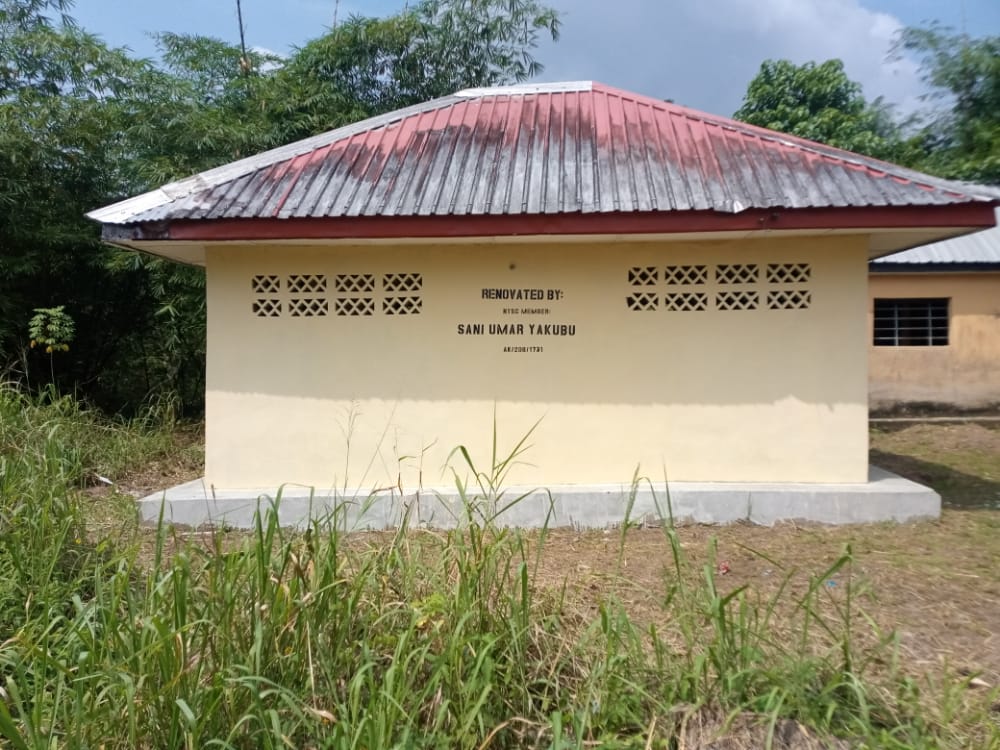
A National Youth Service Corps Member by the name Sani Umar Yakubu has on Thursday 25th November 2021, or in fulfillment of his community development service commissioned renovated twin toilet facility in Community High School Afaha Obong, Abak Local Government of Akwa Ibom State.

While commissioning the renovated toilets, Umar who hails from Dass Local Government Area of Bauchi State, said the facility represents his contribution to fight against open defecation, citing the United Nations Statistics of over 47 million individuals practicing Open defecation in the country.

He added that the gesture follows a successful sensitizations to about five schools namely: Government Technical College, Abak, Comprehensive Secondary School, Ediene; St. Mary’s Practicing School, Holy Family Secondary Schools, Church of Jesus Christ Atai Otoro, market etc on the negative implications of open defecation.

The corps member, who encourage other corps members to embark on similar project, said that it will ensure development of their host community for legacy during the service year and that the project was executed with support from his sponsors Engr. Inyeneowo Umanah of Lean On ME Nigeria and Muritala Mujjib, a business man in Abak market also commended the support of Elder Umah T. Udiong, principal Community High School Afaha Obong.

While commending the effort, the principal community high school Afaha Obong Elder Umah T. Udiong appreciated the corps member on the project, noting that their students will make adequate use of the facility and ensure cleanliness. “This project comes at a time that I was under pressure to provide a good toilet facility, most especially to the staff of the school.

“When the project manager walked into my office to indicate his interest to renovate the toilet facility, the joy inside me knew no bunds. I still do not understand why he chose this school for this project, given that this is not his place of primary assignment but one thing I know is that God works in a mysterious way”, he said.

The Honorable Commissioner for Education Akwa Ibom State Mrs. Idongesit Etiebet who was represented by Dr Aniete Ikot commended the corps member for his staginess and passion to the service for his fatherland stating that if every corps member is determined to execute a project that will impact their host community positively, the entire country will be a better place.

Nigerian universities are unproductive – Prof. IBK

By Uzair Adam Imam

A lecturer with Bayero University, Kano, Prof. Ibrahim Bello Kano (aka IBK), has described the Nigerian universities as entirely unsuccessful and unproductive, adding that both the lecturers and students are good plagiarists who solely depend on online resources.

Prof. IBK raised this argument on November 25, 2021, at the 3rd Social Sciences Public Lecture organized by the Faculty of Social Sciences, Bayero University, Kano.

However, the lecture generated responses, which eventually led to a debate among the audience. While some of the audience members agreed with Prof. IBK, others disagreed with him.

In response to the debate, IBK lamented, “Some professors never bother to read new information in their declared research field of interest. Only very few among our colleagues keep their head above the stagnant academic pool.”

He added that in Nigerian universities, some lecturers give lectures to the students, who pretend to take down notes. “When it is time for class tests, the assignment or examination, the students migrate en mass to online searches for relevant information,” he stated.

IBK, who seemed to have been speaking from his heart, described how sad he feels seeing lecturers and students openly plagiarising online academic materials.

“Students openly plagiarized online academic materials and pass them off as their own hard, independent research. Some of the lecturers are in relatively the same situation.” He lamented.

The lecture had many influential personalities both within and outside the university in attendance. Some of them included: The Vice-Chancellor of Bayero University, Prof. Sagir Adamu Abbas, represented by Dr Musa Auyo; Prof. Abdullah Uba Adam, former Vice-Chancellor, National Open University, Prof Ahmad M. Tsauni, among many others.