Education

My deafness: A blessing in disguise

By Ibrahim Tukur

Becoming a doctor was my childhood dream. When I was a child, I had an overwhelming desire to save as many lives as possible. The dream was nurtured by my elder sister Maryam Tukur. But back in school, I never performed well in class. More often, I scored low in the exams. That was what principally irritated my father. Although my father couldn’t read nor write, he more often than not flogged me for performing poorly in the examinations.

When I was in primary two, my father employed a tutor to teach us at home but sadly, it never worked on me. Like a dumb, I never grasped anything the tutor taught me. That even made my father angrier.

While we were in the second term, I suddenly fell seriously ill and lost my hearing sense to meningitis. In my parents’ strenuous efforts to restore my hearing, they took me to different doctors and herbalists who prescribed me some medicines that never worked. Finally, after many abortive treatments, my parents gave up the struggles and left everything to Allah, the Exalted of all.

Life became very challenging for me when I became deaf. My friends gradually avoided me. I was often lonely in school and at home. My father became hopeless about my education. Even my dream of becoming a doctor scattered itself like broken glass. 

When my academic performance worsened, which my teachers constantly complained about, my father withdrew me from school and kept me at home doing nothing.

A year later, upon recommendation, my father admitted me into Government School for the Deaf, Malumfashi. That was where I began to thrive. It was there that I learned to write my name, nay, perceived life from extraordinary angles.

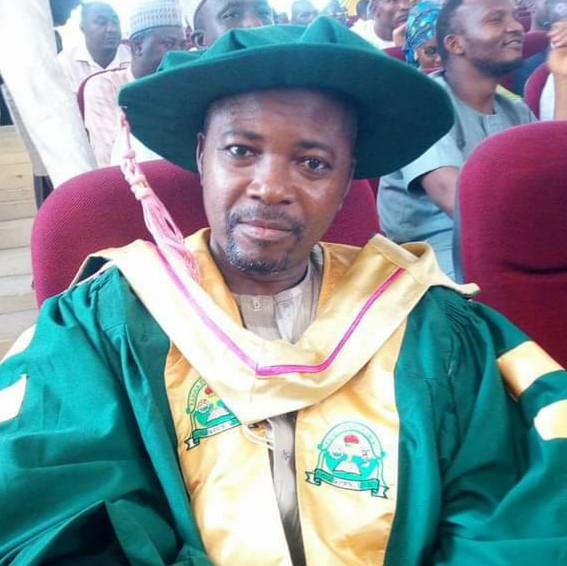
I’m currently a 400 level student at Bayero University, Kano (BUK). Unfortunately, due to some problems, I could not realize my dream of becoming a doctor. But Alhamdulillah. Deafness is not a barrier to greatness.

A moment with the late Abubakar Gimba

By Umar Nasale Ibrahim

Whoever wants live in the world with others after his body leaves the open space should write. A reader, they say, lives a thousand lives before he dies. A writer, as he is also a reader, lives many other lives after he dies. Thus, a writer benefits more than a reader.

Abubakar Gimba died some years back, leaving a handful of books of great might to the posterity to enjoy. Although I haven’t met him to learn of his living policies yet, he had sent them to me before he departed, reaching me late the previous year. He published many books, out of which only three came to me to read for the time being.

“Witnesses to Tears” is the first I encountered, and out of pleasure and amusement of how I enjoyed it, I looked for “Sacred Apples”. Not long after finishing it, a friend came with “Footprints”, and I snatched it to read. These are the books, out of almost twelve publications he had/has, I could lay my hands on. Reading them has been like a conversation of the admonition of how to live with others. In fact, this is my takeaway from the books.

“Footprints”, for example, is permeated with political inequities of the civilian and military governments of a fictional state I presume to be Nigeria. The political paradox discussed in the book, in the end, turned out not to be what I learned from it. The social relationship of the characters in the narration that develops its plot still fascinates me. Though in this regard, one may say that the writer is conscious of it, not all the readers may apparently take care of it.

The central home in the book is composed of two living parents with three children. Two males and a female, though the other male is much of a minor character. The female child, Farah, is a university graduate teaching at a secondary school her younger brother joins later in the book. This is one of the fascinating things the book has left me with. The male parent, Jibran, was a teacher, so his child became one. She engages in a relationship with her co-teachers, and Jibran has never been aversed in the relationship. The open-arm welcome to the teaching profession, the loving arms with which it is embraced and the burning desire to turn the lives of others in the book through the good profession is an emulable action.

That’s one. And to be precise, not to say much, the most important other issue is the interfaith relationship of the characters. Haytham and Basil are the intimate co-working mates of our female character, Farah. Haytham is a Christian and has been the boyfriend of Farah for a long time before Basil turned to show interest in her and thus married her later. The duo has become constant visitors of the house, first as friends, for courtesy and later, for a date. No matter the nature of the visit, Jibran would warmly engage them in conversation about the leadership of the country and the way out. Farah, with her father, would be supporting the country’s civilian activists to be given power, while others would intellectually be opposing her views. Usually, the conversations last long and no way in it one would dare include religion in it. The actual outlook of one’s humanity is the concern.

This was ringing in my ears while I was reading the book. Just telling me of how Gimba lived in the community he lived. And for sure, he was a religious man of dignity. But, to say he was a reader is just an insult to his reading avidity.

May Jannatul Firdaus be his current comforting home, amin

Umar Nasale Ibrahim can be reached via: umarnasaleibrahim@gmail.com.

Kwankwaso earns doctorate in water engineering from Indian varsity 

By Uzair Adam Imam 

The former governor of Kano State, Engineer Rabi’u Musa Kwankwaso, has bagged a PhD in Water Engineering from Sharda University, India.

Kwankwaso was said to have defended his PhD dissertation on Tuesday, March 14, 2022.

This was in a Facebook post from his page and has later sparked to the walls and pages of other ardent Kwankwasiyya followers.

Of what has come as jubilation, many people have taken to their various social media platforms to celebrate the two-time former Kano State governor and senator representing Kano Central. 

The post read: “Congratulations to His Excellency Engr. Dr Rabi’u Musa Kwankwaso, for your successful viva presentation in PhD Water Engineering today (14th March 2022) at Sharda University, India. 

“From his right is Prof. Gaurav Saini (his supervisor), from his left, Prof. Rameshwar Adhikar (Tribhuwan University), Kathmandu Nepal (his External Examiner) and other Distinguished professors during his successful Final viva presentation.”

ASUU NEC members to meet tomorrow amidst one–month warning strike

By Muhammad Sabiu

The Academic Staff Union of Universities (ASUU) will meet on Sunday for its National Executive Council (NEC) to assess the ongoing strike and determine the appropriate action to take next.

The union’s president, Emmanuel Osodeke, a soil science professor, stated this on Saturday but did not provide details about the scheduled meeting.

A member of the NEC who did not want to be named to avoid sanctions, however, indicated that the meeting would be held in Abuja.

Recall that about a month ago, the union declared a one-month warning strike to mount pressure on the Federal Government to have its promises fulfilled.

Therefore, tomorrow’s meeting is the determinant as to whether the strike will continue or not.

ASUU strikes: Many students may opt to “yahoo-yahoo” and other crimes

By Ahmad Deedat Zakari

It is the grass that suffers when two elephants fight. This is the sad situation of students in Nigeria’s public universities. Students find themselves suffering anytime ASUU goes on strike.

The innocent Nigerian students bear the brunt of the impasse of the duo – the Academic Staff Union of Universities (ASUU) and the federal government. At the end of every fight for a better condition of service by ASUU, their remuneration is paid, but the students are left to compensate themselves for the time they lost and the emotional trauma caused by the strike.

As legitimate as ASUU’s demands may be, keeping students at home to pursue these demands does not appear logical to me. As for the government, their attitude reminds me of Gbemisola Adeoti’s poem, “Ambush” where the literary genius described the land using many metaphors to demonstrate how dreams are murdered.

Students dreams are unceremoniously halted whenever ASUU embarks on strike. Some lose interest in education altogether, and others continue with less enthusiasm. Clichés like ‘school na scam’ seems to then make sense and many students embrace crimes like cyber fraud popularly known with the sobriquet ‘yahoo yahoo’ as an alternative to education. This is among the many problems usually caused by strikes.

Adeoti was right in his poem when he said, “The land is a giant whale that swallows the sinker, with hook line and bait aborting dreams of good catch fishers turn home at dusk blue peter on empty ships” Many students often try to escape this land that consumes dreams, they seek education in small neighbouring countries like Togo, Niger and Ghana etc. Some stay back to attend private universities they can afford while politicians and wealthy people send their children to Europe to get education. ASUU’s strike is not only demarketing our public universities in Nigeria. This attitude slowly kills the dreams and the universities, as anyone with a choice will not consider the option of attending one.

ASUU’s strike put students at a disadvantage in the pursuit of their progress, happiness and other life aspirations. It causes them unnecessary delays. They watched their peers in private universities graduate and take on the next steps in their lives while they are consoled with the saying that God’s time is the best. The Nigerian student is often stared in the face with the reality of George Orwell’s saying that “All animals are equal but some are more equal than others. A country that is seemingly careless about the education of its people is breeding the ground for poverty and crimes.

Quality education is no doubt the key to the greatness of any nation. But, sadly, it is not on the priority list of our leaders. While the government takes the most considerable blame for why universities are always on strike; we cannot wholly excuse ASUU for their complicity in killing the university education in Nigeria by going on regular strikes which often leave students stranded and confused.

Please ASUU change your strategy, we suffer every time.

Ahmad Deedat Zakari can be reached via ahmadzakari111@gmail.com.

ASUU vs FG: A solution to the university revitalization fight

By Professor Abdelmalik Abdelghaffar Amoka

ASUU in 2008, provided pictorial documentation on the state of infrastructural decay in public universities to the Federal Government (FG). After several struggles and strikes, FG put together a Committee on the NEEDS assessment of the public universities, headed by Prof. Mahmood Yakubu, the then TETFund Boss. Prof Mahmood Yakubu’s committee after a thorough work recommended that 1.3 trillion naira is required to revitalize all the public universities (Federal and State universities) to make them suitable learning environments for the normal human being.

Just like the 2021 visitation panel report and the 2021 report of the renegotiated 2009 agreement, the NEEDS Assessment report was dumped somewhere till ASUU declared another strike in 2013 for the report to get attention. An agreement was then reached between ASUU and FG after the 2013 strike that the fund will be spread from 2013 to 2018. GEJ’s government released 200 billion naira for 2013 before he was voted out and Buhari’s government took over in 2015. As of 2013, Gen Muhammadu Buhari, Mal. Adamu Adamu, Mal Nasiru El-Rufai, Alh Lai Muhammed, and APC as a party believe that the government of Jonathan was “irresponsible” for their failure to implement the agreement reached with ASUU on public universities. They gave all sorts of convincing supporting reasons why FG can meet the demands of ASUU. El-Rufai was in OBJ’s government and he knows how government works. So, hypocrisy did not come to people’s mind, they didn’t see any point in doubting his position and his 2013 post on the ASUU strike went viral.

The general public is always on the fence during these fights for university revitalization. Some choose who to support based on where their loyalty lies at that moment. That is the reason why those who were against the FG on the ASUU strike in 2013 and now supporting FG on ASUU strike on the same issues. Since 2015, the APC government has refused to release the funds for public universities. After about 4 ASUU strike actions for the last 7 years of the government of President Buhari, they have not been able to release up to 100 billion naira for universities revitalization. Meanwhile, they are adding more universities.

There is this class of public school beneficiaries that believe that FG does not have 1 trillion naira to fix our universities to make them attractive to any student except through the introduction of tuition fees. But some of us think that the people, including civil servants, are too poor to afford tuition for University education, else it will become an elitist institution. Public schools produce us and some of us are super-rich. So, if we believe that FG is actually broke to fund education, then we can intervene to revitalize the public universities in the interest of national development and for the love of the country.

Nigerians are cheerful givers. Our business moguls, media celebrities are fond of gifting their friends. Not sure if it’s for show-off. For example, Nightlife boss, Obinna Iyiegbu, popularly known as Obi Cubana got cash and other gifts worth over 250 million naira for his mother’s burial in July 2021. David Adeleke, popularly known as Davido in November 2021 raised 200 million naira within hours that he donated to the orphanage. I recently saw an unconfirmed impressive list of donations for the Attah of Igala coronation from my brothers. There are several of such donations. This is evidence that Nigerians are cheerful givers.

Nigeria’s generous donation of one million dollars to the Humanitarian Trust Fund for Afghanistan shows that even the government is generous. Only a cheerful giver will use 100 billion naira to rehabilitate non-functional refineries that are still not functioning. Only a cheerful giver will pay 69 billion naira as salaries to refinery workers that generated zero revenue and only go to work to warm their office chairs.

The public primary school system is dead, the public school system is dead, and the public university system has nearly collapsed. But why don’t we extend this generosity and cheerful giving to the education of the ordinary Nigerian? why can’t the elites donate a fraction of the money they sent abroad to educate their kids?

The agreement in 2013 was for FG to release N210 billion naira every year for 5 years. 9 years later, not up to 23% of the fund was released to the universities after 9 years. Maybe FG is actually broke even though they are establishing more universities and the key players are getting richer. A poor and broken man doesn’t add to his responsibilities.

Let’s apply the principle of our supposed generosity and cheerful giving to solving our education problem. Let’s open a public schools revitalization endowment fund. Let’s get 100 thousand cheerful givers from politicians, businessmen, captains of industries, Bank CEOs, celebrities, and the noisy “Abroadians” to donate 200 thousand naira every month for a year. That will give us 240 billion naira revitalization fund annually. Do that for 5 years and we’ll have 1.2 trillion naira to revitalize public universities.

Put up Board of Trustee and Fund management team from the donors to ensure that the fund is shielded from mismanagement. Nobody wants to see his money misused. Then, ASUU won’t have to go on strike for revitalization and will limit ASUU’s demands to welfare. The government won’t be looking for tuition fee that is not there or students’ loan that is not sustainable, students won’t have to stay at home for months due to strike. The university will be good enough for our big men that ship our money abroad. The industries will get a quality workforce. The universities will be attractive to international students and we’ll start earning forex from education.

But unfortunately, our cheerful giving in Nigeria does not extend to public education. Public education made us and we are either part of those destroying it or watching it destroyed without any slight resistance. It’s like a case of climbing to the top through the public education ladder and destroying the ladder after getting to the top. And unfortunately, the supposed middle class, a class that is nearly wiped out, that needs the ladder is afraid of the oppressors but blames ASUU.

Amoka is a social analyst, prolific writer and a Professor of Physics, Ahmadu Bello University, Zaria, Nigeria.

I’ll move him and his parents to Abuja, get best private school, then US – CEO Ronchess Global Resources

By Aisar Fagge

A picture of a 13-year-old Hausa boy, Musa Sani, who designed a flyover prototype trended social media platforms with many comments about the magic hand and brain of the young child.

Upon seeing that, there was news that Ronchess Global Resources Plc offered the child a scholarship and an automatic offer at their construction company. The Daily Reality followed up the story and spoke with the CEO and founder of the company, Jackson Ukuevo, who said:

“Yes, it is true. I have spoken to one Ali Usman from Borno, who said he’ll speak to the guy’s parents. We gonna move him to Abuja. I’m gonna put him in one of the best schools in Abuja. A private school. When he’s done from there, I’m gonna ensure that he gets to the United States of America (USA) to further his education to build on his horizon. He’ll then come back and do something real for us.

Because what I saw, I don’t think it is something anyone should leave behind. For that child [at his age] to design that [flyover prototype] and actually build on that, then if we give him the opportunity and put him in the right position, with all the accessories and resources he needs, and also be with the mindset of the same people with the same creativity he has, we’re sure he’s gonna do something wonderful.”

When he was asked whether he has spoken to the child’s parents, he said:

“I haven’t spoken to his parents. I just spoke with someone (Usman Ali) who said he’ll speak to his parents and he’s gonna try to speak with the emir of village or something, then once that is done upon the parents’ acceptance, we will move the child and his parents to Abuja. There I’m gonna ensure that the child gets one of the best schools in Abuja. Then, upon all this, hopefully, he completes his education and everything, we make sure he furthers it outside the country. We believe he’ll come back and give back to the society something great.”

The Daily Reality then asked the CEO when he’s planning to go to Maiduguri and meet the child’s parents to show seriousness in his company’s promise he closed with: “We are just waiting for his parents’ acceptance of our offer. Once they accept it, we’re ready to go down there and meet them. If they accept it today, tomorrow we’ll be there and finalize everything.”

The Daily Reality also spoke with the first person who posted the picture of Musa Sani with his flyover prototype on her Facebook page, Yagana Bukar, on whether she knows Ali Usman, who was given the assignment to speak to the parents of the boy.

She said, “Yes, I know him. Right now, he’s in Abuja, but he’s coming back tomorrow. When I posted the picture of the boy, I tagged him and the governor of Borno State, Prof. Babagana Umar Zulum, hoping someone will help the child to study engineering abroad. Now Allah has answered my prayer.”

Adamu Adamu, public service, critics and the rest of us

By Abubakar Suleiman

“Why waste your money to study your family tree? Just go into politics, and your opponents will do it for you free.” – Mark Twain

The Minister of Education, Adamu Adamu, has become the subject of public scrutiny lately, after members of the Academic Staff Union of Universities (ASUU) deserted university classrooms for a one-month warning strike to drive home their demands.

To compound Mallam Adamu Adamu’s ordeal, the National Association of Nigerian Students (NANS) President, Asefon Sunday Dayo, threw decency, good English grammar and coherence to the dogs and confronted him for the way forward on these incessant strikes. The Minister, within his rights, could not stomach zingers from the NANS President; hence, he peacefully walked out.

What the Nigerian academics and critics need to crucify Adamu any day is to comb his past articles on the sorry state of education in the country and the possible solutions he highlighted in addressing the anomaly, notwithstanding the practicability or sustainability of the solutions. Blessed with astonishing writing prowess, Adamu doesn’t pull punches whenever he decides to take the government of the day to the cleaners on education.

Mallam Adamu is not alone in the blowback of past written or spoken words. Isa Ali Pantami, Reno Omokri and Reuben Abati are good examples of how venturing into public service can force critics to chew some of their words or elegant analyses raw. They get to see, first hand, the depth of the rot in the system they seek to reform. Moreover, thanks to their fantastic writings, their readers or fans expect them to do wonders, including unrealistic expectations actions.

History is replete with critics who ended up being the worst versions of the people or policies they obsessively criticised. So also, the grave is filled up with critics whose know-it-all dispositions and elegant solutions never get tested.

Criticism is sweet and romantic. However, it is undeniably required to hold elected or appointed leaders accountable as humanly possible. It helps improve a system and checks leaders’ excesses, thereby insulating them from being despots or demagogues.

However, criticism should be accompanied by good knowledge or grasp of the subject matter, moderation, realistic approaches, and viable solutions. The quick urge or attitude of some critics pontificating on, or criticising, everything under the sun without critical thinking is among the reasons many critics presumed as messiahs ended up as disasters.

Nothing humbles most critics like public service. So, they either choose sheer populism or face the realities or challenges that come with purposeful leadership amidst competing demands, meagre resources, criticism and tough decisions, which are often unpopular. With the latter, they get more kicks than halfpence.

As it is true with an onlooker who sees most of the game, their opinions are birthed from the outside on the premise of poor exposure and little information, which invariably make them see complex and daunting challenges as straightforward.

Interestingly, opinions could change due to contexts or circumstances. People learn from exposure, old age or new knowledge. We may find ourselves opposing some views we hold so dear today in the future when we are eventually called to serve the people. Therefore, if you are called to serve the people, don’t hesitate to oblige. However, be ready to get your fair share of kicks and past opinions unearthed.

Abubakar Suleiman writes from Kaduna and can be reached via abusuleiman06@yahoo.com.

Can we tell the truth to ourselves?

By Isma’il Alkasim

Education is the passport to the future, for tomorrow belongs to those who prepare for it today— Malcolm X

Unequivocally, the educational sector requires critical and colossal funding from various stakeholders, whether civil society or a particular individual, not only the government. The intervention programs, which are basically designed to address the critical challenges bedevilling the sector, contribute a greater percentage to the educational sector’s wellbeing. 

The United Nations Educational, Scientific and Cultural Organization has recommended that 20—25% of the country’s budget be allocated to the educational sector to ensure the sector’s effectiveness. 

Notwithstanding, Benjamin Franklin, asserted that an investment in education pays the best interest. This has been a rejoinder to the elites who had no clue what would guide them through, thereby emanating a cohesive plan towards the educational reform.

A concert series of strikes, declared by the Academic Staff Union of the Universities (ASUU), leave a deep scar in the memory of the students whose interest and ambitions were solely dependent upon their studies. And this is a serious threat to the nation where insecurity and poverty threaten the lives of its citizens. The ASUU and the government should understand the gravity of the tension this strike may accelerate.

Furthermore, the last industrial action in 2020 through 2021, which ASUU has spent almost a year striking, led to a gigantic imbroglio to university education. Meanwhile, nearly every university could not fulfil its academic calendar in a duly prescribed time. This strike, all despite a whole year spent due to the outbreak of the Covid—19 pandemic, but both parties, the government and ASUU, had failed to get rid of the strike before the lift of lockdown. This indicates how lackadaisical the government is to prevent the ASUU from continuing an indefinite, elongated, and pervasive strike.

Are we really serious?

Probably, not; we are not serious at all. If the government and ASUU can’t sit and share the same cup of tea to find the lasting solution to this horrendously, repulsive and awful strike, as citizens of conscience can’t hold both parties accountable? Why can’t to come out en mass and protest against the lackadaisical of both parties? It worked in an EndSARS protest, so we need to borrow and use the same language as a last resort.

The worst part of this ASUU—FG drama is that those at the centre of the controversy do not value the Nigerias’ education system. Perhaps, their sons and daughters aren’t the victims of the elongated strikes since they spent or are spending their educational journey abroad; the great countries that have done everything possible to redefine and standardise their educational sectors.

The United Kingdom, for example, had spent at least 900 solid years revitalising and meliorating their educational sector before it came to fruition and privatised the industry. This indicated that the suggestions and recommendations made to the government of Lugards’ amalgamation in 1914 to take a bold step towards commercialising the sector would not yield any positive result. Instead, it’s a giant stride to uplift, breed and enhance corruption in the educational sector. More so, privatising the sector is unbecoming. The reason is that the educational sector is a system that is a babysitter that has weaned and breastfed every individual in the Nigerias’ domain.

How should it be?

On a lighter note, we should embrace ourselves collectively. As a whole entity, we shouldn’t lie to ourselves; there’s a limit to what government can achieve within its capacity about the economic status. This deserves no clarification to any discerning individual, but that shouldn’t be an excuse to circumvent and leave our educational sector (not only universities) in the stage of mediocre. We must value the system to make progress.

The education we are supposed to give our utmost priority is the basic education as the foundation ground and necessary stage for all citizens. But, until we resolve the odds vexing the UBE, the thirst to get rid of our universities’ problems can’t be quenched. So, at this juncture, the clamour to refine and redefine the universities system in Nigeria by ASUU is graceless and unbecoming.

May Nigeria prosper.

Isma’il Alkasim writes from Garki, Jigawa State. He can be reached via kogasgarki@gmail.com.

The untold story of Kano’s special education school (I)

By Aminu Adamu Naganye

Established as the centre for juvenile delinquents in 1958 and later converted to Special Education School in 1977, it is Kano’s premier and most important school for Persons with Special Needs from Kano and beyond. In part one of this special report, the Daily Reality reporter, Aminu Adamu Naganye presents the general condition of school from classes, furniture to hostels. And how the shortage of learning materials hampers the learning process of the students.

PICTURE 1

Approaching of classrooms in the junior secondary school section of Kano Special Education School, Tudun Maliki, The Daily Reality observed how a teacher was trying hard to obviously settle a fight between two hearing-impaired students. “Judging and settling fights are a daily routine here,” said a smiling teacher who likened their work to that of judges.

Special Education School, Tudun Maliki, Kumbotso Local Government Area of Kano state is a combined boarding school with multiple sections or parts serving the educational needs of persons with special needs (disability) from different parts of Nigeria.

Established prior to Nigeria’s independence in 1958 as a centre for keeping juvenile delinquents, it was later transformed into a school for hearing and visually impaired pupils in 1977. At the inception, the special school “started with four (4) visually impaired students and seven (7) teachers.”

“There are currently about 1500 pupils and students comprising both male and female from different parts of Nigeria,” said our tour guide who teaches at the secondary section of the school. “It has a primary section, junior secondary and senior secondary sections” he added.

“Special Education School Tudun Maliki is a sort of a unity school because its students aren’t only from Kano state. It is a kind of unity school because we have students from all the neighbouring states such as Jigawa, Kaduna, Katsina, and Bauchi. We have students also from Yobe, Taraba, Abuja and even Lagos we have students from there… there are students from different places in this school” narrated a teacher while briefing an NGO team that distributed items to the students.

Although the school director and teachers do not entertain journalists in the school for apparent fear of possible backlash from the authorities who often deny or trivialise the problem, the school accepts NGOs who support the school with learning and teaching materials in addition to supporting the pupils with detergent and laundry stuff. TDR relied on an NGO’s visit to file this report.

It can be recalled that recently the school became a public sensation, especially on social media when some visitors posted dilapidated conditions of the students’ toilets which prompted the Kumbotso Local Government Chairman to come to their rescue by renovating one toilet and constructing another in the school; another philanthropist also built a toilet for the students as shown by a teacher. 

Although there are other special education schools at the primary level for the persons with special needs in Kano, this particular school is actually unique as it allows them to culminate into senior secondary school. “There are primary school sections of this type established by some metropolitan LGAs in Kano. So after their primary education there, they come here to continue to secondary school” said a teacher.

Dilapidated classrooms and hostels, in need of renovation

Considering the fact that there are few special education schools of this type that impart knowledge to persons with special needs in the state, it is expected that this very school should have standard classrooms and hostels for this unique breed of students. However, classrooms at the school were anything but befitting for learning and teaching. “It is not conducive for learning and teaching the state of the classrooms, especially the primary section,” said a teacher, “there are no seats in the classes, and the students sit on a bare floor. The windows and even the doors to the classes are all broken” narrated the teacher as he ushered our reporter into primary six class.

PICTURE 2

The sign language/gesture with which they greeted our reporter tells the fertile minds, hearts and brains eager to learn and expand frontiers of knowledge not just in the hearing impaired community but also in the larger society. With their complete white uniforms, the hearing-impaired pupils look dirty and untidy for obviously having constant contact with bare floor due to the absence of desks and chairs in the class. What is startling is the apparent joyous and smiling faces of these innocent souls full of hopes and dreams as they welcome us into their supposedly learning vicinity. In most of the primary school classes, there was no single chair or desk for the students’ learning convenience. In a class where few desks were available, they were broken and not convenient for sitting, writing and learning. “That is how all of us manage the situation. The teachers and pupils are doing their best in this environment,” said one teacher.

Passing through the students’ hostel blocks, the story is the same. The sorry condition of the dormitory is visible from any angle. Most of the windows are broken and the doors are not any better. “It is terrible when it is very cold because the windows as you can see are broken,” said the teacher in whose company our reporter moved around the school. Similarly, it is terrifying the condition of both the hostels and the beds for the students; the beds are grossly inadequate, leaving many students to sleep on the floor with mattresses alone due to a shortage of bunk. The teacher guide said they pity the students, especially in cold weather but there is nothing they could do personally to help the situation.

Despite our reporter’s inability to get into the hostels but peeping through the broken windows reveals their dilapidated conditions ranging from shattered windows, scratched and cracked walls to badly spoiled ceilings.

A teacher whose identity could not be revealed appealed thus “Government owns the school and it’s doing its best. But I still call on the government to do more. I also call on NGOs and affluent people to come and help, to support government efforts. There are a lot of things to do here. A lot of problems to solve especially in classrooms because you can’t learn in an unconducive learning environment. As you have seen in the primary section of the school, they sit and learn on a bare floor. There are no seats. The windows are broken”  

“We need additional hostels. There is a shortage of even beds. Some students are sleeping on the bare floor of course with either a mattress or mat. We have a lot of students but the accommodation isn’t enough. We need both bunks and a hostel block. Especially during cold weather. If you check the hostel, they need to be renovated. But as the saying goes a ‘single tree cannot make a forest.’ “We hope people and organisations should come and support the government,” he added.

Dearth of teaching and learning materials

The peculiarity of the kind of students of the Special Education School requires unique learning instruments to impart knowledge to them successfully. Although it was relatively easier to teach hearing-impaired students using sign language, a blackboard and chalk-like conventional students, it is more challenging to teach visually impaired students how to write and subsequently read their writings. A teacher corroborated this when he said, “Honestly, we don’t have the material for teaching and learning on the ground…if you take the hearing impaired students there is a little problem because they use learning materials like everyone such as chalk, blackboard, textbook etc. Even though we don’t have textbooks but their parents buy for them.” 

But for the visually impaired students, he explained that “That is where we have a very big problem. Previously, NGOs used to bring learning materials. Now they don’t bring such things. And their (visually impaired) learning materials are expensive, especially if you want to enrol them in primary school you have to buy what is called “slate and stylus” which currently cost around N10, 000. And this slate and stylus is a must if you want your child to study because it is the first learning instrument. So some parents because they cannot afford to buy such material, prefer to keep their children at home and refuse to enrol them in school.”  The teacher however acknowledges that the government supplies exercise books for the students.

TDI came to the rescue, donates hundreds of textbooks

As part of its effort to support and empower adolescents, a Kano-based NGO called Teens Development Initiative (TDI) made a commitment to addressing some of the challenges in the school, especially on learning materials.

Fadhila Nuraddeen Muhammad, Founder and Executive Director, of TDI, told the Daily Reality that they are currently working with the school authority to establish a library for the school. She said they discovered that science-based subjects were not taught in the school because of the absence of instructional materials but the students were eager to learn, hence their commitment to support with the necessary materials, especially textbooks.

She said TDI donated about one thousand books to the school that will be put to the library to make it functional.

“We have already delivered the books to the school. We are planning to raise some funds for the shelves in the library,” she noted.

Our students don’t starve, they have nutritious meals

Despite the challenges confronting the school, the students are not left to starve as one of the visually impaired students revealed. The student, Abdullahi Adamu, confirmed that: “They give us food in the morning, in the afternoon and at night.” In the same vein, a teacher in the school told our reporter that “They get good food here. Some of them cannot get what they get here in their parents’ houses. They are served three meals, three good meals a day. The government provide their breakfast, lunch and dinner. Some of us as their teachers cannot afford what they are being served in our houses.” Another teacher explained further: “In their breakfast, for instance, they are served bread, tea and egg. In the afternoon, they are given food with chicken. It is not everyone that can afford that nowadays. Every Wednesday, they eat a fish meal. In the past, after every two weeks, cows used to be slaughtered. They hardly eat food without meat.”

To be continued in part (II)