Education

ASUU Strike: NANS blows hot, threatens to block roads, disrupt party primaries

By Ahmad Deedat Zakari

The President of the National Association of Nigerian Students (NANS), Asefon Sunday Dayo, says the association will block all airport roads in the country, as a result of the government’s inability to end the lingering ASUU strike.

Asefon made this known in a press release on Facebook on Monday, May 9, 2022.

This is coming after the Academic Staff Union of Universities (ASUU ) extended their ongoing strike to 12 weeks. ASUU has been on strike since February and cited negligence on the part of the government as the reason for the extension of the strike.

According to the NANS President, the extension of the strike is a total declaration of war by the Federal Government against the university students in Nigeria.

“Having exhausted all windows of constructive engagement with the government, I, on behalf of the national leadership of NANS, therefore, declare National Action from tomorrow 10th.


The National Actions is tagged “Operation Test Run”. Operation Test Run shall be held in all the 36 states of the Federation. Federal Roads across the 36 States shall be occupied for a minimum of 3hrs. The Operation shall be a precursor to a total shutdown that will be decided during our Senate meeting/pre-convention on Saturday 14th May 2022. Our decision from the pre-convention shall be binding. The action shall be total as the extension of the ASUU strike is a direct declaration of war by the Federal Government against university students in Nigeria.” He wrote.

He added that the association will subsequently block airport roads across the country and disrupt party primaries amongst other things.

“Our proposal to our congress on the 14th shall be total blockage of the airport roads across the country and total disruption of political party primaries, blockage of the national assembly until they are committed to passing legislation banning public office holders from sending their children to university [sic] abroad.” He stated.

ASUU strike: Buhari administration has failed Nigerians – Bulama Bukarti

By Uzair Adam Imam

A well-known social media activist and lawyer, Abdu Bulama Bukarti, lambasted the Buhari administration over the Academic Staff Union of Universities (ASUU) strike.

This came as ASUU extended its ongoing strike by three months due to the government’s poor handling of the issue. Also, Bukarti’s remarks surprised some as he had been publicly criticising ASUU on its resolve to strike.

ASUU President, Prof. Emmanuel Osodeke, had announced Sunday at the end of the Union’s National Executive Committee (NEC) meeting, which was held in Abuja, that the strike had been extended by three months.

Bukarti, known for his stern opposition against frequent strikes by ASUU, said that Nigeria has failed to mitigate the menacing issue of strike by ASUU because it does not affect them (the elite) or their beloved children.

In a Facebook post, Bukarti lamented that the government “never hesitate to move on putting the strike by the Airline operators to an end because it has [a] direct effect on them and their children. But since [the] ASUU strike has no direct or indirect effect on them and their children, they failed to solve the problem.”

The Daily Reality reported that ASUU suspended its nine-month-long strike in 2020 after reaching an agreement with the Federal Government. Still, a year after, the government is yet to fulfil its promises to the union.

The ASUU strike has been described as one of the most lingering issues paralysing Nigerian universities, leading to the delay in students’ graduation, deterioration of the educational system and promulgation of serious social vices across the country.

Not only that, many people argue that the strike has destroyed the future of many promising youths, including both university students and their lecturers.

The need to introduce sign language as a core course in Nigerian schools

By Ibrahim Tukur

Communication barrier is one of the major problems holding many deaf people back. Living in an inclusive world—a world that comprises people with differences, one has to know the others better to get along together. We can only achieve that through communication. Unfortunately, however, many people have immensely misunderstood due to the communication barrier. Some see people with hearing impairment as stupid, insane, mad, etcetera.

Communication barrier has brought various challenges that not exclusively affect the personal achievement of the deaf but also their educational, spiritual and economic development.

Due to this barrier, many deaf experience loneliness, depression and isolation at home because they have no one to communicate with as most of the family members don’t know how to communicate with them. In the same vein, their parents often neglect them and find it challenging to communicate with them in their day-to-day interactions and operations. Thus, this makes many deaf children, if not all, grow up morally deficient.

In many tertiary institutions, deaf students face many academic challenges that interfere with their studies. Although all tertiary institutions are inclusive, they are not offering special services like Sign Language interpreters. Consequently, those students often sit in the class watching their lecturers lecturing verbally and their coursemates with no hearing loss drinking from their knowledge flow.

Deaf people face immense challenges when it comes to employment. Many organisations and companies find it difficult to employ deaf people due to this barrier, as good communication is one of the essential requirements in entrepreneurship. This is why many deaf people have automatically been disqualified during job interviews despite meeting all the requirements.

Again, because of this barrier, deaf people are denied from getting jobs as doctors, engineers, journalists, lecturers, lawyers, accountants, etcetera. Many deaf who have studied others fields are forced to become classroom teachers as if teaching is the only profession for the deaf.

Although the current administration has enacted a law that prohibits discrimination against people with disability, thanks to their bid for inclusion, they failed to trench the underlying causes of the discrimination. 

To nip the deaf-based discrimination in the bud, Sign Language should be introduced as a core curriculum in all schools since the communication barrier is its underlying cause.

Sign Language specialists should be employed in all schools and tertiary institutions to teach Sign Language so that everybody will learn to communicate with the deaf and get to know them better.

Teaching Sign Language in schools nationwide will improve this communication gap and end the disparagement, discrimination, and stigmatisation they experience. It will equally create a comfortable environment for the deaf folks to live in this Inclusive world.

Ibrahim Tukur is a 400 level student of Bayero University, Kano. He can be reached via inventorngw@gmail.com.

Poetifying the North: Six years of Poetic Wednesdays poetry revival

By Sa’id Sa’ad

As a people of oral tradition such as folklores, stories and songs, modern poetry today – or what is otherwise called contemporary poetry – could still be traced back to the oral literary traditions which have, over centuries, served the purpose of cultural entertainment and preservation in Nigeria.

However, even with the consistent growth of poetry in some parts of Nigeria – mainly because of the existence of some of the most celebrated African literary giants in those parts: Wole Soyinka, Niyi Osundare, Gabriel Okara, Christopher Okigbo – poetry in northern Nigeria has continued to suffer significantly amongst the wanna-be-poets and growing poets, who are thirsty of platforms to put their arts out for the right audience. With no or few consistent literary communities, inaccessibility of literary mentors and workshops or festivals, this category of young people genuinely interested in the art has been in a dilemma between giving up their dream or continuing to breathe in water.

Six years ago, Poetic Wednesdays was built—a rescue mission run by young people for young people. Of course, they understood the challenges of their fellow youths so well. However, It is not surprising that a small team of young people from the under-represented communities in this part of the world would give birth to a literary community of sorts. But what is exciting is how – in six years – these young people Poetified most of Northern Nigeria. It was surprising how, in six years, they were able to achieve what will take others a decade-plus to achieve. This is a product of genuine passion for the course.

Thus, these are young people who – when they began – were never given a seat at any literary or poetry workshop, of any sort, as a way to propel or guide their growth as future literary stars. And this is, sadly, a coat-of-arm that Northern Nigeria, in almost all industries, has cursed itself with, which is ‘intentionally’ refusing to tap on the shoulders of their growing talents. Relatively, most of the young talents in this part who have grown to horn their talents were able to do that without mentorship. Accordingly, they are used to thorns.

However, against all odds, with Salim Yunusa, a young writer from the narrow streets of Zaria, to Nasiba Babale, a noble lab scientist with poetry all over her syringe and test tubes, to Abdulbasit Adamu, a passionate poet and spoken word artist wobbling on the highway between Kaduna and Kano, to Maryam Gatawa, a Kano poet turned entrepreneur, to Abduljalal Musa (AJ) and scores of others who pushed the lorry behind the camera, these passionate and talented people stood and birthed a poetry community run by young people – solely to promote literary arts, to give a platform to other young people especially the wanna-be-poets who are ‘only’ interested in seeing their forced-rhymed poems read by others, and the growing poets who have the dying needs to hear feedback about their art.

Excitedly, with fewer resources, Poetic Wednesdays has grown to do beyond a toddler literary organisation. Especially using digital media/social media platforms like Facebook, hundreds and thousands of young poets have access to sharing their poems with global audiences every Wednesday. With Poetic Wednesdays, in the last six years, one can say that the recent robust revitalisation of poetry, especially in parts of Northern Nigeria, can be directly attributed to literary organisations like Poetic Wednesdays. Now, the north is ‘poetified’ with excellent poets who have and are capable of creating some of the best poems in the country.

Accordingly, with these bold decisions, numerous literary communities have sprouted from some of the most unexpected parts of Northern Nigeria, which have continued to host literary functions and promote their local artistic prowess. From Borno Literary Society in Borno, Yobe Literary Society in Yobe, Sunshine Literary Society and in Adamawa State, literary communities in other northern states such as Taraba State, Sokoto State and Kebbi State sprouted as well. This occurs due to the hard work of a few young people who dared to take up the challenge and push beyond boundaries.

This doesn’t contextualise Nigerian literature based on geographical lines; I am solely a Pro-Nigerian-Literature irrespective of where it comes from. However, it is also essential to acknowledge the growth of particular people or at least point a green mark on an honest, passionate move. Moreover, Poetic Wednesdays or any literary community doesn’t only speak for the people of the north but speaks for every Nigerian artist. Whereas some are even growing to go beyond Nigeria to a broader African space, which is commendable in a way as well.

Today, northern Nigeria is Poetified. From Sabon Gari in Kano to Bulunkutu in Maiduguri, to Ribado Square in Adamawa, to Tudun Wada in Zaria, to Unguwan Dosa in Kaduna, Gidan Kaya in Sokoto, to Bunza in Kebbi, to Madobi in Jigawa, to Sardauna in Taraba, these and more thousands of streets in the north now breath poetry and are giving birth to the most talented literary giants in the country.

If they ask you about the north, tell them that the north is poetified.

Sa’id Sa’ad is a Nigerian writer and performance poet from Maiduguri. He won the Peace Panel Short Story Prize, 2018 and NFC Essay Prize, 2018.

Almajiri System: From the prism of broken marriages

By Nusaiba Ibrahim

When all this brouhaha on the Almajiri system of education is over just before we hop on another discussion likely to be initiated by random persons online, we will then realise we have failed to acknowledge the failed infrastructure that has created and will continue to fuel the unrefined Almajiranci system of education by the day.

The earlier we realise how enormous challenges have, over the years, consumed our societies in the North, courtesy of broken marriages or homes, the better for us to understand the enormous task ahead of us in empowering our communities with the correct information and strategies to face greater challenges now and in the future, especially with regards to marriage as an important social institution. No matter how hard you try, as an optimistic Northerner, to overlook the series of ongoing debates in the past week online, it is practically difficult and impossible to ignore them, given the current reality that we have found ourselves in.

There is a reason why I choose to deliberately sideline discussing the Almajiri system from the premise of system reformation, the aspect of its essence or in contrast to modern primary education that has continuously screamed for aid. Unless we address the myriads of problems faced by the major social institution that is essential for development – family/marriage, we are hence, collectively wasting our efforts and brains to come up with solutions to transforming the system. At the same time, many under-aged will continue to be pumped out into these traditional Islamic schools, which are, of course, overwhelmed in the name of Qur’anic education.

It’s impossible to continue thinking that only strategic transformation, erasing the system or replacing it with a standard Islamiyya system, will bring a lasting solution to this misery. Agreed, they are essential to improving the system and even sustaining it. But as time flies, if they ever get a chance to be thoroughly revamped, they too will be overwhelmed to take care of these children sent to them in multitudes.

Now, let us take a quick recap of why our primary education has continued to suffer greatly. If you choose to think critically, you will understand that it’s the same reason in the context of the Almajiri system of education that has continued to promote this unending menace. It continues to act as a shield to a lack of good parenting, thanks to unsuccessful marriages. It’s nothing other than overpopulation alongside a dwindling economy. Hence, a multi-faceted menace like this requires a robust approach from virtually all aspects of social life.

My thoughts on why broken homes have the lion’s share of Almajiri menace are based on the facts highlighted in many of the reports that have been consistently aired on our local radio stations in Kano State and a recent publication by The Daily Reality on the 28th of March 2022. Several instances of why these unkempt children are sent to these schools all boil down to the separation of parents either directly or indirectly, which necessitates living with grandparents and stepmothers, who are eventually left without no quicker choice but to use the Almajiri system as an escape route from discharging their parental duties.

In a bid to understand the in-depth social ills of our dearest Northern Nigeria, particularly on the marriage institution, The Daily Reality published a report highlighting the rate of divorce in Kano State to be at about 32%, with an average age of divorcees ranging from 20-25. Presenting these figures shows a red flag and a slap on our faces as we boast of some of the best religious scholars, undisputed morals and values compared to our neighbouring counterparts.

But unfortunately, some low-IQ dimwits denied the facts with fierce rebuttals. While some challenged the veracity of the facts, another portion challenged the authenticity of the reportage/research findings by reducing it to mere propaganda than research. And for others, it doesn’t even reflect the reality on the ground. And the consequences aren’t confined to their families alone, which we are well aware of. Unfortunately, with developments in several aspects of social life around the world, we are still in the age of denying facts that are under our noses.

Let’s assume the facts aren’t authentic enough. Still, mere observations and intuitions have made us all realise that there exists a particular season of the year when agricultural products are everywhere in the markets. The number of these children quadruple on our streets. These periods always signal the season of new marriages in villages with the bit of fortune made from the sales of agricultural produce, thereby forcing these children out of the homes to accommodate new wives. You may choose to argue with whatever is next to you – these are undeniable facts. Interviews during the height of the ban against street begging unveiled many children narrating experiences of their grandparents, fathers and step-mothers taking them to traditional Qur’anic education alias Almajirci before harmattan season kicks off. Radio stations in Kano State primarily documented these.

Delving deep into the report, what struck me hard was, who will then take responsibility for the children out of these marriages? In whose custody will they survive if their mothers remarry? Will their new stepmothers be willing to accommodate them? What about their step-fathers? Indeed not the government, and it cannot be the community either. So, they’ll add another layer of complexity to our complex problems. In my thoughts, I silently hoped that people might look at this dimension which happens to be the root cause. If you think broken marriages aren’t the problem, try surveying many Almajirai in your community.

In all sense of honesty, I must recognise that the essence of the Qur’anic education in the North has not only proven to be undisputedly essential for authentic Islamic education but is also the pillar that sets the pace for all modern Islamiyya education in Northern Nigeria. Contemporary Islamic education has only gone further to modern teaching and learning methods in line with global Islamic development based on the strategies of traditional Quranic education. Many of our reputable religious scholars, professors and other professionals in different fields of endeavour are beneficiaries of the conventional Qur’anic systems.

Apparently, we have seen examples of why transforming the Almajiri system of education is almost impossible, especially because of government inconsistencies, discontinuity of government policies and lack of political will to tackle the menace. Besides, there are even mightier problems that are yet to be addressed. However, I firmly believe that strengthening marriages via introducing policies to safeguard and sustain good parenting can be a strategic move to tackle the menace of Almajirai. It will undoubtedly produce a desirable result by solving multiple challenges simultaneously.

Nusaiba Ibrahim Na’abba is a master’s student from the Department of Mass Communication, BUK. She is a freelance writer and researcher. She can be reached via nusaibaibrahim66@gmail.com.

How to entertain your children without TVs, tablets, phones, video games or PlayStations?

By Umm Khalid

I completely understand this parental concern. We live in an age, unfortunately, where entertainment is tantamount to plopping yourself and your kids in front of the screen.

Screens = Fun

But this model was not always the case. In previous generations, entertainment came in many forms and none of them involved a screen.

Even today, much research has been done and much ink has been spilt to detail the deep harms that come with screentime for children, especially at a young age.

I did not grow up watching TV, even though this was the norm in Egypt when I was growing up. Almost everyone had a TV, and most families gathered around their screen to watch أفلام ومسلسلات (movies and soap operas/ TV shows and dramas). This was standard practice in Egypt even with our relatives and neighbours.

But my father, may Allah reward him immensely, had a different mindset. He saw this as a big waste of time, precious time that could be used elsewhere either to be productive or to have fun but in a non-screen way. He also worried about the impact it have on his daughters (my sisters and I) to see women dressed without hijab (even though the way women dressed on TV in Egypt in the 1980s and 90s was nothing compared to how women dress now!). But he knew that whatever the eye consumes has a big impact on the heart and mind. My father called the TV مُفْسِديُون (a play on the word for TV in Egyptian Arabic, تلفزيون), roughly like “Mufsid-vision,” meaning that which brings fasad, or destruction.

So he put our TV in the closet, unplugged and unused.

I think this is one of his most brilliant parenting strategies mashaAllah!

So after becoming a parent myself, I’ve followed suit. My husband and I do not allow our children to watch TV or be on a screen of any kind.

Especially these days, even so-called children’s shows and cartoons are riddled with subliminal messaging and deep social engineering on issues like LGBTQ+-×÷ and tabarruj and promote disrespect and defiance to parents, and deviance in general. TV shows on Netflix or HBO or whatever other platforms are basically avenues for smuggling in all the most damaging, fitra-warping, nature-altering liberal ideas into the heart and mind of the viewer. It’s nothing short of mass brainwashing.

What is also quite sad and even dangerous is that after enough acclimation to screens, it becomes an actual addiction. There are studies that show that children as young as one and two years old get addicted to screens, and if parents attempt to take away these devices, children show classic signs of withdrawal! This is what happens with drugs, for example. When a drug user stops using, he or she experiences painful withdrawal symptoms. TV for children can become similar. Turning off the TV after the show has ended can often result in crying, screaming, and temper tantrums.

The other bad thing about a screen is that it trains children to be passive recipients instead of active doers. On the screen, characters parade themselves before the children’s eyes, there are bright lights and loud sounds and flashing images. So easy to sit back and be passively amused. Next to this lively entertainment, how can reading a book compete? Now reading a book looks dull and boring in comparison. Writing your own story is now too much work. It is in this way the screens tend to stunt creativity and initiative in children.

And for us as Muslims, an over-reliance on screens can be an obstacle to Quran. How can memorizing Quran compete with the easy passive fun of watching TV? Memorizing Quran will seem that much harder and more arduous, that much less fun, next to the TV. Without the blaring distraction that is the screen, Quran is much more doable and even enjoyable inshaAllah.

Sometimes either my husband or I will show the kids a specific video on a certain topic (animals, nature, or what subject they might be learning about like tornadoes or earthquakes, etc), but it’s always with us, supervised and educational.

And it’s a one-off, not a regularly scheduled event.

Our kids have no expectations for having a certain amount of TV time or screen time a day or a week or a month. This can be achieved by training the kids and by being consistent with the rules so the kids do not feel confused.

So then: what do the kids do for entertainment?

🌻 We go outside very often and let the kids run and play, go swimming. One of my kids is a big climber and loves to climb trees. Invariably, the boys find some good sticks and tree branches and use them as swords, and have mock battles (غزوات).

🌻 The kids love to read books and sometimes try to “write” their own books complete with illustrations. Before they are literate, they just look at the pictures. We also read aloud to them sometimes.

🌻 We go on play dates to various parks with friends.

🌻 Sports (for my kids: soccer!)

🌻 At least once daily, I play with the kids (chasing and tickling games, lol). [I have an old post from a few years ago detailing the specific games I often play with them!]

🌻 But most of all, the kids invent games with one another. Alhamdulillah, that’s one of the benefits of having multiple children: they make up games together! They wrestle, race, and make up other ways to compete. This strengthens their creativity, initiative, and imagination.

When you have a big imagination, the possibilities for entertainment are vast!

But what we don’t do is rely on TV or screens for entertainment. Our entertainment is deliberately low-tech and old school.

I’ll end with this, as food for thought: many of the people who live in Silicon Valley and work at Google or other tech companies do not allow their own children to have any screens. They keep all their kids’ toys and entertainment low-tech. Interesting, no?

Double standards in outright vilification of Almajirai

By Yusuf Muhammad Tukur Illo

It has obviously become the norm among those who call themselves ‘intellectuals’ or arrogate to themselves ‘advanced civilization’ especially from the North, to at the slightest opportunity, revile not only the poor Almajiri children but also their parents and anyone/anything they deem directly or indirectly connected with their own notion of Almajiranci practice.

You will often read them carelessly throwing descriptions such as ‘irresponsible parents who bring to the world children that they cannot take care of’, showing absolutely zero regard to the plight of most of those children and their parents – being victims of systemic injustice who otherwise should deserve better treatment from their governments.

Moreover, the so-called intellectuals have constituted themselves into an anti-Almajirai vanguard, advocating for banning of the practice in its entirety and vehemently opposing any call or move to reform the system. Literally, giving the children no chance to benefit from any initiative to improve their lives, especially from the governments that have neglected and reduced them to destitution.

HOWEVER, the attitude shown by these ‘civilised intellectuals’ is an entirely different ball game when other than Almajiranci is the case. I will give a few examples attesting to that double standard.

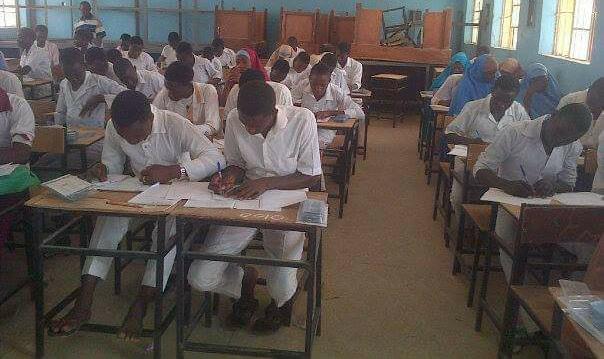
1. They passionately call out any State Government (from those Northern States where Almajiranci is prevalent) that has failed to pay the examination fees (WASSCE and NECO) of its graduating secondary school students, criticising and blackmailing the government until it settles the money running into hundreds of millions. The flimsy reasons they advance is that there are children of the poor who cannot afford the examination fees. But to them there are no children of poor among the Almajirai that deserve government support in whatever form.

After enjoying virtually free education with feeding (mostly for those in boarding schools) courtesy of the State Governments, the parents failing to pay only the exam fees of their children are not irresponsible and not deserving of condemnation, simply because they sent their children to a school other than an Almajiri school. Consequently, our ‘intellectuals’ will pressure the governments to shoulder that responsibility on their behalf.

2. They equally criticize any State Government that discontinues payment of University Registration fees for its indigenes (as is the case in some Northern States) or cuts down scholarship stipends of its students in the highly subsidized public universities. Why won’t they deserve free or highly subsidized education from Primary School to the University since it is Western Education, as it is popularly called?
And their parents are not irresponsible for giving birth to children whose education in public institutions they cannot even pay for, but rely on the Government to do it for them.

But the Almajiranci practice should not benefit from any government scheme that will aim to reform it, because their parents are irresponsible for giving birth to them and failing to look after them.

3. They always support the struggle of ASUU (which I have been a member of, for over a decade) in demanding more Government funding to revitalize our universities, making all kinds of commentaries on how our governments care less about the educational sector due to low budgetary provisions for the sector. That is because university education is sacred to them.

But they will oppose groups that advocate for schemes to intervene and reform Almajiri practice, because those who engage in it are lesser humans and therefore deserve no such interventions. That’s even though the Almajiri school settings are no where near the universities in terms of needs.

4. They endlessly praise any State Governor that sponsors his indigenes to study abroad. And any successor who dares to end the sponsorship due to lack of funds or redistribute the students across universities in less expensive countries or even transfer them to private universities in Nigeria, will come under fierce criticisms of the ‘intellectuals’.

But the Almajiri practice should receive total ban rather than government initiatives that will reform it and make it better for the citizens who have chosen it.

With all sense of modesty, I have been a beneficiary of government funded foreign scholarships for both MSc and PhD, and I know the humongous amounts of money the government spends on foreign scholars yearly, which has yielded only very low Return on Investment for the country so far.

Should a meagre fraction of those amounts be allocated and used to reform Almajiranci practice, the impact will be immediately noticed and the poor children will have a chance to live a decent life facilitated by their governments. But our ‘intellectuals’ are opposed to that, because Almajiranci practice is a useless venture from which comes no good, as they have repeatedly claimed.

5. After all the aforementioned interventions, the students of Western Education graduate from the universities and complete their NYSC, then majority sit at home idle, only adding to the country’s unemployment statistics. Our ‘intellectuals’ will seize the opportunity to criticise the governments once more for failing to create jobs or provide employment opportunities for the youths.

Interestingly, the graduates are not irresponsible for failing to secure a job or even knowing where to start from, despite benefitting from free or highly subsidised education. Likewise, their parents are not irresponsible for giving birth to them and failing to guide them to obtaining jobs or entrepreneurship, even though the government has shouldered most of their educational responsibilities.

However, our ‘intellectuals’ expect the neglected Almajirai and their disadvantaged parents who have most likely never benefited anything from the government, to be self educated and enlightened and even create those enabling environments and opportunities for themselves to thrive and become ‘responsible’.

6. Whenever they discuss about the Almajiri practice, they try to bring out only the woes of it, without a single possible benefit which they have already concluded does not exist.

However, whenever anyone discusses the ills of their unimpeachable Western Education, they go berserk, pouring invectives on the person regardless of their social status – accusing them of trying to drive Northerners away from acquiring modern education to be able to compete nationally instead of encouraging them, and eventually blackmailing them into silence.

But the fact they keep denying is that there are as much troubles and abuses in our Western educational systems as there are in the Almajiri practice.
I do not need anyone to tell me this, because I am a stakeholder with nearly 2 decades of cumulative teaching and lecturing experience across Nursery and Primary Schools, Polytechnic and University.

Even for non-stakeholders, the incessant cases reported in the media of abuses in formal school settings from defilement of Nursery/Primary schools pupils by teachers, sexual harassment of junior students by their seniors, induction of high school and tertiary students into prostitution syndicates as well as sex for grade incidents, are more than enough pointers to the degree of rot and risks in the system. But we can continue living in denial and looking the other way.

The Sexual Harassment Act made by the National Assemlby to arrest sex for grade cases in our universities is what has hit the final nail on the coffin in that regard. So, whoever wants to keep denying let them do.

Therefore, for those whose major argument for advocating ban on Almajiranci practice is the risk of abuse the children are exposed to, they would really have to try harder to prove how free our formal education sector is, from those risks.

A very silly argument some of the ‘intellectuals’ often put forward is: “since Almajiranci practice in its current form is good, why don’t you send your child to an Almajiri school?”

Well, the chances of me sending my child to Almajiranci is as non-existent as the chances of me sending them to any formal boarding school. The probability is zero. Because the risks are as high in both, and only effective reforms could endear either of them to me. That is why we call for the reform of the Almajiri practice with integrated skills training and basic literacy and numeracy, to engage the poor kids and offer them chance to live a decent life, at least. At AMORGIC Foundation, we are making plans to give such contributions to some Almajirai, as a pilot scheme. While the ‘intellectuals’ can continue attacking whoever dares to expose the vices that have become rampant in our formal educational sector as they are in the Almajiranci practice.

Another irrationality yet displayed by groups of those intellectuals is: “the Almajiranci practice has outlived its usefulness”, “what do the Almajirai even achieve after graduation?”, bla, bla, bla… That is the shallow and pseudo kind of their ‘intellectualism’. They can see sense in music, drama, film making and what not, but none in graduating from an Almajiri School after committing most or all of The Holy Qur’an to memory?

They should perhaps try to first explain what the millions of our unemployed graduates have achieved after graduation, with some spending as much as 5-10 years searching for jobs. That is when we can easily think of factors responsible for that, right? Likewise, there are factors responsible for the sorry state the Almajirai have found themselves in. So, for every bastardised Almajiri School that you want to use as a model, there are equally bastardised formal institutions that produce millions of graduates adjudged unemployable – many that cannot even write a formal job application letter.

And in case our so-called intellectuals have no idea, a reformed Almajiranci practice brings with it numerous benefits. Apart from producing responsible and law abiding citizens and boosting the skilled labour market, the graduates of those schools can even be ‘exported’ to other countries where their expertise are needed. Yes, exported!

If the Almajirai can have decent learning environments with proper, formalised certifications for their completed studies, there are opportunities for them to be hired internationally and get handsomely paid. A quick destination for them could be the complex for printing and publication of The Holy Qur’an in Saudi Arabia, to be proofreading millions of copies of printed Qur’an among other tasks.

In fact, the graduate Almajirai can be hired even in the United Kingdom where you least expect, as full time Imams.
From experience, an Imam leading just Taraweeh prayers in Ramadaan (who are in high demand) could earn up to £1,000 only, an equivalent of about N750,000.
As full time Imams, they could be entitled to a house from the mosque and a monthly wage of up to £700 – £800 (N525,000 – N600,000). While some mosques have a rate of pay for the Imams per prayer he has led.
Plus, the Imams can run Qur’anic classes for adults or kids or both, with an average charge of £6 – £10 (N4,500 – N7,500) per person per week. Details about this may be discussed another day.

In conclusion, it is apparent that most of those bashing the Almajirai and calling for the abolishment of Almajiranci practice in its entirety, are not really after the betterment of those poor children’s lives. They are only furious because the children roam the streets of our big cities, hence they are insisting that every child be returned to their villages so that our streets are rid of Almajirai completely. They do not care what becomes of them at the villages where there is no government presence whatsoever, in most cases. They will be just fine and comfortable as long as they don’t see Almajirai on their way.

But those ‘deported’ children may be there gradually metamorphosing into monsters that will come to hunt us much later, probably worse than the neglected forest Fulanis who are now terrorising us whenever we pass through their territories. We should have learnt serious lessons by now, honestly.

That is why at AMORGIC Foundation, we try to approach the issue critically rather than emotionally. The children should not be summarily condemned to their villages where their respective governments have failed to provide them any form of basic education. From initial engagements with some of these Almajirai, they do not have even a single block of classroom in their villages. What exactly do we want them to do if they are deported?

We hope to in no distant future, conduct a comprehensive study involving the Almajirai and their Malams, into a multitude of factors that have contributed to the current state of Almajiranci, including the failure of governments in discharging their responsibilities of providing free, accessible basic education for all citizens. Because we believe that for any drastic reformative measures to be successful, governments must fulfil their own part of the bargain. They must take responsibility!

Then if we want justice and fairness for the Almajirai, let us pressure all Northern States Governments with Almajiranci issues to halt the payment of WASSCE, NECO, University Registration fees and/or scholarships for just 3 years and use the money to reform Almajiranci practice. Let us see the results we are going to have.

Until that is that chance is given to them, I don’t think we have the right to scorn them at will.

President Goodluck Jonathan walked the Almajiri talk

By Engr. Mustapha Habu Ringim

The innovative Almajiri School Initiative of President Goodluck Ebele Jonathan (GEJ), directly or indirectly, challenged northern Nigerian elites on the intense need for a proper plan and execution of any sustainable way of curtailing the menace of the Almajiri system of education. He did his best during his tenure. We expect the incumbent government and the next one to build on where that administration stopped to ensure continuity.

I don’t know how Northern Nigeria is becoming so loose that our communities find it difficult to maintain essential infrastructures like those installed during the GEJ government. Instead of optimising the system, we allowed the structures and the equipment to rot away. We abandoned the schools. Today no one cares to adopt the strategy even in our localities, neither our philanthropists nor any NGO.

Most of our elites are only good at criticism. You will never see them when it comes to action. They instead spend their energy on empty talks and promises. While in a situation like the one Arewa is subjected to, action is mostly needed, with less noise. Though we all agree that “facta non verba”, actions speak louder than words, we always end up talking the wrong walk instead of walking the right talks.

Alhamdu Lillah, we started a model of such a system within our jurisdiction, called ENGAUSAR ALMAJIRAI, under Engausa Global Tech. Hub, which has recently attracted an intervention from NITDA Nigeria and a solo philanthropist from JOS Plateau State, Alh. Yusuf Yahaya Kwande. I don’t want to say much about the outcomes at the moment until we achieve enough to discuss. I always prepare walking the talk instead of the opposite.

We had witnessed a similar effort to revamp the TSANGAYA SYSTEM in Kano State during Malam Ibrahim Shekarau’s tenure. Shekarau transformed the Tasanga (Almajiri School) system and provided Almajirai and their teachers (Malaman Tsangaya) with sustainable means of livelihood. But unfortunately, the innovative Tsangaya System, sphere-headed by Dr Bashir Galadanci, a man with a sincerity of purpose, was abolished by the successor of Shekarau. And all the achievements recorded from the innovative system were brought back to square one.

Moreover, this is how the monotonous lack of continuity in governance, lack of patriotism, and focus are consuming every program or policy designed to transform our socioeconomic and sociocultural activities. In the same way, Kano ICT Park and Jigawa Galaxy Back Borne and Informatics suffered from the unpatriotic people at the helm of the affairs of Nothern Nigeria. Both Jigawa and Kano would have been ahead of Lagos regarding the digital ecosystem and digital economy. As of 2005, Jigawa was rated as the best ICT State in Nigeria due to the achievements recorded from those iconic “digital wings”.

Our society needs a new set of purposeful leaders, the likes of Borno State Governor Prof. Babagana Umara Zulum. We require leaders who are ready to sacrifice their lives for any struggle necessary to save our society from obscurity to prominence. With such Zulum’s prominent achievements, the progress recorded under Shekarau in Kano, and that of Goodluck at the federal level, we now have a concrete reason to disagree with anyone who thinks Nigerians will never be taken to the proverbial promised land.

Engr. Mustapha Habu Ringim wrote from Kano via ringims@gmail.com.

ASUU Strike: KASU opts out, announces resumption date

By Sumayyah Auwal Ishaq

The management of Kaduna State University (KASU), Kaduna, has decided to back out of the ongoing strike embarked upon by the Association of Staff of Universities Union (ASUU) as the resumption date for academic activities is announced.

The resumption notice, which is contained in a statement by the institution’s Academic Secretary, Barrister Abdullahi Zubairu, said that “the University will continue its academic activities for the Second Semester, 2020/2021 Academic Session on Monday 9th May 2022”. 

The Daily Reality learnt that the management has decided to resume in order to avoid stoppage of salary from the Kaduna State Government. The ASUU Chapter in KASU may likely clash with the management about the new development in the institution. 

Recall that ASUU has condemned the Federal Government’s handling of the negotiation on its demands and nonchalant attitude towards the ongoing strike.

Islamiyya System: A perfect replacement for the archaic Almajiri system

By Muhammad Dattijo Kabir

Islamiyya system has been proven to be an alternative to the Almajiri system. In the Islamiyya system, it is easier to commit the Qur’an to memory within the shortest period with decency. And it also allows the children to seek other knowledge that will aid them in confronting the present challenges. Almajiri system can only be insisted to be reformed when it is proven that that is the only way to learn the Qur’an. The system poses a lot of danger to the children, such as health challenges, inferiority and, of course, most of them become morally debased in the end.

Reforming this system alternatively means rewarding irresponsible parents for their irresponsibility, creating unsustainable programs which cannot see the light of the day. Instead, the government should ban and criminalise the system and absorb all the already enrolled Almajiri into formal schools. Then any other parent that wants his child to learn the Qur’an by traditional means must first provide shelter, food, and health facilities for the welfare of the child and must ensure that the child goes to school to at least get primary education.

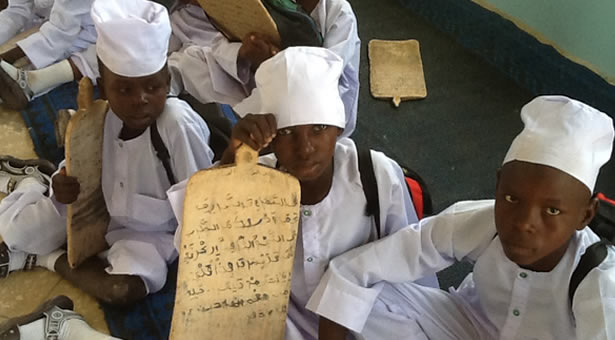
No one is saying karatun allo should be banned. Karatun allo differs in content and operation from the Almajiri system. While the former entails learning Qur’an by the traditional design by all and sundry, the latter entails recruiting young persons to learn Qur’an by traditional means without provision for food, shelter and medical facility for children recruited. The said recruited army of children relies only on begging leftover food and tattered clothes for subsistence.

It requires no second thought to believe that this system of taking young children away from their parents at the ages they need their parents the most should be stopped and criminalised. No child under the age of 12 should be taken away from his parents’ house in whatever guise. There is nothing good in the Almajiri system as practised today. The system has served and outlived its usefulness. It became archaic and, to some extent, barbaric considering the conditions of the children involved in the system.

There are more decent systems which are alternatives to the already abused system. The system indirectly supports irresponsible parents to breed bundles of children they know they cannot cater for. The parents use the system to abdicate their parental responsibility of feeding, clothing, educating and sheltering their children.

Also, the half-baked Malllams use the system as a means of income. The activists are using it to get themselves employment from international NGOs. The nagging question is, can Qur’an be learned through a more decent system than this child molesting system? The answer is yes. Thousands of children have committed the entire Qur’an to memory through the modern Islamiyya system.

Let’s move on; the system is not viable in the present era. The era of dogma has passed. Let every child be supported by his father and take Quranic education before his parents while attending school. Any system that encourages parents to take their children to the street is barbaric and should not be encouraged.

Muhammad Dattijo Kabir. Muhammad is a lawyer, a human rights activist and a public affairs commentator. He lives in Kaduna and can be reached via jibrilmuhammad27@gmail.com.