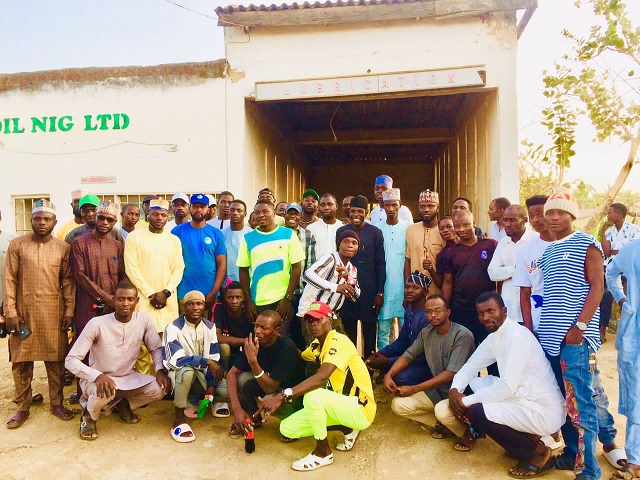
About a hundred students sponsored by the Kano State Government at Digital Bridge Institute have expressed their worries over the state government’s failure to pay for their certificates five years after graduation.
The students decried that the state government has not paid the designated fees to the institute to enable them to collect their results since 2019.
They complained that the development is delaying their education as they are left stranded for over five years.
The students said they need the certificate to further their education and apply for various job opportunities, saying their future would remain bleak if the government refused to intervene.
The Daily Reality gathered that the Kano State Governor, Dr Abdullahi Umar Ganduje, had sponsored 100 students, 40 males and 60 females, to study at the institute in 2017.
The students were sponsored to study various ICT programs such as Software Engineering, Multimedia Technology, Networking and System Security, Hardware Engineering and Telecommunications.
Our future is bleak students
The graduates said their educational careers were at risk, saying the years they spent at the institute would be wasted if the government refused to intervene.
One of the graduates, who pleaded anonymity, said he missed many opportunities, including admissions to study abroad because he has not collected his certificate.
He said, “I was offered three admissions to study in India, but I could not go because my certificate was not given to me.
“Some of my colleagues told me that they even got job offers. However, they could not go for an interview since they didn’t have the certificate.
“I would have scored admission and graduated had I the certificate. Probably got employed in an organisation.”
Muktar Ibrahim (not a real name) said he wanted to further his education but could not lay his hand on his diploma certificate after graduation in 2019.
He said, “I wanted to further my education. However, I have no certificate to seek direct entry into the university.”
Aisha Hussain (not a real name) said it was painful that she was yet to acquire a degree certificate while some of her sisters and friends were serving their one-year mandatory NYSC.
She said, “We have long been expecting the payment by the government for the release of our certificates. It is sad that some of my sisters and friends have completed their degrees even though I started schooling before them.
“I also got so many opportunities. However, I hopelessly saw them pass as I could not go for any of them,” she stated.
Government ignores our appeals
Since graduation, the students said they have been pleading with the government to settle the outstanding debt to enable them to collect their certificates.
The students went to various media stations pleading with the government to come to their aid and settle the debt.
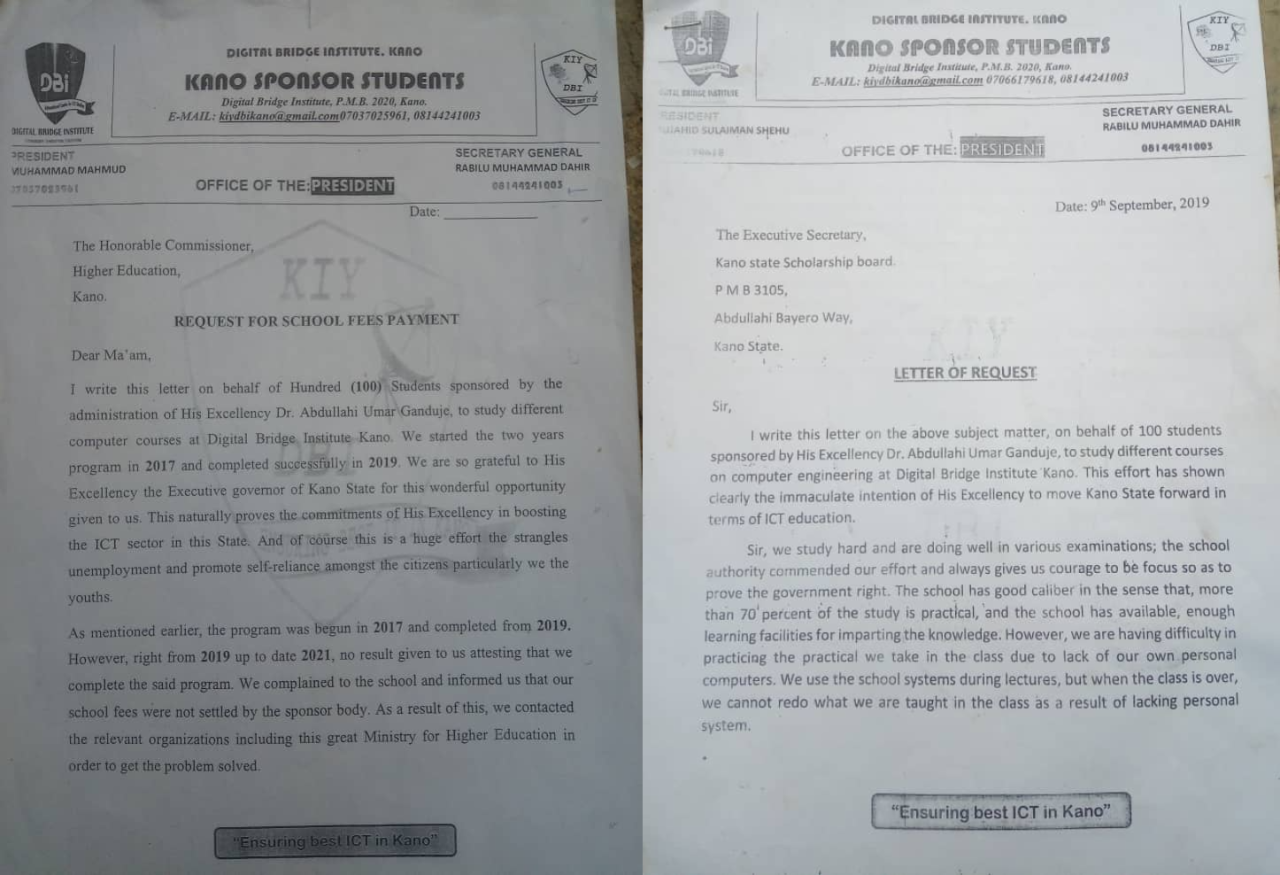
They said they also wrote letters to the Kano State Governor, Dr Abdullahi Umar Ganduje, through the Ministry of Higher Education and the Ministry of Education of the state.
However, all their efforts were in vain, as their plea did not yield any positive result from the government.
Some of these letters.
We are still not tired – students
The students who spoke to The Daily Reality said they are still not tired of sending their passionate appeals to the government to consider them.
They said they are still hopeful and pleading with Governor Ganduje to settle the debt before he leaves office this 2023.
Halima Ibrahim (not a real name) pleaded, “I urge his Excellency, Governor Abdullahi Umar Ganduje, to help us and pay for our certificates.
The lady said her parents are poor and therefore placed all their hopes on her certificate.
Another student who asked not to be named said, “Your Excellency, we know you are good and kind to the poor. We are your children. We are pleading with you to consider us.”
Maimuna Sunusi said, “Our parents cannot afford to settle this debt. Therefore, we are pleading with His Excellency to pay for our certificates and not to waste the years we spent at the institute.”
Kano State Government response
Our reporter has made several attempts to hear from the government, but all his efforts were in vain.
While the Public Relation Officer of the Kano State Ministry of Higher Education, Sunusi Abdullahi Kofar Na’isa, denied knowledge of the development, the Ministry’s Commissioner, Mariya Bunkure, could not be reached for comment.
His name was Sadik. Perhaps about 11 years old. He walked into my newly allocated office in the old Mass Communications building of Bayero University Kano (Nigeria) in 2013. I was startled. He was a tiny boy with deep dark skin, a beautiful face with intense eyes and a dolphin smile. He asked if I wanted to buy Fura (steamed millet balls blended in cow milk, often used as dessert, although it could stand on its own as a nutritious meal). He did not look like any of the usual urchins who thronged the corridors of the building look for odd jobs – run errands, empty trash, sweep office when those officially charged – and paid – to do so did not. Intrigued, I ordered one. He disappeared and returned some twenty minutes later with the Fura in a transparent plastic bag. I paid him, and that was that.
He returned the following day. When I declined to buy it because I didn’t feel like drinking the Fura, he insisted I buy it for others. When I asked why, he simply retorted that I appeared richer than other staff because, first, I was a professor, and second my office was larger. I was amused by his evaluation of my finances based on my position. And true, my office was the largest for staff, but I was a new bride in the Department – having been wedded to Mass Communication after an amicable transfer from the Department of Science and Technology (thus the ‘double’ professor tag), and all stops were pulled to make me welcome. Based on his logic of having a larger office, if not a deeper pocket, I bought about ten and asked him to distribute them to colleagues.
Sadik was to become a regular fixture in the corridor. Always after 2.00 p.m. One day he came with a blue checkered school uniform. Mentally, I thanked the boy who gave him the ‘hand me down’. The uniform was from Musa Iliyasu College, located along Gwarzo Road, a few kilometres from the New Campus of Bayero University Kano. This was a private and prestigious high school in Kano, attended by the children of the well-to-do.
I was told, however, that the uniform was his own and that he was indeed a student at the famous prestigious college. Curious about the human aspect of this development, I decided to delve further. What I found was what I want to share with you regarding the world of Hausa women.
Sadik did not come from an elite home. He was from a large Fulani family living in a ruga (a Fulani cattle encampment) near Janguza Army Barracks in Kano – itself a few kilometres from Bayero University Kano, New Campus, along Gwarzo freeway. The unit was a father, three wives and eighteen children. Sadik was the eldest in his mother’s room. They were herders. Indeed, Sadik was born near Tamburawa along Zaria Road in Kano when the family was on the move in 2002. They camped near Janguza Barracks, where they located their ‘hometree’.
The mother was the one selling the Fura at Bayero University Kano New Campus that Sadiq marketed. She had a ‘stand’ near the Faculty of Engineering. She had a lot of customers in all categories of the university community. After all, even professors love Fura. Her interaction with the university community enabled her to develop an interest in education, and she wanted to get Sadiq to attend a school and eventually a university. She did not want Sadik to follow the family herd. His father, however, wanted the child to join the family herding tradition. The mother then engaged one of her customers, a professor, to drive to the ruga and convince the father to allow the child to attend school, to which he reluctantly agreed. The mother then took over the process of educating the child.
She enrolled him in a local private primary school inside the Janguza Barracks. After he finished, she inquired which was the best high school around, and Musa Iliyasu came highly recommended. She enrolled him there. An exclusive private school. Paid for from the proceeds of her Fura business. She bought a bike for Sadik to make it easy for him to attend the school, some five kilometres from their tent. His legs could barely reach the pedals, but he was enthusiastic about learning. After school, he would go to her Fura stand, park the bike and then trample all over the BUK mega building advertising his mother’s Fura (even boldly entering the Vice-Chancellor’s office to market the Fura), all the way till 6.00 p.m. when they close ‘office’.
I interacted with Sadik for three years. He was so curious, bold, confident and always lifting books on my desk, trying to read them, asking endless questions, his eyes always darting and roving all other office. He was truly an inquisitive and intelligent child.
In 2016 I temporarily relocated my place of work to Abuja, and that was the last I saw of Sadiq. I did not fully return to Bayero University till 2022. In the intervening period, I had wistfully thought of Sadik and finally decided to find out what had happened to him when I returned. It was a massive success story of doggedness by a traditional woman.
When Sadik finished Musa Iliyasu College, he told his mother he wanted to be a pilot. She asked him to find out how much it would cost. Off he went to the Nigerian College of Aviation Technology (NCAT), Zaria, where he learned the fees could be as much as ₦7.5 million. He informed his mother, who immediately asked him to continue the process of getting admitted. She would pay the entire sum – after all, she was already a millionaire with the large herd she had. She earmarked the number of cows to sell to raise the pilot school fees. Sadik did the entrance exams but did not scale the final test. So, he was not admitted.
He then applied to BUK with his JAMB score of 201 for Computer Science but did not meet the Post-UTME requirements for the program. Again, he faced rejection. His mother initiated the process of getting him alternative university admission and was advised to take him to Al-Qalam University, a non-profit Islamic university in Katsina. He went there and inquired about the admission process and the fees. With his results, he was admitted. His mother sold two of her cows for ₦450,000 and gave him the money to pay for the school fees in Computer Science and his accommodation in Katsina. He enrolled and started his program.
When he relocated to Katsina, she sent him money every day. She eventually gave him ₦200,000, with which he started a Fura packaging business, employing his co-tenants in the house he was renting. Soon, he established a small business employing other students. Eventually, he vied for and succeeded in becoming the Vice-President of the Computer Science Students Association of the Al-Qalam branch.
Sadik became a dedicated student with a consistently high CGPA, which could eventually lead to either a good second upper or a first in Computer Science. He was eventually elected the President of the Computer Science Students of his university chapter. One day, the officers of the Association came to Kano for a function during a school break and decided to see his house, especially after he told them he lived in a ruga. They were astonished to discover he was telling the truth – their respect for his modesty raised higher.
In January 2023, I was in my office at the Faculty of Communication BUK when someone walked in. I was bent on my laptop but did notice the guest removing his shoes and coming and standing in front of my desk, waiting for a pause in my typing.
I looked up at a tall well-built young man. I immediately knew it was Sadik. At 21 years, everything about him has changed, of course, but not his dolphin smile. He told me he learnt I was asking of him and decided to come and greet me. I was so happy to see him, and it was he who related to me what I had written so far. I immediately connected him to Sunusi Ahmad Baffa Dawakin Tofa, Chairman of the Kano State chapter of the Fulfulde Development Association of Nigeria (FULDAN), of which I was a patron. They promised to come together and see how Sadik could be part of community mobilisation awareness and a role model, especially for youth. Sadiq owes his success so far to his mother.
Professor Abdalla Uba Adamu and Sadik
***
Sadik’s mother, Hajiya Hauwa Suleiman Dikko, was not an educated, entitled, privileged woman. She did not go to school. Her class was the hard knock of life. As a young girl, she missed going to school with lunchboxes and rucksacks festooned with stickers from the Marvel Cinematic Universe – Spiderman, Hulk, X-Men, and Fantastic Four. She did not attend a privileged landscaped school with paintings of Micky Mouse and Donald Duck on their walls. She had no driver to chauffer her to school in an airconditioned SUV. No TV to return to after school hours in a nice airconditioned living room. No iPads to play with. No Netflix to relax her hard stressful day. No extra lesson teacher (Uncle John or Auntie Funmi) to ensure she passed those horrible subjects such as Mathematics.
Her contemporaries who lived such life finished successfully from their expensive private schools (of course, no private school would allow mass failure, especially from children of the privileged) and had gatekeepers to ensure they got admission into the juiciest disciplines in the university of their choice. If at all in Nigeria – otherwise, it would be off to Ukraine (before it became too hot), some obscure countries in Eastern Europe, India, Cyprus, the UK or preferably, Malaysia.
When such contemporaries returned, they had cushy jobs waiting for them and a relatively easy path to the top. Eventually, they are celebrated as women of substance – given awards (which they don’t need) and celebrated in academic papers and opinion pieces as role models of female achievement and doggedness in a patriarchal society. I don’t mind their high-profile visibility. I just believe the accolades are wrongly placed, or at the very least, the Point of View (POV) should sweep around.
My female heroes? Those I will be celebrating today, the 2023 International Women’s Day? Let’s start with Sadik’s mother. And hundreds of others like her. I am sure you know one or two in your locality. They are women, often widowed, left alone, with little or no inheritance, and who, with the little they have, were able to provide much-appreciated services in their communities and keep a tight hold on their families. They don’t engage in endless and fruitless debates about gender identity or reproductive rights nor women’s representation in political representation and their share of hegemony. Rhetoric. Talking loud and saying nothing. As my main Man sang, “Like a dull knife / Just ain’t cutting / Just talking loud / Then saying nothing”. (James Brown, 1970).
Mainly, restauranteurs, these local women build people and impact their communities. With their business – restaurant (ƙosai, koko, tuwo, ɗanwake, wake da shinkafa, alkubus, gurasa, ƙashin rago, etc.), public transport (Keke NAPEP, buses, Acaba/Okada, Ƙurƙura), estate (properties, rental apartments, plots of land) – they are the role models who should be celebrated. They don’t feel entitled and are privileged in the peace of mind they have and the mentoring they do in their communities. They have no PAs, SAs, fierce dogs at the gates of their solar-powered villas and mansions, no frowning ‘maigad’ to intimidate and scare away panhandlers.
They have no SUVs as the cost of one could serve as capital for a whole year for their business. They don’t even have cars, despite some owning a transport business or so. They do not take their holidays in London or Dubai – they have no time for holidays as they are busy serving their communities. They marry off their daughters, not in grand style, with furniture imported from IKEA in China but from local makers – thus contributing to local economies.
So, what should be the concerns of women on International Women’s Day? For me, with a focus on Muslim Hausa women living in traditional communities, how about integrating them into the modern sector digital economy? Instead of empty rhetoric about gender representation, why don’t we focus on enabling them to acquire skills such as mobile phone repairs and POS services – in the comfort and safety of their homes? Many women are now engaged with mobile phones and online trading and payments. Muslim Hausa women feel unsafe in approaching service centres where clusters of men provide these services. Empowering them to be skilled in digital knowledge in the lungu and saƙo (alleyways) of our communities works better than hot-air rhetoric and genuinely can make a difference.
On this day, I, therefore, award accolades to Sadik’s mother, Hajiya Mai Ƙashin Rago Fagge (with a whole street named after her), and countless others whom I am sure Jaafar Jaafar knows more. They are truly women of substance.
Today, being International Women’s Day, please locate any in your community, go right up to her and appreciate her. Celebrate her achievements and her silent but visible impact in the community as the REAL woman of substance.
PS: Some have asked about Sadik’s whereabouts. He is in his final year at Al-Qalam, Katsina, Computer Science, and from his results so far, he is heading towards either a First Class or a very good Second Upper.
Professor Abdalla Uba Adamu can be contacted via auadamu@yahoo.com.
On Friday, March 3rd, 2023, I attended two events at the Divinity School. The first was a lecture convened by Professor Ousmane Kane, and the second was a joint symposium called the Zaytuna-Harvard Symposium. These two events shared similarities in that they both aimed to highlight the intellectual heritage of sub-Saharan Africa in various fields of knowledge and the importance of traditional means of knowledge acquisition.
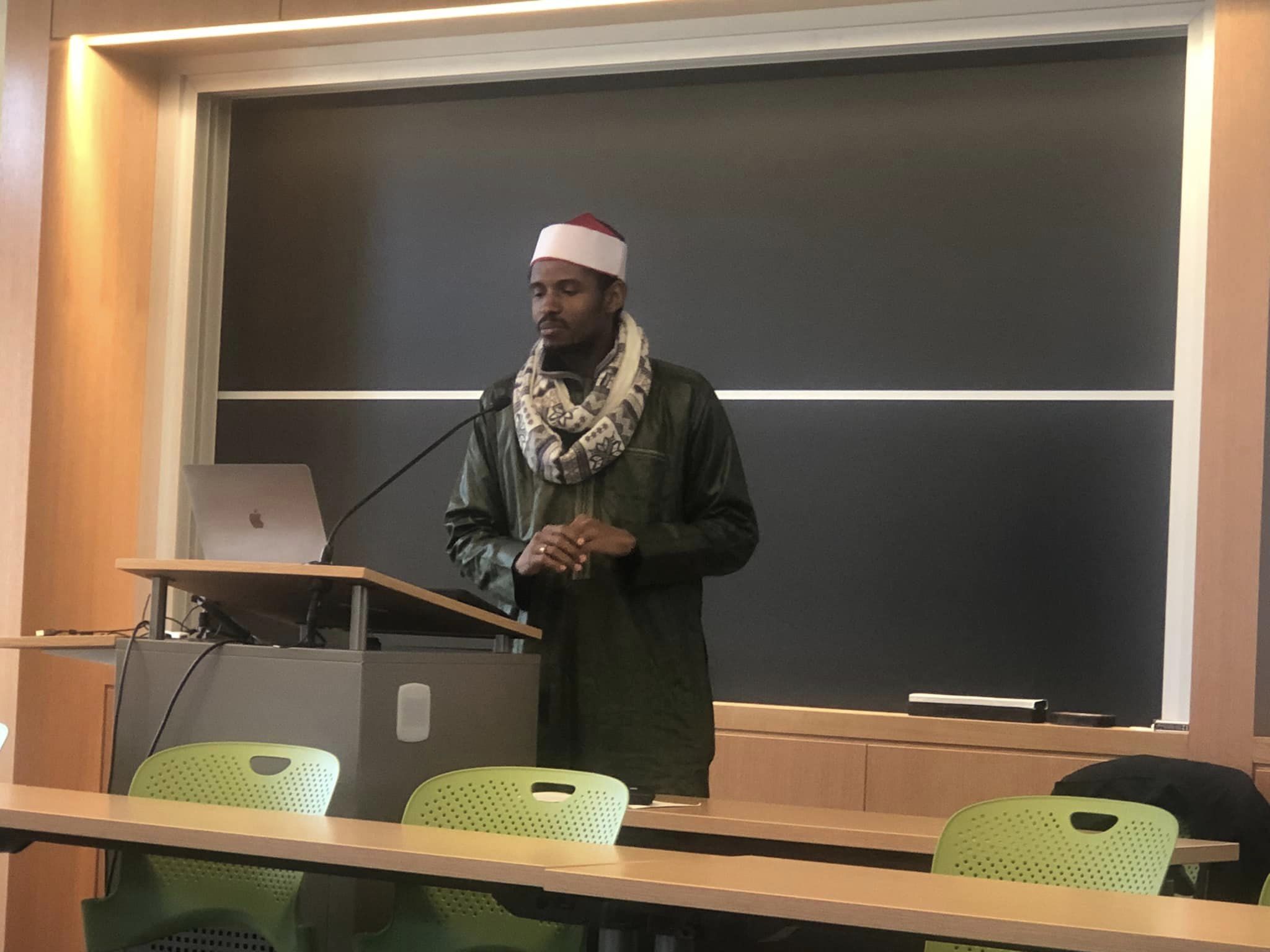
The former was a presentation by Ustadh Umar Sheikh Tahir, the son of a prominent Nigerian scholar Sheikh Tahir Bauchi and a current PhD candidate at Columbia University. His presentation was titled “Rediscovering 18th Century Knowledge Tradition: Alkashinawi’s (d.1742) Intellectual Networks in Bilad Al-Sudan and Hijaz.” The latter was a presentation by Sheikh Hamza Yusuf, President of Zaytuna College, who spoke on “The Arts of Understanding Prerequisites for Unlocking the Islamic Tradition.” Sheikh Hamza Yusuf studied traditionally with scholars in Mauritania, West Africa.
Ustadh Umar presented the story of Muhammad Alkashinawi, a West African scholar from today’s Katsina province in Northern Nigeria. Alkashinawi developed proficiency in Arabic language, logic, mathematics, and jurisprudence in West Africa. When he moved to Hijaz, his scholarship was acknowledged, and he became a respected scholar from whom society was learning. When he died in Egypt, he was buried in the cemetery of scholars. Alkashinawi’s story highlights the journey of a scholar whose intellectual depth was developed in West Africa and whose scholarship transcended geographical boundaries.
The uniqueness of Alkashinawi’s work was not as prominent as it should have been, and Ustadh Umar’s work is more relevant in that he is translating Alkashinawi’s book into English. Interestingly, some of Alkashinawi’s work is only available at Yale University, and his book was not borrowed from the library at Yale for 120 years until Ustadh Umar asked for it.
The unborrowed book from Yale Library for 120 years
Sheikh Hamza Yusuf’s presentation highlighted the importance of traditional means of knowledge acquisition and how it translates into scholarship that transcends geographical boundaries. Both presentations mesmerised the audience, providing evidence that knowledge is a human heritage that belongs to those who work to acquire it. It is neither the monopoly of a region, ethnicity, nor race but a heritage that beautifies a society that values it.
During the symposium, I sat among the students of Zaytuna College. One of the students asked me where I was from, and I responded Nigeria. He then introduced me to one of his schoolmates from Texas, who was a descendant of Sheikh Uthman ibn Fodio. I found it interesting how the family of Uthman Dan Fodio crossed the Atlantic and still keeps the story of their genealogy intact.
Takeaway: Knowledge is a human heritage. It belongs to those who work to acquire it.
Muhammad Jameel Yusha’u, PhD, is a candidate for a Mid-Career Master’s in Public Administration at Harvard University, John F Kennedy School of Government.He can be reached via mjyushau@yahoo.com.
On March 3rd, the world celebrated International Writers’ Day. This special day honors the indelible mark writers have made on society, inspiring, educating, and entertaining us all through their words.
While many people may immediately think of famous novelists or poets when they think of writers, the truth is that writing is a skill that can be applied in a wide variety of contexts.
As for myself, I may not be identified as a professional writer yet, but I have personally authored over 200 articles. This in itself is quite a noteworthy accomplishment, and it demonstrates that writing is not simply a domain of a selected few, but rather, it is a skill that anyone can develop if they have something meaningful to share or communicate. Whether you’re writing for your own blog or for a company, the ability to effectively express yourself through the written words can open countless doors and lead to amazing opportunities.
In our current digital era, the demand for writers has grown exponentially. From copywriting to content creation, social media management to email marketing, etc. Today, businesses require writers to help them engage their audience effectively. As e-commerce continues to gain more prominence, companies need high-quality product descriptions and persuasive sales copy to attract customers. As such, freelance writers are increasingly on demand, making this an ideal time for anyone looking to earn an income through writing.
Writing, however, is not just limited to the professional realm. It can be an incredibly therapeutic exercise that allows you to express your thoughts and emotions in a healthy way. Journaling, in particular, is a popular practice that many people use to reflect on their experiences, thoughts, and feelings. By writing down your goals and aspirations, you can also clarify your vision and take tangible steps towards realizing your dreams.
In summary, the Writers’ Day was a day to celebrate the profound impact that writers have made on our lives. Whether you’re a professional wordsmith or someone who enjoys writing as a hobby, you can contribute to society by sharing your knowledge, insights, and experiences through the written words. Therefore, take a moment to recognize the power of writing and don’t be afraid to put a pen on a paper and see what kind of magic you can create.
Happy International Writers’ Day.
Abdurrazak Muktar Makarfi can be reached via; prof4true1@gmail.com
I first met Philip Jaggar in March 2008 at the School of Oriental and African Studies (SOAS) when I was engaged as the cinematographer for a visit, mediated by the British Government, of Sheikh Dr Qaribullah Nasir Kabara of Kano, to various places in the UK, including the University of London.
While I knew of Jaggar (although never having met him before), the rest of the team was pleasantly surprised by his total command of the Hausa language (and inner city Kano Hausa at that) – and his absolute refusal to respond to any question except in Hausa. The SOAS meeting brought together an impressive list of scholars to receive Sheikh Qaribullah. These included Graham Furniss, Dmitry Bondarev (specialist on Hausa handwritten Warsh Qur’anic manuscripts of Hausaland) and Philip Jaggar himself. It was a very pleasant encounter, full of banter.
My next encounter with him was later in November 2008, when I was commissioned to deliver a lecture at the Universität Hamburg. Jaggar had taught at the university, and I was honoured he attended my public lecture. Only two meetings, but he treated me like a long-lost friend, despite the eleven-year age gap between us. I was also elated when he told me of his interest in my works which at that time were beginning to gain traction in media and cultural studies. It was our last meeting, but very memorable for me due to his simplicity, love for Kano and absolute devotion to Hausa studies. He taught at Bayero University Kano from 1973-1976 and had pleasant memories of his experiences.
Jaggar’s most famous and highly acclaimed book is simply titled Hausa (John Benjamins, 2001). It was considered a classic comprehensive reference grammar of the Hausa language spread over sixteen chapters which together provide a detailed and up-to-date description of the core structural properties of the language in theory-neutral terms, thus guaranteeing its ongoing accessibility to researchers in linguistic typology and universals.
While Jaggar, or Malam Bala as he preferred to be addressed when he was in Kano, was known for his immense contributions to Hausa grammar, I interfaced with his work on the ‘maƙera’/blacksmith industry of Kano. Jaggar was the first to provide a comprehensive study of the blacksmith industry in Kano. His landmark book, The Blacksmiths of Kano City: A Study in Tradition, Innovation and Entrepreneurship in the Twentieth Century (Rüdiger Köppe, Cologne 1994), brought out the honour, dignity, creativity, aesthetics and the technology of the metalworking industry in the heart of Africa. The blurb of the book summarizes this amazing work:
“The present book examines the factors involved in the expansion, during the colonial and post-colonial periods, of a traditional pre-European craft. It discusses the art of blacksmithing in Kano City, northern Nigeria, and its eventual conversion into a modern metalworking industry. In doing so, it challenges the widely-held and simplistic assumption that such traditional professions declined before the economic and technological onslaught of colonialism.”
For me, the book provides a fascinating and ethnographic picture of the industrialization of the inner core city where I spent the early years of my life. It vividly brought to life the alleyways, the people and the entrepreneurial focus of the various wards in the city. This alone is enough to endear a reader to the book, even without the fascinating focus on the blacksmithing industry. I was able to snatch a copy in a bookstore at the University of Maiduguri in 2003 at ₦800 – barely 2€ now, but the publisher is currently selling it for 24€, about ₦12,000.
If, and only if, someone in the policy circles of the Kano State government of the day had taken note of the book, our maƙera would have received a boost and been incorporated into the development agenda of a national creating a synergy between its creative proto-industrialists and modernity.
When he celebrated his 75th birthday in 2020, many of his colleagues paid a lot of glowing tribute to him. Now that he has sadly passed away, those tributes remain etched in stone. He will be surely missed by hundreds of his colleagues and thousands of Hausa students who benefitted, directly or indirectly, from his extensive scholarship on the Hausa language.
Tribute to Philip Jaggar (2020) https://study.soas.ac.uk/tributes-to-philip-j-jaggar/
About Philip Jaggar https://study.soas.ac.uk/jaggar-hausa-champion-soas/
Various scenes with Phil Jaggar and the OP, as well as with Sheikh Dr Qaribullah Nasir Kabara’s team
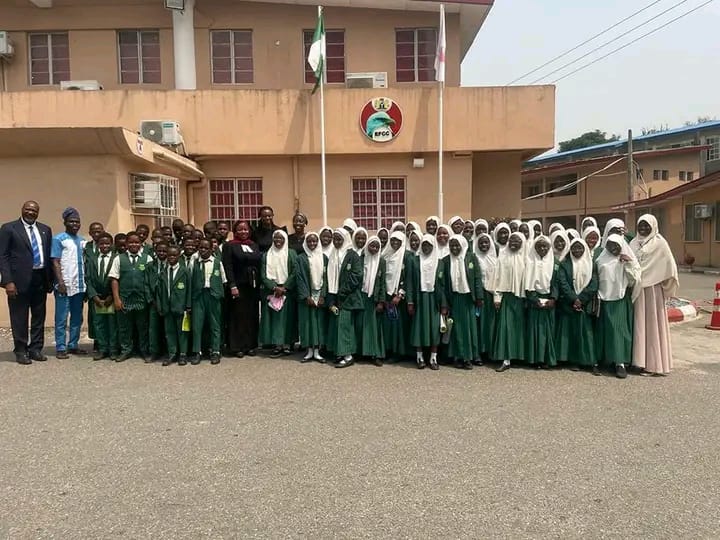
The Economic Financial Crimes Commission (EFCC) is set to inaugurate the Commission’s Integrity Club in a Lagos secondary school.
On Wednesday, the Lagos Command of the EFCC said the inauguration of its Integrity Club in Crescent College, Lagos, is in line with its strategic objectives to continuously enlighten and reorientate the youth about the menace of economic and final crimes commission.
The EFCC made the promise to the students during the former’s visit to the Lagos Command of the EFCC.
Addressing the students, the Deputy Zonal Commander, Lagos Zonal Command, Emeka Okonjo, urged the students to join the EFCC Integrity Club. He said joining the Club affords them an opportunity to become ambassadors of the Commission in the anti-graft campaign.
He said, “We want you, the leaders of tomorrow, to join in the campaign against economic and financial crimes and become change agents in your environment, schools, churches and mosques.
“We want you to join hands with us to tell everyone that integrity, honesty and hard work are the sure routes to living a successful life”.
A representative of the school, Shukrah Odunola, expressed profound gratitude to the EFCC for honouring the school invitation, adding that the lunch of the integrity club in the school would go a long way in ensuring that the students “are enlightened on the consequences of corruption in the society and Nigerian as a whole.”
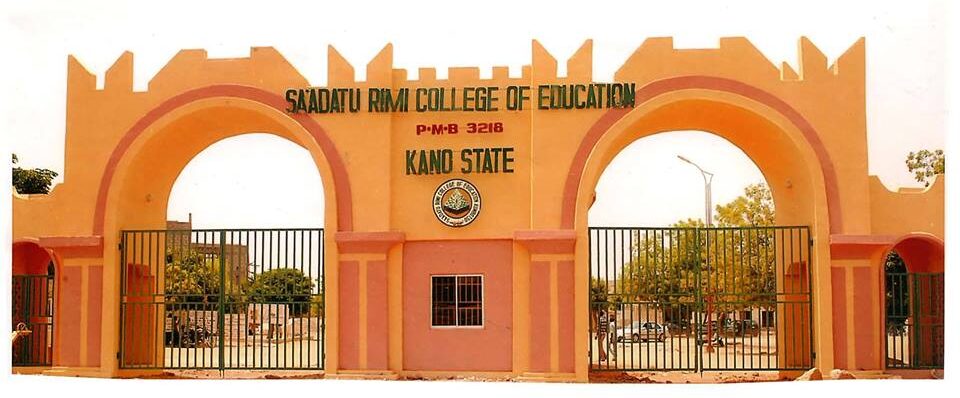
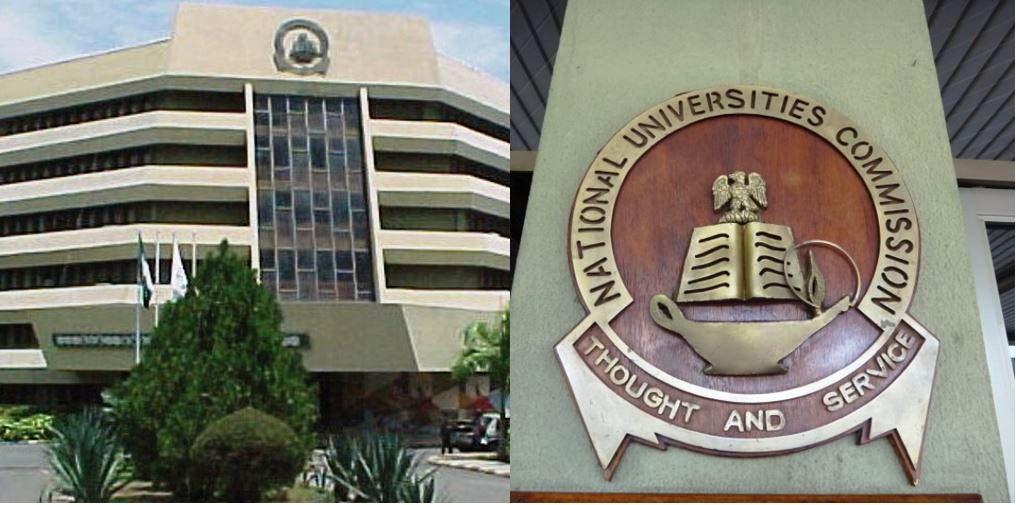
The National Universities Commission ( NUC), has approved a new university for Kano State.
Consequent of the approval, Sa’adatu Rimi College of Education, Kumbotso is now a university of education.
On Tuesday in Abuja, the Executive Secretary of NUC, Prof. Abubakar A. Rasheed, presented the letter of recognition of the institution to Kano State Governor, Abdullahi Umar Ganduje .
Ganduje said, the new university was part of his administration’s efforts to meet the growing demand for education in the state.
According to him, the university, which is the third under Kano State, has 116 lecturers with PhDs.
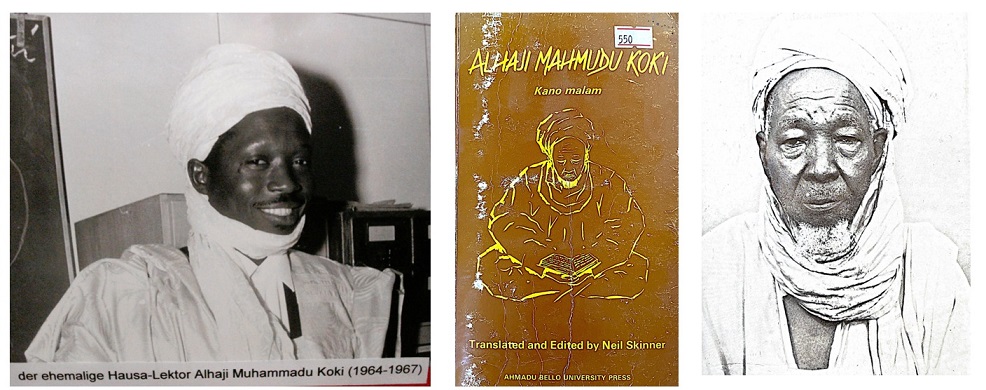
I was rummaging through my travel pictures when I came across a picture that I am sure has not been published anywhere. I saw it in a glass case at a ‘corridor museum’ at Universität Hamburg, Germany, on 2nd December 2008. I was excited because of its rarity. It was the picture that I am sure has not seen the light of day almost anywhere. I had vaguely heard about the man from my father, a writer, but did not pay attention then. Now he was there, smiling in all glory and right before me. I decided I would take the picture to show it to my father.
Edit: The man was Muhammad Ƙoƙi, the son of Alhaji Mahmud Ƙoƙi, the Kano Malam. His picture triggered my excitement about his father, Malam Mahmudu Ƙoƙi.
Malam Mahmudu was perhaps one of the most unsung and unknown critical literary figures in Hausa history. You can Google all you can. You won’t find him or his picture. Instead, you will be taken to Neil Skinner’s book, “Alhaji Mahmudu Ƙoƙi: Kano Malam” (ABU Press, 1977). I very much doubt if ABU Press itself has a copy. My copy is in excellent condition (except for a slightly scratched cover) since it was printed on shiny bond paper – and can therefore scan very well. I hesitate to do this for fear of copyright violation. I do wish ABU Press would consider retrieving a copy somewhere and reprinting it.
On return from Hamburg, I started looking for the book – and I was lucky to grab a copy at then ₦550 in January 2009. Now, some 14 years later, you can get a second-hand copy from the online store Abe Books for just $99 (cheap at ₦74,000 in 2023). At the moment, I don’t have any ‘kebura’ around me (since the ASUU strike was suspended!). Otherwise, I would offer mine for ₦50,000 for my copy!
Quite simply, it is a brilliant slice of Hausa history. Most significantly, it detailed the fieldwork done in the collection of data for Bargery’s Hausa Dictionary, whose full title is “A Hausa-English dictionary and English-Hausa vocabulary”.
Although mainly attributed to Rev. George Percy Bargery (1876-1966), an English missionary and linguist, the dictionary had significant input from Diedrich Hermann Westermann (1875-1956), a German missionary, Africanist, and linguist. The dictionary was published in 1934. The printed copy used to be available at ABU Bookshop, where a colleague of mine gifted me one he bought at the huge sum of ₦2,000 in ancient days, almost breaking his bank account!
The book was written/edited by Neil Skinner (1921-2015) at the request of Bargery’s son, Kenneth, to collect recollections of the elder Bargery while in northern Nigeria. Alhaji Mahmudu Ƙoƙi (1894–1976) was Bargery’s Chief Assistant in the preparation of the Dictionary and was the first choice to ask in 1967. As Skinner recollected, “I began recording some of his memories of Bargery. Listening to his vivid accounts of Kano in the first of the century, I formed the idea of putting together from Mahmudu’s lips some account of his own life.”
And what a fascinating life it was. Skinner continued, “As a son of the largest city of northern Nigeria, who had been born into the civil war of Aliyu and Tukur, M. Mahmudu saw the coming of the British, knew Waziri Giɗaɗo and Resident Temple, lived to see the end of the British rule and the Nigerian Civil War and, above all, had close contact with rulers and innovators, both Nigerian and British. He, therefore, seemed likely to have a tale worth recording for younger generation of Nigerians and those with an interest in Nigeria as it was and is. Mahmudu was a spectator of many great events and participant in not a few.”
And what a whirlwind tour of northern Nigeria it was in the early 20th century. Reading the book is like going back in a time machine. Everything was covered: economy, society, governance, culture, everything. As Neil Skinner stated, the book was told by Mahmudu himself – Skinner just edited it. It contained both fascinating and often disturbing details of days gone by. For me, for instance, I was traumatized by his account of the slave trade in Kano. As Mahmudu recalled,
“I used to see slaves being sold – with my own eyes! At Ƴan Bai, on the west of the [Kurmi] market. That was where they used to line them up and sit them down, with their feet sticking out, like this. Then it would be, ‘You there! Get up!’ And he would get up, and we would look him over well from top to bottom and say, ‘Walk a little!’ then he would do so until we told him to come back. He would do so, and we would say, ‘Right, go and sit down’ and put hand to pocket and take out a little money, perhaps a score of cowries or fifteen and give them to him. You would do this, whether you bought him or not. Then, if he saw someone selling groundnuts, he would call her over to get some saying he had been given the price for getting up to be inspected. That is how we have a proverb which says, ‘Tashi in gan ka ma na da ladanta’.”
Based on this disturbing account – in the heart of Africa – I wonder how many of our other proverbs have such creepy and dark origins? If you go to Ƴan Bai in Kurmi market in Kano, now you will only see mats, books and assorted goods.
Alhaji Mahmudu Ƙoƙi provides a rich tapestry of ethnographic details about how the Dictionary was compiled and the fact that the team of Bargery and his assistants insisted on seeing actual objects and their names before recording them. One wished they had an artist with them to sketch out many of the cultural artefacts that have all but disappeared now. It is good that the Bargery dictionary has been digitized and is available free online, thanks to the efforts of Hirokazu Nakamura of the Faculty of Human Science, Department of Human Sciences, Bunkyo University, Japan.
“Alhaji Mahmudu Ƙoƙi: Kano Malam” is comparable to “Baba of Karo” by Mary F Smith (wife of M.G. Smith, author of “Government in Kano, 1350 to 1950” amongst others, and which is available FREE online!). Published in 1954, “Baba of Kano” is an anthropological record of the Hausa people, partly compiled from an oral account given by Baba (1877-1951), the daughter of a Hausa farmer and a Koranic teacher. Baba’s reports were translated by Smith.
Books like these encourage us to seek out our own cultural history – visit those places mentioned, savour their historical aroma and note them as centres of excellence in discovering our past. By the way, Ƙoƙi is a ward in the city of Kano and right on the edge of the Kurmi market. If you are from the area, perhaps you may have heard of Alhaji Mahmudu from his grandchildren.
Don’t forget; this is not a review of the book but a memory jog on the old man, Alhaji Mahmudu Ƙoƙi, whose picture was honoured at a foreign university.
There is a composite collage of the picture I snapped in the Hamburg university museum of the son, the book and the father! as the latter appeared in the book.
Prof. Abdalla Uba Adamu can be reached via auadamu@yahoo.com.
In a bid to prevent pre and post-election unrest across Toro and Bauchi during the oncoming elections in Nigeria, Toro Uplift Association commences a sensitisation program across various secondary schools in Bauchi state.
The sensitisation program, which will commence on Monday, 13 February 2023 and end on Thursday, 23 February 2023, has been disclosed by the Union’s chairman Abdulfatah Mu’azu while addressing some susceptible youths in Toro last Wednesday on the consequence of political thuggery.
Abdulfatah said the sensitisation journey, which will be embarked on in three selected secondary schools across the state’s towns, is aimed at discouraging pre and post-election violence in the forthcoming poll.
He, however, admonished the susceptible youths to disassociate themselves from unprofitable politicians who may hire them to disrupt the smooth conduct of elections for selfish interests.
In their respective comments, some of the susceptible youths, Shamsudden Umar and Nabil Saleh, paid allegiance to Toro Uplift and thanked the union for considering them despite their situation and promised not to engage in any political violence no matter the amount of money one will offer them during the election period.
In his remark, the association’s secretary Umar Muhammad Sani said the Toro Uplift would not fold its hands to allow selfish politicians to use youths to disrupt the peaceful conduct of the exercise. He, however, charges that susceptible youths report any suspicious politicians whose target is to use them as thugs.
He further called on the principals of various secondary schools across the state to give the Toro Uplift Association maximum cooperation to have a smooth sensitisation exercise so that entire societies will be benefited from the program’s outcome.
The National Universities Commission (NUC) has directed that all universities in the country be shut down in order for students to exercise their franchise in the 2023 general election.
The Deputy Executive Secretary of the Commission, Chris Maiyaki, issued the directives in a letter dated February 3 and addressed to universities’ vice-chancellors and directors.
According to the letter, the security of staff, students and the universities’ properties during the general elections is the reason for the closure.
Mr Maiyaki also stated that the Minister of Education, Mallam Adamu Adamu, gave the directive following consultation with relevant security agencies.
Part of the letter reads: “As Vice-Chancellors of all Universities and Director/Chief Executive of Inter-University Centres are quite aware the 2023 General Elections have been scheduled to hold on Saturday, February 25, 2023, for the Presidential and National Assembly, and Saturday, March 11, 2023, for Gubernatorial and State Assembly, respectively.
“In view of the foregoing and concerns expressed on the security of staff, students and properties of our respective institutions, the Honourable Minister of Education, Mal. Adama Adamu has, following extensive consultations with the relevant security agencies, directed that all Universities and Inter-University Centres be shut down, and academic activities be suspended between February 22 and March 14, 2023.