Education

Boko Haram: Inspiring stories of two resilient girls who became registered midwives

By Lawan Bukar Maigana

In the war-torn region of Gwoza, two remarkable girls, Mabruka Manu, and Maryam Abubakar Musa, emerged as beacons of hope and resilience. Despite the devastating impact of the Boko Haram insurgency on their lives and education, they defied the odds and became registered midwives. 

Their inspiring journeys from displacement and despair to fulfilling careers are a testament to their unwavering determination and the power of education.

Mabruka Manu was born and raised in Maiduguri, while Maryam was born in Katsina State but raised in Gwoza, Borno State. As with many thousands, both young ladies had their dreams of education shattered by the insurgency. However, an NGO called Girl Child Concerns, GCC, provided them with a lifeline, offering opportunities to realise their full potential. 

In 2018, GCC undertook a remarkable initiative in Borno State with support from MDS’s Merck for Mother selecting and training over 300 adolescent girls from various communities (primarily affected by the Boko Haram insurgency) to become Village Health Workers (VHW). The goal was to address the pressing maternal, newborn, and child health (MNCH) needs in these areas, where many health workers had left due to the Boko Haram insurgency, leaving women and children with limited access to healthcare. 

Among the trained VHWs were Maryam and Mubruka, whose dedication and resilience stood out. With support from Borno State Government, GCC further trained over 500 VHW and equipped them with essential skills, including training as Per Mother’s Support Groups for Infant and Young Children’s Feeding, serving as supportive supervisors, and encouraging them to pursue further studies, leading to their qualification for the Foundation Year Program (FYP) initiated by Women for Health. 

With the support of their loved ones and overcoming financial obstacles, Maryam and Mubruka’s journey eventually led them to gain admission to the prestigious College of Nursing and Midwifery in Maiduguri, where they began their inspiring path toward becoming Registered and Licensed Midwives.

In 2020, GCC continued its mission to empower women in rural communities by organising a training program for health workers, including Maryam and Mubruka, and nearly 100 others, to address the challenges rural women face in providing basic health screening, counselling, and managing common ailments.  

This training taught participants good infant and child feeding, promoted immunisation, and provided referral services. Maryam and Mubruka’s active involvement in this initiative showcased their commitment to their communities’ well-being as they diligently acquired the necessary skills to support and educate mothers on proper infant and child nutrition.

The stories of Maryam and Mubruka exemplify the transformative impact of GCC’s initiatives on the lives of young women and their communities in Borno State. Through their training as Village Health Workers and their subsequent journey to become Registered and Licensed Midwives, they have become invaluable assets to their communities, offering crucial healthcare services and expertise where it was previously lacking. 

Additionally, their involvement in the “Mother Support Group for Infant and Child Nutrition has furthered the cause of empowering rural women and enhancing the health and well-being of their children. 

GCC’s dedication to uplifting and supporting women in the healthcare sector continues to bring positive change to Borno State, fostering a brighter future for its women, children, and communities.

Maryam Abubakar Musa, who faced numerous challenges in her journey, including the horrors of the Boko Haram insurgency, displayed incredible determination and commitment to education. 

Despite setbacks and low exam scores, Maryam pursued her passion for healthcare, eventually graduating with a diploma in Chemistry Education. Her perseverance paid off, and she successfully graduated, landing a job in her chosen field.

These fantastic stories of Mabruka and Maryam are shining examples of resilience, determination, and the pursuit of education against all odds. Their unwavering spirit and commitment to their community exemplify the best of humanity. 

They highlight the importance of providing educational opportunities and support systems to individuals from marginalised areas affected by conflict, proving that resilience and dedication can overcome any obstacle to a brighter future.

The journey of Mabruka and Maryam is a source of inspiration for their community and countless others facing similar challenges. Their triumphs showcase the transformative power of education and the impact of collective efforts from NGOs like GCC and Women For Health. 

These stories remind us that even in the darkest times, hope can prevail, and with the proper support, individuals can overcome adversity and achieve their dreams. Recognition for their remarkable achievements arrived when Mabruka and Maryam were offered jobs at the Ultra Modern Police Hospital in Yobe State. 

Their inspiring narratives, shared through a Girls for Girls phone-in radio program initiated by Girl Child Concern in Collaboration with Education Cannot Wait and UNICEF, caught the attention of a good Samaritan. Their employment solidifies their career paths and serves as a testament to the power of their resilience and the impact of their stories on others.

Mabruka Manu and Maryam Abubakar Musa’s journeys from displacement and adversity to becoming registered midwives are tales of unwavering determination, resilience, and the transformative power of education. Their stories underscore the importance of providing support and opportunities to individuals in conflict-affected regions.

Mabruka and Maryam’s achievements inspire hope, demonstrating that with perseverance and the right support, anyone can overcome obstacles and forge a path toward a brighter future.

Lawan Bukar Maigana is the Communication Officer for Girl Child Concerns, GCC, Borno State, and can be reached via email: lawanbukarmaigana@gmail.com.

The hidden costs of free education in Jigawa state

By Ibrahim Musa

Education is a critical component of a child’s development, and a lack of quality education can have lasting consequences. The Jigawa state government’s “free education” program was intended to improve educational standards and make education more accessible. However, the so-called ‘free education’ program in the state may be doing more harm than good. While it’s true that the program removes the financial burden of education from parents, it also has hidden costs that may outweigh the benefits.

Students in the government’s “free education” program are not motivated to succeed. They know their education is already paid for, so they don’t need to study or work hard. This has led to declining grades and test scores, and students are unprepared for the future. Without motivation, students are less likely to engage with schoolwork and may have difficulty developing skills and knowledge. This can lead to a downward spiral where a lack of motivation leads to poor performance, further decreasing motivation.

Along with a lack of motivation among students, the “free education” program has led to a lack of accountability for teachers. Teachers are not motivated to do their best without the incentive of student performance. They are not held accountable for their student’s progress, which has led to a decline in the quality of teaching, and students may not reach their full potential. Without good teachers, students cannot learn the skills they need to succeed.

In addition to the issues with motivation and accountability among students and teachers, there is also a lack of motivation and accountability among parents. Since parents are not directly paying for their children’s education, they may feel less invested in their child’s success. This lack of investment can hurt the child’s education and the overall quality of education in the area.

In conclusion, the Jigawa state government’s “free education” program has serious hidden costs. It has led to a lack of motivation among students and teachers, leading to a decline in educational standards. This decline has serious implications for the future of the state, including economic decline, social problems, and an overall loss of competitiveness.

The government needs to re-evaluate the program and find a way to improve education without causing these negative consequences.

Ibrahim Musa is a primary school teacher at Egyptian Modern Model schools, Hadejia, Jigawa. He can be reached via imhadejia95@gmail.com.

WAMY to establish Islamic university in Jigawa State

By Uzair Adam Imam

The World Assembly of Muslim Youth (WAMY), a famous Saudi-based non-governmental organisation, has pledged to construct a prestigious Islamic university in Jigawa State.

The Jigawa State Chief Press Secretary, Hamisu Mohammed Gumel, who disclosed this in a statement on Sunday, said the decision was unveiled during a visit by the state governor, Umar A. Namadi, to the WAMY office in Kano on Saturday.

According to the statement, WAMY also plans to construct a mosque with an Imam’s residence in a strategic location within the state.

Gumel stated that Governor Namadi was received by the Director of WAMY, Hashem Mohammed Abdelsalam, who said their purpose was to contribute to the spiritual well-being of the local communities of the state and beyond.

The statement read in part, “In line with their mission to empower communities and promote education, WAMY is now embarking on a monumental project to establish an Islamic university in Jigawa State. 

“Following the success of Alhikmah University in Ilorin, the organisation aims to replicate this model of excellence in Jigawa, fostering educational growth and uplifting the state’s educational landscape.

“Additionally, WAMY plans to construct a mosque with an Imam’s residence in a strategic location within the state, further contributing to the spiritual well-being of the local community,” the statement added.

Muhammad Yusuf was never formally or informally considered Ja’afar’s heir – Dr Ismail Hashim Abubakar

By Muhammad Abdurrahman

In this interview with The Daily Reality, Ismail Hashim Abubakar, who finished his doctoral program at Mohammed V University, Rabat, in the Kingdom of Morocco, gives a synoptic picture of his PhD thesis titled “Contemporary Islamic Thought in Northern Nigeria: Shaykh Ja’far Mahmud Adam as a Case Study”. The thesis, which appears in 4 volumes, was written in both Arabic and English. Enjoy: 

At the beginning and as a background, the reader would like to know what propelled you to embark on academic research in this area and to select this topic with the personality of Shaykh Ja’afar as your case study.

I was propelled to undertake this research by many factors. Perhaps the most current and academically engaging factor was the aftermath of the 2009 Boko Haram uprisings when documentation of the saga started outflowing in different forms, including academic studies and media reportage. I observed that the Boko Haram saga was used by many writers – local and international – to, in the process of researching the evolution, growth, ideological base and all other issues associated with the insurgency, direct their attention on the late Shaykh Ja’afar Mahmud Adam and devote some portions in their works on the relationship between Shaykh Ja’afar and the founder of Boko Haram, Muhammad Yusuf.

While I acknowledge that these writers have relevant information and facts regarding this dynamic, I can confidently assert that many facts have been twisted, distorted and misrepresented. In fact, too much attention on Ja’far’s interaction with the leader of Boko Haram would certainly swerve readers’ attention to the grand reform mission Ja’afar had carried out in his career that spanned about two decades.

Furthermore, some writers made absurd and explicit allegations that should not be allowed to pass without a solid, verifiably intellectual response. Besides, the career of Shaykh Ja’afar was full of captivating and interesting episodes that would add up to the history of postcolonial Islam, contemporary religious movements, the interplay of Ulama with civil society and authorities in northern Nigeria and the Hausa-speaking world in general. In other words, if you like, confining the career of Shaykh Ja’afar to an engagement with an estranged disciple is an act of cruelty and tyranny to history.

If this is the case, how does your work differ from the previous works on Boko Haram, and what do you particularly object in them?

In my thesis, I review the representation of Ja’afar and his engagement with Boko Haram as cited in studies and reportages. I endorse what appears to be true and verifiable, while I counter what is a distortion of facts. For example, I tackle the question of Muhammad Yusuf’s studentship and mentorship under Ja’afar; here, there are two visible opinions. One opinion suggests that Yusuf was the mentee, star, protege and possible successor of Ja’afar, while the other view objects to the point of almost debunking any teacher-student relationship between the two men. I seek to stand in between these positions. Based on fieldwork I carried out in Maiduguri in 2019 and in addition to the literature I consulted, I draw a conclusion that Yusuf had, of course, studied under Ja’afar.

Nonetheless, as confirmed by several informants, Yusuf was never punctual during Ja’afar’s lessons; in fact, he did not study a complete book under Ja’afar. Consequently, I re-examined the assertion of the closeness of the two men; it manifested to me that Yusuf was never formally or informally considered Ja’afar’s heir, nor was he considered intellectually capable of taking over from Ja’afar.

Meanwhile, I make reference to Yusuf’s ideological trajectories and terminals of religious activism, starting as an ambitious young man looking for fame. As such, he took a leading position in Muslim Brotherhood, Jama’atu Tajdid al-Islam, before finally joining the Izala, which he would also break from within a couple of years. Finally, on this point, I compare Ja’afar and Yusuf, what the two figures represent to Nigerians and the legacies each one has left behind. 

What else do you address besides the Boko Haram phenomenon in your project?

Hmmm. Like I said initially, Boko Haram is a small (though most popularised) aspect of Ja’far’s career. I set a background where I give a snapshot of the state of Islam and Muslims in postcolonial Northern Nigeria, highlighting the engagement of Muslims in politics and governance while appraising the debates of Shari’ah implementation and discourse on secularism which characterised the Nigerian public sphere after the turn of the 21st century.

I also look at the relations between Muslims and Christians, pointing to the areas of divergence, which are quite many, but also the few areas where Muslims and Christians united in pursuit of a common goal. I also survey the fragmentation of Islamic society along sectarian lines by first tracing the emergence of major and minor religious sects, groups and movements and their major views and arguments. I also illuminate the interplays between these two groups and what brings/brought them together to speak in one voice. All these are meant to give much insight into the religious and landscape sociopolitical contexts in which the figure of my study lived and conducted his mission. This represents the first significant section of the work, which, as you can see, represents the first epithet in the thesis title. 

I supply a relatively detailed biography of Ja’afar, focusing on his family background, the phases of his knowledge acquisition and the factors that contributed to his public visibility as a young man, all before his sojourn to the Islamic University of Madina. 

The work dwells on Ja’afar’s reunion with the Da’awah arena after his study at Madina and how unlike before, he concentrated on the transmission of knowledge and cultivation of disciples while minimising open-air preaching. In this regard, I supply comprehensive information on the major sites and centres of Da’wah, which used to host and coordinate Ja’far’s public engagement and private study circles.

In Kano, for instance, I reserve sections in which I discuss in detail the majalis of Ja’afar, such as the Triumph Mosque in Fagge, the Beirut Road Mosque, Usman Bin Affan Mosque, Gadon Kaya, Almuntada Mosque in Dorayi and the majlis in Ungogo Road. I explicate all the activities Ja’afar conducted, such as leading prayer, teaching for open and private audiences and presentations of sermons, lectures and seminars.

In Bauchi, I make reference to sites that hosted Ja’far’s mission, such as Gwallaga Jumaat mosque, Shaykh Awaq mosque at Old GRA, Baban Godi Mosque in Mallam Goje Street and Women Centre of Bauchi located at Gombe Road. Moreover, in about thirty pages, the thesis unpacks the mission of Ja’afar in Maiduguri, with a particular reference to the activities he conducted within the Indimi Mosque, hinting at the challenges Ja’afar confronted at the beginning and the strategies he adopted in the process of consolidating his Da’wah. The work here emphasises the Qur’anic interpretation exercise Ja’afar led during Ramadan at the mosque and how it became an annual conference that attracted audiences from different parts of northern Nigeria.

But Ja’far’s mission was also characterised by other features: teaching, presenting lectures and seminars and rigorous engagements in civil and political issues. Does your work take a look at this also?

Yeah, of course. I dedicate a full and lengthy chapter that surveys and appraises Ja’far’s interactions and engagements with some events that affected Nigerian contemporary developments, Islam and Muslims, and Ja’afar’s relations with various government and public figures, religious groups and individuals. It focuses on Ja’afar’s role in the return of Shari’ah in northern Nigeria, how he collaborated with religious leaders of other groups, and how this resulted in the implementation of Shari’ah in some northern states. It also refers to Ja’far’s participation in the implementation of the Shari’ah process in Kano.

The chapter further lays bare Ja’far’s engagement with Nigerian politics, governance, politicians and public figures, taking a look at his criticism of General Obasanjo’s administration and different political and government institutions, including Kano state, his base, but also figures such as Muhammadu Buhari, Atiku Abubakar, Ahmed Yarima, Ibrahim Shekarau, Rabi’u Musa Kwankwaso, Ahmed Adamu Muazu, Ahmed Makarfi, Abubakar Habu Hashidu, Sanusi Lamido Sanusi, Baba Impossible, among others.

The work also relates Ja’afar’s interplay with traditional institutions, which connects to his position on the royal fathers of the northern emirates and how they disagreed with some and collaborated and had cordial relationships with others. Still in the chapter, Ja’afar’s engagement with religious groups is narrated, beginning with Salafi networks to which he belonged, the Sufi brotherhoods with whom he disagreed most of the time and the peripheral groups like the Shia, Boko Haram and others. 

As a complement to a cleric biography, the chapter categorises Ja’far’s disciples and followers into four tabaqat, just as it mentions some of his colleagues, teachers and role models. It also provides insightful information relating to Ja’afar’s assassination, including the events that preceded the tragedy and what followed it, such as the posthumous attraction of the Muslim public toward the legacy and mission of the murdered cleric. 

The final chapter in the thesis extracts the thoughts, ideas and philosophical views and visions of Ja’afar on a plethora of issues such as education, economy, sociocultural topics, marriage and women issues, politics, global politics and international affairs, relations between Muslims and non-Muslims and the prospects of peaceful coexistence. The chapter presents at the end what the researcher believes is the central position of Ja’afar on Jihad, which further unravels the extent to which he conceived violent extremism in a world and time when Islamophobia was rising high.

But how have you encountered all this stuff, which appears to involve huge materials you had to engage?

Yes, I gathered my data through multiple sources. First, I laid my hands on the available recordings of Shaykh Ja’afar, including cassettes and online content. I listened to his entire Tafsir tapes, available Friday sermons, and many of his lectures and public and private lessons on Islamic texts. I also conducted fieldwork where I travelled to many states in Northern Nigeria and met about a hundred informants. Needless to say, I consulted a great deal of literature that ranged from published books, journals, newspapers and magazines, and reliable internet pages.

What challenges did you face while undertaking this research?

A lot of daunting challenges, but a researcher must always be ready to confront them. It suffices to say that one has to be away from family to a distant land to carry out this task. But before then, I faced challenges as regards accessing some informants. For example, although the work discusses Boko Haram, I could not interview any Boko Haram members to hear some things from him directly. But the most appalling of all the challenges was the lack of positive cooperation from some of Ja’afar’s colleagues and disciples. While some of them delayed, procrastinated and even cancelled my appointments with them, some of them even avoided me and refused to give me any audience at all. Paradoxically, I got positive responses and warm accommodation from personalities who might be well counted among Ja’afar’s rivals and competitors, including Sufis and Shiites.

Which plan do you have now for this work after you have been awarded a doctoral degree?

I just remembered that the work is bilingual and in four volumes, or if you like, two volumes in Arabic and two in English. My ambition is to publish it as a book or as two books. I will be glad to edit the Arabic version and publish it in a press in an Arab world like Egypt, Lebanon, Qatar or any other country, while the English version is to be hopefully published by a Western (preferably university) press.

Is there any point you disagree with Shaykh Ja’afar in your work?

Of course, there are. I can count almost ten. 

Can you give an example?

Certainly! During one of his lessons to women at Gadon Kaya, a woman asked if it was permissible for her to make a supplication – a prayer – to ask God to prevent her husband from marrying a second wife. Shaykh Ja’afar answered that it was not permissible since marriage is lawful, and no one has the power to make unlawful something that was made lawful by God. My argument here is that in a situation where women have turned adding a second wife into their earthly hell, so much so that they go to any extent, including dangerously deadly means to thwart their husbands from the second marriage, giving a fatwa with the permissibility of praying against this wish seems to be safer for all the parties involved. If God wishes, he would answer, and if He doesn’t answer, the woman would accept fate like that. 

Are there journal articles that have been published out of this thesis?

Yes, two articles have been published so far. One was published in a journal at an Islamic University in Uganda. I examined the thoughts and ideas of Shaykh Ja’afar on education. It is available here.

The second one was published in an Indonesian journal, and it talks about Ja’far’s views on women, marriage and family institutions. It can be accessed via this link.

I expect to publish two more before the end of the year, in sha Allah. One of them presents a contextual analysis of a sermon that Ja’afar delivered at Almuntada Mosque in Kano in the aftermath of the OPC massacre of northerners in Southwestern Nigeria. In the essay, I argue that the sermon, despite its strident nature and use of highly harsh language, served as one of the rhetorical instruments that calmed frayed nerves and tensions amid the possibility of reprisal attacks. The second essay examines Ja’afar’s engagement with Boko Haram and violent extremism. 

What are your concluding remarks?

I will conclude by stressing that the clerical career of Shaykh Ja’afar has provided one of the most interesting and attractive pages in the history of Islamic activism in contemporary Nigeria and Hausa speaking world. With millions of followers and his ideas circulating within public domains, Ja’afar’s mission is worth reading and researching. I proposed in my work what I call “Jafarology”, which refers to the process of studying the legacies of Ja’afar in different dimensions and from different perspectives.

I will close by expressing my immense gratitude to all the people who supported me in one way or the other. I must thank my parents for putting me through this path early. I thank my mentor Professor Salisu Shehu, to whom I dedicate this work. I still recall his visit to Morocco in June 2022 and consider it a fatherly concern that gave some moral comfort to a son away from home. In the same vein, I thank Professor Alexander Thurston, who read my chapters and offered me invaluable suggestions and recommendations. My success in this work owes greatly to his mentorship. The same gratitude goes to Dr Abdullahi Abubakar Lamido, whose mentorship and frank counsel encouraged and motivated me to delve into this research area. I also thank a colleague of mine here, Osho Iskil Kehinde, who has greatly supported me.

I also use the medium to appreciate the Federal University Gusau management for releasing me to undergo this program. In this vein, I must thank Dr Abubakar Masama, the Dean, Faculty of Arts; Dr Qasim Badamasi, the former HOD, Islamic Studies; Malam Abdallah Bashir Bakori, Dr Ja’far Agaji, the present HOD, and all the colleagues within the Department of Islamic Studies and Faculty of Arts of the University.

Last, I must reiterate my thanks to Dr Anas al-Shaykh Ali, the Director of the IIIT London Office. Sister Shiraz Khan, a coordinator at the Office, the Director of the Institute of Epistemological Studies Europe (IESE) in Brussels, Dr Beddy Ebnou al-Murabity and Dr Naima Daoudi for being of great help to me. It was these institutions that sponsored my entire studies here in Morocco.

My journey into student unionism

By Mubarak Shafiu

I joined the train of the Students’ Union right from day one at the university. My painstaking journey to the world of student activism has also fed me with sour, bitter and sweet experiences. Often, I feel nostalgic about the onerous struggles we underwent and the myriad of obstacles we encountered.

Being a passionate advocate for good governance, leadership and democracy, I was overwhelmingly compelled by nature to partake in the diversity-politics. My participation is solely to add my own quota and refine the university’s political atmosphere.

It is indeed sad seeing incompetent, incapable, self-centred and unpatriotic students take the leadership mantle and run the affairs of this vast student body.

Though my fundamental assignment is to study, acquire knowledge, experience, and skills, more importantly, earn my degree with colourful grades. Yet, I developed a burning desire to involve in the school’s extracurricular activities, more precisely- politics, intending to make sustainable reformation.

As a freshman, my initial preoccupation was to study and adequately understand my new environment. Being well-informed would assist me tremendously in making better decisions as events unfold.

Along the process, on many occasions, my parents called me to order and cautioned me to be steadfastly focused on my studies and not mingle with bad company. These cautionary words always crossed my mind, and I decided to keep myself away from anything that could interfere with my study.

Since then, I shunned anything apart from my study as the drumbeat of my parents’ cautionary remarks sounded louder and louder into my eardrums. This made my ambition of becoming a student leader a pipe dream, for naturally, I disliked betraying the parental confidence reposed in me.

As an obedient child, who always wanted to please his parents, I had never turned down every admonition. I just dispelled and dismissed anything that had nothing to do with my study. I attended classes, dug into research, engaged in group discussions and made the library my best friend. 

As the exam approached, I became consistent, determined and accelerated my efforts towards achieving my goal. Expectedly. I passed out with flying colours in my first-semester examination, as I made an “A” in the overall result.

Out of sheer joy, I presented the result to my parents to bless it, as they had been nursing the dream of seeing their son become a champion. 

After a short break from the first-semester examination, we all returned to our dear University, and academic and social activities began fully.

Students from various departments and faculties started expressing their interests in different positions, especially in the “Students’  Union Government” (SUG) and other associations like departmental, faculty and state associations.

Being sceptical and scared of my parent’s stance on not getting involved in school politics, I let my intention be latent and inexpressible. I was only debating whether to seek my dear parents’ approval.

Seeing how time flew, I just took the bull by the horn, shook off my phobia and sought permission to contest for a position that would not be infectious to my study.

 Surprisingly, my parents gave me the go-ahead to participate on the condition that I should not interfere with my academic performance. Having heard of this had gladdened my heart and brightened my spirit. 

Long story short, I vied for a senator representing my department in the “Students’ Representative Assembly (S.R.A), and I effortlessly made it. This assembly shared some things in common with the “National Assembly regarding greatness, corruption, unaccountability and many more.

Millions of funds were annually poured into the students’ union government account.

However, these funds were being mismanaged, misappropriated and stolen in collaboration with representatives of various departments.

The brainlessness and wickedness of the so-called student leaders tremendously moved me. This compelled me to resign and distance myself from the system. I recently retired from S.U.G to my state association, “The National Association of Kano State Students”. But you guess what? The Story was the same or even worse than that of S.U.G.

I contested for the presidential position under the bona fide umbrella of the association, and I won the election by a wider margin. To my dismay, under the watchful eyes of the students, some unscrupulous folks rubbed, snatched and ran with my mandate to one’s advantage.

Sadly, these corrupt individuals are the so-called leaders of tomorrow. Imagine an institution like a university where learning, character and discipline are inculcated. The university management should force such student-leaders to face punishment to deter others.

If we have not changed ourselves into better persons, we will continue to produce bad leaders in the country. Let’s desist from insulting, cursing, and condemning our leaders at all levels.

“Change begins with me”…….

Mubarak Shafiu wrote via mubarakshafiu596@gmail.com.

Kano State Foreign Scholarships: Review and Recommendations

By Mahmud Aminu Dambazau

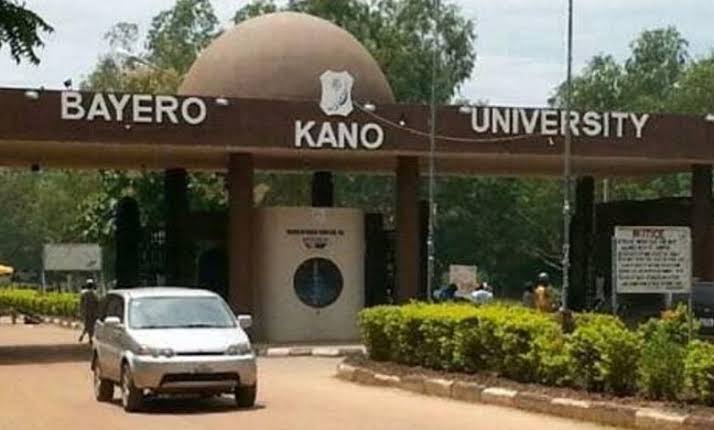
One of the trending topics in the past weeks has been the increase in registration fees of students by Bayero University, Kano. Before that, the University of Maiduguri, Federal University Dutse, University of Uyo and several others had increased theirs, and of course, it was anticipated following the revelation from the federal government that it could no longer fund universities.

I am glad the state universities in Kano have not toed that path yet, as several state universities have followed suit or tried to. Engr Rabi’u Kwankwaso’s administration has, among its biggest achievements, sponsored thousands of students abroad and within the country for undergraduate and postgraduate studies. While such numbers were unprecedented and unmatched by any other state administration, there is a need to reflect, assess the previous intervention, and possibly look for alternative ways to achieve the same result without necessarily taking the same route.

Many students had dropped out of tertiary institutions even when they had a passion for the study and were lucky to pass all stages of admission simply because they could not afford the then registration fees. A day hardly passes during registrations by tertiary institutions without students begging for public support to pay their fees on radio programs in the state. Now that most of these institutions have increased their fees which are in most cases more than 100%, we are likely to have an influx of dropouts across the state. With few job opportunities and frustrations of a crumbled dream, such could threaten a volatile security situation. More students will benefit from a home-based scholarship, even if partly, than a foreign one.

Between 2011 to 2015, when Kwankwaso sent students abroad, a dollar was exchanged for less than ₦200. With the dollar now fluctuating around ₦800. It means what would be spent for a single student now would be more than what was paid for three students then; if they are to be sent to the same institutions, fees will remain unchanged. Is Kano generating at least three times what was developed during Senator Kwankwaso’s administration, even if other factors were to be constant?

I have friends that had graduated years back from private universities within the country who were also sponsored by the then administration but are unable to serve their country (NYSC) or secure employment with the government because the schools have not issued their original results to them due to inability of the successive administration to complete their payments. A relative of mine could only graduate from India because her father paid her outstanding fees.

I have heard different appeals from students sent to different countries but later abandoned after Kwankwaso’s tenure. Wouldn’t it be better to investigate and ensure all those previously sponsored thoroughly have successfully graduated and issued their original results and then devise a sustainable plan for similar future interventions even if it is to be continued?

The Kwankwaso administration established more than 20 different institutes, none of which are currently functioning. I am glad; HE Abba Kabir Yusuf had, among his first acts in government, visited the Reformatory Institute, Kiru and given directives for its revival, among others. To borrow the title of Prof. Isa Ali Pantami’s recent book, Skills Rather than Just Degrees, re-establishing these institutions will allow even those who have already acquired degrees to further polish them with relevant skills. Reviving them will certainly gulf millions if not billions. All other stages of education at the state are currently requiring urgent attention.

Recent pictures from the once glorious Science and Technical Schools Board schools are disturbing. Bringing back these institutes, Technical Schools; Schools for Arabic Studies; Adult and Nomadic schools, without doubt, are better avenues to invest rather than foreign scholarships.

Again, as an alternative to foreign scholarships, why not invest the money in needed infrastructures in our universities, get them the latest equipment and employ on contract foreign scholars while giving them specific targets to train a certain number of masters and PhD students? With that, a considerably greater number of students would benefit, meaning more research output, recognition, and higher ranking of the state universities and might even attract foreign students or grants.

Lastly and more importantly, there is a saying, thus, “Teach a man to fish rather than give him a fish”. Some months back, just before the elections, a friend of mine who graduated with a first-class degree from Bayero University, Kano, and a distinction during his masters at a university in India sponsored by the Kwankwasiyya Foundation appealed to his followers on Twitter to vote for the NNPP, at least so he and of course, others could further their studies once more, abroad. For him, it would be a PhD. There are currently multiple scholarship opportunities, such as the PTDF, especially for students with excellent results. There are even more opportunities from several universities, including some of the best universities in the world. In almost every instance, those who get such opportunities from Nigeria are usually from the southern part of the country, who are more informed and enlightened in aspects like this.

An association, Arewa Youth Mentorship Forum, comprising mainly academics that secured foreign scholarships, is mentoring the younger ones from the North. Luckily, many succeeded in securing scholarships for both undergraduate and postgraduate levels. I came across a post on their Telegram group earlier this week where they provided a list of universities in the US that offer scholarships to even second-class lower and third-class graduates. If second-class and third-class graduates could get foreign scholarships, why should scarce resources be expended on sending those who could easily get such scholarships to institutions that even the government could probably not afford to send them?

If the Kano state government can utilise these opportunities and provide an avenue for these graduates to be mentored, trained and guided on securing foreign scholarships, more students would benefit. In contrast, the government can invest the scholarship money in other areas requiring more urgent attention.

Mahmud Aminu Dambazau can be contacted via madambazau@gmail.com.

NUC approves 10 new degree programmes for Al-Istiqama

By Uzair Adam Imam

The National Universities Commission (NUC) has approved ten new degree programmes for Al-Istiqama University, Sumaila, Kano.

Professor Salisu Shehu, the university Vice Chancellor, disclosed the news of the NUC’s approval to the press Wednesday.

“10 new degree programmes approved for Al-Istiqama University, Sumaila,” Processor Shehu announced in a message seen by The Daily Reality.

According to him, the ten new programmes include; B.A Arabic, B.A Shari’a, B.A English language, B.A International Relations and B.A Peace and Conflict Resolution.

Other programmes are B.A Sociology, B.A Criminology and Security Studies, B.A Biotechnology and B.A Environmental Health and Community Health.

It was gathered that admissions into these programmes would be made against the 2023/2024 academic session using the 2023 UTM Jamb results.

Life before graduation

By Aminat Adebesin

Getting into college after high school has been the main focus of students for decades to the extent that we mostly forget about life during college/university days and what might come after getting a degree. Universities offer everyone different opportunities like networking, housing, relationship, partying, etc. It all depends on the aspect you tend to grab. 

Before graduating, build enough networks to last you a lifetime, even to the coming generations, if possible. As they say, the university is the best stage for you to lay the foundation of “who you want to be” and “people you want to be with”.

Make use of the resources around you and better use them. No one cares whether you have anything to give, so tap into the resources in the school to build yourself up. Building yourself up should be your primary focus, which involves updating your CV with meaningful resources as much as possible. 

Getting a side hustle will ease life in school better than relying entirely on your sponsors, as there are some impromptu needs that you would love to take care of without disturbing them. No one can relate to the spending that comes with schooling unless you experience it yourself.

Attending university is about making memories and having the most beautiful experience possible. Building memories and networks have good and bad days, so make enough to last since they are all we have to show we have passed through a stage with some people.

Never let anything stop you from enjoying your school days. Learn and have fun sensibly.

Aminat Adebesin is a student of the Mass Communication dept, Bayero University, Kano.

Zaria public library or a shattered bed of bats and rats? A call upon the government

By Maryam Shehu

I write with a heavy heart and bleeding eyes to the extent that my sights are closed, and I can’t catch a glimpse of the words that percolate through my pen.

Zaria is known as the heartbeat of its state, moving from its social amenities and the acuity of its residents and advocates. It won the best award for breeding leaders and world scientists with excellent records of surveillance and stateliness.

Its leaders have incentives for every eclipse and malady, but I am yet to have a vision of the sad situation of its library. Does that spell another prestige or a paralyzing facet of its artistry and reading culture? Only God knows how much a lack of a library plays in the eruption of the educational sector and traditions.

 ‘Mostly students within Zaria from the 1980s used the Public Library, but now it remains only the building’; this was what I saw as a description of a group named ZARIA PUBLIC LIBRARY FRIENDS on Facebook… A very disheartening description, indeed! Does that mean education ended in Zaria after those days, or is it only for those in the 1980s? Oops, I can’t uphold the irritation!

Everyone that often visits the place is a bystander to how barren and malodorous the place is, the books are outdated, and the shelves are scanty and scattered to the magnitude that one can not confidently point to a visitor or a person who has been reading about or watching notable libraries.

I write for the government or any other personnel responsible for the library to reminisce, if forgotten, about the virtues and diamonds behind refurbishing the library and its roles in developing a state/LG with few ravines of mine. These are:

First, it supports the educational sector: Education is the bedrock of every progressive state. It soothes every rough wall for governance. Whenever/ wherever a state owns a gear of education and capitalize its residents with the necessities, that administration is said to have grappled with every hole of unemployment, insurgency, and other suppressed deed that might lead to the tumult of any governance. It can contribute to nation-building and reconciliation. As said by Nelson Mandela, “Education is the most powerful weapon you can use to change the world”.

Second, it preserves the cultural heritage of the society: A rich cultural heritage defends how the residents maintain its distinctiveness and sets it as a mirror to look at by young ones. We have different skin colours, languages, and marks, and our clans mingle with others (good/bad), but the pictures we sow in their hearts and books are those that could reflect and defend their susceptibilities. The library is the only place where those scrapbooks and photographs could be carefully salvaged.

Third is the provision of useful textual materials: The availability of a standard and substantial library provides advantageous scripts and materials for self-development and implementation of a basic constitution… It helps especially those from underprivileged backgrounds.

Fourth, it also provides an avenue for recreation and relaxation. Libraries are one of the most significant factors that lead to the development of arts and crafts; they create seats for all crawling and professional clubs and carve stages. It composes words for artists and other microphones partners.

Furthermore, it also provides and enhances reading culture. As the slogan says, ‘Readers are leaders’; likewise, writers and other mellow people, we succeed by reading from the served letters of our antecedents. And many people strive to be voracious readers but the lack of money to buy books drag their necks back and turn their faces from the papers by furnishing the library; that surely could be a buzzer to the sleeping readers.

With the above few ravines of mine, I hope the government and other related personnel are persuaded and forecast how much renovation of the public library could make their governance suitable and memorable and how lack of it will keep draining the administration. We hope you listen to our dried throats and reconstruct our shattered floors.

Maryam Shehu wrote from Zaria via maryamshehu6354@gmail.com.

Student Loans: Good or bad?

By Kasim Isa Muhammad

In 2016, Femi Gbajabiamila, the immediate former Speaker of the 9th House of Representatives, took a bold step by introducing a bill to address the financial challenges faced by students in higher education institutions nationwide. The proposed legislation, known as the Student Loan Act, sought to provide students with access to loans from the federal government to alleviate the burden of educational expenses. After its initial introduction, the bill was later reintroduced in 2019. However, when it resurfaced in 2022, it sparked a heated debate within the National Assembly, with members expressing divergent views.

The revival of the Act triggered intense discussions and disagreements among the members of the National Assembly. On one side, some legislators strongly supported the motion, citing the potential benefits of student loans for expanding access to education and reducing financial barriers. Proponents of the bill argued that it would provide equal opportunities for students from various socio-economic backgrounds, enabling them to pursue higher education without financial constraints.

Lo and behold! On June 12, 2023, President Bola Ahmed Tinubu signed the Student Loan Bill into law, demonstrating his administration’s commitment to strengthening the country’s educational sector.

Although concerns have been raised regarding the extent of student access to these loans, considering the persistently high rate of unemployment afflicting the country, One of the key considerations surrounding the implementation of the Student Loan Act is the number of students who will benefit from the financial assistance, as it remains unclear how many students will qualify for and receive loans.

However, some suggested that providing massive job opportunities for graduates would be a more practical approach than granting them loans. This sentiment is echoed by those who believe most graduates possess the skills but lack the capital to enhance their businesses. For instance, providing them N500,000 to start a business could be a viable alternative.

Whoa! The current provision stating that loan repayment begins two years after the completion of participation in the NYSC programme is being questioned. The government should reassess this strategy with graduates struggling to secure employment for up to eight years or longer. Given the prevailing circumstances, it is doubtful that the debt collectors will be able to repay their loans within such a short timeframe.

I was also taken aback when I discovered a particular element of the loan procedure: defaulters risk being fined N500,000 or even being incarcerated for up to two years. This revelation left me astounded and raised an essential question in my mind. Is it, not a grave injustice to punish our helpless teeming youths who are already battling to secure jobs with imprisonment simply because they cannot repay their loans?

The fundamental component of the loan process that exceedingly caught my attention is the requirement for students to provide at least two guarantors who must meet specific criteria, such as being a civil servant of at least level 12, a lawyer with at least ten years of post-call experience, a judicial officer, or a justice of the peace. This provision raises concerns, particularly for individuals residing in rural areas or those without any relatives in government positions who could serve as guarantors.

Since the loan programme intends to support the financially disadvantaged, the requirement of guarantors with specific professional backgrounds seems to create a barrier for those who lack connections with people in high positions in the government. 

Another facet of the Act that appears contradictory is the provision that a student’s family must have an income of less than N500,000 to qualify for the loan. This condition seems to limit the accessibility of the loan to only a select few people, raising questions about the effectiveness and inclusivity of the loan act.

Setting an income threshold may have been intended to target students with financial constraints, ensuring that those with the greatest financial need receive the necessary support. But the specific income limit of N500,000 may inadvertently exclude many students who could benefit from the loan.

Considering the drawbacks of the Loan Act, it becomes evident that the federal government should augment its efforts to fund tertiary institutions across the country. By so doing, education can become more affordable and accessible to a broader range of students.

Likewise, the recent increase in school fees at several institutions, including UNIMAID and BUK in the northern part of the country, highlights the pressing need for government intervention. While providing student loans is one possible solution, addressing the underlying issue of inadequate budgets for public universities is essential. By allocating sufficient funds to 109 public universities—50 federal and 59 state institutions—education can become more affordable for students.

The United Nations Educational, Scientific, and Cultural Organisation (UNESCO) recommended that developing nations give up to 15–20 per cent of their annual budget to public education. Nigeria’s allocation to the Education sector has not been meeting the UNESCO standard.

Dataphyte, a media research and data analytics organisation aiming to deploy data tools and technology for Nigeria’s socio-economic development, stated that the education budget analysis between 2016 and 2022 shows that the education sector has not received the recommended 15%.

This has indicated that the government at all levels should prioritise funding for education as a necessary step before implementing student loans. By addressing infrastructure deficiencies, making education affordable for underprivileged students, and providing needed resources, the government can create an environment where all students have equal opportunities to succeed. Investing in education will yield long-term benefits for people and society, fostering development and ensuring a brighter future for future generations.

Kasim Isa Muhammad is an investigative journalist who contributes as a full-time journalist at both Kanempress and The Citizen Reports newspapers.