Education

Public Universities: the FG’s new revenue generation goldmine

By Prof. Abdelghaffar Amoka

The Academic Staff Union of Universities (ASUU) has been in a battle with the Federal Government of Nigeria over the funding of the public universities. The facilities that made our universities to still have a semblance of a university were products of ASUU strike. ASUU was so passionate over public universities funding to the point that the public began to think that such funds, when released, are paid into ASUU’s account. Even some journalists that are supposed to be properly informed shared in the ignorance or misinformation.

You read headlines like “FG releases 2 billion naira to ASUU for university funding”. ASUU pursued funding at the expense of its members’ welfare. The battle has been on funding to an extent that the younger generation of academics began to wonder why their welfare is not at the top of the union’s demands. The consoling words from our veterans have always been: You get true fulfillment when you have an ideal working environment.

The battle took a new dimension last year, during the reign of the ex-president Muhammadu Buhari, who had no agenda for education aside from establishing more universities without funding plans. Yeah! Buhari came to re-write the story of our university system. The number of the underfunded new tertiary institutions were listed as his major achievements. A strike on funding and the renegotiation of conditions of service that should not have lasted for more than four weeks, if sincerely handled, was dragged on for eight months and the lecturers starved. A few died and many survived and are still surviving but not an item on the demands on the needs of the universities was treated.

While ASUU was fighting for adequate funding, the FG had a hidden plan. It publicly declared that the universities will have to generate their money to partly fund themselves. The public couldn’t see the implication of the statement. The statement received support from some Nigerians whose education was funded from primary to PhD with public funds. However, besides this declaration, they are also seeing the universities as revenue generation institutions rather than institutions to be funded. They were wondering why they should keep funding these institutions when they are supposed to be generating revenue for the government.

Having conceived the idea to make federal universities an internally generated revenue (IGR) source for FG, their challenge was how to make these institutions generate revenue for FG without backlash. The only obstacle to the plan is ASUU that is always using strikes to force to unwillingly release some funds for the universities. ASUU was on strike again. They find their trouble annoying and something must be done. They engaged their friends that are former union leaders to develop the strategy to clip ASUU. Hunger strategy was found most effective and that was deployed and the rest was history.

From the experience of the last strike, call for a referendum on strike today and the members will tell you that if they will lose their salary for a one day strike, they won’t join. They are still paying their debt. So, they began starving the universities of funds.

Universities like Ahmadu Bello University (ABU) and Unilag, whose electricity bills are around 120 million naira per month, are given about 150 million naira per annum for operational expenses. How they pay their bills was left as their business. So, to keep up with the bills, the universities began to review the service charges. The universities estimated what can run the universities and appropriate charges were put together as fees for students. There were outcries on the fee increment. Some called it tuition and that got FG worried.

FG had to come out with a press release. They acknowledged the increment but that FG has not introduced tuition. The increase in fees as announced by various universities was to reflect the current economic reality; mission accomplished. However, the FG didn’t see these increased fees as service charges, they saw them as IGR by the universities and hence became interested.

As the universities were busy announcing the revised fees, the Minister of Finance suddenly remembered that there was a circular FMFBNP/OTHERS/IGR/CRF/12/2021 dated December 20, 2021 that said all partially funded FG Agencies should remit 40% of their IGR to FG. Universities are currently expected to remit 40% of the fees collected from the students to FG as revenue generation. These service charges in the universities are referred to as Gross Internally Generated Revenue. The deduction is effective from November 2023.

This means that if a student is charged N2,000 for an ID card, the university will give N800 out of it to the FG. It doesn’t matter to the FG if the cost of the ID card is truly N2,000. If a student is charged N10,000 as laboratory charges for chemicals and consumable, the university will give N4,000 out of it to the FG as revenue. If every student is charged N30,000 for electricity, water and sanitation bills, the FG will enjoy N12,000 out of it as revenue. It doesn’t matter if the remaining amount is not enough to pay those bills. If a student is charged N15,000 for a field trip or SIWES, the FG will take N6,000 out of it. If a student pay N5,000 as examination fee, the FG will take N2,000 from it as IGR for the FG. etc.

The insensitivity of the government to the needs of the people has gotten that bad. Public universities are the government’s new revenue generating agencies. This 40% revenue is expected to be paid by kids whose parents are earning less than N100,000 per month from the same FG. As they are milking the people dry, they have refused to cut off the cost of governance. The NASS members that were supposed to drive a car of 7 – 8 million naira by law got 160 million naira cars as against the law.

The bad thing is that the government will deduct 40% from the money as it is paid. It is auto-deduction. They will take their share before the universities even have access to the money. The announced fees were calculated to barely take care of the basic needs of the universities. So, how will the universities be run without the 40%?

My opinion…

Dear parents, tight your seat belt and the revised fees of your kids in any federal higher institution increased by 40%, thanks to FG quest for IGR. ASUU has done its bit for us Nigerians. It should not be a major discussion at the ongoing NEC. Nigerians should be allowed to fight their fight. The fight should now be left for the students and their parents. If they are willing to fight, ASUU members can join as parents. If they are not ready, we all MILT and move on as usual. After all, we are used to suffering and smiling.

The university managements, Senates, and Councils should find an appropriate way to introduce the 40% FG IGR from the universities into the fees. The universities that are yet to announce their revised fees should add the FG 40% university IGR to their fees. It should be separated from the university charges. It can be called “40% FG IGR charge” as a separate item. So that the students and parents will know what they are paying for. They need to know that rather than FG funding the education of their kids, something ASUU has fought for and prosecuted over, FG is now generating revenue from them as they pay their kids fees.

©Amoka
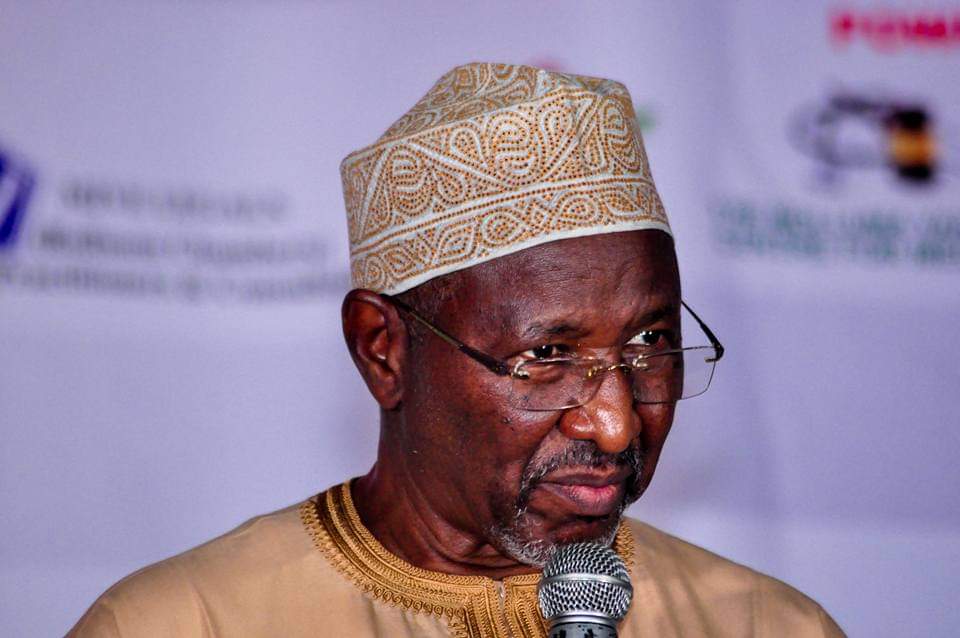
Bugaje in Gombe, the question of competence

By Musa Kalim Gambo

To start with, it must be easily concluded that Usman Bugaje is an excellent speaker for any gathering that seeks to place Nigeria on a microscopic slide to analyse its minutest of details. Therefore, Gombe State University made the best choice when it invited Bugaje to serve as the keynote speaker for the 10th,11th, 12th, and 13th pre-convocation lectures of the university last week.

Given Bugaje’s multi-disciplinary background, there could have been no doubt about his competence to speak on the theme of the pre-convocation lecture “Education and Development: The Challenge of Content, Competence, and Character in Nigerian Universities”. While a topic of this nature may sound like a cliché-ic abstraction of the troubles in the Nigerian university system, Bugaje’s treatment and perspective of the topic are both fresh and passionate.

Bugaje was out on a journey to establish the nexus between education and development. With the oft-repeated argument that there can be no meaningful progress without education, it is clearly established that Africa has had a flourishing system of knowledge transmission until the coming of the colonials. When they came, they suffocated the existing system in favour of their own.

Among the gathering, mostly the graduating students who listened to Bugaje’s lecture, not many may be aware of Africa’s glorious past and pioneering role in the development of universities around the world. Indeed, not many may be aware that what the West regards as an Arab contribution to education is largely a veil over the combined Persian and African efforts. It is a clear attempt to obscure the true position of Africa as a pacesetter in the world of knowledge and the evolution of civilisation. As poignantly described in his citation, Usman Bugaje is a pan-Africanist. This simple description as a pan-Africanist will not allow him to deliver such an important lecture without exposing the true fallacies that represent Western intervention in African education.

In many respects, Bugaje’s generation of the past benefited from a functional, effective, and not defective education system. It was such a system that prepared them to be competent for a diverse set of roles within the country and around the world. As a matter of doubt, were they so well equipped or was it simply the scarcity of manpower at that time? I have listened to many elderly people, mostly those who studied in Nigerian universities in the ‘70s and ‘80s, who, in their critique of the education and governments of today, make mention of the number of jobs they had at their disposal when they graduated. What was the Nigerian population size at that time? What was the manpower needed? And what was the economic power of the country then? These are questions that must be answered before a comparison is made between the glorious past and the gloomy today of our nation.

With the bulk of information, and indeed knowledge at the disposal of the student today, competence should not be a problem. Unfortunately, it is in many areas of modern endeavour. Within the educational system, quality of content and competence of output are intertwined, like the Staff of Asklepios or the Caduceus Wand, a symbology of the healthcare background of Bugaje.

An educational system where teachers have problems of competence across all levels will definitely have to deal with the complex question of the quality of content imparted to the students. The issues at stake here are – the relevance of the content being taught and the capacity of the teacher to deliver.

A friend of mine from one of the first-generation universities in Nigeria narrated the difficulty of his lecturer. This lecturer has taught the same content in phytochemistry for almost twenty years. He was on the verge of becoming a professor in that field of chemistry. However, he has this handwritten note that has spanned his career in this field.

In spite of being an expert in this phytochemistry, any day his handwritten note was not with him, his class would not hold. There was a day my friend and his colleagues sat for a very tough test by this soon-to-be professor of phytochemistry. They were asked to draw the chemical structure of a certain phytochemical, which was passively mentioned as an example during one of their sessions. Most of the members of the class couldn’t get the correct structure. They, therefore, requested the lecturer to help answer the question. It was quite interesting that this soon-to-be professor of phytochemistry could not answer the same question he set for his students. This suggested that in spite of his years of experience teaching the course, he would have failed if he sat for the same test.

This interestingly sad anecdote paints the picture of the Nigerian university in response to the question of competence.

Kalim writes from Zaria via gmkalim@hotmail.com.

Kano students protest against tuition hike amidst risk of missing exams at FUD

By Sabiu Abdullahi 

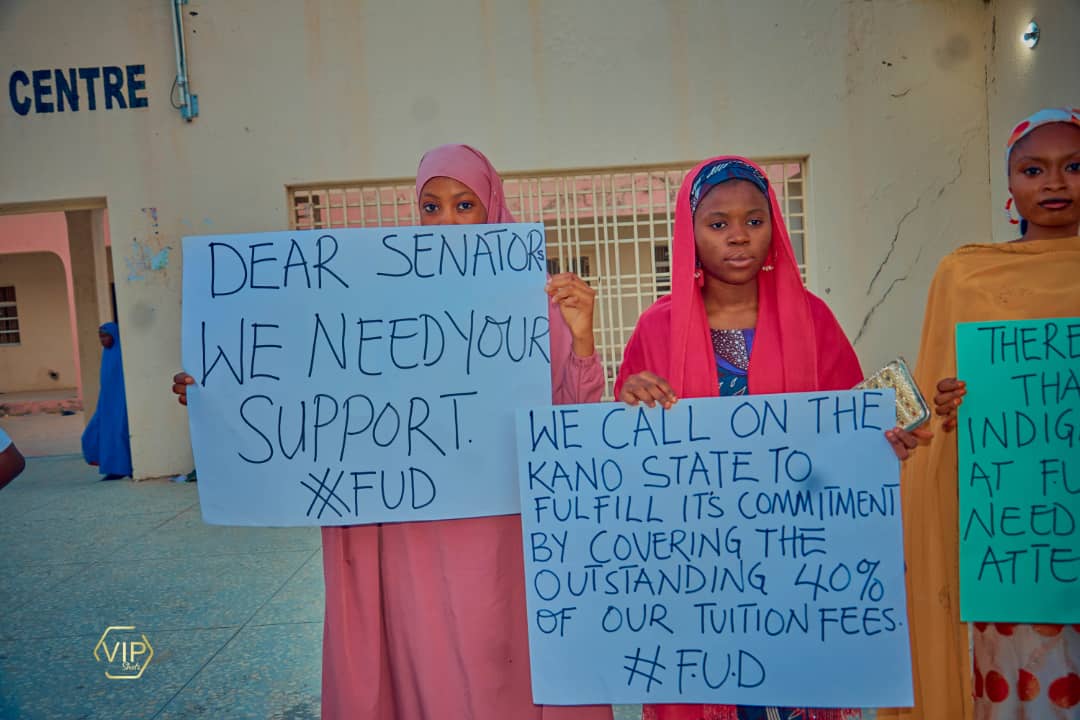
Over 4,000 students from Kano State studying at the Federal University Dutse (FUD) in Jigawa State are facing a crisis as they are unable to afford the new tuition fees imposed by the university management. 

The National Association of Kano State Students (NAKSS) revealed that the tuition fee increment, which raised the fees from N30,000 to N40,000 to a minimum of N100,000, has left thousands of students in a precarious situation. 

During a peaceful protest at the university on Tuesday, affected students pleaded with the Kano State Government and their political representatives to help them pay their outstanding fees, allowing them to sit for the upcoming second-semester examination scheduled for next week. 

The students’ union government spokesperson, Ibrahim Yunusa, stated that since the announcement of the 200 per cent school fee increment in January, many students and their parents have been struggling to meet the financial demands. 

Yunusa commended the FUD management for permitting indigenous students to pay their fees in instalments, with N60,000 due in the first semester and the remaining N40,000 in the second semester. 

However, he highlighted that, despite this concession, more than 40 per cent of the students have not been able to pay the remaining balance, putting them at risk of being dismissed from the university. 

“We’ve been calling the attention of the Kano State government to come to our help and pay the school fees for us,” said Yunusa. 

He also noted that letters were sent to the Kano State government. Although they received a reply directing them to the office of the Commissioner for Higher Education, no further action has been taken. 

The deadline for registration is just six days away, and if the remaining fees are not paid, the affected students will automatically dismiss themselves from the school. 

The students’ plight has drawn attention to the larger issue of affordable education and the challenges faced by students from low-income families. 

Kano State Commissioner for Higher Education, Yusuf Kofar Mata, has not responded to calls and text messages seeking comments on the matter, leaving the students uncertain regarding their educational future.

UK to assist Jigawa gov’t curb shortage of teachers

By Sabiu Abdullahi 

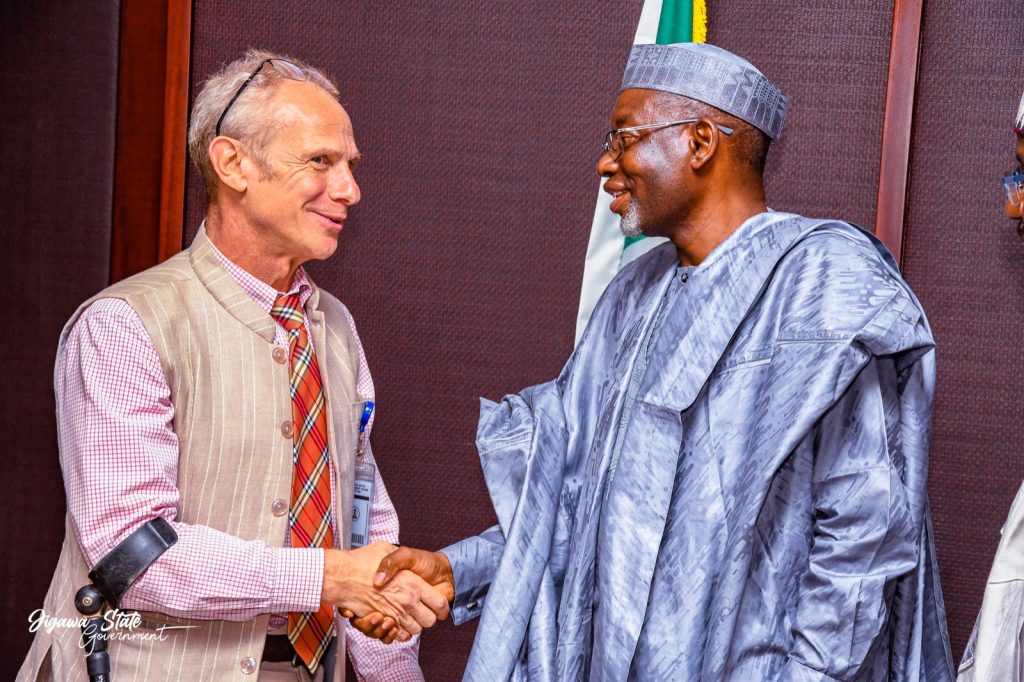
The UK Government, in collaboration with the British High Commission in Nigeria, has pledged unwavering support to the Jigawa State Government to improve education in the state. 

Mr. Ian Attfield, FCDO’s Senior Education Adviser, reiterated this commitment during his recent visit to the state, where he engaged in constructive discussions with Governor Namadi and his State Cabinet. 

Attfield’s visit focused on evaluating the impact of the UK government’s initiatives in improving foundational skills and ensuring quality learning opportunities in Jigawa State.

He expressed contentment with the state’s proactive approach to addressing challenges, particularly in education and healthcare. 

“We are pleased with your dedication, and we are prepared to fortify our partnership to attain our shared objectives,” Mr. Attfield affirmed, acknowledging the state’s efforts in tackling these issues. 

Governor Namadi expressed heartfelt gratitude to the Foreign and Commonwealth Development Office (FCDO) for their continued support.

He emphasised the strides made in various sectors, including education, health, and good governance, with the aid of FCDO’s Partnership for Learning for All in Nigeria (PLANE) and Partnership for Reform and Learning (PERL-ARC) programmes. Governor Namadi also disclosed the allocation of over 2.6 billion naira to recruit, train, and integrate 6,000 new teachers.

This initiative aims to alleviate the acute shortage of teachers in the state, a deficit estimated at around 30,000 educators. 

The collaborative efforts between the UK Government and the Jigawa State Government represent a significant advancement in bolstering the educational landscape.

The other degree I have earned

By Sulaiman Maijama’a

Seeing some photographs yesterday that we took in 2019 when we were leaving Sa’adu Zungur Hall of the Bayero University, Kano, as we finished level 200, I remembered several events, particularly during my stay in the hostel. I was filled with mixed feelings of nostalgia, reminiscing about my BUK days, the good and bad experiences, and the culture shock I had to contend with as a fresh university student.

In 2018, when we secured admission, my friend Shamsuddeen insisted that we stay off campus. I did not like the idea, so I reported him to our teacher and mentor, Mallam Abdul Ahmad Burra, to be a judge, knowing that Mallam would be on my side. Mallam Abdul directed that we live in the hostel, saying, “The experience you have when you live in the hostel is another degree in itself. Never miss that.”

The experience began soon after we settled on the 18th of March, 2019, in our number D-56 room on the first floor of Sa’adu Zungur Hall. Six of us were the occupants. Kamal Abdulsalam, Shamsudden A Musa and I were in Mass Comm, Bashir Dalhat read Geography Education, Sirajo Basiru read Economics Education, and Abdul studied Political Science. All of us in the room were voracious readers, what people call “mayun Boko”.

Our room was almost always locked because we left for class or library day and night, and so, we were addressed and addressed each other as Prof. The trouble was, when someone said prof alone, we got confused as to whom he was referring to because we were all bearing the title. One day at the Vice Chancellor’s mosque, I loudly said “Prof. Kamal”, referring to my roommate Kamal Abdulsalam, when I caught the attention of Professor Aliyu Kamal of the English Department. To his surprise, he saw me approaching a student whom I  addressed as Prof.

Unlike other rooms, our bond had blossomed into becoming a family, sharing food and water and even requesting little money when needed. We soon realised that one of us was living a miserable life. In the morning, he would take Gari, water in the gallon, wear squeezed clothes and go to lectures. We all were concerned about his condition and began to talk about how we could help him. God had saved us when News later got to us that he was a millionaire in their village. We were all shocked and began to keep him under surveillance.

I once escorted him to the Eco Bank ATM to withdraw cash. He wanted  2k but mistakenly added a zero to the digits. When the ATM dispensed 20k, we looked each other in the eyes; I was surprised that he had such money in the account, and he was concerned that I saw his money. We had to enter the bank hall and redeposit the cash instantly, and he begged me not to tell anyone I saw that money.

We began to see real shege when we moved to our number D-40 room on the first floor of Idris Garba Hall on  20th January 2020. On the very first day, one of the room members said we were contributing money to buy padlocks, something that in our previous hostel, one of us would just buy and share the keys without asking a penny. D-room is usually allocated to 4 students, but each one could come with one squatter as is the tradition. In this instance, one person came with three settlers and himself (enough number to be allocated a complete room) and insisted they stay in the room. We called an urgent meeting in a small corner and chased away two.

There was one roommate who set an alarm ringing around 3:00 a.m. daily. The whole room would be disturbed and wake up, but the person who placed the alarm never woke up before 7 a.m. It was in level 300 when my young-looking face misled this person into thinking I was a small boy. In the morning, he would toss a Lipton at me and say, “Sulaiman, put tea for me”. He would ask, “Sulaiman, what is the time?, “Bring me sugar, “Bring me a mat, “Do this, do that”.

At the onset, I thought it was normal assistance between roommates, but later, when I realised that he had made me his Personal Assistant, I called it quits. This person would buy all the delicious things in this world; think about eggs, fish, meat, milk, etc., but would request the basic ones like sugar and Maggi from one of us.

In the same room, someone spent the whole night pressing his phone but would fall asleep just before dawn prayers, wake up around 10 a.m. and pray. He never attended 8 am lectures.  We also had two overnight debaters. These people returned to the room in the middle of the night and began to debate loudly until all the room members woke up. When they were scolded, they would humbly say they were sorry. We couldn’t fight further!

In our final session, when we stayed in number D-16 room on the ground floor of the same Idris Garba hall, beginning on November 1st, 2021, we were more mature and tolerant. But there was one character who would wake up in the middle of the night and turn on the light while everyone in the room was asleep. When we complained that he infringed on our rights, he said he turned on the light because he was pressing his phone and did not want the screen’s reflection, so turning on the light reduces the reflection. When he was out, we removed the bulb. Until we graduated, we did not have a bulb in our room.

Maijama’a wrote via sulaimanmaija@gmail.com.

Zamfara institute of technology bill passes second reading at House of Reps

By Sabiu Abdullahi

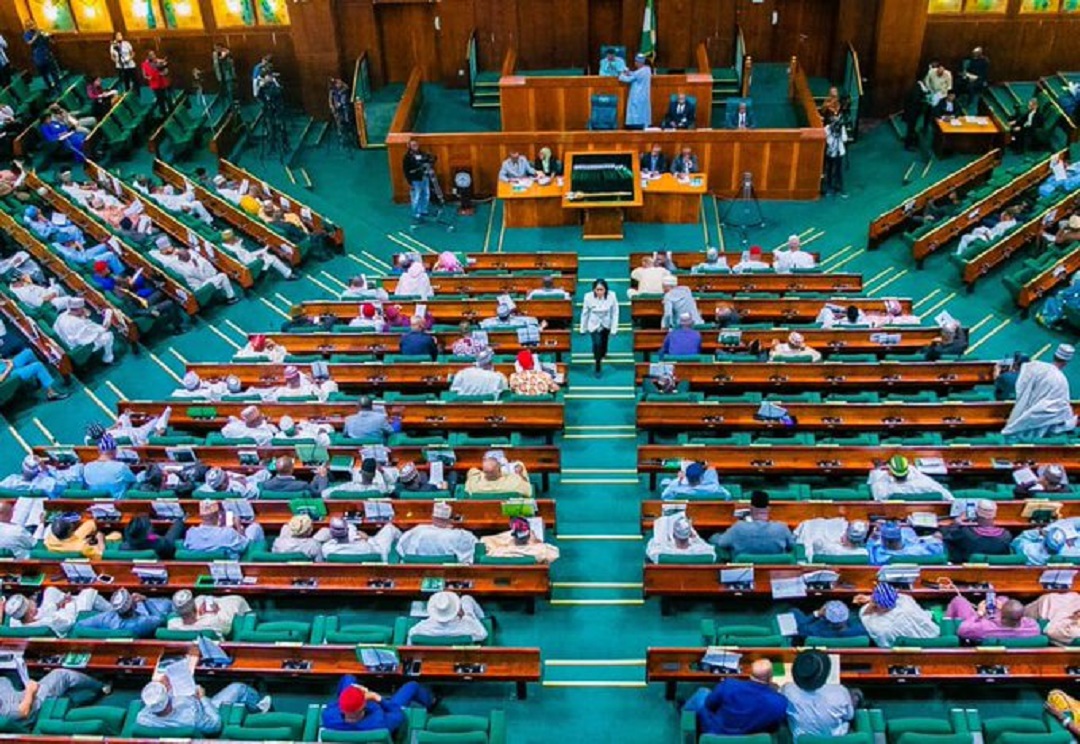
The House of Representatives has advanced the Federal Institute of Technology and Entrepreneurship Bill to the next stage of the legislative process.

The bill, sponsored by Hon. Abdulmalik Zubairu Bungudu, representing Bungudu/Maru Federal Constituency of Zamfara State, successfully passed its second reading, garnering widespread support from lawmakers. 

The proposed legislation seeks to amend the Federal Polytechnic Act, 2004, enabling the establishment of the Federal Institute of Technology and Entrepreneurship in Bungudu, Zamfara State.

The institute’s primary focus would be on offering specialised courses and programmes tailored to address the technology and entrepreneurship challenges faced by Nigeria.

By equipping students with relevant skills and knowledge, the institution aims to empower them to create jobs and contribute significantly to the nation’s economic growth. 

During the deliberations, Hon. Abdulmalik Zubairu Bungudu passionately argued for the bill, emphasising the urgent need to reposition the education system.

He highlighted the prevailing economic realities, where traditional job opportunities are limited, especially in regions like Zamfara State, where farming, a primary source of income, is severely impacted by banditry and insecurity. 

Members of the House expressed unanimous agreement on the bill’s potential to transform the educational landscape. They underscored the importance of aligning education with the demands of the contemporary job market and commended Hon. Abdulmalik Zubairu Bungudu for his vision in sponsoring the bill. Speaker Hon.

Tajudeen Abbas, in his closing remarks, reiterated the House’s commitment to promoting initiatives that enhance economic opportunities for Nigerians.

He assured that bills like the Federal Institute of Technology and Entrepreneurship Bill, aimed at fostering self-employment and economic growth, would receive expedited attention. 

The bill has now been referred to the House Committee on Tertiary Institutions, where it will undergo further scrutiny before returning to the Committee of the Whole for final deliberations.

This development marks a significant stride towards empowering the youth, encouraging entrepreneurship, and ultimately bolstering Nigeria’s economic resilience.

From doubt to determination: My journey to HND in Mass Communication

By Usman Muhammad Salihu

In the world of education, some paths are straightforward, while others are winding, challenging, and filled with unexpected detours. My journey towards obtaining an HND in Mass Communication at Abubakar Tatari Ali Polytechnic (ATAP) in Bauchi State, Nigeria, certainly falls into the latter category. It’s a tale of determination, sacrifice, and the unwavering support of family, mentors, and friends.

The story began in early 2020 when a conversation with my model, Abu-Ubaidah Ibrahim Kuna, led to my contemplating furthering my education. During my diploma days, I had already embarked on a professional course, Mass Communication, but some circumstances are forcing me to delve into sociology. Abu-Ubaidah’s advice struck a chord in my heart, prompting me to reconsider my choices.

Yet, life had its complexities. I was now a family man, responsible for providing for my loved ones. Pursuing my passion for Mass Communication while residing in Gombe seemed daunting. The course was unavailable nearby, and sponsorship was scarce. This predicament led me to opt for sociology. As they say, “In the absence of desirability, you make the availability your desirability.”

As fate would have it, the Direct Entry application period had elapsed, and waiting for another year was not a viable option for me. I thought of returning to Abubakar Tatari Ali Polytechnic in Bauchi, but the distance from Gombe presented its challenges. Who would sponsor my education and care for my family during this journey?

With courage and determination, I applied for HND in Mass Communication at ATAP and, to my delight, secured admission. In November 2021, I embarked on a motorcycle journey from Gombe to Bauchi State, joining my fellow students as lectures had already commenced.

As if the journey had become more challenging, I found myself in Stream B, paying registration fees every semester without a sponsor. However, divine intervention came through my elder brother, Jubril Salihu (Baban Hajiya), who provided much-needed support.

Balancing lectures and providing for my family back in Gombe was no easy feat. I travelled back almost every week, seizing every opportunity for sustenance that came my way. Skipping breakfast and even lunch became the norm, but our determination to succeed remained unshaken.

The challenges were numerous, from putting food on the table to completing assignments with limited resources. Still, we pressed on, making our presence known inside and outside the classroom as we joined the school unionism.

Our lecturers, especially Mal. Abdul Ahmad Burra singlehandedly led us to the membership of the pen profession, Mal. Nazir Abba Pali and Mal Abdul Rasheed Bala Tulu were pivotal in our journey. They nurtured us into aspiring journalists, and our articles began appearing in renowned Nigerian dailies and online media outlets. Friends like Muzaffar, Adams, Raheenert, Bello class rep, Jalam, Alpha, Aliyu, Yahya, Ibrahim, Wale, Usaina, Saeedah, Celestina, A’isha, Rinret, Anas, Baba Fema, Baba Damina and many others became our pillars of strength.

I would be remiss not to express my gratitude to my family, especially my parents, brothers and sisters, the heads of department at ATAP, my mentors, and Dr. Saidu Wanzami, who supported us during our educational journey.

In the face of adversity, we persisted. With the unwavering support of our loved ones and mentors, we overcame the obstacles on our path. Our journey to an HND in Mass Communication is a testament to the power of perseverance, determination, and the support of a strong community. As we graduate, we look back with gratitude and forward with hope, ready to embrace the challenges that lie ahead, knowing that with faith and resilience, nothing is impossible.

Usman Muhammad Salihu writes from Jos, Plateau State, Nigeria, and can be reached via muhammadu5363@gmail.com.

Sokoto governor sends 15 students to China for engineering studies

The Sokoto State Government has sponsored 15 indigenous students to study engineering courses in China. 

The chairman of the Sokoto State Scholarship Board, Abdulkadir Dan’iya, confirmed the news, stating that the students, chosen for their academic excellence, will depart in early November. 

The government has allocated funds for their tuition and living expenses, emphasising the importance of investing in the youth’s education.

This initiative reflects the state’s commitment to providing quality education and global opportunities for its students.

New, unverified users on X to pay annual subscription fee

By Ahmad Deedat Zakari 

New users on X, formerly known as Twitter, are now required to pay $1 annually as a subscription fee for signing up. 

This new policy was announced on Wednesday in a statement shared on the support account of X. 

According to X, the programme is now being tested in New Zealand and the Philippines.

The test will allow new accounts to post and interact with other users. 

The statement reads, “Starting today, we’re testing a new program (Not A Bot) in New Zealand and the Philippines. 

“New, unverified accounts will be required to sign up for a $1 annual subscription to be able to post & interact with other posts. Within this test, existing users are not affected. 

“This new test was developed to bolster our already successful efforts to reduce spam, manipulation of our platform and bot activity while balancing platform accessibility with the small fee amount. It is not a profit driver. 

“And so far, subscription options have proven to be the main solution that works at scale.” 

In a tweet, Elon Musk, X’s owner, disclosed the reason for the annual subscription fee. 

According to Musk, the charge will reduce spam and automated bot accounts.  

“Correct, read for free, but $1/year to write. It’s the only way to fight bots without blocking real users. 

“This won’t stop bots completely, but it will be 1000X harder to manipulate the platform.”

Does it matter the course you studied?

By Bello Hussein Adoto

I am a microbiologist. A colleague asked recently in my set’s WhatsApp group if we are practising as a microbiologist, and another colleague replied: “Virtually everyone!” His reply was laced with sarcasm.

A common belief amongst Nigerians is that if you are told you can work anywhere with your course, you are probably studying one of the so-called useless courses. Microbiology falls into this category.

My colleague’s reply suggests that it doesn’t matter whether you are a banker, a tech bro, or a journalist. You’re a microbiologist regardless of what you do. After all, “you can work anywhere.”

Sarcasm aside, the idea of being able to work anywhere with the course you study should not be a source of mockery. Instead, it should be a testament to the transferable skills that university education should equip you with.

All courses are not created equal. Human Kinetics Education is not as lucrative as Medicine; neither is History and International Studies as prestigious as Law. At least, many don’t believe they are. Nevertheless, each course is a product of university education, which should count for more than a patronising line that “you can work anywhere.”

I don’t use my university degree certificate today, but the training I got for it has served me in multiple fora. The communication skills I acquired from my practicals, presentations, and assignments helped my work as a freelancer, student, and team lead.

My team-playing experience from lab work, time management from projects, independence, ruggedness, and the capacity to improvise, adapt, and evolve came mainly from my time studying at the University.

Of course, these are not part of the curricula. The training I received on writing came via GNS 111 and MCB 311, and they were not even thorough. I only did them in “partial fulfilment of the requirements for the award of ” XYZ—the others I picked up ‘ear and dear’ as a student, without necessarily having to write exams. Still, I am not sure I could have picked all that without having the formal structure of a university to inspire and support me.

I’m not holding brief for courses that have probably outlived their usefulness and should be scrapped or those better as a six-month online course than a four-year classroom programme. Those courses should be reviewed and made more relevant now that education is more expensive and the labour market is more competitive.

Beyond universities and educators, students must reflect on who they want to be. The era of special courses that fetch cool jobs and fat salaries is fast coming to an end. It’s no longer just a matter of what you studied but who you are and what you can do. Some may add who you know, but that’s open to debate.

Besides, the usefulness of a course is also becoming a matter of perspective. Is studying medicine useless if you can earn more as a tech bro.? Is going to school even necessary when you can make a lawyer’s annual salary from creating videos on YouTube and TikTok? Students must find their answers early. Proper career guidance could help here.

We need people in various departments to practice in diverse fields. Not everyone will be a medical doctor or earn thousands of dollars from writing codes or doing affiliate marketing. We will still need farmers, teachers, and communications specialists in the future.

While studying a not-so-prestigious course and earning good money are not mutually exclusive, it’s better now, to begin with the end in mind so that you don’t get to the “top of the ladder and only then realise it was standing against the wrong wall,” as Stephen Covey wrote.

Meanwhile, if you are studying any of the so-called useless courses that allow you to work anywhere, immerse yourself in it. Make your time worth your while. Come out enriched with skills and experiences that can serve you anywhere and at any age.

Don’t fall for the condescension or pity yourself for wasting your time at the University. You are already studying the course, so it’s in your best interest to help yourself and make the most of the course. Who knows, you might graduate and realise the course is not useless after all.

Bell Hussein writes via bellohussein210@gmail.com.