Education

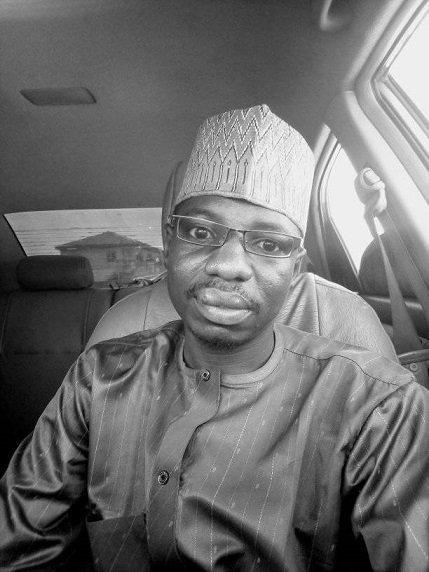
Tragedy of losing a mentor and father: Tribute to Prof. Yusuf Saidu

By Jamilu M. Magaji

In the weaving of life, exceptional individuals leave a lasting impression on the hearts and minds of those they meet. Today, I grieve the loss of a truly extraordinary person who exemplified greatness through his steadfast dedication to his beliefs, compassion for humanity, and inspiring leadership that influenced many lives.

I was tidying up titbits for the June issue of FUBK Chronicle Magazine when I received a call from my former senior colleague, Mal. Abubakar Adamu recently retired from Federal University Birnin Kebbi (FUBK). He delivered the shocking news that prevented me from continuing my work until the following day. Social media was flooded with continuous updates on the tragic event. I hurried to pick up my children from school and return home, filled with sorrow and dismay.

When I joined the services of FUBK in 2014, I questioned the future of my career progression in the newly established institution. I pondered the obstacles of starting a new department, particularly as a founding staff member. My encounter with Prof. Yusuf Saidu proved to be fruitful. I worked closely with him for nearly seven years, serving as Chairman and Secretary of various committees. He was crucial in establishing the Federal University Birnin Kebbi Seminar Series as the founding Chairman in 2015.

Prof. Yusuf Saidu exemplified integrity and exceptional qualities. His extensive administrative and professional expertise positively influenced my professional development and the institution we both served. I believed he was destined for greater achievements. His diligent work ethic and inspiring nature served as a beacon of motivation for many. His leadership approach was exceptional, earning trust in carrying out demanding tasks assigned to him.

Yusuf Saidu is a Professor of Nutritional Biochemistry at the Usmanu Danfodiyo University, Sokoto (UDUS), Nigeria. He graduated in 1990 with a B.Sc. degree in Biochemistry from UDUS, winning the Northco Holdings prize for the best-graduating student in Biochemistry. He obtained an M.Sc. in Biochemistry from the University of Jos in 1994 with distinction and had his PhD in Biochemistry from the UDUS in 2005. 

Bandits killed Prof. Yusuf Saidu on June 24, 2024, en route to Kaduna for an official engagement. Until his sudden death, Prof. Saidu was the Deputy Vice-Chancellor, Research, Innovation and Development of UDUS. He was the Director Research, Innovation and Development, UDUS and the University Governing Council member representing Convocation. He served as a member of the TETFUND Standing Committee on Research and Development and a member of the National Research Fund Screening and Monitoring Committee. He was equally a member of the Education and Training Committee of the International Union of Biochemistry and Molecular Biology. Prof. Saidu was the Head, Department of Biochemistry, UDUS (2018-2020) and the pioneer Head of the Department of Biochemistry and Molecular Biology, Federal University Birnin Kebbi. He also led many other ad-hoc and standing committees at UDUS and FUBK.

Prof. Saidu, a Fellow of the Nigerian Society of Biochemistry and Molecular Biology (FNSBMB), was widely published with over 100 papers and three (3) patents to his credit. He attracted research grants from the Education Trust Fund (now Tertiary Education Trust Fund), Abuja, Nigeria; the International Foundation for Science (IFS), Sweden; Raw Materials Research and Development Council (RMRDC) and Science and Technology Education Post Basic (STEP-B). His research interests are in oxidative stress and pathogenesis of diabetes mellitus/hypertension, as well as the elucidation of the mechanism of action of medicinal plants used to manage diabetes mellitus and infant and preschool children.

As a visionary leader, Prof. Yusuf Saidu motivated others to achieve their full potential and strive for excellence in all their endeavours. He set a remarkable example, guiding them with wisdom, patience, and unwavering support. His ability to lead with integrity and humility earned him the respect and admiration of all his colleagues, leaving behind a legacy of empowerment and growth that continues to influence those he mentored.

In 2021, I paid tribute to his appointment as the pioneer Deputy Vice Chancellor of Research, Innovation, and Development at UDUS. I recalled a citation from Prof. Sahabi Danladi Mahuta during Prof. Yusuf Saidu’s inaugural lecture in 2017, where he boasted of having a great friend in Prof. Saidu. I, too, celebrated and acknowledged him as a remarkable mentor. Today, with a sense of longing, I mourn the loss of my esteemed mentor.

Prof. Saidu was a leader, mentor and guiding light in a world often clouded by darkness. His remarkable attributes, profound religious dedication, compassionate qualities, and forward-thinking leadership have had a lasting impact on all who know him. As we say goodbye to a cherished mentor and father, let us carry on his legacy of love, empathy, and leadership, ensuring that his memory remains alive in those he influenced and guided.

I express my sincere condolences to the immediate family of the deceased. I also sympathise with all his extended family members in the academic community at UDUS, UNIJOS, FUBK and the entire country.

May his spirit continue to inspire us, his light keep shining brightly, and his legacy of exceptionalism always be cherished in our hearts. May Allah (SWT) grant him eternal bliss in Aljannah. Ameen

Malam Jamilu Magaji, Head of Information and Public Relations at Federal University Birnin Kebbi, wrote via mjmagaji@gmail.com.

A peep into Kano’s declaration of state of emergency on education

By Sani Surajo Abubakar

Some days ago, Kano Government House was agog with guests from within and outside the country, primarily stakeholders in the education sector who thronged the state to witness the historic declaration of a state of emergency on education by the state government under the stewardship of Governor Abba Kabir Yusuf.


The declaration was necessitated by an alarming proliferation of out-of-school children, with its figure currently at 989,234 for both genders. This situation threatens to rob the entire generation of their education rights and a brighter future.


Dilapidated school structures, lack of instructional materials, a severe shortage of qualified teachers, and inadequate teacher training programs coupled with the socio-economic challenges in basic and post-basic schools across the state made learning and teaching challenging, if not impossible.


Statistics at government disposal indicate that out of the 42516 total classrooms available, a mere 22% meet the basic standard of habitability as nearly four out of every five classrooms in Kano’s primary and secondary schools are marred by dilapidation and disrepair, rendering them unsuitable for the noble pursuit of knowledge.


At the secondary school level, less than 30% of classrooms can be deemed habitable, leaving significant students of such schools grappling with inadequate facilities that impede their intellectual growth and development.


Looking at the science and technical schools, the pathetic story is the same, with less than 20% of classes meeting the essential criteria for habitability, making it difficult to nurture the next generation of scientists, IT experts and engineers when the very environments in which they are meant to learn are ripe with inadequacies and deficiencies.


Passionate and committed to rescuing the education sector from total collapse, on Saturday, 8th of June, 2024, the Kano State Government declared a state of emergency on education to address the critical challenges facing the sector with a clarion call to all the stakeholders to unite and prioritize the revitalization of the education system for the overall benefit of the society.

The cardinal aim of declaring a state of emergency on education was encapsulated in the overall vision for the education delivery in the state as articulated in a statement viz:

Every school, a good school; every child, enrolled in school; every student, an engaged learner; every teacher, a caring educator; every parent, a supportive partner; and your government, a committed investor in human capital development.


The declaration, as envisaged, will enable the government to mobilize resources, implement urgent reforms, and focus on strategic interventions that will rebuild educational infrastructure, provide necessary materials, and reclaim schools from encroachment.  


To ensure effective revitalization of the education sector, restore its lost glory and take Kano State to greater heights educationally, eleven robust commitments are put in place that include;

In the 2024 fiscal year, Kano State has made an unprecedented budgetary allocation of 29.95% to education. This was made based on the fact that significant financial resource allocation will address underfunding problems bedevilling the sector.


Two, for the smooth operation of basic and post-basic schools, restoration has been made for the payment of upkeep and overhead funds for all secondary schools in the state.  The timely release of the funds will allow schools to maintain their infrastructure, procure essential teaching and learning materials, and aid in conducive teaching and learning processes.

Third, plans have been made to build an additional 300 state-of-the-art laboratories across 100 schools in the state. The provision of such needed facilities will go a long way in providing students with hands-on experience in scientific inquiry, fostering a culture of experimentation and discovery needed for their future and success in their chosen endeavours. The provision of laboratories is another 300 earmarked for overhauling 100 secondary schools.

Four boarding secondary schools that were hitherto closed by the immediate past administration are to be reopened and re-boarded within the next academic year. Such schools provide a supportive environment for students, particularly those from remote areas or economically disadvantaged backgrounds.


Five, to consolidate the drive to improve the education sector, approval has been granted for a comprehensive renovation of all primary and secondary schools in the nooks and crannies of the state in the subsequent two academic sessions. In this regard, the Community Re-orientation Committee (CRC), Kwankwasiyya, Lafiya Jari, and Kano Pro-PA will handle minor repairs, while the Ministry of Education, State Universal Basic Education Board (SUBEB) will shoulder all major repairs through competitive bidding.


Six, to achieve the commitment of clearing out of school children roaming the streets, 28,264 additional classrooms will be built across the state within the next three years to accommodate such children through the supervision of the Ministry of Education, SUBEB, and to be monitored by the Ministry of Project Monitoring.


Seven, to make pupils engage learners with utmost attention in their classrooms, arrangements are made to distribute free one-meal per pupil per day in all primary schools. The CRC, assiduously working as preparations, has hired cooks for the home-grown feeding program. This is in addition to the plan to re-introduce the distribution of free uniforms to all primary I pupils in all primary schools in the state.


Eight, to show a solid commitment to tackling teacher shortage and positively adjusting the students/teacher ratio, 5632 BESDA (Better Education Service Delivery for All) teachers were fully employed. Also, the governor has approved hiring an additional 10,000 teachers to go ahead with SUBEB to chart a training roaster for all teachers in the state government’s employment.


Nine arrangements are going on to commence the renovation of schools affected by fire outbreaks in the last eight years in Madobi, Gaya, Ajingi, Kiru, Dawakin Tofa, Kano Municipal, Gezawa, Kabo, Gwarzo, Dambatta and Bichi local governments respectively.

Similarly, in his second tenure, 44 schools for Islamic Studies and 44 Technical Colleges initiated by Senator Rabiu Musa Kwankwanso would be completed and put to use in earnest.

Ten, to boost the morale of teachers and prioritize their welfare for quality service delivery, approval has been granted for the disbursement of the sum of three hundred million naira as a revolving soft loan to primary school teachers in the state.


Eleven, as a government with a resolve to project Girl-Child-Education and reduce pressure on parents to transport their girls’ children to schools daily, 70 high-capacity buses are shuttling in the Kano metropolis for such purpose.


All the commitments stated above are in addition to other feats achieved that range from sponsoring 1001 first-class degree graduates for foreign post-graduate studies; settlement of registration fees for Kano indigenes studying in various higher institutions of learning across the nation; payment of NECO and NBAIS fess; renovation and upgrade of two bilingual academies of French and Chinese located at Kwankwaso town and Niamey, capital of Niger Republic to mention but a few.


With the above-stated commitments and concerted efforts of all the relevant stakeholders, one can optimistically conclude that Kano State has begun a journey of education transformations.

Sani is an Assistant Chief Information Officer at Government House, Kano

Governor AKY releases N4b for renovation, construction of classrooms in Kano

By Sabiu Abdullahi

In an effort to revamp the education sector, the Kano State Government has released a substantial sum of N4.8 billion for the renovation and construction of classrooms across the state. 

Governor Abba Kabir Yusuf announced that N1.9 billion has been disbursed to the 44 local government areas for classroom renovation, while N2.9 billion has been approved for the construction of new classrooms in the first phase of the project. 

This significant investment is part of the state government’s declaration of a State of Emergency on Education, aimed at providing conducive learning environments for students.

The governor has pledged to continue rolling out more approvals to further enhance the education sector in Kano State.

FUBK secures NUC accreditation for 12 programmes

By Jamilu Mohammed Magaji

This is to inform the University community and the public that the National Universities Commission (NUC) has accredited 12 undergraduate programmes of the Federal University Birnin Kebbi (FUBK). Out of this number, 11 programmes were fully accredited, while one programme got interim accreditation.

The development is contained in the results of the accreditation exercise conducted by the NUC between November and December, 2023 signed by Ag. Director of Accreditation, Engr. Abraham Chundusu on behalf of the Executive Secretary and issued to the University.

The report disclosed that the accredited programmes cut across Faculties of Arts, Social and Management Sciences, and the Faculty of Science. It also highlighted that while full accreditation status is valid for five years, interim status lasts for two years, after which the programmes would be revisited.

The programmes that secured full accreditation include: Business Administration, History and International Studies, Demogragraphy and Social Statistics, Economics, Political Science and Sociology. The rest are Applied Geophysics, Biochemistry, Computer Science, Mathematics and Statistics. On the other hand, the programme with interim accreditation would be fully accredited in the next two years.

While speaking on the development, the Vice Chancellor of the University, Prof. Muhammad Zaiyan Umar, “expressed delight over the results. He was optimistic that the other programme with interim accreditation would achieve full accreditation in the next two years.”

The Vice Chancellor “expressed gratitude to all stakeholders who participated in the exercise. He thanked the Management of FUBK, Deans, Directors and Heads of Department. He also appreciated staff and students of the University for their support and cooperation which contributed to the success of the exercise.”

FUBK Bulletin reports that the NUC report revealed that “Section 10 (1) of the Education (National Minimum Standard and Establishment of Institutions) Act CAP 3LE3, Laws of the Federation of Nigeria 2004, empowers the NUC to lay down Minimum Academic Standards for all academic programmes taught in Nigerian Universities and also to accredite such programmes.”

“The implementation of the Core Curriculum Minimum Academic Standards (CCMAS) commenced in 2023/2024 academic session. The University is expected to ensure compliance in the utilization of the CCMAS for all programmes.”

Private school teachers and poverty: An insider’s view

By Ishaka Mohammed

I discussed in my last article why I don’t generally consider private school teachers victims of proprietors’ inhumanity. Many factors could be responsible for the seeming wickedness of some school owners. However, these teachers are mostly underpaid.

I understand that some private school teachers earn good salaries, but such usually come at the expense of their dignity and peace of mind. This is due to the presence of unruly students who are highly protected against reasonable corrective measures. A teacher must either tolerate their misbehaviour or be ready to quit.

In addition, schools that pay competitive salaries and have standard facilities often overlook other factors that might hinder learning aside from the teachers’ incompetence. Teachers’ efforts are hardly appreciated, as parents and proprietors judge everything based on the students’ scores in internal and external exams. As a result, teachers are usually under pressure to deliver near-perfect performance, hence sacrificing extra time and energy. 

Teachers in the above category are very few compared to those with meagre salaries. Based on my personal experience and interactions with colleagues and other stakeholders, a privileged private school teacher in Nigeria is one whose annual salary is enough to cover feeding, accommodation, clothing, toiletries, and transport expenses without attracting debts. I am talking about a person with perfect health conditions and no dependents.

I have seen instances where a teacher has to rely heavily on contributions (susu or adashi) for several months to be able to buy a new Android phone. 

Some people have questioned why anyone would choose to depend on such a job instead of finding additional sources of income.

Well, I don’t think anyone would decide to subject themselves to the life of penury that the job promises. 

Most private school teachers wish to have “side hustles,” but certain factors, such as time, location, information, capital, etc., block them.

We might think they should be able to access relevant information since they’re adults and educators, but life isn’t always like that. So, I believe that every individual, including you, the reader, can assist one or two teachers by occasionally sharing valuable information concerning alternative sources of income.

And if you own a school or are positioned to influence teachers’ well-being, I urge you to do your best to improve their economic status.

First, I appeal that you frequently review salaries based on economic realities and teachers’ efforts. Although salary increases largely depend on the organisation’s revenues, you must remember that a teacher’s failure to meet basic needs would adversely affect your organisation and education in general. 

Second, as much as possible, reveal dates on which your employees should expect salaries. This would allow them to plan how to use their money correctly. 

Lastly, strive to grant them access to interest-free business loans with flexible repayment terms. You can also organise workshops (for them) on managing multiple income streams.

I believe the implementation of the above suggestions would lead to win-win situations.

Kebbi deputy governor lauds FUBK management

By Jamilu Magaji Mohammed

The Kebbi State Deputy Governor, Senator Umar Abubakar Tafida, has commended the Management of the Federal University Birnin-Kebbi (FUBK) for maintaining high academic standards despite many operational challenges. The Deputy Governor made the commendation when the Management of FUBK, led by the Vice Chancellor, Professor Muhammad Zaiyan Umar, paid him a courtesy visit in his Office on Wednesday.

Senator Umar Tafida expressed the State Government’s concern over the problems of transportation, hostel facilities and land disputes affecting the University. He assured that these would be forwarded to the Governor for intervention and solution. He stressed the need for the institution to maintain an open communication channel with the State Government and continue to have cordial relationships with the host community as part of its corporate social responsibility.

Speaking earlier, the Vice Chancellor, Professor Muhammad Zayyanu Umar, told the Deputy Governor that the Federal University, which was set up in 2013, is planning its first Convocation of 5 sets of graduands before the end of this year. 

He said the institution, which has over 8,000 students, 70 per cent of them from Kebbi State, is facing challenges such as an acute shortage of transportation system, hostel facilities, power supply and non-payment of a parcel of land with its host community. He, therefore, appealed to the State Government to support the University towards hosting its very first combined Convocation coming up before the end of the year.

Prof. Umar said inadequate transport is seriously affecting the University, which is located 15 kilometres from Birnin Kebbi township, adding that only four buses jointly donated by Tetfund, Zamfara State Government and former Chief of Army Staff are presently serving the students of the institution.  

The Vice-Chancellor implored the State Government to come to the aid of the University with additional buses,especially now that the rainy season is fast approaching. He also urged the State Government to help in alleviating the 

acute shortage of hostel facilities, as well as interventions on settlement of land disputes with the host community to enable the University to put some development projects in the area. 

Highlights of the visit include the presentation of published materials of the University to the Deputy Governor by the Vice Chancellor and group photography.

Still on the trending “Skills vs. Degree” discussions

By lbrahiym A. El-Caleel

As I mentioned elsewhere, Nigeria’s educational system is not actually that bad. We need to understand that Nigeria has many good systems in place; the only problem is that these systems are either abused or not functioning efficiently. For instance, in our banking sector today, credit and debit alerts are nearly instantaneous. If I send you money now, you will be credited immediately and receive an SMS alert. This is made possible by the investments Nigerian banks have made in technological infrastructure, such as the Nigeria Inter-Bank Settlement System (NIBSS).

Many people, including myself, were shocked by the revelation that in Germany, there is a one-day lag in effecting transfers. This means that if I send you money today, you will only receive it in your account tomorrow. This was the system we had in Nigeria about 15 to 20 years ago. Germany is still stuck there despite being a G8 nation. At least, this is what we read from Dr. Muhsin Ibrahim in 2021. Germany is lagging behind Nigeria in banking efficiency. Who could have foreseen that? I am making this point so that we understand that Nigeria is not lacking systems. Many things in this country have established systems.

Now, let’s discuss our university system. Nigeria understands the need to bridge the gap between industry expectations and what is being taught to graduates in classrooms. Nigeria recognizes that graduates need to develop skills beyond classroom teaching. These are the relevant skills that will assist them in their careers when they graduate. Therefore, as far back as 1973, Nigeria established the Students’ Industrial Work Experience Scheme (SIWES), commonly called “Industrial Attachment/Training” or simply IT. This program is nationally facilitated by the Industrial Training Fund (ITF) directorate, with headquarters in Jos, Plateau State.

The objective of SIWES was to address the problem of tertiary institution graduates’ lack of appropriate skills for employment in Nigerian industries. When was this problem first addressed? In 1973. A very long time ago—51 years ago! So, who said Nigeria’s educational system isn’t aware of the graduate skill gap? This is something it established 51 years ago and is still running.

Now, what is supposed to happen during SIWES?

At this stage, let me quote directly from the ITF’s Policy Document No. 1 of 1973, which established SIWES. SIWES is to:

  1. Provide an avenue for students in Institutions of higher learning to acquire industrial skills and experience in their respective courses of study.
  2. Prepare students for the Industrial Work situation they are likely to experience after graduation.
  3. Expose students to work methods and techniques of handling equipment and machinery that may not be available in their Institutions.
  4. Make the transition from school to the world of work easier; and enhance students’ networks for later job placements.
  5. Provide students with an opportunity to apply their knowledge to real work situations, thereby bridging the gap between theory and practice; and
  6. Enlist and strengthen Employers’ involvement in the entire educational process; thereby preparing the students for employment in Industry and Commerce.

These are the objectives of SIWES. Do they sound familiar with all the yearnings we hear about “skills, skills, skills”? Now, does a Nigerian degree expose a student to skills acquisition or not? Well, it does! SIWES is a full semester in the Nigerian degree curriculum.

Students in SIWES have a logbook where they are expected to record their activities in the organization every single day of the entire 6-month program. Nigeria pays lecturers to travel across the country to supervise these students, ensuring they are doing what the curriculum expects. Furthermore, these students write a “project” at the end of SIWES to explain what they’ve learned. The country pays them ₦15,000 (at our time) just for participating in this program.

Therefore, we only need to call the attention of students to make the best out of their SIWES. Students from the Faculty of Education should take their “Teaching Practice” seriously. They should go to a standard school where they can develop professional teaching skills, not just select a secondary school in their neighborhood because they don’t want anyone to “disturb” them. After learning about lesson note and lesson plan, Teaching Practice will give them an opportunity to do it practically as it is done in the teaching industry.

The law graduate should take his Nigerian Law School seriously. He should get a reputable law firm during his externship programme and appear in court to maximally learn what he needs to know. This takes him from simply memorizing acts, to practically using them in the law industry. The same goes for the medical graduate and his housemanship, as well as the pharmacy graduate and his internship. Come on, these things are part of our educational system. Graduates are simply not making the best use of these opportunities, and that’s why it’s easy for any pundit on Facebook to tell them degree certificates are no longer what should be sought after. Skills are the go-to area.

A degree is a comprehensive package of both academics and skills. In your pursuit of a bachelor’s degree, you will gain skills that will give you competitive advantage in your postgraduate life—whether you choose to go purely academic, or go to industry practice.

The degree will train you to think for yourself and determine what you should do with your life, rather than simply following the crowd. You will be able to critically evaluate yourself to understand what suits you better- going academic, or going the industry way, or even starting up a business.

Degree develops your mental agility to do all these things. This is why if you’re running a degree programme, I will tell you to take it seriously.

And very importantly, pray for Allah’s blessings in this. You will see wonders.

Ibrahiym A. El-Caleel writes from Zaria and can be reached via caleel2009@gmail.com.

Is STEM-based Nigerian university curriculum obsolete?

By Dr. Hamisu Adamu Dandajeh

It is not a conundrum that Nigerian STEM-based postgraduate students often perform incredibly well when they find themselves in foreign universities despite going through an “obsolete” curriculum. Nigerians are mostly on top of their classes abroad and compete favourably with other best students from all around the world who were taught with the so-called “up-to-date” curriculum. Some of us are witnesses to this anomaly, and the reason for this is simple! 

The Fundamental Principles of Engineering Science, such as gravity, thermodynamics, and fluid mechanics in most curricula in the world are inherently similar. What is markedly different are not only the methods, areas, and propensities of cutting-edge applications but also the relative mastery, tools, delivery, understanding and environment of the instructor. The key concepts are meant for you to think about. When these concepts are fully truly understood, one can solve any complex problem from one’s domain of expertise, starting from the first principle.

I have worked with the Mechanical Engineering curriculum of University College London (UCL), Massachusetts Institute of Technology (MIT) and some modules at Cambridge University. These are the best universities in the world. I audited and developed curriculums in two MIT courses (2.005 Thermal Fluids Engineering and 2.60 Fundamentals of Advanced Energy Conversions), engaged 2nd and 3rd year UCL undergraduates in thermodynamic laboratories and developed engine laboratories similar to that of Cambridge. My experience is that because all the resources needed were readily available and the pedagogical learning outcomes were clear and student-centred, these fundamental concepts were used to derive and solve unbelievably sophisticated equations whose physical meanings and applications were well intended. I always call these universal, natural, and settled concepts, but their usage and applications depend on the goal they are meant to achieve.

Cambridge University has an integrated “Department” of Engineering, NOT ‘Faculty” for a reason. Undergraduate students are required to study general engineering in their 1st and 2nd years and then specialise in their preferred engineering discipline in their 3rd year. The first two years are expected to groom students with most engineering science principles for interdisciplinary problem-solving capabilities. My MSc project supervisor (Emeritus Prof. Chris Lawn) at Queen Mary University of London was a Cambridge graduate. I marvelled at how he developed, from first principles, thermo-fluid equations representing instantaneous mesoscale combustion processes.

A typical Nigerian Engineering curriculum is diverse, rich, and multi-disciplinary. For example, a graduate of Mechanical Engineering at Ahmadu Bello University is expected to take courses like Communication, History, Development Economics, Law of Contracts, Moral Philosophy, Financial Management, Statistics, Quality Control, Linear, complex, and Applied Mathematics. These are in addition to the core courses of thermodynamics, Control, Strength of Materials, Fluid-Mechanics, Hydrodynamics, Aerodynamics, Machine Design, Heat Transfer etc. The mathematics-heavy curriculum has the necessary analytical rigour to prepare and adapt candidates to any academic climate. This is why a third-class graduate from a Nigerian would successfully graduate with a First Class (Hons) in a TOP-UP degree from a UK University.

The fact that students from these global best institutions excel and are industry-ready, despite the common key fundamental principles with the Nigerian curriculum, is not surprising. These institutions further advance fundamental concepts with contemporary grant-ready research, and they establish a vibrant ecosystem that fosters innovation and growth, hence easily attracting the best minds (students and staff) from all corners of the world. Meritocracy is their criteria for admission and employment of manpower. No wonder Boston, Massachusetts, where MIT is situated, is an attractive centre for start-ups and scale-up Biotech companies. 

Nigerian universities can also translate these fundamental concepts to meaningful research and innovation, and for this to happen, the quadruple helix of Academia-Industry-Government-Society should not continue to stand on only one leg of the theoretical “academia” as the status quo. We should refrain our students from memorising and regurgitation of facts via testing “book knowledge” only; instead, we should produce thinkers and re-skilled graduates who would use these fundamental concepts to solve local and global problems.

My prior idea after my Fellowship at MIT was for the current STEM courses to be decentralised to produce the programs of the future. For example, instead of studying the bulk of “Renewable Energy” as a sub-course of an Engineering program, courses like “Wind Engineering”, “Solar Engineering”, and “Science & Engineering of Climate Change” should be redeveloped as separate programs. 

Computer Science could be split into minor courses such as “Data Science”, “Artificial Intelligence”, “Cybersecurity”, “Computational Linguistics”, and “Drone Technology”. Mechanical, Electrical, Biology and Electronics can produce courses on “Robotics and Biomedical Engineering”. 

Based on our experience with COVID-19, “Epidemiology” can also be developed as an independent program. We must all recognise that however excellent these suggestions may be, their success story would also rely heavily on the understanding and delivery of the fundamental principles of STEM.

Dr. Hamisu Adamu Dandajeh is currently a Senior Lecturer in Energy, Thermo-Fluid and Climate Change at the Ahmadu Bello University Zaria. He can be reached at hadandajeh@gmail.com.

NANSU: Past, present and future

By Salihi Adamu Takai

This will take us on a nostalgic – National Association of Nigerian Students in Uganda – NANSU’s heyday that exited in the time when Nigerian Students studied in Uganda, enjoying the value of the Naira currency from 2013 to present.

National Association of Nigerian Students in Uganda (NANSU) was a strong association that showcased its values, with the Ugandan Shilling being significantly weak compared to Naira currency. This has led to the braggadocio in the association, attracting other nationalities to the financial value of the Naira.

Yesterday, I was listening to a brother, who was a student at IUEA from 2013 to 2015, discussing about how Naira’s value was in those days; “I was recieving 60 thousands Naira monthly from home, and that amount was equivalent to 1.5 Million Shillings”, said by him. He added that “I used to deliberately go to shop, buy foodstuff, and I don’t collect my balance regardless of the amount”.

Some of the Nigerian students don’t sleep at night, frequenting clubs, lavishly flowing money for show-off. They were like British men in Uganda, when going to some places, people used to be around in order to get their shares. Someone was reminiscing about his life then, unveiling how he was attractive to Ugandan ladies; “I used to receive calls of around 20 different ladies in a day”, he said.

He added that also, “I didn’t cook myself. I used to buy from the first class restaurants in Kampala”. They used to withdraw money with their MasterCard from Ugandan Banks, and, they were being paid in official rates. One thousand Naira (₦1000) was equivalent to 15 thousand Ugandan Shillings (15,000).

As time kept going, it reached to a time when the then President, Godluck, was defeated, and Buhari came in, and, upon his swearing in, different policies were made, affecting the value of Naira.

The first policy, was the directive to block the use of MasterCard overseas. This led certain difficulties, which started facing Nigerian Students. In just a year, Naira dipped woefully, and Shillings started bouncing. Towards the end of Buhari’s tenure, the rate was so shocking.

Tinubu was sworn in last year. Upon the swearing in, he made a statement over the fuel supsidy removal, and this was the first recipe for the first hardship in Nigeria. Fuel prices increased by more than 200 percent compared to how it was prior to the statement. Tinubu didn’t stop there, he also directed for the removal of the Dollar subsidy. This was the first time when Dollar lost control in Nigeria, Naira keeps devaluing against Dollar.

International Nigerian students have been stranded, waiting for a time when Naira will bounce back to its value. This has led to the deferral for studies by many Nigerian students studying abroad. They can’t afford it with the current rate. They have been used to it when it was affordable to them, but now, the rate is very bad. Those who can live hand to mouth are very few as hundreds can’t afford simple meal twice in a day while staying overseas.

As few are managing to cope with the situation smoothly despite the skyrocketing of exchange rates, which is, of course, determining the comfortability of the students. Whenever the exchange rate goes down, students afford many things, and if it goes up, it messes up everything. Students are now pessimistic about their studies. Many of them are now admitting that, if things keep going like this, they will definitely lose their ways here.

Unlocking career opportunities with a fisheries degree 

By MD Aminu, PhD 

Yesterday, I met a young lady who graduated with a degree in fisheries from the University of Port Harcourt. She was hesitant to tell me about her field of study because she often encountered scepticism about its prospects. Initially, she had wanted to pursue engineering but was assigned to fisheries. Many of her classmates transferred to other departments after their first year, driven by the belief that fisheries lacked career opportunities. 

The lady shared her concerns that people often looked down on her course of study, assuming it had no potential for a sustainable livelihood or a great career. However, I assured her that a fisheries degree holds significant promise and began to outline various opportunities, although our conversation was cut short. 

If I had pursued a degree in fisheries, here is the approach I would take to maximize its potential. With a good first degree in fisheries, I would utilize my national service year to study diligently for the GRE, preparing for graduate school in the United States or Canada. Prior to graduation, I would research the top researchers in fisheries globally and identify the institutions they belong to. By examining their research trends over the years, particularly focusing on the last five years, I would gain insights into the latest advancements and focal areas in the field. 

I would then reach out to these researchers, discussing my plans for graduate school and exploring potential funding opportunities within their departments. This proactive approach would demonstrate my interest and alignment with their work. 

Additionally, I would investigate the practical applications of these research trends beyond academia, specifically looking at what employers of fisheries graduates, such as FAO, IFAD, and the World Fish Centre, are currently focused on. Understanding that these organizations emphasize sustainability in their programs, I would delve into the major issues concerning sustainable livelihoods and fisheries management. 

As an African, I would pay particular attention to sustainability challenges relevant to African fisheries. This would ensure that my studies and future research remain pertinent and impactful within my regional context. Additionally, I would explore what researchers in sustainable fisheries in the tropics are identifying as future problems, aiming to stay ahead by addressing medium- and long-term challenges. 

Securing admission to a reputable university under leading fisheries researchers would be a significant milestone. My goal would be to produce a doctoral thesis that is futuristic, globally relevant, and applicable to Africa. I would aim to publish at least three research papers in leading fisheries journals, establishing my expertise and credibility in the field. Throughout my graduate studies, attending leading conferences where fisheries experts convene would be essential. Presenting my research at these events would enhance my visibility and allow me to network with professionals from both industry and academia.

 As I near the completion of my research, I will actively seek positions at global organizations like FAO, IFAD, and the World Fish Centre. Additionally, I would monitor the activities of institutions like the African Development Bank and other UN organizations involved in fisheries and food security in Africa, aiming to identify relevant vacancies. 

Securing a position in a global organization would provide not only an exciting career opportunity but also a platform to make a significant impact. My work would contribute to global initiatives in fisheries management and sustainability, and my expertise would be recognized internationally. 

By strategically planning my education and career path, networking with top researchers, understanding industry trends, and focusing on sustainability, I would be able to carve out a successful and impactful career in fisheries. By leveraging available resources, staying informed about industry trends, and aligning my studies with global and regional sustainability challenges, I would ensure that my fisheries degree opens doors to a fulfilling and globally influential profession. 

The young lady I met need not worry about the perceived limitations of her degree. With determination and strategic planning, she can transform her fisheries education into a thriving career with significant impact.

MD Aminu can be reached via mohd.aminu@gmail.com.