Business

You can add some category description here.

InvestJigawa and matters arising

By Saifullahi Attahir Wurno

” …. In the next 25 years, Jigawa state should be the preferred investment destination in Nigeria”.  – Sule Lamido

On June 4, 2024, the Jigawa State Investment Agency, with the collaboration of other key economic sectors, convened a summit to raise awareness on how to facilitate easy access to small credits and attract foreign investment.

Many dignitaries across the state gracefully attended the summit, including various agencies concerned with investment in the state and the private sectors involved in providing job opportunities for our army of unemployed youths.

Summits like these were crucial to highlight key areas that urgently need investment in Jigawa state. These investments would serve as catalysts for job creation, improve economic indices, and attract more internally generated revenue (IGR) for the state.

I was delighted by a speech by Mal Audu Ahmadu from CBN, who highlighted the role played by commercial banks in hindering small enterprises’ access to loans because of their high interest rates, which amount to over 30 per cent instead of the more tolerable 25 per cent or less.

Commercial banks created other bureaucratic formalities that prevented local investors from getting easy loans. They required collateral assets to be presented, sometimes demanding that they be in the nation’s capital, Abuja, or other unreachable locations.

Although many banks were invited, the commercial bank Zenith Limited required special mention not only for being the only bank honouring the invitation but also for analysing its activities over the years in Jigawa state aimed at improving the standard of living of ordinary people in the state. The bank formulated a specially designed program called Z-Women to give medium-term credit to women interested in domestic marketing.

Other key dignitaries in the summit who were among the frontiers as local investors include Dr Sambo of Sambo Hospital Limited, Dr Yamuna Kani of Albarka Hospital Limited, Mallam Umar Babayaro of Limawa Table Waters, and Mallam Hassan Hashim from Hasina Confectionery Limited.

Another key guest was Mallam Aminu Bizi, CEO of the renowned Bizi Mobile Cashless Consultancy Limited. He was instrumental in providing millions of jobs in the technology sector across many States in Northern Nigeria through mobilisation, marketing, and public awareness of POS services during the early CBN introduction of the cashless policy.

Aminu Bizi other ventures include; Bizipay Fintech Account, NASIA health insurance, Jigawa JICHMA health insurance, and Jigawa Palliative shops. All these were his endeavours to provide jobs for unemployed youths in the state through partnerships with the state government.

Jigawa state was in dire need of investment, and the unfortunate low profile caused the poor turnout of foreign investors. However, with the appointment of the current Director General of the Agency, Hajiya Fureira Jumare, many positive strides were made to attract potential investors to the state.

For the benefit of outsiders, Jigawa state is one of the most peaceful states in the country, with political stability that would protect capital venture investments. The state has a population of over 6.5 million people, which is a readily available market for any investment and cheap labour for manufacturing.

In 2018, the World Bank ranked Jigawa state second among states with ease of doing business. The state has a rainfed land of over 1.9 million hectares, of which 400,000 is Fadama readily for rice farming. The state is mainly Agrarian, with vast land that fruitfully yields Sesame, grains, Hibiscus, tomatoes, and Onions. Jigawa is blessed with about four major markets that have an extensive network linking the state to others and international markets like Niger and Cameroon. The market include; Sara, Gujungu, Maigatari, and Hadejia.

Jigawa state has over 22,000 square kilometres of land, over 3000 km of road network, and a state-of-the-art International Airport. The current and previous administrations have led the way in bolstering the state’s economic indices and attracting foreign investors.

InvestJigawa was founded in 2013 after the first economic investment summit under Governor Sule Lamido (the father of modern Jigawa). Seven years later, with the appointment of the current DG, she strives to create a commendable five-year strategic plan (2021-2026) for the InvestJigawa journey. 

The roadmap would constitute a public-private partnership (PPP) and comprehensive development framework (CDF) to revive key employment avenues like MSMEs, tourism, solid minerals mining, renewable solar energies, and the already established Agriculture.

Jigawa state aims to attract at least 1 billion USD and create 2500 jobs by the end of 2030. This is thanks to other investments made during previous administrations, such as the Kila Cassava processing plant, Hadejia rice mills, Gagarawa Sugarcane plants, Gagarawa Industrial Park, and Dutse Ceramic Processing Company.

Saifullahi Attahir Wurno wrote from Dutse. He can be reached via saifullahiattahir93@gmail.com.

Effect of electricity tariff increment on Nigerian business environment

By Abdulrahman salihu

Electricity is one of the most crucial factors in the development of every industrial country, which factories, financial hubs, and technological companies rely heavily upon for their operations.

In Nigeria, on 1st April 2024, the Nigerian Electricity Regulatory Commission (NERC) increased the price of Kilowatt per hour by 300% from N68 Naira to N225 Naira to urban Customers popularly known as “Band A” customers, who are 15% of the total number of Electricity Consumers in the country.

The electricity tariff increment comes after President Bola Ahmed Tinubu removed the fuel subsidy in his inauguration speech on 29 May 2023, which triggered massive hyperinflation in Nigeria that resulted in hikes on almost every commodity and inflicted severe suffering among Nigerians.

The Nigerian Electricity Regulatory Commission (NERC) has claimed that the hike in the electricity tariff will only affect the “Band A” customers. Therefore, the remaining 75% of customers (Band B-C-D-E) who get less than 20 hours daily will not be affected.

However, the multiplier effect of the tariff increment dramatically influences the cost of production of foodstuff processing companies, manufacturers and other producers of goods that the masses use, thereby affecting the price of commodities.

Moreover, some artisans and small business owners have been put out of business because the financial institutions will increase the interest rate to meet the electricity tariff hike, making it unaffordable to businesses that take loans from them, rendering the artisans jobless. Businesses will collapse in the long run.

On the other hand, the government may not be able to generate revenue from the businesses that shut down, so also the artisans and craftsmen will not get customers as a result of lack of adequate electricity in their “Band”, which will make them unable to pay taxes to the government. 

Therefore, as a matter of urgency, the federal government and the stakeholders in the power sector should suspend the electricity tariff increment and invest in modern solar power plants. This will generate more power for the country and will go a long way in mitigating global warming and climate change.

The federal government should also find ways to improve the electricity supply, as the current supply is insufficient to make things work effectively. 

The governors of hydroelectric power-producing states should initiate policies and partner with international investors to boost power generation for their states and the country. At the same time, the other states should also render support where necessary.

This will encourage foreign investors to troop to Nigeria for investment, bringing job opportunities and facilitating unprecedented revenue flow into the accounts of both the federal and state governments.

Abdulrahman Salihu wrote via abutalatu72@gmail.com.

Umar Bush – unbelievable rise of a new celebrity

By Lawan Bukar Maigana

The rise of Umar Bush, a popular Hausa skitmaker notorious for insulting people, to stardom is unbelievably incomprehensible, justifying Allah’s incredible ability to enrich whom He wishes regardless of their decency or otherwise.

It is Allah alone who knows how he got there. Many people thought his popularity was going to be short-lived, like that of Alhaji Rufai, but that is not the case. He’s now targeted by skitmakers in the Southern part of Nigeria. God is great! New deals are underway.

His unimaginable progress reminds me of the time when an elderly man looked at me in our area during Ramadan and said that I would become a governor. However, a few of my closest friends, whom I thought would be the first to say ‘Insha Allah’, were the ones who contested against me. Indeed, life is greater than our sentiments, and it shall happen if He wills.

When he first came to the limelight comedically, many people thought he was a madman who needed intervention from a psychiatric hospital because of the way he speaks and relates to people. Some netizens even donated thousands of Naira, amounting to over a million Naira, which was later transparently given to his relatives after he had a misunderstanding with his manager, who is also from Kano, labelling it as ‘his end.’

A day later, his manager posted on his personal Facebook page announcing their resettlement with Umar Bush, assuring their audience of their continued efforts to reach stardom.

Ahmed Musa, a renowned Nigerian footballer who plays both in and outside Nigeria, saw Umar Bush’s comical clips trending on Instagram and Facebook and decided to host him at his residence in Kano. Inviting him was a big drama, as he had many misunderstandings and disagreements with all of them, insulting his managers and tagging one of them as his ‘enemy of progress.’

When given lots of Maltina and asked to extend it to one of the team members whom he perceived as an antagonist, he started a fresh drama, insulting him unstoppably until Ahmed Musa intervened and gave him one million naira.

A few days ago, he allegedly signed a ₦100m deal with Ziptol, a company that produces powder detergent, among other detergents. He’s now a millionaire, and I foresee bigger deals coming his way.

Perhaps it is my turn to be insulted comically when he sees this article, especially if he is told that I demanded he pay me for writing about his uncommon sagacious rise to stardom amidst all odds. If you know him or know anyone close to him, tell him that he should pay for this article; else, I will join Sadiq to disturb his life.

Lawan Bukar Maigana writes from Maiduguri and can be reached via email: lawanbukarmaigana@gmail.com.

EFCC cracks down on embassies demanding dollars for services

By Uzair Adam Imam

Amidst the devaluation of the Nigerian currency, the Economic and Financial Crimes Commission (EFCC) has issued a stern warning to embassies, instructing them not to demand foreign currency for goods and services within the country.

In a memo addressed to the Minister of Foreign Affairs, EFCC Chairman Ola Olukoyede emphasized the illegality of collecting any currency other than the Naira in Nigeria.

The memo, dated May 5, 2024, highlighted the violation of Nigerian laws and financial regulations by embassies invoicing consular services in United States Dollars.

Olukoyede underscored the significance of adhering to Section 20(1) of the Central Bank of Nigeria Act, 2007, which designates currencies issued by the apex bank as the sole legal tender in the country.

The EFCC boss condemned the refusal of some embassies to accept the Naira for consular services, describing it as an affront to Nigeria’s sovereignty and undermining its monetary policy and economic development objectives.

Expressing zero tolerance for this trend, Olukoyede urged the Minister to convey the Commission’s displeasure to all embassies in Nigeria, reiterating Nigeria’s expectation for their operations to comply with existing laws and regulations.

This move by the EFCC comes as embassies in Nigeria persist in demanding and collecting Dollars for goods and services, a practice detrimental to the local currency.

Your funds are secured amid CBN’s new account suspension – Opay

By Uzair Adam Imam

Opay, a prominent financial services provider in Nigeria, has moved to reassure its customers about the safety of their funds amidst the recent directive from the Central Bank of Nigeria (CBN) to suspend the creation of new accounts.

It was reported that Kuda Bank, Moniepoint, Palmpay, and Opay were halting new account openings in response to the CBN’s directive.

This suspension follows closely on the heels of the Economic and Financial Crimes Commission (EFCC) taking action against 1,146 bank accounts involved in unauthorized forex dealings.

In a statement released on its X account on Tuesday, Opay affirmed its commitment to combatting illegal financial activities in the country.

The statement reads, “Opay remains committed to collaborating closely with the Central Bank of Nigeria (CBN) and other regulatory bodies in the fight against money laundering, fraud, terrorism financing, and other illicit financial activities.”

“As a regulatory-compliant institution, Opay adheres to the rules set by the CBN and other regulators to uphold the integrity of the financial system.

“In line with this commitment, we have closed non-compliant accounts, implemented stringent security measures, and educated customers to help combat fraud.

“To support government efforts in cleansing the financial industry, Opay and other fintech companies have temporarily paused onboarding new customers and creating new wallets. This action underscores our dedication to fostering a secure financial environment and combating illicit activities.

“It’s important to note that existing accounts and wallets remain unaffected by the CBN’s directive. We want to assure our customers that their funds are secure, their data is protected, and this measure is temporary.

“Customer satisfaction remains our top priority, and we are committed to promoting financial inclusion and contributing to economic growth as key players in Nigeria’s financial ecosystem.”

Nigeria Customs Service collaborates with Benin Republic to boost trade

By Sabiu Abdullahi 

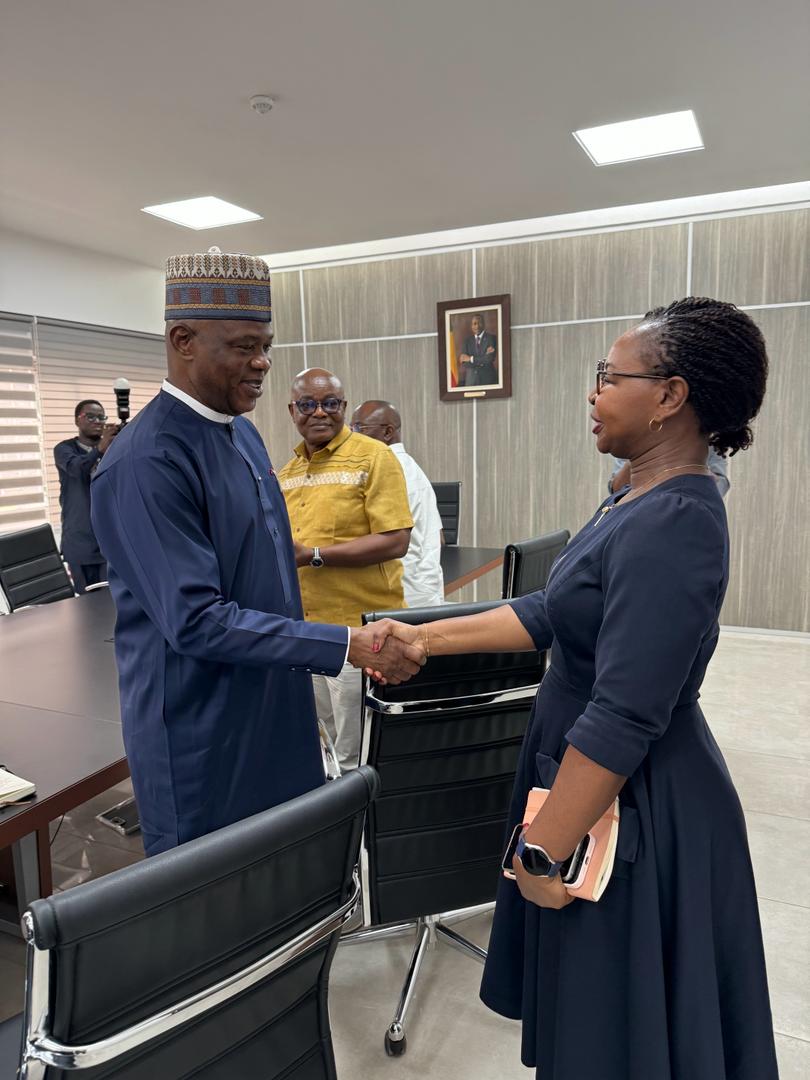
The Nigeria Customs Service (NCS) is intensifying its collaboration with the Republic of Benin Customs Administration to boost trade activities between the two nations.

A high-level delegation led by the Comptroller-General of Customs (CGC), Bashir Adewale Adeniyi MFR, met with the Director-General of the Customs Administration of Benin Republic on Thursday, 11 April 2024. 

The primary agenda of the meeting was to discuss strategies to amplify trade activities and implement previously agreed-upon recommendations from their earlier meeting in Cotonou.

The CGC was quoted as saying, “We are cognizant of the established framework for cooperation between our respective customs administrations. This framework was established at a higher level by the authorities of the heads of State, President Patrice Talon of Benin and His Excellency President Bola Ahmed Tinubu of Nigeria, both expressing a desire to work together.” 

Mrs Adidjatou Hassan Zanouvi, the Director-General of Benin Customs Administration, welcomed the delegation and reaffirmed their commitment to executing the agreed-upon measures.

She stated the importance of thorough monitoring for effective implementation. 

The collaboration between the two customs administrations aims to facilitate seamless trade operations and the efficient management of cross-border activities for mutual benefit.  

During the visit, the CGC also inspected ongoing projects within the Nigeria Customs Service, Seme Area Command.

Accompanied by the Customs Area Controller, Comptroller Timi Bomodi, he assessed the progress of the projects and received assurances of diligent oversight from the responsible authorities.

Nigerian artisans and their psychological warfare

By Ibrahim El-Caleel

I have noticed one thing with artisans. A good number of them hate it when you ask them about their charges before commencing work on your item, be it electrical faults, plumbing issues or any other tasks. The prefer completing the job before telling you the price.

The underlying psychology here is for them to gain leverage in negotiation. By completing the task first, they position themselves in a stronger bargaining position. They will always argue that they have already done the job and they have really suffered to do so. This leaves you at their mercy, with some even framing their service to you as a massive favour.

However it goes, they will win. If you don’t pay as much as they want to charge you, then they will leave you with a guilt feeling about shortchanging them. An empathetic person will be prompted to add more money “just to clear his or her conscience”.

This is their psychology.

However, it is all your fault. No work should begin without a clear, mutually-agreed labour cost. It is akin to an employee signing an offer letter without a specified salary. Imagine starting a job as a Medical Doctor and your offer letter simply says, “we will pay you a monthly salary by 30th of every month.” No specified figure. What if at the end of the month the hospital pays you a salary of ₦17,500 while you were expecting ₦250,000? It’s absurd.

This is why both parties should agree on very clear terms before any work begins. If you meet your mechanic in his workshop, ask him how much he will fix your car’s Stabilizer & Ball Joints. Don’t agree with his vague assurances that, “No na Oga.. we are together”. Insist on knowing his charges upfront before the work begins.

Interestingly, this reminds me of an incident with Dr Sakynah some years back. After completing her shopping at the market, she hired a wheelbarrow boy to transport her goods and he brought them. When she asked him about his charging fee? He declined mentioning a figure, but told her “ko nawa ne ki bada; Allah Ya sa musu albarka”. Meaning, “just pay any amount of money; may God bless it”. She obliged and paid him ₦20, and that’s when he began murmuring.

“What happened again?”, she asked him.

“Haba. Ai ke ma kin san ya fi haka!” (Haba. You also know that this work deserves more than what you just paid), he replied.

She asked, ‘were you not the who said I could pay anything and may God bless it?’ So she asked him again, “how much is your money?”

Without any hesitation, he replied, “₦50!” And she now gave him his money. She could have paid him N200, and the guy would be happy that the strategy is working.

This is also another strategy artisans use to charge you more than what is their actual pay. They will tell you to simply pay any amount, no problem. I don’t know why any merchant would do this. Is it possible for me to go to a kiosk and pick a large loaf of bread, and then the kiosk owner will tell me to pay any amount? It’s impossible. So why do artisans issue labour with a blank price tag?

But then it is a strategy for price discrimination. You sell the same goods or service at different prices to different consumers. A seller is happy to do this, but a buyer feels uncomfortable. Some buyers even feel like they were swindled. This is the same strategy the e-CEOs of “DM for pricing” are using. They lure you to inbox, and sell a ₦2,000 kitchen utensil to you at ₦5,000; then lure your friend to inbox and sell the same product at ₦2,400.

As a buyer, you must be smart. Most sellers are already very smart. If you are not smart as a customer, they will maximize their profit out of your meager earnings. This is why they get richer annually while you either stay flat or decline. Sapa wan finish you.

Commercial Lawyers would say, “Caveat Emptor“, or “Let the Buyer Beware.”

Agribusiness in Nigeria needs standardisation, NABG says

By Uzair Adam Imam  

At a media briefing on the “Agro Commodities Standard Grading System National Validation” programme, Jafar Umar, Director General of the Nigerian Agribusiness Group (NABG), called for the standardisation of Nigeria’s agro commodities grading system to align with international standards.

The event is scheduled to take place in Abuja. The organisation believes that agriculture, as a major sector of the economy, has the potential to lift Nigeria out of its current socio-economic challenges, according to the Director General.

He also highlighted NABG’s ongoing efforts to partner with public, private, and donor institutions to improve the business environment for agribusiness. 

Celestine Okanya, Director General and CEO of NiNAS, stated that NABG is dedicated to ensuring that agribusiness people and smallholder farmers receive the maximum return on their investments.  

This is achieved through a focus on improving the productivity and profitability of the agribusiness sector.

Dangote inaugurates 15 billion naira nationwide rice distribution initiative

By Uzair Adam Imam

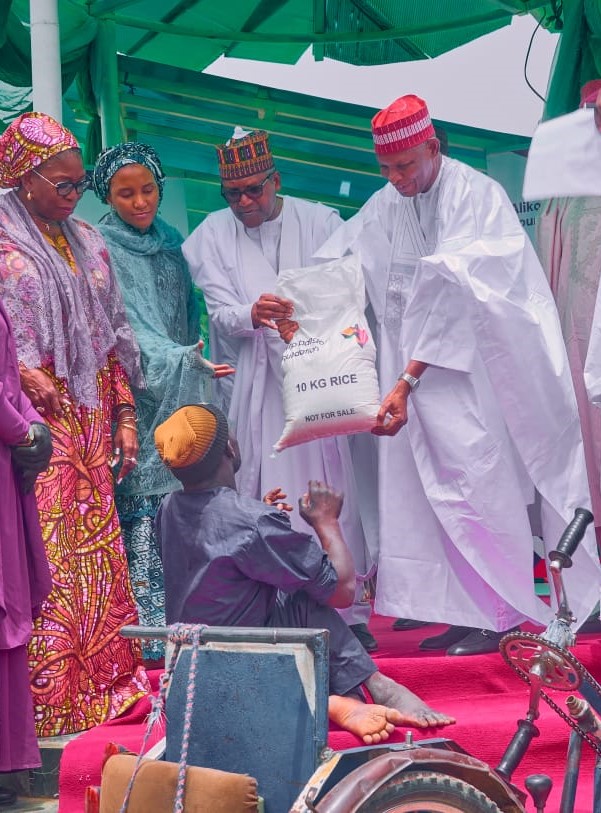
In an effort to address the pressing needs of the less privileged during these difficult times, Alhaji Aliko Dangote, the Chairman of the Dangote Group, has initiated a nationwide distribution of one million bags of rice.

The distribution began in Kano State, with 120,000 beneficiaries, and will continue throughout the country.

The rice will be disbursed in all local governments in Kano State, and the initiative will then be replicated in other states. Dangote hopes that this effort will alleviate some of the hardships faced by the poor.

The Dangote Group’s nationwide rice distribution program was officially launched at the Kano State Government House, with Alhaji Aliko Dangote himself in attendance.

The ceremony was also attended by Kano State Governor, Alh. Abba Kabir Yusuf, who expressed his gratitude for the initiative.

According to Dangote, the rice distribution aims not only to alleviate hunger in the short term, but also to invest in long-term solutions for communities across Nigeria.

The program represents a significant step towards ensuring food security and reducing poverty in the country.

“We should stand as one community, one nation, extending our hand of friendship and brotherhood,” remarked Dangote.

He also emphasized on the importance of unity and compassion during these challenging times.

“During this month of Ramadan, we are reminded of the spirit of compassion and generosity. This initiative is not just about addressing hunger; it’s about fostering a sense of communal support,” he added.

Alh. Aliko Dangote said the gesture is for 774 local governments nationwide, covering one million bags of rice, with Kano State receiving the lion’s share of 120 thousand beneficiaries

“I am confidently informing you today’s distribution is special. Despite the fact that for the past 30 years, we have been extending support to the teaming populace. We decided to come and add this project to relieve our fellow Nigerians in need.

In addition to the current rice distribution program, Alhaji Dangote informed the audience that the Dangote Group has also been providing meals for 10,000 beneficiaries daily in Kano State.

He also mentioned that the nationwide rice distribution initiative cost a total of 15 billion Naira.

Governor Abba Kabir Yusuf thanked Alhaji Dangote for his generosity and noted that the assistance comes at a critical time when many people are struggling.

He urged the distribution committees, including the HISBAH Board, to ensure that the rice reaches the most vulnerable members of society, and thanked Alhaji Dangote for his commitment to helping those in need.

Governor Yusuf stated that the gesture by Alhaji Dangote will greatly alleviate the hardship faced by the people of Kano, and noted that selecting 120,000 beneficiaries from Kano for the inauguration ceremony was significant.

Zouera Yousoufou, the Managing Director of the Aliko Dangote Foundation, also spoke at the event, highlighting Alhaji Dangote’s consistent philanthropic efforts and the critical role that the foundation plays in promoting and facilitating such initiatives.

She stated, “It is we at the Dangote Foundation who encouraged him to publicize the gesture, so others can immulate but he has been doing it for years without the left hand knowing what the right hand was given, ensuring that assistance is provided to those in need without drawing undue attention.”

The distribution of palliatives organized by Alhaji Aliko Dangote demonstrates a commitment to alleviating the suffering of those less fortunate, embodying a spirit of compassion and solidarity. It is a meaningful gesture of support for those in need.

Binance’s conflict with Nigerian authorities and troubles worldwide

By Haruna Chiroma

Binance is widely regarded as the largest cryptocurrency platform globally, facilitating billions of dollars in transactions daily. As of March 3 2024, it had over 179 million registered users across 100 countries and supported over 30 languages. Despite its prominence, this emerging financial institution operates with relatively lax oversight from financial regulatory agencies, unlike traditional financial institutions. This lack of stringent policing renders the platform vulnerable to illicit transactions. 

However, Binance also plays a significant role in fostering economic growth and providing earning opportunities for both digital natives and digital immigrants. Established in 2017, Binance rapidly gained widespread acceptance, particularly among digital natives, spreading rapidly like wildfire. 

Binance has encountered significant resistance from governments worldwide, citing concerns over its lack of transparency and regulatory issues. Numerous countries have completely banned Binance from their cyberspace, prohibiting transactions within their borders. These countries include China, Malaysia, Italy, Vietnam, the Philippines, Thailand, Australia, and several others. Despite all this, Binance is boldly embracing the wave of AI to stay competitive in the cryptocurrency market. 

The company has incorporated an AI token known as “Sleepless AI” into its platform, which is available on the Binance Launchpool. A visit to the Binance website indicates a listing of the top AI crypto tokens according to market capitalisation, with a market cap of over $7 billion and over $1.3 billion in trading volumes. 

Despite being banned from Japan, in 2022, Binance made determined efforts to re-enter the Japanese crypto market by expressing interest in acquiring Sakura, a Japanese crypto company. In another development, Binance sought a crypto license in Germany to facilitate transactions within the country’s crypto market, aiming to expand its presence across Europe. 

However, the crypto giant encountered regulatory hurdles from German financial regulators. In a prompt response, in March 2023, Binance announced the withdrawal of its license application. Following sanctions imposed on Iran, sidelining the country from traditional financial systems, Iran turned to Binance as an alternative gateway to financial institutions. Blockchain data reveals that between 2018 and 2022, Binance facilitated over $8 billion worth of transactions for Iranian firms. 

Banning Binance from a country does not necessarily prevent Binance customers from finding alternative means to conduct transactions within the banned country’s crypto market. The Wall Street Journal, published on August 2, 2022, stated that Binance successfully facilitated over $90 billion in transactions in one month within China’s crypto market. 

In the current digital age, blocking access to Binance is unlikely to be effective. Users can easily bypass restrictions by installing a Virtual Private Network (VPN) with a fleet of thousands of servers across many countries, choosing a server in a country where Binance operates, and accessing the platform with minimal effort. 

In 2021, Binance encountered regulatory challenges in Thailand, with the country’s financial authorities accusing the platform of operating without a license. This led to filing a criminal complaint against Binance with the Thai police. Later, Binance was finally banned from operations in Thailand.

Binance finds itself entangled in a legal dispute with US authorities, facing accusations of violating federal money laundering laws by neglecting to report more than 100,000 transactions deemed suspicious. Prosecutors argue that Binance serves as a prime environment for ransomware transactions (a cyberattack method that denies victims access to their computers until a specified ransom is paid via payment systems) and the exchange of payments for child abuse materials. In what appears to be an effort to resolve the matter out of court, Binance has opted for a plea bargain with US authorities. 

Under the terms of that agreement, Binance agreed to pay the US authorities a substantial fine of over $4.3 billion ($1.81 billion for criminal acts and forfeiture of $2.52 billion). Additionally, Binance plead guilty to sponsoring terrorism and involvement in money laundering. As part of the agreement, Binance has committed to operating within the legal framework and implementing monitoring mechanisms, as reported by Reuters on February 24, 2024. 

On February 24, 2013, NPR reported that the US Securities and Exchange Commission and Commodity Futures Trading Commission filed a lawsuit against Binance in court. The lawsuit was based on the absence of regulatory oversight, highlighting Binance’s operation without stringent policing akin to traditional financial institutions, artificially inflating trade volumes, and diversion of customer funds. 

Currently, Binance is engaged in a contentious dispute with the Nigerian government, which has resulted in the government blocking access to the platform. The government reportedly fined Binance a substantial sum of $10 billion, though the circumstances surrounding the fine are controversial. Users can circumvent the block by utilising a VPN, as previously discussed. Therefore, legalising and regulating the platform would be more prudent rather than the Nigerian government potentially losing billions in revenue through the backdoor. 

Given that Binance handles transactions in billions of dollars, I argue that it would be unwise to discard the benefits along with the drawbacks (“throwing a baby with the bath water”). Particularly in light of the high levels of unemployment among youths and the prevailing hardships in the country, many young people have discovered opportunities in the world of Binance. Therefore, rather than outright banning Binance from Nigeria, integrating it into its legal framework may yield better outcomes. 

As a short-term solution, Binance should be permitted to continue its operations in Nigeria under stringent control mechanisms established within the country’s legal framework, with critical oversight from entities such as the Central Bank of Nigeria (CBN), Economic and Financial Crimes Commission (EFCC), and other relevant authorities. 

For a long-term strategy, the CBN and EFCC, in collaboration with the Cybersecurity Department of the Federal University of Technology, Minna, should undertake high-impact research to be sponsored by the CBN and EFCC to develop a robust framework for regulating cryptocurrency operations in Nigeria. This framework should balance Nigeria’s legal system and economic growth objectives. 

Emphasising research and development is a globally recognised best practice for addressing societal challenges instead of relying solely on inter-ministerial committees, which may lack the necessary technical expertise, resources and research skills. 

Haruna Chiroma, Ph.D. Artificial Intelligence, wrote from the University of Hafr Al Batin, Saudi Arabia, via freedonchi@yahoo.com.