Business

You can add some category description here.

High debt will burden future generations – Dr Hassan Mahmud

By Uzair Adam Imam

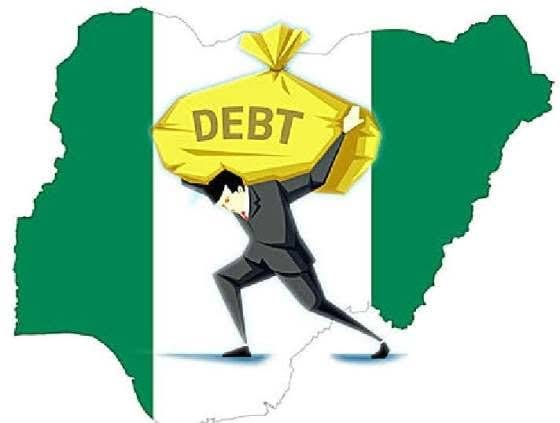
The Director, Monetary Policy Development, Central Bank of Nigeria, Dr Hassan Mahmud, said the high debt would be a burden on future generations in the country.

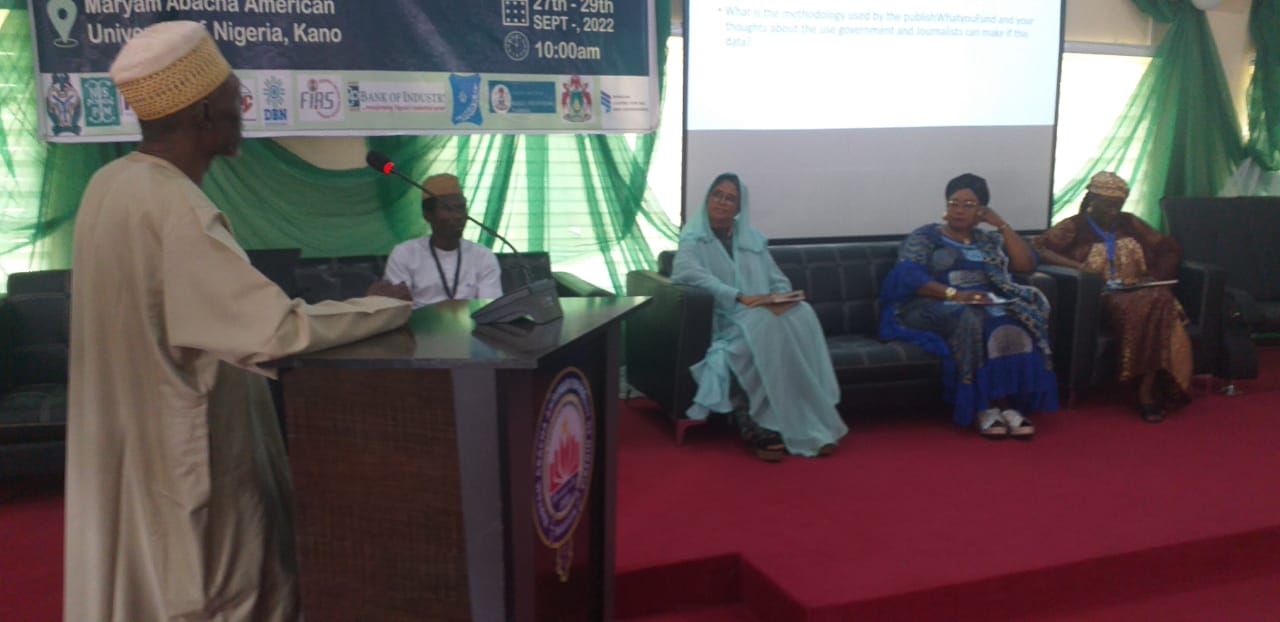
Dr Hassan Mahmud disclosed this on Wednesday at the 63rd National Conference of the Nigerian Economic Society (NES). 

The 3-day conference, which started on Tuesday at the Maryam Abacha American University of Nigeria, Kano, was themed “Fiscal Sustainability and Policy Response for Economic Recovery in Nigeria”.

It was gathered that the country’s public debt in the first quarter of 2022 had risen to N41.6 trillion from N39.56 trillion recorded in December 2021.

However, the debt by the Federal Government has continued to throw a big threat to future generations as it may impinge on the country’s economic growth.

He said, “When debt is high, it becomes a burden on future generations as it leaves no room for borrowing when there is a shock.

“High debt can increase the cost of private sector borrowing, crowding out viable private sector investment and high servicing requirements.” 

Mahmud said despite the challenges, the public debt is an important instrument for the economy, adding that the country’s borrowing plan is guided by debt sustainability.

He added, “Nigerian borrowing plan is guided by the debt sustainability threshold to ensure debt carrying capacity does not impinge on growth.”

The event hosted many academicians and politicians from all over the country, many of whom also commended the conference and its organisers.

Nigeria’s economy in chain since the start of Ukraine war – Minister

By Uzair Adam Imam

The Federal Government has said that the adverse effects of the war in Ukraine and the ongoing security challenge in Nigeria have contributed to the aggravation of the fragile economic situation in the country.

At the start of the war, the Organisation for Economic Cooperation and Development (OECD) warned that the world economy would pay a “hefty price” for the war in Ukraine, encompassing weaker growth, stronger inflation and potentially long-lasting damage to supply chains.

In Nigeria, inflation is already hitting living standards and reducing consumer spending as business owners become less optimistic about production.

The Minister of State, Budget and National Planning, Prince Clem Ikande Agba, disclosed this Tuesday at the 63rd National Conference of Nigerian Economic Society. 

The 3-day conference, which started Tuesday at the Maryam Abacha American University of Nigeria, Kano, was themed “Fiscal Sustainability and Policy Response for Economic Recovery in Nigeria”.

The Minister, represented by the Director Macro Economic, Mr Felix Okonkwo, said fiscal discipline is what Nigeria needs to build a stable and inclusive economy.

Agba stated that the Federal Government is focused on addressing the revenue issues, which it considers essential to the economic and financial health of the country.

He added that insufficient revenue was why Nigeria could not contain its fiscal deficit after the recession, meaning that the country’s capacity to continue to support and raise capital expenditure has not been improved.

He said, “The adverse effect of the War in Ukraine, insecurity, global food crisis, oil theft in the Niger Delta, rising energy prices, massive depreciation of the naira exchange rate, high fuel subsidy and increasing inflation as well as insufficient fiscal buffer aggravated the fragile economic situation in the country.”

The chairman of the occasion, Shamsuddeen Usman, said the conference aimed at providing possible ways to restore the country’s economic stability through enhancing fiscal policies.

The President of the Nigerian Economic Society, Prof. Umma Jalingo, who organized the event, said the association was founded three years before Nigeria’s independence and was aimed at enhancing the country’s economy.

Several flights rescheduled as Nigerian students protest against ASUU strike

By Uzair Adam Imam

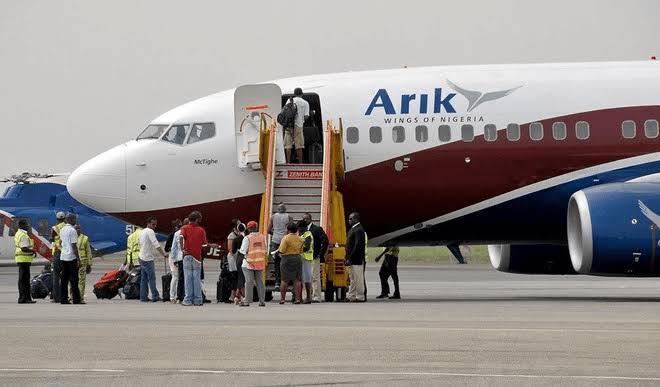
Murtala Muhammad International Airport (MMIA), Lagos, has rescheduled several flights as students stormed the airport to protest against the incessant strike by the Academic Staff Union of Universities (ASUU).

The angry students threatened to shut down the airport if the conflict between the Federal Government and ASUU had not been resolved.

Our reporters gathered that the students were members of the National Association of Nigerian Students (NANS) and had blocked the international airport as early as 07:00 am.

The decision of the protesting students was said to have caused gridlock on both ends of the airport, thereby leaving several passengers stranded.

However, they later moved to a domestic airport, causing traffic jams in the airport and Mobolaji Bank Anthony road leading to the local airport.

the protesting students were joined by a former Students Union Government President of the University of Lagos and Presidential candidate of the African Action Congress (AAC), Omoyele Sowore.

Many students have blamed both the federal government and ASUU over the ongoing dispute, which they said has ruined the dream of many promising Nigerian students.

ASUU has been on strike since February 14, 2022, making it over seven months now. However, the federal government has reportedly dragged the union before the court to end its strike that lingers.

eNaira: Changing the narrative of financial transactions in Nigeria

By Abbas Badmus

The idea of eNaira comes from the ever-expanding developments in digitalization and the need for a secured means of effecting transactions across borders. 

eNaira is a central bank digital currency issued and regulated by the Central Bank of Nigeria (CBN). As a compliment to the existing forms of CBN-issued legal tender currency, the eNaira serves as both a store of value and a medium of exchange, offering efficiency in Nigeria’s payment ecosystem.

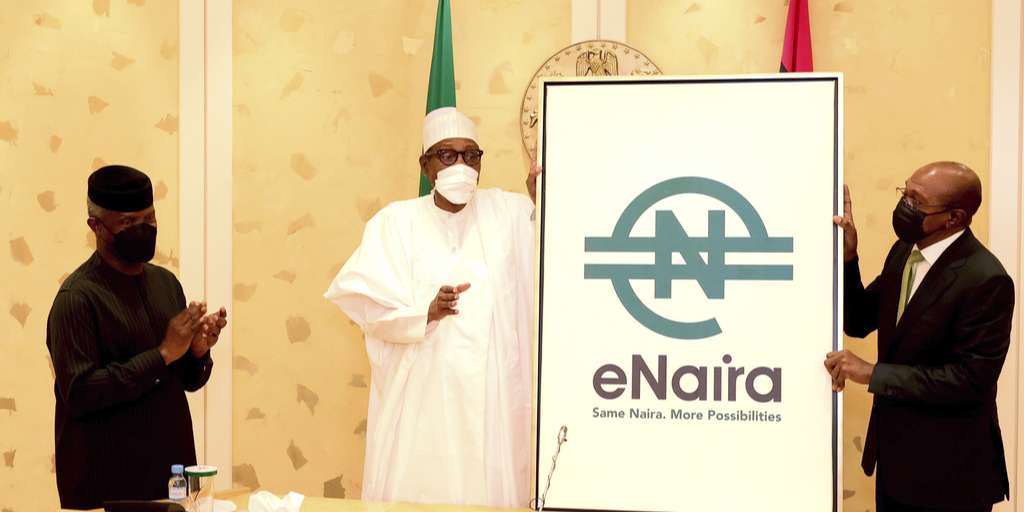
President Muhammad Buhari launched the eNaira on 25 October 2021, under the slogan: “Same Naira, More Possibilities”.

The introduction of the eNaira by the CBN immediately put Nigeria in the global spotlight as the first African country to launch the Central Bank Digital Currency (CBDC).

If fully embraced, there are several benefits for Nigerians and the business community, thereby eradicating many issues surrounding cash transactions.

Some benefits include speedy delivery, safe, simple trading and transactional opportunities for customers and end-users.

More specifically, the benefits to the merchants and business owners include reduced cash handling cost, elimination of failed transactions, instant settlement, increased speed of transactions, improvement in records keeping and elimination of Challenges associated with giving change to customers, amongst others.

Recently, CBN Deputy Governor, Economy Policy, Dr Kingsley Obiora, made it known in the just-concluded Abuja eNaira Merchants Mega Events held at Abuja Chambers of Commerce and industry that there is a reward scheme for merchants and business owners using the eNaira platform.

“I am pleased to inform you that the central bank of Nigeria approved a reward scheme for merchants and other users of the eNaira.

“This reward scheme includes providing merchants with the required scheme includes providing merchants with the required promotional (marketing) materials, subsidizing the current merchant service charge by 50% and activation of a nationwide sensitization which early business adopters of eNaira can leverage on to market its wider adoption “.

It is also important to note that the eNaira platform can now facilitate payments using QR codes, USSD, Wallet ID and eNaira wallet tag. Value-added services on the platform include branch or sub-wallets, employee management, and interoperability with other enterprise applications. Furthermore, these services are provided in a secure environment as the eNaira platform was built using a secure security protocol.

Ample opportunities for increasing business income abound through the adoption of eNaira. For instance, the availability of the eNaira payment option on e-commerce merchant platforms such as Remita is expected to complement the existing digital payment system, translating to about 50% increments in e-commerce transactions at a lower cost.

Going by the innovations and advantages of the eNaira, and the greater understanding that the relaunch is expected to build, it is most likely that the eNaira will, in no distance time, be embraced to enhance financial inclusion further.

Abbas Badmus is with TechDigest Abuja and can be reached via abbasbadamasi946@gmail.com.

Shell CEO resigns after nine years in office

By: Ibrahiym A. El-Caleel

British multinational oil corporation, Shell is set to wear a new face of leadership effective 1st January, 2023.This was highlighted by the corporation’s Chief Executive Officer (CEO), Ben van Beurden.

Beurden, a Chemical Engineer and Dutch national announced the development through his LinkedIn page earlier today.

“After a great 39-year career at Shell, I’ll step down as Chief Executive Officer at the end of 2022. Wael Sawan, currently Integrated Gas, Renewables & Energy Solutions Director, will take over from 1 January 2023.”, he said.

While wishing the incoming CEO the best term in office, Beurden remarked that he has great confidence in Wael as his successor. “He is a principled and dynamic leader, who I know will continue to help deliver our #PoweringProgress strategy purposefully and profitably.”, he said in the statement.

Shell is one of the oil multinational corporations involved in the exploration of oil in Nigeria. The company has been working in Nigeria since 1937, and currently has the largest footprint of all the international oil and gas companies in Nigeria.

Ponzi scheme: An ugly race for easy money (II)

By Bilyamin Abdulmumin

In the first part of this article, Ponzi alias pyramid schemes were discussed in detail, including their cunning modus operandi. If you come to these schemes with suspicion and scepticism, the chance is that you would notice some funny or dubious traits associated with them. The second part wishes to discuss these traits.

An obsession to prove originality

When someone is not truthful, he knows. So, he will assume the suspect mode consciously or unconsciously. He will always show the urge to convince others that he is a saint. This phenomenon is a funny trademark of Ponzi schemes.

These vague platforms float all kinds of certificates at any given opportunity to prove they are real. The more one becomes obsessed, the easier it becomes to detect his flaws. For instance, how could a firm claiming to be a global investment but floating a CAC with business name registration (which even a market woman can get) as evidence of originality? Many Ponzi agents woo potential subscribers with certificates as evidence of legitimacy, “mai kaza a aljihu ba ya jimirin” as” loosely means “he who has a skeleton in the cupboard live in fear.”

Unprofessional communication

 In this 21st century, communication has become a fundamental part and parcel of any firm, especially the one claiming to be a global player. Any renowned firms there will seek to prove to be professionals in their platforms and customer service delivery. For instance, if you visit any Nigerian telecommunications or bank platforms or engage their customer service agency, you will find them very professional. Likewise, their command of the English language is standard. But that is not the case with many Ponzi schemes. One will find their platform full of average written English, their responses sometimes as good as any street English user.  I have observed one costly mistake from these platforms; they kept replying “transaction successced (sic)” instead of “transaction succeeded” This is an embarrassing mistake no firm would afford. 

Definite and stable gains

Market forces dictate that there is always a level of uncertainty for the return of any investment, but not in the world of seemingly Ponzi schemes. Most legitimate investments are based on “gain and loss”. Sometimes the investment return will be much, small, or even deficit depending on the market forces. Still, as mysterious as it is, this basis of ‘gain and loss’ does not exist in the realm of Ponzi schemes. The song is always the same in these fraudulent platforms: gain and gain, invest x naira and recoup 2x naira.

 Some market forces not long ago that caught the global economy unaware were Covid-19 and Ukraine inversion by Russia. The only market immune from the shocks was the Ponzi scheme. So, dear investors looking for easy money, wake up and smell the coffee.

Camouflage 

Of course, anyone who wants to play a shady game will woo others into believing him by camouflaging a well-known establishment. The Ponzi schemers are masters of camouflage. They float a famous brand as their own. But a simple way to discern this trait is by noting the difference in name between the platform and its website address; let me emphasize this point by riding on the back of the white paper issued on Sunpower.

Sunpower is an acclaimed online investment but was found untrustworthy by “nogofallmaga”, an NGO dealing with scam practices.  The pseudo-Ponzi scheme is known everywhere as Sunpower, but their website name is www.sunsolar.one. This appears to be camouflage because there is a genuine global brand with the name Sunpower and has www.sunpower.com as its website address. So, dear Sunpower, why is the vagueness (brand name different from the website address)?

The dubious and funny traits of fraudulent platforms are many. Control your desire for windfalls, and it becomes difficult to sell you a dummy.

Bilyamin Abdulmumin wrote via bilal4riid13@gmail.com.

Atiku donates N50m to Kwari market flood victims

By Muhammad Aminu

The presidential candidate of the People’s Democratic Party (PDP), Atiku Abubakar, has donated N50 million to Kantin Kwari textile market in Kano following a flood that affected the market.

The Star earlier reported that Kano has been witnessing torrential rainfall in the last few days that has led to floods in many parts of the metropolis, including the Kwari textile market.

The presidential candidate announced the donation Monday while welcoming former Kano State Governor Ibrahim Shekarau to the PDP.

He sympathized with the businessmen and women who were already suffering from an unfriendly business environment with economic hardship.

According to him, Shekarau’s defection is a win for the people of Kano State, the PDP and the country.

The former Kano State governor argued that Atiku was the most qualified candidate to get Nigeria working again come 2023.

Atiku was in Kano since Sunday alongside his running mate Governor Ifeanyi Okowa, Governor Aminu Waziri Tambuwal of Sokoto State, former Governor of Jigawa State, Sule Lamido, former Minister of Transportation, Senator Abdullahi Umar Idris, among other party chieftains.

Ponzi scheme: An ugly race for easy money (1)

By Bilyamin Abdulmumin

Needless to say, everyone wants money. Most of us have an insatiable love for them. There is this Hausa rhetoric:  if anyone says, “you have too much love for money, then the person saying that is playing with your intelligence”. In other words, the accuser is being unserious because what he said is a fact not only about you alone but everyone.

However, that is not the nitty-gritty of the matter because the like for money is one thing, and getting them is another. Getting the money is not as easy as pushing a standing pestle. Neither is it as easy as slapping a chick (in Dan Anace’s words)

To get the Phoenician’s invention, one has to invest a lot. It is a struggle for “survival of the fittest”. Those who bring or have the best ideas or strategy get them, thus putting us in constant skirmish and outweighing one another (capitalism in short).

Through their programs, some people have allegedly found a platform that can bring us this money almost effortlessly. In other words, the Ponzi scheme, alias pyramid, promises to free us from the bandage of suffering before getting the money.

To get to the utopia, according to these organizations, one will only invest a certain amount of money, and instantly a fixed profit is ensured (which one can claim after some time). The return of these investments is usually from 10 to 1000 per cent.

Initially, these Ponzi organizations’ operations were physical, with their offices and agents well known. One of such schemes that once cut across nook and cranny in Zamfara State was “oil and gas investment.”

The gale of the scheme in the state swept aside everyone on its path. It left neither business people, politicians, government workers, or even town heads. The “oil and gas” claimed an investment with a 100 per cent return in two weeks. For instance, an investment of 10,000 would qualify one to cash out 20,000 in two weeks. This is the type of eldorado business everyone can envisage, making it difficult to resist.

With the global transition from a physical to an online platform, the Ponzi schemes have followed suit. They would unleash their various applications where subscribers follow laid-down rules. Although different from the physical schemes, the concept remains the same: invest a certain amount of money and recoup mouth-watering profit (at 100 % assurance).

MMM was one online Ponzi that traversed the length and breadth of Nigeria, thanks to the subscribers’ testimonies like that of the oil and gas scheme. MMM promised and initially delivered 30 per cent profit to subscribers at every kobo invested within two weeks. This online investment was even riskier because the subscribers were dealing with faceless agents. When the MMM finally crashed, the bang of the burst was heard everywhere across the globe.

How the MMM founder from the far East of the globe, Russia, was able to convince Nigerians (some of whom are learned) to use not only their savings but other people’s money (staff salary, school registration fees, or money entrusted to them) was a mystery

The basic modus operandi of any pyramid scheme is the same: one particular schemer (the Ponzi initiator) would convince one to two people. Next, these two people convince four, four convince eight, and it keeps cascading like a symbolic pyramid hence the name pyramid scheme. Note the new subscribers in the pyramid pay the older ones; those at the top, especially the schemer who is at the top, bag the most money out of the scheme to the detriment of those at the bottom. For the scheme to remain healthy in operation, the new subscribers must always be able to pay the older ones; otherwise, the scheme becomes stuck in the mud.

Some of the Ponzi schemes recently to have met the waterloo are ISME and OSTIME. And according to “nogofalmaga”, an NGO specialist in dealing with Ponzi schemes, some other currently active schemes are only a matter of when not if they flow suit. These are SunPower, Tesla-recharger, Bitmaincenter sabrinascala, stormgain, among others.

In order not to take too much space, I reserved for the next article the discussion of some funny traits of Ponzi schemes

The elixir for easy money doesn’t exist. The Ponzi scheme can only provide for a few while robbing many others. If it is too good to be true, don’t trust it.

Bilyamin Abdulmumin wrote via bilal4riid13@gmail.com.
Nigeria, India to strengthen bilateral relations

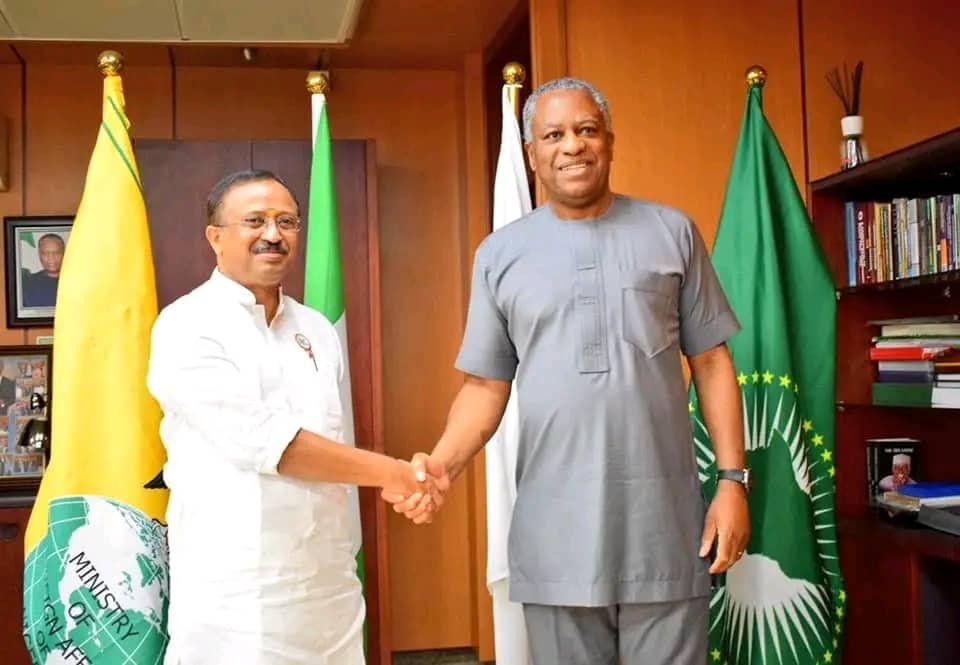
Nigeria and India are looking for strategies to enhance their mutually beneficial and robust bilateral ties.

Geoffrey Onyeama, the minister of foreign affairs, revealed this on Monday when meeting Shri V. Muraleedharan, the state minister for external affairs of India.

Muraleedharan is in Nigeria to attend the Nigeria-India Business Council’s opening (NIBC). Nigeria, according to Onyeama, is attempting to benefit from India’s expertise in the fields of information, communication, and technology.

India is one of the biggest investors in Nigeria and one of the biggest consumers of Nigerian crude, he pointed out.

In the context of the Solar Alliance and Conference of the Parties on Renewable Energy, Onyeama acknowledged India as the primary instigator.

“On Defence cooperation, there is a joint initiative with some of our Defence institutions on the development of detection of Improvised Explosive Devices which we are working on.

“Of course, that will be an important addition to the armoury of our security forces”, he added.

Muraleedharan stated that the bilateral relationship between India and Nigeria is excellent and that the meeting covered topics such as commerce, consular matters, education, etc.

The minister expressed confidence that the NIBC would enhance bilateral trade and investment in a number of industries.

Muraleedharan indicated that his nation was prepared to lend soft credit to Nigeria so that it might construct solar power facilities.

“On Power, Nigeria is part of the International Solar which is the global alliance to ensure that sustainable power is there across the world”, he noted.

Commercial banks capital requirements and underdeveloped population: Regulation vs emotional sentiment

By Idris Mukhtar, PhD.

This write-up seeks the correct the perception of some people about the Commercial Banks’ operations and the Central Banks’ regulations.

A banking operation is a business like any other business. They collect money from those that have a surplus and channel it to those that are in deficit with the sole aim of making positive returns. In this sense, the business has to respect the law of demand and supply, which basically determines the prices. Human beings are rational in nature; thus, they try to avoid anything that could bring them dissatisfaction in favour of the things that could bring them satisfaction.

Basically, peoples are the owners of commercial banks. They invest their personal net worth in banks with the sole aim of making profits and avoiding disasters. However, because of the high-risk nature of the banking operations (i.e., dealing with money, complicated mode of operation, and the important roles these institutions play in economic development), the government, through Central Banks and other regulatory agencies, makes certain regulations with the aims to make their operations smoothly and to safeguard the investors’ money. The government regulates the banking system by setting a minimum Liquidity Requirement, Minimum Capital Requirements, Non-Performing Loans threshold, Maximum Expense vs Revenue (efficiency ratio) Requirement, Concentration Ratio, etc.

Based on the above, to ensure fairness to all (developed or underdeveloped) within a given jurisdiction, these regulations must be made equal among the banks in a particular category (i.e., International banks, National banks, Microfinance banks, etc.) by considering several factors. 

For example, regulators set the minimum Capital requirements for international banks differently from national banks or microfinance banks just to make sure fairness is achieved uniformly within the country. No particular region, segment, or people will be given preferential treatment over the other. In setting these regulations, due to the nature of banking operations, any preferential treatment because of the underdevelopment of the region will set that region or people preferred in the disadvantage stage because investors will definitely not find it easy to risk their capital in a high-risk region that did not have stringent regulations that could safeguard their money.

Because of the rationality of the consumers who are the capital providers to the banks, if the regulations are enforced in a particular region due to the so-called reason that the region is not advanced and the economic life is difficult in such a way that will temper with investors interest (i.e. attaining a positive return and avoiding negativity) to protect their personal wealth invested, they will run away from that region in favour of the region that has an adequate regulation to safeguard their hard-earned money. 

No one will stay in the region, which will cause them to lose money unless few. (even these few could only stay if they believed they could get a higher profit/interest rates by charging high markup on loans and advances to cover the high risk they took by staying in an area in which there is a high risk of defaults). This will cause economic hardship, a high rate of crime, terrorism, and continued deterioration of the conditions in such a region.

If we look all over the world, due to the loan default expectation, any region that proves to be economically more prosperous enjoys the teaming number of investors trooping to such a region for investment even though the gain is lower because of the competition. That is why the profit/interest rate on loans charged to borrowers in developed nations is much lower compared to what is charged in developing or underdeveloped nations that have lower ratings or high credit risk (this is basic as per as risk management is concerned), i.e., in Nigeria commercial banks charges between 20%-25% on loans while in the US or the UK the rate is lower than 5% per annum. What explains this scenario is simply, in comparison to US or UK, Nigeria is a high-risk country disturbed by a high rate of corruption, insecurity, terrorism, etc. which scare any rational investor away unless he could be compensated by charging a high-interest rate that will worsen the economic situations of the borrowers.

To me, the way forward for a less economically developed region to compete with another region is to continue educating its younger ones gradually. Research shows a positive correlation between education, low corruption, terrorism, and improvement of economic conditions. With a good and quality education, businesses will thrive, people will prosper, income will improve, and well-to-do members of the region or investors from outside will invest their surplus funds in such a region because of the expectation of positive gains on their investments and good business models that will ensure non-default in the loans.  

Any enforcement by the regulators on the people’s right to the investment of their personal wealth (i.e., calling for the government to enforce peoples invest their wealth in a region with a high risk of default in such a way that they will incur losses just because the government wants help that region or the region is less developed) is an illusion and will do more harm to the region than good in future. In the end, instead of that region prospering because of that policy, it will end up deteriorating.

Dr Idris Mukhtar wrote from Jeddah, Saudi Arabia, via mukhtaridrisu@gmail.com.