Business

You can add some category description here.

Starting January 2026, PoS operators barred from operating without CAC certification

By Muhammad Abubakar

The Corporate Affairs Commission (CAC) has issued a public notice announcing a nationwide crackdown on unregistered Point of Sale (PoS) operators, with enforcement set to begin on 1 January 2026.

According to the statement, the Commission observed a rapid rise in PoS agents operating without proper registration—an act that violates the Companies and Allied Matters Act (CAMA) 2020 as well as Central Bank of Nigeria (CBN) Agent Banking Regulations. The CAC described the trend as a reckless practice that exposes Nigeria’s financial system and citizens’ investments to significant risks, allegedly aided by some fintech companies.

From the effective date, no PoS operator will be allowed to run without CAC certification. Security agencies have been directed to ensure full compliance, including seizing or shutting down unregistered PoS terminals. Fintech companies found enabling such illegal operations will be placed on a watchlist and reported to the CBN.

The Commission urged all PoS operators to regularize their business registrations immediately, stressing that compliance is mandatory. The notice was signed by CAC Management on 6 December 2025.

Netflix to acquire Warner Bros Discovery in $83bn mega deal

By Hadiza Abdulkadir

Netflix is set to acquire Warner Bros Discovery, including HBO Max and the company’s historic film studios, in a landmark deal valued at $83 billion, marking one of the most significant shake-ups in modern entertainment history.

The agreement brings together Netflix’s vast global streaming footprint with Warner Bros’ deep library of iconic franchises, from DC superheroes to the Wizarding World, and critically acclaimed HBO series such as Game of Thrones and Succession.

As part of the arrangement, Warner Bros Discovery will first spin off its cable networks — including CNN, TNT and TBS — into a separate entity before the sale is finalised. The merger still faces regulatory scrutiny in the U.S. and Europe, with critics warning that the consolidation could suppress competition and limit creative diversity.

If approved, the tie-up would create a powerhouse straddling both Hollywood tradition and streaming dominance, reshaping the future of global media.

Fact Check: Is Opay deducting users to service loan?

By Abdulsalam Alkali

Claim: 

Opay, a fintech microfinance bank, is deducting money from customer accounts to service COVID-19 Survival Fund loans. This claim has been circulating on social media since the beginning of the week.

Verification Process:

A rough search using the Tor browser and DuckDuckGo search engine found no evidence to support the claim. A deeper search traced the origin of the story to a social media page named “Ibadan Crush TV”, which appears to have been the first to publish it. Furthermore, Opay has used its verified official channels to refute the story, describing it as false, malicious, and fabricated. The company insists all customer accounts and deposits remain safe, intact, and fully accessible.

Findings:

Available data confirms that the circulating news is entirely misleading and false. No deductions for loan servicing have been made from Opay accounts. Opay insists that anyone with a genuine claim should come forward to register a complaint. The story originated from a non-credible source, a page focused on entertainment and lifestyle, not a legitimate news medium.

Verdict:

The claim that it is “fake and misleading” is consistent with the available evidence. There is no public traceable evidence that OPay deducts user funds for servicing any “COVID-19 Survival Fund” loan, and strong official statements from OPay denying both loan services and unauthorised withdrawals.

Halal economy in Nigeria: Today’s opportunity, tomorrow’s prosperity 

By Abdullahi Abubakar Lamido 

When Nigeria first introduced Islamic banking more than a decade ago, a section of the public, especially some Christian leaders, cried foul. They labelled it an attempt to Islamise the nation. The word Islamic became synonymous with suspicion. Yet, history has since given its verdict. The same Islamic banking and finance that was once denounced as a tool for religious expansion has now become one of the most credible components of Nigeria’s financial system. Today, the government of Nigeria, regardless of faith or political party, routinely issues Sukuk (Islamic bonds) to finance national infrastructure, build roads, and other developmental projects. 

If Islamic banking did not Islamise Nigeria, how on earth will the halal economy, a trade-based development initiative, suddenly do so?

Unfortunately, some commentators continue to see through the fog of prejudice rather than the lens of global economics. The recently developed Nigerian National Halal Economy Strategy is not a religious project. It is an economic vision. It seeks to position Nigeria within a rapidly expanding global market that respects ethics, transparency, environmental responsibility, and product integrity; values shared by all civilisations, not by Muslims alone.

Globally, the halal economy is estimated at USD 2.3 trillion, excluding Islamic finance. It is growing at an annual rate of around 20 per cent, making it one of the fastest-expanding consumer markets in the world, valued at about USD 560 billion each year. The halal industry, initially rooted in food and beverages, has long transcended its traditional boundaries. It now spans pharmaceuticals, cosmetics, health products, toiletries, medical devices, and even service sectors such as logistics, marketing, media, packaging, branding, and finance. With rising affluence and awareness among global consumers, it has further extended to halal tourism, hospitality, fashion, and lifestyle services.

This development is not driven by Muslims alone. Indeed, the modern halal market is non-exclusive. Increasingly, non-Muslim consumers associate halal with ethical consumerism, animal welfare, environmental stewardship, and quality assurance. The label “halal” has evolved into a global mark of trust, symbolising cleanliness, safety, and ethical production.

Countries far removed from Islam, such as the United States, the Netherlands, Russia, China, and South Africa, are already major players in the halal economy. In the United States, the halal market is worth USD 12 billion annually, with halal food sales growing by more than 70 per cent since 1995. Over 90 per cent of U.S. dry dairy ingredient manufacturers now produce halal products, primarily for export.

In the Netherlands, where Muslims are barely a tenth of the population, non-Muslim Dutch consumers spend approximately USD 3 billion annually on halal food. In the United Kingdom, six million people consume halal meat, three times the Muslim population. These figures prove one thing: halal has gone mainstream. Even Russia is experiencing explosive growth in its halal sector, with domestic demand rising by 30-40 per cent annually. The country now produces around 65,000 tonnes of halal meat each year and hosts major expos such as the Moscow Halal Expo and KazanHalal.

China, with its 23 million Muslims, records 10 per cent annual growth in its halal industry, with trade worth USD 2.1 billion and export products valued at USD 10 million annually from the Ningxia region alone.

Africa, too, is awakening to this opportunity. South Africa—with only two per cent of its population being Muslim—is now one of the five largest producers of halal products globally, thanks to a robust certification infrastructure. Kenya, with a fast-growing halal certification regime, already has more than 150 certified companies serving local and regional markets.

Nigeria, with its vast agricultural resources, strategic location, and large Muslim population, stands at the crossroads of opportunity. The halal economy offers three immediate advantages:

1. Export Expansion: By developing credible halal certification and production infrastructure, Nigeria can unlock access to markets worth over USD 2 trillion, exporting beef, poultry, processed foods, cosmetics, pharmaceuticals, and other halal-compliant goods. Nigerian products can enter Middle Eastern and Asian markets that strictly demand halal certification.

2. Job Creation and SME Growth: The halal economy stimulates employment across value chains—from farm to factory, logistics, certification, branding, and export marketing. It empowers micro and small enterprises while ensuring compliance with ethical standards that appeal to both local and international consumers.

3. National Image and Ethical Standards: Halal certification ensures higher hygiene, traceability, and environmental protection. It is compatible with international standards like ISO and HACCP, thereby enhancing Nigeria’s global competitiveness. In essence, promoting halal is promoting quality, sustainability, and integrity—values that no religion should reject.

The critics who fear the halal roadmap as a step toward Islamisation fail to recognise that halal is an economic term before it is a theological one in this context. It stands for what is wholesome, safe, clean, traceable, and socially responsible. These values are not confined to Islam. They are embedded in Christianity, Judaism, and secular ethics alike.

The halal economy represents a fusion of faith and fairness, ethics and enterprise. It provides a model for a more responsible economic system—precisely the kind of moral economy the world craves in the aftermath of global financial and environmental crises.

When the debate over Islamic banking first arose, the same fear-mongering dominated the headlines. Yet, today, Islamic finance has built roads, schools, and hospitals across Nigeria through Sukuk and other Shari’ah-compliant financing. Christian engineers, contractors, and civil servants have benefitted immensely. The country’s Christian-majority states have received as much as the Muslim ones. No mosque was built, no church destroyed, and no constitution rewritten.

If Islamic banking did not Islamise Nigeria, how will halal exports do so? On the contrary, the halal economy promises to diversify Nigeria’s trade, create jobs, enhance foreign exchange earnings, and promote industrial standards that protect all consumers, Muslims and non-Muslims alike.

Nigeria cannot afford to watch from the sidelines while other nations—Christian, secular, and atheist alike—harvest the fruits of the halal economy. The world is shifting toward ethical consumption, sustainability, and traceable production. The halal brand, far from being divisive, is a passport to global markets.

The Nigeria National Halal Economy Strategy is not about religion; it is about relevance. It is about integrating Nigeria into the trillion-dollar value chain that prizes quality, fairness, and responsibility. Those who see crisis where there is opportunity risk being on the wrong side of history, just as those who once opposed Islamic banking and finance, now benefit from Sukuk-financed roads.

The celebration of the halal economy is not the planting of tomorrow’s crisis; it is the harvest of tomorrow’s prosperity for every Nigerian, regardless of faith. It is time we remove the caps of emotion and prejudice and wear the lenses of reason, tolerance, and progress. Nigeria must embrace every opportunity that promises shared prosperity, job creation, and national development. The halal economy is not about division—it is about direction. It is about placing our nation on the map of global relevance, productivity, and ethical growth. So help us God. 

Amir Lamido wrote from Abuja via lamidomabudi@gmail.com.

Let the oil exports breathe

By Hanniel Sebatie Noboh

On the morning of July 30, Vanguard newspaper published an editorial titled “30% Processing of Export Raw Materials”, offering its perspective on the recently passed Senate bill mandating that all raw materials exported from Nigeria must be processed locally by at least 30 per cent. This long-overdue legislation is a welcome development in Nigeria’s quest for economic diversification.

Nigeria remains one of the most naturally endowed nations in the world. With abundant resources such as limestone, gold, natural gas, and the globally coveted crude oil, our country boasts mineral wealth that many developed nations lack. In agriculture too, from rice and groundnuts in the North to cassava and palm oil in the South, Nigeria’s fertile soil continues to bless us with variety and abundance.

Yet, successive governments have, for decades, focused disproportionately on crude oil, neglecting other sectors, such as agriculture and manufacturing. As the Vanguard editorial rightly observed, even during economic downturns—when necessity should inspire reform—there has been little effort to diversify our export base.

This is why the passage of this bill marks a significant shift. By requiring at least 30 per cent local processing of all export-bound raw materials, Nigeria takes a substantial step towards value addition and economic transformation.

The advantages are manifold. First, processed goods typically command higher prices in global markets. Take cocoa, for instance—a ton of raw beans sells for far less than the same quantity processed into cocoa butter. This principle applies to most commodities: the more value added, the greater the earnings.

Second, enforcing the 30 per cent processing threshold will spur the development of local industries. More processing facilities will mean more jobs, improved infrastructure, and Nigeria’s transition from an exporter of raw materials to a player in the global manufacturing and semi-processed goods market. Even for domestic buyers, the availability of semi-processed inputs will reduce dependency on fully imported goods, lowering costs and supporting local production.

Additionally, the bill aligns with President Bola Tinubu’s vision of making agriculture more attractive to Nigerian youth. Many young people may not be drawn to traditional farming, but with the emergence of new processing plants, opportunities will abound in machine operations, logistics, quality control, and related fields.

However, as Vanguard also warned, the real challenge lies in implementation. Nigeria has no shortage of well-intentioned policies, but history shows that many fail at the execution stage. A lack of infrastructure, regulatory oversight, and transparency could undermine the promise of this bill. The risk of corruption—particularly in granting exemptions or failing to enforce compliance—must be proactively addressed.

The responsibility for enforcement rests with the Raw Materials Research and Development Council (RMRDC), which must ensure compliance with the 30 per cent benchmark and uphold quality standards. Any exporter who fails to meet the requirement will face a 15% surcharge on the export value of their raw materials. This is a strong disincentive, but only if enforced fairly and transparently.

In conclusion, while the bill is commendable, its success depends on rigorous implementation, strong political will, and effective institutional accountability. If executed effectively, it could be a game-changer for Nigeria’s economy. Like many Nigerians, I remain hopeful that this won’t become another forgotten policy but the beginning of a new era of industrial growth and self-reliance.

Hanniel Sebatie Noboh is a Mass Communication student at Nile University and an intern at PRNigeria. She can be reached via nobohhanniel@gmail.com.

L-PRES equips Kano extension agents with modern skills

By Uzair Adam

The Kano State Coordinating Office of the Livestock Productivity and Resilience Support Project (L-PRES), a World Bank–supported programme, has commenced a two-day training for 200 livestock extension agents and advisory service providers on modern livestock production strategies.

The training, which began on Tuesday at the Kadawa Mechanisation Institute in Garun Malam Local Government Area, is aimed at equipping extension agents to support the adoption of improved breeds through selection, breeding and artificial insemination techniques, as well as the proper management of forage resources and feed formulation.

In his welcome address, the State Project Coordinator of L-PRES, Dr. Salisu Muhammad Inuwa, described the training as a strategic step towards transforming the livestock sector in Kano.

He said the project aims to increase productivity, strengthen resilience, and promote sustainable practices that would uplift farmers and improve livelihoods.

Dr. Inuwa was quoted as saying,“You, the extension officers, are the bridge between research, policies, innovations, and the farmers in our communities.

The knowledge and skills you gain here will help our livestock keepers adopt improved breeds, better management practices, and modern feeding techniques.”

Speaking on behalf of the state government, Dr. Bashir Sunusi, Permanent Secretary at the Ministry of Agriculture and Natural Resources, who represented the Commissioner, Dr. Danjuma Mahmood, said Kano has invested heavily in agriculture, including the recruitment of over 1,000 extension workers and expansion of irrigation facilities.

He noted that extension agents remain the frontline soldiers of agriculture and urged participants to take the training seriously.

“Extension work is not theory; it is practical. When extension agents are well trained and equipped, they can support farmers to achieve higher yields, improved livestock production, and better access to markets,” Sanusi said.

Also speaking, Gambo Isa Garko, an extension officer with L-PRES, said the project is expected to transform livestock production in the state, particularly in meat, milk, and poultry output.

He added that the initiative would also establish livestock centres where farmers can access feed, veterinary services, and advisory support.

According to him, L-PRES is building a database of livestock farmers through profiling, which will enable targeted interventions.

“We are going to transform Kadawa into a practical school for livestock where farmers will learn from one another through farmer-to-farmer interaction, which makes adoption of new practices easier,” he explained.

Speaking on behalf of the participants, Ibrahim Adamu Aliyu commended the organisers for providing what he described as a timely and practical training.

He said the knowledge gained will enhance their capacity to deliver advisory services to farmers more effectively.

“This training is equipping us with modern techniques that will help us address the challenges faced by farmers, especially in adopting improved breeds, better feeding systems, and disease control measures.

“We are committed to taking this knowledge back to our communities and ensuring that it translates into tangible results for farmers,” Aliyu said.

The training includes lectures on extension strategies and models for reaching farmers, livestock production and breeding, artificial insemination, animal feed formulation, and pest and disease control, among others.

How Dangote Refinery reshapes Nigeria’s fuel supply, pricing, and distribution, raising monopoly concerns

 By Nasiru Ibrahim 

The channels of distribution from exploration to consumers in Nigeria’s oil industry—before Dangote’s refinery—began with crude oil extracted by NNPC Ltd. and international companies such as Shell, Mobil, and Chevron. The crude was sold to NNPC or exported. Due to the poor performance of local refineries, such as those in Warri and Port Harcourt, Nigeria relied on importing refined fuel through NNPC and major marketers, including TotalEnergies, Oando, and Conoil.

Once imported, the fuel was stored in depots like Apapa, Atlas Cove, Ibru Jetty, and Calabar. From there, independent transport companies such as Petrolog, TSL Logistics, AA Rano, and MRS transported it by tanker to filling stations. These stations—both major and independent—sold the fuel directly to consumers. 

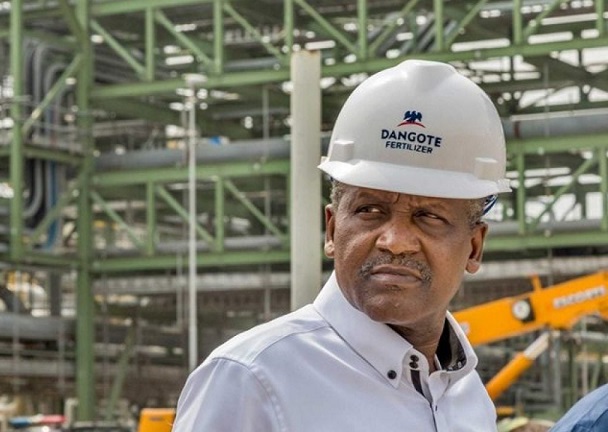
Alhaji Aliko Dangote is on the verge of taking full control of Nigeria’s downstream oil sector, covering everything from marketing and retail to transportation and distribution of petroleum products. In economic terms, this is known as vertical integration. Many Nigerians are now raising concerns that Dangote could dominate the entire fuel market. This comes after Dangote Petroleum Refinery released a press statement outlining its upcoming plans for fuel supply and distribution.

In the statement dated June 16, 2025, the company announced that it will start selling petrol (PMS) and diesel in the Nigerian market from August 15, 2025. To support this, it plans to roll out 4,000 Compressed Natural Gas (CNG)-powered trucks across the country to deliver fuel directly to buyers at no additional logistics cost.

Dangote also revealed that it will offer credit facilities to credible buyers who purchase at least 500,000 litres of PMS or diesel. 

These buyers include registered oil marketers, manufacturers, telecom companies, airlines, and other large fuel consumers. The company states that this move will enhance fuel availability, reduce reliance on imports, and bolster Nigeria’s energy security by overseeing both refining and distribution.

With Dangote’s new initiative, he buys crude oil from NNPC and refines it here in Nigeria. Then, using his trucks, he moves the fuel to his storage depots and delivers it straight to filling stations. This means no need for middlemen or prominent marketers—everything is handled by Dangote’s team from start to finish.

However, while this could lower fuel prices and ease supply challenges, it has also sparked fears about reduced competition. Some worry that giving too much power to one player could lead to a market monopoly, calling for proper regulation to ensure fairness in the downstream sector.

Economists, policymakers, businessmen, entrepreneurs, and economics students like myself are actively considering the potential impact of this new initiative on oil marketers, the Nigerian economy, employment, exchange rates, consumers, filling stations, climate change, and other critical factors. Many are questioning whether this move will yield positive results. However, we cannot understand the implications unless we first examine the structure and components of Nigeria’s downstream sector, including Dangote himself, his competitors, those affected by his actions, and all other players in the supply chain up to the final consumer.

In economics and policy development, a long-standing debate exists about how policies should be evaluated. Some scholars argue that policies should be judged by their outcomes, while others believe they should be assessed based on their intentions. For example, Milton Friedman emphasised that policies must be judged by their results, not their intentions. 

In contrast, economists like Paul Samuelson acknowledged the importance of considering both intent and context, especially when outcomes are not yet visible. This debate is relevant here. It may be premature to conclude whether Dangote’s new initiative is positive or negative solely based on expected results, as those outcomes have not yet materialised. 

Nevertheless, some would argue that judging the initiative by its intention — such as improving fuel availability, reducing logistics costs, and enhancing energy security — is still meaningful, especially in economic policy, where many decisions are based on projected or long-term effects. Evaluating intentions enables us to gauge the direction of policy, even in the absence of immediate evidence.

Nigeria’s downstream sector is responsible for refining, retailing, distribution, transportation, and marketing of petroleum products. It comprises several companies and regulatory bodies, including NNPCL, Dangote Refinery, Oando, MRS, AA Rano, ExxonMobil, Danmarna, Aliko Oil, and many others. While Dangote operates across both the midstream and downstream sectors, his actions may also indirectly affect the upstream sector, particularly through their influence on demand, supply, and the pricing of petroleum products.

Instead of focusing solely on the structure of the downstream sector, I believe we should carefully consider both the potential benefits and drawbacks of this new initiative by Dangote Refinery, without completely dismissing Friedman’s view on judging policies strictly by results.

Potential Positive Implications of the New Initiative

Firstly, Dangote’s new initiative will reduce Nigeria’s dependence on imported oil from the Gulf and Europe. This is beneficial for Nigeria’s foreign exchange (FX) reserves, as less demand for imported fuel means the country will need fewer U.S. dollars for imports. As a result, this could lead to an appreciation of the Naira due to a fall in demand for foreign currency. Additionally, it will improve the trade balance and increase GDP contribution from the domestic oil refining sector.

Secondly, the initiative will create both direct and indirect jobs in Nigeria. Direct employment opportunities will arise for truck drivers, mechanics, technicians, depot workers, and logistics personnel. If Dangote deploys between 2,000 and 4,000 trucks, and each truck requires one to two drivers, along with at least one support mechanic, one depot staff member, and logistics coordinators, this could result in approximately 20,000 direct jobs. Indirect employment opportunities will arise for consultants, accountants, lawyers, filling station managers, as well as workers in catering, cleaning, petrochemicals, fertiliser, plastics, and related industries.

Thirdly, the initiative will enhance fuel accessibility and improve supply chain efficiency, thereby reducing waste and environmental pollution. By taking direct control over storage and distribution, the initiative can eliminate middlemen inefficiencies, potentially reducing fuel scarcity and hoarding, which often drive up inflation. With direct sales to filling stations, illegal practices like tanker swaps and product diversion by middlemen can be curbed. Furthermore, the use of Compressed Natural Gas (CNG)-powered trucks will lower transportation costs, reduce emissions, and increase domestic gas utilisation, thereby boosting gas revenue.

Fourthly, the initiative is expected to lower fuel prices, which is a major driver of inflation in Nigeria. By eliminating international shipping fees, foreign refinery profit margins, and import levies—all of which form a significant portion of the overall fuel cost—the retail price per unit of fuel could drop. Lower fuel prices can ease the cost of living, reduce inflationary pressures, and improve economic stability.

Fifthly, the initiative will strengthen Nigeria’s energy security in the face of global supply chain disruptions. For instance, ongoing conflicts such as the Israel-Iran and Russia-Ukraine wars, or geopolitical tensions in the Middle East, can threaten the global fuel supply. Additionally, OPEC+ efforts to raise oil prices increase external vulnerabilities. By reducing dependence on imported fuel, Nigeria becomes more resilient to global shocks, ensuring steady availability of fuel at domestic filling stations even during international crises.

Sixthly, from a broader perspective, this initiative positions Nigeria as a regional supplier of refined petroleum products in Africa, reducing the continent’s reliance on Europe and the Gulf. This shift enhances Nigeria’s foreign policy leverage and strategic influence, particularly within regional and international institutions such as ECOWAS, AfCFTA, AfDB, and Afreximbank. A robust domestic refining industry enhances investor confidence and may attract more foreign direct investment (FDI) in the long term. Investors are more likely to commit to economies with stable energy supply, regional trade advantages, and reduced exposure to global price shocks.

Potential Negative Implications

Firstly, there is a serious economic fear that this could lead to a monopoly, and many Nigerians have already raised concerns about that. The Petroleum Tanker Drivers and Owners Association of Nigeria (PATROAN) and the Independent Petroleum Marketers Association of Nigeria (IPMAN) have both expressed worry that Dangote might dominate the entire downstream oil sector. In economics, when a single company controls the whole supply chain, from refining to selling, it stifles competition. And when there’s no competition, prices can be fixed unfairly, small businesses get pushed out, and consumers suffer in the long run.

Secondly, there’s the risk of predatory pricing. This occurs when a powerful company sells at very low prices—sometimes even below cost—to drive smaller competitors out of the market. Dangote might do this since he doesn’t import fuel and can afford to sell at a lower price. However, after chasing them out, he can raise prices at any time, leaving people with no choice and putting consumers at risk of exploitation. This leads to what is called “deadweight loss” in economics, where both individuals and the economy lose out.

Thirdly, many jobs could be lost, especially among small fuel marketers, distributors, and transporters who previously imported and sold fuel themselves. Dangote is now doing everything directly—refining, distributing, and even retailing—which means companies like AA Rano, Danmarna, Aliko Oil, and many others might be pushed out or forced to operate under unfair terms. This is already affecting their businesses, especially in the North, and could lead to job losses in areas that rely heavily on these companies.

Fourthly, government policy interference and the role of the Nigerian National Petroleum Company Limited (NNPCL) could create more problems. NNPCL also operates in the downstream sector and has partnerships and influence that could either support or conflict with Dangote’s activities. Past issues, such as unclear pricing, fuel subsidy mismanagement, and delays in policy implementation, demonstrate that when government agencies operate without transparency, it can create more confusion than solutions. This could make it easier for big companies like Dangote to influence decisions in their favour while others suffer.

Fifthly, new investors might avoid the sector. If one company already controls everything, what’s left for others to invest in? People may view the fuel business in Nigeria as a “one-man game,” making it challenging to attract new ideas, competition, and investment. This can slow down innovation and limit the country’s long-term progress in energy.

Sixthly, there’s a risk of regional imbalance. Dangote might focus more on high-demand urban areas where there’s more profit, and this could lead to fuel shortages in rural or northern regions. Small marketers who once served these communities may not survive, and that means remote areas could suffer more from fuel scarcity. This may exacerbate existing regional inequalities.

Possible solutions 

Firstly, don’t ban fuel imports immediately. Let other marketers continue importing fuel, at least for the time being. If only one company controls the supply, prices may rise or stay unstable. The government can grant import waivers to others, ensuring that competition remains alive and fuel remains affordable.

Secondly, we should repair our old refineries and support the development of new ones. Dangote shouldn’t be the only one refining fuel. If we repair the Warri, Port Harcourt, and Kaduna refineries and encourage small private ones, we’ll have a more local supply. That also helps in the future if we want to export after meeting our own needs. 

Thirdly, ensure that other players can access storage and transportation facilities. If only Dangote had the port, pipelines, and trucks, smaller marketers wouldn’t survive. The government can step in to make sure these facilities are shared fairly, with clear rules and affordable fees.

Fourthly, don’t forget far places like Northern states and rural towns. Most fuel may remain in the South, where Dangote is located. Therefore, the government should support distribution to remote areas by encouraging group buying or establishing shared fuel depots. Everyone deserves access, not just those near the refinery.

Fifthly, expand the availability of fuel alternatives like CNG to more locations. If we’re shifting to compressed natural gas (CNG), it should not be exclusive to the rich or city dwellers. Rural and remote areas require the same support,including CNG buses, filling stations, and awareness initiatives.

Finally, monitor prices and ensure fairness. We need a simple system that tracks and shows fuel prices across regions. That way, if one company tries to raise prices unfairly, the public and the government will be aware.

Ibrahim is an economist and writer based in Jigawa State, Nigeria. He holds a degree in Economics from Bayero University, Kano. With a background in journalism at Forsige, he currently works as a research assistant and contributes expert commentary on economics, finance, and business.

Livestock cooperative launched to empower youth, women and boost exports

By Muhammad Sabiu

A groundbreaking initiative aimed at transforming Nigeria’s livestock sector has been launched with the inauguration of the Livestock Value Chain for Youth and Women Multipurpose Cooperative Society Limited. The cooperative aims to empower youth and women through value addition, targeting a ₦4 billion increase in livestock export value within the next three years.

Speaking during the virtual launch and swearing-in ceremony, President and Initiator, Hajiya Khuraira Musa, described the initiative as a “solution” to the economic struggles of rural farmers, youth, and women. She emphasised its mission to promote food security, economic empowerment, and dignified livelihoods across Nigeria, especially in the North.

“Our vision is to rebuild communities and elevate underrepresented groups while revolutionising the livestock value chain,” she said.

The executive board includes key figures such as Dr. Zainab Talatu Ahmed (General Secretary), Engr. Salim Salis Musa (Director of Projects), Dr. Dasuki Umar Kabir (Director of Marketing & Export), and Halima Adole Yusuf (Director of Women Engagement). Other notable members include Amb. Ferdinald Feson Fada, Pastor Celina Gar, Dr. Hussaini Adamu, and Batulu Sadiq.

The cooperative has developed a 12-month export development strategy under the leadership of Dr. Dasuki Umar Kabir, targeting markets in Brazil, Saudi Arabia, Qatar, the UAE, and Egypt. Plans include international product certification, cold-chain logistics, export branding, and business-to-business trade missions.

Advisory board members such as Aliyu Asghar Sa’eed Yar’Adua, Dr. Fatima Sule Mohammed, and Hauwa Muhammad Maccido are expected to provide strategic guidance.

In addition to its economic focus, the cooperative promotes social responsibility through interest-free loans, guaranteed offtake agreements, and training in livestock handling, agri-tech, and cooperative governance.

Membership is by referral only. According to Mohammed Sodangi, Director of Membership and Community Mobilisation, applicants must be recommended by a member in good standing and approved by the General Assembly. Recruitment efforts will involve women- and youth-led town hall engagements, as well as partnerships with traditional and religious leaders.

Hajiya Khuraira Musa concluded, “We are not just running a cooperative—we are rewriting the future of rural Nigeria, where livestock becomes a ladder to peace, prosperity, and progress.”

With its visionary leadership, inclusive governance, and ambitious export targets, the cooperative stands poised to become a national model for sustainable rural development.

Meta to introduce ads in WhatsApp, marking major shift

By Hadiza Abdulkadir

In a significant move, Meta has announced plans to begin displaying advertisements in WhatsApp, its popular messaging platform. The decision marks a major shift in WhatsApp’s business model, which has long promised an ad-free experience for its users.

Meta officials stated that the ads will initially appear in the app’s Status feature—similar to Instagram Stories—and may later expand to other areas, such as the chat list. The company says this step is aimed at helping businesses reach customers more effectively, while generating new revenue from WhatsApp, which boasts over 2 billion users worldwide.

The announcement has sparked mixed reactions. While some view it as an inevitable evolution of the platform, others fear it may compromise user privacy and the simplicity that made WhatsApp popular.

Meta has yet to confirm an official launch date but assured users that end-to-end encryption in personal chats will remain intact.

Kano beyond educational boom: A call for federal intervention to fuel growth 

By Ismaila Abdulmumini

Kano, renowned for its rich history, cultural vibrancy, and socio-economic vitality, marked 57 years of statehood a few days ago. A long journey of sacrifices and transformations, usually one at a time, gives Kano the new look we see and admire today. Kano is now carving a new identity as Nigeria’s educational powerhouse, boasting four federal universities, three state-owned institutions, and over five private universities, in addition to state and privately funded colleges and polytechnics. 

Equally, quantifiable challenges and rubble need to be put together to build the Kano of our dreams—the one we revere and would be proud of. The state’s transformation into a learning hub has inadvertently exposed systemic gaps in critical sectors, gaps that demand urgent federal intervention to unlock Kano’s full potential.  

Despite its academic strides, Kano grapples with erratic electricity, which stifles the industries that support its institutions. Students and entrepreneurs alike face daily blackouts, which undermine research, innovation, and productivity. Experts argue that federal investment in renewable energy projects and grid modernisation could ignite industrial growth, creating thousands of jobs while sustaining the educational sector’s momentum. 

Kano’s healthcare system, chronically underfunded and overburdened, struggles to serve its 15 million residents. State-run hospitals lack essential equipment, and medical personnel are stretched thin. Federal input through facility upgrades, increased funding, and partnerships with the private sector could reduce pressure, improve public health outcomes, and attract medical tourism, turning a cost centre into a revenue stream.  

In Kano’s bustling large markets that serve Africa, such as Dawanau’s grains, Kwari’s fabrics, and Singa’s groceries, transactions remain stubbornly analogue. This “brick-and-mortar” mentality, experts say, stifles economic scalability in the twenty-first century. “Digitisation isn’t optional; it’s survival,” argues tech entrepreneur Aisha Musa. Federal grants to build a robust digital ecosystem, e-payment platforms, online marketplaces, and broadband expansion could connect Kano’s markets to global consumers, boosting GDP and curbing youth unemployment.  

Kano’s agricultural landscape is littered with bad, indefatigable innuendo. Farms teem with tomatoes, peppers, and livestock, yet the state imports processed dairy goods. The absence of modern processing facilities leaves farmers vulnerable to waste and price fluctuations. A federal push to establish agro-industrial zones with cold storage and meat-processing plants could transform raw abundance into export-ready products, slashing Nigeria’s $10 billion annual food import bill and strengthening the naira. 

Potholed roads and inefficient rail networks cripple trade, inflating costs and deter investors. Upgrading transport infrastructure, which relies heavily on the federal government, would streamline the movement of goods from farms to ports, link markets to neighbouring countries, and position Kano as a logistics hub. “Better roads mean cheaper goods, happier consumers, and a thriving economy,” notes logistics expert Tunde Okoye.  

The blueprint for Kano’s renaissance is clear: targeted federal investments in energy, healthcare, digitisation, agro-industry, and transport. Such interventions promise to generate employment, diversify revenue streams, reduce import dependency, and fortify Nigeria’s economy. As the state stands at a crossroads, the message to Abuja is unequivocal: Empower Kano, and you empower the nation. Kano’s story does not need to be one of unfulfilled promises. With strategic governance, Africa’s “Centre of Commerce” could reclaim its title, this time, as a beacon of inclusive, 21st-century growth.

Ismaila Abdulmumini wrote via ima2040@outlook.com.