Aisar Fagge

US to help Nigeria fight banditry

By Uzair Adam Imam

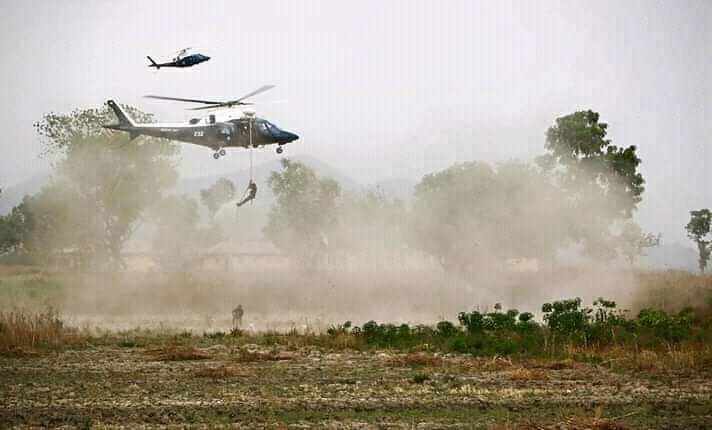
The United States Principal Deputy National Security Advisor, Jon Finer, said US government will help Nigeria fight against banditry.

He made this known on Monday during a press round table discussion held in Abuja, assuring Nigeria their full support to carry on the mission.

It is obvious that insecurity in Nigeria is one of the major problems that lingers for a very long time, more especially in some Northwest states.

Mr. Finer added that: “We’ll provide technical assistance for justice programming, much of which is dedicated to help Nigeria get a turnaround at this time of banditry challenges, and we will continue to provide programmes like that to help the country.


“I think we’ve made clear our expectations on how the firefighters are going to be use in a right way,” he said. Read More

Four police officers detained for assaulting travellers in Kogi

By Ishaka Mohammed

The Kogi State Police Command has detained officers who reportedly brutalised some travellers in the state, report says Sunday 17 October, 2021. As released by the Command’s public relations officer, DSP William Ovye Aya, the Command has commenced investigations into a trending video which claims extortion and physical assault.


The Daily Reality gathered that four police personnel attached to Adogo Division reportedly extorted N25,000 from a traveller and physically assaulted one other passenger along Adogo-Okene road.


According to the Commissioner of Police, Kogi State Command, CP Idrisu Dauda Dabban, the officers have been detained at the State Criminal Investigations Department. The CP enjoins the victims to reach out to the Command through 08107899269.


Recall that the Inspector-General of Police, IGP Usman Alkali Baba, had earlier ordered the Kogi State Command to immediately conduct discrete investigations into the trending video. In the viral video, the police officers forced a traveller to a PoS operator and extorted N25,000 from him. According to DSP William, the officers are: ASP Isah Barnabas, Inspector Ifediegwu Godwin, Sgt Emmanuel Ochima, and CPL Umameh Mathias.


Both the IGP and the CP have promised that any of the officers found guilty will be dealt with accordingly.

Massacre of Muslim Travellers in Jos: the inside story

Barrister Lawal Ishaq is a resident of the area where Irigwe militias massacred scores of Muslim travellers. The Daily Reality (TDR) newspaper had an interview with him, thus:

TDR: Nigerian newspapers, blogs and so on have reported different figures as numbers of Muslim travellers massacre while passing through Jos, Plateau State. Can you tell us how many people were actually killed?

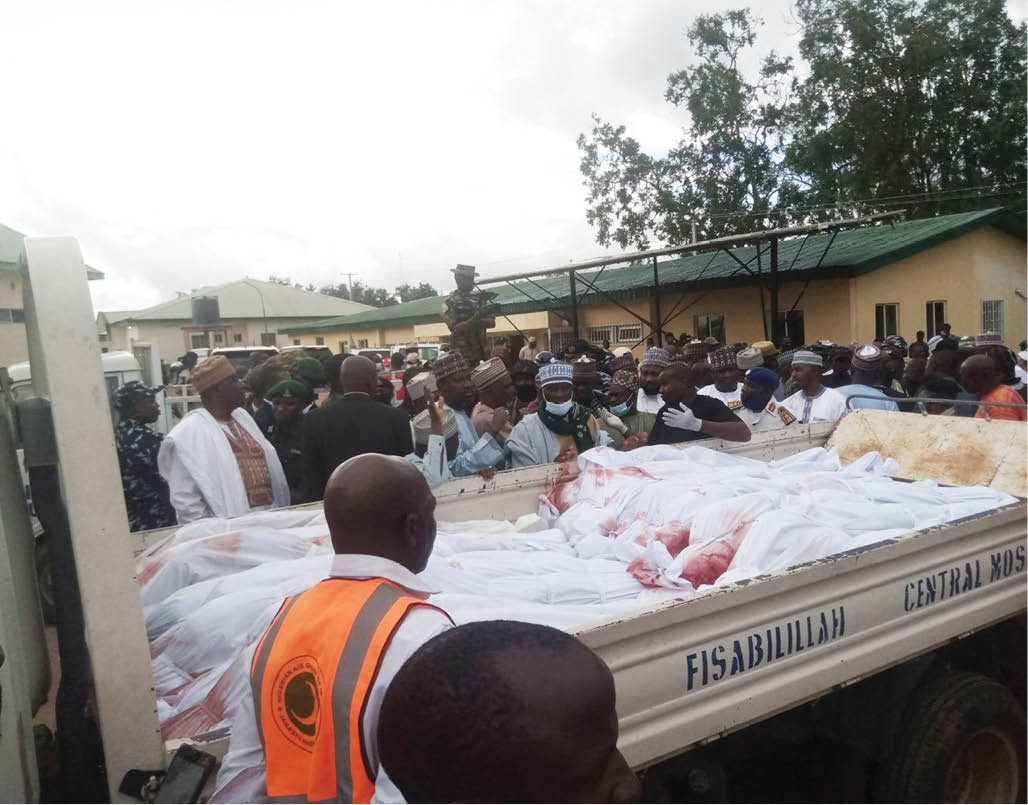
Barrister:  So far, the actual number is 26, and security operatives and good Samaritans rescued about 34 people.

TDR: Jos is known as a volatile state where religious crises have become a norm. Was this a sort of reprisal attack or what?

Barrister: Recently, there had been some misunderstanding and skirmishes between Fulani and Miyango tribe in Bassa Local Government. There have been attacks and counter-attacks between them for ages.  Recently, it was said that four people were killed, and their corpses were deposited at Plateau Special Hospital. They planned their funerals on Saturday. After they picked the bodies from the hospital, instead of conveying their corpses in the vehicle, they opted to come in large numbers and carried them on foot and were heard chanting war songs in their language. They were over two thousand. They trekked from Plateau hospital, passing “Operation Safe Haven” headquarter, but nobody said anything to them. Their large number was a warning signal, but fortunately, nobody cares.

As they were passing through Rukba Road, unfortunately, their victims were coming back from their annual Zikr event in Bauchi under the leadership of Sheikh Dahiru Usman Bauchi. The event takes place on the first Friday of every new year of the Islamic calendar. So, most of the people killed came from Ondo State. Most of them are Fulani, but they speak Yoruba more than even Fulfulde, and they were followers of the Tijjaniyya sect. They spent a night in Bauchi and left Bauchi early morning. The typical road for them to follow through Jos. They were in five buses, each containing eighteen passengers. So imagine the number.

TDR: You mean they attacked all those five buses?

Yes. All buses were attacked, killing 25 people instantly. One died later in the hospital.

TDR: How did they identify them?

Barrister: Unfortunately, their buses were all carrying the pictures of Sheikh Ibrahim Inyas to indicate that they were on a religious trip. And some of them were chanting Zikr. But there was nothing suspicious about them. It was apparent that they were only passing through Jos. And according to what they have told us, ordinarily, they would have passed Inuwa Nsunde (name of the street) peacefully. But because of the traffic gridlock caused by those people, that was how they met their death.

TDR How long did the attack last?

Barrister: It didn’t last long because already there was tension in that area. So the security operatives are always on high alert. And in this social media era, before you know it, some people were able to record and share images and videos on Facebook and WhatsApp groups.

TDR: Was there any gunshot in their bodies?

Barrister: No! No, any gunshot at all. They used machetes, knives and anything that can kill.

TDR: Any action from the state government?

Barrister:  The State Government had reacted promptly. The secretary to the state government came to the place immediately. The police commissioner was there, the director department of security service was there, and the Commandant of the Nigeria Security and Civil Defence Corps was also there. So we were together when they dispatched the security personnel team to the area. They retrieved the dead bodies and the injured, who were soon conveyed to the general hospital.

TDR: Was there any arrest?

Barrister: We stayed at the hospital until we were told to go and bury the bodies at 04:30 pm or thereabout. The burial took us more than an hour because we had to put them into a mass grave. We, later on, received information from the police command that about seven people were arrested. But the most important thing is that the resident of that area did not carry out the killing. Those people from Miyango village did this massacre.

TDR: What is the name of their tribe?

Barrister: Irigwe Tribe. They are predominantly Christians. That gives the whole thing a religious colouration because their victims were all Muslims. It took us a great deal to control the situation because some people were so agitated. That is why instead of burying them at the central burial ground, we took them to Dadin Kowa cemetery. That is about fifty kilometres from Jos.

TDR: Thank you, sir.

Barrister: You are welcome.
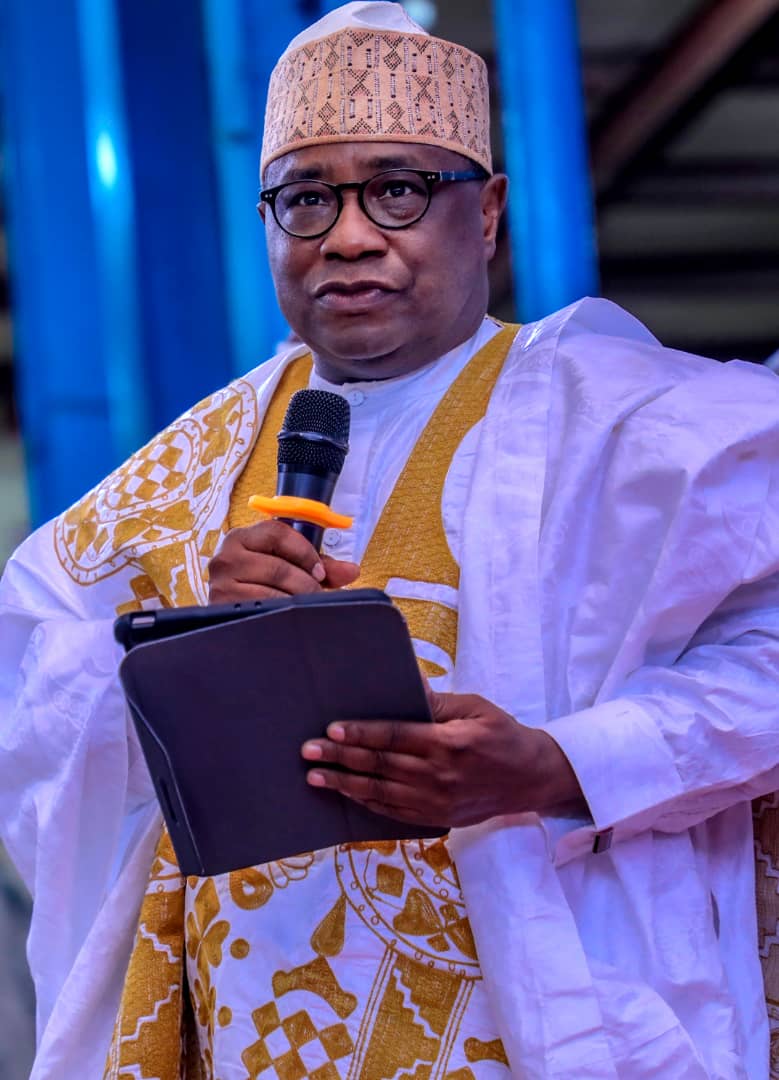
‘It is our collective responsibility to protect Prophet Muhammad (SAW)’ – Prof. Salisu Shehu

With the ongoing discussions on Sheikh Abduljabbar Nasiru Kabara saga, Professor Salisu Shehu spoke to The Daily Reality (TDR) on why religious conflicts are pervasive in northern Nigeria.

‘The fact is our state governments are primarily responsible for this. They allow everybody to do what they like. If a state government can muster the necessary political will to exercise the necessary political authority to curtail these things, things like these must not be happening. The governments should be proactive; they should not act when issues are already or on the verge of going out of hand. Besides government, other factors include widespread ignorance and poverty. These and other factors are the facts we cannot dismiss.’

TDR asked Prof. Shehu to comment on the call to sensitise and regulate religious preaching. The call gain prominence since the devastation caused by Boko Haram religious organisation in North-East.

‘I believe something around that should be done by the respective state governments. People like these [Sheikh Abduljabbar and co.] should not be allowed to be saying whatever they want. Freedom of speech does not mean saying whatever you want to say, true or false; whether it could bring confusion in the society, create disaffection and cause bloodshed and so on. For me, the regulations should not be unilateral. The state government cannot just come out and hand down some rules and regulations without consultations. You know, there has to be a wide range of consultation with stakeholders, primarily the preachers and scholars. So, based on mutual understanding, something should be done,’ said Prof. Shehu.

Concerning the dialogue Kano State government organised after receiving series of complaints from religious scholars and other concerned citizens on the manner Sheikh Abduljabbar was preaching, Prof. reacts thus:

‘Actually, one of the reasons why the government organised this dialogue was because it wanted to bring peace. It wanted to avoid the situation that may degenerate into violence in Kano State. So now it is left for the government to take the necessary steps to ensure that this thing does not continue. It must take measures to ensure that this blasphemy against the person of the Prophet (S.A.W) stops. And whatever it takes, the governor should do that. Because it is collective interest to protect the honour, the nobility and the great position of the Prophet (S.A.W).’

Abduljabbar Dialogue: ‘My emergence as judge’ – Prof. Salisu Shehu

Prof. Salisu Shehu, who is the Director of the Centre for Islamic Civilization and Interfaith Dialogue of Bayero University, Kano, in an exclusive interview with The Daily Reality (TDR), described how he emerged as the presiding judge of the dialogue between Sheikh Abduljabbar Nasiru Kabara and some Islamic scholars in Kano state.

“I want to believe that it was made by the grace of God. I know that several senior, elderly and important personalities were pencilled down and contacted, but some of them declined while others, unfortunately, were out of town. My name was among those that were suggested as options. And, by the grace of Allah, my name was anonymously accepted by the committee and therefore was presented to the Kano State Government. I received my appointment letter a day before the fixed date for this dialogue. I, too, have actually tried to decline because there are many people that are more deserving and competent. Still, the committee insisted and persuaded me to accept this appointment since State Government has approved it.”

There were speculations that those who rejected the offer to chair the session or refused to participate did that due to the gravity of the blasphemous remarks on the person of Prophet Muhammad (S.A.W). They, thus, and see the whole issue as needless and a waste of time.

“Of course, these are terrible, sacrilegious statements and utterances. And it is disturbing listening to them because they are horrible and disrespectful to the Prophet (S.A.W). But from the perspective of a jurisdiction maxim: “Addarurat tubihul mahzurat“, we have to do something to bring an end to it. And I have seen how this person has been boasting and bragging that all his claims are valid and no one can face him. So I felt it was necessary to accept and participate in this capacity to bring an end to his misguidance That was how I convinced myself,” Prof. Shehu said.

Sheikh Abduljabbar has complained about the time given and has tried several times to provoke you. How did you manage his provocations?

“You see, dialogue should not just be conducted for an unlimited time. We don’t have to stay the whole day. Unless there is no orderliness and good organisation, he was the only one complaining about time. You have all seen how one of the participants open about five books or more in his ten minutes. Abduljabbar had a system [mobile phone or laptop] with him together with two of his disciples. What was their function? Why did he bring them there? Why they were not opening the pages of those books, he was asked to? It was obvious. So it was quite challenging in the sense that you have to control yourself. You have to exercise a great deal of patience because one can easily be provoked.”

I wish Abduljabbar will truly repent – Dr Muslim

A leading member of the Coalition of Kano Ulama and an academic, Dr Muhammad Muslim Ibrahim, who also attended the dialogue between Sheikh Abduljabbar Kabara and representatives of the Coalition, said in an interview with The Daily Reality that Kano Ulamas had done their parts. The rest was for the Kano State government to make the final decision.

Dr Muslim said, “The debate was well-organized and was just. Each contestant was allocated ten minutes to present their argument, followed by an additional five minutes for clarification, etc. Malam Abduljabbar was aware of the questions to be asked. They were nine questions formed from his blasphemous translations and utterances on Prophet Muhammad (S.A.W), his companions and famous Hadith books – Sahihul Bukhari and Muslim. He said all this in his lessons, preachings and sermons.”

In the dialogue held on July 10, 2021, Sheikh Abduljabbar persistently complained about insufficient time to answer questions. He further protested that he was not aware of the debate’s guidelines. However, Dr Muslim countered these claims.

“This is nothing but denial and a look for a way out. The questions had been with him for months, and he was the one who urged that this debate should be held. Thus, he had to be more prepared than any of these scholars. Similarly, nobody was aware of the specifics of the arrangement of the debate as everything was in the hand of the government. Of course, we also wanted to have equal time for both parties, but he had more.”

Dr Muslim emphatically added that “Our representatives should have more time than Abduljabbar because his task was to defend those blasphemous remarks, but the judge of the sitting outrightly rejected our demand.”

On his expectation as the dialogue was over now, the cleric responded thus, “There are many views. Some say the government intended to have a reasonable point with which Abduljabbar can be legally convicted for making those blasphemous statements. However, now that it has been confirmed that Abduljabbar fabricated all those statements, it is the Kano State government that will decide his fate. So though some say the punishment of blasphemy in Islam is killing, I don’t think it will be possible here in Nigeria. So we should not talk about it because we will end up wasting our time.

But what I expect from the Kano State government is to continue banning him from leading prayers, giving lessons and or posting on social media. It is none of our intent for Abduljabbar to be jailed; we are afraid that he will use this opportunity to corrupt the inmates. But, If we are to follow what Allah says, the only option for Abduljabbar is to either repent or be killed if he refused. How I wish he will repent,” concluded Dr Muslim.

Flooding: As you make your bed, so you must lie on it

By Ibrahiym A. El-Caleel

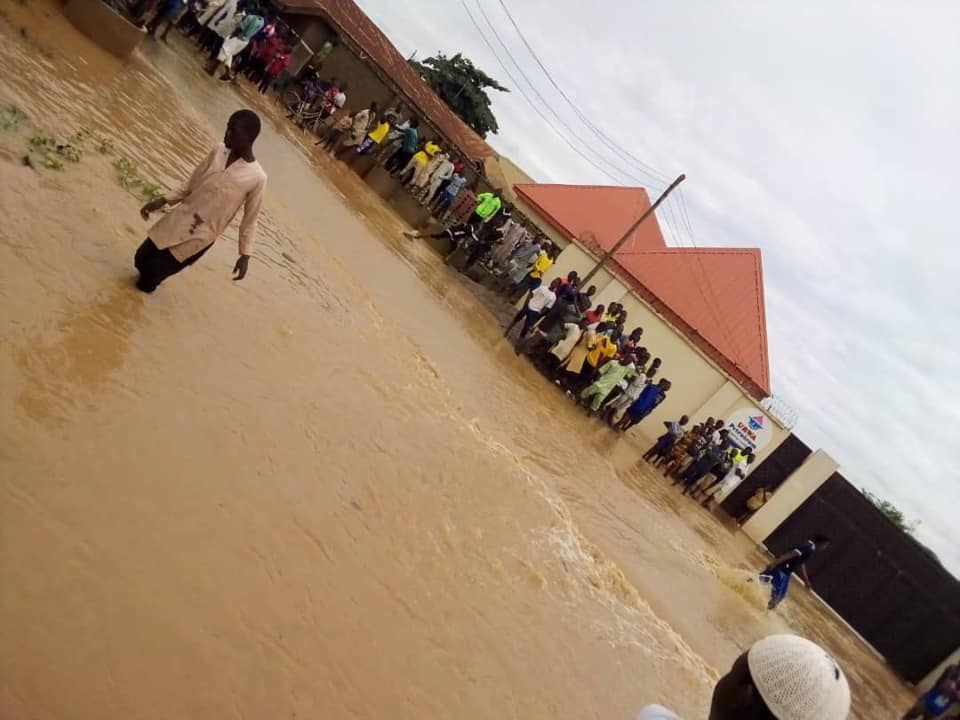
Flooding in this season is caused by heavy rainfalls. It happens because the excess water from a heavy rainfall is unable to find a drainage system with the capacity to contain it. Our local areas, called “ghettos” are fond of blocking the gutters. Household wastes are dumped in gutters instead of depositing them in refuse dump for proper incineration.The new extension areas mostly called “low-cost” also suffer from inadequate drainage system due to poor planning. People passionately build houses of N8-10 million, but comfortably neglect building a drainage that will cost them less than N300K.

I know a man whose neighbor refused to build a gutter for over 20 years, with much quarrel. Everyday, this man had to use a rake to collect the waste from his house to pass it to the next gutter because his immediate neighbor refused to let the gutter continue in front of his house. Of course it’s a semi-ghetto area, no one cared to reveal this to appropriate authorities. Rainfalls have no specific regards to the poor drainage system we have in our communities. We can continue to block the gutters with our household wastes. Lowcost residents can continue to build their fine houses without making provision for drainage. When the heavy rain eventually falls, it will not seek for a pathway. It will accumulate on the streets and find its way into our houses, living rooms and bedrooms. Eventually, we will then begin to have honest concerns with our lack of regards for drainage systems. It is true that we have governmental institutions for environmental health. Take Kaduna State for example. Kaduna has Kaduna Environmental Protection Authority (KEPA). Go to KEPA’s office on Old Jos Road in Zaria close to Kongo Campus and see the gutter there. A few years back when I was making a self-assigned field research on this issue, their gutter was also blocked with several plastic wastes and heap of sand! This is a regulatory agency that should drive residents compliance with environmental health systems like drainage. KASTELEA was also launched to enforce both state traffic laws and environmental laws. KASTELEA stands for “Kaduna State Traffic and Environmental Law Enforcement”. But today KASTELEA is obsessed with catching drivers with an expired “Road Worthiness Certificate” more than cracking on households with no drainage systems which leads to flooding of a community of 2,000 homes.

For prevention, people should not wait for KEPA or KASTELEA to come and enforce them to clean their gutters. They don’t have your time! If you like, don’t just dump your household wastes in the gutters. You may please seal the gutters with molten steel! When the community eventually floods, you will feel the pain more than anyone. The best thing SEMA will do is to give you 2 tiers each of rice as palliatives and then have NTA cover the story. The remaining wahala is yours to know how to solve. It is the usual way of manhandling everything that has to do with public good. I have seen someone who demolished a part of his house, and instead of transporting the red sand elsewhere, he spread it on the tarred road that is meant for public use. When rain fell, the red sand became sticky and everyone in that community had to suffer for this indiscipline. Yet no one cared to force this man to come and pack up his red sand. After all, he dumped it on a road that doesn’t belong to anyone. The road belongs to the government. Therefore, it is the government’s headache! Allah has been very merciful to us. We are not living in coastal areas that are susceptible to tropical cyclones that could lead to storm surges that will flood our communities. Now that we live in our areas that are free from this, why can’t we have good drainage systems that will contain heavy rainfalls? As we make our bed, so shall we lie on it.

Kano has the best emirate in northern Nigeria – Prof Abdalla Uba Adamu

Adamu speaking at the Coronation Lecture of his highness, the emir of Kano, Alhaji Aminu Ado Bayero, which Kano Emirate Council organized in conjunction with the Bayero University, Kano held at the Convocation Arena of BUK on Thursday, July 1, 2021.

While delivering his paper titled “Kano Emirate: Yesterday, Today and Tomorrow”, Prof. Abdalla Uba Adamu argued that “Of all the grand emirates of northern Nigeria, none has the spectacular and expansive history and cultural anthropology recorded like the emirate, now the emirates of old Kano.”

In the historiography of Kano, Adamu traced that “Kano was founded in the 7th century by a group of wandering blacksmith seeking for iron ore from Gaya Town.” The versatile scholar used the typology of urban cultures developed by Fox (1977).

Adamu classified Kano as a ritual city, administrative city, mercantile city, scholastic city, colonial city, industrial city, and a bustling hub. He reiterated that it maintains the famous cultural jingle “Kano ko da me ka zo an fi ka”, loosely meaning: Kano is simply the best. 

Despite its greatness, Adamu lamented the increase in crimes and other social vices in Kano, adding that “these are the characteristics of any prosperous urban state.”

In his welcome address, the Vice-Chancellor of Bayero University, Prof. Sagir Adamu Abbas, said that it was a privilege to choose the University to host this maiden lecture. “It was a wise decision to introduce a public lecture into the activities of the coronation as it signals [a] new archetype in the affairs of Kano Emirate Council.”

Abbas commended the decision of the Kano State Government to formalize the Coronation of Sarkin Kano as that “demonstrates love and commitment towards ensuring a stable society and hopes Sarki Aminu Ado will use this opportunity to move Kano and the traditional institution to greater heights.”

Also speaking, the chairman of the occasion, His Eminence, The Sultan of Sokoto, Alhaji Muhammad Sa’ad Abubakar, reminded the audience of the significance of traditional leaders as the custodian of cultural heritage. 

In his remark, His Royal Highness, Alhaji Dr Aminu Ado Bayero, the emir of Kano and the 15th Fulani ruling amir, described the relationship between Kano Emirate and Bayero University as that of “hanta da jini” [blood and liver]. Being a former student of Bayero University, mass communication programme, Sarki Aminu was delighted to see his former teacher, Prof. Cecil Blake, in the audience. 

In his speech, the Executive Governor of Kano State, His Excellency, Dr Abdullahi Umar Ganduje, said the title of the paper presented by Prof. Adamu “is apt.” Ganduje expressed happiness with the current peace in Kano State when many northern states are fighting insecurity. 

The event was attended by many politicians, academics, business people, traditional and religious leaders from and outside Kano State.