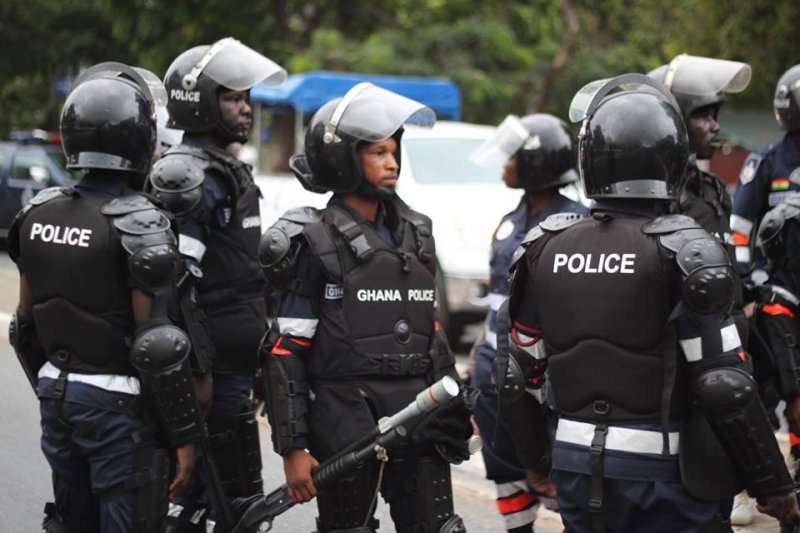
Nigerian police apprehend own officers for extorting traveller
By Muhammad Sabiu
By Muhammad Sabiu
By Uzair Adam Imam
Following the death of two patients at Green-Olives Hospital, which the Private Health Institutions Management Agency (PHIMA) has described as misconduct in terms of management and service, the Kano State government has decided to shut down the hospital.
Green-Olives Hospital is situated at Sabon Titi, Tal’udu Gadon Kaya in Gwale Local Government Area.
Concerning the development of the issue, the Executive Secretary of PHIMA, Dr Usman Tijjani Aliyu, announced the closure of the facility in a statement.
However, the institution (PHIMA) was said to have been informed by the committee of citizens over the death of two patients at the facility.
Speaking, Aliyu stated that the two cases were thoroughly looked into and had discovered lots of misconduct and mismanagement in terms of services rendered to patients.
According to the statement, “The surgeon serves as the anaesthetic nurse, perioperative nurse and assistant surgeon as well, hence he alone does the four jobs during surgery, and this is grossly unethical by all standards.
“Consent forms were not signed before surgery, patients were not adequately prepared before surgery and no intraoperative monitoring of patients during surgery,” the statement added.
He also added that the accused would be dealt with in accordance with the agency’s guidelines, urging Kano state people to report such cases immediately as found wherever in the state.
By Sumayyah Auwal Ishaq
Abba Sayyadi Ruma, a former minister of agriculture and rural development, is dead. Mr. Ruma served as minister during the late President Ummaru Musa Yar’adua’s administration.
Sources have confirmed that Ruma died in London after a brief illness. The deceased was believed to be among the most influential cabinet members during the Yar’adua era.
By A. A. Bukar
Let me preface this with the caveat and confession that part of the reason I recently slow down hobnobbing with professors is my increasing abhorrence of this culture of excessive bootlicking and kowtowing that is creeping into academia and eroding the ideals of independent thought, spirit of free inquiry and detachment that hitherto characterise intellectual discourse. The radical critique of issues and events for the betterment of humanity and irradiating the society is slowly taking a wing, supplanted with overt politicisation of minor issues (and even non-issues). Today, young academics, like myself, are becoming increasingly afraid to express even simple admiration of who they consider as the IDEAL TYPE among their teachers and mentors in academia because of “interpretations”. For this, you can even be reported to the enemy of such a scholar to possibly victimise you “sabida ai yaron wane ne! Ku kyale shi, ai zai zo defence, ai za’ a kawo papers dinsa for assessment”. And on and on. Such pettiness and vendetta. Hence, many – out there – see Nigerian academics as the worst enemies of themselves and are happy with how FG is dealing with them.
Little wonder whether this culture is obtainable in other parts of the world. Departments are compartmentalised into cliques and camps a la political parties in the larger society. Professors are becoming like emirs fortified by sycophants, making them unnecessarily snobbish and covetous of flattery. PhDs are deliberately delayed or tactically killed because a candidate does not BELONG. A blind eye is turned to obvious wrongs, mediocrity, and crass injustice because “our oga” is INVOLVED. Entitlements and privileges (especially of the younger ones) are stampeded to settle SCORES.
A friend sent me a Jumaat goodwill message, a quotation from Rumi which reads: “Listen to silence; it has so much to say”. How many PhD/MSc candidates do you know writhing in silent pain of frustration? Prof sirs and mas: listen to our silences and that shy smile that says “ba komai sir”. When I was an undergrad, I once overheard my teacher, Dr Gausu, talking about one of his colleagues in Economics, Business or Accounting (I can’t remember exactly) who’d become agoraphobic and almost schizophrenic because of PhD manhandling from a senior colleague. Of course, then I was too inexperienced to understand the heck that was about. They sarcastically even refer to the initials as “Pull Him Down”.
Whether this augurs well for generation, production and dissemination of ideas and knowledge typical of the Ivory Tower, I leave it to your imagination.
For these and more, many ideal intellectuals are on the lookout for escape windows from the suffocating atmosphere of poverty and frustrations taking over academia like a thick cloud on the horizon. Many are “diversifying”, hence diverting their attention from the absolute commitment ideal scholarship demands. Others are increasingly becoming nonchalant – that I-don’t-care attitude of: “if the department or unit fuels the generator set, fine, otherwise I teach the SPSS or Word Processing on the whiteboard”. Elsewhere blackboard. So Nigerian hospitals are not alone; medical practitioners are just a cohort.
Despite all odds, I love being at the University. It is a place where I feel I naturally belong. And our campuses are still dotted with the IDEAL TYPE (just as there are IDLE TYPES who do not “profess” any knowledge) that constantly bring back to one’s memory my favourite: Edward Said. Critically engaging. Highly unassuming – like Mazrui. Passionate about nourishing the mind; concerned with the public good and Humanity as a whole. People who will unconsciously make you feel you are far from arriving without making you feel embarrassed. I have recently met and enormously admire one such intellectual is Professor Abubakar Mu’azu of the Mass Communication department, UNIMAID.
Interpret this one too the way you like. Report me anywhere. Land me into trouble. I no longer care. But Allah knows whether this is coming from the bottom of my heart or elsewhere. Such as an attempt to curry favour.
After all, what use is admiring people if you cannot tell them or others you do? Or should we hold on till they are no more? Wouldn’t that serve as a token of encouragement to maintain the course and tempo against all odds?
I have earmarked a few other similar intellectuals I will write about in due course on this space. I will unburden my heart about people I feel positively towards. Yes, I will specify those who fit my definition of the ideal intellectual. Part of this is, of course, honesty. Wallahi, no matter how engaging you are, you are out of the equation once it comes to the light you are dubious and too self-centred. If you’re extorting money or sex from your vulnerable students, you cannot be my model. But again, I am not looking out for an angel.
Back to the subject, I have met with Prof Muazu only a few times. One was when he came as an external examiner to my thesis in April 2018 and some months earlier as an accreditation team member for the college I taught in Yobe state. The last, some weeks back. Each, he left me with nothing but admiration and deep respect.
When I phoned my referee and supervisor at undergrad, late Prof Maikaba, to congratulate him on his last promotion, he typically enquired about the progress of my thesis. I told him then, “I was done with viva yesterday and effecting corrections now”. Curiously, he returned with a finder about the examiner. When I replied that it was Mu’azu, he said: “kace an sha aiki”. Toh Bukar. PhD beckons. You can’t wait, especially for one in this business. He admonished me as usual; I giggled, thanked and said my goodbye.
I don’t know whether it’s appropriate to reveal this too. Some hours before the viva voce, my supervisor, Dr Binta Kasim Mohammed, called alerting me “to prepare very well. Because the external examiner brought is extremely thorough and critical”. Sir, you are appreciated and held in high esteem not only by nonentities like us but also by your colleagues. But my assessment of you from afar is that: these things matter little to you (if at all) – out of humility.
From both you and the late Maikaba, I graduated with distinction. But each time we met, you left me feeling inadequate, making me wonder ‘when will I arrive?’. Parts of this are the books you recommend, which I never read, or know not exist. But somewhere in WHERE I STAND, Sheikh Gumi has opined along this line that knowledge is such enigmatic that the more you learn, the more you realise that you know very little. I wonder whether you feel something similar sometimes. Yes, despite the accomplishments. In just your last visit, you recommended, as the situation warranted, many texts. Among these are Peter Winch’s THE IDEA OF A SOCIAL SCIENCE AND ITS RELATION WITH PHILOSOPHY. Then the POSITIVIST DISPUTE IN GERMAN SOCIOLOGY. The latter is such a rare collection – in fact, my first time to meet Adorno, Habermas and Karl Popper in one place. Both books remind me of similar stuff I read from the staple of Claude Ake and Yusuf Bala Usman of blessed memory.
In this vein of characteristic modesty, you specifically asked me to read Ben Bagdikian’s MEDIA MONOPOLY after the viva voce in order to steel my argument on the influence of profit drive in media content production. A copy of my thesis still carries your adorable handwriting suggesting the title and other points. But little wonder you never drew my attention to the fact that you have written extensively on media in peacebuilding until my curiosity took me to the internet and a bookshop where I stumbled CONFLICT MANAGEMENT AND THE MEDIA IN NIGERIA – a book coedited by you and Gani Yoroms. This was despite your awareness that my thesis is squarely about this matter of controversy. Quite recessive indeed.
With the crisis engulfing Nigerian Universities (the worst I have ever seen) and academics running helter-skelter for greener pasture, I equally wonder what becomes of the academia after the few of you that remain out of passion pass on to something else or the inevitable great beyond. And especially if this maddening ill-treatment continues from the federal government. Allah Ya kiyaye, amin.
Bukar teaches Mass Communication & Journalism at Ahmadu Bello University, Zaria.
By Hussaina Sufyan Ahmed
By Adamu Ibraheem Jimeta
There was pandemonium at the main entrance of the Federal College of Education, Yola, on Tuesday, October 26, 2021, when students blocked the college entrance protesting a two-week total blackout of electricity and water supplies in the college.
The protest, which started as early as 7 am, grounded academic activities as students and lecturers were denied access to the college.
According to the protesters, they have opted for the protest as their last resort as all pleas to the management to intervene in the incessant problems of water and electricity supplies fall on deaf ears.
Speaking to our correspondent, a level 300 Education/English student who prefers anonymity told The Daily Reality that for over a week, there was no water nor electricity in the college. He said, “Living in the hostel with no water and light, lecture theatre with no electricity supplies for over weeks have been excruciating.”
He said the Students’ Union Government (SUG) has not lived to the expectations and welfare of the students. He called on the management to take drastic measures that would bring these problems to an end.
Responding to the accusation by the students, the SUG President, Comrade Sulaiman Abdullahi, told our reporter that his administration has been running around over the problem. “We have had a meeting with the Acting Provost, and he has assured us that the management will fix the problem. Even yesterday, I spoke with the provost on phone, and he said he has arranged a tanker that will start supplying the college effective from today, Tuesday. Therefore is not true that we have not done anything about it,” said the SUG president.
All efforts to speak with the Registrar of the college, Malam Gidado Ahmed, proved abortive during filing this report. He earlier told The Daily Reality he was in a meeting and promised to get back to us but, he didn’t reply to the messages and calls put to him by the reporter before going to press.
It took the intervention of a joint task force of soldiers, mobile police and men of NSCDC when the protest escalated to burning tires within the school premises. The JTF fired gunshots in the air and dispersed the protesters.
In a related development, the management of the Federal College of Education, Yola, has announced the closure of the college. In a circular signed by the Registrar, Ahmed, it was stated that after its emergency meeting on October 26, 2021, the management has reviewed the situation on the ground and resolved to close the college immediately.
Students are given up to 10 am to vacate the campus, the circular added.
Have you tried entering any Nigerian bank these days? You will have an experience you will never want to go near bank again. The reason is that the banks have taken their Covid-19 protocols to a primitive, cruel and self-destructive level. It is time they throw away their Covid-19 protocols. I have long said if Corona had been what we were made to believe, probably by now we would have all been dead. But fortunately Africa, for unexplained reasons, has been spared the disasters predicted about the pandemic.
Bankers are like all of us when they leave banking halls. They go to markets, schools, airports, motorparks, shopping malls and places of worship where Covid-19 protocols are thrown to the dogs. What they don’t get from the bank they will still get it from outside the banks. If the rest of Nigerians don’t care about Covid-19 protocols, why should bankers be more Catholic than the Pope?
Schools resumed also with their mad frenzy for observing all Covid-19 protocols. But within a week they have gone back to basics. Students don’t have the discipline, patience and above all, the resources to keep faith with Covid-19 protocols. No one can be religious with hand sanitizer, facemask and hand washing. My children tried it and my Chief gets his facemask soaked in soup daily. He loses bottles of sanitizers daily. At his age there is no way he can understand Covid-19 protocols and will not be made to understand the dangers of Covid-19.
But all in all Covid-19 is past behind us. Social distancing and protocols should be part of individual responsibility. Covid-19 or no Covid-19 we are supposed to exercise distancing and hand washing hygiene. But that does not mean we should promote Covid-19 protocols to religious level.
Our African, and to some extent Nigerian Covid-19 is entirely different from the deadly foreign one. This is the best time to acknowledge the local thing over the deadly foreign one. Ours is more friendly and merciful. The banks should know these and stop their stupid and deceptive lies.
Aliyu Nuhu writes from Abuja, Nigeria.
Through out last week, there were rising fears among the Sudanese as the military were about to intrude into the civilian spaces. Tension was so high, a situation that led to the closure of businesses, offices and many people remained indoors in the Capital city of Khartoum. However, earlier in the morning, there was a reported military coup.
According to CAIRO (AP) — Military forces arrested Sudan’s acting prime minister and senior government officials Monday, disrupted internet access and blocked bridges in the capital Khartoum, the country’s information ministry said, describing the actions as a coup.
In response, thousands flooded the streets of Khartoum and its twin city of Omdurman to protest the apparent military takeover. Footage shared online appeared to show protesters blocking streets and setting fire to tires as security forces used tear gas to disperse them.
Protesters could be heard chanting, “The people are stronger, stronger” and “Retreat is not an option!” as plumes of smoke from burning tires filled the air.
A takeover by the military would be a major setback for Sudan, which has grappled with a stop-and-go transition to democracy since long-time ruler Omar al-Bashir was toppled by mass protests two years ago.
The United States and the European Union expressed concern over Monday’s developments.
Jeffrey Feltman, the U.S. special envoy to the Horn of Africa, said Washington was “deeply alarmed” by reports. Feltman had met with Sudanese officials over the weekend in an effort to resolve a growing dispute between the country’s civilian and military leaders. EU foreign affairs chief Joseph Borrell tweeted that he’s following events with the “utmost concern.”
The first reports about a possible military takeover began trickling out of Sudan before dawn Monday. By mid-morning, the information ministry confirmed that the prime minister, Abdalla Hamdok, had been arrested and taken to an undisclosed location. Several senior government figures were also detained, the ministry said in a Facebook post. It said their whereabouts were unknown.
In other hallmarks of a takeover, internet access was widely disrupted and the country’s state news channel played patriotic traditional music. At one point, military forces stormed the offices of Sudan’s state-run television in Omdurman and detained a number of workers, the information ministry said.
Monday’s apparent takeover came after weeks of rising tensions between Sudan’s civilian and military leaders. A failed coup attempt in September fractured the country along old lines, pitting more-conservative Islamists who want a military government against those who toppled al-Bashir in protests. In recent days, both camps have taken to the street in demonstrations.
Under Hamdok and the transitional council, Sudan had slowly emerged from years of international pariah status in which it existed under al-Bashir. The country was removed from the United States’ state supporter of terror list in 2020, opening the door for badly needed international loans and investment. But the country’s economy has struggled with the shock of a number economic reforms called for by international lending institutions.
There have been previous military coups in Sudan since it gained its independence from Britain and Egypt in 1956. Al-Bashir came to power in a 1989 military coup that removed the country’s last elected government.
Among those detained Monday, in addition to Hamdok, were five senior government figures, according to two officials who spoke on condition of anonymity because they were not authorized to share information with the media.
Those detained included Industry Minister Ibrahim al-Sheikh, Information Minister Hamza Baloul, and Mohammed al-Fiky Suliman, member of the country’s ruling transitional body, known as the Sovereign Council, as well as Faisal Mohammed Saleh, a media adviser to Hamdok. Ayman Khalid, governor of the state containing the capital, Khartoum, was also arrested, according to the official Facebook page of his office.
After news of the arrests spread, the country’s main pro-democracy group and the Sudanese Communist Party issued separate appeals for Sudanese to take to the streets.
Separately, the Communist Party called on workers to go on strike in an act of mass civil disobedience after what it described as a “full military coup” orchestrated by the Sovereign Council’s head Gen. Abdel-Fattah Burhan.
By Aliyu Nuhu
Kano State governor, Dr Abdullahi Umar Ganduje congratulated his predecessor and former boss, Senator Rabiu Musa Kwankwaso, on his birthday. I feel Kwankwanso and Ganduje will surely one day reconcile. These people have come a very long way together. It is the political devil that is harassing their conscience and calculations. However, their supporters gave Ganduje’s birthday message different interpretations and are killing themselves over it.
Kwankwasiyya followers said it was hypocrisy and deception. Some of them viewed it as a nice gesture. On the other hand, the Gandujiyya followers said it was a respect for the former governor.
Either way, I see it as an important step in building bridges and mending fences. How I wish Kwankwaso will, one day, do the same!
The supporters of the two camps should sit and just watch the two gladiators keenly and carefully. They shouldn’t be fighting and insulting one another. One day they Kwankwaso and Ganduje will reconcile. There is no permanent enemy in politics.
I am sure with time you will see Kwankwaso hugging Ganduje and singing his praises. On the other hand, Ganduje has always reached out and is still referring to Kwankwaso as his political father.
With this kind of move, reconciliation is easy.
Who expected Abubakar Rimi and Sabo-Bakin Zuwo to become friends again? Who expected Atiku Abubakar and General Olesagun Obasanjo to come back together? Who knew Nasiru El-Rufai and General Muhammadu Buhari would be together again.
On the flip-side who expected Buba Galadima and Buhari or Malam Ibrahim Shekarau and Buhari to part ways. One day they will also reconcile.
That is politics for you. Don’t lose sleep over politicians and their fights. They are very selfish and deceptive!