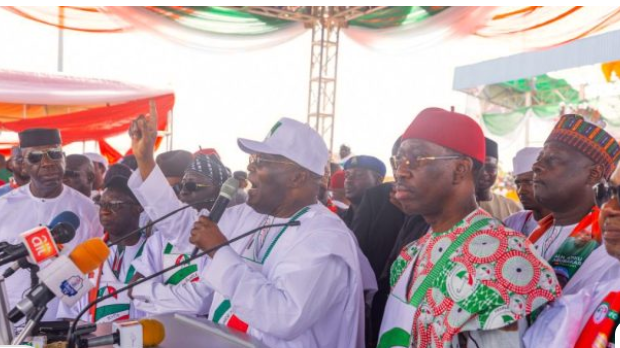
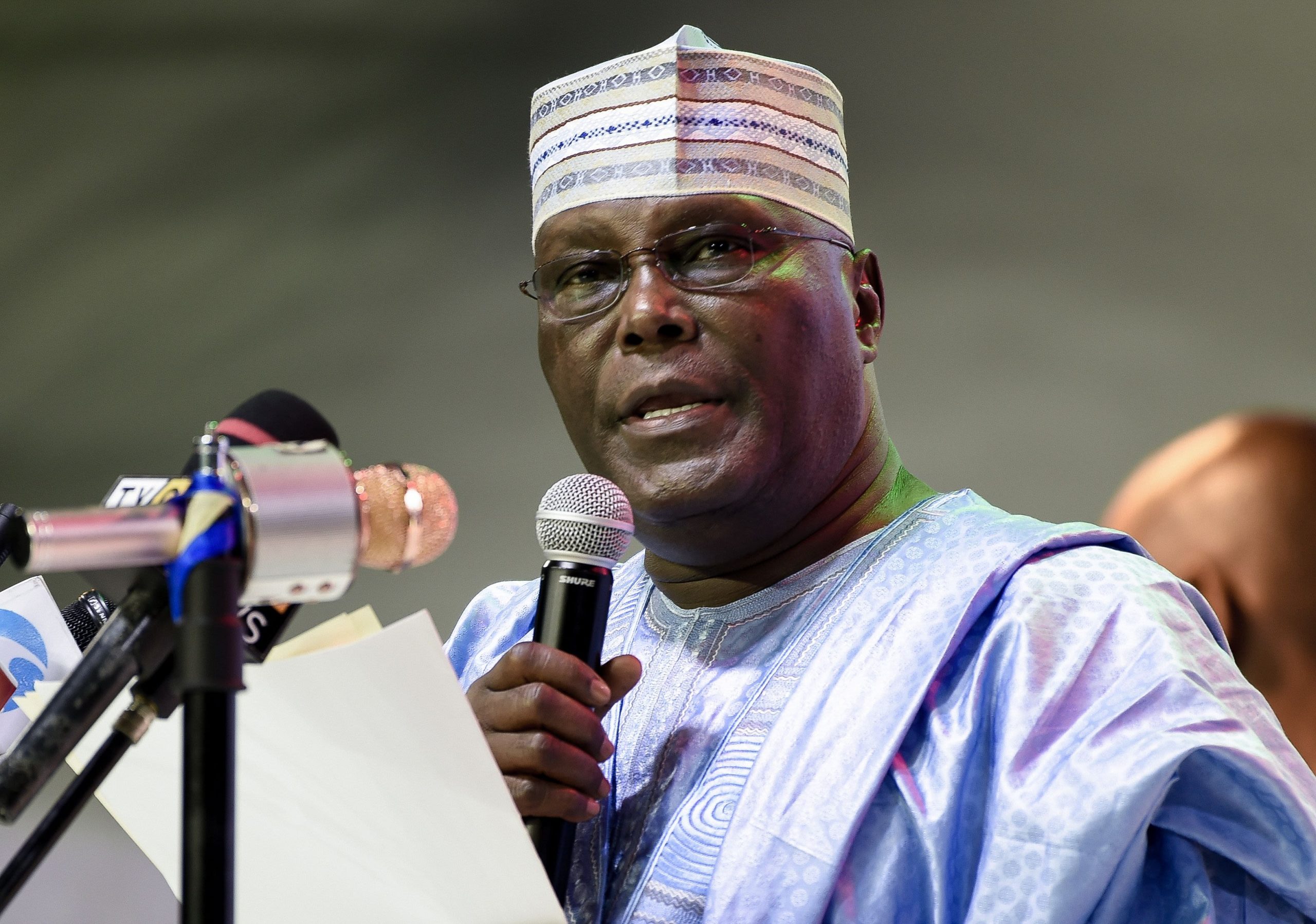
The unprecedented mammoth crowd that welcomed Atiku’s campaign entourage in almost every state they visited is shockingly mind-boggling. The recent one in Katsina, President Muhammad Buhari’s home state, speaks volumes and needs no further political argument that the opposition party has amicably conquered the heart and minds of the northern populace.
Most of the north-eastern electorates feel they now have ample opportunity to produce a president from the region after considering the clear development this has brought to the north-western parts of the country. It’s general knowledge that most of the Federal Government initiatives, such as National Social Investment Schemes, N-power, and other beneficial capital projects, under this current government were enjoyed mainly by in the north-western states. They are making it more developed in politics, infrastructure, and the economy.
The above issue is a welcome development because the region is considered core-north large and more densely populated than the northeastern parts.
But, the northeastern parts, for example, are yearning to produce the first-ever president from the region, which will undoubtedly pave the way for social, political, and infrastructural development. Thus, the hit helps curb the devastating effects of extreme poverty, and hardship occasioned by the Boko Haram Insurgency in some parts of the Borno and Yobe States. And communal, Farmers Herder’s clashes in Adamawa, Taraba, Gombe, and Bauchi States.
Unquestionably, whoever understands the psyche of a typical northerner must agree that it is difficult for one to reject Atiku despite the current circumstances in the country mindfully. Therefore, the northern populace that massively voted for Buhari in the previous elections unopposed should have no regrets about doing the same for the leading People democratic party’s candidate.
Besides, even the elites and the ruling party stalwart knows that are a shot of words on how to stop people, especially from the north, from voting for the Peoples Democratic Party’s candidate in the upcoming general election. Thus, remain with no option but to beat around the bush, able to maintain their political positions and offices.
Atiku may win or lose the election, but undoubtedly, the staunch and unalloyed support Buhari previously enjoyed in the north will certainly be transferred to him and no other.
The northeastern people have never rejected Atiku Abubakar in Nigerian political history but chose Buhari ahead of him due to the political exigencies of the time.
Interestingly, the era of political manipulation has gone. As a result, an average Nigerian from the remote and urban centrist now has a proper knowledge of the game of politics. Consequently, it allowed individuals to amicably exercise their constitutional franchise by considering the most deserving candidate regardless of religion, region, or political party.
Above all, politics, they say, is a game of numbers and interest, and whoever wants to play it should imbibe the culture of flag-waving, unity in diversity, and national Integration.
The National Drug Law Enforcement Agency (NDLEA) states that it has seized 100 million pills of the prescription painkiller Tramadol in just 22 months.
The agency estimated the combined value of the cash and illegal narcotics to be about N450 billion. In addition, the agency detained 29 drug lords, while detaining 23,907 drug traffickers.
Brig. Gen. Mohamed Buba Marwa (Retd), Chairman of the NDLEA, said this in a statement released on Tuesday through the Director of Media and Advocacy, Femi Babafemi.
Marwa said the confiscated Tramadol may have had a negative influence on the youth population and the nation’s productivity.
He said this during the Commands’ Awards/Commendations and Decoration of newly promoted officers at the Agency’s National Headquarters, Abuja.
Marwa said, “Within the period under review, the Agency arrested 23, 907 drug traffickers including 29 barons.
“Our seizure was over 5,500 tons or 5.5 million kilograms of assorted illicit drugs, which together with cash seized are worth over N450 billion.
“In the same period, we have taken the fight to the doorsteps of cannabis growers by destroying 772. 5 hectares of cannabis farms. In these 22 months, we have record convictions of 3, 434 offenders. We have equally made good strides in our drug demand reduction efforts where the number of those counselled and rehabilitated is 16, 114.
“The figures are mere statistics until you view them through the lens of human impact and the good or harm that could have come to society, the impact on public health, security as well as law and order if those dangerous drugs had gone to the street. Take, for instance, the one hundred million pills of tramadol seized in the past 22 months.
“If those pills had gone into circulation and ended up in the hands of young people, it would take a heavy toll on lives, families, productivity and, ultimately, the GDP of the country because it will affect these young people who are the engine room of productivity.
“We usually calculate our performance as monthly, quarterly or yearly appraisals. But drug law enforcement is generally a continuum, hence, I am wont to always appraise our efforts from January 2021, when we began far-reaching reforms, reviewed our strategies and rejigged the existing systems to accommodate innovations.
“From then till now, we have been on an upward trajectory. And indeed, what we have done in the last 22 months, from January 2021 to October 2022, based on the available statistics, is cause for celebration.”
The newly appointed bursar of Federal University Birnin Kebbi (FUBK), Malam Ibrahim Lawal, has assumed duty officially on Monday, December 19, 2022.
This was disclosed in a statement signed Monday by Jamilu M Magaji, the school’s Public Relations Officer.
According to the statement, until his appointment, Lawal was the Deputy Bursar as well as the Ag. Director of Procurement at Federal University Gusau, Zamfara State.
The statement read, “Ibrahim Lawal attended Faki Road Primary School, Kaduna, from 1985 to 1990. He proceeded to Command Day Secondary School, Kaduna, where he got the Senior Secondary Certificate Examination (SSCE), after which he moved to Isa Kaita College of Education, Dutsen-ma, for an Interim Joint Matriculation Board (IJMB) examination between 1998 and 1999.
“Mal. Ibrahim obtained B.Sc. in Accounting, a Master’s in Business Administration and M.Sc. in Accounting and Finance from Ahmadu Bello University, Zaria, in 2005, 2011 and 2018, respectively. He’s currently pursuing a PhD in Accounting at the Nigerian Defense Academy, Kaduna.
“Mal. Lawal started his career at Bulet International Nigeria Limited as Executive Officer (Accounts) in 2006. Thereafter, he worked in various organizations where he rose through the ranks to become Chief Accountant at Federal University, Wukari, Taraba State; Deputy Bursar and Ag. Director of Procurement at the Federal University Gusau.
“The new Bursar is a Fellow of the Association of National Accountants of Nigeria (ANAN), a Member of the Society for Forensic Accounting and Fraud Prevention, as well as a Fellow of Certified National Accountants.
“The new Bursar shares a vision to improve and maintain a highly distinguished Bursary Department with financial integrity in the management of the University funds through the provision of exceptional services to the University community, the nation and beyond,” the statement added.
The Kano State Hisbah Board Monday said it apprehended 19 youths for same-sex marriage in the state.
The Commander General, Sheikh Harun Muhammad Sani Ibn Sina, confirmed the development to journalists.
Ibn Sina said the youths gathered to witness the wedding of two suspected homosexuals, Abba and Mujahid, at one event centre in the city.
However, he said their personnel arrived at the scene before the commencement of the wedding rites and 15 females, and four males were arrested during the operation.
He added that some of the ladies arrested said they were invited to the wedding from the neighbouring states.
He noted that the duo, tagged as bride and groom, Abba and Mujahid, escaped immediately after the arrival of the Hisbah personnel at the wedding venue.
A 21-year-old lady, Salma Usman, who is now in Hisbah custody, was said to be the event organiser.
Meanwhile, while reiterating that the Hisbah will intensify efforts to ensure the arrest of Abba and Mujahid, Ibn Sina said they would hand over those in their custody to the police for further action.
Some of those arrested who spoke to Radio Nigeria, Salma Usman, Sadiya, Aisha Adam, Maryam Ibrahim and Bilkisu Lukman, claimed to have been invited to a birthday party.
The ladies pleaded for leniency and promised not to engage in such acts.
There has been quite a bit of online commentary, some of it quite derogatory, regarding the black robe that Lionel Messi wore prior to accepting the World Cup. For context, I wanted to explain its significance.
The garment is called a ‘bisht’, and it is an outer garment worn in predominantly Arab countries. The name is derived from the Akkadian word ‘bishtu’, which means ‘nobility’ or ‘prestige’.
This garment is considered a symbol of great honour. It’s a status symbol amongst royalty, the wealthy and those with high social rank, much like a cross between ceremonial graduation robes or, in Western terms, wearing a black tuxedo on a special occasion.
When it’s the Emir of a country literally gifting you the bisht, putting it on you with his own hands, it’s the highest honour that can be bestowed upon that civilian. It has nothing to do with religion at all.
Messi may not have understood what it meant when he graciously wore it, but it was the Qatari way of recognising him for the GOAT that he is.
It is about the feud between the Izala and Darika in Kano and across the nation. AbdulJabbar’s over-zealousness, eventually, landed him into trouble. He is from the Qadiriyyah Sufi order, whose headquarters is in Kano, just as Kano is one of the headquarters of Tijjaniyyah. Lately, Kano also became one of the headquarters of factional Izala group, specifically the Salafiyyah.
AbdulJabbar grew up in the midst of an ongoing harsh and hot arguments between the scholars of Izala and that of Darikah. Thinking that he is knowledgeable enough to wade in, he dived into the arguments.
The fundamental aspect of the Izala argument, which secluded the title of “Ahlussunnah” to itself, is basing everything on the Qur’an and Sunnah based on the understanding of the first three generations of Islam. But they put more emphasis on hadith (sayings, actions and approvals of the Messenger of Allah) with a pedagogical approach. To display that he has an unmatched prowess in that kind of knowledge, AbdulJabbar ventured into the altercation head on.
That coincided with the emergence of Kano as one of the headquarters of the Shi’a sect, (with whatever you come to Kano, you will find someone/something better). The Darikah Ulama are divided into two, pertaining engagements with Shi’a. While many of their scholars are suspicious about them, some have embraced them for their (Shi’a) near similar stand on the status of the progenies of the Messengerof Allah. AbdulJabbar is one of those who were influenced by the doctrines of Shi’a. He started to turn to their books, which contained condemnation of the companions of the Messenger of Allah and rejection of what they reported directly from the Messenger of Allah. When he went to Iraq for studies, he met many adherents of Shi’a and, consequently, became influenced by their stand on the companions of the Prophet and Hadith.
Thence, AbdulJabbar decided to wage a war on Izala in an unprecedented way – through the condemnation and destruction of the entire Sunni school of thought- to which Izala held on tightly and proudly. Prior to this, no scholar have ever tried that. In addition, all the Darikah scholars believe that they are Ahlussunah, they have no problem with the sunnah of the Messenger of Allah (PBUH). Their problems with Izala is only that of definition, meaning or translation. The Izala, too, according to some scholars among them, agrees that yes the Darikah adherents are Ahlussunnah, in a “broader meaning”, while they (Izala) are the specific/real Ahlussunnah.
Another influence of Shi’a, specifically the Zakzaky faction, on AbdulJabbar, is the “heedless” confrontational approach. He decided to confront Izala in a “heedless” manner similar to the Zakzaky faction of Shi’a. He failed to decipher that Zakzaky faction only display “heedlessness” while confronting the government, but when it comes to the Shi’a doctrine, specifically on the companions of the Prophet, they apply the “Taqiyyah”. AbdulJabbar didn’t learn the wisdom behind Taqiyyah, because he thinks that if if he didn’t disrobe himself from the Sunnah he can’t say anything (to suppress Izala) when it comes to “knowledge driven discussions.”
He started by insisting that most of the Ibadat undertaken by Izala were not based on the Sunnah of the Prophet but based on innovations from his companions. He, then started discussing the “innovations of the Sahaba”, giving more emphasis on the second CalIph, Umar. This exposed how deep he was influenced by the Shi’a. He spent time discussing “the fifty innovations” that were smuggled into Islam by Umar.
The fundamental thing that AbdulJabbar failed to realize, when he started his “heedless” sojourn, was that he was invalidating the whole jurisprudence that were in practice by every Muslim who was not a Shiite. He failed to understand that he was, indeed, attacking every Muslim.
When he started this, the scholars at his home quickly realized where he was heading and the danger that lies ahead if their family is to be identified with what he was spewing. Therefore, they tried to stop him, an action that resulted in bitter disagreements between them. Consequently, he parted ways with them and started his own group for his kind of Da’awa.
The advent of Google search engine gave AbdulJabbar quick access to some writings by atheists, Muslim heretics and orientalists from the Christian scholars who satirize the Prophet and his companions. This emboldened him over his attack on Sunnah.
He immediately embarked into the process of invalidating Hadiths. His most important targets were Sahih Bukhari and Sahih Muslim, to be followed by the rest of Hadith books. His method was to establish that it was the companions who deliberately concocted those Hadiths in order to destroy Islam after the Prophet. The Prophet didn’t utter those Hadiths. He insisted that those who reported the Hadiths knew that they were lies, concocted by the companions, but they chose to conceal the truth for over a thousand years! This is exactly the stand of Shi’a on the Hadith believed by Ahlussunnah.
To prove that the companions were against the Prophet and that they were trying to destroy his religion, AbdulJabbar decided to quote the utterances of Shi’a scholars, heretics and that of the atheists, (everything said by AbdulJabbar on this subject was copied from elsewhere, he was not the one who discovered or hypothesized them, as he boastfully claims), that asserts that the companions have disrespected and ridiculed the Prophet, or that they (the companions) have invented some things into Islam that could never have been from the Prophet (PBUH).
This is what the scholars termed as challenging the “Dirayah” (the part of knowledge that ascertain whether or not the import or meaning of a hadith is in concurrence with the shari’ah) instead of challenging the Hadith from the angle of its authenticity or not, through observing the chain of reporters (Riwayah).
AbdulJabbar used both approaches, but he took an opposing stand to that of the scholars of Hadith’s principles that “a hadith couldn’t be faulted on the basis of the companion who reported it, because all the companions are deemed trustworthy and honest (specifically when reporting what the Prophet said)”. He, instead, selected the stand of Shi’a that asserted that the fault of a companion is also the fault of any hadith from him, notwithstanding who followed in the chain of the narrators.
Muslims in this country have been reading these books and other commentaries on them from the day Islam came into this country, they’ve never heard anyone interpreting them with such bizarre meanings as did AbdulJabbar. But he kept misinterpreting them – as the Judge said in his rulings – “without showing or pointing the exact words in the books, and it was not an interpretation with meaning (which is lawful) but that -as he (AbdulJabbar) claimed- it was an interpretation with a “Shubhul “Ma’na.”
Therefore, to all Muslims in this country, with the exception of the Shi’a, AbdulJabbar’s failure to point the exact offensive words he alleged were uttered by the companions, meant that those reprehensible words were his, and he is the one who invented those words against the Prophet (PBUH). This ignoble act, prompted all the Muslims in Kano that bear the name of Ahlussunnah, even if it is the “broader meaning” of Ahlussunnah, to merge in order to fight this menace which is simply Shiism in the garb of Sunnah.
The merger scholars were victorious in pressuring the government to prosecute AbdulJabbar. The judge sentenced him according to the Malikiyya school of thought, using the verdict from “As-shifa”, a book made famous by the family of AbdulJabbar for reading it always in public. It was disclosed that the stand of Imam Malik is that “anyone who report offensive comments on the person of the Messenger of Allah, and eventually failed to prove it, will be deemed as the one making the offensive statement, and is liable to be sentenced to death.”
When AbdulJabbar came out “heedlessly” to proselytize Shiism using the garb of Sunnah, in order to suppress Izala, he was oblivious of this statement from “As-shifa”. Eventually, the verdicts of the book have consumed him. He had also forgotten that, by so doing he will be fighting every segment of the Muslims who are not Shi’a. Now the merger has consumed him. He had also forgotten that though it is said that in this country everyone can say whatever he likes, due to Freedom of Speech, the shariah law is exercised in Kano. Now he is consumed by Shariah.
Overzealousness in sectarianism should be avoided by all, please.
The Abuja-Kaduna train resumed operations after eight months of suspension due to the sad event of March 28, 2022, where terrorists attacked the train and kidnapped 168 passengers, killing eight others. Thus, the situation is now under control. Captives were freed and reunited with their families. We hope not to have a repeat of these ugly scenarios in the future.
Behold, the Nigerian citizens can’t hide their excitement as the train is back on track after the unfortunate incident. We all call for a proper investigation into the circumstances and, at the same time, call on the authority to remain vigilant.
However, citizens have the habit of crossing the railway track without proper guidance and caution, resulting in accidents and damage to the public infrastructure, which is public property that shouldn’t be dabbled with.
There is a sad report of a Toyota Camry with a female occupant that was allegedly crushed by the train as it carelessly came to pass the track. Often those with prior knowledge of the train, especially as you leave Kubwa train station in the suburb of the city centre, Bwary Area Council, the community residents of that axis have a habit of trespassing anyhow without being cautious of the danger therein. This has, of course, inflicted untold hardship on the victims and, at the same time, damage to the slippers of the track. Perhaps people are not aware of the dangers or have deliberately neglected them.
However, as I went to the axis some time ago, I observed a provision for a pedestrian channel to pass. Sadly, people develop the habit of going through the danger zone. It’s a patriotic call on the ministry of transport to take a leaf from the city centre and provide barricades in such a way that communities have to follow the normal route, which will indeed be a win-win situation, as neither the track will be damaged nor no accident will occur within that axis as long as proper precautions are taken.
I also laud the measures of the management for the proper check and balance of passengers, where thorough screening is put up so that those with suspicious motives are apprehended. I call on the general public to give maximum support to security agencies and report any sceptical movement for the benefit of all Nigerians.
Tajuddeen Ahmad Tijjani writes from Galadima Mahmoud Street, Kasuwar Kaji Azare, Bauchi State.
Nigeria Meaningful Adolescent and Youth Engagement Working Group (Naija MAYE) has called for the involvement of youths in politics and urged political parties to ensure health and development agenda in political parties manifestos in the country.
The call is an aftermath of a one-day summit organized by MAYE and held at Belmont Hotel in Abuja on Wednesday.
In a press statement signed by the Chairman of MAYE, Olympus Ade Banjo and other leaders of the group, the group charged the Nigeria political class to ensure the involvement of youths in politics and prioritize health and development in their party manifestos
The group also lamented the slow implementation of the Sustainable Development Goals (SDGs). They noted that many Nigerians are yet to experience the economic and political dividend of the SDGs.
At the end of the summit, Naija MAYE was quoted to have made the following suggestions:
1:- “Ensure inclusivity of youth health and development agenda in all 2023 party manifestoes blueprints, and campaign messages.
2:- Review the Basic Health Care Provision Fund (BHCPF) to recognize adolescent and youths as part of vulnerable population by improving access to quality youth friendly health care services.
3:- Adopt innovative and diverse approaches in financing social health insurance for young people taking into consideration that they are about 70 percent of Nigeria’s population and the high rate of unemployment which is about 40 percent.
4:- Ensure National Council on Health should approve reduction of age of independent access to sexual and reproductive health services including HIV testing from 18 to 14years.
5:- Ensure a comprehensive range of sexual and reproductive health services required by diverse groups of young people is integrated into training curriculums of healthcare providers at all levels of training Ensure that policies supporting youth and female engagement in governance is actively implemented. Ordinary people should be given opportunity to serve from the local government to the Federal level. Strengthen Micro Finance to give reduced interest rates to young people’s mini and small scale businesses.
6:- Create meaningful occupational counselling structures for young people in secondary schools and institutions.”
Yesterday, education lost one of its most important gurdian angels. Professor Abdullahi Mahdi was arguably the best university administrator and without doubt, the greatest environmentalist Nigeria produced in the last 30 years. As VC, he transformed Ahamdu Bello University (ABU) Zaria into one of the safest and most hospitable university campuses in the country.
In a period of just 6 years, he transformed ABU’s vast land spaces from weed infested farmlands into a scene of beauty, serenity and gardens of roses and woodlands. In our very eyes, he literally transformed the landscape from the brown dusty lands in the dry season and muddy grassland in the rainy season into a beautiful garden of woods, palms and flowers.
As VC, he was like a restless military administrator with a mission. He was everywhere either making sure lecturers were in classes and laboratories imparting knowledge and character, or making sure that no one derailed his green revolution project on campus threatened the peace andsafety of the University communityhe administered.
Within a few years of stewardship, he stabilised the once notoriously unstable ABU academic calendar, ensured teachers taught the courses they were meant to teach at the times alloted. Tests and examinations were conducted as at when due, scripts were marked within agreed timelines and results of all examinations pasted and displayed before the commencement of the next semester. I could remember that, on resumption, the first point of call for any student was the departmental and/or faculty notice boards.
Mahdi was the best VC friend of the Student that ABU had. He was always there whenever and wherever needed. As a student, you could be admiring his flowers or taking a picture in any random place on campus and be surprised with the VC of mighty ABU helping you adjust your pose or position to better capture his beautiful gardens.
He made accommodation administration so seamless and fair that every deserving student got it on a first come first served basis. He made the hostels liveable by deploying adequate sanitation staff and providing water for drinking and sanitation. He turned our hostels into beautiful green gardens and enforced the rules to keep them so.
On security on the campus, ABU felt so safe and tranquil that female students could leave Amina and Ribadu halls 2:00pm and go to their classes unaccompanied anywhere on campus to study without fear of harassment or molestation. The ABU security system became so efficient that Students and the University community trusted them more than any State security agency of the country.
To govern ABU’s huge landmass, he employed the services of hunters to patrol every inch and ensured no one encroached or made its inhabitants feel unsafe. On campus, the University security was empowered to function and deployed the most effective methods to govern the most diverse student collection on campus anywhere in Nigeria.
Within the shortest time possible, he provided adequate water to not only ABU’s numerous hostels and his ubiquitous green revolution project, but its many and widespread staff quarters. The ABU dam was desilted and expanded, the waterworks revamped and expanded, and where provision of water became an intractable challenge like the Suleiman Hall, industrial boreholes were sunk and connected to the water reticulation system.
When NEPA became notoriously efficient in its failure to provide electricity to the campus environment, Mahdi fixed the broken down generators prcured new ones, installed and ran them with military efficiency. Again, they provided lightning to every class on campus and staff quarters. He signed an MoU with NEPA to guarantee power for some hours while generators provided lightning in the absence of NEPA. You could go to the class anytime with the assurance that light was available for your reading pleasure.
On sexual and other sundry harassments by lecturers and other members of university staff, he protected female students to the hilt. The only case that went unsolved was perhaps the one not reported. As Students, we felt safe and protected by Baba Mahdi.
For those that fell in love with themselves on campus, there were always places to go to, to sit and share stories, to take photos and relax without fear. ABU was hard, but it was beautiful, it was a social citadel. We had chairs to sit in every garden and enjoy the beauty and serenity of the campus. The famous gardens around the senate building and convocation square were nicknamed Love Gardens by some and Mahdi Gardens by others.
Public toilets with adequate water for sanitation and hygiene became available in every department, faculty and library. Whenever the need arose, students and staff needn’t rush to hostels to comfort themselves.
As ABUSites, we felt proud to return to campus wherever school reopened. It was always a pleasure to go to the assembly hall or Mamman Kontagora’s convocation center.
Whenever the travails of campus got on the way, the well maintained sports arena opposite Queen Amina Hall was there to admire the beauty of creation and watch volleyball, basketball or just relax. Mahdi made sure that Amina Hostel’s paint was always new, and those saddled with the responsibility of giving accommodation also always ensured that the most beautiful girls were accommodated there.
Mahdi turned ABU Samaru campus to a garden city with paved roads, walkways, trees and flowers. We were proud to tell students from other schools that they could visit ABU, spend a week and return home without walking on unpaved grounds.
Before his tenure elapsed, graduands got their certificates on the day of convocation just students had their results before the next semester commenced.
During his tenure he faced the recalcitrant university unions, including ASUU which he once chaired, with resolve and ensured that their troubles didn’t derail his vision. On a particular day, were inside Kashim Ibrahim Library when violently striking SSANU members clashed with police and teargas was used to disperse them. Many left the library with tears, but Mahdi won.., jacking continued.
When he eventually left, he left ABU many generations better than he met it in every aspect.
In Gombe, he built the State university from scratch to compete favourably with many older federal universities and perhaps, to become the best State university in at least northern Nigeria. Two months ago, I was there on q leisure visit and was confronted with the nostalgia of the Mahdi vision all over again. Even when ASUU had been on strike for months, the green made the campus lively and serene. At the zoo he established, we found the few animals it houses well fed and catered for. We saw families visiting with children enjoying the facilities provided by a man of vision and foresight.
As an academic, administrator and leader, Mahdi accomplished all these with a simplicity of a saint and commitment of a soldier on the battle field. He never sought to be known, he did not crave power, but when he got the opportunity he used it to make life better not just for the people he was responsible for but for environment and everything living within.
And when he eventually left the field and retired, he did not build or bought mansions in Abuja, Kaduna or even Gombe, he retired to the warm embrace of his family, and the community he served most of his life with distinction, Samaru in Zaria.
May Allah in His infinite mercy forgive his shortcomings, have mercy on his soul and grant him Jannah. May He comfort his family, the ABU Community and Nigeria 🇳🇬 deprived of a father, leader and patriot that served with distinction, dedication, honour, love and humility.
Kuba was a former student of ABU Zaria. He writes from Katsina State.