Admin

Forensic Science: An imperative tool for fight against corruption, insecurity, other woes

By Mubarak Shu’aibu

The insecurity challenge in Nigeria has assumed a formidable dimension that requires a stakeholder’s approach as it is being touted in various quarters and, in all honesty, necessitates a call for creativity and long-term work. The alarming rate of insecurity is no less disturbing despite the reform undertaken and a substantial share of the national budgets allocated to the security sector.

The sensation of insecurity citizens of our societies experience is one of the main threats against the quality of life in a democracy. Thus, this has caused public opinion to cry in favour of searching for solutions to the woes.  There is an acceptance that a lot needs to be done to turn the current malaise around, and espousing Forensic Science as a tool should be considered on the list of priorities as it would make a profound impact and or even lay a groundwork for the fight against insecurity. Proof for sexual offences, drugging, cold blood murder, bank robbery, identification of victims and other menaces could be decisively dealt with by forensic techniques.

Forensic Science refers to the application of scientific methods in the recovery, analysis and interpretation of relevant materials and data in criminal investigations. It is both an intelligence and evidential tool to assist in the crime management and delivery of justice.

Scientific advances already play an essential role in solving crimes. According to the American National Institute of Justice, since 2009, the institute has funded forensic science projects worth more than $127 million, including approximately $116 million for 269 research awards and nearly $11 million for projects by federal partners. This funding has resulted in more than 900 reports, publications in scholarly journals and presentations. Therefore, it is a wise bit of business in a country like Nigeria, where the criminal activities are devoid of sophistication like that of America, to expend more resources in forensics.

Just as medical, agricultural and economic research are crucial for the advancement of a country, a sustained progression in the research underlying forensic sciences also is critical for advancing safety and the administration of justice. Unfortunately, Nigeria is hooked on instant highs and short-term fixes, which has ultimately and gruesomely halted our general progress as a country.

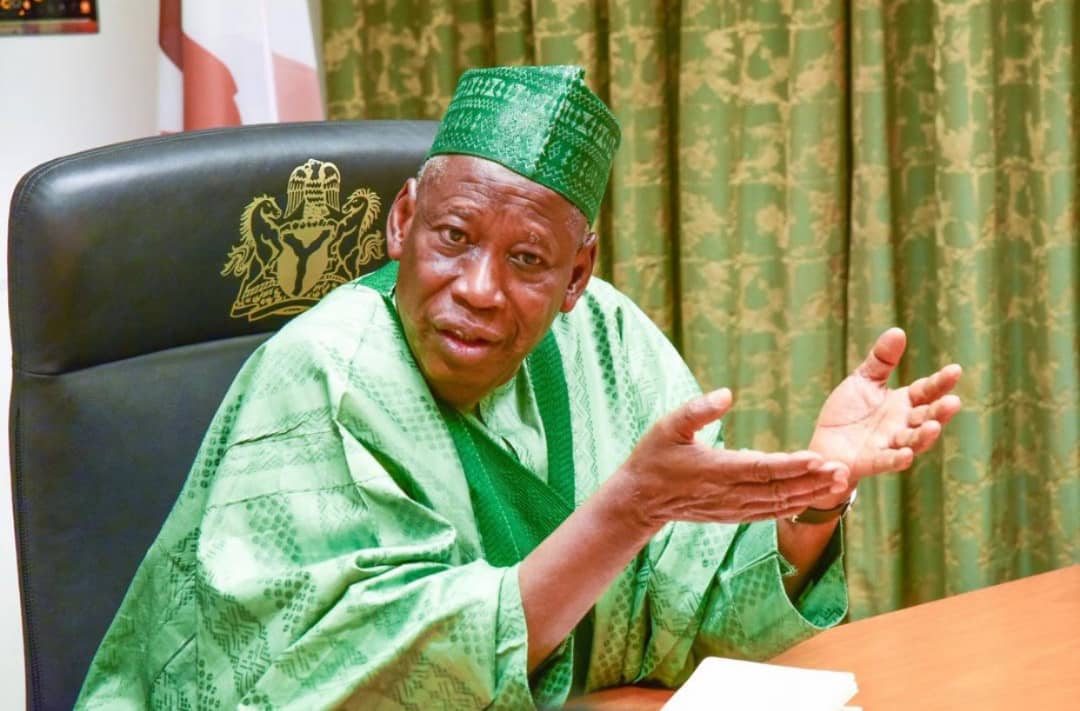
In retrospect, lack of intrinsic abilities on forensic had many arguing in favour of the Kano State Governor Abdullahi Umar Ganduje when his videos stacking dollars into his pocket were leaked. This event had the public stupefied, including President Muhammadu Buhari, who in the aftermath remarked that he didn’t know the extent of technology used to record the video, a matter that could quickly be settled within a fraction of seconds with good forensics in place.

In a similar terrain, a snake swallowed handsome money in the JAMB office, a fire outbreak in one of the finance offices in Abuja, the recent accident that occurred recording scores of deaths by one of the elite sons and many more stories whose verdicts to date remain surreptitious for Nigerians.

Bringing this to a close, I can say employing forensic science techniques in our fight against lingering insecurity and corruption should be considered inevitable and necessary. That will solve many other problematic issues such as sexual offences, drugging, cold murder, etcetera.

Mubarak Shu’aibu wrote from Bauchi State, Nigeria.

Nigeria: A nation with nominal Commander-in-Chief

By Amiru Halilu
“Nearly all men can stand adversity, but if you want to test a man’s character, give him power.” – Abraham Lincoln. 
When insecurity and ineptitude became the hallmark of former President Jonathan’s administration, Nigerians opted for a greener pasture in APC in 2015. People hoped that the candidate featured by the then major opposition party, APC, would be a leader with a big picture and capacity to overcome the deep-seated insecurity that bedevilled the country. Why? He depicted himself as someone, who was actuated by altruistic desire. But, sadly, President Buhari has never been that someone.
In less than one year in office, his ineptitude and lack of competence became apparent. At present, Nigerians feel like a lost cause, trapped in a lacklustre, ennui, directionless and uninspiring leadership. We have been bearing the brunt of his gross incompetence, cluelessness and nonchalant attitude towards compelling issues and burning problems. Nigerians now feel what it means to have a president who is so wildly unable to fulfil his responsibilities.
To Buhari, being a president is just to occupy the highest office in the land, chairing executive council meetings, delivering empty speeches, sitting at the comfort of the presidential Villa while assenting to bills that have nothing to do with citizen’s well-being, junketing from one country to another dissipating our little resources and wooing ghost investors. These are the major duties Buhari has been performing as a president and the requirements of being a president in his school of thought.
From the day former President Jonathan and President Buhari were inaugurated as the fourth and fifth democratically elected president of the Federal Republic of Nigeria, ‘competence’ got missing from the country’s leadership code. What do I mean by “competence?” The Oxford English Dictionary defines it as “the ability to do something successfully or efficiently.” What has Buhari done impeccably to distinguish himself from his predecessor? Virtually nothing! To some extent, he ends up making his predecessor a hero in the eyes of many.
Nigeria is technically at war yet, we have an intellectually handicapped president, who doesn’t even have accurate information of what is happening around the nation, who cannot do serious preparation of any kind, who has hollowed out the government, filled critical posts with lackeys and selfish money-grubbers, and who has taken governance like sophomoric kid stuff. Buhari has been behaving like a president of the most peaceful nation on earth, where citizens go to bed with their two eyes closed.
What is the essence of a president under whose stewardship the country becomes a shrink tree with dead branches. Anything that will make Nigeria a subject of ridicule in the comity of nations is happening under this amateurish government. So many embarrassing events that had caused the resignation of government officials in live and breathing countries had already occurred in this lethargic and non-functional regime yet, no one was sacked because the president is grossly incompetent; he accommodates mediocre and appreciates mediocrity.
Buhari’s leadership is characterised by disappointment, uncertainty, instability — occasion by emotional trauma, grief, sorrow and misery. The only dividend his administration is paying to Nigerians is precious living. The most disastrous event now in Nigeria is travelling by road. His so much indifference to the burning topic of the day — insecurity had set off a wave of opportunities for high-profile criminals to graduate from armed robbery to kidnapping.
Travellers are unsure of getting to their final destination without being kidnapped and taken to the bush in exchange for ransom. Just as other countries are progressing in other walks of life, ours is vice-versa. Northern Nigeria is about to be taken over by armed bandits and other terrorist groups, and Buhari is leaving a dangerous vacuum filled by increased attack after attack after attack! Incessant killings are gradually becoming a daily routine in northern Nigeria.
Education, the backbone of any developed society, is under a serious threat as many schools were compelled to close down owing to a series of kidnappings. Farming, the only recourse to abject penury, was since crippled by gruesome murders. Most of the farmers who have access to their farms have met the demands of the armed bandits operating in their respective areas.
When a nation had a nominal commander in chief, it’s doom.
Amiru Halilu writes from Kaduna and can be reached through haliluamiru@gmail.com or @AmiruHalilu.

Gov. Fintiri proscribes hunters associations in Adamawa

Adamu Ibraheem Jimeta

The Adamawa State Governor, His Excellency, Ahmadu Umaru Fintiri has declared the Association of Professional Hunters in Adamawa as illegal. In a statement signed by the Chief Press Secretary, Humwashi Wunisiko on Monday, December 6, 2021, stated that “The operations and activities of the hunters have become a source of concern and insecurity instead of the security it is fashioned to provide”.

He further said the hunters’ abuse of rules of engagement and lack of regard to the traditional institution and security agencies in the state, especially in the five local governments of Numan, Demsa, Lamurde, Guyuk and Shellenge have made the decision unavoidable.

The statement reads: “More worrisome is the fact that the association operates independent of any security organization in the 5 Local Government Areas, thereby giving room for suspicion of their motive and intentions especially that they operate in uniforms of our security agencies and at odd hours.”

While emphasizing that security is everyone’s business, Fintiri added, “No group or anybody will be allowed to take the Law into their hands, disrespect to security agencies and traditional institution.”

He finally directed security agencies and traditional institutions to collaborate and ensure that peace is maintained across the state before, during and after the Yuletide and new year festivities.

Harvest of parallel party congresses

By Abdulrazak Iliyasu Sansani

It is harvest time, where farmers all over the country harvest their crops. Some have already harvested the early maturing varieties of crops, while others are counting days to commence harvesting, or at least have started preparations for the harvesting of Agricultural produce after toiling, expending funds, and hoping of getting bumper harvest as a reward for everything.

It is an akin experience in Nigerian politics, where navigating through the political minefields entail passing the energy-sapping, complex, and rough terrains before reaching the point of achieving one’s political aspirations in Africa’s biggest democracy. It presents all the drudgery involved with manual farming and requires all the technical know-how needed to deliver the immaculate service of mechanised farming.

On  Saturday, October 16, 2021, the All Progressives Congress (APC), the governing party of Nigeria conducted their state congress in most states of the country, having done the same thing at ward and local government levels all over the country earlier. The main opposition party, the People’s Democratic Party (PDP) also went to the poll in a few of the states they were yet to elect their state executives elections namely: Adamawa, Kwara, Oyo, etc.

It was a hectic weekend. One that lived to its billing in most parts of the country. Postponements, cancellations, parallel congresses, declaration of winners, and the blatant gloating by those who purportedly won the elections in both parties, especially the APC which held congresses in more states. The APC state congress had to be called off in Taraba State to avert a grave security challenge that might have occurred, with the avalanche of thugs armed to the teeth and with their assumed battle-tested amulets, charms, etc, seen a few days to the day of the state congress in Jalingo. A decision I applauded whoever had a hand in it.

Parallel congresses held in so many states: Akwa Ibom, Kano, Ogun, Osun, Oyo, etc. Ogun is one state I guessed few would be astonished to learn that this happened. As there was no love lost between the governor, Prince Dapo Abiodun and his predecessor Senator Ibinkule Amosun. The DSS shielding the President caught in the midst of the two divergent political interests, at the last Presidential campaign rally in Abeokuta is still fresh in our minds. It was least anticipated that they won’t do anything to assert who truly holds the ace in Ogun politics.

In Kano where the good and hard-working people of Kano have always prided themselves to eclipse whatever anyone comes with to the ancient and historical state.  It indeed aptly lived up to that. As the people of Kano would always say, ‘Siyasar Kano Sai Dan Kano,’ which loosely translated as, the politics of Kano only a person from Kano would comprehend. Hence, I do solemnly affirm that this is not an attempt to stamp my expertise in Kano politics or anywhere, but a patriotic layman’s endeavour to effect changes in the weighty challenge to our democracy posed by parallel congresses across the country, which undermines it.

Parallel Congresses are colossal drawbacks to our internal democracy, which remains the basis of our external democracy. Both intra-party and inter-party democracy proceed to build a good nation when well nurtured. Unfortunately, it is the alternative to development that the harvest of these parallel congresses will reap for the people in dire need of development. What a sad reality for the brilliant and shrewd populace of Africa’s biggest economy.

We have seen these parallel Congresses across parties in Nigeria. It is not condemned to one party in Nigeria, though it is more prominent in the two parties with the highest members in Nigeria if at all we can determine genuine card-carrying members: APC and PDP. This clearly shows that these are the parties with the biggest stakes. Thus, the reason for ‘the battle for the soul of the party’. It points to the fact that drastic measures have to be taken to effectively address the conundrum. I must state that it is only a conundrum because there aren’t strong laws that strictly sanction those who engage in holding parallel congresses and other actions which we view to be less significant but have severe consequences on our democracy.

With the consequences already in the centre of commerce, Kano: reforms are long overdue. All our institutions have to be strengthened to checkmate the far-reaching implications to our democracy, which Nigerian power craving elite go beyond the limit set by our laws or cash in where it is silent on weighty issues. Legislation should be enacted in such a way that gives no room for parallel congresses. For having parallel Congress anywhere is an obvious admission of failure of our institutions, especially our laws of which the parties are products.

There can’t be two leaders of a single party at the same. Then why is it becoming more fashionable by every period of congress in the two major parties in Nigeria? Given that politicians are motivated by their ambitions, but would it still maintain its lure, if stiff punishments are in place for anyone whose actions lead to having parallel congress and other anomalies that belittle our democracy? It is highly unlikely.

All in all, injustice, greed, weak laws, disregard for standard and proper practice, and lack of stiff punishment among other issues are at the centre of its all. Therefore, when some people who believe they are or are rightly the leaders of a party based on the party’s constitution deny others a fair shot at achieving their ambitions and the authorities back then. Then it is bound to persuade them to seek whatever means to actualise their ambitions, especially when they are certain about the gross inadequacies of our institutions. Being fully aware that hardly would the offenders be penalised. They resort to whatever would lead them to success. This is a damning indictment of our system, institutions, and a sad commentary on our democracy. This has to change to a democratic nation that is firmly built on standards and strong institutions that are deeply rooted in conventional democratic practices.

Abdulrazak Iliyasu Sansani wrote from Turaki B, Jalingo, Taraba State.

The Kano APC ship on the verge of capsizing

By Musa Sa’adu

Political parties remain the only vehicle or platforms for candidates/politicians to aspire for political offices. This, however, leads to the emergence of various interest groups within a party. The groups work harmoniously together to pursue their common goals. However, the success or otherwise of a political party depends mainly on how the stakeholders manage these interest groups in the distribution of party positions, party tickets, appointments and the traditional largesse as the case may be. Failure to do these for any reason has, on so many instances, led to the internal party crises.

Kano APC faces the formidable opposition PDP-Kwankwasiyya that is waxing power to unseat them. Yet, the party is bedevilled with internal crises that by day slim and reduce its electoral chances comes 2023. Internal party crises are the primary driving force that negatively affect party performance in a poll. Before governorship elections in Kano that spring surprises are born out of internal party squabble and wranglings.

The 1983 election that produced Senator Sabo Bakinzuwo against a well-performing Governor Abubakar Rimi, seeking reelection resulted fromf party crises. The PRP crises that metamoposed into ‘Tabo‘ and ‘Santsi‘ factions, led by Malam Aminu Kano and Rimi respectively, forced Rimi as a sitting Governor to dump PRP for NPP to seek reelection. However, this was one of the cardinal reasons behind his Waterloo despite his performance in office throughout Kano and Jigawa.

In the botched Third Republic, one can learn a lesson from it. The popular and well-accepted SDP lost the Governorship election to NRC due to the internal crises in SDP, which was an offshoot of Santsi and Tabo from the Second Republic. After about three primary elections that produced an independent candidate, Engr. Magaji Abdullahi against Aminu Inuwa of Santsi faction and Ahmad Rufa’i of Tabo faction. The wrong choice of Ahmad Rufa’i as running mate to Magaji Abdullahi led to Santsi group to revolt and enter an agreement with NRC candidate Kabiru Gaya. This development changed the election outcome in favour of the NRC candidate.

Senator Rabiu Musa Kwankwaso, Malam Ibrahim Shekarau and, of course, Dr Abdullahi Umar Ganduje are no doubt the principal actors of the Fourth Republic Kano politics. The three have benefited and suffered the consequences of internal party crises.

Our memories are still intact on how the political hullabaloo, shenaniganism and internal party wranglings ruined the reelection bid of Governor Kwankwaso during the 2003 Governorship election. The defection of Danhassan, crises between Kwankwaso and some members of the National Assembly, notably the then speaker of the House Of Representatives, Hon. Ghali Na-Abba and perhaps General Buhari factor were among the contributing factors that led to the Kwankwaso/Ganduje downfall and the emergence of Malam Shekarau.

Likewise, Shekarau suffered the repercussions of internal party crises; his anointed candidate Salisu Sagir Takai was defeated by Kwankwaso/Ganduje. The crises between Shekarau and his deputy, Abdullahi Gwarzo, popularly known as Ruwa Baba, the over fifty thousand votes garnered by him during the Governorship election, has smoothly leveraged the second coming of Kwankwaso and Ganduje in the 2011 election.

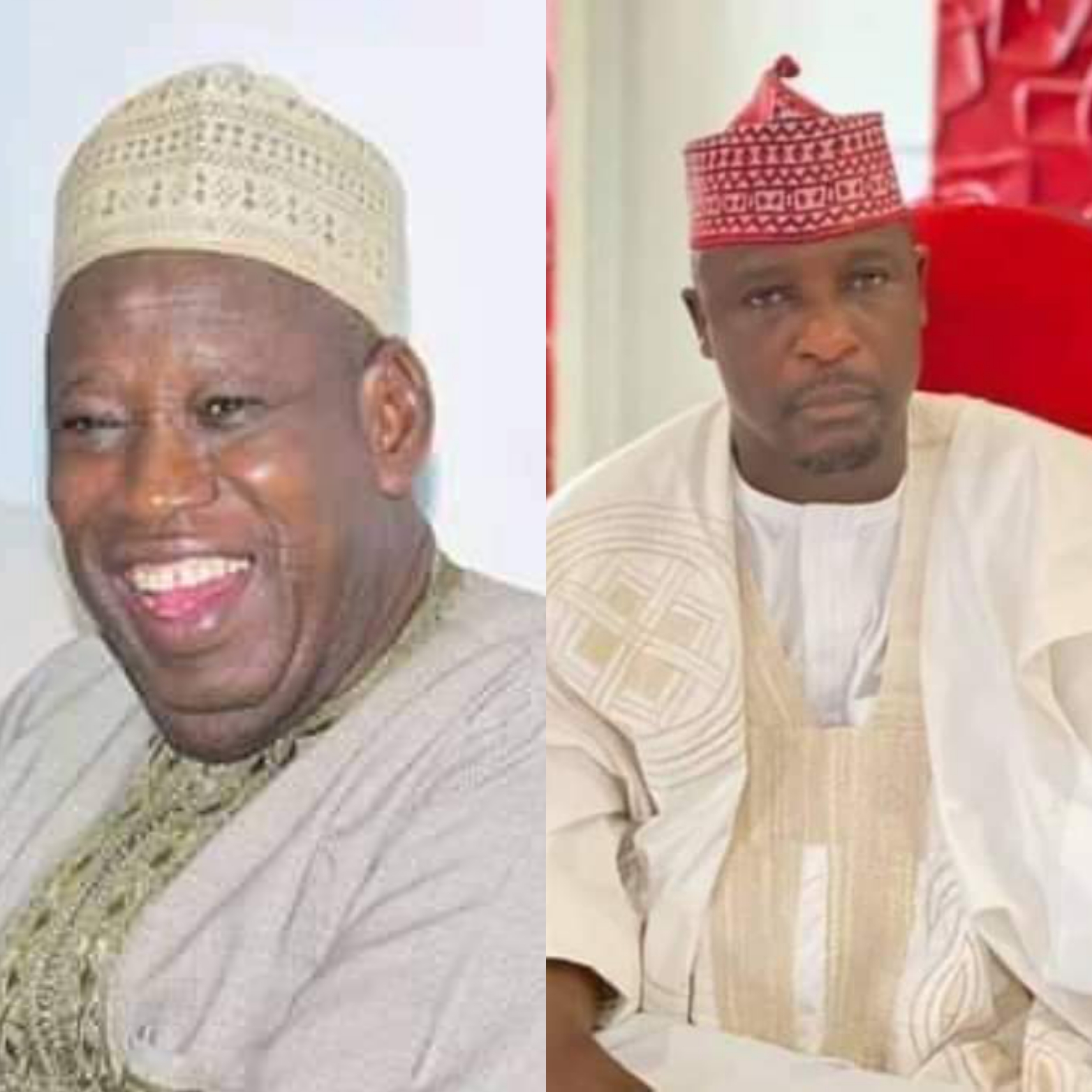
The current turmoil rocking the Kano APC is a cause of concern to any committed party member. The internal crises that paved the way for two parallel conventions that produced Abdullahi Abbas and Haruna Zago representing Ganduje and Shekarau led factions respectively will create a hole that will gradually sink the Kano APC ship, and neither the Ganduje nor Shekarau will survive the mishaps including their supporters.

In politics, number matters; everyone is important! Don’t tell me someone who’s Governor for eight years and a serving senator doesn’t have political influence, and these G-7 members, as they fondly called themselves, are blessed with sturdy supporters and resources to bankroll political movements that can make or mar an election.

With the Tuesday court verdict favouring the Shekarau-led faction and considering the nature of Nigerian litigation processes, I’m afraid that whichever faction the pendulum swings and even if they won the general polls, the replica of Zamfara 2019 is imminent.

Both Ganduje and Shekarau should tread with caution; there is still time. They shouldn’t listen to the sycophants instigating the crises. Let them sit, discuss and iron out the grey and problematic areas and find out political solutions; otherwise, Kwankwaso will send them to political oblivion.

Musa Sa’adu wrote from Sumaila and can be reached through musasaadu0181@gmail.com.

Can your children compete locally…and globally?

By Amara Sesay

Humans are either inherently competitive or inherently collaborative. However, in Politics and Psychology, the dominant instinct seems to be that of competition. And here are some of its popular and not-so-popular by-products in interpersonal relationships and politics: envy, jealousy, excellence, mastery, victory, number-one statushood, presidency, globalisation, colonialism, populism and racism. For some of these, the nexus with competition is clear, for some, you have to move closer and look deeply.

What is however noteworthy is that even in the absence of apparent competition, it makes both economic and emotional sense to train your children to be competitive.

For a start, nobody goes about in search of the number two man. And in most sports and endeavours of life,  that’s the best place for losers. It’s the top one per cent that eats the biggest part of the pie, makes the most critical decisions and controls the tools and infrastructure to engender the most harm or the most goodness as the case may be. You don’t want your son or daughter to miss that spot!

Being competition-conscious does not mean taking your children to schools where they are taught in American and British Curriculum, whatever that means. In fact, such neo-colonialist, low self-esteem attempts at putting your children ahead of the competition may be counterproductive in the long run. That is not to say there are no benefits attached to it.

Being competitive means being grounded in knowledge and the context of local factors of production. In our times, these go above and beyond the physical, to the digital and even the post-digital, if there is ever going to be something like that. In other words, let them compete both in the universe and the metaverse.

Note that competition, like charity, begins at home. Teach them to maintain a grasp of their native or first language as they may need that constituency later in life. Teach them the nuances of upholding and breaking the law for “good” causes. Teach them to eat last. And teach them to complete whatever they start, except they are sure that the preferred task is more beneficial than the abandoned ones. You should teach them to embrace feedback. With these traits and a deep mastery of one service or product that is of value to people, they can go places and perform wonders.

What is international competitiveness? Its local mastery is refined to suit many cultures and geographical territories. In the gig economy, this has become even more important. With 5G,  it will be even more critically important.

So, whilst this generation may benefit from local content policies and other forms of structural violence that are meant to keep immigrants at bay. Populism, affirmative actions/federal character and language barriers may not prove beneficial in the future, as they are now for the less competitive citizens. Now is the time to build that sense of competition in your children. Now is now! Let the journey begin.

Amara Sesay wrote from Lagos.

The polyethnic-state-policy we need

By Lawi Auwal Yusuf

Several innovatory constitutional devices, administrative and technical solutions were tried to resolve the sectional tensions that, minimally in writing, attempted to enhance tolerance and political affinity between the heterogeneous regions of our dear country, Nigeria. These supposed solutions failed because they were unfounded paperwork, if not lip service.

The dispositions of politicians denote that they have no true intentions of dissipating all forms of religious and tribal harassment that undermine Nigeria’s progress as a diverse but cohesive society. They exploit the divisions for political deceit and their malicious divide and rule tactics. Politicians misuse the distinctions to garner more support, increase popularity and gain votes. But the effect is that it augments people’s consciousness of the differences and raise the importance they affix to them.

Hence, there exist mutual antipathy among the ethnicities. They strongly hold ethnic prejudices and stereotypical views against each other and counter-blaming themselves for the country’s woes. Frequent destructive fracases, secessionism and bloodshed depict Nigeria.

We need a poly-ethnic policy that will help us forge a pluralist democracy that fully respects tribal and religious dissimilarities. A country that truly recognizes and values such pluralism in society. This worthwhile project must establish mutual veneration among Nigerians which is essential for a peaceful future of multiethnic Nigeria. It should socialize Nigerians to enfold cultural diversity, support multiculturalism and believe that the tribes can harmoniously cohabitate through respecting each other’s cultures.

For this dream to become reality, the policy must be accompanied by genuine efforts to eradicate poverty and inequality. Research confirmed that lack of cohesion results mainly from inequality.

This policy must emphasize universalistic moralities like supremacy and rule of law, transparency in governance, economic development and nationalist sentiments to combat the particularistic moralities of the individual tribes. This will make Nigerians united by a common purpose rather than individualistic purposes.

Also, there is an immense need of maintaining a distinct Nigerian identity to replace particularistic cultural identities. People will develop a sense of common identity. Nationalism is a powerful ideology that unites perversely fractious and ethnocentric cultures effectively. It leads to a sense of sameness, uniformity and also bring people into closer fraternities. This will help them understand their differences and how to live with them. Therefore, tolerance will manifest and subsequently love will flourish among them. Diversity will be a source of strength, unity and progress.

Good leadership must be the leading force in this trip. Ethnic favouritism and turning public office an instrument of creating wealth for acquaintances and tribal brethren must utterly vanish. Justice, transparency and equal treatment of all irrespective of closeness or ethnic background must prevail.

Furthermore, Nigeria should adopt the integration approach to ethnic relations. Ethnic relations exist where individuals show allegiance to different groups that conflict exists among them. When disputes and competition divide tribes, then integration brings them together. Conflict wither away and there will be no ethnic consciousness and therefore less potential for dispute. Integration is a permanent cure for the ailments generated by ethnic relations. This model involves a continuous process by which individuals learn one another’s language, acquire modes of behaviour, characteristic attitudes and habits. At the macro level, the process also involves the gradual incorporation of smaller groups into the mainstream culture.

Increased contact and intermingling ought to be facilitated through ensuring inter-regional trading, sports competitions and encouraging people to travel widely because contact between members of divergent tribes reduces tensions, suspicion and dispute. This will turn Nigerians into cosmopolites. Those are individuals who travelled extensively and lived in different communities. Thus, they tend to be familiar with different cultures, communities and languages. Instead of exhibiting an overwhelming loyalty to their tribes, they have intricate repertoires of loyalty and identity. Therefore, they hardly become bigots.

Institutional ethnic stratification has to be dispelled from society. Political, social and economic institutions must be crafted to help manage the differences and all indigenous people need to have equal rights whatever their social background. Policies should be devised to deal with such diversity and prevent forms of social exclusion both at the national and community levels. Equal opportunities must be given to all and these institutions must be reformed so that they no more exclude and discriminate against minorities or disadvantaged groups.

Minority cultures must be protected because resistance intensifies where the dominant groups arbitrarily oppress the interests and aspirations of the feeble minorities. The conflict may manifest either violently or through political processes. Moreover, fundamentalist convictions emerge among minorities as they become apprehensive that their cultural distinctiveness will perish as the elements of dominant cultures become integrated into their own. They retaliate to defend their cultures in malevolent ways to people from the major cultures.

Finally, it is of paramount importance to establish an agency with broader powers and scope to enhance tribal equality in Nigeria. It should have the responsibility of implementation of the new policy. Yet, it can be assigned with the tasks of promoting peaceful co-existence and provision of legal aid to victims of harassment. In the same vein, statutes should be enacted making it obligatory for government agencies and private enterprises to vigorously exterminate all forms of discrimination and ensure equal opportunities for all.

Lawi Auwal Yusuf wrote from Kano, Nigeria.

Russia to support Nigeria fight terrorism

By Uzair Adam Imam

The Russian president, Vladimir Putin, has promised Nigeria his support in fighting terrorism and countering religious extremism.

Receiving the Nigerian Ambassador to Russia, Professor Abdullahi Y. Shehu, the president gave his words.

President Putin made the assurance to Nigeria adding that a “very promising expansion on substantive dialogue on topical issues related to maintaining stability in the world hydrocarbon markets, combating terrorism and countering religious extremism.”

He stated that Russia was open to mutually beneficial partnership with all countries without exception.

Putin declared that “Russia is ready for multifaceted interfaces for mutual interests with the countries that their new envoys have come to represent in Russia.”

Governor Fayemi pays tribute to Malam Aminu Kano, says he was real ‘patriot’’

By Muhammad Sabiu

The governor of Ekiti State and a key figure of the All Progressives Congress (APC), Mr John Kayode Fayemi, celebrated the late Malam Aminu Kano over his patriotism, advocacy for education and support for the poor.

Delivering a speech on Saturday to commemorate the 21st anniversary of Mambayya House at the Sa’adu Zungur Auditorium Complex in Kano, Governor Fayemi said he was so delighted to be invited to give a talk at such an event, adding that “Mallam stood out in our entire post-colonial experience as the very anti-thesis of money politics.”

Mr Kayode’s speech partly reads: “Born on the 9th of August 1930, and as an early beneficiary of both Quranic and Western education, Mallam as he came to be known affectionately very quickly carved a niche for himself as the pre-eminent voice and champion of the talakawa – that mass of peasants, the urban working poor, and the déclassé.

“His emergence and growth into this role emanated from a deep-seated set of values that he embraced and honed at an early stage in his political career and held on to tenaciously for the rest of his life.

“Concerned by the reported excesses that were built into the colonially-licensed native authority system and convinced that the system needed to be overturned in order for the talakawa to be able to have a fighting chance to lead a decent and dignified life free of oppression, he committed himself to organise the mass of the people to exercise their agency to imagine and create an alternative political order.

“The principal agency through which he did this was the movement which he helped to found in 1950 and which was named the Northern Elements Progressive Union (NEPU). The establishment of NEPU was to mark a significant milestone in the history of political radicalism in Nigeria. The tradition of radicalism which it represented was carried over into the late 1970s and beyond by the Peoples’ Redemption Party (PRP), which Mallam Aminu Kano also led.”

Malam Aminu was a famous political figure, especially in Northern Nigeria. Public institutions named after him include an airport, a teaching hospital, and a college in Kano and other states.

Many dignitaries from around Nigeria graced the occasion. These include Governor of Jigawa State, Muhammad Badaru Abubakar; former Deputy Governor of Kano State, Prof. Hafizu Abubakar; Vice-Chancellor of Bayero University, Kano, Prof. Sagir Adamu Abbas, among others.

Why are graduates unemployed?

By Uzair Adam Imam

Every year Nigerian institutions produce thousands of graduates who come out to compete for the few available job opportunities in the country.

There is no doubt that Nigeria labour market has continued to see a steep increase in unemployment.

Professionals have argued that there is a need for urgent action to save the country from an impending danger posed by the exponential increase in unemployment.

According to the National Bureau of Statistics (NBS), the unemployment rate increased to 33.30 per cent in the fourth quarter of 2020 from 27.10 per cent in the second quarter of 2020.

Today, Nigeria battles a high rate of crimes: insurgency in the Northeast, banditry in the North West, and IPOB attacks in the Southeast, aside from the cybercrime, which is inviting to the youths.

 These security threats are believed to have been caused by some circumstances, especially unemployment.

The root cause
A lecturer at the Department of Business Administration and Entrepreneurship, Bayero University, Kano, Dr Mu’az Hassan Mu’az, attempted to trace the root cause of unemployment among graduates in the country.

He said that the issue of unemployment would persist if graduates continue to look up to the government for jobs.

He added that graduates need to be self-employed to eradicate poverty and unemployment in the society.

However, according to him, one major factor contributing to the rising unemployment in society among graduates is wishful thinking of great life after graduation.

He said most students do not want to venture into small scale businesses as they think they would be employed in big offices when they graduate. This, he said, increases the number of unemployed youths in the country.

He stated, “If students will be innovative, the effect on the economy will be fruitful.

“Many will be self-employed, poverty will reduce, social vices will drop and above all, the government will generate revenue from these entrepreneurial ventures.

“Graduates will have to look inward, explore some of their capabilities so as to start something, no matter how small that could make them financially liquid.

“There are needs in the society that no one is offering to satisfy for a premium; try to do that, then one is in business.”

Unemployment breeds crimes
On his part, Malam Hassan Sule Adamu, an entrepreneurship lecturer with the Kano State Polytechnic, stated that unemployment might unfold to all sorts of crimes.

 Muhd said, “It leads to societal ill-being, human trafficking, prostitution, insecurities like banditry, armed robbery, burglary, social and political crises, and any other crime.”

Students air their grievances
Several students expressed their grievances over the lingering issue of unemployment.

They urged the government to come to their aid by creating more jobs opportunities.

A university graduate, who preferred not to be named, said that he bagged his Bachelor’s degree eight years ago from Bayero University.

He added, “Since then, I have been applying for different sorts of recruitment. But, up to now, I am not employed.

“But I thank God because I am running a small scale business from which I earn my living and even help my relatives.”

Bad governance complicates the situation
Another university graduate, Abdulmalik Ibrahim, said bad governance complicates the situation.

Abdulmalik added, “Bad governance, mainly corruption and inhumanity of political leaders, contribute to the present situation in Nigeria.

Suleiman Ishaq believed that the only way to arrest the situation was for the authorities concerned to create more business and job opportunities.