Admin

Kaduna: Nigerian military eliminate terrorists, intercept ransom payment, salvage kidnap victims

By Muhammad Sabiu

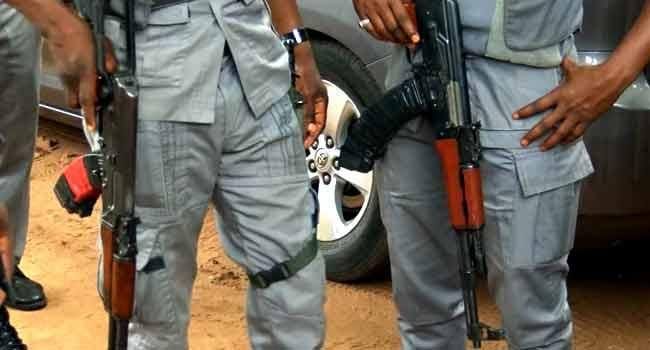
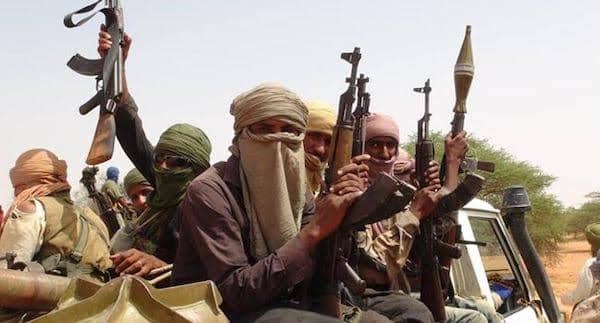
Nigerian soldiers have captured a large sum of money intended to pay for the release of several captives held by armed bandits in Kaduna State.

Some of the ransom payment couriers are alleged to be security personnel, according to media reports.

Kidnapped victims, including women and children, were also rescued by troops participating in intelligence-driven military operations.

The operations, which were carried out concurrently by Nigerian Army ground soldiers and special forces from the Nigerian Air Force, NAF, resulted in eliminating several bandit terrorists.

According to an intelligence officer, troops from the synchronised operations from the 271 NAF Detachment in Birnin Gwari and the Nigerian Army FOB in Gwaska rescued dozens of kidnapped victims.

“The sum of N60,000,000 in cash, petroleum products and sophisticated weapons were recovered during the operations.

“Other items recovered by the troops from the suspects include vehicles, AK-47 rifles, magazines, various kinds of ammunition and mobile phones.

“Meanwhile, we will refer the case of the arrested couriers who mostly have identifications with security agencies to the Department of State Service (DSS) and Defence Intelligence Agency (DIA) for further investigation,” the intelligence officer was quoted as saying.

IPOB and Southeast insecurity: Soludo to the rescue

By Mukhtar Ya’u Madobi

“The current trajectory is a road to desolation. Let us get around the table and talk. Let the elite in the closet come out and let’s debate our future and forge a consensus. The elite conspiracy of silence and some community leaders should end.” – Governor Charles Chukuma Soludo

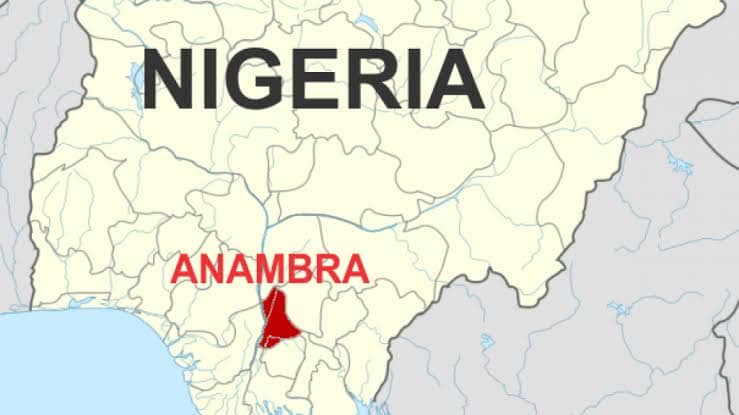
The above quote was made by the Anambra State Governor, Professor Charles Chukuma Soludo at a low key but a colourful inaugural ceremony to mark the beginning of his tenure in office on Thursday, March 17, 2022.

It is not surprising for the Governor to have solicited the support of stakeholders and other community leaders in the state in order to surmount the challenges currently being faced by the state and the entire eastern region in general.

When Soludo was announced as the winner of the last November gubernatorial election in Anambra, he clearly knows that one of the most contending issues that people might look up to him to proffer solution is nothing but the rising insecurity that has engulfed the state and the entire Igbo nation.

It is no longer news that the eastern region of the country has, over the years, become a hub for maiming, killings and wanton destruction of citizens’ properties, occasioned by the activities of some miscreants tagged as ‘unknown gunmen.’ But truth be told, the origin of these so-called “unknown” or “faceless” gunmen can be traced to the military wing of the members of the outlawed Indigenous People of Biafra, IPOB group, known as Eastern Security Network, ESN.

The group, under the leadership of Nnamdi Kanu, who is currently languishing inside the Department of State Service, DSS dungeon after being rearrested in Kenya, last June and flown back to Nigeria, after he previously fled the country, upon breaking the bail conditions.

The IPOB group has over the years been actively clamouring for the creation of an independent Biafra nation from Nigeria.

According to them, the eastern region and Igbos have been marginalized and treated as second class citizens in the country in terms of appointment into political offices, resource sharing and allocation, and governance, among a host of other allegations. But alas, instead of the outlawed group adopting a legitimate manner of registering their grievances, they subscribed and resorted to violence.

The notorious group has carried out several attacks on government facilities including security outfits, Independent National Electoral Commission, INEC Offices, markets, and prisons among other strategic locations. It can be recalled that the ‘unknown gunmen’ in March 2021 unleashed terror on Owerri, the capital city of Imo State, in a night raid. Reports indicated that the guns-wielding men attacked Owerri Correctional Center, thereby releasing not less than 2,000 inmates and subsequently burning some sections of the facility.

Again, they also went ahead and attacked Imo State Police Headquarters, killed some security personnel, looted the armoury and eventually set ablaze security patrol vans that were packed at the premises. Since then, their activities have become more pronounced as they intensified their attacks at will, killing various personnel of the security forces of Nigeria including the Police, Military, DSS Operatives, Prison Warders, Road Traffic Officers just to mention but a few.

It is also on record that IPOB militants have been enforcing sit-at-home order every Monday across the entire five states of the eastern region since when Kanu was re-arrested. According to the group, this is to serve as a means of solidarity and to force the government to capitulate to their demand for his unconditional release.

However, this order has been crippling the economic situation of the region thereby dragging it to the cross. A lot of people who live from hand to mouth are denied such opportunities on a weekly basis as markets remain closed as well as schools, banks, government agencies etc. In fact, this lingering terror activity of the group is like a cankerworm that has been eating deep into the flesh of the entire eastern region people.

Reports indicated that there are some incidents where a lot of people are killed and their business places destroyed by the proscribed IPOB group members under the pretext that they have flouted the sit-at-home order.

Not only that, a number of elites in the Igbo region cutting across traditional rulers, politicians, public servants and business moguls were murdered by these blood-sucking demons. The unfortunate murder of Ahmed Gulak and that of the husband of the Late Dora Akunyele in their own pools of blood by the IPOB militants were, to say the least of their heinous acts.

Their nefarious activities are just too numerous to be outlined in this piece. Thus, let’s just leave it as a story for another day.

Meanwhile, it is gratifying to learn that presently, Governor Soludo of Anambra has stepped up an effort to stem the rising tides of insecurities haunting the state and the region at large.

Soludo, while featuring in an interview with the Channels Television, promised to grant amnesty to IPOB members who agree to call it a quit by laying down their arms. Though his plan has been countered by the Ohanaeze Ndigbo, emphasizing that the vicious group have been causing violence to the entire Igbo nation all under the pretext of actualizing the Biafra nation, they however welcomed the idea of rehabilitating the aggrieved Igbo youth in order to have everlasting peace in the region.

To that effect, the Governor has just appointed and unveiled a 15-member Truth, Justice and Peace Commission to stop the activities of the indigenous people of Biafra (IPOB). The committee is headed by the human rights activist, Prof Chidi Odinkalu with Ambassador Bianca Ojukwu as Secretary.

With these recent unfolding developments mapped out by the Governor, it is hoped that the IPOB members will lay down their weapons and embrace peace so as harmony and normalcy could finally return to the Igbo nation.

Mukhtar, a public commentator, writes from Kano via ymukhtar944@gmail.com.

Is the Buhari-led government on holiday?

By Shafi’i Sheikh Jr.

I tried to resist the temptation to speak on matters that fringe around governance and government policies. This is because there are things that an observer can only see if he resists the temptation to jump into the fray and become an actor himself. But recent happenings have reawakened my enthusiasm to march to the stake like the man my mom had always desired me to be and take the bullet in the chest should the need arise. 

In 2015, we supported APC with our sweat and money chanting “change” wherever we found ourselves so much that it caught every household’s mood. Why? Because we thought a Buhari-led government would have no trouble handling the heaps of problems bedevilling our mettlesome Nigeria. 

Now, let’s get down to the nitty-gritty of why we-the masses brought Buhari to power in the first place. 

First of all, Nigeria, Africa’s biggest oil-producing country, was rapidly growing its economy, but the wealth had not been shared appropriately. Half of Nigeria’s population was living below the poverty line. The corruption that was partly to blame was eating into every fabric of Nigeria’s being. 

Secondly, the menace of Boko Haram was spreading wider than it started and had already claimed over 20,000 people and forced out some 3 million others from their homes. We accused the previous Goodluck E. Jonathan-led administration of not taking the menace seriously and posited that Buhari, who’s from the region, would do better if given the opportunity. 

We, therefore, came out en masse to vote Buhari into power. The 2015 election was and still is of massive significance in Nigeria’s turbulent history because, for the first time in Nigeria’s history, an opposition candidate won a presidential election free and fair. 

The president-elect (as he then was) told his supporters that “We have proven to the world that we are people who have embraced democracy. We have put the one-party state behind us.”

“You, Nigerians, have won. The people have shown their love for this nation and their belief in democracy,” He mentioned. 

It was the beginning of a new era. Nigeria and Nigerians refurbished a new hope. But these hopes were soon quashed by his incompetence to constitute a cabinet after 100 days in office. It was opined that a leader who couldn’t form a cabinet for that long is ill-prepared for the most important job in the country. 

Albeit hinging his voter appeal on waging war against corruption, fighting terrorism, and revamping the economy, the Buhari-led government had nothing to show except a plethora of controversies that embroiled his first 100 days in office. 

Today, the government only succeeded in pulling us from the shackles of Boko Haram into a dungeon full of kidnappers, IPOB and the so-called Unknown Gunmen. 

Ours is a country where lives are no longer sacred. Education has been exiled, social amenities are declared “extinct”, and food! Well, you’ll have to take a bank loan if you want to eat healthily. These terrorists attack and operate in broad daylight. 

Even after the president’s declaration in 2019 that Nigeria has “technically won the war” against Boko Haram, the country is still ravaged by insurgencies ranging from kidnappings to coordinated attacks on security forces and population centres. 

The recent attack on the Abuja-Kaduna train is a clear example that Nigerians will not forget for a very long time.

If holiday refers to that time of the year when one usually takes time away from home, work, or business to travel and relax, then this so-called government has betrayed Nigerians and gone on a holiday! 

Shafi’i Sheikh Jr. is a student of the Nigerian Law School, Kano Campus. He writes from Jos and can be reached via talk2sheikh.esq@gmail.com.

Katsina: Villagers neutralise armed bandits while collecting ‘tax’

By Uzair Adam Imam 

Citizens in Kahiyal in Bugaje word of Jibia, Katsina State, have bravely stood up to bandits who invaded the village to collect tax from the innocent people. 

The Daily Reality gathered that two armed bandits came into the village in broad daylight, asking people to give them money. 

The villagers feigned to oblige but only for one of them to quickly grab the bandit’s rifle while dropping the money. Other locals, who also had their weapons, helped him.

A citizen, Professor Abdussamad Umar Jibia, narrated the incident on his Facebook wall.

He said the bandits “stayed in one place and asked the villagers to contribute money and bring it to them. 

“The villagers did that. However, unfortunately for the criminals, the person who brought the money dropped it and quickly grasped the boy holding the rifle. 

“Other villagers who were ready with their local weapons rushed on the criminals and finished them off as it should be,” he said.

Insecurity and banditry are the major security issues bedevilling the northwestern part of the country, leading to thousands of deaths while numerous others are forced to migrate.

The criminals impose unlawful taxes on countless farmers and others living in the affected areas.

Nigeria Jubilee Fellows Programme: Advice to three applicant categories

Ishaka Mohamed

According to a New York Times bestselling author, Joyce Meyer, patience is not simply the ability to wait — it’s how we behave while we’re waiting.

Many Nigerian youths have been eager for the outcome of their applications for the Nigeria Jubilee Fellows Programme (NJFP). Well, the waiting period is almost over because forty days from now, successful Fellows will have been deployed to their host organisations. This is according to the mail sent to many applicants, a version of which has also been posted on Facebook by the official page of the scheme: Nigeria Jubilee Fellows Programme.

That said, I write this purposely to advise all the applicants. I have categorised them into three.

The first group are those who have been pushed by impatience into using rude comments on posts by two Facebook pages: UNDP in Nigeria and Nigeria Jubilee Fellows Programme. I presume they’re really fresh graduates who, probably, haven’t been following recruitment processes in Nigeria. I’ll outline only three out of the countless cases of delay in the country for them. 

The Nigeria Security and Civil Defence Corps (NSCDC) started a recruitment process in 2019 but failed to complete it until 2022.

N-Power Batch C application started in June 2020, but the deployment of beneficiaries never happened until after 15 months. 

The Kaduna State Teachers’ Service Board (KSTSB) started a recruitment exercise in 2018 but managed to employ 7,000 secondary school teachers in July 2022. In fact, as of the time of writing this article, that’s nine months after their employment, none of these teachers has been posted to a school, let alone being paid a salary.

Therefore, there isn’t any need to feel too disappointed over something that is highly expected. It’s worth stressing, however, that it’s OK to clamour for a positive change in whatever concerns us, but decorum is highly recommended, at least for a young graduate and job seeker. So, rude comments should be done away with.

The second group are the over 340,000 applicants who won’t be selected. Yes, a total of 365,679 people applied for the scheme that needs only 20,000 Fellows per annum.

With or without cogent evidence, there’ll be lamentations from almost every angle when successful applicants are eventually picked. Many will blame favouritism and the like. A good number might lose interest in applying for other jobs, claiming that it’s by whom one knows. I urge all unsuccessful applicants (yet to know, though) to avoid losing momentum because of this; it’s simply part of life.

Now, to the third group, the privileged few, I advise that you think twice before leaving your ‘small’ job for the programme. Although it’s said that Fellows will be fully paid as graduates, being deployed doesn’t guarantee prompt payments. You must be realistic to yourself by keeping an alternative means of livelihood.

Of all of the schemes I’ve observed in Nigeria, only NYSC is somehow consistent in the payment of allowances. I’ll mention three others that have significantly failed in this regard.

One, as of January 2022, many of the past N-Power volunteers were still owed stipends. That was after 18 months of exiting the programme. And even while in the scheme, a significant number of these youth often received overdue allowances.

Two, the Special Public Works Programme for 774,000 unskilled labourers ended in March 2021, but a good number of the beneficiaries weren’t paid their N60,000 stipends until after nine months (end of December 2021).

Three, some Nigerian youth were placed on a three-month paid internship called the Work Experience Programme (WEP) from August to October 2021.

The Federal Ministry of Youth and Sports Development promised each intern a monthly allowance of N30,000 within the period of their engagement.

But such never happened, as the payment commenced in November 2021 and continued, inconsistently, through February 2022.

Some may think that NJFP will be different; I pray so, too. However, the scheme has already shared a pattern with its predecessors. In August 2021, it was promised that the first batch would be inducted in about two months’ time (October), only for the statement to be changed after seven months.

Based on the above instances, I reiterate that you keep an alternative source of livelihood before engaging in the programme. This is especially important for those who’d be posted to states other than their current settlements.

On a final note, if you’re privileged to be deployed to a private organisation, make sure to sell yourself. Much as many organisations usually aim to rightsize their employee base, none will be willing to lose a diligent young graduate if you really present yourself well.

Ishaka Mohammed writes from Kaduna. He can be reached via ishakamohammed39@gmail.com.

Osinbajo declares to run for Nigeria’s president

By Ahmad Deedat Zakari

Nigeria’s Vice President, Yemi Osinbajo, has declared his interest to contest for the office of the president in the 2023 presidential polls. 

The declaration that came on the morning of Monday, April 11 2022 confirmed the speculation that Osinbajo wants to succeed his principal, Muhammadu Buhari, whose tenure officially ends in May 2023.

Osinbajo, who posted his declaration on his official Twitter handle, said:

“I am today, with utmost humility, formally declaring my intention to run for the office of the President of the Federal Republic of Nigeria on the platform of APC.” 

In Osinbajo’s declaration speech, he also said he could relate to the suffering and challenges of Nigerians and hence why he wants to be president. 

“I’ve stood where you stand and sat where you sit. I know, and I understand our hopes, aspirations and fears from a place of relatable proximity; and I believe that in those hopes and aspirations are the seeds for the great Nigeria that we all desire. I believe that the very reason why the Almighty God gave me these experiences, these insights, and these opportunities, is that they must be put to the use of our country and its great peoples.” He stated.

Osinbajo will jostle for the ruling party’s ticket with other political heavyweights, like APC’s chieftain, Bola Ahmad Tinubu, and Minister of Transportation Rotimi Amaechi, who also declared their intention to run for the presidency on the platform of the party.

Sheikh Nuru Khalid: The way they and I see it

By Bilyamin Abdulmumin

The nation has woken up with yet another round of controversial news, as the committee to the National Assembly mosque, Apo legislative quarters Abuja, deemed it fit to suspend the renowned Islamic cleric Sheikh Nuru Khalil before sacking him later. The committee cited incitement and lack of showing remorse as reasons for the suspension and the final sacking, respectively.

Last week’s Friday prayer sermon the Sheikh delivered was the action that earned him the sack. In the sermon, reeling from the Abuja-Kaduna train attack tragedy, the Sheikh supported a boycott of the upcoming 2023 general election should the government fail to protect the lives of Nigerians. This message immediately went viral to generate a heated debate among the public on social media.

Those who support the message have some reasons. Because it was just history that repeated itself; before the 2015 general election, Nigeria, especially the North, was literally on fire. Amidst the chaos majority of the northern Islamic clerics openly criticized the government of the day – PDP, while drumming support for the opposition – APC.

Fast forward, seven years later, the table has turned. The APC is in charge, and similar to the eve period of the 2015 general election, the insecurity is threatening the country again. So, for this category of view, what is good for the goose should also be good for the gender.

Some try to strike a balance. According to these people, the Sheikh’s sermon was right, but they argue that leadership comes with responsibility. So, a leader with a large audience has both privilege and responsibility. Some of these responsibilities are eschewing opinion, unlike any ordinary person who doesn’t mince words. In other words, the Sheik should have a tread with caution. 

Some categories look at it from the extremism tendency. According to them, some extremists, such as Muhammad Yusuf, the Boko haram leader, started as a spokesperson to the masses. First, he became a fierce critic of the government, but later, when his antics escalated to insurgency, those masses clapping for him became the most victims in the end.

Some sought to politicize the controversy. According to them, the Sheikh has pitched a tent around the opposition – PDP, so they claim he has been a critic of the Buhari government for the last seven years. These critics sealed their arguments with the allegations that the Sheikh was appointed an Imam at a mosque built by Atiku Abubakar, a new Jumu’at Mosque behind the Central Bank Nigeria (CBN) Quarters, Abuja.

The peculiarity of any argument is that if anyone is allowed to explain his view, one will somehow see a reason for their claim. The above four viewpoints on the same thing are good examples.

By and large, if there is anything this raging debate achieved, it is one thing: it made Nigerians forget the series of other pressing issues like the ASUU strike, fuel scarcity, the naira to dollar depreciation, VP Osinbajo, Minister Pantami, and Farooq debates, even the plight of the actual victims of the attack (may theirs be a speedy release, harmless). One Nigerian coined this scenario: “one rising issue after another makes Nigerians forget their suffering; Nigerians live for the moment.”

Bilyamin Abdulmumin is a PhD candidate in Chemical Engineering at ABU Zaria. He is also an activist for a better, informed society.

SERAP gives FG 72 hours to unblock 72 million SIMs with NIN linkage issues

By Muhammadu Sabiu

President Muhammadu Buhari has been given a 72-hour deadline by the Socio-Economic Rights and Accountability Project (SERAP) to rescind the decision to block the mobile connections of 72 million Nigerians.

SERAP tells the president to order the Minister of Communications, Isa Ali Pantami, and the Nigerian Communications Commission (NCC) to immediately revoke the seemingly unlawful decision to prevent over 72 million active telecommunication subscribers from making calls on their SIMs.

Recall that the Federal Government ‘directed’ telecoms firms this week to stop outgoing calls on all unlinked lines after the verification deadline passed on March 31.

Over 72 million users have been prevented from making calls as a result of the directive.

SERAP, on the other hand, said that prohibiting people from making calls constituted an infringement on their right to free expression.

Is Potiskum turning into a drug jungle?

By Kasim Isa Muhammad

It is socially impertinent how the vulnerable youths in the Potiskum LGA, Yobe State, have succumbed to excessive drug abuse and addiction without realizing how dangerous it could be for their lives, mental health, and what they uphold shortly.

The increase in drug abuse has become a subject that needs actual consideration and drastic action to combat its rapid growth among youths. Potiskum is the epicentre of carrying out various business and educational matters. It has been the giant pillar of Yobe State regarding population and contributions to con-constant revenue generation and youth engagement towards persuading education for the future. 

But on the other hand, the locality is enveloped with thousands of dumped youths who have chosen drug abuse and are helplessly living around some areas of the town. They hardly work for themselves, and even if they did, the credit is artfully exhausted on hard drugs, thereby keeping them unconscious and capable of being involved in any act of immorality.

However, I noticed that some of them have unintentionally become addicted to sedative drugs due to unemployment. I’ve been seeing them in a place where they hide out and observe this deadly menace. I had an informative interview with one of them, who told me about the main ingredient that drove him to such activity.

Nonetheless, the most significant point here is to draw the attention of the government and public agencies with the responsibility of fighting against any felonious acts that can socially affect society. Both parties should immediately intervene to curb the growth of drug consumption and find a lasting solution.

The government should provide job opportunities for the youths, support them with funds to raise a small business scale, and educate them. Providing efficient job opportunities can securely remove the most vulnerable youths from illegal acts. It will also keep them from sabotaging government and public properties, thereby decreasing the crime rates in the town or the state at large. 

Nevertheless, those drug abuse victims urgently need government or private agencies’ support with funds or facilities to grow a local business or enrol them in schools. The majority of them dropped out of school due to insufficient funding and parental support. 

Furthermore, the Federal Agencies in charge of controlling drug abuse and illegal consumption should stand firm in their determination to conduct secret general patrols, seize any hard drugs, and send any guilty person to a correctional facility.

Regardless, it is very harmful to society and the government to spare those victims without any necessary security intervention. If such illegal drug consumption continues to grow among the population, the children will believe that nothing is wrong with dealing with hard drugs. Moreover, the government may find controlling the kids’ law-breaking mentality challenging.

Kasim Isa Muhammad wrote from Potiskum, Yobe state via kasimimuhd1999@gmail.com.

Firm, Cynox IT limited, unveils $500m Education Intervention in Kano

By Uzair Adam Imam 

A non-governmental firm, Cynox IT Limited, has unveiled a 500 million US Dollar educational development intervention project aimed at reducing the number of out-of-school children in Kano.

The Daily Reality gathered that the project would focus more on basic and secondary education. 

The project titled Education Strategic Investment and Development Initiative (ESIDI) is said to have also intervened in the areas of western, Islamiyyah and even Almajiri/Tsangaya schools.

It was reported that the project is in collaboration with the state’s ministry of education.

The Cynox Vice Chairman, Abdulrahman Abubakar Yabo, disclosed that the project came up as part of their attempt to address education challenges in entire northern Nigeria, starting with Kano.

He added that “Our ultimate goal is knowledge value revolution by increasing school enrolment in Kano and even training teachers.

“We are also working towards making students self-reliant after leaving school. The project will also focus more on Science, Technical, Engineering and Mathematics. We will collaborate with international tech giants such as Microsoft and Google in that aspect.

“Cynox is working in raising $500 million from local, national and international donor agencies, philanthropists and the host state (Kano) in raising the money.”

Yabo also explained that the Kano Government would provide 30 per cent of the amount.

Also speaking, Kano State Commissioner for Education, Muhammad Sanusi Sa’id Kiru, said the state had signed a memorandum of understanding with the firm. 

He said, “this will go a long way in complementing the state’s free and compulsory education.”