Admin

Polygyny: The silenced narrative of an added wife

By Khalilah Yahya Aliyu

Nothing like polygamy has been grossly abhorred and misunderstood in marriage, especially among women. It trends both ways, be it positive or negative, with the latter being blown out of proportion – leading to an intense phobia for women young and old.

Please note that we Muslims don’t practice polygamy. What we are allowed to practice is polygyny. The difference here is that in polygamy, both men and women are allowed to have multiple wives or husbands, respectively, while polygyny refers to a husband taking more than one wife, four to be precise. So, I will use polygamy for this article.

The piece will be dominated by my point of view, garnished with some spicy personal experiences. Writing this has been difficult because I felt as though I was laying bare a part of my soul. After going through numerous articles and books on polygyny, I realised that much attention is given to the perspective of the first wife or existing wives. Their fears and insecurities when confronted with polygyny and ways to overcome them were discussed in detail. Therefore, the added wife is left to nurse her worries and insecurities alone as it is being treated as non-existent.

During my secondary school days, we did ask ourselves questions regarding polygyny, and we all wanted to be the first wife. This position to our understanding back then, comes with these benefits:

Societal empathy towards the first wife, with the man and his new wives, considered wrongdoers, conspiring to destabilise the existing wife’s life.

You enjoy the man’s prime years and resources, which translates to more attention and care. You get a clearer understanding of the man’s personality as a husband, having spent more years with him and his close and extended family.

Being his first and as humans, we tend to get sentimentally attached to our first of everything, be it a child, car, job, etc.

Those are a few of the benefits. They could be more or less depending on the person and the current situation. All these made me crave that position, too, to the extent of being willing to welcome co-wives so that I could hold on to the bragging rights of knowing him first. Well, fate has an entirely different story lying in waiting for me.

I met this amazing man. I have always been an incurable romantic at heart, placing emphasis on those zings and sparks you feel when you meet someone you share a strong chemistry with. “This here is the man of my dream,” I exclaimed to myself. The feelings were mutual; I am sure you will be like, “why didn’t you get married right away” as it is the only legal way to have a relationship with non-Mahram. It wasn’t that easy because here I am, a not previously-married young lady from a monogamous home presenting a married man as a suitor to her family. The more the number of wives, the more difficult it is for our parents to accept the man as a spousal choice for their girls. In my case, it was even wives, not a wife, an unsurmountable wall, it seemed.

As parts of the tenets of our Deen, we must accept “qadr”, otherwise known as the divine decree, regardless of how it comes. I drew strength from this and presented him as my choice. During the waiting period before the wedding, I was riddled with nerves and bouts of insecurities. This shows that added wives, too, have fears. What if the other wives are better looking, cooks and humans than I am? No day passes without my heart racing faster when I think about what lies ahead. Your intentions might be noble, but you can’t say the same about the other parties with the recent ugly trend of co-wives harming one another. The what-ifs were actually numerous, including the ability of our husband to treat us fairly.

I channelled the energy generated by these fears into finding a better version of myself, seeking religious knowledge and reading more on human psychology to understand better the tricks of maintaining a healthy relationship between humans—anything on polygyny I devoured keenly to better prepare for what lies ahead. Marriage is a lifetime journey, and no preparation is termed too much. So when I felt ready, armed with prayers and all I have learnt, I plunged bravely into it and “Alhamdulillah”, it was not as difficult as I envisaged.

Though no amount of preparation is adequate when reality finally hits, coping mechanisms are needed to maintain a healthy relationship when jealousy glares its ugly head. A naturally occurring phenomenon, even our mothers, the wives of our noble prophet (S.A.W), were not spared. Feeling bouts of jealousy is normal, but borrowing a leaf from how our role models, Mothers of the Faithful, dealt with theirs will keep this strong emotion in check. How you handle this emotion can make or break you. I try to always look at a person as a human first, and no matter how jealous or angry I get, I will try my best to treat the person humanely. No one is worth your “Iman” I repeat, never lose your “Iman” over anything. Keep striving to maintain a better version of yourself. Study your co-wives because understanding their temperaments will make it easier for you to relate with them accordingly. It might not lead to friendship per se, but an amicable relationship is assured.

Plus, always remember that humans are dignified creatures, and every soul has its unique form of beauty. As a famous saying goes, “beauty is in the eyes of the beholder” sister, you are beautiful. Indulge in many positive affirmations, eat healthy, exercise, and maintain positive hygiene to boost your self-esteem should you ever feel your co-wives are better.

Contrary to popular belief of competition between co-wives, you are there to compete with no one; be yourself and try as much as you can to support and not bring them down. Remember, as your sisters in Islam, you owe them that. Banters will be thrown, especially that of knowing him before you did or you coming to marry their husband. He was never meant for them alone; it was decreed that he would marry you all in the manner or order he did. You have the same right as any of them, but this shouldn’t make you disrespectful. Support your spouse; it takes a lot of spunk and sacrifice to maintain a wife and talk more about wives.

Personally, polygyny has been a blessing. Ask pizza lovers; having a slice of it is better than not having a taste at all. I wouldn’t have been able to enjoy the good moments with the man of my dreams if it wasn’t legal for him to marry me too.

Regardless of being the first or last, we are all advised to make it work. Equip yourself with what it takes to build a peaceful haven or sanctuary for yourself, your husband, and everyone visiting your home. He is yours; make every moment count. It is not how much time is spent but how qualitative it is. To the added wife, know this, you are brave and unique, and you’ve got nothing to fear. Be yourself, and I wish you the best.

Khalilah Yahya Aliyu writes from Kaduna and can be reached via khalilah20@gmail.com.

Manyan Mata: A new, worth-watching Hausa series

By Salim Toro

Yesterday, after meeting with Usman Toro, I returned home immediately to have dinner before retiring to bed. My siblings were watching a Hausa web series, Manyan Mata. So, while having dinner, I caught half of the episode they were watching. I found it captivating and worth watching.

I later learned it’s a new Hausa web series that premieres on YouTube and airs on Arewa24 every Saturday at 9 pm. The series is produced and directed by Ahmad Amart and Sadiq N Mafia, respectively. It brings all the leading Kannywood actors and actresses, such as Ali Nuhu, Adam A Zango, Sadiq Sani Sadiq, Hadiza Gabon, Fati Washa, Saratu Gidado, Momee Gombe and much more.

The storyline of the series is fascinating, entertaining, and educational as well. It highlights and depicts most of the trendy issues in our society (Arewa), such as marital and parental responsibility, girl child education and Almajiranci.

While I find the series riveting and worth watching, I recommend it to everyone here. Rest assured that you will benefit from it in one way or another. Happy watching!

Salim Toro sent this via salimabdulhamid0909@gmail.com.

The need to revive our traditional institutions

By Usman Muhammad Salihu

Our traditional institutions are institutions built on the historical culture, norms, values, and religious beliefs of the said community, often led by an Emir, an Igwe, an Oba, and so on. Like almost all societies, Nigeria had witnessed times when traditional rulers effectively agitated the activities of their various communities, particularly prior to the arrival of colonial masters.

Although they have no formal power, our traditional institutions are well equipped and standard, allowing the colonial masters to wield effective indirect power, particularly in northern Nigeria, and to a lesser extent in the west, and ineffective in the east. This is because our traditional institutions are solid and effective.

Our Institutions suffered a significant decline, particularly after independence, as political office holders were elevated far above our traditional rulers — who mingle, co-exist, and know the needs of the community and the solutions to its enormous problems in most cases better than elective politicians.

The importance of these institutions cannot be overstated because they play a vital role in mediating and resolving minor conflicts, enhancing mutual identity, and serving as guardians of culture and tradition, among other things. Their opinions and commandments are held in high regard and respected by members of their various communities, as they are considered sacred in some communities.

They also promote peace, unity, cohesion, and harmonious relations as one of the government’s goals, especially among their various communities, which leads to rapid development. According to Joseph I. Igwubor, ‘traditional rulers are bridge builders that the government can use to cement existing relationships between different ethnic groups in Nigeria.’

The main factor pushing back our traditional institutions is the lack of clear roles for these institutions in the 1999 constitution, since also after the 1979 constitution failed to provide precise functions.

These institutions play essential roles in maintaining peace, security, and the rule of law in the country and also in achieving development goals, which is why they must be revived because they are closer to the people.

The government should enact legislation that will give these institutions constitutional recognition and support. This will allow them to discharge their obligations effectively. The government should also collaborate with these institutions on policy implementation. When they issue a resolution, the government should critically evaluate it and consider whether it is feasible to implement it in our contemporary society.

They must also be encouraged to help secure their respective domains. As grassroots leaders who are closer to the people, they may have some knowledge of community-related security issues, which, if handled with utmost importance and secrecy, will undoubtedly help reduce the threat of insecurity that plagues our country, as both government and traditional institutions will manage security-related issues.

Finally, when these institutions are revived and carried out constitutionally, they significantly impact issues of development in their various communities and security. As grassroots leaders, people hold them in high regard. Their followers regard them as cultural and traditional guardians, and their words are considered, respected, and held in high esteem. Therefore, these institutions are in an excellent position to provide lasting solutions to the problems that would set our country back if they were removed.

Usman Muhammad Salihu writes from the Mass Communication department, Abubakar Tatari Ali Polytechnic, Bauchi, Bauchi state. He can be reached via muhammadu5363@gmail.com.

Again, El-Rufa’i orders collection of old Naira notes in Kaduna

By Sumayyah Auwal Ishaq

The Governor of Kaduna State, Malam Nasiru Ahmad El-Rufa’i has ordered ministries, agencies and departments in the state to accept old and new currency.

In a statement signed by the Special Adviser, Media and Communication, Mr. Muyiwa Adekeye said that, “In line with the subsisting order of the Supreme Court, the Kaduna State Government has directed its ministries, departments and agencies to ensure that their collection agents continue to accept payments made in all denominations of the naira, old and new”.

It further stated that “the laws of Kaduna State do not allow personnel of government agencies to be involved in cash collection of revenues. The collection agents authorised by state government agencies do offer citizens a route for cash payment, and are expected to comply with the subsisting court order”.

As Nigerians head to the polls

By Salim Yunusa

In less than a week, Nigerians will get to exercise their democratic and electoral rights in carefully selecting and choosing new leaders that will steer the affairs of the country and represent them across local, state and federal levels; with the hope of bringing on board people that will – among many other things – secure the country and improving its economy.

The last 8 years have been characterized by a turbulent administration; with glaring insecurity caused by banditry and kidnapping in the North-West and North Central, IPOB uprising in the South – East and the lingering Boko Haram insurgency in the North – East.

The Nigerian economy took hits and was severely battered, with double digit inflation figures and millions of Nigerians plunged into poverty. Recently, the cashless policy, which is good in the long run, has caused untold hardship to many Nigerians, with protests and riots in some places.

As Nigerians head to the polls, they’re left with clear choices of who they want to steer the affairs of this country; a leader who can tackle the insecurity ravaging the country, a leader who can improve and strengthen the economy and mostly, unite a nation whose unity is precariously held by few loose strings.

Nigerians should elect a leader with a clear-cut vision on how to effectively utilize the millions of youths that are unemployed and underemployed. They should vote vote a leader devoid of religious, ethnic and regional bias for the betterment of the country.

Someone who will prioritize education – enrollment of the millions of out-of-school children roaming on the streets – and will put to an end the incessant industrial strikes bedeviling the public universities.

Nigerians should opt for a leader that listens and doesn’t infringe on their rights – whatsoever right that may be. We have seen how this administration banned Twitter, one of the most popular platforms that gave young Nigerians a voice, for six months. We have seen how the government cracked down on young Nigerians protesting police brutality during the #EndSARS protests.

We have seen how the government has tried to gag press freedom through the introduction of the social media bill. No sensible Nigerian should bring forth a leader that will enshrine this.

As Nigerians go to the polls, they should remember that the greatest mistake they made was placing all their hopes in the hands of one person; thinking that one person alone would ‘change’ the country. They should know – and if they do know – they should remember that change and nation building is not a job that can be done and achieved by just one man.

That it is a collective responsibility of everyone to play their part in making the country work for everyone. They should know that there is no magic wand that will swish away the problems of this country and that there’s no messiah that will come and save us.

Luckily for Nigeria, the problems are clear – and that’s half the problem solved. It is left to us to choose what is right over what is easy; to look away from hype and what is in vogue and to opt for options that will put first the interest of Nigerians and Nigeria.

Salim Yunusa is a prolific writer, poet and public affairs commentator. He writes in from Zaria, Kaduna.

Nigerians and mass migration: Addressing the Japa syndrome

By Umar Yahaya Dan’inu

Mass migration is a complex and multifaceted phenomenon that affects individuals, communities, and entire countries. It is driven by factors such as economic opportunity, political instability and natural disasters as people seek to improve their lives.

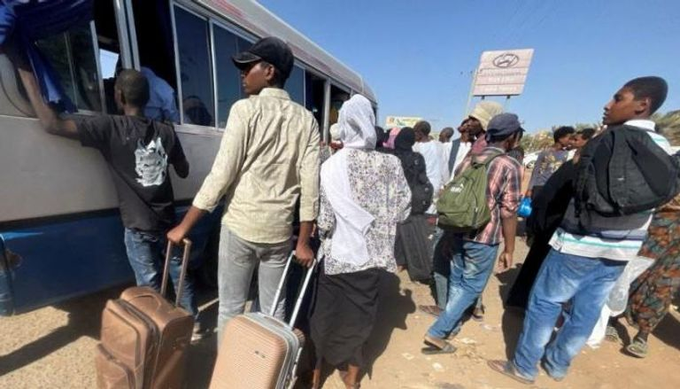
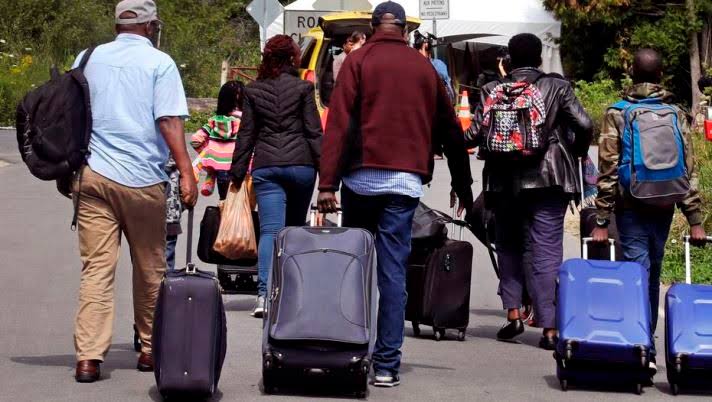
In Nigerians, many people are driven to migrate for better lives, education and healthcare, and job prospects. Political instability, such as conflict, insurgency and human rights abuses, also contributes to a mass migration of Nigerians.

The term “Japa” refers to the migration of Nigerians to foreign countries, especially Western ones, in search of a better life. A lack of quality leadership in the country at all levels often causes this phenomenon. Several reports and writing has shown that despite their love for their home country, many Nigerians have lost trust in their leaders and feel compelled to leave in search of a better future. Moreover, the decay in leadership has caused division within the polity; every tribe or region is suspicious of one another, and there is fear of domination and marginalisation.

In the 60’s and late ’70s, Nigeria was a country that commanded respect in the global arena. Our passport is a thing of pride at any entries and departure level. The Nigerian currency and economy were in good shape. However, the challenges facing Nigeria, such as insecurity, kidnapping, banditry, corruption and political violence, have led to the decline of the country’s economy and international standing. This decline has driven many young people, skilled and unskilled, to leave in search of a better life.

In Northern Nigeria, where Islam dominates the culture, people prefer to migrate to Middle Eastern countries, such as Saudi Arabia and recently Dubai and Qatar, where they share the same religion and beliefs. In contrast, Southern Nigeria is the centre of migrants, as people seek to escape bad governance and poor leadership. Despite the differences between the North and South in terms of access to education, quality of life, job prospects and economic opportunities, many young people still feel compelled to leave.  

However, the skilled and unskilled knows what they can do to navigate their way to leaving Nigeria. In Benin, the state of Edo, people are trafficked in the name of migration to get a better life, and they mostly end up enslaved and sold to work without regard for the dignity and respect they left in their country.  

Furthermore, some skilled migrants bring positive changes to Nigeria; they are doing wonders in their new countries, such as setting up companies that employ Nigerians, impacting the economy positively. In addition, statistics have shown that Nigerians are highly skilled people in the UK and the US, contributing to the economies of the host countries.

The migrations of these groups affected Nigeria negatively because Nigeria is among the world countries with the highest numbers of out-of-school children and increased maternal mortality rates. Nigerian-trained Doctors, Engineers, Scientists, Musicians and filmmakers are all over the world doing great work. Nigerian government needed their services and contribution to help in reducing the numbers of maternal mortality and to help in actualising effective education take place at all levels.     

To address the Japa syndrome, a multi-faceted approach is needed that addresses the root causes of migration and its challenges. These involved improving economic opportunities, promoting stability and security, and increasing access to education, healthcare, and employment opportunities can help reduce migration. In addition, strengthening the democratic process, improving wages and salaries, and enhancing the country’s security architecture are also important steps that need to be taken.

Nigeria is ours, and our responsibility is to ensure a bright future for our nation and youth. We must take action to address the Japa syndrome and create a future that is worth staying for.

Umar Yahaya Dan’inu wrote from Hausari Ward, Nguru, Yobe State. He can be contacted via umarnguru2015@gmail.com.

Mainstreaming mental health in Nigeria

Bello Hussein Adoto

The signing of the Mental Health Bill into law presents a renewed imperative to rewrite the mental health narrative in Nigeria. Here is how Nigeria can do better.

‘All diseases are equal, but some are more equal than others’. Although Nigeria is not George Orwell’s Animal Farm, the country has a glaring disparity in the kinds of diseases it considers a priority, but the recent signing of the Mental Health Bill into law can help us to rewrite the narrative.

At the mention of infectious diseases like HIV, tuberculosis, and malaria, or non-infectious diseases like diabetes, hypertension, and cancer, one could point to tangible, nationwide, and sustained initiatives to promote public health and reduce their impact on individuals and communities. But very few such initiatives are available, if any, for anxiety, depression, or Alzheimer’s disease. 

While anxiety and depression do not kill as regularly as untreated malaria, HIV, tuberculosis, and uncontrolled diabetes and hypertension – diseases that received far more attention, these mental illnesses are nonetheless deadly.

Anxiety and depression, for instance, reduce our quality of life and living, undermining our productive capacity, while depression increases a person’s risk of suicide. This reality makes diseases that affect moods and behaviour as relevant as those that affect tissues and organ systems.

Mental health disorders are a huge challenge in Nigeria. A recent report puts the number of people living with one mental illness or the other in the country at 60 million. According to a World Health Organization report, Nigeria has more than seven million people living with depression. This value doubles the number of people living with depression in South Africa and Ghana combined. A similar story plays out in the estimate for people with anxiety in the continent.

Nevertheless, the signing of the Mental Health Bill offers a renewed imperative for stakeholders to harness the several opportunities that could rewrite the narrative of mental health in the country.

The first opportunity is an extensive network of primary, albeit underfunded and underutilized, healthcare centres across the country. Nigeria has more than 33,000 primary health centres with a potential capacity to provide mental health first aid services to Nigerians. The government can expand these facilities to provide mental health care services.

The centres have community health officers (CHOs), community health extension workers (CHEWs), registered nurses, and midwives. Specialists can train these non-specialist healthcare workers to provide basic mental healthcare services nationwide, especially in rural areas, in a task-sharing, task-shifting policy.

Nigeria has applied this policy to provide malaria and family health services, and a 2015 study shows that integrating mental health into primary healthcare in Nigeria could follow a similar model. Such integration will buffer the shortage of mental health specialists in the country and improve care coverage for underserved populations.

Secondly, the digital era is here. Digital channels such as social media, webinars, SMS, and tools such as smartphones and software, provide an exciting, affordable, and sustainable opportunity to reach many people. The government could harness these channels to support non-specialist care delivery, educate the public about the fundamentals of mental health, reduce ignorance about mental health, and eliminate the stigma and dangerous practices associated with mental health disorders in the country.

Beyond helping to raise awareness, the government and other relevant stakeholders should harness digital channels to deliver e-health to people with mental health disorders and bypass the barriers to accessing traditional care. Such digital interventions have been shown to improve mental illnesses among students and could be helpful in care delivery to a larger population.

A third opportunity is the existence of non-governmental organizations, such as the Mentally Aware Nigeria Initiative (MANI) and Asido Foundation, that champion mental health causes in the country.

NGOs are paramount to health promotion because they supplement public efforts to promote health. Some NGOs operate helplines for mental first aid; others, like the Asido foundation, run the Unashamed campaign to increase mental health awareness and reduce stigma in the country. The government can partner with these NGOs to sensitize the public and provide the much-needed care and support that millions of Nigerians need.

Finally, a special insurance package should be instituted for people with mental health disorders, so they can access essential care without worrying about the cost. Awareness about health insurance has increased over the years, and more Nigerians are enrolling in their numbers. The number of enrollees in the Nigerian Health Insurance Scheme [(NHIS), mow National Health Insurance Authority (NHIA)] has nearly doubled between 2007 and 2013. Stakeholders can expand current social health insurance packages for insurance owners to include mental health conditions and give Nigerians a new lease to access proper mental health care whenever needed.

Bello Hussein Adoto, a researcher, writer, and journalist, writes via bellohussein210@gmail.com.

2023: Buhari working for PDP, says Ganduje

By Ahmad Deedat Zakari

Kano State Governor, Abdullahi Umar Ganduje, has accused President Muhammadu Buhari on working for the defeat of the All Progressives Congress (APC) in the forthcoming presidential election.

In an audio recording, Ganduje was quoted in Hausa saying, “President Buhari should remember that for several times he was trying to contest Presidency but he could not make it until there was an alliance , but now after enjoying everything , he turned back against the same democratic system that saw him to office.”

This is coming from Ganduje after Buhari’s address to the nation on Tuesday. Buhari had in his address poignantly refused to obey the Supreme Court order on the extension of time for the use of old Naira notes. A move Ganduje and other APC stalwarts believe jeopardises their chances in the February election.

Ganduje then criticised and counselled the president thus: “I wonder why the President is hellbent in making the same Party that helped him to win elections lose out, what did we do to him that he is this ignorant on several advice forwarded to him.”

“This same Buhari he contested again and again but he couldn’t win not until there was an alliance, now he wins and win again for the second term, but now that he is living, he wants to cripple the same Party that brought him to power why?

“This Currency Swap Policy, why didn’t the President bring it seven and a half years ago or after elections, but now one must be compelled to think that there is an ulterior motive in the whole thing.”

Election safety advice

By Abdurrazak Mukhtar

As the election season draws near in Nigeria, it’s imperative to prioritise one’s safety. Political elections, although crucial to democracy, can often lead to tension and conflict. Thus, citizens must be aware of the potential dangers and take necessary precautions to ensure their well-being.

Safety should always come first, and in times of political elections, it’s of utmost importance. By staying informed through reliable news sources, avoiding large gatherings and protests, and following safety advice provided by local authorities, individuals can take control of their safety during such times.

For instance, it’s recommended to steer clear of crowded areas during demonstrations or political rallies and to dress in a manner that doesn’t identify one as a supporter of a particular political party.

Moreover, respecting the rights of others is a fundamental aspect of ensuring a peaceful and safe election season. Political differences should never be used as an excuse for violence or intimidation, and individuals must refrain from engaging in illegal activities. This not only protects the safety of others but also helps maintain peace and stability in the country.

In conclusion, as citizens gear up for another election season, it’s essential to prioritise one’s safety. By being aware of the potential dangers, following safety advice, and respecting the rights of others, individuals can participate in the democratic process peacefully and responsibly.

Therefore, let’s work together to promote harmony and ensure that the elections in Nigeria are conducted in a fair, transparent, and safe manner, securing a peaceful and stable future for generations to come.

Abdurrazak Mukhtar can be contacted via prof4true1@gmail.com.

Nigerian youth and their quest for high-paying jobs

By: Muhammad Danjuma Abubakar

On the weekend, while scrolling through my phone casually, I clicked on the Google App to open the search box. I stared for a while as I had no question in mind. Although, it is advised that one should have a specific question in mind before attempting to consult the internet; to enable the user to save precious time and better organisation the resources therefrom.

As I was thinking about which question was most relevant to the search, I suddenly typed ‘best paying jobs that can earn me millions’ as my query in the search box. This took a better part of my time for hours as I kept searching through Google – the most admired search engine today, to find out the ‘best jobs’ that could earn a person millions, whether in naira or whatever currency.

The outcomes from the search engine result pages (SERP) could not cease to amaze me.  The more results I got, the greater my curiosity for further searches as I kept re-phrasing the queries.

While on this, I also remembered that our society today is such that it overrates affluence and attaches respect to any ‘rich wheat’ regardless of whether one can genuinely justify the means to its acquisition.

Because of these, most young Nigerians wish, in a resolute manner, to find a professional career in jobs that could offer them huge pay to enable them to build a big house and get a car or cars of choice, among other acquisitions in the shortest time possible. These are society’s key indicators for measuring success in life or otherwise.

Emphatically, it is because of the perceived belief that studying certain courses in the university could translate more in good paying jobs that some parents impress it upon their children to forfeit one university admission for another or go to a greater length such as using monies to get the desired choice of course(s) of study for their children.

In one of my recent articles titled ‘Our Schools, the rots and dangerous implications’, I discussed some of these unfortunate realities and how best to tackle them. That aside.

As I realised further the fact that our youths today do not choose a career or job that aligns with their interests but those ones that pay more, I took my research more seriously as I began to write down the results from my search queries. And at the end, I got massive results from my google searches.

Good-paying jobs could fetch you millions are many. Yet, I was shocked to see that most jobs I had expected to find, considering the perceived potential of the courses leading to those jobs, did not make a list, and those least expected were on the list. How ironic!

Some list of the careers/jobs I expected to find are: Politics, Aeronautical engineering, Pilot, Photography, Data visualisation, Water resources engineering, web development and Planning Officer. Others are shipping and logistics, music, and filmmaking, among others. I did not find any of these.

For clarity, my expectations were well placed. Because for example, politics is one of the most desirous ambitions, particularly in Nigeria, where even a ward councillor easily amasses wealth within his shortest period in office. Most Nigerians, especially those who wish to feel they belong, desire to win an elective office.

 Another notable example is photography. It is estimated that over 20,000 events take place in Lagos State every day, according to the vanguard newspapers report.

Photography has become a speciality that has stood the taste of all times and has proven to be a money-spinning venture. If you must know, politicians of class, businessmen, top government functionaries and blue-chip organisations now have trained photographers in addition to their spokespersons and media teams. This is why even some universities, particularly overseas, now run degree and even higher degree programs in modern Photography. 

Similarly, the job of being an aeronautical engineer or pilot could also be very rewarding. According to statistics from Statista, the number of current active commercial aircraft is more than 25,000 globally, with Africa accounting for 888 of this number, with an annual growth rate of no less than 3.8%.

But, the only very financially fulfilling jobs, according to Google, despite repeated searches, were a Sales manager, Chief executive officer, Financial manager, Software developer, Lawyer, Investment Banker, Negotiations expert, Neurosurgeon, Psychiatrist, Human Resources Manager, Risks Analysts among others.

The best cure for ignorance is a constant search for knowledge. So, I took my research further this time by picking each of these jobs one at a time to ask google again ‘why they were the best-paying job. I wondered, this time, why I kept receiving tips on ‘how to be successful and earn better pay’ instead. 

Put differently. My search results indicated that there are key conditions for you to excel and eventually earn more in these jobs earlier regarded as the ‘most financially’ rewarding. Google listed the conditions to include; passion, staying evergreen through the search for new ideas, and competence, among others.

At this point, it is reasonable to believe that any legitimate job and vocation is a best-paying job and could make you a millionaire when you imbibe certain principles.

Therefore, instead of seeking the best-paying jobs, the youths must rather seek a job that aligns with their purpose and personality in life, seek to become like a ‘bunch of keys’ with broad ideas and creativity in their chosen career and seek to work to learn more, not to earn more; because it is said that, when you work more than you earn; you will later earn more than you work.

Muhammad Danjuma Abubakar lives in Minna, Niger State. He can be contacted via muhammadcares4u@gmail.com.