Admin

Muslim domination of Nigerian politics, El-Rufai’s remarks and the quest for a just social order!

By Ibraheem A. Waziri

1. As against the postulations of some, who think Nigeria to be a fantastic, British-contrived social experiment. Many believe it to be purely a product of inevitable historical processes that ordinary mortals should only play along with. So, it is said that statesmen and cultural priests cum social philosophers must – by the spirit of the time, fair universal human values and exigencies of frequent unassailable moments – always create and promote a narrative of a reasonable sociocultural balance for the country to continue to thrive.

2. In this, since religion is adjudged, by scholars of identity in history, to be the strongest factor in social mobilisation. It is safe to assume that the crème de la crème of the Nigerian military, who ruled the nation between 1983-1998, although mostly Northerners and Muslims, had good intentions; to have worked hard to ensure the provision of religious balance, between mainly Muslims and Christians, in the general administration of the national and sub-national units of the country.

The Justification

3. A casual review of both the 1st and 2nd Republic is enough to show tendencies to Muslims’ domination of the Nigerian political space. Also, since Islam is consistently found to be deeply expressive in the discourses and practices of its adherents daily, especially in Northern Nigeria, non-Muslims may not help but feel threatened – even if only imagined, not real – with marginalisation when individual Muslims are in power. This, regardless of whether their predilections do not suggest inclinations to any assumed extremist tendencies. Because often politics and politicians ride on only prevailing narratives and popular sentiments as major currencies during elections and subsequently in forming finer details of general governance policy direction!

4. This may have been why people like the late Capt. Ben Gbulie would maintain this in his book, Nigeria’s Five Majors, and much later when he responded to questions by late Barrister Yahaya Mahmood SAN during a session at the Oputa Panel. That one of their reasons for staging the January 1966 coup d’état that killed mostly Northerners Muslims in power was intel, they got and rigorously verified to confirm, by some standard, that the then Nigerian government, led by mainly Northern People’s Congress (NPC), was clandestinely planning a Jihad with the hope of Islamising the country.

5. The measures of balancing taken by the military may not be favourably viewed by modern reviewers, depending on the angle of vision one takes. But it is unmistakably clear that had the prevailing rhetoric of the Nigerian Muslim communities of the late 80s and 90s – that were even celebrating as heroes on various pulpits, figures and ideals of contemporary Islamist movements in Egypt, Iran, Algeria, Afghanistan and Sudan – met with a popular narrative of Muslim majority populated Nigerian state, the results would have been better imagined now. 

6. Thus, during both the two aborted electioneering processes of 1992 and 1993, to usher in a democratic government, General Ibrahim Babangida (IBB), the Head of the Nigerian state, deliberately tried to ensure political parties presented bi-religious tickets for elections into offices of governors, everywhere there is a significant population of people of differing faith, and ultimately that of the Presidency.

7. Many scholars and pundits alike have concluded that it was the failure of the southern Muslim, Moshood Abioĺa, Social Democratic Party’s candidate, who is said to have won the election, to respect IBB’s wish to select Paschal Bapyau, a northern Christian, as Vice Presidential candidate that led to the annulment of June 12 1993 elections! The Quest for such religious balance was that important to IBB, as we can conveniently presume it to be part of his insight and blessed wisdom clinging to higher moral flanks, advancing the standard of a fair, indivisible Nigerian nation.

8. Fast forward to the events preparatory to ushering in the fourth republic in 1999. It was the same cream of former Northern Nigerian top military generals who insisted on a power shift to the South, particularly to a Christian president, who would, in turn, have a Muslim running mate from the North. Thus, Northerners or Muslims from the South were cajoled to stand down their ambitions in the name of peaceful, regional and religious balance!

To Every Action…

9. Yet, as the timeless law of physics stipulates, there is an equal and opposite reaction to every action taken. So also the decision to premise all the sociocultural discourses on Nigeria on the narrative of religious balancing. Religion as a determinant of who gets what, in the string of the political equation, and ultimately down the line on the food chain of the country’s rentier economy, also became the cheap tool providing the impetus for persistent conflicts and unending violence, particularly in some subnational units in Northern Nigeria.

10. In Kaduna, my state, there has been a wave of religiously motivated crises, coupled with agitation for territorialism and territorial expansion, more resource allocation and political representation, since 1987. After the ushering in of the fourth republic in 1999, it continued assuming an alarming direction, characterising every aspect of the policy discussion in the state. Every single appointment, political or otherwise, must factor in religion. Yet the wave of the crisis did not show any sign of going away. It kept consuming many lives and properties, casting a blight on every possible future of progress and development. Refugee camps became a distinct feature of satellite towns in the state.

11. Government, civil society and faith-based organisations became very busy and active daily on the issues of conflict resolution and rehabilitation and resettling of refugees more than any other thing. From 2013 to 2014, Reverend Joseph Hayeb, the present Kaduna State Christian Association of Nigeria’s Chairman and a Muslim cleric, Shaykh Haliru Maraya, served as Special Advisers to the then Kaduna State governor, Mal. Mukhtar Yero on Christianity and Islam, respectively. They partnered with an international peace promotion non-governmental organisation, Global Peace Foundation, in a state-wide campaign for peace and conflict resolution in the state. Malam Samuel Aruwan, who was to become the first Commissioner of Internal Security and Home Affairs in Kaduna 2019 – 2023, and I joined them on the invitation. We wrote essays and appeared with them at conferences, engaging in the discourses of why Muslims and Christians must find ways to live in peace!

2015!

12. the deployment of superior vigilance technology, by the Independent National Electoral Commission, in the conduct of the 2015 elections exposed the fallacy of the premise ascribed to the religious balancing narrative that has lasted for 30 years in Kaduna. Instead of the entrenched assumption that the religious demographic spread in the state is almost 50-50 between Christians and Muslims, it was realised that it was at most 30 – 70 in favour of Muslims!

13. This, unfailingly, was to give room to so much reflection, on the utility of the religious balancing narrative, in providing the needed peace and stability for the general administration of the state. In that, a fair and dispassionate assessment could be said that over the years, it has proven to be a burden to the state and is threatening the overall peace and stability of the Nigerian Nation! Even if it has once been useful in keeping peace and maintaining justice, providing stability and strengthening the foundation of the Nigerian Nation.

14. More so, the assumed justifiable reasons that made the northern military elite deploy it then can be said to be no longer there now. As Samuel Huntington projected in his 1993 seminal work, The Clash of Civilisations and the Remaking of World Order, the appeal of the universal call to Jihad among Muslims would lose its popularity in about 25-30 years. That Muslims world over would gradually appreciate and align with the values of democracy and its prescriptions in the rule of law and freedom of expression.

15. Global war on terror and the experience of the Muslims here, home to Boko Haram, has helped make Huntington’s prophecy real. It significantly changed the perspectives and disposition of the Muslim elites in the country. Many scholars and clerics have stopped identifying with Jihadi rhetoric and, in many cases, withdrawn or dissociated themselves from the earlier ones they once made. There has been a wide-ranging consensus among a larger section of them to work with the present multi-religious composition of Nigeria and support its established institutions!

16. Also, the era now is not a military era, where the earlier conceived balancing narrative can be sustained by fiat nationally and sub-nationally. Democracy is here, and its promises, based on the premise of popular participation and will, are bound to force the hands of society in a particular direction.

17 In 2019, the Pew Research Centre, an independent American think tank that specialises in social sciences, demographic research and analysis, published that, in 2015, Muslims in Nigeria constituted 50% of the population as against Christians who are less. And by 2050, Muslims will constitute about 60% of the people, while Christians will be less than 40%. 

18. When I wrote about this on the 11th of July 2022, in a message wishing fellow Muslims well during Sallah celebrations, I also called them out to reflect on what Nigeria they would want. Many experienced pundits and senior citizens in my list submitted that the 60% per cent figure is most likely the population of Nigerian Muslims now. We are only hindered from knowing that for a fact because the past Nigerian military leaders had struck out religion as a variable in all official national headcounts. They believe that by 2015, Nigeria’s Muslim population will likely be 70 – 75%. 

19. All these should point to the reality of the futility of struggle, for a just social order, in Nigeria while clinging to the religious balancing narrative. 

The El-Rufai Example of 2019!

20. Malam Nasiru El-Rufai was elected into the leadership of Kaduna State on top of events significant to unravelling the wave of fallacies that made operational in the state, the religious balancing narrative. He was equally confronted with the reality of the non-viability or even risks associated with any attempt to perpetuate it.

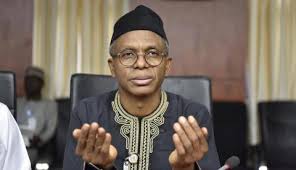
21. In 2019, he won the election after confronting the operational, religious balancing narrative and crushing it. Amid cheers by the Muslim community, who are excitedly displaying an air of triumphalism, some of us must have assumed that the winner takes all maxim will be deployed. Yet Malam Nasiru went ahead in his acceptance speech on the 11th March 2019 to state: _“Let us all see and value each other as human beings descended from Adam and Eve. Let us end the misuse, abuse and manipulation of religion for personal gains. Religion should be a private matter. Our identities should not become barriers to common humanity. Our doors are open to a new chapter of concord.”

22. Subsequently, appointments and responsibilities were allocated based on merit, trust, commitment, party loyalty, and clearly outlined cause. Thus, many so-called sensitive positions, like the Accountant General, Commissioner of Internal Security and Home Affairs, and many others, go to non-Muslims!

23. In this, as an independent observer not speaking for Mal. Nasiru, I will say that one can see that if the Muslim-Muslim ticket has any purpose, it is only for burying the religious balancing narrative, which has proven to be cancer, in the body of our journey of development, into a just and prosperous society. It is also to serve as a teachable moment, to Muslim leaders, politicians, and the teaming youthful population, on operationalising the new narrative of the Muslim majority Kaduna and Nigeria, which is soon to be the new order of the day.

The Controversial Speech of 28th May 2023!

24. Nigeria’s 2023 elections, which saw the much-maligned success of a Muslim-Muslim ticket at the national level, had reasons to give Nigerian Muslims a feeling of triumphalism again. It has confirmed their numerical superiority and harbours the tendency of permanently killing the religious balancing narrative in our national politics. It also came with the risk of making some elements among Muslim politicians, clerics, and scholars alike start using it, in future, in a manner that would be inimical to the interest of their fellow Muslims, non-Muslims and the idea of the Nigerian nation.

25. The farewell dinner, Imams, clerics and Islamic scholars organised for Mal. Nasiru Elrufai, the 28th of May, 2019, in my opinion, was the best place for him to kick start the conversation about what the victory of the Muslim‐Muslim ticket should mean to the Muslims and the country in general. Both mark the end of the religious balancing narrative, religious politics and what future clear Muslim dominance or leadership should mean. 

26. From the clips of the recordings circulating in social media and the translation of the entire speech by various news outlets. It is clear that though Elrufai spoke appealing to his audience’s sentiments and good feelings, he was also unequivocal that the Muslim leadership across history and his, in Kaduna, did not and shall not try to discriminate against non-Muslims. This is a call and a subtle cautionary appeal to those who may think otherwise to reflect and reconsider as an exemplary guide in future.

The Ways Forward

27. Nigeria has moved into a new era in its history and evolution. Not that it has only seen the futility and, ultimately, the end of the religious balancing narrative; it has also come to the era where the influence and wisdom of its retired military generals in its democracy is about to cease altogether. All hands must be on deck to help chart a new cause and craft a fresh narrative for its sustenance and maintenance on a just and equitable pedigree.

 28. The country’s new reality of a sociocultural composition needs the attention of scholars, pundits and policymakers to ensure that the nation moves with reasonable speed on the lane of development. And this is what that speech by El-Rufai on that day should be seen to have helped to transit the national conversation quickly!

Ibraheem A. Waziri wrote from Zaria, Kaduna State. He can be reached via iawaziri@gmail.com.
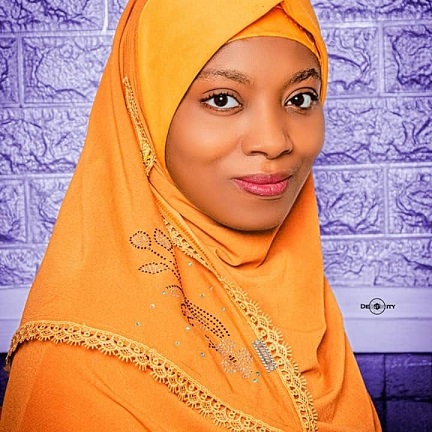
To wash, or not to wash: The bloody Samaritans contemplated

To wash, or not to wash: that is the question

‘Whether it is nobler in the mind to suffer the slings and arrows of outrageous’ servitude,

or to take a stand against a sea of troubles, mediocrity and ‘by opposing, end them?’

Since washing the husband’s clothes has found its way to the topmost topic worthy of discussion amidst many other issues ravaging our dear region, let’s talk about it then. We are unserious, first of all, I must admit. After wasting time and energy on such trivial topics, I wonder how we still expect an actual transformation to occur. How is that possible?

By the way, washing the husband’s clothes is not a crime; it fetches rewards from Allah and love from (some) husbands. If you want to be a diligent wife and conquer his heart by washing his clothes, please do, as there’s no user guide to a successful marriage. Just do what works for you. But remember, no good husband will wish slavery and suffering upon his wife. If he/she has the means to make life easier for you and they are not doing that, then dear, you are probably with the wrong partner.

Who are you married to? A lover or a husband?

Yes, because it’s about time we differentiate between the two. But I was married to both in one person, so to say that I washed his clothes out of love shouldn’t be surprising. We were newly married then. I was young (and not naive, thanks), energetic, and most of all, wanted to prove the ‘I am a good wife’ point. We both were pursuing our masters in India, so whenever he had classes and I didn’t, I would wash and iron his clothes before he returned. I love to see him appreciate me. That ‘Allah ya yi miki albarka‘ meant a lot to me, and I would do anything to get those blessings.

So while I was washing, he would try to dissuade me. Other times he would join when he was around, and because I wouldn’t stop, he searched, found and patronised dry cleaners in the neighbourhood until we got our washing machine. So, whether or not to do these little things is absolutely perspectival. I washed not just his clothes but those soiled with poop and vomit (when he was sick). It doesn’t make me feel lesser, and I would do that again if necessary because if I don’t, who will? I did it diligently, with enthusiasm and so much pride.

Moreover, that made us happier; it fetched me lots of love and admiration and earned me a good repute. As such, he washed mine and the kids’ too. We were abroad without any other relative, so whenever I put to bed, he’d be fully in charge of the laundry – and other domestic chores. What is love and compassion in marriage for?

I have seen similar arguments about cooking as well. So if you say women shouldn’t care for or serve their husbands in these little ways, how else should they do it if he is not rich enough to afford such services? Just how?

I am not saying being a slave is the only way to a man’s heart; instead, I want to rebuke the adamant claims that rule out the possibility of making these little gestures. If care is not taken, someday, women will argue about whether to have intercourse with their husbands. Hello!

It saddens me every time I see women following a so-called ideology trashing the institution of marriage – in the guise of ‘woke-ness’, for we may escape the traps of their unwavering criticisms, but what about our kids? The louder their voices, the more sceptical the next generation would be about marriage. Many youths are now feeling pessimistic about the whole idea of marriage – thanks to influencers and bloggers. Remember, if we continue to applaud life without marriage, we will watch our societies relapse into lethargic savagery.

I am not saying being a slave is the only thing about marriage; no, there’s a lot more. But please, let’s engage in marital discourses more positively and always keep in mind that the younger generation is watching. Marry, wash or cook if you want to, and if you don’t want to, just shut up! We shouldn’t be accomplices to the tacit agenda infesting our region.

Please do not misconstrue my opinion. Being servitude isn’t the key to every man’s heart. It depends on the man and the circumstances. Also, washing his clothes (among other courtesies) wouldn’t keep him, if you like wash his clothes and all of his village people’s, he will replace you in a snap if he wants to. No amount of endurance, sacrifice, compassion and diligence would guarantee that you have won him, my dear; only a man that wants to be kept can be kept.

So, as you put all your efforts into building your home, do everything for Allah’s sake to earn His pleasure only because man is naturally dynamic. Wash if you want to, I reiterate, but remember, it’s not your religious duty as a wife. However, you may do it for the fun of it. Be a bloody Samaritan. It’s fun! What is love without compassion and foolishness? Although my ‘breakfast’ was just recently served, I choose to say objectively: Marriage is sacred and an achievement, take it or leave it!

Yours humbly,

Dr Sadiya Abubakar

MURIC congratulates Jigawa Attorney General on his reappointment

By Muhammad Abdurrahman

The Kano State chapter of the human rights advocacy group, the Muslim Rights Concern (MURIC), has sent a congratulatory message to Dr Musa Adamu Aliyu on his reappointment as the Attorney General and Commissioner for Justice of Jigawa State.

Dr Aliyu was among the 16 Commissioners sworn in by the Executive Governor of Jigawa State, Malam Umar Namadi, on Wednesday, 12th July 2023.

In a statement released on Friday, 14th July 2023, the Chairman, Kano State chapter of the rights advocacy group, Malam Hassan Sani Indabawa, said:

“The Muslim Rights Concern (MURIC) rejoices with family, friends and associates of Musa Adamu Aliyu, PhD, on his reappointment as the Attorney General and Commissioner for Justice of Jigawa State.

“This, in fact, is a recognition of excellence, professionalism, dedication, hard work and selfless service exhibited by Dr Aliyu during the tenure of the immediate past administration of Jigawa State.

“As a consummate professional in the legal profession, Dr Musa Adamu Aliyu had initiated several revolutionary reforms of Jigawa State justice system, jurisprudence and advocacy.

“We observed with awe and admiration how the young and energetic Musa overhauled the Jigawa State judicial system by instilling professionalism, hard work and meritocracy. 

“In his remarkable display of hard work and competence, Dr Musa had brought about far-reaching changes by discouraging redundancy and promoting excellence and prudence in the justice sector service delivery.

“He, similarly, modernised the system by digitalising resource materials and introducing Information Technology (IT) tools for efficient and effective service delivery. This was unprecedented.

“Your being reappointed”, MURIC observed, “is a testimony of the role you played in advancing positive changes in the development of Nigerian law, jurisprudence and advocacy by your physical appearances in courts, a new innovation to the Jigawa State office of the Attorney General. 

“We, therefore, urge you to remain focused, undaunted, resolute and exemplary in your matchless passion to reform the Jigawa State Justice system.

“Your vision to inculcate professionalism, honesty, and hard work is one of the Nigerian positive vibes that all hope is not lost with young professionals like you bringing about the desired change. 

“We, sincerely, pray for your success while congratulating His Excellency, the Executive Governor of Jigawa State, Malam Umar Namadi, on being circumspect, in his choice in you, signifying the desire for continuity.”

Nigerian military rescue nine kidnap victims in Zamfara

By Muhammadu Sabiu

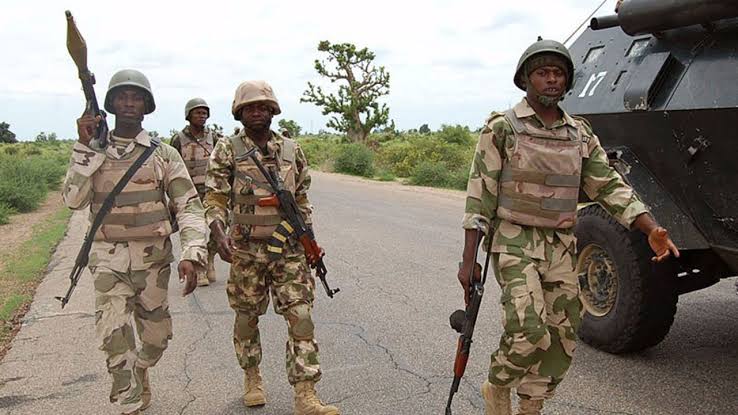
Operation Hadarin Daji troops on Friday freed nine abducted victims in Zamfara State’s Bukuyyum Local Government Area.

It was learned that the military responded to a distress call on armed bandits in Mailere village in the Bukuyyum region while conducting normal patrols and protecting farmers in their farmlands.

According to a senior military source who asked to remain anonymous and spoke to journalists, the forces deployed quickly to the location of the event and made contact with the armed bandits at the community’s gate.

However, the troops’ superior firepower forced the armed bandits to retreat and leave the nine kidnapped people when they engaged them in combat.

The Daily Reality understands that the freed victims were afterwards reunited with their families.

Zamfara State has been on the list of Nigerian provinces terrorised by the activities of armed bandits who attack, abduct, and abduct travellers and residents of communities in the state.

Police investigate shooting of two brothers by vigilante group in Abuja

By Uzair Adam Imam

The Federal Capital Territory Police Command has confirmed the commencement of investigations into the shooting of two brothers by some local vigilante group in Bobota/Dabi Kwali Area Council of the FCT on Sunday.

The two brothers were identified as Abdulmalik Abubakar, 27, and Ibrahim Abdullahi, 22.

It was gathered that Abdullahi sustained gunshot wounds to the lap and buttocks while Abubakar was hit in the leg.

The Daily Reality reports that the victims were rushed to the hospital, where surgery was performed on one of them.

Speaking with the journalists, their sister, Jemilah, said two of the victim’s toes were amputated following the injury sustained from the gunshot.

Josephine Adeh, the Police Public Relations Officer, FCT Command, confirmed in a statement that the investigation into the matter had commenced.

According to the statement, one of the suspects arrested on the day of the shooting was still in police custody despite moves by the local vigilantes to release him.

News I presented forged academic certificates to INEC libellous – Kaduna Senator reacts

By Uzair Adam Imam

Senator Lawal Adamu Usman of the Peoples Democratic Party (PDP), Senator representing Kaduna Central Senatorial Zone, has bitterly denied the allegation swirling around that he forged certificates and threatened to take legal action.

Senator Usman was said to have presented a fraudulent academic certificate as part of the documents presented to the Independent National Electoral Commission (INEC) during the 2023 election.

Reports have it that a former student of the Department Public Administration of Ameer Shehu Idris College of Advanced Studies, Zaria, had claimed that the serving senator used her result to gain admission into a university.

But in his reaction, Senator Lawal Adamu Usman, in a letter through his solicitors Messrs E. N. Ogbu & Associates, stated that the story published on 12th July 2023 with the caption: “Kaduna Senator used my result for varsity admission, witness tells tribunals” is libelous and defamatory, and therefore threatened legal action.

The letter further reads: “However, the procedure to obtain these facts were thrown to the wind with respect to the reportage in itself as same, according to our Client, were a calculated effort to wickedly dent an image and status earned over the years by dint of hard work.

“Our Client has suffered emotional and psychological trauma over the “fake news” printed to dent his hard-earned reputation in the eyes of the public over information that is not only false but inexistent.”

“The Nigerian Government has times without numbers strictly warned the generality of the public against spreading what is now known to be “fake news.”

Is Tinubu Awoist – a disciple of Awolowo?

By Abdullahi Khairalla

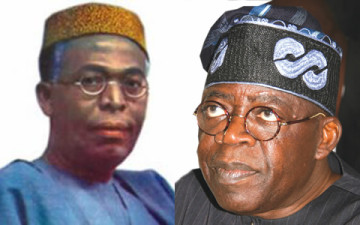
Given the recent tsunamic and fundamental economic and educational reforms in the country, people have started raising historical and comparative questions of whether President Bola Ahmed Tinubu holds dearly the sacred political and economic principles and ideals of a centenary Yoruba saint Obafemi Awolowo known as ‘Awoism’.

Since the 1960s, Yoruba politics has been dominated by a political orientation known as ‘Awoism’. The phrase refers to the political philosophy of the late Yoruba political leader Awolowo, who espoused policies he called “democratic socialism”. Its primary tenets were welfarerism, free social services and job creation. Awolowo loomed large over Yoruba politics for over forty years. He was an intensely intellectual figure with great energy.

Awolowo had a ground-breaking term of office as the premier of Nigeria’s Yoruba-dominated Western region between 1955 and 1959. During this time, he introduced free education and health care in his region with other social welfarist policies.

Awolowo’s political ideology did not die with him. He was a great and transformational leader who was loved, revered and cherished like the rock of Gibraltar by the Yorubas and all who benefitted from his pioneering social welfare programmes. They refer to themselves as ‘Omo Awolowo’ (Awolowo’s children) or Awoists (disciples of Awolowo and his principles). Awolowo’s ideas remain so deeply ingrained in the political psyche of the Yoruba that being an Awoist is regarded by many Yorubas as the only legitimate apprenticeship before becoming a Yoruba politician on the national stage.

President Tinubu has very few in common with Awolowo. Tinubu, just like MKO Abiola, is not like Awolowo. Awolowo was trim, dapper and austere. In contrast, Tinubu is well known for his staggering wealth and flamboyance, which made him appear larger than life. Awolowo was a socialist: Tinubu is an ultra-capitalist billionaire who sits atop— bringing in completely capitalist-oriented policies in the education sector, oil and gas industry, health, electricity and many others, which makes him look like the opposite figure of Awolowo in Yoruba land.

Of course, Awolowo’s death politically orphaned the Yoruba. He had served or played a dual role as the Yoruba leader and also their political representative on the national scale. After his death, Yoruba politics were dominated by one trend. First, there was the search for another iconic and radical socialist to inherit Awolowo’s dual role. 

Many thought Tinubu would apply some Awoist policies on Nigerians now that he became the Nigerian president, but the recent developments and realities seem to belie this hope. 

Abdullahi Khairalla writes from the Department of Political Science, University of Maiduguri.

Emefiele’s case in court – DSS

By Uzair Adam Imam

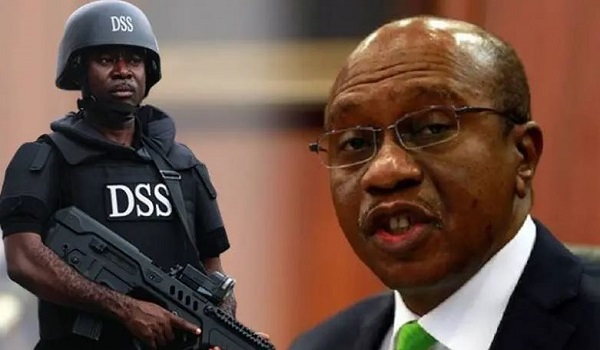
The Department of State Services (DSS) Thursday said that it has charged the suspended governor of the Central Bank of Nigeria (CBN) to the court.

This was coming as a response to the order by a Federal High Court sitting at Maitama in Abuja which it ordered that Emefiele should either be released or charged to court.

Recall that in a judgement delivered by Justice Hamza Mu’azu, the court held that Emefiele’s continued detention without trial, amounted to a gross violation of his fundamental right.

Responding, Peter Afunanya, DSS spokesperson, said, “Sequel to an Abuja High Court Order of today, 13th July, 2023, the Department of State Services (DSS) hereby confirms that Mr Godwin Emefiele has been charged to court in compliance with the Order.

“The public may recall that the Service had, in 2022, applied for a Court Order to detain him in respect of a criminal investigation.

“Though he obtained a restraining order from an FCT High Court, the Service, however, arrested him in June, 2023, on the strength of suspected fresh criminal infractions/information, one of which forms the basis for his current prosecution.

“The Service assures the public of professionalism, justice and fairness in handling this matter and indeed the discharge of its duties within the confines of the law,” he added.

EFCC arrests 13 Chinese citizens over alleged illegal mining activities in Kwara

By Muhammadu Sabiu
 
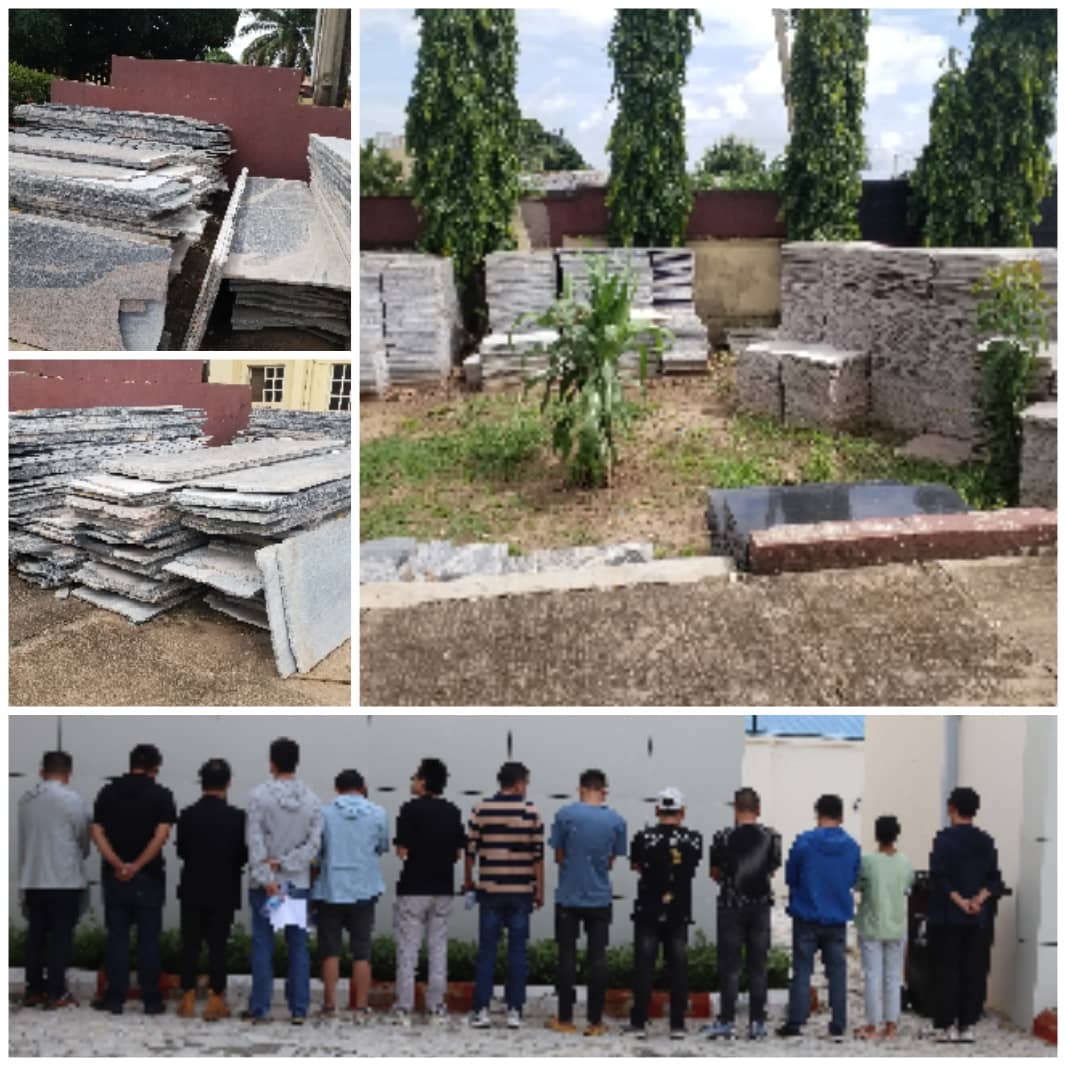
Operatives of the Economic and Financial Crimes Commission (EFCC) in Ilorin have apprehended 13 Chinese nationals for illegal mining activities in Kwara State.
 
The EFCC revealed this via a statement on its social media handles on Friday evening.
 
According to the anti-graft body, “the offence is contrary to and punishable under Section 1(8) (b) of the Miscellaneous Offences Act Cap M17, 1983.”
 
This paper understands that the suspects, who include a female and 12 males, were detained on Wednesday, July 12, 2023, at the Government Reserved Area, G.R.A. Ilorin, after obtaining reliable information about their unlawful activities, which included illegal mining and failure to pay royalties to the Federal Government as required by law.
 
The EFFC’s statement further reads, “Prior to their arrest, discrete investigations on the activities of illegal mining operators in Kwara State revealed that the operators have different illegal mining sites in almost all the 16 Local Government Areas of the state.”

Use your certificate and creativity

By Salihi Adamu Takai 

Creativity pays with much income, so don’t be misled as you’re acquiring knowledge in any field of study, whether scientific or artistic. Refrain from relying on the Government to enumerate your study; the onus is on you to use your knowledge to help your humble self and the Government.

Be curious about Creativity, and don’t think that you will have a certificate in some field of study so that Government will give you what you may rely on to quench your hunger. As you study at the University, college or secondary school, think of your future and learn to get money from the little you grasp in your study.

People should have learned that already as they started feeling discouraged by Government policy; success in life is attached to curiosity, innovation, creativity and courage. If people had been curious about innovation, they would have become creative and courageous about their interests.

Let’s look at the sources of development of the developed countries, such as China, America, England and others. We will say that they all developed because of curiosity in innovation. In China, we can see an infant exhibiting a sense of invention, producing phones and what have you; he doesn’t rely on the Government to give him jobs; the Government receives from his creativity.

In Nigeria, conversely, even a professor still relies on Government to boost his salary. That is a typical example of backwardness in Africa. Our Government also doesn’t encourage the youths to be curious about Creativity only bars them with a lack of encouragement. 

Therefore, as the youth who starts thinking of this idea, I engage myself in creativity. I did, and I got the value of it; I became curious about it; and will keep evolving curious about it forever. I exhibited my input on Earth, and it was accepted. Alhamdulillah!

Salihi Adamu Takai wrote from Kano via salihiadamu5555@gmail.com.