Admin

Bauchi: Commissioner charges youth to be more productive

By Ukasha Rabiu Magama

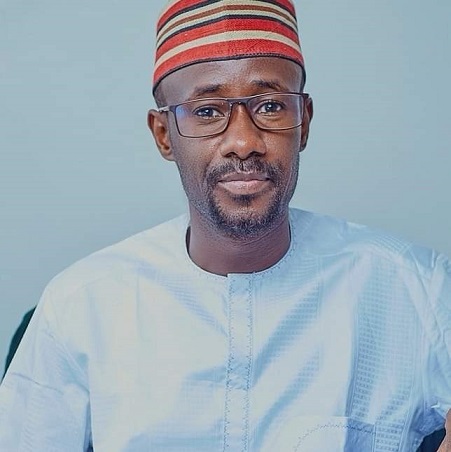
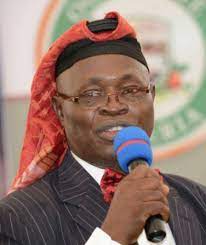
The new Bauchi Commissioner of Health, Dr Sambo Umar Adamu, has charged Bauchi youths to be productive and peace ambassadors of their respective communities to bring the desired development to the state. 

The disclosure was made at his Magama residence when he received the delegation of the Magama Youth Forum on a congratulatory visit. Expressing his happiness over the visit, Dr Sambo assures his readiness to work closely with youths to bring much-needed development to the state, particularly in the health sector.

Further, Dr Sambo said his door will always be open for consultations on moving Bauchi state to the greater pedestal. He added that Governor. Bala Muhammad’s administration was an inclusive regime. Therefore, he promised to learn from his footsteps by carrying everybody along, irrespective of party, religion and tribal affiliations, for the sustenance of peace and to bring progress to the state. 

In his remark, the acting chairman of Magama Youth Forum, Malam Isma’il Abubakar Najjar, asserted that the visit aimed to felicitate with Dr Sambo on his appointment as the new Bauchi state commissioner of health as well as pray for more success in the distant future.

Malam Najjar said Magama Youth Forum are ready to give maximum support and cooperation to the new commissioner to perform his responsibilities to revamp the Bauchi health sector.

While making his comment, the acting assistant secretary of the Magama Youth Forum, Comrade Abubakar Abdulkarim Jibrin, appealed to the new commissioner to consider the union at a time of enjoying the democratic dividend as well as shun nepotism by giving equal opportunity to the entire citizens of the state.

The visit had in attendance chairmen and secretaries of various associations within Magama and its environs.

Military junta in Niger ignores ECOWAS, appoints new prime minister

By Uzair Adam Imam

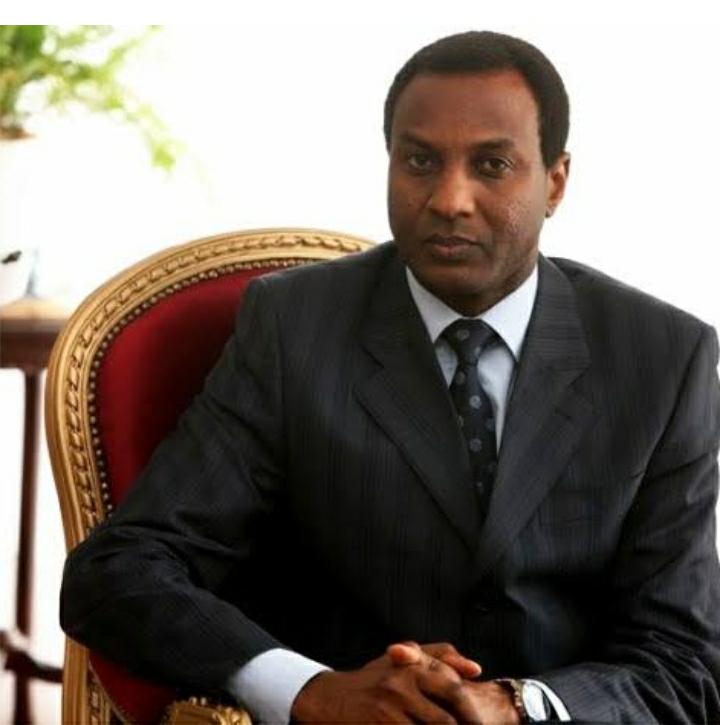
The Niger coupists have named former Economy Minister Ali Mahaman Lamine Zeine as the country’s new prime minister, nearly two weeks after they took power.

Zeine appointment was announced late Monday night by the military junta spokesman on television.

It was gathered that Zeine was the former Minister of Economy and Finance for several years in the cabinet of then-president Mamadou Tandja.

Our reporters gathered that Tundja had led the country from 1999 after its return to civilian and was ousted in 2010.

This is coming a few days after an ultimatum from the Economic Community of West African States to the coup plotters to reinstate Bazoum has expired.

However, the Daily Reality learned that the prime ministers of the ECOWAS member states will now meet in Nigeria’s capital, Abuja, on Thursday to discuss how to proceed.

Many Nigerians, especially the Northerners, are not in support of the ECOWAS measures that could possibly include force, as the ultimatum threatened.

Meet Dr Aliyu Isa Aliyu, the new DG of Kano State Bureau of Statistics

By Dr Yusuf Ya’u Gambo

Thirty-nine years ago, Dr Aliyu Isa Aliyu came into this world just a year after Late Governor Muhammadu Abubakar Rimi left office. With over a decade of work experience, Aliyu is an Assistant Professor of Mathematics and the Deputy Director of the Research and Development Directorate at Federal University Dutse.

He was a research fellow at the School of Mathematics, Sun Yat-Sen University, China, where he served as the assistant head of the research and development committee. He also worked as a part-time lecturer of mathematics at Kano State Polytechnic more than ten years ago. 

Aliyu’s dedication and high-impact works have earned him widespread recognition in the global mathematical community, which has seen him listed among the top 2 per cent researchers in the world by Standford University, USA, among the top 2 per cent Mathematicians in Africa in the AD Scientific Index 2022, and among the top peer reviewers in Mathematics by Publons Web of Science.

His research primarily focuses on fractional calculus and its applications, Solition Theory, computational science and engineering, symmetry analysis and conservation laws of differential equations.

Aliyu has an impressive track record of scholarly accomplishments, having won the National Natural Science Foundation of China research grant and authored numerous influential publications in prestigious mathematical journals that generate over 2,700 citations with an H-index of 33 and an i10-index of 71.

The research pundit is currently a reviewer of about 20 highly regarded international journals, including the well-known IEEE Access, Frontiers in Physics, Journal of Computational and Applied Mathematics, Mathematical Methods in the Applied Sciences, among others.

Aliyu has taught several courses at both undergraduate and postgraduate levels and has participated in various international conferences, some of which are the Computational Management Science Conference, Designing Health Care Appointment Systems using Genetic Algorithm and Simulated Annealing Algorithm in Spain, International Conference of Mathematics and Mathematics Education- A Solution of Telegraph Equation by Natural Decomposition Method in Turkey, International Conference on Mathematical Modelling in Applied Sciences, Optimal system, nonlinear self-adjointness and conservation laws for generalised shallow water wave equation in Russia, among others.

Over the years, the Assistant Prof. has acquired technical skills in numerous mathematical and statistical software packages, including MATLAB, Mathematica, Maple, C++, LaTex, among others. He holds a PhD in Applied Mathematics from Firat University Turkey, an M.Sc. in Mathematics from Jordan University of Science and Technology Jordan, and a B.Sc. in Mathematics from Bayero University Kano.

Aside from his academic pursuits, Dr Aliyu is actively involved in politics, showcasing his commitment to public service. He holds the esteemed position of Financial Secretary in the New Nigeria Peoples Party (NNPP) Kano State, advocating for policies that promote education, science, technology and youth inclusion. Additionally, he served as the Administrative Secretary in the 2023 Gubernatorial/Presidential campaign directorate of the NNPP Kano.

Climate Change: Best time for Nigeria’s energy transition

By Bilyamin Abdulmumin

One of the major issues that is increasingly capturing global attention is climate change. Since 1992, the United Nations Framework Convention on Climate Change (UNFCCC) has been committed to mitigating the repercussions of this phenomenon. The Conference of Parties (COP) convenes every year to discuss the progress of their commitment.

The last summit, COP27, was held in November 2022 in Egypt, with 190 countries attending. The summit’s focus was the establishment of a “loss and damage fund” to provide funding from significant climate change contributors to countries that are least responsible for climate change but are the most vulnerable to its impacts.

Our planet Earth receives energy from the Sun in the form of sunlight, then radiates it back in the form of infrared; some of this heat reflects into space,  while some get absorbed by  Green House Gass (GHGs) in a process called Greenhouse Effect, this process stabilises our climate. Without these gases, the Earth could be considerably colder, well below freezing point. On the other hand, an increase in the concentration of these gases leads to a warmer planet. The consequences of interfering with this natural phenomenon are unimaginable. However, modern human activities are believed to be depleting this natural balance; we are increasing the concentration of greenhouse gases, resulting in a rise in global atmospheric temperatures.

Whenever fossil fuels (coal, oil, and gas) are burned to generate energy for various needs such as industrial activities, transportation, and cooking, CO2 is produced as a major by-product (CO2 emission). This CO2 is one of the greenhouse gases (GHGs) and plays a significant role in the greenhouse effect. The emissions of CO2 and other GHGs increase heat absorption, resulting in global warming. Glaciers and ice caps melt due to global warming, leading to rising sea levels. This phenomenon poses a significant threat to coastal areas, as increased water volume can cause flooding and other existential hazards.

 Another big threat is that global warming causes heat waves. A heatwave is a period of scorching weather, typically lasting several days or even weeks; the temperature of some European countries (due to heat waves) is currently reported to soar up to 40 degrees Celsius.

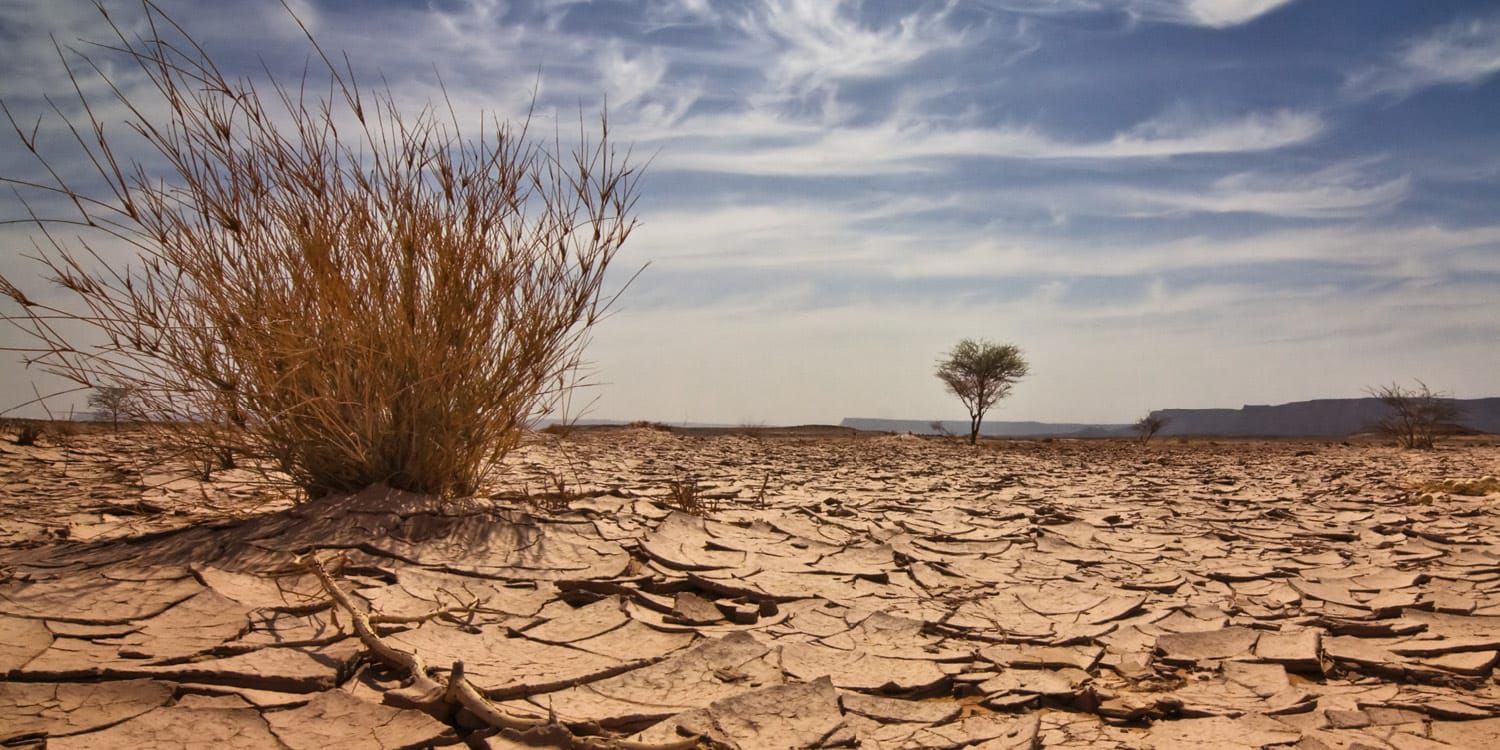
In broader terms, while the global North (North America and Europe) mostly experiences heatwaves, glacier melting, and increased rainfall, the global South counterpart (South America, Africa, and Asia) mostly experiences flooding, drought, and forest fires. It is clear here that the latter is worst affected by global warming.

The overall global warming is currently measured at 1.2°C and is projected to reach 1.5°C by 2025. The Earth will be in real danger if global warming reaches 2.0°C (as forecast, at least by 2040). At this level, it will cause the acceleration and exacerbation of all the threats mentioned above. Drought will impact the majority of global farmland, while flooding will submerge a significant number of homes. Unquenchable forest fires will also reign, creating a sort of doomsday scenario for humanity.

It was against this foreseeable bleak future that the COP members, through the Paris Agreement, agreed to reduce CO2 emissions by 50% by 2030. This commitment means that the countries involved will restrict the usage of fossil fuels such as coal, oil, and gas and instead transition to green and clean energy alternatives like solar, wind, hydro, geothermal, and biofuels.

But one major obstacle hinders this promising energy transition, especially in developing countries: the glaring affordability of fossil fuels compared to all renewable sources. Due to the low cost of fossil fuels, all developed countries relied on them to propel their advancement. This is why transitioning to renewable energy poses more difficulties for developing countries like Nigeria. When Africa struggles to find its footing, this ugly scenario rears its head. The beneficiaries of fossil fuel’s abundance now advocate for cleaner energy solutions left, right, and centre. This situation is like campaigning to a malnourished person about routine medical check-ups when they primarily need proper nutrition. The person has to eat well before considering a longer life campaign.

The intriguing part of the global warming scenario is the unequal contribution of CO2 between developing and developed countries. The latter are far more culpable, with their giant machines releasing CO2 into the air ‘like tomorrow no de’. For instance, the US and China contribute more than 20% of the global CO2 emissions each, while the entire African continent contributes below 4%.

Nevertheless, these should not be discouraging for Africa, or a reason for kicking against climate commitment, since climate change is a long-term issue; in the future, when Africa’s economy snowballs, it will significantly contribute to global warming.

Instead, this should serve as an opportunity for Africa to embark on development while committing to climate action. Imagine if, a few centuries ago, Europe and America had received support to consider climate change mitigation while advancing their technology. We might not be where we are today, facing the current threat of global warming.

Among all the renewable energy sources, biofuel remains the most suitable option for African countries or any developing nations to adopt in their fight against climate change because it can promise simultaneous infrastructure development while combating climate change.

Agriculture is both a boon and a bane for development in many African countries since most citizens are farmers. Therefore, investing in the development of the agriculture sector through the energy sector by adopting biofuels can significantly contribute to the overall progress and development of a nation.

With COP’s commitment to supporting developing countries and the potential of biofuels to transform the agriculture sector, there is no better time for Nigeria to transition to cleaner energy.

Bilyamin Abdulmumin is a doctoral candidate in Chemical Engineering at ABU Zaria, a public affair commentator, and a science writer.

Arsenal win historic Community Shield

By Muhammadu Sabiu

In an exhilarating match, Arsenal emerged victorious in the Community Shield, securing a well-deserved win for manager Mikel Arteta.

The North London club played against one of their fierce rivals, Manchester City, and defeated them on penalties.

This triumph marks Arteta’s second Community Shield and adds to his tally of three trophies since joining the club in 2019.

Arsenal’s stellar performance also cements their position as one of the most successful teams in the history of the Community Shield, with an impressive 17 titles to their name.

Congratulations pour in for the team and their manager as they celebrate this momentous achievement.

Four illegal miners killed after site collapsed in Bauchi

By Muhammadu Sabiu

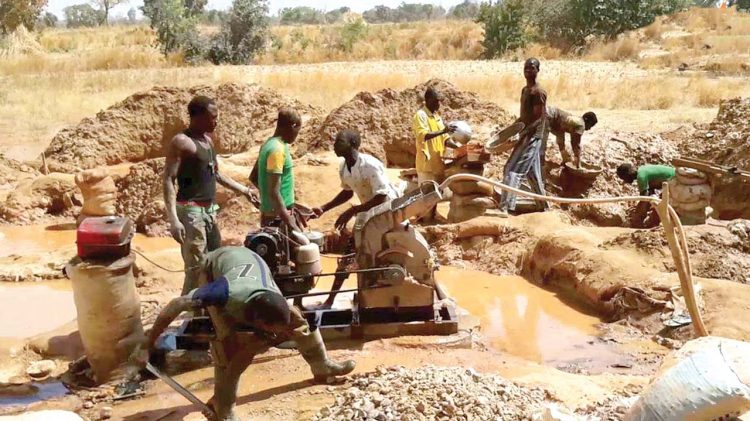
The collapse of a mining site in the hamlet of Kogo Kadage, located in the Yadagungume neighbourhood of the Ningi Local Government Area of Bauchi State, resulted in the deaths of four illegal miners.

The tragedy occurred on Saturday night while the miners dug up lead and attempted to remove it.

According to an anonymous source, they had been mining and excavating lead, one of the local mineral resources, for more than a month when, all of a sudden, one of the holes they had excavated collapsed and buried them beneath.

He noted that as the four miners were taken away from the collapsed site, they passed away instantly.

Ibrahim Zubairu, the chairman of the caretaker committee for the Ningi LGA, described the incident as tragic and sad, stating that three of the four people who were trapped in the pit perished instantly.

According to him, the illegal mining facility is situated seven kilometres from Yadagungume town in the Kogo Kadage forest.

“Yesterday (Saturday), I was informed that four people were trapped in a mining pit, I directed that they should be rescued. Later on, they reported back to me that they recovered three bodies.

“I don’t know about the illegal activities of the locals because we have banned all sorts of illegal mining in the entire local government area, it came to me as a surprise when I got the report of the incidence,” he said.

War is not an option – MURIC cautions Tinubu on Niger coup

By Abdurrahman Muhammad

The Muslim human rights advocacy group, the Muslim Rights Concern (MURIC), has sounded a note of caution to the Economic Community of West African States (ECOWAS), a regional bloc under the leadership of President Bola Ahmed Tinubu, to shelve the idea of invading Niger Republic to reinstate the former President Muhammad Bazoum, who was unceremoniously ousted and detained by the military junta on 26th July 2023.

The Muslim rights organisation was reacting to a letter written and sent to the Senate and read on the floor of the red chamber by the President of the Senate, Godswill Akpabio, Friday, 4th August 2023.

In the letter, President Tinubu listed several measures already taken to pressurise the soldiers behind the coup to release and reinstate President Bazoum. 

Some of the measures in place included cutting off the electricity supply to the Niger Republic, mobilising international support for the implementation of the provisions of the ECOWAS communique, closure and monitoring all land borders with the Niger Republic and reactivating the border drilling exercise, as well as military build-up and deployment of personnel for military intervention to enforce compliance should the military junta remain recalcitrant.

While strongly condemning the unconstitutional change of government in the Niger Republic, MURIC believes the handling of the situation by the ECOWAS is harsh, unpragmatic and may be counterproductive.

MURIC’s position was contained in a statement released on Saturday, 5th August 2023, by the Chairman of its Kano State Chapter, Malam Hassan Sani Indabawa.

The statement further states:

“Military action should never be an option in solving the problem of change of government in the Niger Republic due to the current and historical relationship between Niger and Nigeria, two brotherly neighbours in West Africa. Relations between the two countries are based on a long shared border and common cultural and historical interactions.

“Citizens of Nigeria and people living in Niger are predominantly Muslims and share a solid socio-cultural and religious affinity. Nigeria also shares about 1,500 kilometres of land border with Niger.

“The Nigeria-Niger border is artificial. It was drawn in the colonial period by London and Paris, a process driven in part by the desire to check German expansion in West Africa rather than recognition of ethnicities or other indigenous factors. 

“Border crossings are also practically impossible to control. In many ways, Niger and northern Nigeria have much in common culturally, and the local language of both regions is Hausa.

“Significantly, Nigeria should maintain its age-long foreign policy of non-interference in the internal affairs, especially of a friendly neighbour.

“Before Niger, there were some unconstitutional changes of government in at least three Sahel countries, sharing the same historical and common border with the Niger Republic. Non of the countries were attacked, even though some of the countries are home to military bases of some European and US forces.

“Since 1990 till date, there have been 44 coups and 41 failed attempts in Africa. The fewest attempts, 13, came in the period between 2000 and 2009, compared with 36 attempts between 2010 and 2019 and then ten attempts since 2020 till date. The latest is that of the Niger Republic, carried out on 26th July 2023.

“The Nigerien transitional military government has already warned against any external intervention. On Wednesday, 2nd August 2023, its counterparts in Mali and Burkina Faso warned that they would treat any attempt to restore Bazoum to power militarily as a “declaration of war” against them, and it would split ECOWAS.

At the home front, the internal convulsions will escalate as the Oduduwa Republic, Arewa Republic, Biafra secessionists, Niger-Delta separatists, and other sundry anarchists may have a field day with the opening of another avoidable conflict theatre.

“Already, European countries have started the evacuation of their nationals in Niger, as Mali, Burkina Faso, and Guinea expressed support for the coup.

“Military interventions could certainly be unpopular in Nigeria and possibly lead to violent and widespread protests. This could only aggravate the worsening security situation in Nigeria.

“The situation in Niger Republic, like the rest of Africa, is an African problem that requires African solutions; going to war should never be one of those solutions. 

“It is more to do with the oppression and domination of France, the former colonial power that refused to allow her former colonies their rights to true independence.

“In the end, we call on President Tinubu, as a listening leader, to immediately withdraw the letter he sent to the Senate and toe the path of dialogue and diplomacy. 

“We also call on the Senate to flatly reject Mr President’s ill-advised request for its counterproductive and far-reaching, negative consequences that may only worsen Nigeria’s economic and socioeconomic conditions.

“We further call on Muslim faithful and other faith-based groups to intensify prayers for Allah the Most High to avert any disaster that may spell doom for Nigeria and Africa.”

A socio-religious analysis of Davido’s protege, Logos Olori ‘Jaye Lo’ video

By Hassan Idris

Discussing trending and contentious topics has never been my preferred inclination, not because of a lack of opinions or the ability to articulate them but rather due to the potential conflicts it may engender with those who hold me in high esteem. Nonetheless, today, I shall delve into the trending and contentious subject matter that has generated a whirlwind of discourse on social media, polarising individuals along sectarian, regional, and religious lines and culminating in mutual vilification.

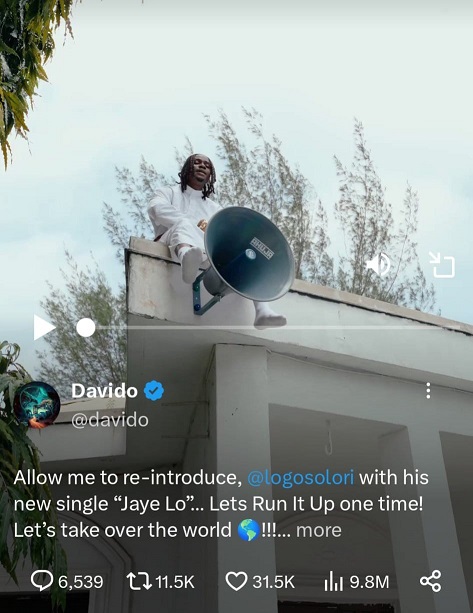
Specifically, I aim to scrutinise the 45-second video released by the Nigerian music sensation David Adeleke, famously known as Davido. In this video, men donned in white jalabia and caps dance boisterously in front of a mosque immediately after partaking in prayers. Adding further intrigue, Logos Olori, Davido’s protege, occupies a prominent spot atop the building’s roof.

Notably, even though the singer makes mention of the phrase ‘Alhamdulillah’ (praise be to God), the video and the accompanying song have been met with severe disapproval from many Nigerians and fans, particularly among the Muslim community, who perceive it as an affront to Islam. They vehemently demand an apology, accusing Davido of disrespecting their religious practices by intermingling sacred rituals with song and dance.

Despite the mounting pressure, Davido finally relents and takes down the video after two days of receiving criticism, opting for a predominantly silent stance and refraining from issuing formal apologies. Notably, Professor Wole Soyinka, in a surprising twist, urges Davido not to apologise for releasing the ‘Jaye Lo’ video, asserting that dancing in front of the mosque does not possess the provocative connotation purported by some.

Among the voices calling for an apology from Davido are prominent Muslim faithful such as Ahmad Ganga, Ali Nuhu, Ashraf Yaman, Ayaat Saeed, Basira Ugochi, and numerous others. Conversely, some Muslims have countered this demand, contending that the singer’s lyrics and actions did not overtly denigrate the Islamic faith. Furthermore, they argue that the video was not intended to ridicule Islam but reflected a cultural norm in Yoruba society.

Additionally, they highlight the existence of Islamic sects, such as the Tijjaniya and Shi’ite, in the northern region, who employ the Mandiri drums as part of their worship practices, thus, indicating that some Muslims themselves engage in similar expressions of religious celebration, with no objections from the community. Before delving into the sociological perspective of religion, it is imperative to recognise the profound significance of religion, particularly in Africa. For many Muslims, it is not merely the song or the jalabiya donned in the video that raises concern, but rather the potential mockery of prayer, a cornerstone of Islam, considered sacred and inviolable. It stands in stark contrast to profanity and warrants utmost respect.

Comparatively, other musicians like Naira Marley may espouse diverse perspectives, yet their words do not evoke similar anxieties. For instance, Naira Marley’s song proclaims, ‘God is the driver, while the Prophet (SAW) is the conductor,’ which, despite its unconventional nature, does not overtly trivialise prayer. Indeed, if Naira Marley had ventured into such territory, he would likely have faced a similar backlash. In response to the contention that some Islamic sects might engage in activities akin to the video’s content, it is essential to discern that while various expressions of worship exist, dancing during prayers remains absent from any Islamic sect. Moreover, the significance of the mosque, as elucidated in the Qur’an, holds paramount importance for Muslims, who regard it as the most sacred and cherished space in their lives. Thus, actions that appear to contradict the mosque’s sanctity are naturally met with vehement objection.

As for Professor Wole Soyinka’s intervention, his failure to fully grasp Nigeria’s religious and multicultural fabric, coupled with his atheistic beliefs, may have influenced his hasty entry into this contentious issue without considering the multifaceted perspectives. Thus, there seems to be an underlying layer of ethnocentrism at play, though it is crucial to clarify that this observation is not intended to belittle Soyinka in any manner.

Turning our attention to Durkheim’s Elementary Forms of Religious Life, the philosopher Charles Taylor’s elucidation of religion as a comprehensive system of beliefs and practices encompassing human existence and its relation to the ultimate conditions of being and other human beings presents a multifaceted framework for analysis.

Durkheim’s seminal work contends that religion is not confined to individual beliefs and practices but rather constitutes a sociological phenomenon that both shapes and is shaped by society. Central to his argument is the concept of ‘collective representations,’ which denotes shared symbols and ideas that foster cohesion among individuals, binding them together in a collective community. Collective effervescence, a cornerstone of religious experience according to Durkheim, entails the shared emotions and sense of unity that emerges when people unite for a common purpose, often manifested in rituals and communal activities.

Furthermore, Durkheim’s delineation of the ‘sacred’ and the ‘profane’ elucidates the fundamental distinction between holy or special elements (the sacred) and the mundane aspects of everyday life (the profane). The video in question seemingly breaches this sacred-profane dichotomy, incorporating elements considered sacred within a context that may trivialise their significance. To elucidate the connection between Durkheim’s ideas of the sacred and the profane, the concept of totemism emerges as an essential component of his thesis.

Totemism encompasses groups of individuals coalescing around a common totem, an emblematic object or animal that symbolises the collective community. The totem, imbued with sacredness, serves as a focal point in rituals and ceremonies, forging a shared sense of identity and unity within the group. By drawing this parallel, the video can be perceived as appropriating religious attire and symbols, potentially attenuating their original sacred import.

Moreover, Durkheim’s concept of ‘mana’ merits consideration of the video’s content. Mana constitutes a spiritual force or energy believed to inhabit sacred objects or spaces. Often linked to animism, the notion that objects and locations possess spirits or souls, ‘mana’ illustrates how the sacred imbue objects and places with special significance. Here, the video’s portrayal of dancing immediately after prayers may be construed as desecrating the sacredness associated with the mosque. As Durkheim transitioned his focus to modern societies, the idea of ‘mechanical solidarity’ comes into play, wherein traditional societies cohere through shared values and beliefs among relatively homogeneous groups.

Comparatively, ‘organic solidarity’ characterises contemporary societies, wherein specialised social bonds form through the division of labour, with various individuals and groups performing distinct functions. The video, juxtaposing modern entertainment (the dance) within the context of a sacred religious space, potentially mirrors the fragmentation and diminished shared values observed in present-day society, evoking notions of anomie.

As a sociologist and poet, I believe some may perceive the Muslim community’s response to Davido’s music video as an overreaction. While concerns are warranted, approaching the issue with knowledge and wisdom, as instructed in the Qur’an, would have been more constructive. Addressing Davido’s actions maturely and knowledgeably could have fostered a more amicable resolution. However, amidst the controversy surrounding the video, it is crucial not to lose sight of the pressing issues in the North, such as kidnapping, terrorism, and poverty, which demand urgent attention and resolution. Calling for uniformity in addressing these challenges alongside the concerns over the music video could have a more significant impact in addressing social issues and fostering a sense of collective responsibility.

Furthermore, it is essential for everyone, regardless of their religious background, to respect and understand the beliefs and cultures of others. Ethnocentrism and a lack of cultural relativity can perpetuate societal misunderstandings and divisions. Respect for all religions, and their sacred practices, should be upheld, emphasising the need for mutual understanding and harmony among diverse communities.

In conclusion, when scrutinising Davido’s music video from a Durkheimian sociological perspective, many potential issues concerning the sacred and the profane in religion emerge. The video’s portrayal of dance immediately after prayers and its use of religious symbols may be perceived as disrespectful and culturally insensitive by some Muslim community members. Moreover, its potential impact on social cohesion and integration in Nigeria’s diverse and multicultural society warrants introspection. Both sociologists and individuals must remain cognizant of religious sensitivities while striving for a profound understanding of different religious practices, fostering mutual respect and harmony within society.

While the controversy surrounding Davido’s music video persists, individuals and communities must engage in constructive dialogue, foster mutual respect, and address societal challenges with collective responsibility. Religion is paramount. It should be treated with reverence, regardless of the particular faith. Let us strive to uphold the principles of knowledge, wisdom, and cultural relativity in our interactions, aiming for a more cohesive and harmonious society. May we all be guided right in our actions and decisions.

Hassan Idris is a Sociologist & Poet and can be contacted via idrishassan25@yahoo.com.
Mbappé reportedly ‘rejects’ PSG’s latest offer to extend his contract

By Muhammadu Sabiu
 
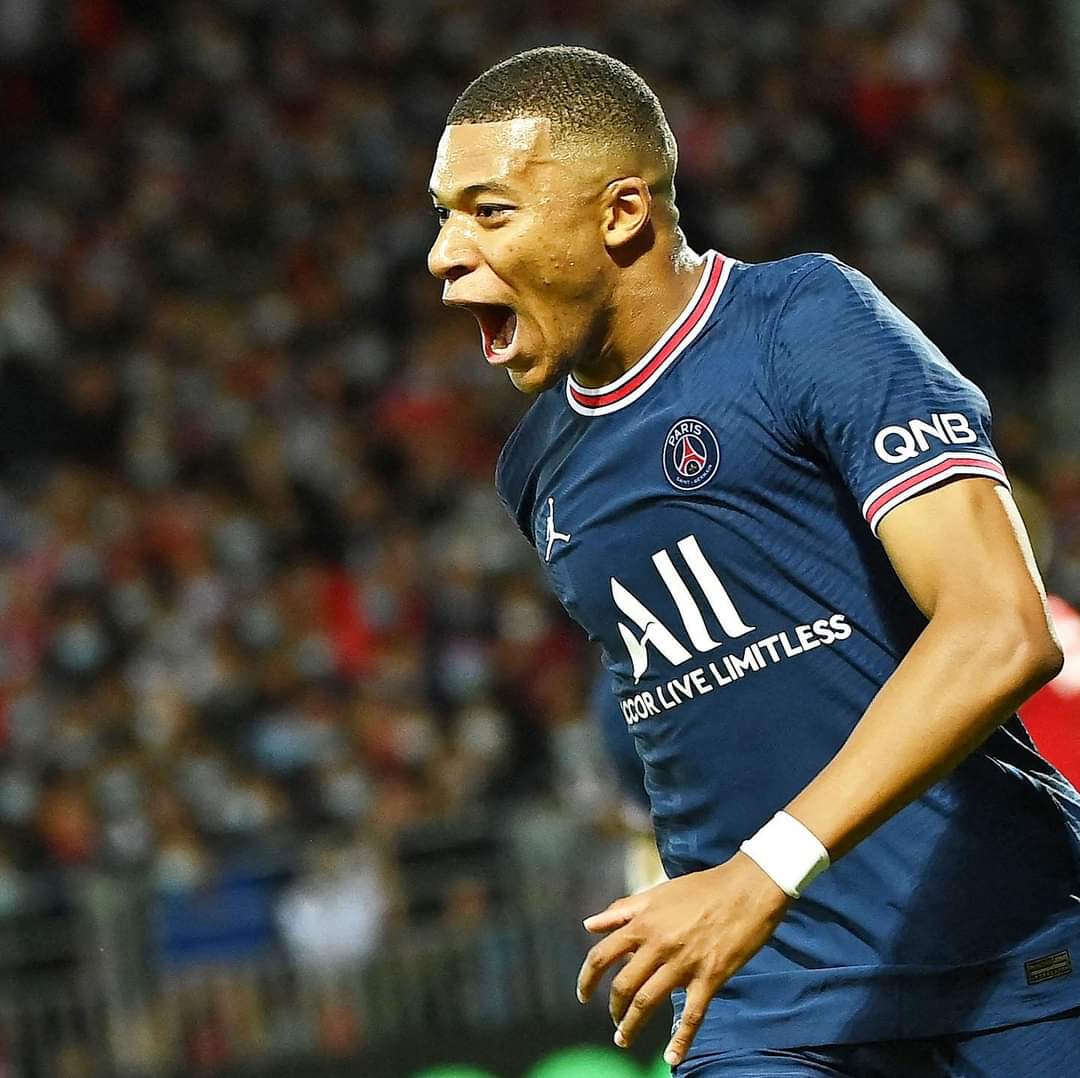
French football sensation Kylian Mbappé has reportedly rejected Paris Saint-Germain’s latest attempt to extend his contract.
 
The club’s offer included a guaranteed sale clause scheduled for the summer of 2024.
 
Mbappé, who has previously declined offers, remains resolute in his decision to part ways with PSG.
 
Despite the new proposal, he has no intention of accepting any deal that would tie him down to the French club.
 
Rumours suggest that Mbappé’s heart is set on a move to Real Madrid. PSG, on the other hand, remains adamant in their belief that the star forward is determined to secure a transfer to the Spanish capital, but they are pushing for the transfer to happen in the summer of 2024 on a free deal.

Senate rejects Tinubu’s request for military intervention in Niger Republic

By Ahmad Deedat Zakari

The Nigerian Senate has turned down the request of President Bola Ahmad Tinubu, to send Nigerian troops to Niger Republic.

President Tinubu, who also doubled as the Chairman of the Economic Community of West African State (ECOWAS), had sought the approval of the Nigerian Senate for military intervention in Niger Republic.

The Senate condemned the coup d’etat in Niger, but advised the President and ECOWAS to explore other options in bringing peace to the country.

The Senate while condemning the Niger coup in totality, commended President Bola Tinubu and other Heads of State of the other States of ECOWAS for their prompt response and the positions taken on the unfortunate development in Niger Republic.

While turning down the request of the president after the meeting, the President of the Senate, Godswill Akpabio, said that.

“The Senate recognises that President Tinubu via his correspondence has not asked for the approval of the parliament of this Senate to go to war as erroneously suggested in some quarters.

“Rather Mr President has expressed a wish to respectfully solicit the support of the National Assembly in the successful implementation of the resolutions of the ECOWAS as outlined in the said communication.


The Senate calls on the president of the Federal Republic of Nigeria as the chairman of ECOWAS to further encourage other leaders of ECOWAS to strengthen political and diplomatic options and other means intending to resolve the political compass in Niger Republic.”