Admin

Iranian president praises African nations’ stand against ‘colonialism’

By Muhammadu Sabiu 

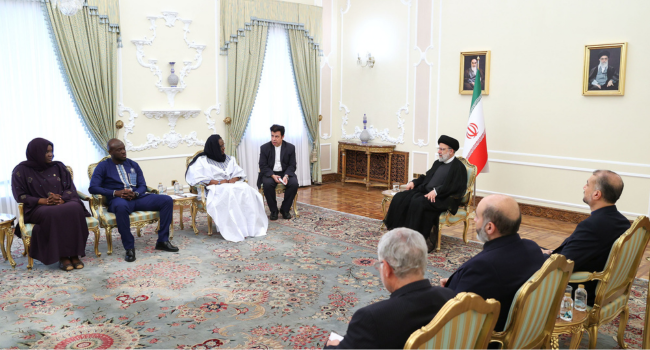
Iranian President Ebrahim Raisi applauded the steadfast resistance of African countries against colonialism and terrorism during a diplomatic meeting with Burkina Faso’s Foreign Minister Olivia Rouamba on Monday. 

While not explicitly naming France, President Raisi’s remarks were seen as a recognition of African nations’ efforts to assert their sovereignty. 

Burkina Faso and Mali, both currently under military junta rule, have notably severed military ties with France, their former colonial ruler, in favour of bolstering relations with Russia. 

Niger, which experienced a military junta takeover in July, has been marked by widespread protests demanding the withdrawal of French troops, harking back to its colonial history. 

In his meeting with Foreign Minister Rouamba, President Raisi commended the African countries for their resilience and resolve. He described their stance as a “sign of vigilance and awakening,” underscoring the importance of nations safeguarding their independence. 

The Iranian presidency’s official website published a statement quoting President Raisi’s words of appreciation for African countries’ principled stand against colonialism and terrorism. 

While diplomatic relations between Iran and the African nations were not the primary focus of the meeting, the implicit message of solidarity resonated with those advocating for self-determination and autonomy in the face of historical colonial ties. 

This meeting marks another instance of international relations being influenced by the evolving geopolitical landscape as African nations navigate their path towards sovereignty and redefine their partnerships on the global stage.

Kaduna governor approves full implementation of consolidated salaries for resident doctors

By Muhammadu Sabiu 

In a significant move aimed at improving healthcare services in Kaduna State, His Excellency Senator Uba Sani, the Governor of Kaduna State, has approved the immediate implementation of the 2014 Consolidated Medical Salary Scale (CONMESS) for resident doctors working under the Kaduna State Ministry of Health.  

This decision was made during a media chat held on Sunday, September 3rd, 2023, as part of the governor’s 100 days in office celebration. 

The announcement comes after extensive negotiations with striking doctors, which revealed that resident doctors in the Ministry of Health were receiving only 75% of the 2014 CONMESS, while their counterparts at Barau Dikko Teaching Hospital enjoyed 100% of the CONMESS. 

Starting in September 2023, this approval ensures that resident doctors in the Ministry of Health will now be on par with their peers at Barau Dikko Teaching Hospital, potentially boosting productivity and attracting more medical professionals to the state. 

Governor Uba Sani also disclosed during the live media chat, broadcast across major radio stations in Kaduna, that the recruitment of 89 medical doctors was authorised to address the staffing gap identified in 2017.

This initiative reflects the administration’s commitment to enhancing doctors’ morale and improving access to quality healthcare for Kaduna residents. 

Furthermore, Governor Sani emphasised the administration’s dedication to primary healthcare, noting the recent distribution of advanced medical equipment to upgraded primary health centres, aimed at ensuring every citizen or resident has access to primary healthcare within a kilometre of their residence.

Why the world needs more oil, not less

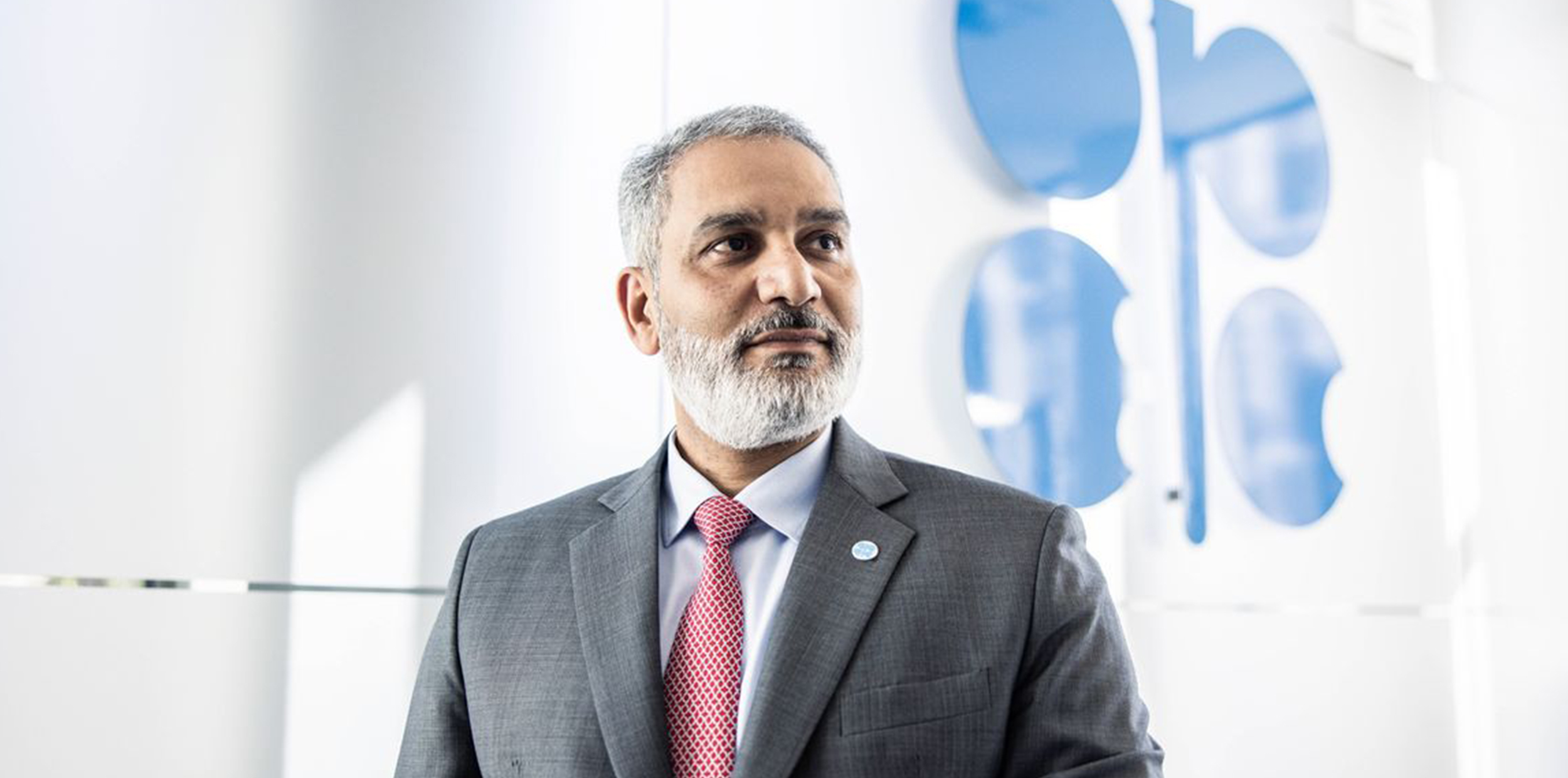
By Haitham Al Ghais

What do toothpaste, deodorant, soap, cameras, computers, gasoline, heating oil, jet fuel, car tires, contact lenses and artificial limbs have in common?

If oil vanished today, these and many other vital products and services that use oil or its derivatives would vanish too. Transportation networks would grind to a halt, homes could freeze, supply chains would crash, and energy poverty would rise.

The World Energy Report for 2022, published by the UK-based Energy Institute and consulting firms KPMG and Kearney, noted that fossil fuels constituted 82% of global energy in 2022. This is comparable to OPEC’s latest world oil outlook and represents a similar level to 30 years ago.

Why then do most energy transition debates disregard the critical role that commodities like oil and gas continue to play in improving lives, fostering stability and energy security, as well as related industries’ efforts to develop technologies and best practices to reduce emissions? The scale of the climate change challenge is daunting, but meeting the world’s rising energy demand and mitigating climate change do not have to exist in a vacuum or be at odds with each other.

Rather, the world should act to reduce emissions and ensure that people have access to the products and services they need to live comfortably. Towards these goals, OPEC members are investing in upstream and downstream capacities, mobilising cleaner technologies and deploying vast expertise to decarbonise the oil industry. Major investments are also being made in renewables and hydrogen capacity, carbon capture utilisation and storage — as well as in promoting the circular carbon economy.

The bottom line is that it is possible to invest heavily in renewables while continuing to produce the oil the world needs today and in the coming decades. This approach also contributes to global stability at a time of volatility and is critical given that history shows that energy transitions evolve over decades and take many paths.

Take electric vehicles: Although the Toyota Prius became the world’s first mass-produced hybrid vehicle in the late 1990s, an analysis from the U.S. National Automobile Dealers Association noted that sales of hybrids, plug-in hybrids and battery electric vehicles (BEV) accounted for only 12.3% of all new vehicles sold in the U.S. in 2022.

While the rising popularity of electric vehicles is indisputable, total sales of BEVS also made up only 19% of new car sales in China last year. Similarly, in the EU, vehicles using petrol or diesel still accounted for around half of all car sales in 2022.

Thus, when it comes to the transportation sector – and indeed many other fields – it is clear that it would not be prudent to ignore that billions of people across the globe rely on oil and will continue to do so for the foreseeable future.

This becomes even more pressing when coupled with the investment needed to meet the rising demand for energy, ensure energy security and affordable access, and lower global emissions in line with the Paris Agreement.

Rising demand for energy

The world’s population is growing. OPEC’s World Oil Outlook (WOO) for 2022 sees it increasing by 1.6 billion people through 2045, while United Nations statistics note growth to around 10.4 billion by 2100.

In parallel, OPEC’s estimates that global energy demand will increase by 23% to 2045. Within this, oil demand is projected to increase to around 110 million barrels a day (mb/d). Thus, it is clear that oil will continue to be an essential part of the global energy infrastructure for decades to come. This is in stark contrast to the many proclamations of past decades that the age of oil was over. Indeed, contemporary demand is close to an all-time high and will rise by close to 5 mb/d in 2023 and 2024.

No single form of energy can currently meet expected future energy demand; instead, an “all-peoples, all-fuels and all-technologies” approach is required. As such, OPEC member countries are ready, willing and able to provide the affordable energy needed to cater towards these future energy needs, all the while reducing their emissions and helping eradicate energy poverty in doing so.

The UN notes that more than 700 million people still lack access to electricity, and almost one-third of the global population uses inefficient, polluting cooking systems. Daily life is not about cars, laptops or air conditioning for these people; it is about basic access to heat and electricity. To provide adequate and affordable universal energy access, and eradicate energy poverty, oil can and will play a key role in developing countries. The Global South has been – and continues to be – very clear about this; is the Global North taking heed?

Investment in oil is critical for energy security

Another worrying reality across the globe is that not enough investment is going into all energies. Looming oil demand growth alone necessitates far more investment if a sustainable supply is to be maintained.

Oil will make up close to 29% of global energy needs by 2045, with an investment of $12.1 trillion needed by then — or over $500 billion a year — but recent annual levels have been far below this.

The consequence of failing to invest adequately in oil is hammered home by recent OPEC Secretariat research outlining that in five years, there would be a staggering oil market deficit of 16 million barrels per day between forecasted rising global demand and supply if investments into upstream activities were stopped today — as some are calling for.

The oil industry has played a central role in improving billions of lives to date. If it is to continue to do so, and if the world is serious about implementing orderly energy transitions and meeting future energy demand while ensuring energy security for all, chronic under-investment in the industry needs to be remedied swiftly.

Ahead of this year’s United Nations Climate Change Conference (COP28) in the United Arab Emirates – where the world will evaluate progress on the Paris Agreement – COP28 President-Designate Dr Sultan Ahmed Al Jaber said the world needs “maximum energy, minimum emissions.” A healthy degree of pragmatism will be necessary to achieve this goal, especially given the clear need to utilise all energies if we are to meet the world’s current and future energy demands.

Ultimately, no people, industry or country can be ignored, and we believe that discussions at this year’s COP28 will reflect this. After all, history is filled with numerous examples of turmoil that should serve as ample warning for what occurs when policymakers fail to take on board energy’s interwoven complexities.

Al-Ghais is the Secretary General of the Organization for the Petroleum Exporting Countries (OPEC).
Obasanjo denies involvement in $6bn hydropower project

By Ahmad Deedat Zakari

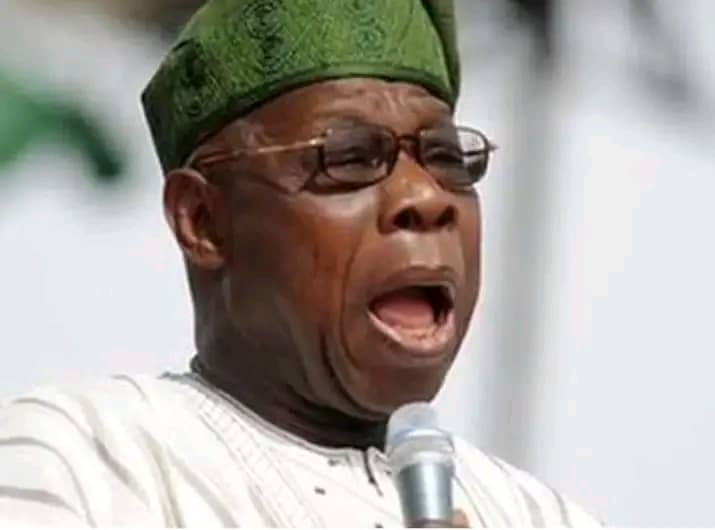
Nigeria’s former president, Olusegun Obasanjo, has denied any involvement in the $6bn hydropower contract awarded to Sunrise Power and Transmission Ltd in 2003.

Obasanjo challenged Olu Agunloye, the former minister of power and steel, to tell Nigerians where he derived the authority to award a $6 billion contract to Sunrise Power and Transmission Ltd in respect of the Mambila Hydropower Project in 2003.

Sunrise Power is currently in arbitration with Nigeria at the International Chamber of Commerce (ICC), Paris, France, over an alleged breach of contract by the federal government.

In the first arbitration, Sunrise is asking for a compensation of $2.3 billion, claiming it had spent millions of dollars on financial and legal consultants before the contract was jettisoned.

In the second one, the company is asking for a $400 million settlement being the terms of the agreement it entered with the federal government in 2020 to end the arbitration.

Nigeria is fighting the claims on the grounds that Agunloye, who suspiciously awarded the contract one week to the end of his tenure as power minister in 2003, acted illegally.

In an interview with The Cable during the weekend, Obasanjo denied authorising Agunloye to commit Nigeria to the $6 billion “build, operate and transfer” contract.

“When I was president, no minister had the power to approve more than N25 million without express presidential consent. It was impossible for Agunloye to commit my government to a $6 billion project without my permission and I did not give him any permission,” Obasanjo disclosed in the interview with The Cable.

Obasanjo challenged Agunloye to explain where he got the power and authority.

“If a commission of inquiry is set up today to investigate the matter, I am ready to testify. I do not even need to testify because all the records are there. I never approved it,” Obasanjo said.

“When he presented his memo to the federal executive council (on May 21, 2003), I was surprised because he had previously discussed it with me and I had told him to jettison the idea, that I had other ideas on how the power sector would be restructured and funded.

“I told him as much at the council meeting and directed him to step down the memo. I find it surprising that Agunloye is now claiming he acted on behalf of Nigeria. If I knew he issued such a letter to Sunrise, I would have sacked him as minister during my second term. He would not have spent a day longer in office.”

The former president also said Leno Adesanya, the promoter of Sunrise Power, ran away from Nigeria when he was president.

“I would have jailed him if he was in the country because of the things I knew about him. After I left office, he returned and I saw him. I told him that he was lucky I was no longer president. Otherwise, I would have jailed him,” He told The Cable.

Sweden faces financial losses, security challenges amidst Koran burning controversy

By Muhammadu Sabiu

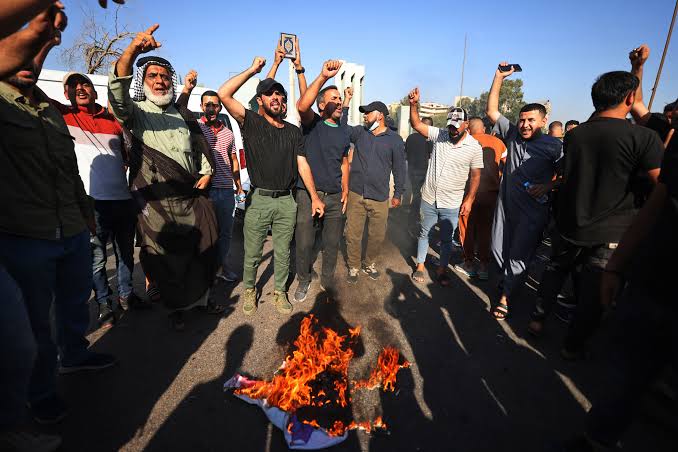
Sweden’s security agencies have reported a worsening security situation in the country, following the controversial decision to permit the burning of the Holy Quran.

This decision, made nine months ago, has not only drawn international criticism but has also cost the nation approximately $200,000, according to a recent report from a national media outlet.

The act of burning the Holy Quran, carried out by individuals including Danish politician Rasmus Paludan and Iraqi refugee Salwan Momika, has incurred significant financial repercussions.

Sweden has reportedly lost 2.2 million Swedish krona (equivalent to $199,300) due to these highly contentious actions, as confirmed by Sveriges Radio.

The controversial activities surrounding Quran burning have necessitated increased police presence and intervention to maintain security, as outlined in the report released by the radio station.

Instances of Quran Burning in Sweden

The burning of the Holy Quran has triggered global outrage and scrutiny, with both Sweden and Denmark facing criticism for permitting such actions and even providing police protection to those involved.

Rasmus Paludan, the leader of the far-right Stram Kurs party, has conducted Quran burnings in multiple Swedish cities, including Malmo, Norrkoping, Jonkoping, and Stockholm.

Notably, he burned copies of the Quran during Easter last year and, on June 21, staged a Quran burning outside the Turkish embassy in Sweden.

Salwan Momika garnered international attention when he burned the Quran outside a mosque in Stockholm during Eid.

On July 20, he threw the Quran outside the Iraqi embassy in Sweden, along with the Iraqi flag, and trampled them.

He also conducted a Quran burning outside the Swedish Parliament building on July 31.

Additionally, Bahrami Marjan, an Iranian refugee, engaged in Quran burning near Stockholm in early August.

Salwan Momika continued these acts, burning another Quran outside the Iranian Embassy in Sweden and another outside the Stockholm Mosque in subsequent weeks.

These actions have severely tarnished Sweden’s international reputation and placed additional pressure on its security forces.

Despite these challenges, the country’s authorities have allowed Momika to continue burning copies of the Holy Quran.

Kano road agency seizes fake drugs worth N50 million

By Muhammadu Sabiu

The Kano Road and Traffic Agency (KAROTA) has reportedly seized fake drugs worth N50 million in Kano.

A spokeswoman for the agency, Nabilusi Abubakar, revealed this in a statement on Saturday in Kano.

He said, “The vehicle with plate number MMR 153 XA conveying fake drugs was apprehended on Friday night around 9:00 p.m. at Murtala Muhammed Way.

“Some of [our] personnel said they suspected the driver was carrying fake drugs.

“Immediately the driver saw the personnel, he ran away which prompted them to search the vehicle.

“The drugs alleged to be fake were analgesic (pain killers), cough syrup and malaria drugs.”

He recalled that the managing director, KAROTA, Faisal Kabir as said the agency would not allow illegal drugs to be brought into the state.

“Anyone found wanting will be seriously dealt with,” he said.

Mr. Kabir appealed to the general public to desist from buying drugs from hawkers and unregistered agents to avoid negative effects.

Ganduje’s APC announces ambitious expansion, progressive institute plans

By Muhammadu Sabiu 

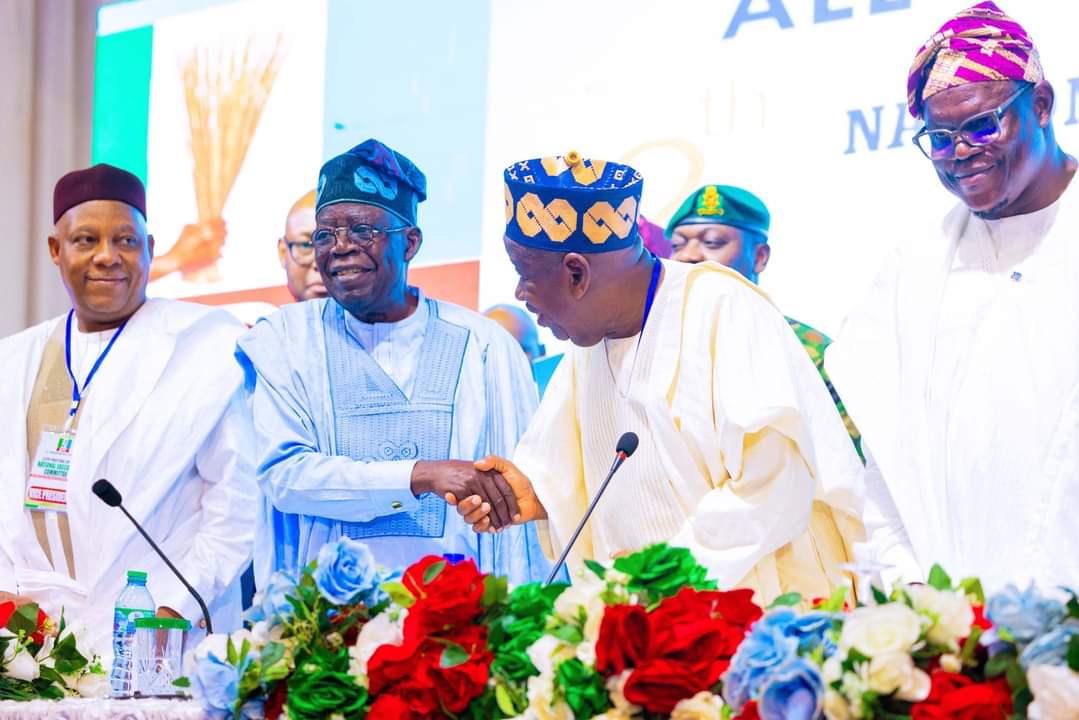
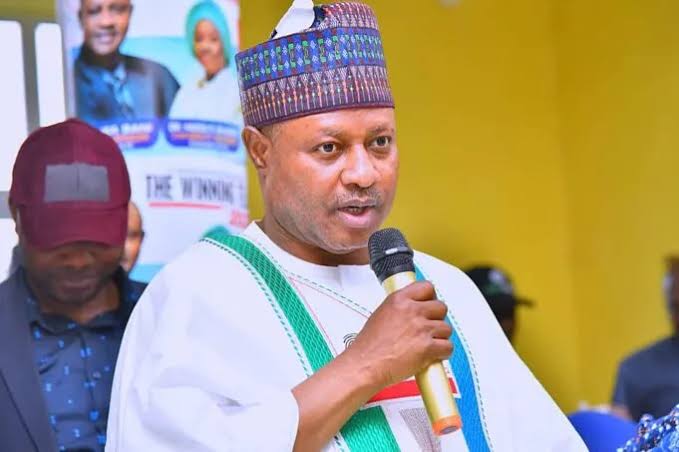
In a significant development for Nigeria’s ruling All Progressives Congress (APC), the National Chairman, Dr. Abdullahi Umar Ganduje, unveiled ambitious plans during the inauguration of the party’s national campaign council for the upcoming Kogi State governorship election. 

During his address, Ganduje announced the party’s commitment to extending its reach to the grassroots level, stating, “It is pertinent to also note that we have initiated and concluded plans to structure our party into a truly grassroots progressive party by opening full-fledged and functional offices in all the 8,813 wards in Nigeria.”  

This move aims to provide party members across the nation with symbolic representation in their neighbourhoods, fostering active interaction between members and leadership at various government tiers. 

Furthermore, Ganduje emphasised the APC’s vision to institutionalise progressive ideology within Nigeria’s political landscape. 

This ideology centres on leveraging political action and social reform based on advancements in science, technology, economic development, and social organisation to enhance the lives of Nigerians. 

To realise this vision, the APC is in the concluding stages of establishing a “National Institute of Progressive Study.”  

This institution is poised to become a centre for promoting progressive ideas and policies that can positively impact the nation’s development. 

The inauguration ceremony held on Saturday drew substantial attendance, with six governors from Kogi, Ogun, Lagos, Niger, Benue, and Kwara States present, along with former governors, senators, and numerous party stalwarts from across the country.

Suspected kidnappers attack Abuja estate, abduct resident

By Muhammadu Sabiu 

In an unfortunate incident that unfolded in the early hours of Saturday, suspected kidnappers targeted the prominent El-Rufai Estate in the Kuchiko Resettlement Development Area of Bwari Local Council, Abuja. 

The assailants abducted a resident identified as Chinedu, marking the fifth kidnapping case to rock the area in recent months, leaving residents gripped by fear and insecurity. 

According to reports from Daily Trust, the victim, Chinedu, was forcibly taken from his home within the secure confines of the estate. 

The daring criminals, armed to the teeth, breached the estate’s defences by breaking through the perimeter fence. 

To further instill terror, they fired shots into the air, sending panic waves through the victim’s family and neighbours, before abducting Chinedu. Chinedu’s wife, who witnessed the terrifying ordeal, recounted the horrifying encounter with the kidnappers. 

“They shot sporadically in the air to scare our family members and neighbours before taking my husband away,” she said. 

As of press time, the kidnappers had not made contact with the family, leaving them in agonising uncertainty. Mai Baba Bego, the chairman of the Kuchiko Resettlement Development Area, expressed grave concern over the escalating incidents of kidnappings in the region. 

“We now live in fear as nobody knows who the next victim would be,” Mr. Bego lamented, underscoring the urgent need for heightened security measures in the area. 

In light of this distressing situation, Mr. Bego called for the immediate deployment of additional security personnel to the Kuchiko Resettlement Development Area. 

This plea aims to mitigate the risk of further incidents and restore a sense of safety to the traumatised residents of El-Rufai Estate and its surroundings.

A reminder and call for Northern Ulama to intervene in the Sudan conflict

By Baba Isa

While reviewing my collection of photographs, I stumbled upon a significant historical image that reminded me of a momentous event during a public lecture in Sudan. It was during this event that distinguished figures such as Prof. Salisu Shehu, Prof. Sagagi, and Prof. Maqari embarked on a special joint visit to Sudan some years ago. Their visit aimed to understand the exceptional approach Sudanese institutions took in providing training to Nigerian students on their soil, enabling them to return to Nigeria as productive individuals.

During this lecture, Prof. Salisu Shehu said, “The educational experience for Nigerian students in Sudan extended beyond academic excellence. These students, who received education in diverse fields, also imbibed qualities of respect, commendable attitudes towards their communities, and a sense of understanding towards various religious doctrines. This was different to their counterparts studying in different foreign nations.

Prof. Added that the Nigerian Sudan-educated students exhibited unmatched expertise and skills compared to their counterparts in Nigeria. Therefore, the Council of Ulama of Nigeria felt compelled to delegate us to come to Sudan and delve deeper into brief research and learn more about strategies employed by Sudanese institutions and their communities to empower these students. So that we can take back reports to Nigeria and put it into practice”.

The lecture was delivered at the International University of Africa (Indimi Hall) during this insightful visit, and I captured the picture.

Regrettably, the Sudan we love, the Sudan we learn from and once held in high esteem, an exemplar of a hygienic educational environment, now stands ravaged by conflict. It’s disheartening that we have not extended a helping hand to a nation from which we have drawn knowledge and inspiration. Sudan, which significantly contributed to the growth and development of our region through its educational support (like its massive Scholarship scheme to everyone in any course without exception)and enlightened Islamic scholars, medical doctors and other professionals, remains in dire need of our attention, prayers, and support.

Northern Nigeria has encountered setbacks in the realm of girls’ education. In the past, we lamented the shortage of female doctors, resulting in inadequate female doctors in healthcare for women in our hospitals. Our parents in the Northern region were hesitant to enrol our sisters in local institutions, let alone consider overseas education, given concerns about religious beliefs, cultural norms and environmental disparities.

These barriers hindered the prospect of sending our sisters abroad for education. This predicament led us to lag in conventional education and the attainment of female medical doctors. Recently, a positive shift has occurred as our parents have become more receptive to sending our sisters to study medicine and various other disciplines, especially in Sudan, due to the conducive educational environment and Islamically oriented. However, it is disheartening to note that challenges mar the current situation in Sudan.

The aftermath of the evacuation of Nigerian students from Sudan – more than 2000 – medical students, primarily females from the north- has left us searching for alternatives that can provide the same nurturing educational environment. Regrettably, no such choice has presented itself, leaving us feeling powerless.

Recent events have highlighted the impactful role that Northern Nigerian scholars have played in resolving crises, as evidenced by their intervention in the unrest following a coup in Niger. Drawing from this, I earnestly beseech our esteemed Northern scholars to extend their benevolent interventions to Sudan. While Sudan may not be a member of ECOWAS, its historical and cultural ties to us cannot be taken away. Just as we stand by Niger, we must stand by Sudan.

In this challenging time, I humbly implore our esteemed Ulama to exert their influence and restore peace and tranquillity in Sudan. Just as they have done in our region and Niger, their intervention could serve as a beacon of hope for a nation that has been an invaluable contributor to our growth and development.

Pharm. Baba Isa, Former President of the National Association of Nigerian Students in Sudan.

A decent life abroad

By Salihi Adamu Takai

Life is a period in a person’s life or a state of being alive. A lifetime is a temporary time to live from the cradle to the grave (death). Being alive is a chance to make everything designed to achieve.

Life goes along with the timeline and plans quickly (it’s not permanent). This means that everyone on earth is allocated to a specific time, and that can’t be in any way extended. 

As you come into existence and start living a life, how do you live it and plan to live it? Are you living at home? Or you’re just intending to live abroad? So, if you want to live overseas, it’s essential to know many things about living abroad; I will critically point out some helpful hints for your living abroad.

Life abroad is not like a home life. It’s a new life. If you happen to be living abroad, you will start feeling lonely and naive because you find yourself in a new place that takes you to free thinking. So, from this time, you will start thinking about living; how can you cope with the situation? But the answer should be the plan made you there; was it for what? Just think about it before living abroad!

It’s discussed that anyone who intends to live abroad has already planned for life, so they only need guidance to live it decently. So, here are the five things helpful for living a decent life abroad;

1. Be curious to achieve your goals for living abroad. This means that as you take off and land in the place you intended to live, just be wrapped up in it until you get it, be it study or business.

2. As you land, you must think about your financial capacity and start studying the cost of living there. Don’t start spending anything without critical thinking about life there. Study their currency first and compare it with your country’s currency.

3. What are you going to do there? Is it study or business? Make sure you study their Constitution. As you start living, please focus on the laws governing your transaction there and avoid anything contrary to their law and order.

4. Choose a good friend to live with, and don’t accompany anyone who can influence you negatively. You can find different kinds of people anywhere, good and bad. So, refrain from associating with the bad, and accompany the good ones helpful to your life there.

5. Your religion should be your guide in everything. Don’t forget your religion in anything. Be within the guidelines of the religion; you will be safe anywhere.