Admin

Bandits Release Video Showing Kidnapped Niger Worshippers

By Sabiu Abdullahi

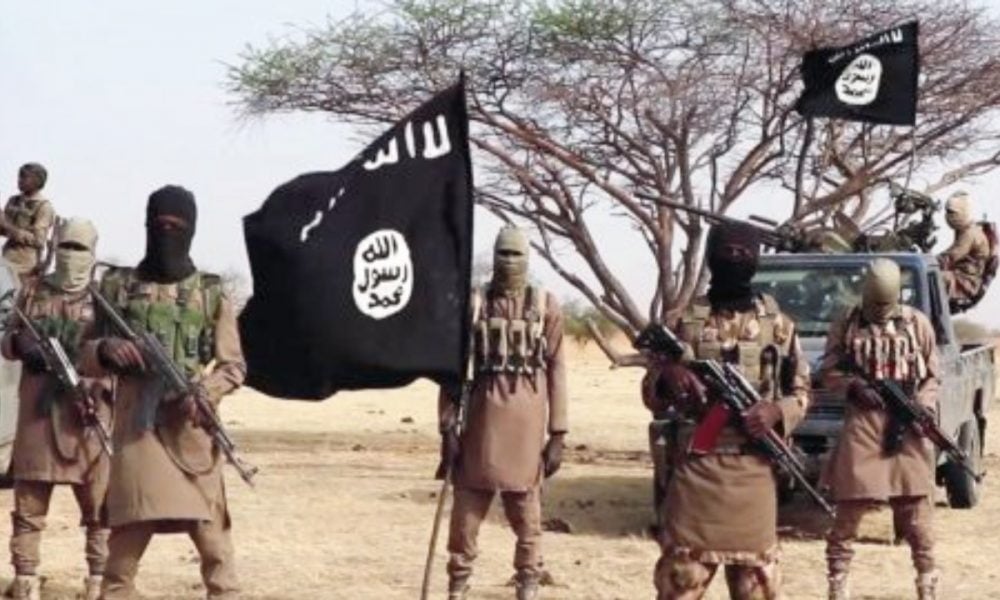
A video purportedly showing a large number of people held captive by suspected bandits in a forest has surfaced online, days after a mass abduction in Niger State.

The footage, which has circulated on Facebook and WhatsApp, shows several captives surrounded by armed men in what appears to be a forested location.

The development comes two days after gunmen reportedly abducted at least 600 worshippers during Friday prayers at a mosque in Dekera village, Niger State.

Residents said the attackers carried out simultaneous raids across several communities in the area and took away a large number of people.

Children could be seen crying in the video, while an armed man who spoke in Hausa appeared to address relatives of the captives and asked them to identify their family members.

“These are all your people,” the gunman said.

The video has since generated concern over the safety of the abducted worshippers and other residents in the affected communities.

The incident has also heightened security concerns in Niger State as Nigeria approaches the 2027 general elections.

The authenticity of the video and the identities of all the people shown in it could not be independently verified from the report.

Morka: Tinubu Has Outperformed All Democratically Elected Presidents

By Sabiu Abdullahi

The National Publicity Secretary of the All Progressives Congress (APC), Felix Morka, has said President Bola Tinubu has performed better than every democratically elected president in Nigeria.

Morka made the claim during an interview with Channels Television on Monday, where he also said Tinubu inherited an economy that was “completely in a mess”.

Asked to identify the indicators that informed his assessment of Tinubu’s performance, the APC spokesperson said the available economic indicators were enough to support the claim.

“President Bola Ahmed Tinubu has outperformed any president in his first term. He has outperformed any democratically elected president in this country in their terms,” he said.

“The indicators are res ipsa loquitur as we say in law; they speak for themselves. This president inherited an economy that was completely in a mess.”

Morka attributed the country’s economic difficulties to what he described as the failures of successive administrations.

He said former President Muhammadu Buhari’s administration came after 16 years of what he described as poor governance under the Peoples Democratic Party (PDP).

“Buhari was a stopgap president that really came to keep the country from tipping over the precipice — from 16 years of horrific maladministration of the PDP government,” he added.

“President Buhari served his term, did his job to hold the country still for President Tinubu to enter.”

The APC spokesman also claimed that Tinubu’s administration had introduced changes that had led some of its previous critics to acknowledge its progress.

According to him, Nigeria has “come out of the woods” at the macroeconomic level as a result of policies introduced by the Tinubu administration.

However, Morka did not provide specific details or comparative figures to demonstrate how Tinubu had outperformed previous democratically elected presidents.

The APC controlled the federal government under Buhari from 2015 to 2023 before Tinubu succeeded him as president in 2023 under the same political party.

Bandits Kill Niger District Head in Palace Attack

By Sabiu Abdullahi

Bandits have reportedly killed the District Head of Galla in Niger State’s Borgu Emirate after attacking his palace.

The incident was disclosed by security analyst Bakatsine in a post on X on Monday.

According to the analyst, the traditional ruler was allegedly targeted after he warned bandits against entering his community.

“Bandits have killed the District Head of Galla, under the Borgu Emirate in Niger State, during an attack at his palace.

“Reports say the monarch was targeted after warning the bandits to stop entering his community,” Bakatsine wrote.

He also said the slain district head was a brother to the Minister of State for Agriculture and Food Security, Senator Aliyu Sabi Abdullahi.

The report comes amid continued security concerns in parts of Niger State, where communities have faced attacks and other criminal activities by armed groups.

No further details were provided on the circumstances of the attack or whether security agencies had made any arrests in connection with the incident.

FG Moves to Revive Kolmani Oil Project, RMAFC Begins Assessment


By Abdullahi Mukhtar Algasgaini

The Federal Government has initiated steps to resume exploration activities at the long-stalled Kolmani Oil Field in Bauchi State, following an assessment visit by the Revenue Mobilisation Allocation and Fiscal Commission (RMAFC) to evaluate the project’s current status.

The RMAFC Chairman, Muhammad Bello, disclosed this on Monday during a verification exercise at the oil field, stating that the commission’s primary objective is to determine the necessary steps for the project’s remobilisation.

“This verification is crucial to assess the state of the project and advocate for its continuation,” Bello said. He noted that the commission is committed to ensuring that the oil field, which holds significant potential for boosting Nigeria’s revenue base, does not remain inactive.

The Kolmani Oil Field, discovered in 2019, was heralded as a major breakthrough for the region, with the potential to transform the economic landscape of the North-East. However, exploration activities stalled due to a combination of technical challenges and funding constraints.

The RMAFC’s intervention is seen as a critical move to re-energize the project, as the commission plays a key role in monitoring revenue-generating ventures. Officials on the verification team are expected to submit a comprehensive report that will guide the federal government’s strategy for restarting full-scale operations. The government has reiterated its commitment to diversifying the nation’s oil assets and unlocking the hydrocarbon potential in the inland basins.

Shettima Cannot Leave Without Reading

By Lawan Bukar Maigana

There are people who go on leave to escape books, and there are people who go on leave only to escape the office. Then there is Kashim Shettima, for whom a leave without books may be like a library without shelves: technically possible, but fundamentally incomplete.

The two-week leave has awakened the bookism in him. After years of governance, meetings, memos, policy conversations and the endless grammar of public administration, one would imagine that a man might simply surrender himself to sleep, travel with his family to some Shangri-La den in Dubai, or disappear into the soft luxury of doing absolutely nothing. But Shettima has never appeared to be a man who considers idleness a convincing definition of rest. For him, perhaps, rest is simply another opportunity to read.

This is not a new discovery. I wrote in 2022 about Shettima as Nigeria’s Modern Day Philosopher-King, drawing from Plato’s idea that leadership and philosophy ought to meet in the same person. Looking back now, I realise that perhaps I was only describing one half of the equation. The philosopher needs a kingdom, yes, but the philosopher also needs books. And Shettima seems to understand that the quickest way to empty a philosopher is to deprive him of reading.

His relationship with books is almost personal. He does not merely read them; he appears to court them. There have been accounts of him browsing bookstores while travelling, moving from one section to another and recommending books to people around him. He has also been described as someone who would choose books over material prizes.

I once had a conversation about this unusual book obsession with Rukaiya el-Rufai, the National Coordinator of Nigeria’s Human Capital Development Programme. She told me something that stayed with me: when it comes to gifts, what impresses her boss the most is a good book. Her advice was simple: when you travel, buy him high-value books. According to her, such a gift can make him happier than a designer perfume.

That, in itself, is a fascinating portrait of a man. While some people measure affection by the price tag on a gift, the intellectual measures it by the depth of thought behind it. A perfume evaporates. A book lingers. A designer bottle may occupy a shelf, but a good book can occupy the mind. This may explain why Shettima’s leave does not seem to be a vacation from intellectual activity. It is more like an intellectual retreat. The office may have been left behind, but the books followed him. The files may have been closed, but the pages remained open.

And when he finally returns to work, we should perhaps prepare ourselves. The post-leave effect in governance may not simply be a refreshed Vice President. It may be a more heavily footnoted one. Every conversation may come with a reference. Every decision may acquire a historical context. Every policy discussion may suddenly develop a philosophical foundation. A simple question could receive an answer, a counterargument, a historical example and, if one is not careful, a brief literature review.

That is the bookism. But beneath the humour lies something serious. Leaders do not govern only with budgets, files and official briefings. They govern with ideas. And ideas, when properly cultivated, are often born from the discipline of reading.

Shettima’s book habit therefore tells us something beyond the man himself. It reminds us that governance should not be an intellectual desert. Public office should not terminate curiosity. Power should not become an excuse to stop learning. A leader who reads is constantly exposed to worlds beyond his immediate environment. He encounters ideas that challenge him, histories that humble him, failures that warn him and possibilities that expand his imagination.

Perhaps that is why, for Shettima, a two-week leave can still become a classroom. He may have left the office, but he never really left learning. And when he returns, the books will return with him, quietly packed into the vocabulary and ideas that will eventually find their way back into governance.

So, Nigerians, prepare yourselves. The Vice President is coming back from leave. And judging by his relationship with books, he cannot leave without reading. Therefore, he is returning not only refreshed but also armed with refined administrative and policy ideas that can help make Nigeria better.

Lawan Bukar Maigana is a media and communications specialist, development advocate, storyteller, and social change driver from Borno State, Nigeria. He can be reached via email at lawanbukarmaigana@gmail.com.

Kano L-PRES Completes 10-day AI Training For 23 Technicians, Targets 5,000 Inseminations


By Uzair Adam

The Kano State Coordination Office of the Livestock Productivity and Resilience Support Project (L-PRES) has concluded a 10-day intensive training for 23 community-based artificial insemination (AI) technicians, with the beneficiaries set to take the skills acquired to livestock-producing communities across the state.

The training, which commenced on August 10, 2026, was held at the Artificial Insemination Centre and Farmer Field School, Kadawa, Kano State, where participants received theoretical and practical training in AI and livestock reproductive management, including semen handling, heat detection, animal selection and insemination of live cattle.

At the end of the programme, the technicians received post-training support packages to enable them to commence and sustain AI services among pastoralist farmers and individual livestock farms across the state.

The Daily Reality reports that twenty-two of the beneficiaries will each cover two local government areas, while Abubakar Muhammad Kabiru, Animal Husbandry Officer with the Kano L-PRES Project, will supervise their activities as the 23rd member of the team.

The deployment forms part of L-PRES’s planned 5,000 artificial insemination exercises across Kano’s 44 local government areas, with the intervention expected to improve livestock breeding, increase milk and meat production, create employment opportunities for youths and strengthen the livestock value chain.

Speaking at the closing ceremony, Dr. Salisu Muhammad Inuwa, State Project Coordinator of Kano L-PRES, said the completion of the programme marked the beginning of the beneficiaries’ responsibility to apply the knowledge and practical skills they acquired in the field.

Inuwa told the trainees that the success of the programme would ultimately depend on how effectively they translate their training into services for livestock farmers and pastoralist communities.

“The real success of this programme, however, will be measured by how effectively you apply these skills in the field,” he said.

He said the post-training support packages were intended to empower the technicians to commence and sustain AI services among pastoralist farmers and individual livestock farms across Kano State and beyond.

The project coordinator urged the beneficiaries to use the resources responsibly, maintain proper records and uphold professional standards in the discharge of their duties.

He further appreciated the technical partners and facilitators for their contributions to the success of the programme, particularly the Aliko Dangote University of Science and Technology (ADUSTECH), Bayero University Kano (BUK) and the National Animal Production Research Institute (NAPRI), as well as the Kano State Government for its continued support.

Inuwa assured the trainees that Kano L-PRES would continue to monitor the utilisation of the support packages and assess the impact of the services provided.

He congratulated the beneficiaries on completing the intensive programme and encouraged them to become worthy ambassadors of improved livestock breeding technology in Kano State.

Speaking on what would be expected of the beneficiaries after the training, Abubakar Muhammad Kabiru, Animal Husbandry Officer with the Kano L-PRES Project, urged the technicians to strictly adhere to the procedures and technical guidelines they were taught.

“We advise these youths, both the females and males, that when they go out to carry out these activities, they should do so diligently as they were taught, adopt the technical guidelines and appropriate techniques, and try to convey the message that was taught to them to farmers across Kano State,” Kabiru said.

He said the technicians would help take AI services closer to livestock-producing communities, particularly farmers and pastoralists who may have limited access to specialised reproductive services.

Kabiru explained that 22 of the technicians would each be assigned to two local government areas, collectively covering the state’s 44 LGAs, while he would supervise their activities.

“Twenty-two of them will go around the 44 local governments. Each of them is assigned to two local governments, and I, as their supervisor, am the 23rd person,” he said.

According to him, the programme is expected to improve livestock genetics, increase productivity and reduce the spread of venereal diseases among animals.

He added that the intervention would create direct and indirect employment opportunities for youths across the state and contribute to internally generated revenue.

Kabiru said L-PRES would engage the technicians in implementing its planned 5,000 artificial insemination exercises, while their continued fieldwork would further sharpen the skills acquired during the programme.

He expressed optimism that the programme could eventually surpass the initial target as the technicians gain experience and expand access to AI services across the state.

Also speaking, Hajiya Rabi Ibrahim Waya, Permanent Secretary, Kano State Ministry of Livestock Development, described the initiative as part of the government’s efforts to strengthen the livestock value chain while creating economic opportunities for young people.

Waya said artificial insemination would contribute to economic diversification by improving livestock production and opening up employment opportunities for youths.

“This will increase the value chain of the livestock, at the same time provide employment opportunities for our teaming youth, as well as the economic growth of the state. That is the essence of it,” she said.

She commended L-PRES and other stakeholders for supporting the programme and assured the beneficiaries of continued government assistance as they begin their assignments.

Waya described the 23 technicians as the first set of beneficiaries and said more young people would benefit from similar programmes.

“This is just the beginning. They are the first set and, Insha Allah, soon many more will follow them,” she said.

She added that the state government had several training and development programmes aimed at engaging youths and ensuring that its interventions produced tangible results across Kano.

One of the beneficiaries, Rukayya Usman Umar, said the programme had significantly improved her knowledge despite having received AI training previously.

“I can say I have achieved a lot, both on the theoretical part and the practical aspect. In fact, I was trained before, but this training is one of the best. I have learned a lot,” Umar said.

She pledged to apply the knowledge acquired and contribute to the success of the L-PRES programme.

“I am very ready and I promise L-PRES that I will never let them down. I will try all my possible best to do my work,” she said.

However, Umar identified transportation and the need for assistance as challenges that could affect female technicians when visiting farms and rural communities.

She appealed for motorcycles to enable the technicians to reach their destinations and provide AI services more effectively.

“For us as females, we will have to have an assistant that will be assisting us when we are going to the farm. We also have the challenge of transportation. We really need a motorcycle so that it can help us to go to our destination to do our work,” she said.

The completion of the programme marks the transition from training to field implementation, with the beneficiaries expected to provide community-based AI services across Kano’s 44 local government areas.

The intervention is expected to support livestock genetic improvement, boost milk and meat production, create employment opportunities for youths and strengthen the livestock value chain as L-PRES works towards its target of 5,000 artificial insemination exercises across the state.

AMHS Kano To Host Maiden Marriage Conference For Muslim Health Students

By Uzair Adam

The Association of Muslim Health Students (AMHS), Kano State Chapter, is set to host its maiden Marriage Conference 2026, bringing together Muslim students and young health professionals across the state to discuss marriage, family life and Islamic values.

The announcement was contained in a statement signed by Abdullahi Nuhu, Ameer of the Association of Muslim Health Students (AMHS), Kano State Chapter, who said the conference was designed to provide participants with practical guidance on building successful and peaceful families.

The Daily Reality reports that the two-day conference is scheduled to hold on September 12 and 13, 2026, at Aminu Kano Teaching Hospital (AKTH), Kano, under the theme, “Beyond the Stethoscope: From Amanah to Sakeenah.”

According to the association, the event will bring together Muslim students, young health professionals, scholars, intending couples, married couples, parents and other stakeholders to address important issues relating to marriage and family life.

Nuhu said the conference was particularly aimed at helping students and young health professionals better understand the responsibilities and demands of marriage while balancing their academic and professional commitments.

He explained that discussions at the conference would cover issues such as the purpose of marriage, compatibility, communication, responsibilities, resilience and preparation for a successful and peaceful marital life.

“The conference is designed to prepare hearts, build homes and strengthen families by providing practical and Islamic insights into marriage and family life,” Nuhu said.

The organisers said participants would have the opportunity to benefit from scholarly lectures, interactive sessions, marriage guidance and counselling, as well as other educational and engaging activities.

The association added that registered participants would also receive souvenirs, two square meals daily throughout the two-day conference and certificates of participation.

AMHS Kano State Chapter therefore called on Muslim students, young professionals, intending couples, married couples, parents and other members of the public to register and participate in the conference.

“Beyond the Stethoscope, Towards Sakeenah — Preparing Hearts, Building Homes, Strengthening Families,” the organisers said, describing the gathering as an opportunity to equip participants with knowledge and guidance for purposeful family life.

Registration for the conference is currently open, while interested participants can contact the AMHS Kano State Chapter on 07063128755 for registration and further enquiries.

Nigerian Soldiers Kill Suspected Kidnapper, Arrest Two

By Sabiu Abdullahi

Troops of the Joint Task Force, Operation Whirl Stroke, have killed a suspected kidnapper and apprehended two others in separate operations across Benue State.

The acting Media Information Officer of OPWS, Lt Ahmad Zubairu, disclosed this in a statement issued to journalists on Sunday.

According to Zubairu, troops received credible intelligence on August 19, 2026, about a suspected bandit leader and his associates who were operating an illegal checkpoint along the Jortar-Atume axis.

He said the troops moved to the location and engaged the suspects in a gun battle.

The statement read, “On arrival, the troops made contact with the criminals, resulting in a firefight during which one suspected bandit, identified by the nickname ‘Cool Nigga’, was neutralised.

“The other members of the group fled in disarray, abandoning a motorcycle, which was recovered by the troops.”

Zubairu further disclosed that troops arrested two suspected kidnappers during another operation at Gou in Logo Local Government Area of the state.

The suspects were identified as Terhile Iyo, 44, and Vershima Emmanuel, 32.

According to the military, the two men confessed to an alleged attempt to abduct a resident of Gou village, Mrs Balame Nyikwagh.

Items recovered from the suspects included a locally manufactured pistol, one cartridge, five TECNO torchlight phones, a MoniePoint ATM card, an identity card, several SIM cards and charms.

Zubairu said the suspects remained in military custody while investigations continued.

Operation Whirl Stroke also reassured residents across its operational areas in Benue, Nasarawa and Taraba states of its commitment to protecting lives and property.

The force called on residents to continue to provide security agencies with timely and credible information that could assist efforts to combat criminal activities in the region.

Despite Acute Hardship in Nigeria, FG, APC Reject Atiku’s Call For Petrol Subsidy Return

By Sabiu Abdullahi

The Federal Government and the All Progressives Congress (APC) have rejected former Vice President Atiku Abubakar’s proposal to restore petrol subsidy, warning that such a move could reverse the economic reforms introduced by President Bola Tinubu’s administration.

The renewed disagreement followed Atiku’s declaration that he would introduce a targeted and transparent petrol subsidy if elected president in 2027.

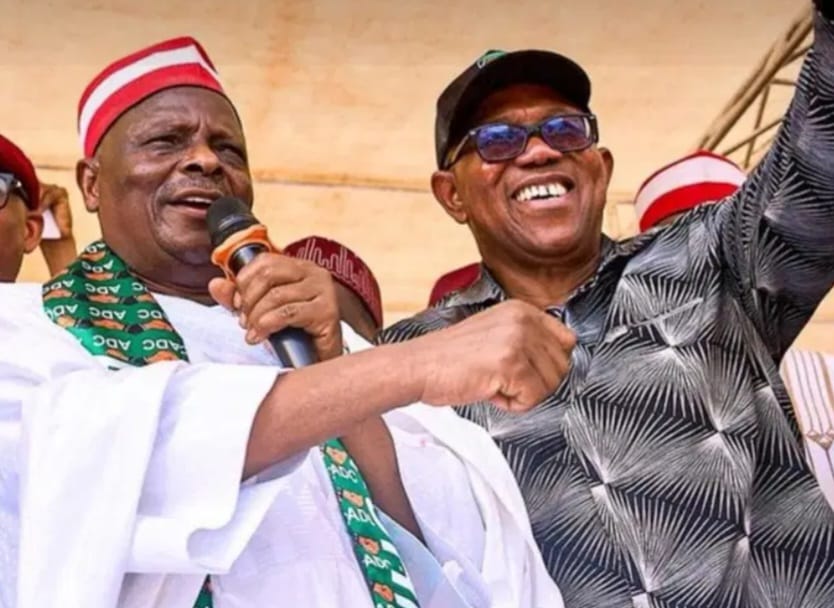
Atiku, who is the presidential candidate of the African Democratic Congress, argued that Nigerians had yet to benefit sufficiently from the funds said to have been saved after the removal of petrol subsidy.

He also demanded greater transparency over the use of the savings, saying the resources should have supported poverty reduction, education, security and opportunities for young Nigerians.

His Economic Recovery Plan 2027 proposes a production-based subsidy system that would differ from the pre-2023 arrangement. Under the proposal, qualifying Nigerian refineries would receive crude oil at preferential prices under strict conditions, with the aim of lowering petrol prices and encouraging domestic refining.

The Federal Government, however, said returning to subsidy would recreate the fiscal challenges that prompted its removal.

Tinubu announced the end of the petrol subsidy regime during his inaugural address on May 29, 2023. He said the policy had become unsustainable and that the resources previously spent on it would be redirected to infrastructure, education, healthcare and job creation.

Responding to Atiku’s proposal on Sunday, APC National Chairman, Prof Nentawe Yilwatda, described it as a “deeply troubling policy U-turn.”

Yilwatda questioned how the opposition would finance the proposed subsidy and warned against introducing a major economic policy as an election promise without explaining its long-term financial implications.

“Economic policy cannot be reduced to election-season promises. Nigerians deserve to know precisely where the money will come from, what sectors will bear the cost and whether such a policy can be sustained without reopening the fiscal pressures that necessitated reform in the first place,” Yilwatda said.

The APC chairman spoke during a visit to the headquarters of the City Boy Movement in Abuja.

He maintained that subsidy removal, despite the hardship associated with it, was necessary. He said the government should strengthen social interventions and productive sectors instead of returning to the former subsidy system.

Yilwatda also urged Nigerians to assess the economic records and policy proposals of the various presidential contenders before the 2027 election.

He said the APC would continue to defend the Tinubu administration’s economic reforms while remaining open to credible alternatives.

FG Says Subsidy Removal Released N15.8tn

The Minister of Information and National Orientation, Mohammed Idris, also defended the subsidy removal, saying the reform had created additional fiscal resources for the three tiers of government.

Idris said figures contained in the Federal Government’s Reform Scorecard showed that subsidy savings generated N15.8tn for the federation between June 2023 and December 2025.

According to him, the Federal Government received about N5.43tn, while states and local governments received approximately N6.52tn and N3.88tn respectively.

The minister clarified that the N15.8tn was not money kept in a separate government account. He said the figure represented resources released into the wider fiscal system and made available to the three levels of government.

He added that the additional funds had strengthened the capacity of state and local governments to pay salaries and pensions as well as finance infrastructure and essential services.

At the federal level, Idris said the additional fiscal space had supported infrastructure, human capital development and social programmes.

He put additional expenditure on strategic infrastructure at about N6.47tn. The projects, he said, covered areas such as transport, housing, agriculture and security.

The minister also disclosed that more than 10 million households had benefited from social transfers. He said more than N400bn had been committed to programmes such as the Nigerian Education Loan Fund, the MOFI Real Estate Investment Fund and the Nigerian Consumer Credit Corporation.

Idris warned that reversing the subsidy reform could also undermine developments in the petroleum sector at a time when domestic refining capacity was expanding.


Atiku Accuses FG Of Double Standards

Atiku, in a statement issued by his Senior Special Assistant on Public Communication, Phrank Shaibu, criticised the Federal Government’s defence of subsidy removal.

He described the administration’s celebration of the policy as “one of the biggest economic frauds being sold to Nigerians.”

The former vice president argued that the government could not oppose intervention aimed at reducing hardship for ordinary citizens while granting tax credits and other fiscal incentives to major investors in the petroleum sector.

Atiku summarised his position by declaring, “You cannot subsidise capital and criminalise relief for citizens. You cannot offer cushions upstairs and call suffering downstairs.”

He also questioned the incentives available under the government’s Deep Offshore Oil and Gas Projects framework.

“Under Tinubu’s own Deep Offshore Oil and Gas Projects Incentives framework, qualifying petroleum developments can receive production tax credits beginning at $3 and $4.50 per barrel, with supplementary credits capable, in qualifying circumstances, of taking the combined benefit to as much as $11.50 per barrel,” he said.

Atiku asked why government intervention could be considered appropriate when it reduced investment risks for major petroleum operators but was rejected when aimed at reducing the burden on households.

“So, what exactly is Tinubu’s objection: government intervention itself, or government intervention for Nigerians?” he asked.

He also raised questions about petroleum-related expenditures recorded after subsidy removal.

Atiku cited financial statements of the Nigerian National Petroleum Company Limited, claiming that the company recorded about N4.84tn in energy-security expenses and related shortfalls in 2023 and approximately N7.13tn in 2024.

He said NNPCL had linked part of the expenditure to the difference between the exchange rate used to determine regulated PMS ex-coastal prices and the prevailing exchange rate at the time import obligations were settled.

“Where exactly did the subsidy go? If Nigerians were paying market prices because ‘subsidy is gone,’ why was the federation still carrying trillions of naira in under-recovery and energy-security costs?” he said.

Atiku argued that changing the terminology for such expenditures did not alter their economic effect.

“Nigerians do not eat semantics. Whether government calls it subsidy, under-recovery, shortfall or energy security, public resources were being used to bridge a gap between economic cost and the price at which petrol was sold,” he added.

The ADC candidate said the removal of subsidy had increased transportation, food, production and household costs.

He accused the administration of applying “brutally savage capitalism” to poor Nigerians while pursuing “compassionate capitalism for big oil money operators.”

He continued, “The government can protect a multibillion-dollar oil investment from risk, yet it says protecting the Nigerian worker from crushing hardship is bad economics,” Atiku said.

He added that the government could not “roll out the red carpet for rich oil operators while leaving its citizens to walk barefoot through hardship.”

Lawmaker Rejects Subsidy Restoration

The member representing Agege Federal Constituency of Lagos State in the House of Representatives, Dr Wale Ahmed, also rejected Atiku’s proposal.

Ahmed described the proposed policy as economically unsustainable and politically expedient. He warned that reversing the subsidy removal could disrupt the country’s economic recovery.

“Nigeria cannot afford to return to the subsidy era. What we need is to consolidate reforms and ensure their benefits reach ordinary Nigerians,” Ahmed said.

The lawmaker said the subsidy removal had increased government revenue by freeing funds previously used to keep petrol prices artificially low.

“The question should be how these additional resources are deployed to improve infrastructure, healthcare, education, transportation and security, not how we recreate an unsustainable subsidy regime,” he said.

Ahmed also asked Atiku to explain how the proposed subsidy arrangement would be financed without putting additional pressure on government finances.

“Where will the money come from? Will government borrow again to finance subsidy? Will allocations to states and local governments be reduced? Nigerians deserve clear answers,” he said.

He said the savings were not kept in a government vault but increased the revenue available to the federation.

“The savings were not money kept in a vault by the Federal Government. They increased revenues available to the federation and were shared among the three tiers of government,” he said.

Ahmed acknowledged the hardship caused by the reforms but argued that returning to the previous system would not resolve the underlying problems.

“Nobody is denying the hardship. It is real. But returning to the policies that contributed to our fiscal problems cannot be the solution,” he said.

He urged the Federal Government to accelerate measures aimed at reducing production and transportation costs through improved electricity supply and investment in agriculture.

ADC Leaders Back Atiku

Meanwhile, ADC chieftains have supported Atiku’s proposal, with former Edo State governorship aspirant Kenneth Imasuagbon describing criticism from the Presidency and APC as “misplaced and politically motivated.”

Imasuagbon said subsidy removal had worsened the economic situation of Nigerians through increased inflation and higher costs of living.

“The removal of fuel subsidy has not translated into a better life for Nigerians. Instead, it has pauperised millions of citizens, destroyed the purchasing power of workers, increased the cost of transportation, food, healthcare and education, while businesses continue to shut down under the weight of unbearable operating costs.”

He argued that Atiku’s willingness to reconsider the policy showed his readiness to review measures that had failed to deliver the expected benefits.

“Atiku should not be attacked simply because he is prepared to reconsider a position he held in 2023. That is the mark of a compassionate and people-oriented leader,” he said.

Imasuagbon also questioned the Federal Government’s account of the savings from subsidy removal.

“Where are the trillions reportedly saved? Nigerians deserve transparent answers.

“We still have collapsing infrastructure, worsening insecurity, failing hospitals, underfunded schools, mass unemployment and deepening poverty.

“If these enormous resources were truly invested in the people’s welfare, the ordinary Nigerian should have felt the impact by now,” he stated.

He said the debate should focus on whether the policy had improved the living conditions of ordinary Nigerians.

The former governorship aspirant expressed confidence in Atiku’s ability to tackle what he described as Nigeria’s “economic quagmire.”

Also backing Atiku was the ADC governorship candidate in Sokoto State, Manir Dan’Iya.

Dan’Iya said a targeted and accountable subsidy system could reduce the pressure caused by rising transportation, food and other essential costs.

In a statement issued on Sunday by his Media Aide, Aminu Abdullahi, he said the economic situation required measures that would cushion the impact of rising living costs.

“At a time when Nigerian families are struggling to afford transportation, food and necessities, any credible policy capable of reducing the cost of living deserves serious consideration,” Dan’Iya said.

He stressed, however, that any future subsidy arrangement should be targeted, transparent and accountable to prevent corruption and waste.

Dan’Iya said Atiku’s proposal should also support domestic refining and reduce the country’s dependence on imported petroleum products.

“The 2027 election is an opportunity for Nigerians to choose a government that understands their hardship and is prepared to act.

“We must support policies that reduce the burden on our people, restore hope, strengthen institutions and put Nigeria back on the path of sustainable development,” he said.

The subsidy debate is expected to remain a major issue ahead of the 2027 presidential election, with the Tinubu administration defending its removal as necessary for fiscal stability while opposition politicians continue to argue that the policy has imposed severe hardship on households and businesses.

Dangote Refinery Extends Free Fuel Delivery To 4 More States

By Sabiu Abdullahi

The Dangote Petroleum Refinery has expanded its free petroleum products delivery programme to Kano, Imo, Anambra and Nasarawa states.

The refinery said the move would help independent petroleum marketers cut distribution expenses and create an opportunity for reduced petrol prices across the affected areas.

The initiative, according to a statement issued on Sunday, was initially introduced in Lagos, Ogun, Rivers, Kaduna, Abuja and Delta states. It is designed to bring refined products closer to marketers and retailers while reducing the expenses associated with transporting fuel over long distances.

The refinery said its decision to bear delivery costs would remove a major expense from the downstream petroleum distribution chain.

Group Executive Director, Commercial Operations, Oil & Gas, WAEP and Fertiliser, Dangote Industries Limited, Fatima Aliko Dangote, said the programme was intended to ensure that the benefits of local refining reached businesses and consumers.

“The value of domestic refining must ultimately be felt beyond the refinery gate. By absorbing the cost of delivering petroleum products to our customers, we are removing a significant component of the distribution burden and creating room for those savings to flow through the value chain to consumers. Our goal is to make fuel distribution more efficient, reduce avoidable costs and support more competitive pump prices across Nigeria.”

The Independent Petroleum Marketers Association of Nigeria welcomed the expansion, saying it would ease some of the financial and logistical difficulties faced by its members and potentially contribute to cheaper fuel for consumers.

The National Publicity Secretary and Public Relations Officer of IPMAN, Chinedu Ukadike, said the arrangement tackled a persistent problem in the distribution of petroleum products.

“This gesture, if sustained, will be able to alleviate the sufferings of independent marketers. There has been the issue of financial hold-up, whereby marketers pay for products and are not loaded for days and weeks, and they suffer unnecessary hardship bringing the product down,” he stated.

Ukadike said the arrangement would shorten the period during which marketers’ funds remain tied up after product payments. He added that this would improve their cash flow and allow them to use their capital more effectively.

The refinery noted that the reduction in distribution expenses would be particularly important for marketers who supply locations far from the facility. Such transportation usually involves additional costs for haulage, vehicle operations, drivers, insurance, road risks and other logistics.

The removal or reduction of these expenses, it said, could make it easier for marketers to supply distant markets and offer more competitive prices at retail outlets.

The initiative is also expected to reduce some operational risks linked to the transportation of large quantities of petroleum products over long distances by taking the products closer to their destination markets.

The expansion comes as Nigeria’s downstream petroleum sector continues to respond to increased domestic refining capacity and growing competition within the market.

The Dangote refinery has a refining capacity of 700,000 barrels per day. It supplies refined petroleum products to the Nigerian market and has also expanded its activities in international markets.