Admin

Taraba State govt dismisses rumors of palace, mosque demolition

By Uzair Adam

The Taraba State Government has debunked rumors that it is planning to demolish the Ukwe Takum Palace and the Central Mosque in Takum.

The allegations were made by the Kuteb Yatso of Nigeria (KYN), a cultural group representing the Kuteb people, during a press conference in Jalingo.

According to the group’s president, Mr. Emmanuel Ukwen, who was represented by Mr. Markus Apwende, a foreign contractor, backed by armed militia and heavy security, was seen marking the palace and mosque for demolition.

In response, the state’s Commissioner for Information, Zainab Usman Jalingo, labeled the claims as false and an attempt to incite fear and unrest.

She assured the public that the government remains committed to peace, unity, and the equitable development of all citizens, regardless of religion or ethnicity.

“These baseless rumors are the work of troublemakers and should be ignored,” she stated, reaffirming the government’s focus on the welfare and justice of its residents.

Adamawa man dies after trying to intervene between two fighters

By Uzair Adam

A man identified as Markus Dali from Sina Kwande, Michika Local Government Area of Adamawa State, tragically lost his life while attempting to mediate a conflict between two individuals.

The incident, which occurred on August 30, involved a dispute between Barka Yama and Alex Z. Tari.

Dali intervened in an effort to stop the fight but was struck by Barka, and that him go into a coma.

He was later confirmed dead at a hospital.

Barka, 32, has been arrested and charged with culpable homicide under Section 191 of the Penal Code.

The case was presented at a magistrates’ court in Yola, where ASP Francis Audu, the prosecuting officer, detailed the events leading to Dali’s death.

Chief Magistrate Muhammed Njidda ordered Barka to be remanded at a correctional facility, awaiting legal advice from the Department of Public Prosecutions.

EFCC explains arrest of journalists at Enugu radio station

By Uzair Adam

On Monday, October 14, 2024, a team of officers from the Enugu Zonal Directorate of the Economic and Financial Crimes Commission (EFCC) visited Urban Radio 94.5FM, Enugu, to invite Favour Ekoh, the host of the station’s program Prime Time, for questioning.

Ekoh is under investigation for her alleged involvement in a N700 million Ponzi scheme that affected about 50 victims.

The victims claimed Ekoh enticed them to invest in “Life Trading,” a scheme run by Leverage Index Limited, where they were promised 10 percent returns on their capital after a set period.

However, after they invested, the company, located at No. 1 Colliery Street, Okpara Avenue, Enugu, shut down, leaving them without their capital or any promised returns.

The victims said Ekoh was their primary point of contact for the scheme.

Upon arriving at the radio station with an arrest warrant, EFCC officers identified themselves to the station’s Managing Director, Bamikole Owoyomi.

However, in an unexpected move, a staff member called the station’s Chairman, who ordered the gates to be locked, trapping the EFCC officers inside the building.

The officers then called for backup, which led to the arrest of Owoyomi, Ekoh, and two security guards for obstructing the EFCC’s duties.

Ekoh, who was trailed to the station as part of a sting operation to prevent her from evading arrest, was allowed to make a statement at the EFCC’s Enugu office and has since been released.

Owoyomi and the guards, who were initially detained for preventing the officers from carrying out their duties, also made statements and were later released.

In a statement, Dele Oyewale, Head of Media & Publicity for the EFCC, emphasized that the commission holds the media in high regard but criticized the actions of the station’s staff as unlawful and obstructive.

He called on the International Press Institute (IPI) and the Nigerian Union of Journalists (NUJ) to examine the station’s conduct and Ekoh’s professional ethics, given her involvement in the fraudulent scheme.

The EFCC clarified that no equipment at the station was damaged and that there was no disruption to the station’s lawful operations during the arrest.

Who can tell you the truth?

By Tijani Abiola

In a spacy world saturated with information, the desert of personal interest and a space box of selfish interest, discerning the truth has become increasingly challenging, from social media feeds to 24-hour news cycles.

We are inundated with facts, opinions, and outright falsehoods. Yet, the quest for truth remains vital, influencing our decisions, shaping our beliefs, and guiding our actions. So, who can tell you the truth?

Science, by its very nature, is a rigorous pursuit of truth. Through the scientific method, hypotheses are tested, results are peer-reviewed, and conclusions are drawn based on empirical evidence. Institutions like the National Aeronautics and Space Administration (NASA), the World Health Organization (WHO), and universities worldwide are pillars of this endeavour. Their commitment to objectivity and reproducibility makes them reliable sources of truth, particularly in areas like medicine, climate change, and technology, but can we say they are the real source of truth?

Media outlets are a relaxed space for the most trusted outlets for news reports, an avenue that most use to suit themselves and tailor their way of life. Most of the time, the media can also be biased. Established organisations like the BBC, The New York Times, and Reuters have built reputations for thorough and responsible journalism. These institutions adhere to journalistic standards, including fact-checking, corroboration, and ethical reporting. Their role in a democratic society is to hold power accountable and inform the public, making them essential sources of truth, but yet, can they tell you the truth?

Experts with a deep understanding of their fields and elders with numerous past useful experiences can provide accurate information and insights. Whether it’s a doctor discussing health issues, a historian analysing past events, or an economist interpreting market trends, these individuals rely on years of study and experience. Their expertise and dedication to their disciplines make them credible sources of truth; still, will you accept trends, mind experience and expertise ideas as the truth?

Ultimately, each of us has the responsibility to discern the truth. Critical thinking is our best defence against misinformation. By questioning sources, analysing arguments, and seeking evidence, we can better navigate the complex landscape of modern information. No one takes information to trust and accepts it as truth, except if they are convinced to accept it as truth.

In a world where the truth can often seem elusive, it is essential to exercise critical thinking before accepting any information to be true. One can only convince and prove with past experiences or actions that seem to complement the existing information left for you to think deeply and analyse whether to believe or negate the information. 

Still, you are the best person to tell yourself the truth through your critical thinking, valuing evidence over opinion, expertise over hearsay, and integrity over convenience. We can navigate the complexities of our information-rich world. Ultimately, the truth is out there, but we must seek and accept it diligently and responsibly.

Tijani Abiola T. wrote via abiolatijani001@gmail.com.

TCN nears full recovery of national grid after partial disturbance

By Uzair Adam  

The Transmission Company of Nigeria (TCN) has made significant strides in restoring the national grid after a partial disturbance on Monday evening.  

The incident, which occurred around 6:48 p.m., triggered an immediate response. 

In a statement on Tuesday, Mrs. Ndidi Mbah, TCN’s General Manager of Public Affairs, confirmed that recovery efforts began swiftly, with the Azura Power Station providing the essential blackstart to stabilise the grid. 

By 10:24 a.m. on Tuesday, the recovery process was in its advanced stages, despite a minor setback that briefly slowed progress.  

Mbah reassured the public that the TCN continued working to restore full power, with about 90% of the country’s substations already receiving bulk electricity.  

Power has been fully restored to Abuja and other key distribution centres. 

She added that the disturbance did not impact the Ibom Gas generating station, which remained functional and continued to supply power to areas in the South-South, including Eket, Ekim, Uyo, and Itu transmission substations.

NCS extends verification exercise on import duty recovery for private jets 

By Sabiu Abdullahi 

The Nigeria Customs Service (NCS) has announced a one-month extension for the verification exercise on import duty recovery for privately owned aircraft, from October 14, 2024, to November 14, 2024.

This extension aims to provide additional time for aircraft operators who have expressed willingness to regularise their import duties and comply with necessary regulations. 

According to the NCS, the extension is crucial in ensuring that all illegally imported aircraft meet legal requirements, promoting transparency and accountability in the aviation sector.

The Comptroller General of Customs, Bashir Adewale Adeniyi MFR, noted the service’s dedication to enforcing laws governing import duties and maintaining the integrity of Nigeria’s aviation sector. 

Aircraft operators are encouraged to take advantage of the extended period to fulfil their obligations and avoid sanctions that may arise from non-compliance after the deadline.

The NCS appreciates the cooperation and understanding of stakeholders in this ongoing exercise. 

The verification exercise extension demonstrates the NCS’s commitment to ensuring compliance and integrity in the aviation sector.

By providing an additional window for operators to regularise their import duties, the service aims to maintain the highest standards of transparency and accountability. 

Abdullahi Maiwada, Chief Superintendent of Customs and National Public Relations Officer, signed the press release on behalf of the Comptroller-General of Customs, dated October 14, 2024.

A memo to the founders of the Youth Movement in Nigeria

Ismail Hashim Abubakar

In a previous article published by The Daily Reality on October 06 (Why All Patriotic Must Support The Youth Movement), I stress the significance of supporting the emerging youth movement as a necessary political option left for Nigerians. I strongly recommend that Nigerian citizens should, in their entirety, support and align themselves with the struggle. This is becoming necessary as the masses are increasingly getting disappointed with the present administration’s policies headed by President Bola Ahmed Tinubu, but also sceptical of the democratic culture practised in Nigeria since the return of civilian politics in 1999.

In the present essay, I specifically address the youth movement’s founders and offer some points I hope they may consider valuable and worthy of reflection.

I begin by calling on the movement to intensify its efforts to sell out this ideology through massive advocacy, comprehensive sensitization, and awareness campaigns that go beyond social media and cyberspace and extend to what will be akin to door-to-door community tours embarked upon by field staff of polio immunization and vaccination programs.

Interestingly, the founders of this struggle have made it clear right from the onset that once one is a Nigerian and is mainly concerned with the plight of his fellow compatriots, they are automatically a member of the movement, and it is left for him to see in what ways or capacities could they contribute in the struggle. This means that with the exception of some politicians, especially the ruling class at various state and national levels and possibly their blind cronies and biased allies from all sectors and constituencies, all Nigerians are now or should be, by default, adherents and promoters of this movement.

Moreover, in the process of mass mobilization, it seems that people are to be made fully aware that this movement is purely a self-rescuing mission and a liberation effort. It is not a venture that one can invest financially in the typical fashion of Nigerian politics, aiming to reap personal benefits after an election victory. It is neither a soft machine nor a cheap ride on whose back one can mount and easily grab power. It promotes selfishness and displays arrogant romance with authority and privileges invested in public office holders. It is instead a clarion call for those who are willing to put a stop to a dangerous political trend which, if allowed to go unmitigated, will deprive the posterity – the future citizens of this nation – of the residual right to live, breathe and move about freely in their land.

It remains a question, I am sure, with youth leaders to deliberate on whether the struggle will adopt one of the existing political parties or push to create a new, special party, with mainstream party structures from grassroots to higher levels, which will identify with the cause of youth as movers and engines that steer and spearhead the liberation struggle. One of the possible effective platforms to gauge the movement’s strength may be adopting an existing party or forming a new party that will field candidates to contest in the 2027 general elections.

However, I also have a firmer belief that this movement should not just be well-conceived and rapidly embraced by the masses but only have a brief influence that will wane and fizzle out quickly. This is very possible when things are hastily done, especially if the ideology of the struggle is not yet fully understood and inculcated in the minds of the majority of Nigerians. I am sure the brains behind this nascent movement are aware of the inevitable possibility of corrupt politicians hijacking the likely fruit-yielding struggle or covertly infiltrating it to impede and sabotage its progress. I am also conscious that pioneers of this struggle are erecting insurmountable forts that will resist all forms of internal and external intimidations and temptations.

Meanwhile, I strongly recommend that while the leadership of this struggle continues to enlighten Nigerians and encourage them to embrace its ideologies and identify with and support its cause, the forthcoming 2027 elections may be utilized as an experimental ground to test the public understanding and acceptance of its mission, but which should be done on a purely nonpartisan basis. By this, I mean that the movement shall publicize its aims, objectives, principles, and priorities and open its doors to every politician willing to contest for an elective post.

The politician must be ready to comply with all the movement’s missions and can ultimately work towards ensuring that it realizes its vision of creating an egalitarian society in which a poor man will have a say in how he is governed and his social, educational, and economic rights, which guarantee his healthy and meaningful survival, are protected.

Any politician who is set to promote these values and can sincerely commit himself to these ideals and sacrifice the last drop of blood in him is eligible and can present himself to the movement for support. A contract agreement of a promissory note shall be written and documented by the movement on behalf of Nigeria’s populace, which employs such politicians through an electoral process. The agreement must explicitly state that if the politician breaches any terms after being elected, he may be liable for prosecution, besides public wrath that drastically affects his future political ambitions.

The movement has to work assiduously to screen willing contestants without any prejudice to the party on whose platforms they contest. After that, it will make the public fully aware of the agreement it entered with contestants and the detailed clauses and terms contained in the contract, including penalties in case elected officials fail to uphold and keep their campaign promises. 

In this way, the movement will be able to, through the successful candidates whose election it actively supports, infiltrate state and national assemblies, thereby producing determinate, resolute, patriotic, populist and incorruptible legislators who have no business in their legislative chambers than to uphold the rule of law and ensure that executive councils implement policies and execute programs and projects that positively serve Nigerians. This means that a massive reform and nonviolent political revolution can be prosecuted mildly as the youth movement succeeds in hijacking and dominating the second arm of government, thus reviving the constitutional roles and responsibilities legislative assemblies are expected to discharge rather than becoming appendages of the executives. If this mission triumphs, it will expose the opportunist camp among politicians who will hopefully be rendered a minority and target of the electoral wrath of Nigerian citizens.

If the mission of the youth movement is fully understood and wholly embraced by the majority of Nigerians, particularly if it becomes the only most guaranteed and safest winning platform during elections but also an unprecedented movement that liberates ordinary Nigerians, its ideals and objectives will permeate the ranks of the executive and be easily upheld by various types of people in every sector including royal and traditional societies, technocrats, civil servants, members of the academia, legal industry, private and group entities.

Ironically, this may be the trial stage in the display of commitment and maintenance of integrity and principles needed. Scaling through this situation will be a grand marker of a democratic triumph that will go down in history as one of the greatest and most progressively fruitful political revolutions to have been demonstrated by the “Giant of Africa” throughout the region’s postcolonial period. 

A sizable number of Nigerians among ordinary citizens, religious scholars, politicians, academics and intellectuals, journalists, community leaders, public office holders, businessmen, retired military officers, human rights activists, private organizations and all kinds of people within the civil society who are equally worried over Nigeria’s situation and are especially concerned with the plight of the masses and will be much willing to bring their wealth of experience and expertise to promote the cause of this struggle. I do not doubt that the founders of this movement are aware of them, and I am optimistic that the youth movement will carry them along without regard for their age or social status.

Ismail writes from the Advancing Education and Research Center (Rabat) and is reachable via ismailiiit18@gmail.com.

Palliatives are not solutions for hardship: The bitter truth

By Rabiu Musa

The removal of fuel subsidy has become increasingly problematic for the masses. The declaration was made by Bola Ahmad Tinubu on 29 May 2023, during the inaugural speech as Nigerian president.

On the occasion, the president said, “We commend the decision of the outgoing administration in phasing out the petrol subsidy regime, which has increasingly favoured the rich more than the poor. Subsidy can no longer justify its ever-increasing costs in the wake of drying resources. We shall instead re-channel the funds into better investment in public infrastructure, education, health care and jobs that will materially improve the lives of millions.”

As a result, several filling stations, not less than 24 hours after the president declared an end to fuel subsidy, saw the pump price of Premium Motor Spirit, commonly known as petrol, soared to N600 per litre from N195/l in many parts of the country.

This also triggered a 100 per cent hike in transport fares, and queues in filling stations worsened because many stations were shut down. The situation has become unbearable for many citizens due to government policies drastically affectingtheir livelihoods. The surge in hardship has been linked to rising insecurity and widespread hunger, leaving millions in dire circumstances.

Poverty in the country is escalating at an alarming rate, and many people can no longer afford necessities like food, healthcare and education. Civil servants, for instance, are forced to sell their cars or abandon them entirely due to skyrocketing and unstable fuel prices.

The government has introduced various palliative measures to relieve vulnerable citizens and ease their hardship. However, These poverty alleviation schemes are far from sufficient to address the root causes of economic distress many Nigerians face.

The former head of state, Gen. Abdulsalami Abubakar, recently expressed concern over this approach, stating that palliative measures alone are not the answer to the hardship and will continue to urge the government to address the hardship confronting the people. He said this during a visit from a delegation of Campaign for Democracy (CD), a Civil Society Organization (CSO) hosted in Minna, Niger State. He emphasised the need for the government to find more sustainable ways to alleviate the economic struggles of the people.

In an estimation of  216 million Nigerians population, according to the National Bureau of Statistics (NBS), Nigeria’s palliative distribution efforts are not enough to address the depth of poverty and hunger affecting the masses. The key questions are: Will these palliative measures truly alleviate the hunger people are experiencing? Are the goods and support reaching the most vulnerable citizens? 

Numerous reports of corruption and mismanagement in the distribution of palliatives have been published. For example, a report published by Punch Newspaper on September 5, 2023, highlighted that the Department of State Services arrested some Nasarawa State Emergency Management Agency officials for allegedly diverting palliatives meant for vulnerable citizens.

The government should rethink its policy-making process and prioritise the needs of the poor before implementing any new actions. One crucial step would be to create an enabling environment that attracts investment, which can, in turn,positively impact the lives of citizens. Achieving this requires adopting a flexible and inclusive approach to policy-making

—one that genuinely considers the welfare of the masses.

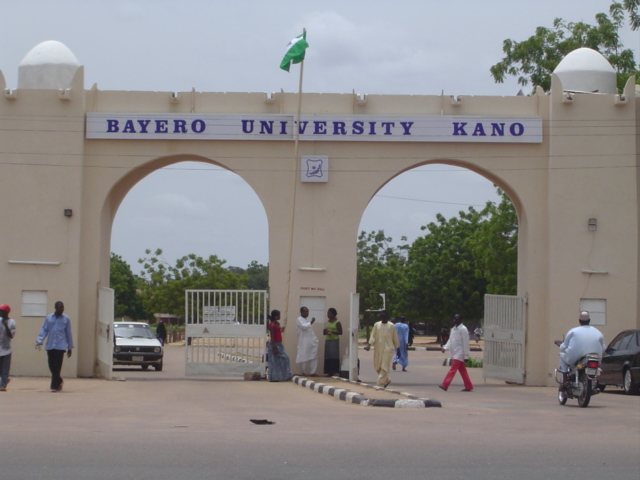
Rabiu Musa wrote from the Department of Mass Communication, Bayero University, Kano. He can be reached via musarabiu913@gmail.com.

BREAKING: Kano SSG, commissioner suspended over disloyalty, abuse of power

By Anwar Usman

The New Nigeria Peoples Party (NNPP) in Kano has announced the suspension of the State Secretary to the State Government (SSG), Abdullahi Baffa Bichi, and the Commissioner of transportation, Muhammad Diggol.

The State party Chairman, Hashim Sulaiman Dungurawa, confirmed this to journalists late Monday.

He said the two people were suspended over disloyalty and abuse of power and creating unnecessary tension in the party.

“We are here by informing the public today that we have suspended the SSG Abdullahi Baffa Bichi and the commissioner of transportation, Muhammad Diggol over abuse of power, office and disloyalty to the party.

“We appreciate the leadership of the party from their wards and the Local Government confirmed to us. They are all from Bichi north where they all came from for bringing the issue to us in written.

“Serving as the leaders of the party, we deliberated and consider that this is the best decision to take until we are done investigation on the issue.”

Reports has it that there is a growing crisis in the Bichi area of the NNPP between the stakeholders in the party.

Air Peace, Festus Keyamo and the sad reality of Nigeria’s aviation sector

By Mohammed Dahiru Aminu

The frustration and anger I feel towards Air Peace is overwhelming. Their constant disregard for their customers and audacity to offer solutions that, in essence, put more financial burden on those they have already wronged, makes me question why they are allowed to operate at all. The situation becomes even more infuriating when one considers the role of Nigeria’s Aviation Minister, Festus Keyamo, who seems oblivious to the glaring issues within the country’s aviation sector. It feels as though both Air Peace and the government are working in tandem, not to improve the system, but to continually frustrate passengers, leaving them with little to no recourse for the mess they create.

A perfect example of this was my recent experience with Air Peace. I had a scheduled flight to Asaba, which they cancelled at the last minute without providing a valid reason. Instead of promptly offering a genuine resolution, they sent me an email offering to reroute or reschedule the flight at no additional cost. It sounded fair at first, but upon requesting a new flight, they had the audacity to ask for more money! It’s almost laughable, but this is the reality Nigerian travelers have to deal with daily. I reminded them of their earlier promise, insisting that I shouldn’t be charged extra for rescheduling, as it was their fault in the first place. In response, they reluctantly offered me a flight on Sunday – a full three days later – provided I refused to pay the extra fee. In what world is it acceptable to offer a flight three days after the scheduled date and expect the customer to be satisfied? I had urgent matters to attend to in Asaba, and they wanted me to wait until Sunday!

When I finally decided that I couldn’t wait for their arbitrary flight offers, I requested a refund, only to be told I would need to wait 21 working days to get my money back. Twenty-one working days! The audacity of this airline to take people’s money, fail to provide the service paid for, and then expect them to wait almost a month to receive a refund is mind-boggling. If I didn’t want to wait that long, they gave me the option to “expedite” the refund within 48 hours – at a cost, of course. In my case, I was told to pay 57,600 naira to expedite the refund for both myself and another passenger. It was clear to me that this entire scenario was not just an unfortunate incident, but a well-rehearsed scam designed to squeeze more money from already frustrated passengers.

Air Peace has gained notoriety for such antics. They cancel flights at the last minute, take people’s money, and then offer empty promises of rescheduling or rerouting without any intention of making things right. What’s worse is that even when they claim you can reroute at no additional cost, it’s almost guaranteed that they’ll come up with some excuse to demand more money from you. And if you’re foolish enough to agree to their terms, what’s the guarantee that they won’t cancel the new flight too? Air Peace is, quite frankly, a disgrace. They offer the option to upgrade to business class, but that, too, is a gamble. Why should anyone believe that they won’t cancel a business class flight just like they do with economy class? The sheer disrespect for passengers is alarming.

As if this wasn’t bad enough, when you finally ask for your money back, they will delay the process as much as they can. Twenty-one working days is an absurd amount of time to wait for a refund, especially when they were so quick to take the money. And yet, if you want it faster, they are more than happy to extort you for it. This isn’t just incompetence. This is robbery. Air Peace is nothing more than a predatory company taking advantage of the lax regulatory environment in Nigeria’s aviation sector. They thrive on making the lives of Nigerians more miserable while pocketing our hard-earned money.

I am still waiting to see if they will honor their promise to refund my money in 48 hours after paying the expedited refund fee. But based on the stories I’ve heard from other passengers, I have little hope. Many have told me that Air Peace rarely refunds the full amount they owe, and they always have some excuse ready as to why they can’t pay it all back. I’m beginning to realize that I may be one of their latest victims in a long line of passengers they’ve scammed.

But let’s not forget that the real issue here isn’t just Air Peace. It’s also the Nigerian government’s blatant failure to regulate and monitor the aviation industry. If Air Peace were operating in a properly regulated environment, they would have been shut down a long time ago. Their level of unprofessionalism and blatant disregard for their customers would never be tolerated in any serious country. But in Nigeria, they continue to operate with impunity, because the government is either too incompetent to do anything about it, or worse, they are complicit.

Take our current Aviation Minister, Festus Keyamo, for example. He was recently captured in a video, arguing that Nigeria cannot allow a foreign airline to operate its national carrier because, in his words, Nigeria is “bigger” and “more ambitious” than Togo. The sheer absurdity of this statement is enough to make anyone’s blood boil. How can you claim that Nigeria is more ambitious than Togo when our aviation sector is in complete shambles? There’s nothing ambitious about having an airline like Air Peace dominate our domestic routes, cancelling flights at will, and treating passengers like garbage. Keyamo’s arrogance and delusions of grandeur are exactly why the Nigerian aviation sector remains so backward. Our leaders refuse to confront the reality of their failures, choosing instead to make foolish comparisons with other African nations in a vain attempt to maintain their egos.

Perhaps if I had been on Air Peace’s London flight, I might have received better treatment. It seems Air Peace and their Aviation Minister patron, Festus Keyamo, are only concerned about flights to more prestigious destinations like London. Domestic passengers? We’re mere afterthoughts. But this is what happens when a country’s leadership is out of touch with the needs of its people. Festus Keyamo and Air Peace are two sides of the same coin, united in their incompetence and arrogance, while ordinary Nigerians suffer in silence. It’s high time we, the people, demand better. Enough is enough.

Mohammed Dahiru Aminu (mohd.aminu@gmail.com) wrote from Abuja, Nigeria.